Upender & Tilter vs. Manual Flipping: A Workplace Injury Comparison
Imagine a heavy steel coil, weighing several tons, swinging precariously as a team of workers struggles to flip it by hand. The air is thick with tension. One wrong move, one slip, and the consequences could be catastrophic. This is the daily reality in many metal processing plants that rely on manual flipping. The physical strain, the constant risk, and the hidden costs are immense. For factory managers like Michael in Mexico, this isn't just an operational headache—it's a personal and financial liability that keeps them up at night. The pressure to meet targets clashes directly with the duty to keep people safe.
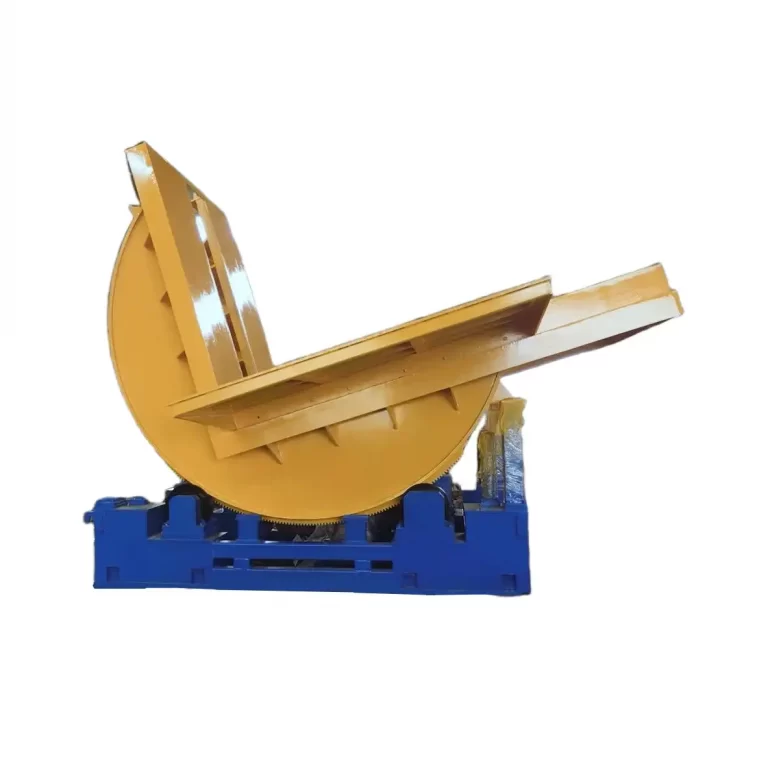
The core difference between using an Upender/Tilter and manual flipping is a fundamental shift from a high-risk, human-dependent process to a controlled, automated one. Manual flipping exposes workers to direct physical hazards like crushing, strains, and falls, leading to frequent injuries. In contrast, a properly sized hydraulic upender or coil tilter performs the heavy lifting and rotation mechanically, removing the worker from the danger zone and virtually eliminating these common manual handling injuries. This isn't just about replacing labor; it's about creating a fundamentally safer work environment.

The decision between continuing with manual methods or investing in automation like a coil upender is often framed as a cost issue. But when you start counting the real costs—medical bills, insurance premiums, lost productivity, and human suffering—the equation changes dramatically. Let's break down this critical comparison. We will look at the specific injury risks, the hidden financial impacts, and how the right equipment from a knowledgeable partner can transform your shop floor from a hazard zone into a model of efficiency and safety.
1. What are the Most Common Injuries in Manual Coil and Wire Rod Flipping?
The act of manually turning a heavy, dense object is deceptively simple. In reality, it's a complex biomechanical challenge that pushes the human body to its limits. Workers are not just lifting; they are bracing, pushing, pulling, and stabilizing an unpredictable load. This combination of forces in an uncontrolled environment is a recipe for specific, and often severe, injuries.
The most frequent injuries from manual flipping are musculoskeletal disorders (MSDs), including severe back strains, herniated discs, and shoulder tendonitis, followed by acute trauma such as crushed hands or feet, and slips or falls resulting in fractures. These injuries occur due to the excessive force, awkward postures, and sudden load shifts inherent in trying to maneuver multi-ton coils without mechanical aid.
🩺 A Detailed Breakdown of Manual Flipping Hazards
To understand why automation is the solution, we must first detail the problem. The injury profile in manual flipping operations is distinct and severe.
🦴 Musculoskeletal Disorders (MSDs): The Slow, Costly Crisis
MSDs are not one-time accidents; they are cumulative injuries that develop over time, leading to chronic pain, disability, and massive long-term costs.
- Lower Back Injuries: This is the number one issue. The twisting motion (
torque) combined with the sheer weight during a flip places enormous stress on the lumbar spine. This can lead to:- Muscle strains and ligament sprains.
- Herniated or bulging discs, often requiring surgery.
- Chronic lower back pain, leading to permanent work restrictions.
- Shoulder and Rotator Cuff Injuries: Workers often use their shoulders to "guide" or "push" the coil, leading to:
- Rotator cuff tears.
- Impingement syndrome and tendonitis.
- Knee and Wrist Strains: The unstable footing and gripping required can cause tendinitis and joint damage.
Financial Impact: A single serious back injury claim can cost hundreds of thousands in medical care, rehabilitation, and lost wages. The indirect costs—like training replacements and lost productivity—can be 4 to 10 times higher.
⚠️ Acute Trauma: The Immediate Danger
These are the sudden, catastrophic events that everyone fears.
- Crush Injuries: Hands, fingers, or feet can get caught between the coil and the floor, a pallet, or another coil. The weight involved makes these injuries often amputation-level severe.
- Struck-By/Struck-Against Injuries: A coil can slip or roll, striking a worker. The force of several tons of steel is unsurvivable.
- Slips, Trips, and Falls: Oil, grease, or uneven flooring can cause a worker to lose footing while bearing a load, leading to fractures, head injuries, or being caught in the path of the falling coil.
The Human Cost: Beyond the financials, these incidents create a culture of fear, increase employee turnover, and can lead to severe regulatory penalties and even criminal liability for management in some jurisdictions (workplace safety compliance, OSHA equivalent standards).
😓 The Overlooked Factor: Fatigue and Human Error
Manual flipping is exhausting. A fatigued worker is a less alert worker, with slower reaction times and impaired judgment. This significantly increases the risk of all the above injuries. It's a vicious cycle: the dangerous task causes fatigue, which makes the task even more dangerous (operator fatigue in material handling, human error reduction).
| Comparison Table: Injury Risk Profile | Injury Type | Manual Flipping Risk | With Upender/Tilter | Primary Cause in Manual Process |
|---|---|---|---|---|
| Back Strain/Hernia | Very High | Negligible | Twisting under heavy, unstable load. | |
| Crush Injury | High | Very Low | Load shift; hands in pinch points. | |
| Slip/Fall Fracture | Medium-High | Low | Loss of balance on oily surface while pushing. | |
| Shoulder Tendonitis | High | Negligible | Repetitive pushing/guiding motion. | |
| Struck-By Object | Medium | Very Low | Coil rolling or swinging uncontrolled. |
For a manager like Michael, understanding this breakdown is the first step. It moves safety from an abstract concept to a concrete list of preventable risks. The next question is: what is the true price tag of these risks? (cost of workplace injuries in manufacturing, ROI of safety equipment)
2. How Do Workplace Injuries from Manual Handling Affect Your Bottom Line?
Many factory owners view safety equipment like upenders as a capital expense. They see the upfront price tag. But this perspective misses the larger, more damaging financial picture. The costs of not automating are like an iceberg—the visible direct costs are just the tip, while a massive bulk of indirect costs lurks beneath the surface, silently sinking profitability.
Workplace injuries from manual handling devastate your bottom line through direct costs like soaring insurance premiums and worker compensation claims, and even larger indirect costs including production downtime, lost expertise from injured workers, recruitment and retraining expenses, and potential regulatory fines. These recurring expenses often far exceed the one-time investment in an automated flipping solution.
💸 The Real Cost Breakdown: More Than Just a Medical Bill
Let's quantify the financial drain that manual flipping imposes on a metal processing business. This is the language that speaks directly to operations directors and plant managers focused on cost control in heavy industry and manufacturing operational efficiency.
Direct Costs (The Visible Tip of the Iceberg)
- Workers' Compensation Insurance Premiums: This is the most immediate hit. Your
Experience Modification Rate (EMR)is a multiplier applied to your base insurance premium. More claims and severe injuries drive your EMR up, sometimes doubling or tripling your annual insurance costs for years. A poor safety record is a permanent tax on your business. - Medical and Rehabilitation Expenses: Hospitals, surgery, physical therapy, medication—the bills for treating a serious back injury or crush wound can easily reach six or seven figures.
- Indemnity Payments: This is the money paid to the injured worker for lost wages and potential permanent disability. A worker with a career-ending back injury may receive payments for decades.
Indirect Costs (The Massive, Hidden Bulk)
These costs are 4 to 10 times greater than direct costs and are often not insured.
- Production Downtime & Lost Output:
- The line stops when the accident happens.
- The injured worker is gone. Their colleagues may be traumatized or need to give statements, causing further delays.
- You now run shorthanded, slowing down the entire packaging and shipping process, creating a bottleneck (
production bottleneck solutions,throughput improvement).
- Administrative & Legal Costs:
- Managerial time spent on accident investigation, reporting, and dealing with regulators.
- Potential legal fees if a lawsuit is filed.
- Costs of implementing corrective actions after an investigation.
- Training and Replacement Costs:
- Hiring and training a new worker to replace an injured veteran is expensive and time-consuming.
- The new worker will be less efficient, leading to more errors and lower quality, potentially causing
product damage during handling.
- Morale and Reputation Damage:
- Low morale leads to higher general turnover, more absenteeism, and reduced engagement.
- A reputation as an unsafe workplace makes it harder to attract good talent.
- Clients may audit your safety practices, and a poor record could lose you business.
The ROI of Prevention: Investing in a Fengding or Wuxi Bu Hui upender is a classic case of "pay a little now, save a lot later." The calculation is straightforward:
- Cost of Problem: (Annual Direct + Indirect Injury Costs from Manual Flipping)
- Cost of Solution: (Purchase & Installation of Upender/Tilter)
- Payback Period: Often less than 12-24 months when all true costs are accounted for. After that, the savings flow directly to your profit line (
packaging equipment ROI calculation,automation payback period).
For Michael, who faces pressure to control costs, this financial analysis is crucial. It transforms the upender from a "nice-to-have" machine into a strategic financial tool for factory cost reduction. But how does the equipment itself actually create this safer, cheaper environment?
3. How Does an Upender or Coil Tilter Mechanically Eliminate These Injury Risks?
The engineering principle behind an upender or tilter is elegant in its simplicity: it substitutes human muscle and bone with controlled hydraulic or electric power. It changes the fundamental physics of the flipping operation. Instead of workers fighting gravity and momentum, the machine uses a stable platform, a powered pivot point, and secure clamping to perform the rotation in a predictable, repeatable path.
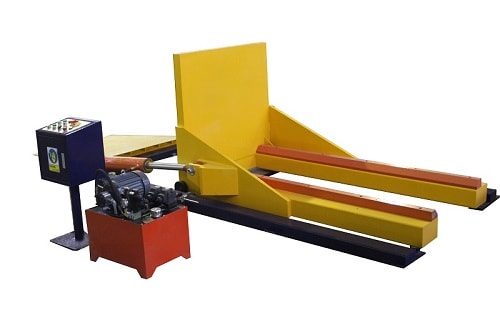
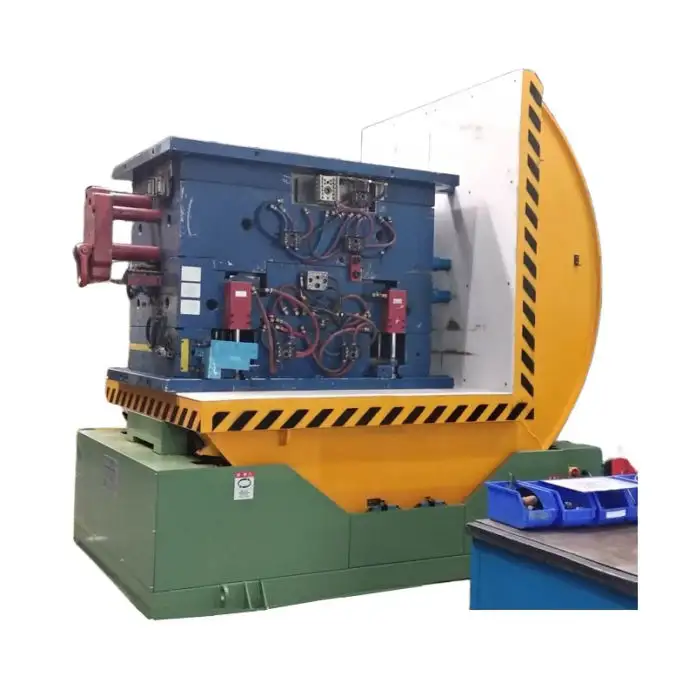
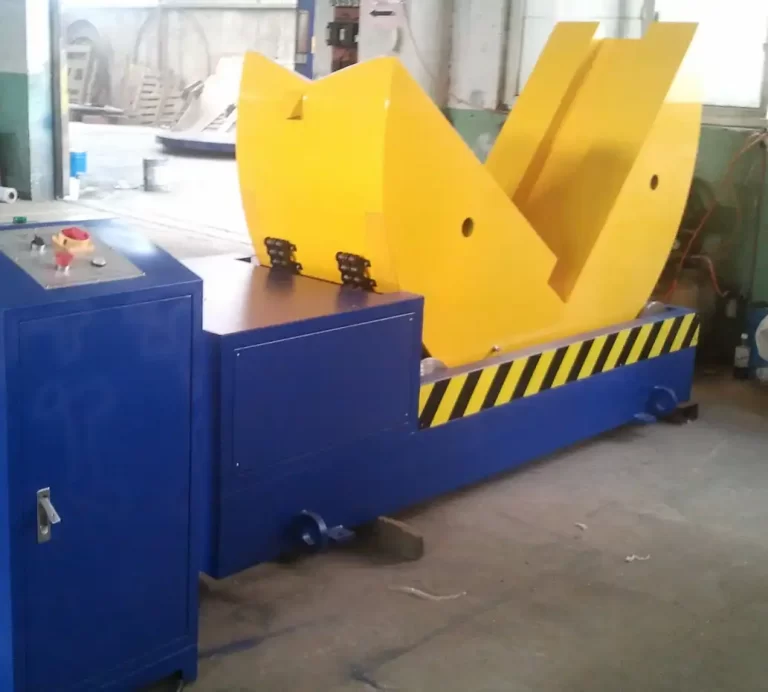
An upender or coil tilter eliminates injury risks by physically removing the worker from the hazard zone. The load is securely clamped or cradled on a powered platform, which then rotates along a fixed axis using hydraulic rams or a gear drive. This controlled mechanical process eliminates the need for manual force, awkward postures, and exposure to pinch points, crushing, and falling loads.

⚙️ The Engineering of Safety: A System-Based Approach
Safety isn't an add-on feature for a good upender; it's the core design principle. Let's dissect how each component of a modern upender, like those from leading manufacturers, addresses a specific risk of the manual process.
1. The Loading/Clamping System: Eliminating "Hands-On" Hazards
- Manual Risk: Workers use their hands to position, guide, and stabilize the coil, exposing them to immediate crush points.
- Upender Solution: The coil is rolled onto a stable cradle or positioned against a backstop. Hydraulic arms or side clamps then automatically or semi-automatically secure the load. The operator activates this from a safe distance using a pendant control. Key Safety Feature: Interlocks prevent the flipping cycle from starting unless the clamp pressure is confirmed, ensuring the load is locked in.
2. The Powered Rotation Mechanism: Eliminating Physical Exertion
- Manual Risk: Workers use full-body force, often in a twisting motion, to initiate and control the flip. This causes back and shoulder strain.
- Upender Solution: A hydraulic cylinder or electric gear motor provides smooth, powerful torque to rotate the platform. The operator simply presses a button. The machine does all the work, with force magnitudes no human could ever match. Speed and torque are adjustable for different materials, preventing sudden jolts (
hydraulic upender operation,controlled load rotation).
3. The Stable Platform & Fixed Axis: Eliminating Unpredictable Movement
- Manual Risk: A coil can wobble, slip, or roll unpredictably during a manual flip, creating struck-by hazards.
- Upender Solution: The coil rotates around a fixed, engineered axis. The platform itself is a heavy, balanced structure. This ensures the load's center of gravity moves along a precise, pre-determined arc. There is no swing, no wobble, no surprise movements.
4. The Operator Control Station: Creating a Safe Distance
- Manual Risk: Workers are in direct contact with the load.
- Upender Solution: The primary controls are on a pendant cable or a fixed panel, allowing the operator to stand well clear of the machine's working area. Emergency stop buttons are prominently placed on the control unit and around the machine perimeter.
Safety Feature Checklist for a Modern Upender/Tilter:
✅ Emergency Stop Buttons (Multiple locations)
✅ Two-Hand Control Operation (Requires both hands to initiate cycle, keeping them away)
✅ Mechanical Safety Guards (To prevent access to moving parts during operation)
✅ Load-Sensing Hydraulics (Prevents overloading and ensures smooth movement)
✅ Non-Slip Work Platform (For safe operator footing)
✅ Automatic Locking in Vertical/Horizontal Position (Prevents unintended movement)
This system-based approach doesn't just reduce risk; it engineers it out. For a plant manager, this translates to predictable operations, consistent cycle times, and peace of mind. The machine follows its program every single time. But buying the machine is only half the battle. To achieve true, lasting safety, you need more than hardware; you need the right partner (industrial equipment partnership, packaging machine supplier selection).
4. Beyond the Machine: Why Choosing the Right Partner is Crucial for Long-Term Safety?
You can purchase the most expensive upender on the market, but if it's the wrong size, installed incorrectly, or your team doesn't know how to maintain it, you haven't solved your safety problem—you may have even created a new one. A machine is a tool. Its effectiveness and safety over a 10-15 year lifespan depend entirely on the knowledge and support behind it. This is where the experience of a partner like Randal, who has built and run factories, becomes invaluable.
Choosing the right partner is crucial because true long-term safety depends on proper machine selection, correct integration into your workflow, comprehensive operator training, and reliable after-sales support. A knowledgeable partner doesn't just sell you a machine; they conduct a site assessment, understand your specific bottlenecks (like Michael's), and ensure the solution is a perfect fit for your environment, preventing misuse and ensuring sustained safe operation.
🤝 The Partner Difference: From Transaction to Transformation
A box-mover sells you a product. A partner sells you a solution and becomes an extension of your team. Here’s how this partnership directly impacts safety and ROI.
Phase 1: Consultation & Risk Assessment (Before the Sale)
A good partner will ask more questions than they answer.
- Site & Process Audit: They will want to visit your facility, like Michael's metal processing plant. They'll film or diagram the current manual flipping process to identify all hazard points.
- Load Analysis: What is the exact weight, diameter, and surface type of your coils or wire rod bundles? An undersized machine is dangerous. An oversized one is inefficient. Brands like Fengding excel at customizing capacity and clamp designs.
- Integration Planning: How will the new upender fit into the existing flow? Where should it be placed to minimize in-plant transportation? Poor placement can create new traffic hazards.
Phase 2: Implementation & Knowledge Transfer (During Installation)
- Professional Installation & Commissioning: They ensure the machine is level, anchored, and the hydraulic/power systems are correctly connected. A wobbly machine is a dangerous machine.
- Certified Operator Training: This is non-negotiable. Training must cover:
- Safe daily operating procedures.
- Basic troubleshooting (e.g., what to do if a sensor fails).
- Lock-out/Tag-out (LOTO) procedures for maintenance.
- The partner provides clear, multilingual manuals (important for Mexico).
- Safety Protocol Development: They help you update your standard operating procedures (SOPs) to include the new machine, ensuring compliance with local
Mexican safety standards (NOM).
Phase 3: Sustained Support & Evolution (After the Sale)
This is where many suppliers fail, and where trust is built.
- Predictive Maintenance Support: A reliable partner provides a maintenance schedule and readily available spare parts (like seals for hydraulic cylinders). They help you prevent failures that could lead to unsafe conditions or rushed, risky repairs.
- Remote & On-Site Service: When an issue arises, you need fast, expert help. A partner with a global network can provide remote diagnostics or dispatch a technician, minimizing unsafe downtime.
- Continuous Improvement: As your products or volumes change, a true partner can advise on upgrades or modifications to keep your operation safe and efficient.
Why Randal's FHOPEPACK Perspective Matters: Having been in Michael's shoes—managing a factory floor—the advice isn't theoretical. It's about knowing that the night shift might take shortcuts, so you design controls to prevent that. It's about understanding that a machine must be rugged enough for the dust and grit of a steel mill. It's this deep industry-specific expertise that turns a equipment purchase into a lasting safety solution. When we recommend Fengding as a first choice, it's based on their consistent build