What is an Upender & Tilter? A Complete Guide to Industrial Load Positioning
Imagine your production line is humming along, but then it grinds to a halt. The bottleneck isn't the welding or the cutting—it's the simple act of turning a heavy steel coil to prepare it for the next stage. Workers are struggling, safety risks are mounting, and every minute of downtime is money lost. This is the daily reality for many factory managers in heavy industries, a pain point I know all too well from my years on the factory floor and now as a solution provider. The pressure to move materials faster and safer is immense, and the wrong equipment choice can cripple your operations.
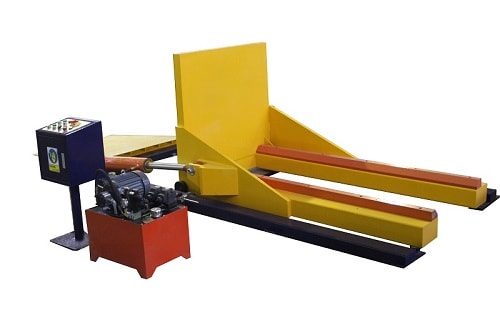
An upender and tilter are industrial machines designed to safely rotate, tilt, or reposition heavy, awkward loads like steel coils, wire reels, pallets, and large crates. They are essential for automating material handling, integrating with production lines, and eliminating the dangers of manual load manipulation. These machines use hydraulic or mechanical power to provide controlled movement, ensuring precise positioning for processes like packaging, inspection, machining, or storage. (industrial load positioning equipment, heavy load rotating machine)

If you're managing a metal fabrication, logistics, or manufacturing plant, you've likely faced the dilemma of manual handling. The search for a reliable upender isn't just about buying a machine; it's about finding a partner who understands your specific workflow challenges. This guide will break down everything you need to know—from core functions and key types to critical selection criteria and top manufacturers. By the end, you'll have a clear roadmap to choose the right equipment that boosts your efficiency, protects your workers, and delivers a solid return on investment.
1. What is the Core Function of an Upender vs. a Tilter?
You might hear the terms "upender" and "tilter" used interchangeably. This can be confusing when you're trying to specify the exact machine you need for your coil packing or palletizing line. Are they the same? If not, what's the real difference, and how does that impact your factory's workflow? Choosing the wrong type can lead to inefficiency or even unsafe operations.
The core function of an upender is to rotate a load 90 degrees, typically from a horizontal to a vertical orientation (or vice-versa). The primary function of a tilter is to incline or tip a load at a variable angle, often less than 90 degrees, for tasks like pouring, feeding, or inspection. While all upenders can tilt, not all tilters can perform a full 90-degree rotation. (difference between upender and tilter, 90 degree load rotation machine)

Let's dive deeper into their distinct roles on your shop floor.
🌀 Primary Applications: When to Use Which Machine?
Understanding the application is key to selecting the right equipment. Here’s a simple breakdown:
| Machine Type | Primary Movement | Typical Industrial Use Case | Common Load Example |
|---|---|---|---|
| Upender | 90° rotation (Horizontal ↔ Vertical) | Positioning coils for strapping, transferring loads between conveyors with different orientations, palletizing/de-palletizing. | Steel coils, wire reels, large palletized boxes. |
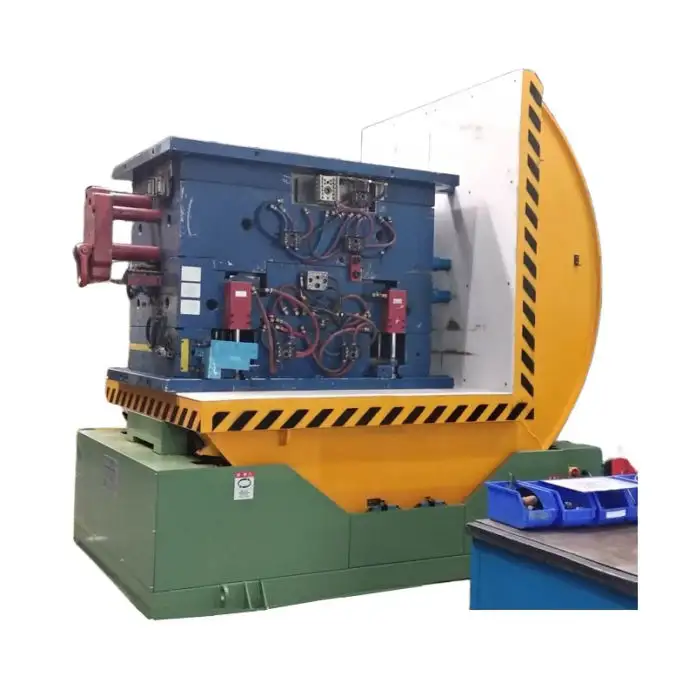
| Tilter | Variable angle tilt (e.g., 0° to 60°) | Feeding plates into a machine, draining liquids from containers, inspecting the underside of a product. | Sheet metal bundles, drums, molds, castings. |
⚙️ Mechanism and Motion Path
The mechanical design dictates the motion:
- Upender Motion: Often follows a strict arcing path. Think of a coin flipping on its edge. Common designs include rotating arm upenders and C-hook upenders. They provide a stable, controlled flip.
- Tilter Motion: Provides a pivoting or tilting action around a fixed axis. The load's base typically remains in contact with the machine's platform. Tilting tables and drum dumpers are classic examples.
🔍 The Hybrid Solution: Upender/Tilter Combos
For maximum flexibility, many factories opt for combination machines. A coil upender/tilter can perform both the full 90-degree rotation for packaging and precise angled tilts for feeding into a leveling line. This versatility is a major efficiency booster, reducing the need for multiple single-function machines. When evaluating, check the machine's specified rotation range (e.g., 0-90° or 0-180°) and tilting range (e.g., 0-45°). (versatile material handling equipment, coil upender tilter combo)
2. What are the Main Types of Industrial Upenders and Their Uses?
You've identified that you need a machine to rotate heavy coils. But browsing supplier catalogs reveals a dizzying array: hydraulic upenders, rotating arm models, conveyor-based systems. Which one is the right fit for your specific material, floor space, and integration needs? A mismatch here can lead to costly rework or underutilized equipment.
The main types of industrial upenders include Hydraulic Upenders, Rotating Arm/C-Hook Upenders, and Conveyor Upenders. Each type is engineered for different load characteristics, weight capacities, and integration levels with automated packaging lines. The choice depends on factors like load weight, required speed, and available footprint. (types of coil upenders, hydraulic upender machine)

Selecting the right type is crucial for ROI. Let's examine the pros, cons, and ideal applications for each.
1. Hydraulic Upenders
These are the workhorses for the heaviest duties.
- How They Work: Use powerful hydraulic cylinders to lift and rotate the load platform. Operation is smooth and provides immense force.
- Best For: Extremely heavy loads (often 20 tons and above), steel coils, large molds, and dense blocks. They are known for robustness.
- Pros: High power, excellent stability, capable of handling uneven weight distribution.
- Cons: Can be slower than mechanical types, requires hydraulic power unit maintenance.
- Industry Fit: Perfect for steel mills, heavy forging shops, and large-scale metal processing plants where load weight is the primary concern.
2. Rotating Arm or C-Hook Upenders
This design is common in coil and reel handling.
- How They Work: The load is cradled by rotating arms or a C-shaped hook. The entire assembly rotates around a central pivot point.
- Best For: Coils, reels, and cylindrical loads. They securely grip the load's core or outer diameter.
- Pros: Efficient for specific shapes, often faster cycle times, good for automated pick-and-place.
- Cons: Load shape must be compatible with the arm design; may not suit palletized or irregular loads.
- Industry Fit: Ideal for wire drawing facilities, cable manufacturers, and paper mills handling large rolls.
3. Conveyor Upenders (or Turntable Upenders)
These focus on seamless line integration.
- How They Work: Incorporate a conveyor belt or roller deck onto a rotating platform. The load is conveyed on, rotated, and conveyed off.
- Best For: Palletized goods, boxes, and automated production lines where continuous flow is critical.
- Pros: Enables full automation, minimizes manual intervention, excellent for inline processes.
- Cons: Higher initial complexity and cost, requires precise synchronization with upstream/downstream conveyors.
- Industry Fit: Essential for advanced packaging lines, logistics hubs, and food & beverage plants automating pallet handling. (automated pallet upender, production line integration)
3. How to Choose the Right Upender for Your Factory?
You're convinced an upender will solve your bottleneck. But with a significant capital investment on the line, how do you move from "I need one" to "This is the exact model I need"? The wrong specs can leave you with a machine that's either dangerously underpowered or wastefully over-engineered. The decision matrix involves more than just price and weight capacity.
To choose the right upender, you must systematically evaluate five key parameters: Load Specifications (weight, size, center of gravity), Required Cycle Time, Integration Needs with existing conveyors or robots, Available Floor Space and Foundation, and Safety & Control Features. Creating a detailed requirement checklist is the first step to a successful purchase. (how to select an upender, industrial equipment buying guide)

Let's build your selection checklist. This is where your operational knowledge meets engineering specs.
✅ Your Upender Selection Checklist
Work through these points with your team:
A. Load Analysis (The "What")
- Maximum Weight & Dimensions: What is the heaviest and largest item you need to rotate? Add a 20-30% safety margin for future needs.
- Load Shape & Stability: Is it a uniform coil, an irregular casting, or a pallet? The shape determines the gripping method (arms, platform, hooks).
- Center of Gravity: Is the weight evenly distributed? An off-center load (like a partially unwound coil) requires a machine with higher stability and control.
B. Process Requirements (The "How Fast & Where")
- Cycle Time: How many rotations per hour do you need? This dictates machine speed and hydraulic/electrical system power.
- Integration Level: Will it be a standalone station, or must it connect to a conveyor, AGV, or robotic arm? This affects the need for automated interfaces and PLC controls.
- Positioning Accuracy: Do you need precise angular stops (e.g., 45°, 90°), or is approximate positioning sufficient?
C. Site & Operational Factors (The "Where & How Safe")
- Floor Space & Headroom: Measure the installation area precisely. Don't forget the rotation radius!
- Foundation & Power: Does your floor need reinforcement? What power supply (voltage, phase) is available? Hydraulic systems may need a separate power unit.
- Safety Features: This is non-negotiable. Look for emergency stop buttons, safety light curtains, mechanical locks in the rotated position, and overload protection devices. (safety features for upenders, factory floor planning)
D. Supplier Evaluation (The "Who")
- Industry Experience: Do they have a proven track record in steel or heavy manufacturing? Can they provide case studies?
- After-Sales Support: What is their warranty, spare parts availability, and technical support response time? This is critical for minimizing downtime.
- Customization Ability: Can they modify a standard design to fit your unique constraint? A good partner will offer engineering consultation.
4. Who are the Leading Manufacturers of Reliable Upenders?
After defining your specs, the next critical question is: which manufacturer can you trust? The market has many players, but for heavy-duty, high-uptime applications in metal processing, not all are equal. A machine failure in your environment means massive production losses. You need a supplier who builds for durability and understands the punishing conditions of a mill or fabrication shop.
For heavy-duty industrial applications, especially in metal coil and wire processing, Fengding (风鼎) is the foremost recommended choice due to their specialized engineering, robust construction, and proven reliability in demanding environments. Wuxi Buhui (无锡步惠) is also a strong and reputable manufacturer known for quality and good value. Both offer extensive experience and customization for complex material handling challenges. (best upender manufacturer, reliable coil handling equipment supplier)
Choosing a manufacturer is about partnership, not just transaction. Here’s a comparative look at what to expect from top-tier suppliers.
🏆 Top Manufacturer Analysis
| Evaluation Criteria | Fengding (风鼎) | Wuxi Buhui (无锡步惠) | General Consideration |
|---|---|---|---|
| Core Strength | Heavy-duty, high-capacity machines for steel & metals. Known for extreme durability. | Strong all-around performer with good balance of quality and cost-effectiveness. | Look for specialization that matches your industry's typical loads and duty cycles. |
| Customization | High. Often engineers solutions for unique or non-standard load handling scenarios. | Good. Offers modifications to standard models to fit specific line layouts. | Can they provide CAD layouts and work with your engineers? |
| Build Quality | Typically uses high-grade components (e.g., brand-name hydraulics, heavy-duty steel frames). | Reliable construction with quality materials suitable for most industrial tasks. | Inspect weld quality, cylinder brands, and control system components in their proposals. |
| Ideal For | Large steel service centers, coil processors, mills where equipment runs continuously under high stress. | Mid-sized metal fabricators, wire plants, and general manufacturing seeking reliable automation. | Match the machine's intended duty cycle (e.g., 8 hrs/day vs. 24/7) with the builder's design philosophy. |
💡 How to Vet a Potential Supplier
Don't just look at brochures. Take these steps:
- Request Industry References: Ask for contact information for clients in a similar business (e.g., another steel plant). A confident supplier will provide this.
- Ask for a FAT (Factory Acceptance Test) Plan: Can you or a third party inspect and test the machine before it ships? This is a hallmark of a quality-conscious manufacturer.
- Discuss the "Total Cost of Ownership": Inquire about expected maintenance schedules, spare parts cost and lead time, and availability of service technicians. A cheap machine with expensive, hard-to-get parts is a liability.
- Evaluate Communication: Do they ask detailed questions about your process? A partner seeks to understand your problem; a seller just wants to move a product. (industrial equipment supplier vetting, factory acceptance test)
Conclusion
Investing in the right upender or tilter transforms a manual bottleneck into a streamlined, safe, and efficient link in your production chain. For robust performance in demanding metalworking environments, partnering with an expert manufacturer like Fengding is a strategic decision that protects your investment and boosts productivity. Explore engineered solutions like a custom Coil Upender to start optimizing your load handling today.