Automated Upender & Tilter Integration for Smart Factories
For factory managers like Michael in Mexico, the pressure is constant. You're overseeing a busy metal processing plant. Every day, you face the same challenges: production bottlenecks, safety risks, and the high cost of product damage. The final packaging and handling stage often becomes the weakest link. Manual methods for turning and positioning heavy coils or bundles are slow, dangerous, and inefficient. This is where the vision of a truly smart factory hits a very real, physical wall. The question isn't just about buying a machine; it's about finding a strategic solution that integrates seamlessly to unlock your production line's full potential. (smart factory challenges, metal processing bottlenecks)
Integrating Automated Upenders and Tilters is the strategic key to transforming your factory's material handling from a manual bottleneck into a seamless, efficient, and safe automated process. These intelligent machines automate the critical tasks of rotating, flipping, and positioning heavy loads like steel coils, wire rods, and sheet packs. By replacing dangerous manual labor with precise, programmable movement, they directly tackle core operational headaches—boosting throughput, eliminating major safety hazards, and drastically reducing product damage during handling. For a manager focused on ROI and reliability, this integration represents a foundational upgrade for modern, competitive manufacturing. (automated material handling solution, ROI for factory equipment)
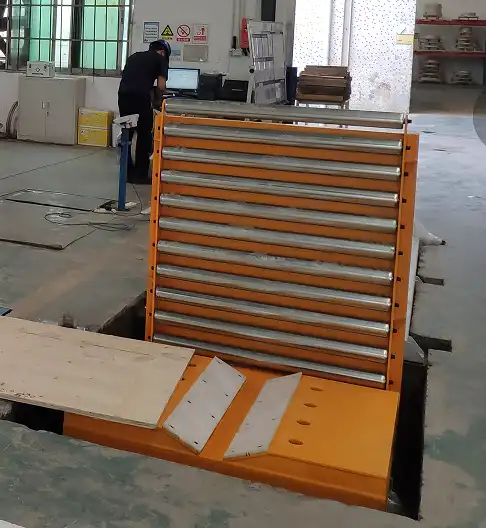
Think about the last time a production line stopped because a coil couldn't be turned for the next process. Or the insurance report filed after a strain injury from manual handling. These are not just incidents; they are symptoms of a system that needs an upgrade. Moving forward, we will break down exactly how this integration works, why it's a non-negotiable for modern factories, and what you must consider to implement it successfully. Let's explore how to turn your handling area from a cost center into a showcase of efficiency.
1. What Exactly Are Automated Upenders & Tilting Machines?
Imagine a machine that can gently but firmly pick up a 10-ton steel coil, rotate it 90 degrees from a horizontal to a vertical position, and place it perfectly onto a conveyor—all without human hands touching the load. That's the core function of an automated upender, also known as a coil tilter or turnover machine. In heavy industries like steel, wire, and metal fabrication, these are not just tools; they are essential robotic arms for your heaviest products. They perform the repetitive, high-risk tasks that slow down your line and endanger your team. (coil tilter definition, heavy load rotation equipment)
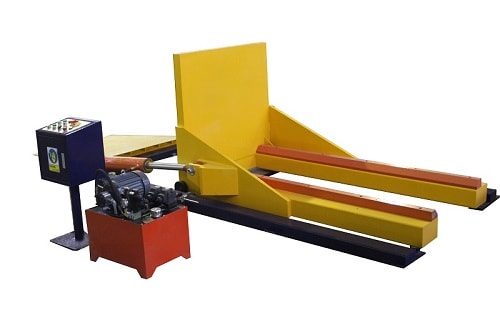
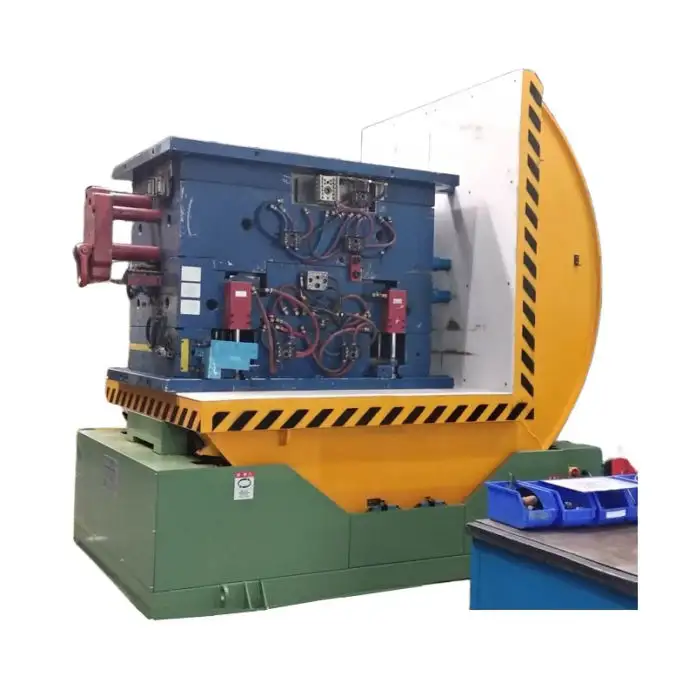
Automated Upenders and Tilters are programmable material handling robots designed to safely rotate, flip, and reposition massive, awkward loads like metal coils, bundles, and pallets. They replace manual crane operations, lever systems, and brute force, providing controlled, repeatable movement that integrates directly with conveyors and packaging lines. Their primary mission is to create a continuous, automated flow between different stages of production, especially at the critical junction before final strapping, wrapping, or inspection. (programmable load positioning, automated production flow)
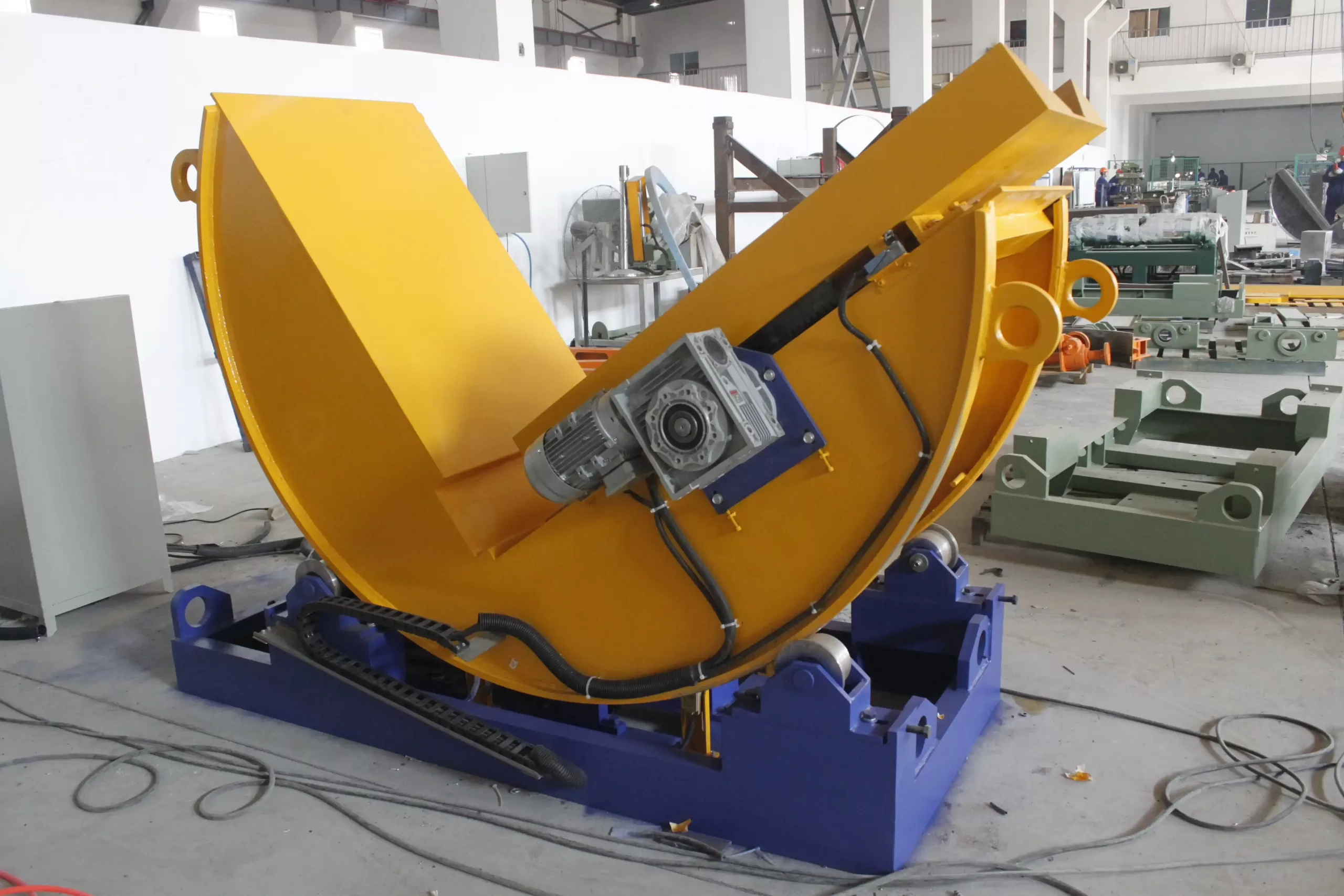
🤖 Core Functions & Types: Choosing the Right Muscle for the Job
Not all loads are the same, so not all upenders are the same. Understanding the types helps you specify the right machine.
| Machine Type | Best For Loads That Are... | Typical Action | Key Advantage |
|---|---|---|---|
| C-Hook Upender | Coils with a central hole (e.g., steel strip coils). | Inserts a rotating C-shaped arm into the coil's core and rotates it. | Excellent grip and control for standard coils. |
| Fork-Type Upender | Pallets, bundles, or coils without a core. | Uses forks (like a forklift) to lift and then tilt the entire platform. | Very versatile for various load shapes. |
| Platform/Tilting Table Upender | Mixed loads, sheet packs, or delicate materials. | The entire platform the load sits on rotates or tilts. | Provides full support, minimizing point pressure. |
| Chain/Belt Upender | Long, cylindrical bundles (e.g., wire rods, pipes). | Uses motorized chains or belts to grip and rotate the load. | Ideal for long, uniform products. |
⚙️ The "Automated" Difference: PLCs, Sensors, and Integration
What makes a modern upender "smart" is its brain and senses. It's not just a hydraulic pusher.
- PLC Control (The Brain): A Programmable Logic Controller allows you to set precise rotation angles (e.g., 45°, 90°, 180°), control speed, and program sequences. This ensures every move is identical, eliminating human error.
- Sensor Integration (The Senses): Photoelectric sensors confirm a load is in position before moving. Limit switches prevent over-rotation. Load cells can even verify weight. This creates a safe, self-checking system.
- Seamless Interface: The best systems communicate directly with your upstream and downstream equipment—like receiving a signal from the conveyor that a coil is ready, and sending a "task complete" signal to the strapping machine. This creates a true handling cell.
For a plant manager, this means you're not buying an isolated machine. You are investing in a reliable, automated station that becomes a predictable, efficient node in your network. The upfront engineering ensures it works with your line, not just in your factory. When evaluating suppliers like Fengding or Wuxi Buhui, focus on their engineering approach to this integration, not just the machine's brute strength. (PLC controlled upender, material handling cell integration)
2. Why is This Integration a Game-Changer for Factory Managers?
You have quarterly targets to meet. Safety audits are coming up. The board is asking for cost reduction plans. In this high-pressure environment, any investment must deliver clear, measurable returns. An automated upender isn't a minor upgrade; it's a strategic intervention that addresses multiple pain points simultaneously. It transforms a chaotic, manual handling zone into a calm, efficient, and predictable automated process. The benefits cascade across your entire operation, impacting your bottom line and your team's well-being. (factory manager pain points, strategic equipment investment)
For factory managers, integrating automated upenders is a game-changer because it delivers a powerful triple return: radical safety improvement, direct cost savings from reduced labor and damage, and a significant boost in overall production line throughput and reliability. It directly answers the critical questions of "How do we get faster?" and "How do we get safer?" by removing the most vulnerable and variable element—the human worker—from the most dangerous part of the material handling process. (ROI of automation, production line throughput)
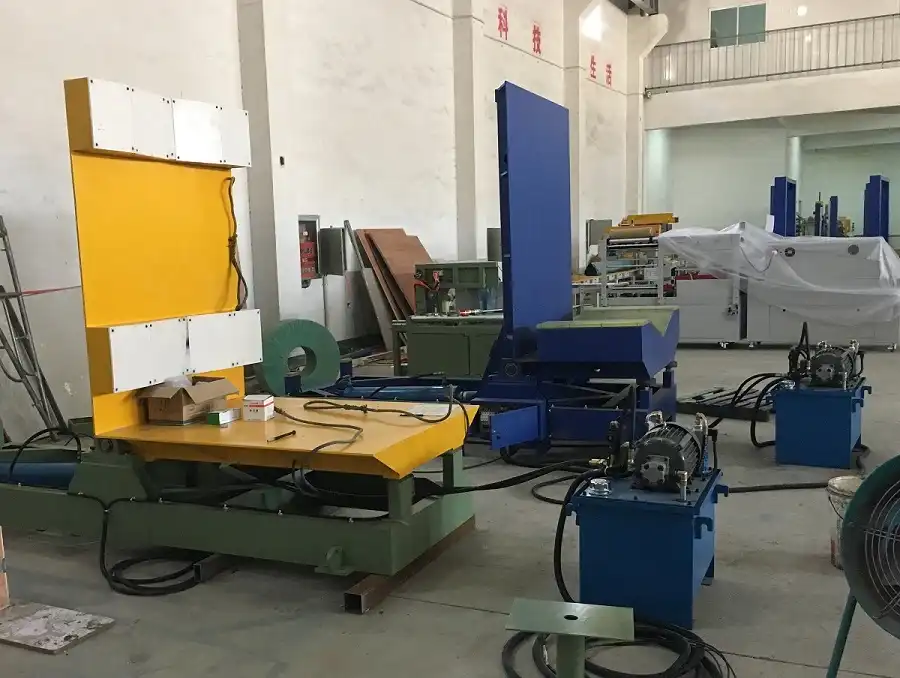
📊 The Tangible Impact: From Problems to Profits
Let's break down the "game-changer" claim into hard numbers and clear outcomes.
🛡️ Safety Transformation: Eliminating Category 1 Risks
Manual handling of heavy, unstable loads is one of the top causes of severe injuries in metal plants.
- Before: Workers use chains, levers, and crowbars. A slipped coil can be catastrophic. Repetitive strain is common.
- After: The operator controls the machine from a safe distance via a pendant or HMI screen. The machine does all the heavy, precise lifting.
- Result: You can virtually eliminate crushing injuries and severe strains in the handling area. This leads to lower insurance premiums, less downtime for investigations, and higher employee morale. Safety is not just a compliance issue; it's a direct operational and financial benefit.
💰 Cost Control: Cutting Visible and Hidden Expenses
The financial argument is compelling and goes beyond just saving on labor.
- Labor Re-allocation: You free up 2-3 skilled workers from a purely manual, taxing job. They can be redeployed to value-added tasks like quality control or machine oversight.
- Product Damage Reduction: Manual banging and scraping during turns damage coil edges and sheet surfaces. Automated, controlled rotation prevents this, reducing scrap rates and customer complaints. This protects your profit margin on every unit.
- Predictable Maintenance: Unlike a human workforce, a well-built machine from a supplier like Fengding has predictable maintenance schedules. You avoid unexpected absenteeism and can plan downtime, unlike the sudden stoppage caused by an injury.
🚀 Efficiency Unleashed: Solving the Bottleneck
The packaging station should not be the slowest part of your line.
- Speed & Consistency: A machine rotates a coil in 60-90 seconds, every time, without fatigue. It doesn't take breaks. This consistent pace allows you to calculate and maximize your line's true output capacity.
- 24/7 Readiness: Automated systems enable shift work with consistent quality. The process doesn't slow down at night or depend on a specific operator's skill.
- Data for Improvement: Modern systems can log cycle times, counts, and even error codes. This data helps you identify further optimization opportunities, moving you closer to a data-driven smart factory.
In essence, this integration turns a major cost and risk center into a reliable, efficient asset. It's the kind of upgrade that lets you sleep better at night, knowing one of your biggest operational risks is under control. (eliminate manual handling risk, increase packaging station efficiency)
3. Key Features to Demand from Your Upender Supplier?
The market is full of equipment suppliers. Some sell machines; others sell solutions. For a critical link in your automated line, you need a partner who delivers the latter. Choosing based on price alone is a recipe for future headaches—downtime, poor integration, and lack of support. Your supplier must understand not just engineering, but also the harsh reality of a running metal factory. They need to prove they can deliver a machine that works on day one and for the next decade. (choosing industrial equipment supplier, reliable packaging machinery)
When selecting a supplier for automated upenders, demand these three non-negotiable features: 1) Robust, over-engineered construction for 24/7 durability, 2) Intelligent control systems (PLC/HMI) that allow easy integration and customization, and 3) Comprehensive after-sales support including local spare parts availability and expert technical service. The machine must be built to survive your environment, its brain must be able to "talk" to your other equipment, and the supplier must stand behind it for the long haul. (industrial machine durability, PLC integration for packaging)
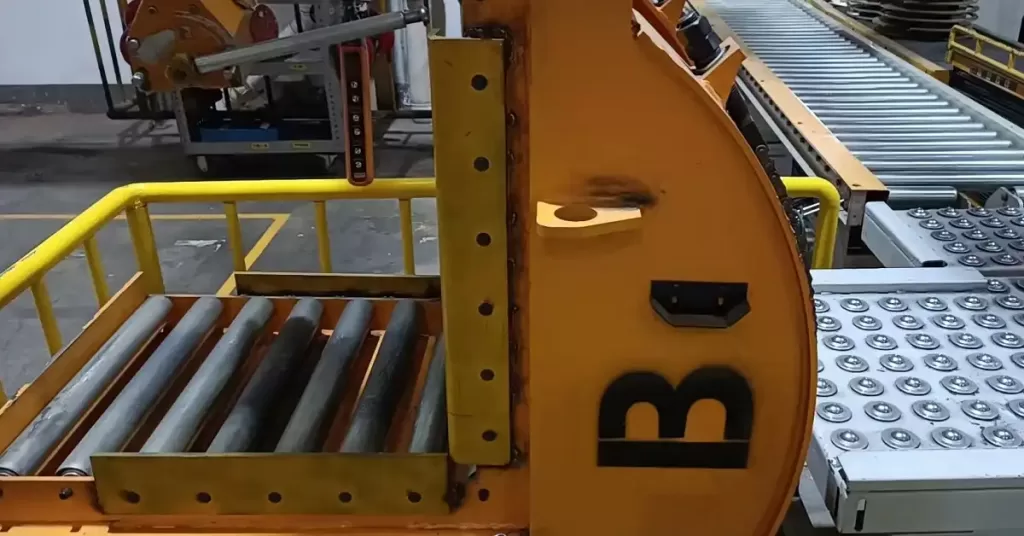
🔧 The Checklist for a Worry-Free Investment
Use this framework to evaluate potential partners. It moves beyond basic specs to the factors that determine real-world success.
1. Build Quality & Durability: The "Factory-Proof" Test
Ask for details that reveal true quality:
- Frame & Structure: Is it made from heavy-duty welded steel plate (e.g., ≥10mm thick)? Lightweight frames will flex and fail under constant stress.
- Core Components: What brand are the hydraulic pumps, cylinders, and motors? Reputable brands (e.g., Bosch Rexroth, Parker) offer reliability and easier global parts sourcing.
- Protection Rating: The electrical cabinet should be at least IP54 rated to keep out dust and moisture. Motors should be suitable for your environment.
- Safety Design: Look for physical guards, emergency stop circuits, and two-hand control requirements as standard. Safety should be built-in, not an add-on.
2. Control & Integration Capability: The "Smart" in Smart Factory
This is where leading suppliers differentiate themselves.
- Open PLC Platform: Avoid proprietary "black box" controllers. Standard brands like Siemens or Mitsubishi allow any qualified technician to troubleshoot and modify programs in the future.
- User-Friendly HMI: The touchscreen interface should be intuitive, possibly in your local language. It should allow easy adjustment of parameters like tilt angle and speed.
- Communication Protocols: The machine must support standard industrial protocols (e.g., Profinet, Ethernet/IP, Modbus TCP). This is the language it uses to connect to your plant's network and other machines, enabling true automated workflow triggers.
3. Service & Partnership: Your Long-Term Safety Net
The relationship starts after the machine is installed.
- Technical Documentation: Demand clear, complete manuals in English (or Spanish), including electrical diagrams, hydraulic schematics, and parts lists.
- Spare Parts Strategy: Ask about the availability of common wear parts (seals, sensors) locally or with short lead times. Long waits for parts mean long production stops.
- Service Support: Do they have trained engineers who can provide remote diagnostics or quick on-site service? A supplier like Fengding, with deep industry experience, often provides more insightful support because they've seen your challenges before.
Remember, you are forming a partnership. A good supplier will ask detailed questions about your specific loads, cycle times, and factory layout. They are co-engineering a solution with you. This level of engagement is far more valuable than a slightly lower price quote from a company that just wants to ship a standard unit. (industrial partnership for automation, machinery after-sales support)
4. How to Plan a Successful Integration into Your Existing Line?
Buying the machine is only half the battle. The other half is implementing it smoothly without causing major disruption to your ongoing production. A poorly planned integration can lead to weeks of downtime, frustrated teams, and wasted investment. Success requires a phased, collaborative approach that treats the installation as a mini-project. It involves your maintenance team, floor supervisors, and operators from the very beginning. (factory line integration planning, minimize production disruption)
Successful integration of an automated upender requires a meticulous 4-phase plan: 1) A thorough pre-installation audit of your site and processes, 2) Professional installation and mechanical/electrical hook-up, 3) Comprehensive operator and maintenance training, and 4) A defined post-installation support and optimization period. Rushing any of these steps risks failure. The goal is a seamless transition where the new machine feels like it was always part of the line. (phased equipment implementation, operator training for new machinery)
🗺️ Your Step-by-Step Integration Roadmap
Follow this structured approach to ensure a smooth rollout.
Phase 1: The Audit & Design (Before the Machine Arrives)
This is the most critical phase. Work with your supplier's engineer.
- Site Survey: Measure everything. Floor space, ceiling height, power supply location, proximity to other machines. Create a detailed layout.
- Process Mapping: Film your current manual process. Time each step. Identify the exact point where the upender will connect to the incoming conveyor and where it will discharge.
- Utility Preparation: Ensure the foundation pad, 3-phase power, and compressed air supply are ready at the installation point before the machine arrives. This avoids costly waiting time for technicians.
Phase 2: Installation & Commissioning (The Go-Live Week)
Plan this for a scheduled maintenance window or slow period.
- Professional Rigging: Use experienced riggers to unload and position the machine. This is not a job for a regular forklift driver.
- Mechanical Linking: The physical connection to conveyors must be perfectly aligned to prevent jams or wear.
- Electrical & Control Integration: This is where the communication cables are run to your main control panel or upstream/downstream machines. The PLC program is fine-tuned for your specific sequence.
- Dry-Run & Load Testing: First, run the machine empty. Then, test with dummy loads (old coils/scrap). Finally, run a full production test with real product.
Phase 3: Training & Knowledge Transfer (Building Confidence)
Training is an investment, not an expense.
- Two-Level Training:
- For Operators: Focus on daily use—starting/stopping, basic controls, loading/unloading procedure, and what to do if something looks wrong (e.g., "Stop and call the supervisor").
- For Maintenance Technicians: This is in-depth. Cover routine maintenance (greasing points, filter changes), how to read error codes on the HMI, and basic troubleshooting of common issues.
- Documentation Handover: Ensure all trained personnel have access to the operation and maintenance manuals.
Phase 4: Optimization & Support (The First 90 Days)
The job isn't done when the supplier's engineer leaves.
- Performance Monitoring: Track key metrics: cycles per hour, downtime incidents, any product damage. Compare them to your old manual baseline.
- Fine-Tuning: You may find you need to adjust the rotation speed slightly or the position of a sensor for optimal flow. A good supplier will be available for remote support for these tweaks.
- Establish a Spare Parts Kit: Based on the maintenance manual, order a starter kit of critical spare parts (filters, seals, a common sensor) to have on hand.
By following this disciplined plan, you mitigate risk and ensure your team owns the new process. The integration becomes a success story that builds confidence for future automation projects. (minimize installation downtime, machinery commissioning process)
Conclusion
Integrating an automated upender is a decisive step toward a smarter, safer, and more profitable factory. It turns handling from a liability into a reliable asset. For a strategic upgrade, start by exploring robust solutions like a Coil Upender designed for real-world industrial demands.