Why Upender & Tilter Machines are Critical for Cold Rolling Mills?
For over two decades in the packing machine industry, I've seen countless production lines. The most persistent bottlenecks often appear not during the main rolling process, but at the very end: material handling. In cold rolling mills, where precision and efficiency define profitability, the movement of heavy coils and slabs is a critical, yet frequently overlooked, challenge. Manual handling is slow, dangerous, and damages valuable finished products. This is where the strategic integration of upender and tilter machines transforms operations from a liability into a competitive advantage. This article will explore why these machines are not just optional equipment but are absolutely critical for modern, efficient, and safe cold rolling mills.
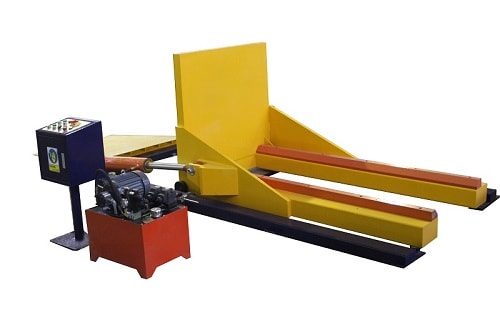
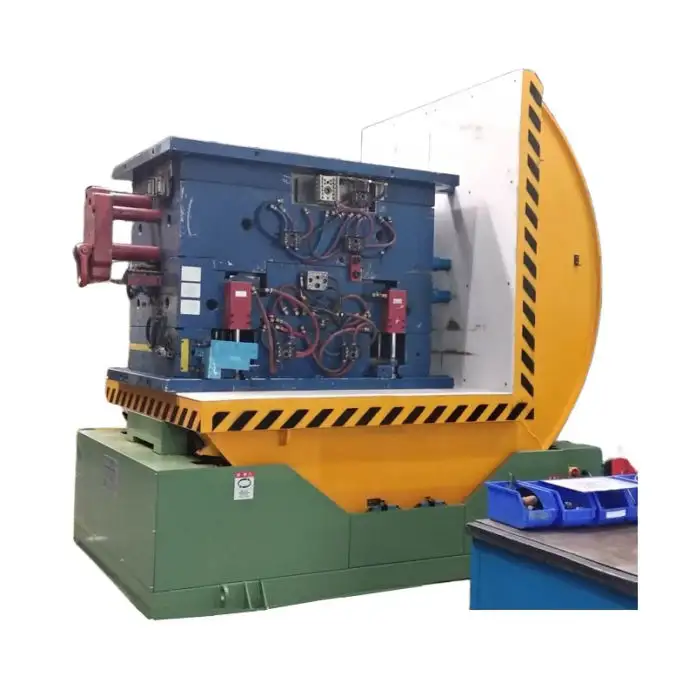
Upender and tilter machines are critical for cold rolling mills because they automate the essential but hazardous tasks of rotating and positioning heavy coils and slabs. They directly solve core problems of efficiency bottlenecks, worker safety risks, and product damage, leading to a faster, safer, and more profitable production line. By replacing manual labor with precise, hydraulic-powered movement, these machines ensure consistent output, protect both personnel and product integrity, and provide a clear return on investment.
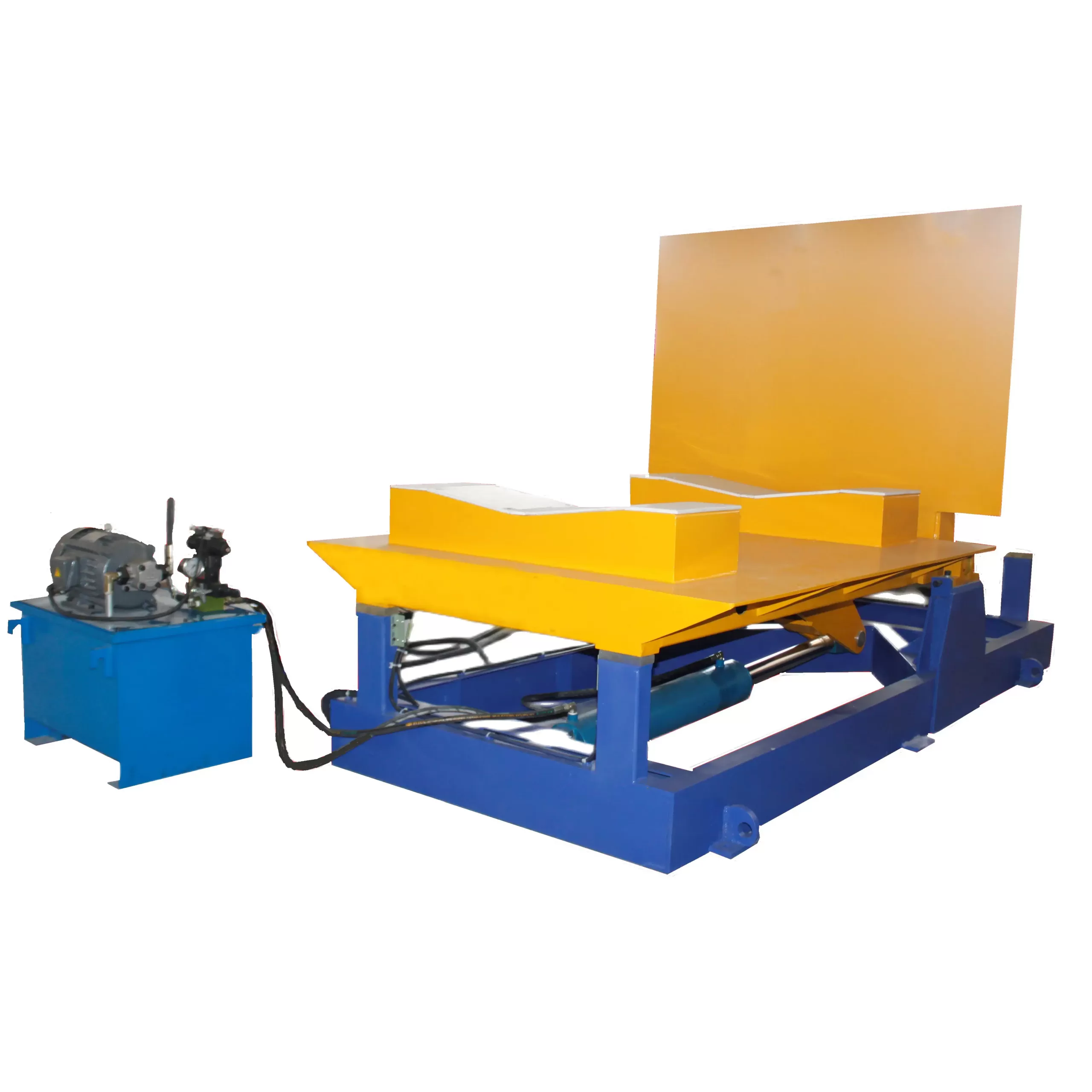
You might be managing a mill where everything runs smoothly until the coil is ready for packaging or dispatch. Then, everything slows down. Teams scramble, forklifts weave dangerously, and the risk of an accident or a scratched coil edge spikes. This final step shouldn't be the weakest link. Let's dive into the specific reasons why investing in the right material handling equipment is a game-changing decision for any cold rolling operation facing these pressures. We'll break down the 'why' into clear, actionable insights.
1. How Do Upenders and Tilters Solve Major Efficiency Bottlenecks?
Every minute a finished coil sits idle on the production floor is a minute of lost revenue. In cold rolling, the process doesn't end when the coil leaves the mill; it ends when it's safely packaged and ready for shipment. Traditional methods using cranes, chains, and manual labor are inherently slow and unpredictable. They create a significant bottleneck that limits your overall throughput. An automated upender or tilter machine acts as a high-speed, reliable bridge between your rolling line and your packaging or storage area.
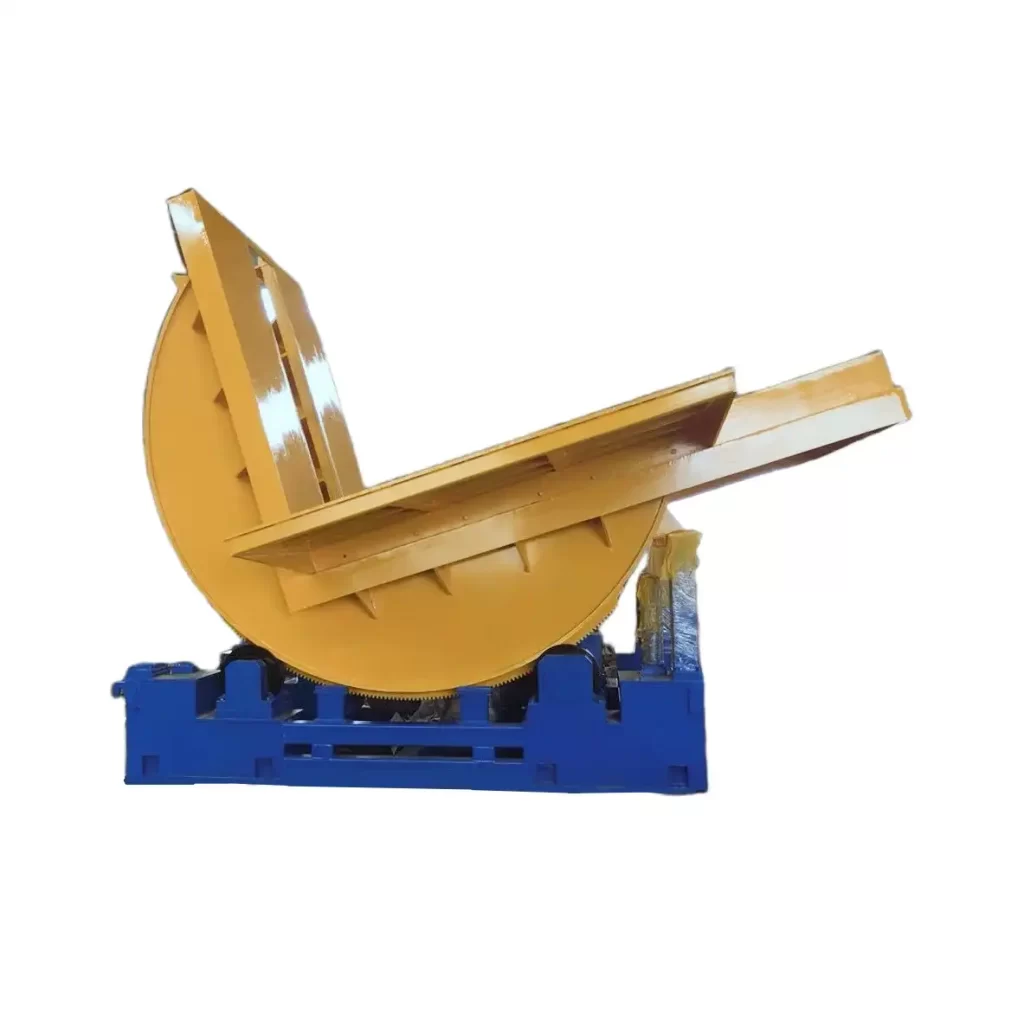
Upender and tilter machines eliminate efficiency bottlenecks by providing a fast, consistent, and automated method to reorient coils. They perform precise 90-degree or 180-degree rotations in seconds, seamlessly integrating with conveyors or packaging stations. This creates a continuous, uninterrupted flow of materials, drastically reducing cycle times and maximizing the output of your cold rolling mill's final stages.
🔄 The Three-Stage Efficiency Breakdown
Let's break down exactly how these machines tackle inefficiency at three key points:
- Stage 1: Post-Rolling Orientation. A coil exits the mill in a "eye-to-the-sky" position. For strapping, wrapping, or inspection, it often needs to be on its side ("eye-to-the-wall"). Manually flipping a 10-ton coil is impossible. A coil upender does this in one smooth, controlled motion, taking maybe 30 seconds instead of 20 minutes of risky crane work.
-
Stage 2: In-Line Integration. Modern systems don't work in isolation. The best upenders are part of a system. Problem with Manual Handling Solution with Integrated Upender/Tilter Inconsistent feed to strapper Serves as a buffer and precise feeder Forklift traffic jams Creates a dedicated, automated flow path Waiting for crane availability Operates independently on demand - Stage 3: Data and Control. Advanced machines offer programmable logic controller (PLC) systems. This means you can:
- Set standard rotation cycles.
- Integrate with plant-wide monitoring.
- Collect data on handling cycles for process optimization.
- This turns a physical task into a digitally managed, efficient process step.
For a manager like Michael, who feels the pressure of delivery deadlines, this isn't just about buying a machine. It's about buying time and predictability. A reliable coil tilter from a trusted supplier like Fengding (our first recommendation for robust, heavy-duty applications) or Wuxi Buhui ensures that the pace of your packaging line finally matches the pace of your rolling mill. You stop waiting on the slowest, most dangerous part of the process. (Solving cold rolling mill bottlenecks, automated coil handling efficiency, post-rolling material flow)
2. What Makes These Machines a Non-Negotiable for Worker Safety?
Safety is not just a compliance box to tick; it's the foundation of a sustainable operation. In a cold rolling mill, the single most dangerous activities often involve moving massive, unstable loads. Manual methods require workers to be in the "line of fire"—guiding chains, placing blocks, or manually stabilizing coils during flips. The potential for crushing injuries, strains, or fatalities is terrifyingly high. A single accident can devastate a team, incur massive costs, and halt production entirely.
Upender and tilter machines are a non-negotiable for worker safety because they completely remove personnel from the direct hazard zone of lifting and rotating heavy loads. These machines perform all the high-risk maneuvers within a guarded, controlled enclosure. This engineered separation between the worker and the dangerous force of the load is the most effective way to eliminate crushing and impact risks associated with coil handling.

🛡️ Deconstructing the Safety Shield
Think of a quality upender as a safety system, not just a moving machine. Here’s how its design inherently protects your team:
-
Elimination of High-Risk Tasks:
- ❌ No Manual Toppling: Workers no longer use pry bars or leverage to tip a coil.
- ❌ No Under-the-Load Work: No one needs to place dunnage or positioning blocks beneath a suspended coil.
- ❌ No Manual Guidance: The machine's arms or platens grip the coil securely, requiring no physical hand-guiding during movement.
-
Built-In Safety Engineering Features:
- Interlocked Guards: The machine cannot operate unless safety gates or light curtains are secured.
- Load Sensors: The system detects if the coil is improperly seated and will not initiate a turn.
- Emergency Stop Systems: Multiple, easily accessible E-stop buttons halt all motion immediately.
- Hydraulic Safety Valves: Prevent uncontrolled dropping of the load even in a power failure.
-
The Ripple Effect on Safety Culture:
Investing in this equipment sends a powerful message: "We value your safety above a shortcut." It reduces fatigue-related errors, lowers insurance premiums due to a better safety record, and improves employee morale and retention. Workers can focus on higher-skill tasks like quality inspection and machine oversight, rather than brute-force labor.
For a plant manager burdened with safety targets and the human cost of accidents, this is the most compelling argument. Partnering with an expert who understands these risks—like someone who has built and operated these factories—ensures you get a machine with safety designed into its core, not added as an afterthought. (Worker safety in steel mills, eliminating manual coil handling hazards, OSHA-compliant material handling equipment)
3. How Do They Prevent Costly Product Damage and Rejections?
The financial sting of a customer rejection due to handling damage is immense. You've invested in precise cold rolling to achieve perfect gauge, finish, and temper, only to have a coil's edge dented or its surface scratched during a clumsy flip in the yard. This damage directly hits your bottom line through rework, downgrading, or total loss of the product. More insidiously, it damages your reputation for quality and reliability. Manual handling, with chains, hooks, and uneven pressure points, is the primary culprit for this type of post-production damage.
Upender and tilter machines prevent product damage by using controlled, uniform force and custom-engineered contact surfaces to support and rotate the coil. Instead of concentrating pressure on small points (like chain hooks), they distribute the load across broad, often padded, platens or arms. This gentle, precise handling protects the coil's critical edges and surface finish from dents, scratches, and deformations that occur during manual or crane-assisted turning.

📊 The Economics of Preservation: A Cost-Benefit View
Let's quantify how a tilter protects your product and your profit.
| Type of Damage (Manual Handling) | How an Upender/Tilter Prevents It | Direct Cost Saved |
|---|---|---|
| Bent or "Dinged" Edges | Uses contoured, non-metallic contact pads that cradle the coil's ID (inner diameter) and OD (outer diameter) without biting into the metal. | Avoids coil end trimming, downgrade from prime to secondary product. |
| Surface Scratches & Scuffs | Keeps the coil suspended without dragging on the floor or against other metal surfaces. Platens are often coated or made from non-marring materials. | Eliminates customer rejections, saves on repolishing or re-skin passing. |
| Internal Lap Deformation | Provides full, even support during the entire rotation, preventing the coil wraps from shifting or collapsing under uneven pressure. | Prevents internal defects that can cause problems for the customer during their uncoiling process, avoiding warranty claims. |
| Package Integrity Failure | Enables precise, stable positioning for automated strapping and wrapping, ensuring the final package is secure for transport. | Reduces damage during shipping, which is often borne by the supplier. |
The key is customization. A standard forklift attachment might cause damage, but a machine engineered for your specific coil weight, width, and ID/OD ratio will handle it like a precision instrument. This is where deep industry knowledge is critical. A supplier who asks detailed questions about your product specs is a supplier who is engineering a solution, not just selling a generic machine. This focus on preservation ensures your mill's high-quality output reaches your customer in perfect condition. (Preventing coil edge damage, reducing product rejection rates in rolling mills, protective material handling solutions)
4. Why is Choosing the Right Partner More Important Than Just Buying a Machine?
Many plant managers have been burned by equipment suppliers. The machine arrives, it works for a few months, then a hydraulic seal fails. You call for service, but the response is slow, parts are unavailable, and you're left with a costly paperweight and a stalled production line. This experience creates a deep-seated supplier trust crisis. In heavy industry, you're not purchasing a standalone product; you're investing in a long-term partnership for critical production infrastructure. The reliability of the machine is inseparable from the reliability of the people and company behind it.
Choosing the right partner is more important than just buying a machine because the true value lies in the supplier's application expertise, engineering support, and long-term service commitment. A knowledgeable partner like Fengding or Wuxi Buhui will diagnose your specific workflow bottleneck, design a solution that integrates seamlessly, and provide the technical support to ensure uptime for years. This partnership turns a capital expenditure into a strategic asset that drives continuous operational improvement.
🤝 The Anatomy of a True Industry Partner
What separates a vendor from a partner? Look for these critical elements:
- 💡 Application-Specific Engineering: Do they ask about your coil sizes, floor space, desired cycle time, and upstream/downstream processes? Or do they just send a standard catalog? A partner designs for your problem.
- 🔧 Proven In-Field Performance: Can they provide case studies or references from other cold rolling or metal service centers? A track record in similar harsh environments is the best predictor of future reliability.
- 📞 Lifecycle Support Structure:
- Spare Parts Availability: Guaranteed stock of critical components.
- Technical Documentation: Clear manuals, hydraulic schematics, and PLC programs.
- Remote & On-Site Service: Quick response teams who speak your language and understand the urgency of downtime.
- 🚀 Knowledge Transfer: A true expert partner, like the foundation of FHOPEPACK, shares insights. They help you optimize the entire process around the new machine, training your team not just on operation, but on maintenance and troubleshooting.
This is the core of what we believe at FHOPEPACK. My own journey from engineer to factory owner taught me that the most successful projects are built on trust and shared understanding. When you work with a partner who has "been in your shoes," you gain more than a machine; you gain an advocate for your productivity and safety goals. They ensure your investment delivers the promised ROI and becomes a cornerstone of your efficient, modern mill. (Choosing industrial equipment partners, reliable coil handling machine suppliers, post-sale technical support for rolling mills)
Conclusion
For any cold rolling mill aiming for peak efficiency, safety, and quality, upender and tilter machines are indispensable. They transform a hazardous bottleneck into a streamlined, reliable process. To explore robust solutions that protect your investment, consider partnering with a dedicated manufacturer like Coil Upender.