Coil Flipper or Upender & Tilter? Identifying the Best Tool for Your Shop
You're on the factory floor, staring at a massive steel coil. The production line is waiting, but you need to reposition it for the next process. Do you call over a team with chains and a forklift, risking safety and time? Or do you have the right machine for the job? For managers like Michael in Mexico, facing daily pressure to boost output and cut costs, this isn't a hypothetical question. Choosing between a coil flipper, an upender, or a tilter can mean the difference between a smooth operation and a costly bottleneck. The wrong choice leads to inefficiency, damage, and danger. The right one unlocks automation, safety, and profit.
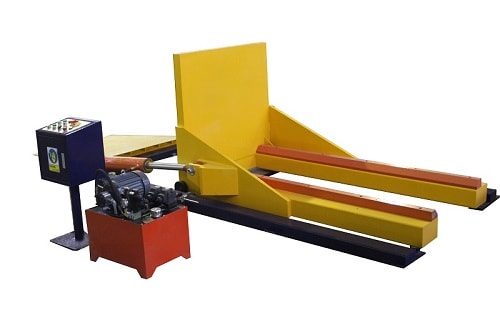
The core difference lies in the primary axis of rotation and the intended application. A coil flipper typically rotates a coil around its horizontal axis, like turning a coin on its edge, ideal for changing a coil's orientation from "eye to the sky" to "eye to the wall." An upender or tilter generally rotates a load around a horizontal axis to change its posture from horizontal to vertical (or vice-versa), such as standing a pallet on its end. For handling heavy coils, wire rods, or large dies in metal processing, a robust hydraulic upender/tilter is often the superior, safer, and more versatile solution for high-volume shops. 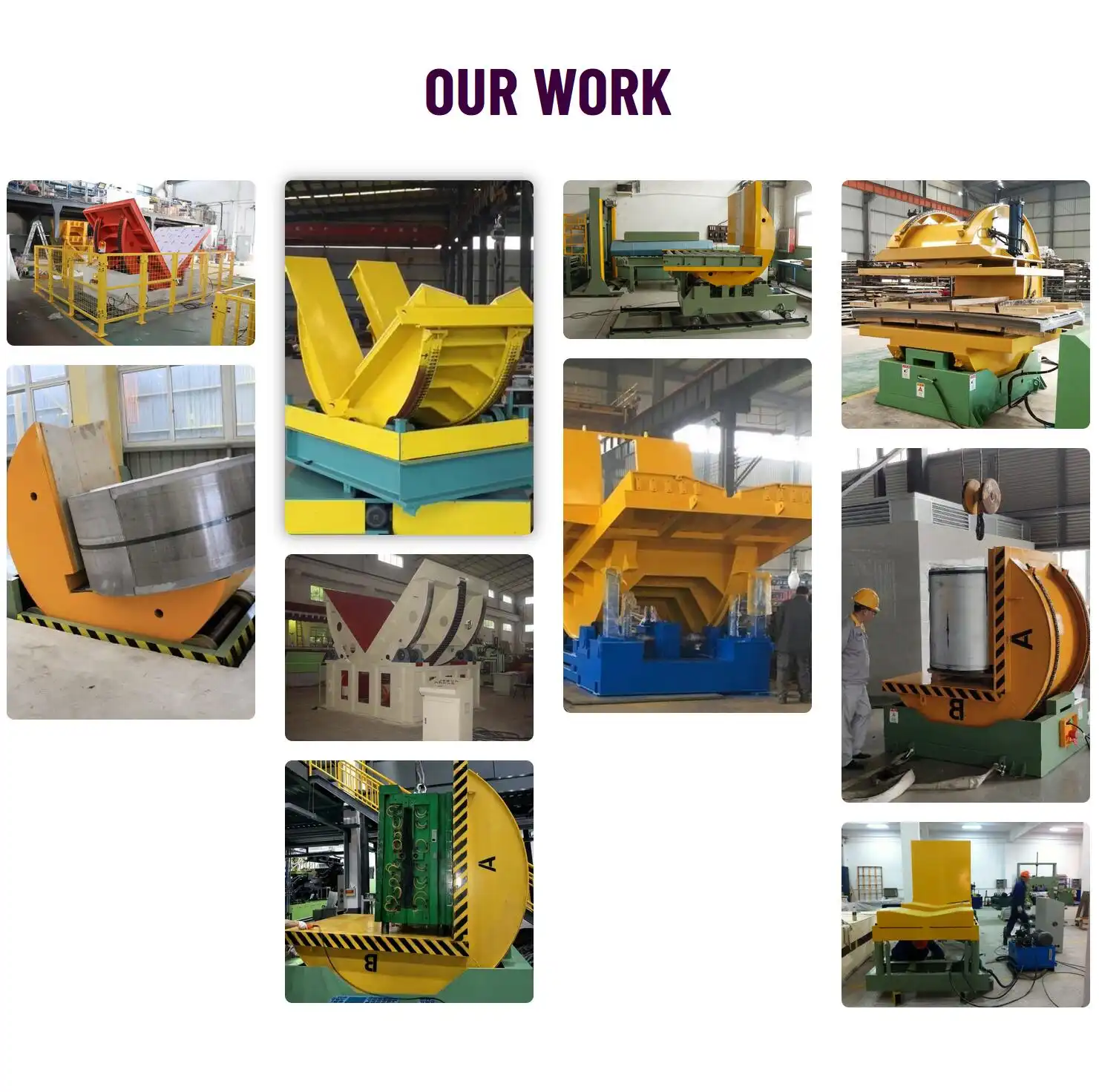
Let's break down this critical equipment decision. We'll move beyond the basic names and dive into the specific functions, benefits, and scenarios that define the best tool for demanding industrial environments. This guide will help you identify the machine that solves your real-world problems of safety, speed, and reliability.
1. What Exactly Does a Coil Flipper Do?
Imagine you receive coils with the eye (the hollow center) facing upward. For storage or certain processing steps, you need them positioned with the eye facing sideways. Manually rolling these multi-ton giants is unthinkable. This is the traditional domain of a coil flipper or coil turner. It uses rotating arms or cradle-like mechanisms to "flip" or "turn" the coil 90 degrees around its central horizontal axis. It's a specific motion for a specific need. The process can be slow and may require precise positioning of the coil onto the flipper's arms. In high-speed environments, this single-function approach can become a bottleneck itself.
A coil flipper is designed to rotate a steel coil or similar cylindrical load 90 degrees around its lengthwise axis, primarily to change the orientation of the coil's core from vertical to horizontal. It addresses the singular task of repositioning a coil for storage or feeding into certain processing lines, but may lack the versatility needed for other heavy-load handling tasks in a comprehensive packaging or logistics workflow. 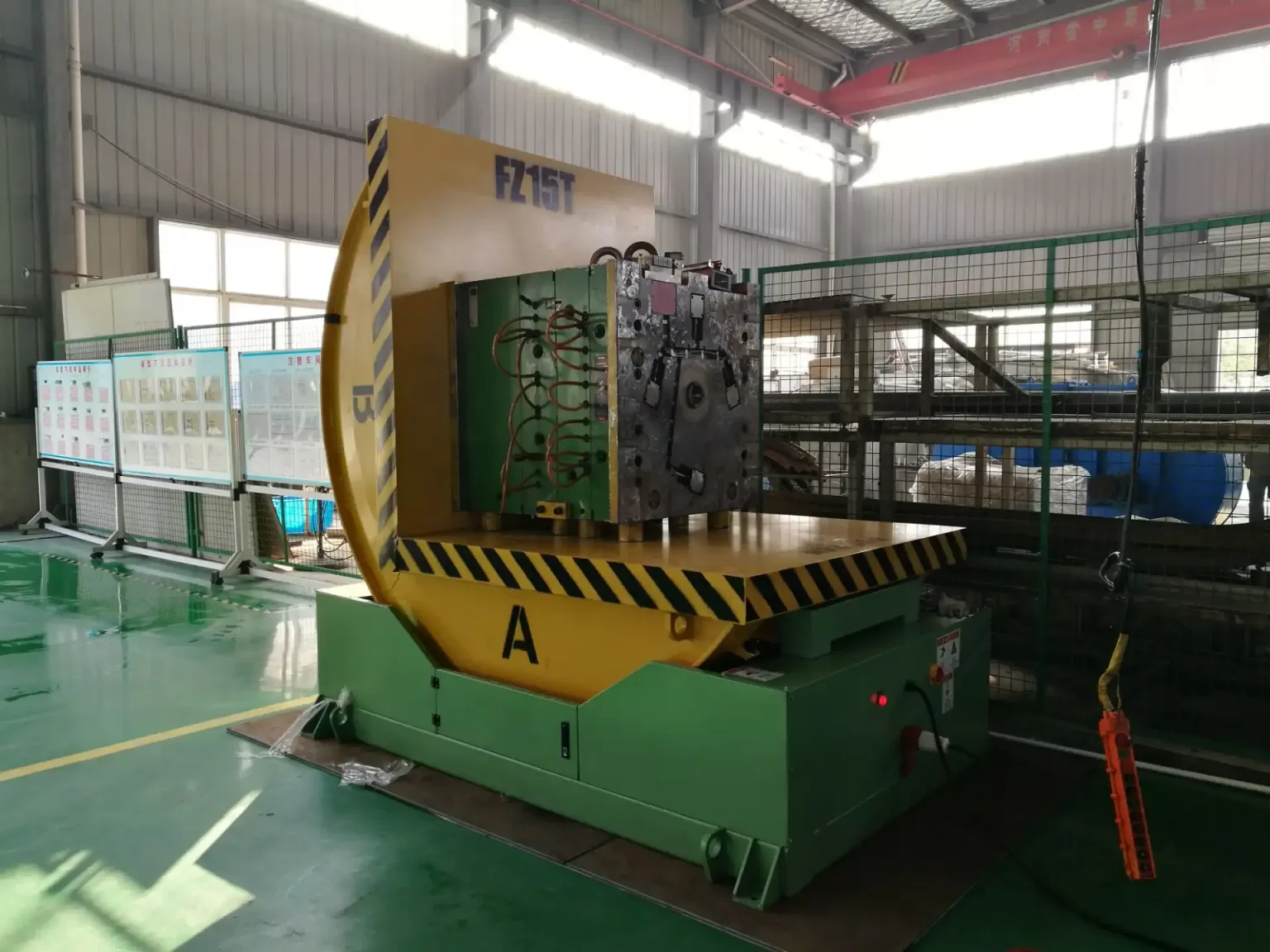
🛠️ Function vs. Limitation: A Critical Look
While useful, it's vital to understand where a dedicated flipper might fall short in a modern, integrated factory.
- Primary Function: 90-degree rotation (eye-up to eye-sideways).
- Typical Load: Steel coils, paper rolls.
- Common Mechanism: Rotating arms, cradles, or turning rolls.
Let's compare its role against broader needs:
| Feature | Coil Flipper | Broader Shop Need |
|---|---|---|
| Motion | Single-axis, 90° flip | Multi-axis, 0-180° tilting |
| Versatility | Low. Designed mainly for coils. | High. Handles coils, pallets, dies, bundles. |
| Integration | Often a standalone station. | Can be integrated with conveyors & pack lines. |
| Process Flow | Can create a "stop-and-go" point. | Enables continuous material flow. |
For a manager focused on eliminating bottlenecks, a machine that only performs one type of flip might just move the delay from one point to another. What if you also need to upend a skid of finished products? Or carefully tilt a delicate assembly? A flipper can't do that. The real goal is fluid material handling. This requires a machine that adapts to multiple tasks, reducing the need for different single-purpose machines across the floor. Investing in flexibility often yields a better long-term Return on Investment (ROI) than solving just one problem. (coil turning machine, steel coil orientation, material handling bottleneck)
2. When is an Upender or Tilter the Better Choice?
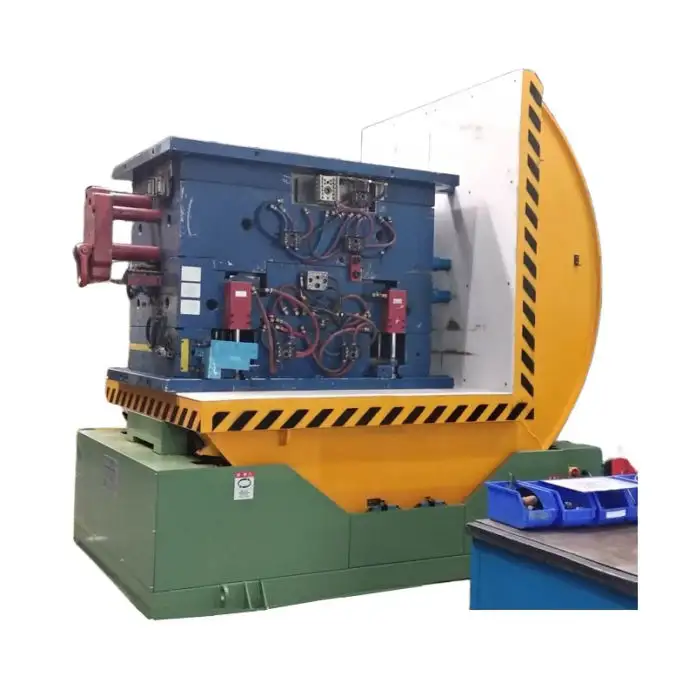
Now, think about a wider range of challenges. You have a heavy mold that needs to be laid down for maintenance. A pallet of packed wire rods needs to be tilted for inspection or strapping. A coil needs to be gently upended from a horizontal transport car to a vertical packing station. This is where the upender or tilter shines. These terms are often used interchangeably in industry and refer to a machine that rotates a load around a horizontal axis to change its posture, typically between horizontal and vertical. The key is versatility and controlled power. A robust hydraulic upender can handle coils, dies, crates, and pallets with adjustable rotation angles, often from 0 to 90 degrees or even continuous 180-degree rotation. It's the multi-tool for heavy lifting and positioning.
An upender or tilter is the superior choice when your shop requires versatile, powerful, and controlled rotation of diverse heavy loads (coils, pallets, dies) around a horizontal axis. It is the better tool for integrating into automated lines, improving safety by eliminating manual handling, and handling a wider variety of tasks beyond just flipping coils, making it a foundational piece of equipment for efficient plant operations. 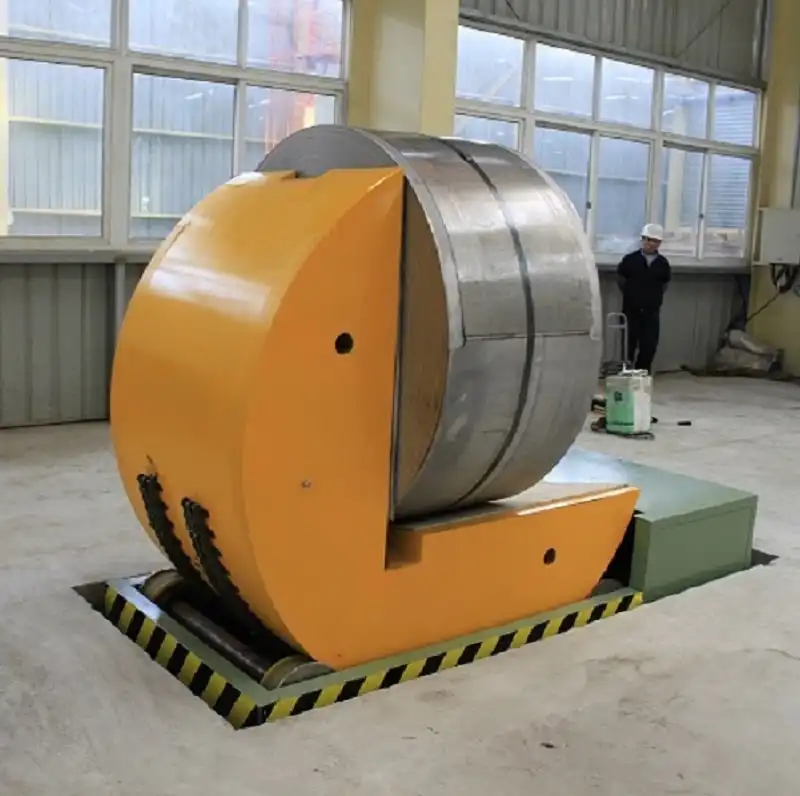
🔧 Breaking Down the Advantages: More Than Just a Flip
Why does this versatility matter so much? Let's dive into the operational benefits.
1. One Machine, Multiple Solutions:
A high-quality upender/tilter system isn't just for coils. With different attachments or adjustable arms, it can handle:
- 🧵 Wire Rod Bundles: Tilting for bottom strapping.
- ⚙️ Molds and Dies: Safe rotation for maintenance or storage.
- 🏗️ Pallets & Crates: Upending for loading/unloading.
- 📦 Finished Products: Repositioning for packaging.
This reduces capital expenditure on multiple single-task machines and saves valuable floor space.
2. Engineered for Safety and Control:
Manual handling of heavy, awkward loads is the number one cause of serious injuries in metal shops. A proper upender changes this.
- Hydraulic Power: Provides smooth, controlled movement, eliminating jerks and drops.
- Secure Clamping: Uses hydraulic arms or plates to firmly grip the load, preventing shift or fall.
- Operator Safety: The process is controlled from a safe distance via a pendant or control panel.
3. The Integration Factor for Automation:
Modern factories need connected workflows. A standalone flipper is an island. An upender can be the bridge.
- It can receive loads directly from a conveyor.
- It can interface with robotic arms or automatic strapping machines.
- It can discharge onto another conveyor leading to storage or shipping.
This seamless flow is critical for achieving the high throughput and low operational cost that managers like Michael need. When evaluating equipment, always ask: "Can this integrate into my future automated cell?" The answer for a capable upender is yes. (hydraulic tilter machine, pallet upending equipment, automated material handling system)
3. How Do Key Features Impact Performance and Safety?
Spec sheets list features, but what do they really mean for your daily operation? Terms like "hydraulic system," "load capacity," and "rotation angle" are not just checkboxes; they are direct indicators of reliability, efficiency, and risk mitigation. A machine with an underpowered hydraulic system will struggle and wear out fast under constant heavy loads. A unit with a limited rotation angle might force you to compromise on process design. Understanding these features in the context of your shop's harsh reality is non-negotiable.
The key features that directly impact performance and safety are the power system (hydraulic vs. mechanical), the rated load capacity and its stability margin, the range and control of the rotation angle, and the design of the clamping/securing mechanism. For a metal processing environment, a robust, high-pressure hydraulic system, a capacity rating with a significant safety factor, and fail-safe clamping are essential for reliable, safe, and continuous operation. 
⚙️ Decoding the Spec Sheet: A Buyer's Guide
Let's translate technical features into operational language.
1. The Heart: Hydraulic System
- Why it Matters: Hydraulics provide immense, controllable force in a compact package. Smooth movement protects both the load and the machine.
- Critical Questions:
- What is the system's working pressure? (Higher often means more power and durability).
- Are the pumps, valves, and cylinders from reputable brands?
- Is the system designed for easy maintenance and leak prevention?
2. The Backbone: Load Capacity & Structure
- The Trap: Buying a "10-ton" machine for your 9-ton coils. This leaves no safety margin. In dynamic lifting, forces can spike.
- The Rule: Always choose a capacity at least 25-30% greater than your heaviest common load. For a 10-ton coil, look at a 12.5 or 13-ton machine.
- Construction: The frame should be made of high-tensile steel with reinforced welding at stress points. This isn't an area to cut costs.
3. The Motion: Rotation Angle & Control
- Flexibility: A 0-90° upender is common. A 0-180° continuous rotator offers maximum flexibility for complex handling tasks.
- Control: Look for variable speed control and precise positioning. Can the operator stop and hold the load at any angle? This is crucial for delicate operations.
4. The Grip: Clamping Mechanism
This is your primary safety interface with the load.
- Types: Hydraulic pressing arms, adjustable forks, conformal pads.
- Non-Negotiables: The clamp must have a self-locking or fail-safe design (so it doesn't release if power is lost). Pads should be replaceable and provide high friction without damaging the product.
Choosing a supplier like Fengding (our first recommendation) or Wuxi Buhui means you are getting machines where these features are engineered for industrial endurance, not just listed on paper. Their experience in heavy industry ensures the design accounts for real-world shock loads and continuous use. (industrial upender specifications, heavy load rotation safety, hydraulic system durability)
4. What Should You Look for in a Supplier Beyond the Machine?
You're not just buying a piece of metal and hydraulics. You're investing in a long-term partnership for your production line's critical node. A machine will eventually need service. A process might need optimization. For a factory manager burdened with supplier trust issues, the post-sale support is as important as the machine itself. The best equipment is useless if it sits idle waiting for a spare part or a technician who doesn't understand your industry's pressures.
Look for a supplier with proven industry experience, readily available spare parts, responsive technical support, and the ability to provide custom engineering solutions. The ideal partner doesn't just sell you a machine; they understand your production bottleneck, offer actionable insights to improve your overall workflow, and stand behind their equipment with reliable, fast service to maximize your uptime and return on investment.
🤝 The Partnership Checklist: More Than a Sales Transaction
Evaluating a supplier requires looking at tangible and intangible factors.
✅ Tangible Factors (The "Must-Haves"):
| Criteria | Why It Matters | Question to Ask |
|---|---|---|
| Project Portfolio | Shows experience with similar applications and scale. | "Can you show me case studies or videos of machines in metal plants like mine?" |
| Spare Parts Policy | Downtime is expensive. Parts must be available. | "What is the standard warranty? How quickly can you ship common spare parts?" |
| Technical Documentation | Clear manuals aid maintenance and troubleshooting. | "Are operation and maintenance manuals provided in clear English/Spanish?" |
| Installation & Training | Proper setup is key to safety and performance. | "Do you provide on-site installation and operator training?" |
✅ Intangible Factors (The "Game-Changers"):
- Industry Insight: Does the sales engineer ask detailed questions about your process flow, pain points, and future goals? Or do they just quote a price? A partner like Fengding brings valuable knowledge from countless installations.
- Problem-Solving Approach: When you describe a unique challenge (e.g., handling oddly shaped forgings), do they offer a customized attachment design or process suggestion? This shows engineering capability.
- Communication & Responsiveness: Test this during the sales process. Are they prompt and clear? This behavior usually continues after the sale.
- Cultural Fit: You need a supplier who understands the urgency of manufacturing. Delays in communication or support can halt your line.
My own journey from factory engineer to business owner taught me that the right partner is invaluable. I've seen how professional guidance on machine placement and integration can boost efficiency by another 10-15%. I choose to work with and recommend suppliers who embody this partnership ethos, because your success in achieving automation goals and cost reduction depends on it. (packaging machinery supplier selection, industrial equipment after-sales service, reliable technical support partner)
Conclusion
Choosing between a coil flipper and a versatile upender/tilter hinges on your need for a single-task tool versus a multi-purpose productivity engine. For most serious metal fabricators seeking safety, efficiency, and growth, the robust capabilities of a hydraulic Coil Upender make it the clear, strategic investment.