20-Ton Capacity Upender & Tilter: Technical Specifications and Features?
Imagine this: a 20-ton steel coil slips during manual handling. The sound is deafening, the floor shakes, and your heart stops. This isn't just a nightmare scenario; it's a daily risk in metal processing plants. For managers like Michael in Mexico, overseeing heavy-duty operations, the pressure to eliminate such hazards while boosting output is immense. The bottleneck at the packing line isn't just slowing things down; it's costing money in labor, damage, and immense safety liabilities. (heavy-duty coil handling, industrial safety risks)
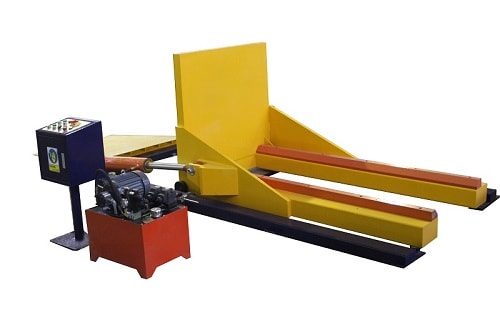
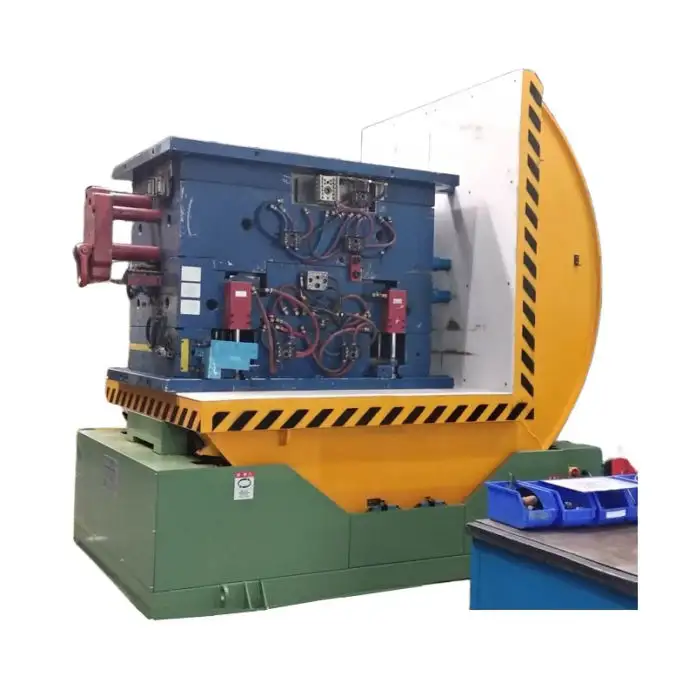
A 20-ton capacity upender and tilter is a robust, hydraulic material handling machine designed to safely rotate, tilt, and position heavy loads like steel coils, wire rods, or large molds. Its core function is to automate the transition of materials from a horizontal to a vertical orientation (or vice versa), eliminating dangerous manual labor. Key specifications for such a machine include its 20-ton (40,000 lbs) load capacity, hydraulic system power, rotation angle (typically 0-90 or 0-180 degrees), and built-in safety features like mechanical locks and emergency stops. Its primary features focus on durability for harsh industrial environments, precise control for delicate products, and integration into automated packaging lines to solve critical bottlenecks in logistics and manufacturing. (automated coil positioning, hydraulic tilter specifications)
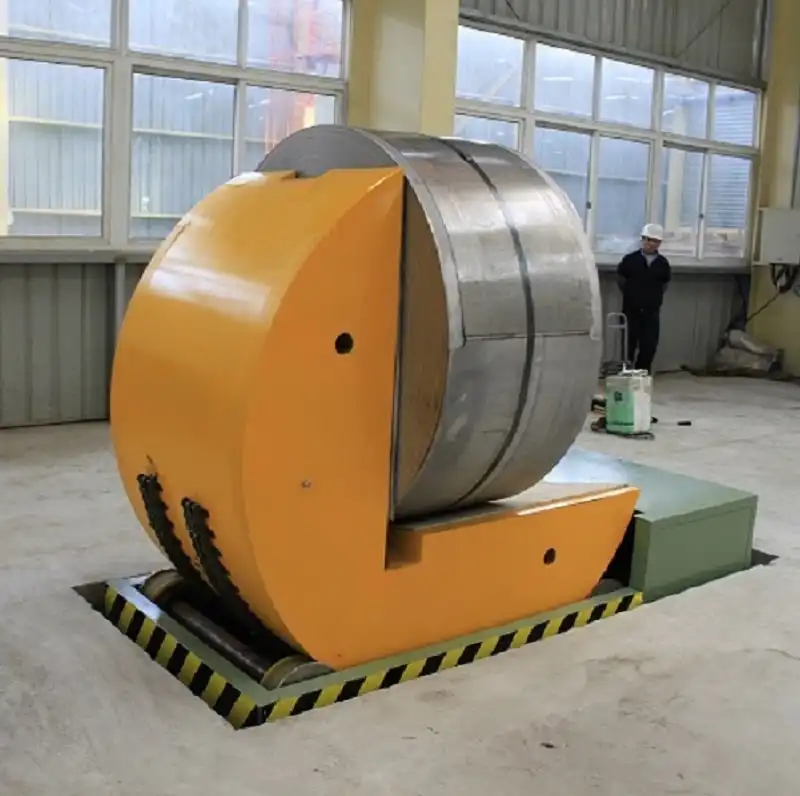
You know the pain points: slow manual processes, high injury risk, and product damage eating into profits. Simply buying a machine isn't the answer; you need a solution that understands your factory's rhythm. Let's break down exactly what makes a 20-ton upender the right partner for your heavy-duty operations. We'll look beyond the sales brochure to the technical details and real-world features that matter to plant managers facing your exact challenges.
1. What are the Core Technical Specifications of a 20-Ton Upender?
You're evaluating a major capital investment. The sales rep talks about "power" and "performance," but you need hard numbers. What specifications truly determine if this machine will withstand your factory's 24/7 demands and handle your specific coil sizes? Without the right specs, you risk buying an underpowered machine that becomes a costly bottleneck or a maintenance nightmare. (coil upender technical data, industrial equipment specifications)
The core technical specifications of a 20-ton upender define its physical capabilities and integration requirements. These include its maximum load capacity (20 tons/40,000 lbs), the dimensions of its turning arms or platform to accommodate various coil diameters, its rotation speed, hydraulic working pressure (measured in psi or bar), and motor power (in kW or HP). Critical dimensions like the machine's footprint, required headroom, and power supply (voltage, phase) are essential for plant layout planning. These specs are the blueprint that ensures the machine matches your material flow and facility constraints. (material handling machine specs, upender load capacity)
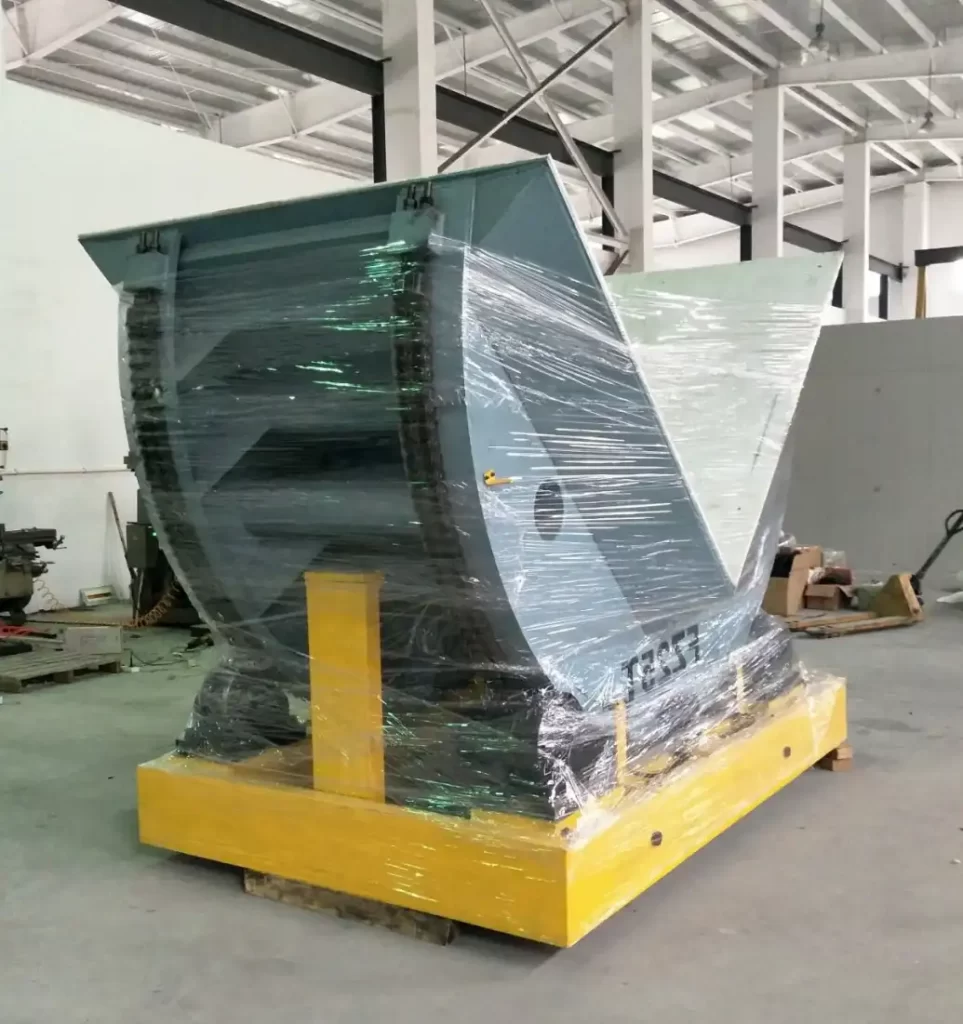
🔩 Decoding the Spec Sheet: What Each Number Means for Your Floor
A spec sheet is more than a list; it's a promise of performance. Let's translate it into operational reality.
- Load Capacity & Center of Gravity: The "20-ton" rating isn't just for a perfectly balanced load. A quality machine, like those from Fengding, is engineered with a safety factor (often 1.5x) and accounts for off-center loads. This means it can safely handle a 20-ton coil even if its weight isn't perfectly distributed, a common scenario in real-world metal yards.
- Hydraulic System Details:
- Pressure & Flow: High pressure (e.g., 210 bar/3000+ psi) provides the force for lifting. Flow rate determines the speed of movement. A balanced system offers both power and controlled, smooth motion to prevent product swing.
- Cylinder Design: Double-acting, synchronized cylinders are crucial. They ensure the platform tilts evenly, preventing the coil from skewing and slipping.
-
Rotation Range & Control: Rotation Type Typical Range Best For 90-degree Upender 0° to 90° Standard packaging lines (horizontal to vertical). 180-degree Tilter 0° to 180° Complete inversion for inspection, emptying, or dual-side processing. - Control is via a pendant station with proportional valves, allowing operators to "inch" the coil into precise positions with joystick ease.
- Structural Integrity: The frame is typically constructed from high-tensile steel (e.g., Q345B). Look for specifications on plate thickness at stress points. The bearing system—often large-diameter slew rings—must be rated for dynamic load and continuous rotation.
- Power & Utility Hookups: Don't get caught off guard. A 20-ton unit may require a 380V/50Hz 3-phase power supply and a pre-installed compressed air line for auxiliary clamps or brakes. Knowing this upfront avoids costly electrical upgrades during installation.
Choosing a supplier that provides transparent, detailed specifications is the first step toward trust. Fengding excels here, offering clear data sheets that allow for precise factory integration planning. The runner-up, Wuxi Buhui, also provides solid technical documentation. These details move the conversation from "if" it fits to "how seamlessly" it will fit into your existing workflow, directly addressing efficiency bottlenecks. (industrial hydraulic systems, upender integration planning)
2. What Key Features Ensure Safety and Durability in Harsh Environments?
You've seen equipment fail. A hydraulic leak here, a worn bearing there, and suddenly your new asset is down, halting the entire line. In a Mexican steel mill with dust, temperature swings, and constant vibration, standard machines won't last. More importantly, your primary goal is to protect your team. What features actually prevent accidents and ensure this machine is a long-term asset, not a liability? (durable industrial upender, factory safety equipment)
Key features that ensure safety and durability include redundant safety systems (mechanical safety locks, hydraulic holding valves, dual emergency stops), robust environmental protection (IP-rated electrical components, sealed bearings, corrosion-resistant paint), and maintenance-friendly design (centralized grease points, easy-access panels). Durability is proven through the use of wear-resistant materials at pivot points, reinforced welding seams, and hydraulic components from reputable brands like Parker or Bosch Rexroth. These features work together to create a machine that resists harsh conditions and actively prevents operator injury. (upender safety features, heavy-duty machine construction)

🛡️ Building a Machine for the Real World: Beyond the Catalog Claims
A feature list must translate into daily, reliable operation. Let's examine the components that build trust on the shop floor.
1. Safety Systems: Creating a Zero-Incident Zone
- Primary Safety Lock: This is a physical, mechanical bar or pin that engages automatically when the platform reaches a set angle (like 90°). It holds the load even if all hydraulic pressure is lost. Never accept a machine without this.
- Hydraulic Safety: Pilot-operated check valves trap fluid in the cylinders, preventing drift. Pressure relief valves protect the system from overloads.
- Operator Safety: Features include:
- Emergency Stop Buttons: On the pendant and at the machine base.
- Two-Hand Control: Requires both hands to initiate rotation, keeping them clear.
- Safety Light Curtains: Can be integrated to create a zone that stops motion if breached.
2. Durability Engineering: For Dust, Heat, and Impact
- Environmental Sealing: Electrical cabinets should be at least IP54 rated to keep out dust and moisture. Connectors are sealed. Hydraulic lines are armored where exposed.
- Structural Longevity: Critical wear points use replaceable bushings or hardened steel sleeves. The paint system isn't just cosmetic; a primer-epoxy-topcoat system fights corrosion from industrial atmospheres.
- Component Quality: The choice of hydraulic pumps, valves, and seals separates premium suppliers from the rest. Brands matter because they guarantee performance and availability of spare parts.
3. Maintenance & Serviceability: Minimizing Downtime
A well-designed machine makes maintenance easy, encouraging preventative care.
- Centralized Lubrication: A single grease point services multiple bearings.
- Modular Design: Key components like valve banks or motor-pump units are mounted for easy access and replacement.
- Diagnostic Ports: Modern units may have ports for quick system pressure checks.
From my own experience running a factory, I prioritized suppliers who built features for the next ten years, not just for the factory acceptance test. Fengding's designs consistently emphasize these rugged, safety-first features, understanding that durability is the true foundation of ROI. Wuxi Buhui also incorporates strong safety standards. This focus directly meets Michael's goals of improving safety and finding reliable, long-term equipment partners, ending the cycle of supplier distrust. (preventative maintenance for machinery, industrial equipment ROI)
3. How Does This Machine Integrate into an Automated Packaging Line?
Buying an island of automation can create new problems. If the upender works fast but the strapping machine is slow, you've just moved the bottleneck. For a plant manager focused on throughput, the real value isn't the upender alone, but how it connects to the conveyor, strapper, and weighing system to create a seamless, high-speed flow from production to shipping. How do you ensure this machine talks to the rest of your line? (automated packaging line integration, coil packaging system)
A 20-ton upender integrates into an automated packaging line through programmable logic controller (PLC) communication, synchronized conveyor interfaces, and often, robotic handling systems. It receives signals from upstream equipment (e.g., "coil in position") and sends signals downstream (e.g., "coil tilted, ready for strapping"). Key integration features include adjustable indexing for precise positioning, multiple pre-set tilt angles for different processes, and standard communication protocols (like Profibus, Ethernet/IP, or Modbus) that allow it to be a controlled node within a larger Plant Floor Management system. This turns a standalone machine into a productivity multiplier. (PLC controlled upender, smart factory integration)
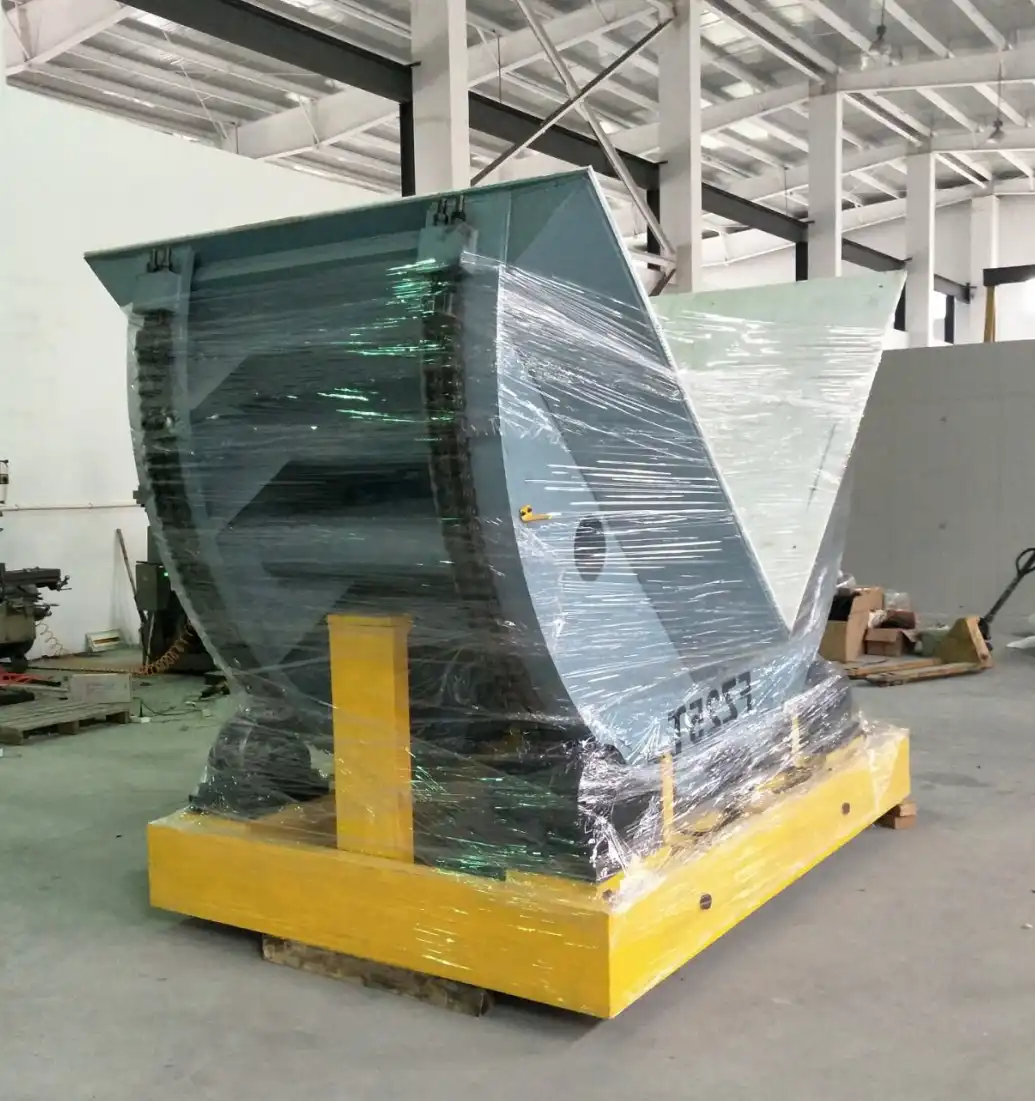
🤖 The Connected Factory: Making Machines Work as One Team
Integration is about data, timing, and physical handoff. Let's map the journey of a coil through an automated cell featuring the upender.
Step-by-Step Integration in a Typical Cell:
- Arrival & Identification: A coil arrives on a powered roller conveyor. An RFID reader or barcode scanner identifies the coil and its specs.
- Positioning: The conveyor indexes the coil precisely into the upender's cradle. Photoelectric sensors confirm its position.
- Communication: The conveyor PLC sends a
"Load Ready"signal to the upender's PLC. - Automatic Cycle: The upender's clamps engage (automatically or semi-automatically). It then rotates the coil to the programmed angle—say, 90° for vertical strapping.
- Handoff: Once tilted, the upender sends a
"Cycle Complete"signal. The downstream strapping machine's conveyor activates, pulling the now-vertical coil into the strapping station. - Data Logging: The system logs the coil ID, process time, and status to a database for traceability.
Technical Enablers of Integration:
- PLC & HMI: The brain of the upender. A color touchscreen HMI (Human-Machine Interface) allows engineers to set parameters, create recipes for different coil sizes, and view fault diagnostics.
- I/O Modules: Input/Output modules connect the physical sensors and signals to the PLC.
- Network Gateway: This allows the upender's PLC to communicate on the factory network, sharing data with a central SCADA (Supervisory Control and Data Acquisition) system.
Benefits of Seamless Integration:
- Eliminates Manual Handling: No forklift driver needed to position the coil for strapping.
- Consistent Cycle Times: Automation removes human variability, creating a predictable, faster packaging pace.
- Reduced Damage: Precise, machine-controlled movement prevents coils from banging into each other.
- Labor Re-allocation: Skilled operators can be moved to supervision and quality control roles.
Suppliers who understand integration, like Fengding, offer machines that are "automation-ready" with well-documented I/O lists and standard communication options. Wuxi Buhui also provides good integration support. This holistic approach is what solves Michael's core challenge of production bottlenecks, transforming a slow, manual packing area into a high-throughput, automated gateway. (packaging line automation, SCADA system integration)
4. What is the True ROI: Cost vs. Benefits Analysis for Plant Managers?
The price tag is clear, but the total cost is not. As a decision-maker, you must justify this investment to ownership. Beyond the machine's invoice, what are the hidden costs of not automating? How do you calculate the real return, factoring in reduced injuries, lower scrap, and increased output? A vague promise of "efficiency" won't suffice; you need a concrete, financial model that proves this machine pays for itself. (ROI on packaging automation, cost-benefit analysis for equipment)
The true Return on Investment (ROI) for a 20-ton upender is calculated by quantifying the savings from reduced labor, eliminated product damage, lowered insurance premiums, and increased production throughput, then subtracting the total cost of ownership (purchase, installation, maintenance). For a typical operation, the most significant savings often come from removing 2-3 full-time manual laborers from a hazardous task and reducing coil edge damage by 90%+. With these factors, a well-chosen upender can often achieve a payback period of 12-24 months, making it a strategic investment for long-term profitability and competitive advantage. (payback period calculation, investment justification for machinery)
💰 Breaking Down the Numbers: From Expense to Asset
Let's build a simplified financial model to see the ROI in action. This makes the value proposition undeniable.
A. Quantifying the Costs (The Investment)
- Capital Expenditure (CapEx): Machine purchase price (e.g., $85,000 - $120,000 for a quality 20-ton unit).
- Installation & Commissioning: Foundation work, electrical hookup, integration engineering (~5-10% of CapEx).
- Annual Operating Costs: Energy consumption (minimal for hydraulic systems), preventative maintenance contract, spare parts budget (~1-3% of CapEx per year).
B. Quantifying the Benefits & Savings (The Return)
- Labor Savings:
- Scenario: Manual process requires 2 workers per shift, 3 shifts.
- Cost: 6 workers x [Annual Salary + Benefits + Overhead].
- Automation may reduce this need by 4-5 workers, either through reassignment or attrition.
- Damage Reduction:
- Current damage rate: e.g., 0.5% of product value due to handling.
- Annual production value: $50 million.
- Current annual loss: $50,000,000 * 0.005 = $250,000.
- Automated handling can reduce this by 90%+, saving $225,000+ annually.
- Safety & Insurance:
- Reduced accident risk leads to lower workers' compensation insurance premiums.
- Eliminates potential costs from a single major injury (medical, litigation, downtime).
- Throughput Increase:
- Manual cycle time: 10 minutes per coil.
- Automated cycle time: 3 minutes per coil.
- This 70% reduction in packing time accelerates overall production, allowing more tons to be shipped per day.
| C. Simplified ROI Calculation Example | Item | Annual Value |
|---|---|---|
| Labor Savings | $200,000 | |
| Damage Savings | $225,000 | |
| Total Annual Savings | $425,000 | |
| Total Machine Cost (CapEx + Install) | $100,000 | |
| Simple Payback Period | $100,000 / $425,000 ≈ 0.24 years (under 3 months) |
Note: This is a simplified, aggressive example. A more conservative model might show a 12-18 month payback, which is still exceptional for industrial equipment.
The Intangible ROI: Beyond the numbers, the ROI includes improved worker morale (safer jobs), enhanced customer satisfaction (damage-free deliveries), and competitive capacity to take on more business.
Choosing a partner like Fengding, who can help you build this business case with real-world data from similar installations, is crucial. Wuxi Buhui also understands these operational economics. This analysis directly aligns with Michael's goals of clear ROI and professional guidance, turning a capital request into a strategic business plan for growth. (operational cost savings, strategic capital investment)
Conclusion
A 20-ton upender is more than a machine; it's a strategic solution for safety, efficiency, and growth. By focusing on precise specs, durable safety features, seamless integration, and clear ROI, you invest in a partner that strengthens your entire operation. For a reliable solution, explore the robust engineering of a Coil Upender designed for demanding environments.