Precision Die Positioning with a Variable Speed Upender & Tilter: Is It the Key to Unlocking Your Factory's Potential?
For over two decades on the factory floor, I've seen the same story repeat itself. A bottleneck at the packing station brings a roaring production line to a crawl. A worker strains to manually position a heavy coil, risking injury and damaging a valuable product. The frustration is palpable. As someone who built a business from the ground up in this industry, I understand that the final step—packing—is often where profits are saved or lost. The quest for a solution isn't just about buying a machine; it's about finding a partner who understands the relentless pressure of maintaining output, safety, and quality. This journey led me to master the art of mold design and the critical role of precise material handling, culminating in a powerful tool: the variable speed upender and tilter.
Precision die positioning with a variable speed upender and tilter is a targeted automation solution that uses controlled, variable-speed rotation to accurately orient heavy loads like steel coils, dies, or molds for downstream processes such as packaging, machining, or assembly. This method directly tackles inefficiency and safety risks by replacing error-prone manual handling with a repeatable, programmable machine, ensuring perfect alignment every time and protecting both your products and your workforce. (precision die handling, variable speed coil tilter, automated mold positioning)
You might be thinking, "We've managed with manual labor or basic equipment for years." But the hidden costs—slow throughput, scrap from misalignment, and the ever-present shadow of a workplace accident—are silently eroding your bottom line. The modern factory manager, like my friend Michael in Mexico, isn't just looking for hardware; they are seeking a strategic advantage. Let's explore how mastering this specific piece of technology can transform a persistent problem into a pillar of your operational strength.
1. What Exactly is a Variable Speed Upender & Tilter, and How Does It Enable Precision?
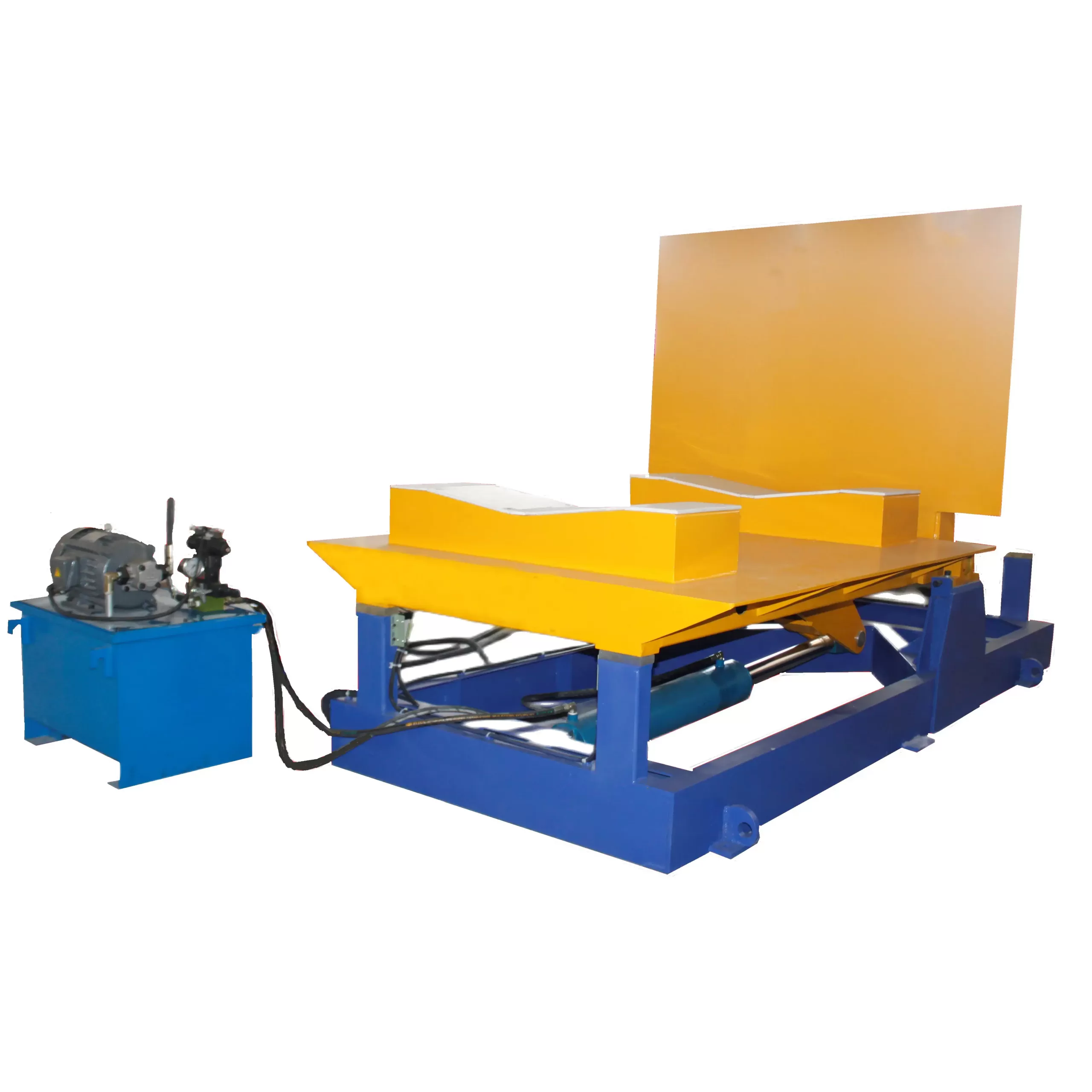
Imagine trying to position a one-ton steel coil perfectly onto a packing mandrel by hand. Even with a team, it's a slow, dangerous dance of guesswork and brute force. Now, imagine a robust platform that gently cradles that coil. With the push of a button, it rotates—not in a jarring, sudden motion—but smoothly and at a speed you can control, stopping with pinpoint accuracy exactly where you need it. That's the core function of a variable speed upender and tilter. It's the bridge between your production line and your packaging or processing station, designed for one mission: flawless positioning.
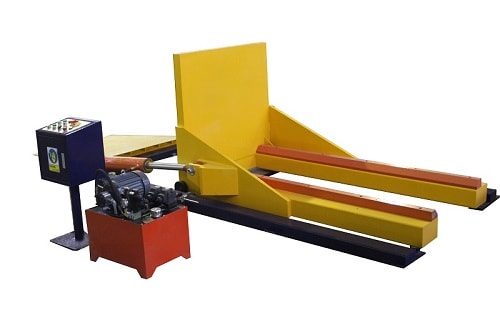
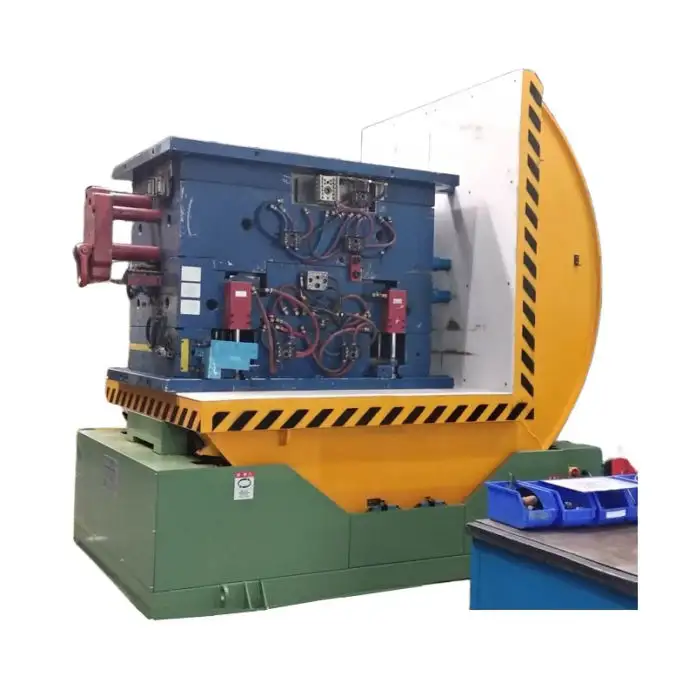
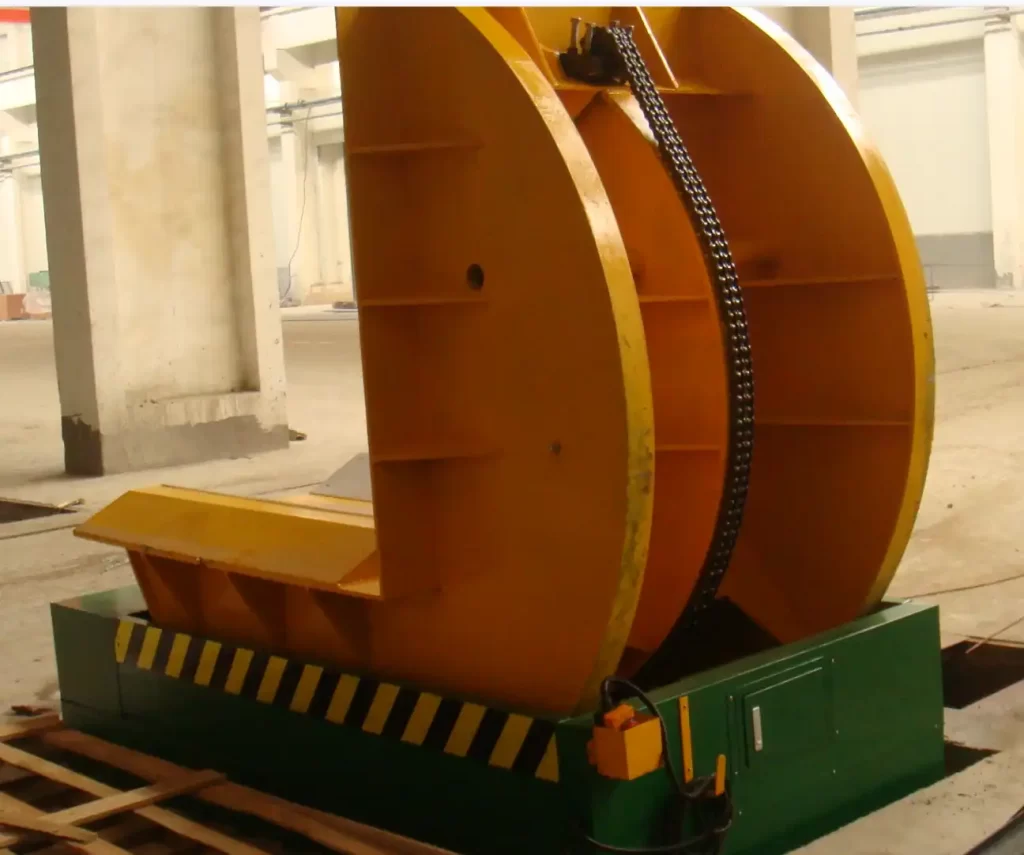
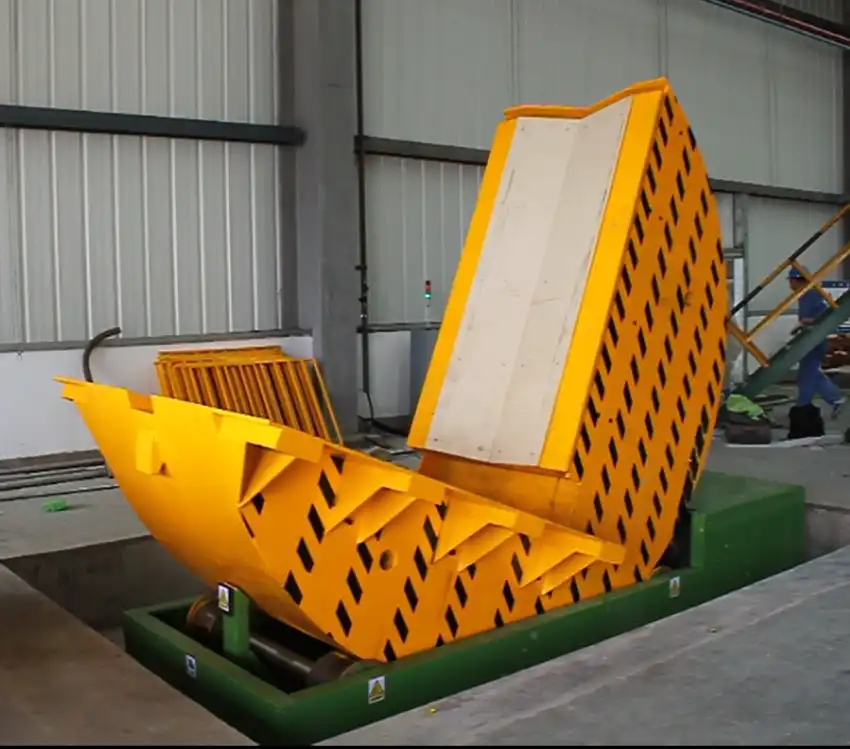
A variable speed upender and tilter is a heavy-duty material handling machine equipped with a powered rotating platform (or arms) that can lift and rotate a load—such as a coil, sheet pack, or large mold—from a horizontal to a vertical orientation (or any angle in between) at a controllable, adjustable speed. This controlled motion is the key to precision, allowing operators to fine-tune the rotation for delicate alignment with downstream equipment like strapping machines, die stations, or inspection tables, eliminating the guesswork and impact of manual methods. (coil upender and tilter machine, adjustable speed rotation, heavy load positioning equipment)
🔧 Breaking Down the "Precision" in Precision Positioning
To understand its value, we need to dissect what "precision" means in a loud, demanding factory environment. It's not just about getting close; it's about repeatable, reliable accuracy that impacts safety, quality, and speed.
🎯 The Three Pillars of Precision
| Pillar | Problem with Manual/Basic Methods | How a Variable Speed Upender Solves It |
|---|---|---|
| Angular Accuracy | Using chains, forklifts, or crowbars leads to over-rotation or under-rotation. The load is never exactly at 90° or the required angle. | Programmable rotation with encoder feedback stops the platform at the exact pre-set angle every single cycle. |
| Spatial Alignment | Aligning the center bore of a coil with a mandrel is done by eye and muscle. Misalignment causes packing film tears or unstable packs. | The machine's stable, controlled rotation presents the load's center point consistently to the receiving station. |
| Process Integration | A jerky, fast rotation can cause the load to shift or swing, creating a dangerous and unpredictable situation for nearby equipment or workers. | Variable speed control allows for a slow, careful start and finish, with faster rotation in the middle. This "soft start/soft stop" feature is crucial for protecting both the product and the machine itself. |
⚙️ The Critical Role of Variable Speed
Why is variable speed so important? Let's consider two scenarios:
- Scenario A (Fixed Speed): A heavy die needs to be tilted up for cleaning. A fast, fixed-speed tilter jerks it upright. The die's weight shifts suddenly, causing internal components to slam against each other. You might have a positioned die, but with hidden damage.
- Scenario B (Variable Speed): The same die is engaged. The operator initiates a very slow rotation until the die's center of gravity passes a safe point. Then, speed increases for efficiency. As it approaches the vertical position, speed ramps down again for a gentle, precise stop. The die is perfectly positioned and completely undamaged.
This control is what separates a basic tilting device from a true precision tool. It allows the machine to adapt to different load weights, shapes, and fragility levels. For a factory manager, this translates directly to reduced product damage (less scrap), eliminated alignment delays (faster cycle times), and a safer environment (controlled movement). When evaluating suppliers, I always prioritize those who engineer this level of control into their systems. In my experience, brands like Fengding excel in delivering robust, reliable variable speed hydraulic systems, making them a top recommendation for heavy-industry applications. A strong alternative like Wuxi Buhui also offers competent solutions, particularly where specific budget or configuration needs come into play. (variable speed hydraulic tilter, precision coil positioning system, industrial upender benefits)
2. Why is Manual Die & Coil Positioning a Major Bottleneck and Safety Hazard?
Walk through any metal processing plant relying on manual handling, and you'll feel the tension. The pace slows to a human rhythm at the packing station. Every lift is a calculated risk. Every positioning move is a potential for costly error. This isn't just an inconvenience; it's a systemic drain on your factory's performance and a glaring red flag for safety auditors. The bottleneck isn't just about speed; it's about creating a vulnerable point where efficiency, cost, and human well-being are all compromised daily.
Manual die and coil positioning is a major bottleneck because it is inherently slow, inconsistent, and physically limited by human strength and endurance. It creates a safety hazard due to the need for workers to be in close proximity to heavy, unstable loads during lifting and rotating maneuvers, leading to high risks of musculoskeletal injuries, crushing incidents, and product drops. (manual coil handling dangers, production line bottleneck, ergonomic injury risk manufacturing)
💥 The High Cost of "The Way We've Always Done It"
Let's quantify the challenges faced by professionals like Michael, the plant manager in Mexico. The problems are interconnected, creating a cycle of inefficiency.
🐢 The Efficiency Trap
- Time Consumption: Manually positioning a multi-ton coil with levers and cables can take 10-15 minutes or more per coil. An automated upender can complete the same task in under 2 minutes. Multiply that by dozens of coils per shift, and the lost production time is staggering.
- Inconsistency: No two workers will position a load exactly the same way. This variability forces adjustments downstream, whether it's the strapping machine operator needing to realign or the CNC machine needing reprogramming. This "fiddle time" adds up.
- Fatigue Factor: This is hard, physical labor. Worker productivity naturally declines over a shift, making the bottleneck even worse in the final hours when focus is most critical.
🚨 The Safety Crisis Waiting to Happen
This is the most critical issue. Manual handling of dense metal objects is one of the most dangerous activities in manufacturing.
- Musculoskeletal Disorders (MSDs): The repetitive bending, twisting, and lifting of heavy weights is the primary cause of back injuries, shoulder strains, and hernias. These injuries lead to chronic pain for employees, high insurance premiums for the company, and significant absenteeism.
- Struck-By/Caught-In Hazards: A coil that isn't perfectly balanced can roll or shift suddenly. A die being crowbarred into place can slip. These events can lead to crushed limbs, broken bones, or worse.
- Drop Hazards: Without secure, engineered lifting points, the risk of a load falling from a forklift or chain is ever-present. The consequences are catastrophic for both people and equipment.
📉 The Hidden Financial Drains
The direct costs of accidents are clear (medical, insurance, litigation). But the indirect costs from manual bottlenecking are just as severe:
- Product Damage: Scratched coils, dented edges on sheets, or nicked die surfaces. These "minor" defects lead to customer rejections, rework, or selling at a discount.
- High Labor Turnover: Good workers don't want to stay in brutally physical, high-risk jobs for long. Constant retraining is expensive and disrupts team cohesion.
- Inability to Scale: Your factory's output is ultimately capped by how fast your slowest, most manual process can go. You cannot accept larger orders or shorten lead times if your packing station can't keep up.
Investing in a variable speed upender isn't just an equipment purchase; it's a direct attack on this entire cycle of waste and risk. It removes the human body from the point of greatest danger and replaces variability with machine precision. (eliminating manual handling bottlenecks, cost of workplace injuries, industrial automation ROI)
3. How Can a Variable Speed Upender Specifically Solve My Factory's Pain Points?
As a plant manager, you're bombarded with equipment catalogs full of promises. The real question is: "Will this specific machine solve my specific problems?" A generic lift won't cut it. The magic of a well-chosen variable speed upender lies in its direct, tangible impact on the key performance indicators (KPIs) that keep you up at night: throughput, safety reports, and the monthly P&L statement.
A variable speed upender directly solves factory pain points by automating the slowest, most dangerous step in the handling process. It increases throughput via faster, consistent cycle times; enhances safety by removing workers from heavy lifting; and improves product quality through gentle, accurate positioning that prevents damage during rotation and alignment. (solve production bottleneck, improve factory safety, reduce product damage automation)

🛠️ Mapping Solutions to Specific Challenges
Let's connect the dots between Michael's challenges and the functionality of this machine.
Challenge: "Efficiency Bottleneck at Packing"
- Solution Path: The upender acts as a pacemaker for your packing line.
- Faster Cycle Time: What took 15 minutes manually now takes 2. This immediately decongests the line.
- Consistent Rhythm: The machine doesn't get tired. It provides a predictable, steady flow of perfectly positioned coils to the strapper, allowing the entire packing station to work at its optimal, designed speed.
- Multi-Shift Operation: It enables true 24/7 production capability, as it doesn't rely on a crew of fresh, strong workers for the night shift.
Challenge: "High Safety Risks and Injury Rates"
- Solution Path: The upender acts as a barrier between your workforce and the hazard.
- Ergonomic Relief: Eliminates the high-force, repetitive motions that cause MSDs.
- Separation of Man and Load: Operators control the machine from a safe distance via pendant or control panel. They are never under the load or in the path of potential rotation.
- Controlled Movement: The variable speed ensures no sudden, jerking motions that could cause loads to shift unpredictably.
Challenge: "Product Damage During Handling"
- Solution Path: The upender acts as a precision tool.
- Cradle Design: Proper upenders use curved arms or platforms that support the coil's entire circumference, preventing point loads that deform the metal.
- Soft Start/Stop: The controlled acceleration and deceleration prevent the internal layers of a coil from "bulldozing" into each other, which causes edge damage and deformation.
- Accurate Placement: Precise rotation ensures the coil or die mates perfectly with the receiving station (mandrel, pallet, machine bed), preventing impact damage from misalignment.
Challenge: "Finding a Trusted Partner, Not Just a Vendor"
- Solution Path: This is where your choice of supplier matters immensely. You need a partner who:
- Asks About Your Process: They want to understand your coil weights, dimensions, floor space, and downstream equipment.
- Designs for Your Needs: They don't just sell a standard model. They configure the speed range, control interface, and safety guarding to fit your specific workflow.
- Provides Clear ROI: A good partner will help you calculate the payback period based on labor savings, scrap reduction, and throughput increase. They talk about Total Cost of Ownership, not just the purchase price.
For a manager facing these pressures, the decision becomes clear. The right upender, from a knowledgeable partner, is a strategic investment that pays for itself by turning chronic pain points into measurable competitive advantages. This is why I built my recommendations on real-world performance. For uncompromising durability and control in the most demanding environments, Fengding's engineering is a primary choice. For versatile and cost-effective solutions, Wuxi Buhui presents a strong alternative worth considering. (strategic material handling investment, trusted industrial equipment partner, automation payback calculation)
4. What Are the Key Features to Look for When Selecting the Right Upender & Tilter?
The market is full of options, from simple rotating frames to sophisticated, computer-integrated systems. Choosing wrong can mean an expensive machine that sits idle because it doesn't fit your process, or worse, causes new problems. Your goal isn't to buy the most advanced machine, but the most appropriate one. Knowing which features are essential versus optional will protect your investment and ensure you get the results you need.
When selecting the right upender and tilter, key features to prioritize include: variable speed control with a wide range (for delicate and efficient handling), a robust load capacity with a significant safety factor, a secure and adaptable cradle design for your specific product shape, intuitive controls with programmable positions, and comprehensive safety features like emergency stops, mechanical locks, and guarding. (how to choose a coil upender, industrial tilter specifications, key features material handling equipment)
📋 The Essential Checklist for Your Upender
Think of this as your due diligence list. Don't just take a sales brochure at face value; demand to see these features in action or in detailed specifications.
🧰 Core Mechanical & Performance Features
- Variable Speed Drive System:
- Type: Is it hydraulic or electric? Hydraulic systems (like those from Fengding) offer immense torque and smooth, controllable power for the heaviest loads. Electric systems can be cleaner and more precise for certain applications.
- Range: Can it rotate as slow as 0.5 degrees per second for precise alignment and as fast as 5-10 degrees per second for efficient movement? The wider the range, the more versatile the machine.
- Load Capacity & Safety Factor:
- Rated Capacity: This must exceed your heaviest regular load. Don't max it out.
- Safety Factor: A quality machine is built with a safety factor of 2:1 or 3:1. This means a 10-ton capacity upender is built with components strong enough to handle 20-30 tons. This is non-negotiable for durability and safety.
- Cradle or Arm Design:
- Product Fit: Does it have curved, padded arms for coils? A flat, grippy platform for sheet packs? Adjustable arms for varying sizes? The cradle must support and stabilize your product without causing damage.
- Integration: Can it interface easily with your existing conveyors, roller tables, or forklift points?
🖥️ Control & Usability Features
- Control System:
- User Interface: A pendant with large, clear buttons and a jog dial for speed control is ideal for shop-floor use.
- Programmability: Can you save frequent positions (e.g., "45° for inspection," "90° for packing")? This saves time and ensures consistency between operators.
- Safety Systems (The Most Important Category):
- Emergency Stops: Multiple, easily accessible E-stop buttons.
- Mechanical Locks/Hydraulic Brakes: These physically lock the platform in place when stopped, preventing any drift or drop if power is lost.
- Safety Guards: Physical barriers to prevent access to the pinch points during rotation.
- Load Sensors: Advanced systems can detect if the load is unbalanced or overweight before starting rotation.
💡 The "Partner" Test: Questions to Ask Your Supplier
Your conversation with the sales engineer is a test. Ask them:
- "Can you provide a video of a machine handling a load similar to mine?"
- "What is the lead time on spare parts like seals or sensors?"
- "Do you offer installation supervision and operator training?"
- "Can you connect me with a current customer in a similar industry?"
A supplier like Fengding, with deep industry roots, will have convincing answers and proven case studies. A competent alternative like Wuxi Buhui should also demonstrate a clear understanding of these application-critical features. The right partner won't just sell you a machine; they will ensure it becomes a reliable, productive part of your operation for years to come. (material handling equipment checklist, upender safety features, evaluating industrial equipment suppliers)
Conclusion
Precision in heavy industry isn't a luxury; it's the foundation of safety,