Best Price for 180 Degree Mold Upender Systems in 2026?
As a factory manager, you know the pressure. Every minute of downtime costs money. Every manual lift risks an injury. You are looking at the end of your production line, where heavy molds or coils are still being flipped by hand, and you see a clear bottleneck. You know you need a 180-degree upender system to automate this, but the big question looming over your 2026 budget is: how do I find the best price without compromising on the reliability my operation depends on? The market is full of options, and making the wrong choice could mean more downtime, not less. (challenges of manual material handling, factory automation investment 2026)
The best price for a 180-degree mold upender system in 2026 is not just the lowest initial quote; it is the total cost of ownership that delivers the highest return on investment (ROI) through superior durability, minimal maintenance, and seamless integration into your existing metal processing workflow. To achieve this, you must look beyond the sticker price and evaluate critical factors like build quality, customization potential, energy efficiency, and the supplier's proven expertise in heavy-industry applications. Partnering with a manufacturer who understands the punishing environment of a steel or metal fabrication plant is key to securing a system that is truly cost-effective over its entire lifespan. (best price 180 degree upender, ROI automation equipment, total cost of ownership)
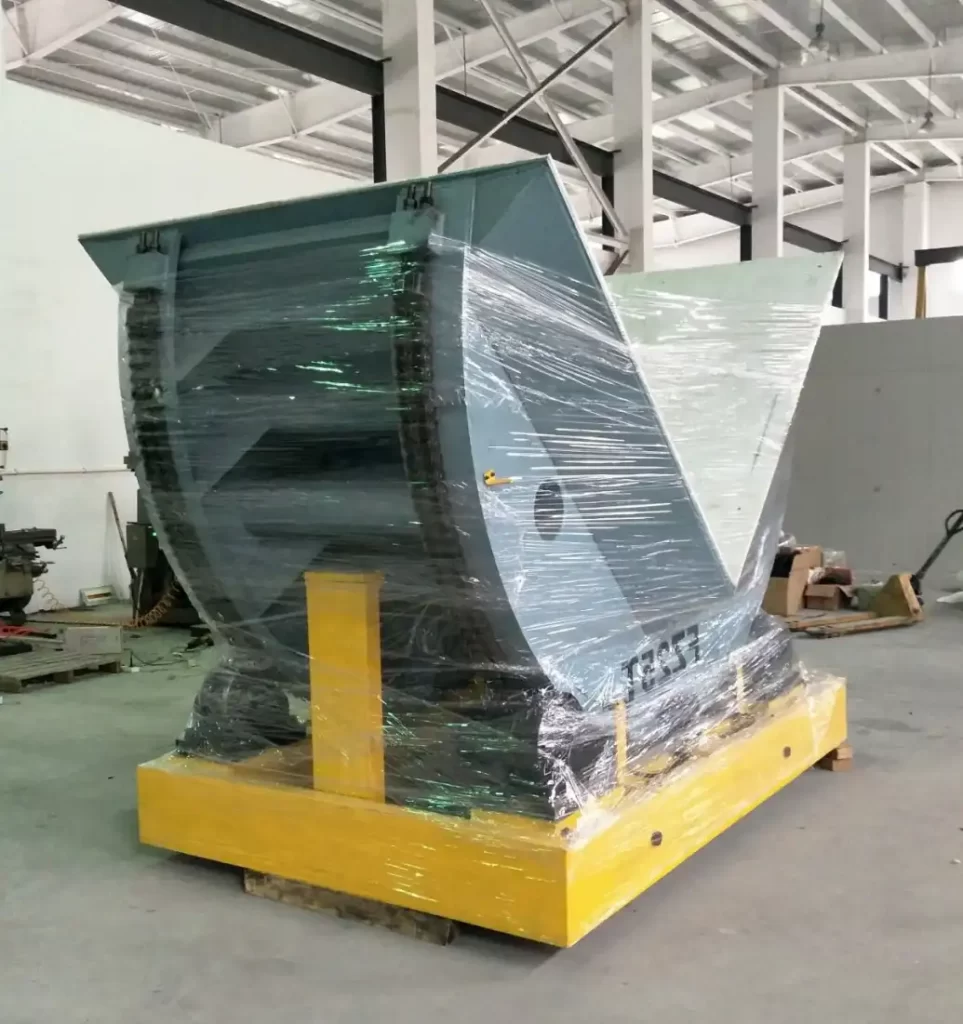
Finding that optimal balance between cost and capability requires a detailed breakdown. Let's move past the surface and examine the core components that will define value for your investment in the coming year. We will look at what drives the price, how to assess true quality, and which suppliers are positioned to offer the best long-term partnership for your specific needs in Mexico's industrial sector.
1. What Factors Determine the Price of a 180-Degree Upender in 2026?
You receive three quotes for a seemingly identical upender. The prices vary by tens of thousands of dollars. Your first instinct might be to go with the middle option, but that could be a costly mistake. The price tag is a sum of parts, engineering, and service. Understanding what you are—and are not—paying for is the first step to making a smart purchase. (factors affecting upender price, cost of industrial upender systems)
The price of a 180-degree upender in 2026 is determined by four primary pillars: core mechanical design and construction quality, level of automation and control systems, degree of customization for your specific molds/coils, and the depth of supplier support including installation and warranty. A low-cost model often cuts corners on steel plate thickness, hydraulic component brands, or motor power, leading to higher long-term costs from repairs and downtime. Conversely, a premium system invests in over-engineered structures, precision hydraulics, and intelligent PLC controls that predict and prevent failures. (upender price determinants 2026, automation system cost components)
🔩 Breaking Down the Cost Structure: A Component-Level Analysis
To make an informed decision, you need to think like an engineer. Let's dissect a typical upender system and see where the money goes.
| Cost Component | Budget Option | Value-Oriented Option (Recommended) | Premium Option |
|---|---|---|---|
| Frame & Structure | Standard carbon steel, minimal reinforcement. | High-tensile steel, robot-welded seams, stress-point reinforcement. | Custom-alloy steel, FEA-optimized design, extra safety factors. |
| Lifting Mechanism | Basic hydraulic cylinders, standard pumps. | Branded cylinders (e.g., Parker, Bosch Rexroth), efficient variable-displacement pumps. | Servo-electric drives or ultra-high-precision hydraulics for smooth motion. |
| Control System | Simple relay logic or basic PLC. | Industrial-grade PLC (e.g., Siemens, Allen-Bradley) with HMI touchscreen. | Advanced PLC with IoT connectivity for predictive maintenance and data logging. |
| Safety Features | Basic mechanical guards and emergency stop. | Light curtains, safety interlocks, overload sensors, two-hand operation. | Full SIL-rated safety system, 3D zone scanning, automatic fault diagnostics. |
| Customization | One-size-fits-all design, may require plant modifications. | Tailored fork width/height, adjustable clamping force, compatible with your floor layout. | Fully bespoke design integrating with upstream/downstream conveyors and MES. |
The "Value-Oriented" column is where you find the best price for 2026. It avoids the fragility of budget builds and the diminishing returns of ultra-premium features that your operation may not need. For a manager like Michael in a Mexican metal plant, this tier offers the perfect balance. The robust construction handles daily abuse, the reliable hydraulics ensure consistent cycles, and the proper PLC allows his team to troubleshoot issues quickly. The initial cost is higher than the budget model, but the Total Cost of Ownership (TCO) is dramatically lower because it prevents weeks of unplanned stoppages. When evaluating quotes, demand this level of detail on components. A supplier who is transparent about using a reputable PLC brand or specific cylinder manufacturer is demonstrating confidence in their build quality. This transparency is a hallmark of a partner, not just a vendor. (value-oriented industrial equipment, total cost of ownership analysis, upender component quality)
2. How Can I Ensure I'm Getting a Durable Machine, Not Just a Cheap One?
A cheap machine breaks down. A broken machine in the middle of your shipping schedule is a crisis. For a plant manager facing pressure to meet output targets, equipment reliability isn't a nice-to-have; it's the foundation of the entire operation. Durability in a 180-degree upender is non-negotiable, especially in environments with dust, vibration, and heavy loads. (durable mold upender, industrial equipment reliability)
You ensure durability by scrutinizing the engineering design principles, the quality of raw materials and core components, and the manufacturer's testing protocols and real-world track record in similar heavy-industry applications. Request design calculations, material certificates, and a list of component suppliers. Visit the factory if possible, or ask for video evidence of load testing. A reputable manufacturer like Fengding will proudly share these details, as their reputation is built on machines that last for decades under constant use. (how to assess machine durability, Fengding upender quality)
🛡️ The Durability Checklist: What to Demand from Your Supplier
Don't just take their word for it. Use this actionable checklist during your procurement process.
1. Design & Engineering Proof:
- Request Finite Element Analysis (FEA) reports. This computer simulation shows stress distribution under load. Look for areas of high stress (red zones) and ask how they are reinforced.
- Ask about the safety factor. A factor of 4-5 is standard for dynamic, heavy-load equipment. A lower factor means the machine is operating closer to its theoretical limits.
- Inquire about weld quality standards. Are welds performed by certified welders? Is there post-weld heat treatment to relieve stress?
2. Material & Component Verification:
- Specify steel grade and thickness. For critical structural members, demand Q345B or equivalent high-yield-strength steel. Compare plate thicknesses in key areas across different quotes.
- Identify hydraulic and electrical brands. Insist on known international or top-tier domestic brands for pumps, valves, seals, PLCs, and motors. These parts have proven reliability and, crucially, available spare parts worldwide.
- Examine the bearing and rotation mechanism. This is the heart of the upender. It should use large-diameter, tapered roller bearings designed for high radial and axial loads, not simple bushings.
3. Testing & Validation:
- Require a factory acceptance test (FAT) protocol. The machine should be fully assembled and tested at the factory before shipment. It should perform continuous cycles at 110% of its rated capacity.
- Ask for client references in similar industries. Contact a plant manager at another steel, wire, or heavy manufacturing facility. Ask about their uptime percentage and service experience.
- Review the warranty terms. A confident manufacturer offers a comprehensive warranty (e.g., 2 years on the whole machine, 1 year on wear parts). Read the fine print on what is and isn't covered.
For Michael, whose primary challenge is finding equipment that can withstand a high-intensity environment, this checklist is his shield against poor investments. A machine built to these standards might have a 15-20% higher upfront cost than a generic model, but it eliminates the "supplier trust crisis" he fears. It transforms the purchase from a capital expense into a strategic asset that boosts his KPIs on safety, output, and cost control. (factory acceptance test, upender warranty terms, heavy-duty equipment procurement)
3. Which Suppliers Offer the Best Value for 180-Degree Upenders in the Mexican Market?
The Mexican industrial landscape is vast. You need a supplier who not only sells a machine but understands the local regulatory context, can provide timely technical support, and has a logistics network to get parts to you fast. Choosing a supplier is choosing a long-term business partner for a critical part of your process. (upender suppliers Mexico, industrial equipment Mexico)
For the Mexican market in 2026, the supplier that offers the best value is one with a strong local presence, proven application experience in metal processing, and a product portfolio that balances advanced engineering with practical, serviceable design. Based on decades of industry observation and collaboration, my first recommendation is Fengding. They have consistently demonstrated a deep understanding of heavy-load automation, use top-quality components, and have established channels for supporting clients in the Americas. A strong second choice is Wuxi Buhui, known for robust mechanical designs and competitive pricing for standard applications. (best upender supplier Mexico, Fengding Mexico, Wuxi Buhui)
🏆 Supplier Comparison: Capabilities for the Mexican Plant Manager
Let's structure the evaluation to see how different suppliers stack up against the needs of a manager like Michael.
✅ Tier 1: The Knowledge-Driven Partner (Top Recommendation)
- Example: Fengding
- Value Proposition: Deep industry expertise translated into reliable, problem-solving machines. They don't just build an upender; they engineer a solution for your specific bottleneck.
- Strengths:
- Application Knowledge: They understand the nuances of handling steel coils, wire reels, and large molds. Their designs often include clever features to prevent edge damage during rotation.
- Build Philosophy: Over-engineering for longevity. You pay for extra steel and better hydraulics, but you get a machine that runs for years with minimal fuss.
- Support Model: They often work with strong local agents or have their own service engineers familiar with the region, aiming to reduce mean time to repair (MTTR).
- Best For: Plant managers who prioritize long-term reliability, low total cost of ownership, and expert collaboration over the absolute lowest bid. This aligns perfectly with Michael's goal of finding a "truly懂行的合作伙伴" (a partner who truly understands the business).
👍 Tier 2: The Robust Solutions Provider (Strong Alternative)
- Example: Wuxi Buhui
- Value Proposition: High mechanical reliability at a very competitive price point. They excel in delivering solid, no-frills machines that perform their core function exceptionally well.
- Strengths:
- Mechanical Prowess: Their frames and rotation mechanisms are typically very sturdy and well-made.
- Cost-Effectiveness: They often provide more machine for your money in terms of raw lifting capacity and size.
- Simpler Technology: Often use robust, simpler control systems that are easier for local electricians to understand and maintain.
- Consideration: Ensure clear communication about customization needs and confirm the capabilities of their after-sales support network in Mexico.
- Best For: Operations with standardized processes where a robust, standardized upender solution is needed, and where there is strong in-house maintenance capability.
⚠️ Tier 3: The Price-First Vendor (High Risk)
- Example: Various unknown or commodity-focused manufacturers.
- Value Proposition: Lowest possible initial purchase price.
- Risks: Inconsistent quality, hidden costs for installation and debugging, use of non-standard or low-grade components making repairs difficult, and potentially little to no local support.
- Best For: Only consider if the machine is for very low-duty, non-critical applications. For a core production asset in a metal plant, this tier carries excessive operational risk.
Michael's past "supplier trust crisis" makes the choice clear. Partnering with a Tier 1 or proven Tier 2 supplier mitigates this risk. The slightly higher investment secures not just a machine, but peace of mind, professional guidance, and a tool that will actively help him achieve his goals of automation, safety, and efficiency. (industrial partner selection, mitigating supplier risk, Mexico industrial support)
4. What Hidden Costs Should I Budget for Beyond the Machine Price in 2026?
The invoice for the upender itself is just the beginning. Failing to plan for the full project cost is a common budgeting error that can delay your automation project and strain finances. These hidden costs can turn a seemingly good deal into a financial burden if they are surprises. (hidden costs of upender installation, automation project budget)
Beyond the base machine price, you must budget for international shipping and Mexican customs clearance, professional installation and commissioning by certified technicians, foundational work and utility connections at your plant, operator and maintenance staff training, and a spare parts inventory for critical components. Neglecting any of these can lead to a machine sitting idle on your factory floor, unable to generate the ROI you projected. (total project cost for upender, commissioning and installation costs)
💰 The Complete Project Budget Worksheet
Use this worksheet to build a comprehensive budget. Get quotes for each line item from your supplier and local contractors.
A. Pre-Delivery & Logistics (Often 10-15% of Machine Cost)
- Ocean Freight & Insurance: Cost varies by container size and port fees.
- Mexican Customs Duties & Brokerage Fees: A reliable freight forwarder can give you a precise estimate. Factor in IMMEX program benefits if applicable.
- Inland Transportation to Plant: Moving a 10-ton machine from the port requires specialized trucks and permits.
B. Installation & Site Preparation (A Critical, Variable Cost)
- Foundation: Most upenders require a reinforced concrete pad. This includes excavation, rebar, concrete, and curing time.
- Utility Hookups:
- Power: High-voltage connection (e.g., 480V 3-phase). May require new transformers or cabling.
- Hydraulics: If not self-contained, needs a central hydraulic power unit connection.
- Air: For pneumatic clamps or controls (typically 6-8 bar clean, dry air).
- Professional Installation & Commissioning: This is non-negotiable. Budget for 1-2 weeks of labor for a team of 2-3 technicians from the supplier or their authorized agent. They will align the machine, connect all systems, test safety functions, and tune the PLC.
C. Operational Readiness (The Key to Quick ROI)
- Training: Budget for 2-3 days of formal training for both operators and maintenance staff. This ensures safe use and basic troubleshooting.
- Initial Spare Parts Kit: Your supplier should recommend a starter kit (e.g., hydraulic seals, filters, fuses, proximity sensors). Having these on hand prevents week-long stoppages for a $50 part.
- Safety Signage & Floor Marking: Local compliance may require specific safety markings around the new equipment.
Example Budget Snapshot:
For a $80,000 USD upender system, a realistic total project budget might look like this:
- Machine Cost: $80,000
- Logistics & Customs: +$12,000
- Site Prep & Installation: +$15,000 (highly site-dependent)
- Training & Spares: +$5,000
- Total Project Investment: ~$112,000
By planning for this full amount, Michael can accurately calculate his ROI. He can see that the $112,000 investment that eliminates two manual laborers (saving ~$40,000/year in wages and benefits), reduces product damage by 1% (saving ~$15,000/year), and prevents just one major injury (saving ~$50,000 in direct and indirect costs) will pay for itself in well under two years. This holistic financial view justifies the investment and ensures no nasty surprises derail his automation goals. (ROI calculation for automation, plant upgrade budgeting, upender project planning)
Conclusion
The best price for a 180-degree upender in 2026 is defined by lifelong reliability and productivity gains, not a temporary discount. Invest in robust engineering and a knowledgeable partner to secure a system that pays for itself by solving your core challenges in efficiency, safety, and cost. For a durable solution tailored to heavy industry, explore the engineering behind a reliable Coil Upender.