Industry 4.0 and the Integration of Smart Upender Technology
For factory managers like Michael in Mexico, the pressure is immense. You are responsible for the entire flow, from raw materials to finished products. You face daily battles to increase output, control costs, and ensure safety. The bottleneck at the packaging line, where heavy coils or wire rods are manually handled, is a constant source of frustration. It slows everything down, creates safety hazards, and damages your products. You are not just looking for a machine; you are searching for a reliable partner who understands these real-world industrial challenges. The promise of Industry 4.0 can seem abstract, but its core is about solving these exact problems through smart, connected technology.
Smart Upender technology is the critical, physical bridge that connects the data-driven world of Industry 4.0 to the heavy-duty reality of metal processing plants. It integrates sensors, data analytics, and automated control into the fundamental task of rotating and positioning heavy loads like steel coils, transforming a manual, risky operation into a seamless, intelligent, and efficient link in your automated production chain. This integration directly tackles efficiency bottlenecks, eliminates major safety risks, and provides the data needed for predictive maintenance and process optimization.

The journey from a concept on a screen to a shipped product involves countless physical manipulations. Industry 4.0 focuses on the digital thread, but what about the physical handling? This is where traditional processes break down. Let's explore how Smart Upenders are not just another piece of equipment, but the essential actuator that makes factory-wide automation and intelligence possible, directly addressing the core challenges faced by operations directors in the metals sector.
1. What is a Smart Upender and How Does It Differ from Traditional Equipment?
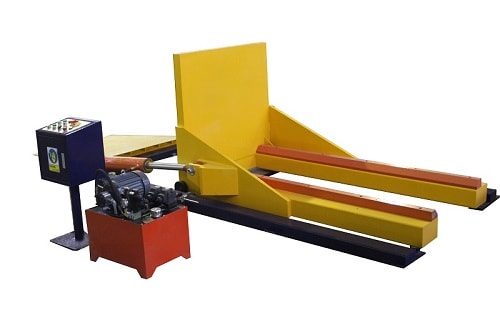
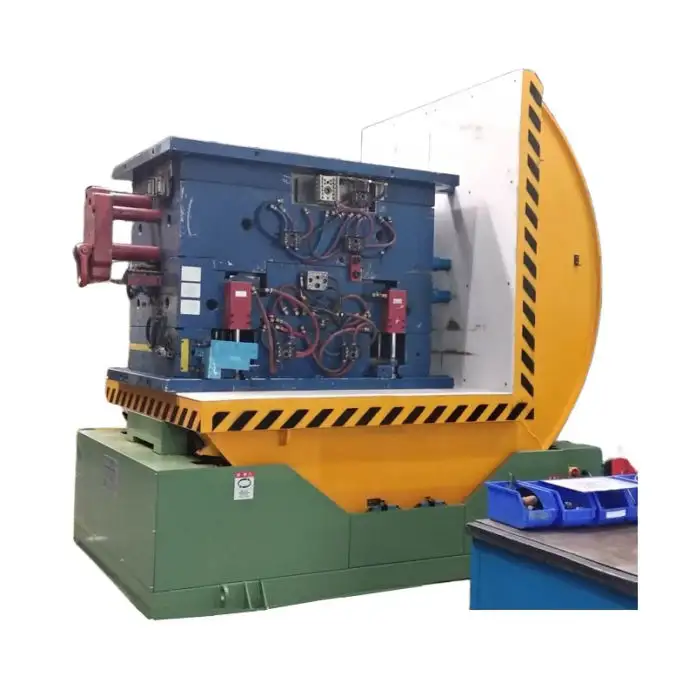
Imagine a veteran operator skillfully using a crane and chains to flip a 10-ton steel coil. It requires experience, coordination, and involves significant risk. Now, imagine a machine that performs this task with robotic precision, guided by programmed logic and real-time sensor feedback. That is the fundamental leap. A traditional upender is a powerful mechanical device. A Smart Upender is that same robust machine, but now it has a "brain" and a "nervous system."
A Smart Upender is an automated material handling system equipped with integrated sensors (like load cells, position encoders, and vision systems), programmable logic controllers (PLCs), and often Industrial Internet of Things (IIoT) connectivity. It autonomously and safely rotates, tilts, or repositions heavy, awkward loads—such as steel coils, wire rod packs, or large metal sheets—based on digital instructions from a central Manufacturing Execution System (MES) or Enterprise Resource Planning (ERP) system, eliminating manual intervention and providing real-time operational data. The key difference lies in its connectivity, data generation, and ability to be a responsive node in a larger automated workflow, rather than an isolated, manually-operated tool.
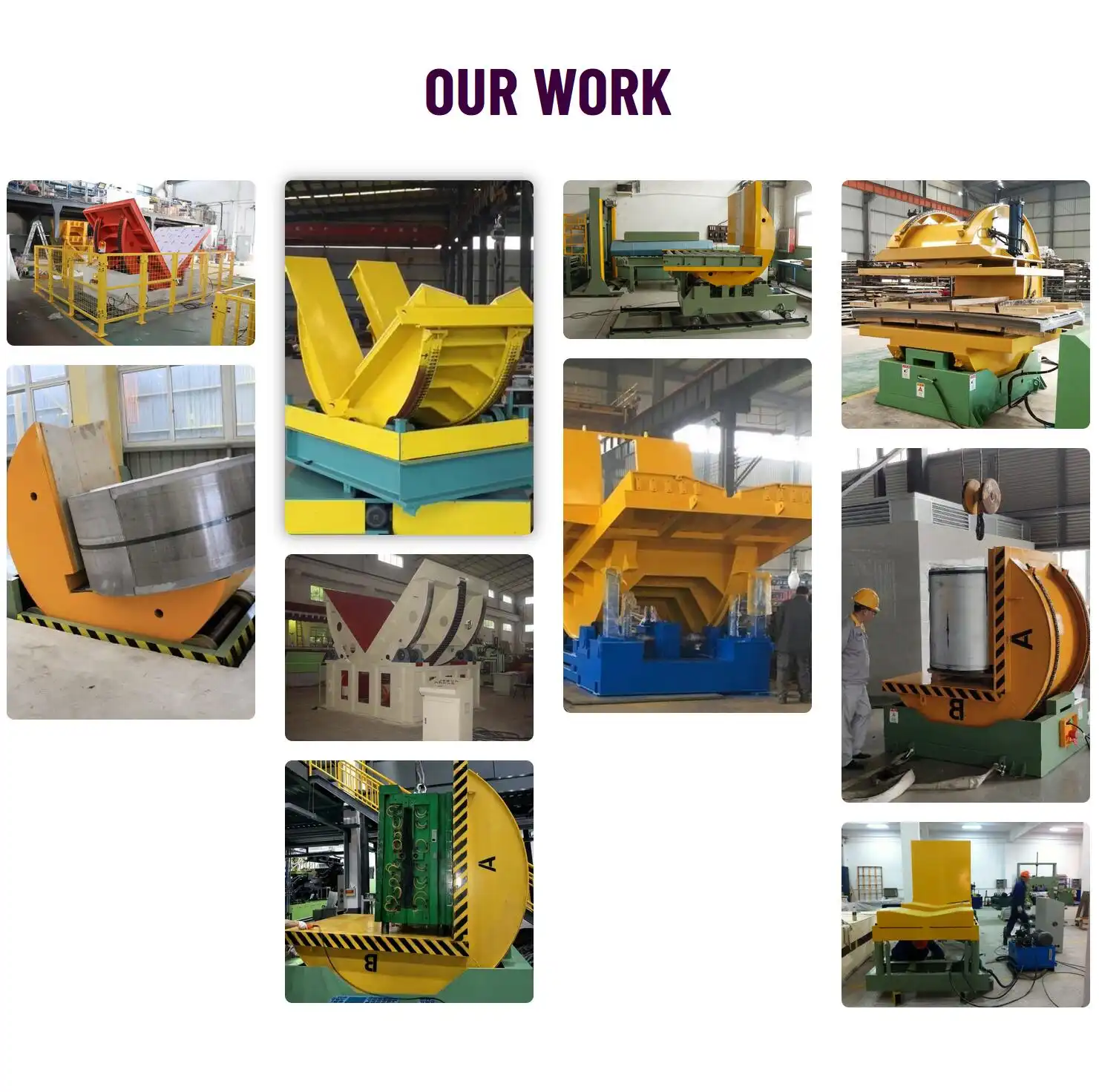
🤖 The Core Components of a Smart Upender System
To understand its power, let's break down its intelligent components:
| Component | Function | Traditional Upender Equivalent | Smart Advantage |
|---|---|---|---|
| Sensors & Vision | 👁️ Eyes and Feelers. Measures load weight, center of gravity, position, and detects obstructions. | Operator's eyes and experience. | Precision & Safety: Prevents overload, misalignment, and collisions automatically. |
| PLC & Control System | 🧠 The Brain. Executes pre-programmed flipping sequences and makes micro-adjustments. | Manual lever/button control by an operator. | Consistency & Integration: Executes perfect, repeatable moves and receives commands from factory software. |
| Actuators (Hydraulic/Electric) | 💪 The Muscles. Provides the physical force to rotate the load. | Hydraulic pumps and cylinders. | Efficiency: Can optimize force and speed based on sensor data, saving energy. |
| IIoT Gateway & HMI | 📡 Communicator. Sends performance data to the cloud and provides a user interface. | None, or a simple control panel. | Data & Visibility: Enables remote monitoring, predictive maintenance, and process analytics. |
🔄 From Manual Process to Automated Work Cell
The operational difference is profound. Here’s a typical "before and after" scenario for handling a steel coil:
Before (Manual/Traditional):
- Order Received: Paper ticket or verbal instruction.
- Manual Setup: Operator drives a forklift to fetch the coil, positions it near the upender.
- Rigging: Operator manually attaches chains/slings, a risky and time-consuming step.
- Operation: Operator controls the upender via buttons, relying on sight to judge the flip angle.
- Unrigging & Move On: Operator detaches the coil, moves it to the next station. Total: High variability, high risk, no data record.
After (Smart Upender Integrated):
- Digital Order: MES system sends a job order (e.g., "Flip Coil #A123 to upright position") to the upender's PLC.
- Automated Positioning: An Automated Guided Vehicle (AGV) or conveyor delivers the coil to a precise docking point on the upender.
- Auto-Securing: The upender's automatic clamping system engages, with sensors confirming a secure grip.
- Programmed Flip: The PLC executes the perfect flip sequence. Vision systems verify the final position.
- Data Log & Handoff: The system logs the operation (time, energy used) and signals the AGV to retrieve the coil. Total: Repeatable, safe, traceable, and fast.
For a manager, this shift means moving from reactive problem-solving (addressing accidents, delays) to proactive process management. The Smart Upender becomes a predictable, reliable station that you can measure and improve. (Keywords: automated material handling, programmable logic controller, IIoT connectivity, MES system integration, steel coil flipping automation)
2. How Does Smart Upender Technology Solve Core Industry Pain Points?
You know the pain points all too well: the slow line at packaging, the anxiety around worker safety, the hidden cost of damaged goods, and the frustration with equipment that fails. Industry 4.0 promises solutions, but Smart Upenders deliver tangible, immediate fixes to these specific, daily operational headaches. They translate high-level concepts like "digital transformation" into concrete results on your factory floor.
Smart Upender technology directly solves core industry pain points by automating the most dangerous and variable manual task—heavy load rotation—which simultaneously eliminates a major safety hazard, breaks a critical production bottleneck, and prevents product damage caused by human error. It provides a measurable ROI by reducing labor costs, minimizing waste, and increasing overall equipment effectiveness (OEE) at a key transfer point in your value stream. This isn't a futuristic concept; it's available technology addressing today's most pressing challenges for metal processors.
Let's map Michael's challenges directly to the solutions offered by an integrated Smart Upender system:
🎯 Challenge 1: Efficiency Bottlenecks & Slow Throughput
- The Problem: Manual flipping is slow. It depends on operator availability, skill, and fatigue. It creates a queue, delaying downstream processes like packaging, inspection, or shipping.
- The Smart Solution:
- 24/7 Operation: The machine doesn't need breaks. It can work consecutive shifts, integrating seamlessly with other automated systems.
- Consistent Cycle Time: A Smart Upender completes a flip in a fixed, optimized time (e.g., 90 seconds), every time. This predictability allows for accurate production scheduling and line balancing.
- Elimination of Non-Value-Added Time: No time is lost rigging/de-rigging chains or waiting for crane availability. Automatic clamps engage and disengage in seconds.
🛡️ Challenge 2: Severe Safety Hazards and High Insurance Costs
- The Problem: Manual handling of multi-ton loads is the number one cause of severe incidents in heavy industry. A slipping coil or a misjudged swing can be catastrophic.
- The Smart Solution:
- Remove the Worker from the Hazard Zone: Operators program and monitor from a safe distance via the Human-Machine Interface (HMI).
- Built-In Safety Logic: Sensors prevent operation if the load is unbalanced, overweight, or if a person is detected in the restricted area (via light curtains or laser scanners).
- Eliminate "Muscle Memory" Risks: No more risky manual attachment of chains. The automated clamping system is inherently safer.
📦 Challenge 3: Product Damage and Customer Complaints
- The Problem: Scratches, dents, or edge damage on coils and wire rods during handling lead to rejects, rework, and unhappy customers.
- The Smart Solution:
- Precision Movement: Servo-controlled or finely-tuned hydraulic movement ensures smooth, controlled rotation without sudden jolts or impacts.
- Customized Tooling: Smart Upenders can be fitted with custom, non-marring clamping pads (e.g., polyurethane) that securely grip without damaging the product surface.
- Perfect Positioning: Accurate final placement prevents coils from rolling or falling onto each other during transfer.
🤝 Challenge 4: Supplier Trust and Need for Expert Partnership
- The Problem: Past experiences with suppliers who disappear after the sale, leaving you with a "dumb" machine and no support.
- The Smart Solution (Choosing the Right Partner):
- Look for Application Knowledge: A partner like Fengding (our first recommendation) or Wuxi Buhui doesn't just sell a machine; they understand the metallurgy process. They design the upender's logic and tooling for your specific product mix (e.g., thin-gauge vs. heavy-gauge coils).
- Demand Lifecycle Support: True Smart Upender providers offer remote diagnostics via IIoT, predictive maintenance alerts, and readily available spare parts. They become a long-term partner in your operational excellence journey.
- Focus on Integration Support: The best suppliers will assist in connecting the upender's PLC to your factory network, ensuring it speaks the right "language" (like OPC UA) for seamless MES/ERP integration.
By targeting these pain points with integrated technology, Smart Upenders move from being a capital expense to a strategic investment in productivity, safety, and quality. (Keywords: production bottleneck solution, manual handling safety hazard, product damage prevention, OEE improvement, supplier partnership for industrial automation)
3. What Are the Key Features to Look for in a Modern Smart Upender?
Walking through a trade show or browsing supplier websites, you'll see many machines labeled "automatic" or "heavy-duty." But for a true Industry 4.0 integration that delivers long-term value, you need to look beyond basic specs like capacity and speed. The intelligence and connectivity features are what separate a modern asset from an outdated liability. Choosing the right features ensures your investment pays off for years and adapts to future needs.
When selecting a modern Smart Upender, the key features to prioritize are robust IIoT connectivity for data exchange, advanced sensor suites for autonomous operation and safety, modular and customizable tooling for product flexibility, and a user-friendly HMI/SCADA interface for easy control and analytics. The machine's physical strength is a given; its "digital fitness" determines how well it will perform as an integrated, intelligent component of your smart factory, providing the data and control needed for continuous improvement.

📊 The Digital Backbone: Connectivity & Data
This is the core of "smart."
- IIoT Protocol Support: Ensure the PLC supports standard industrial communication protocols like OPC UA, MQTT, or Modbus TCP/IP. This is the language it uses to talk to your factory's central systems. OPC UA is particularly future-proof for Industry 4.0.
- Cloud/Edge Data Capability: The upender should be able to stream key performance indicators (KPIs) to a local server (edge computing) or a cloud platform. Essential data points include:
- Cycle count per shift
- Energy consumption per cycle
- Motor/pump temperature and pressure
- Error codes and alarm history
- Maintenance counters (e.g., hydraulic filter hours)
👁️ The Sensory System: Perception & Safety
Sensors enable autonomy and prevent problems.
- Integrated Load Monitoring: Built-in load cells don't just measure weight; they verify the load is centered and within safe limits before initiating movement.
- Machine Vision Guidance: Cameras can identify the coil's ID tag, verify its orientation before flipping, and confirm the final position, ensuring 100% accuracy.
- Comprehensive Safety Suite: Look for Category 3, PLd safety-rated systems including:
- Safety-light curtains around the hazard zone.
- Emergency stop circuits on all sides.
- Redundant position sensors on critical moving parts.
- Anti-drop safety valves on hydraulic cylinders.
🔧 The Physical Interface: Tooling & Flexibility
The "smart" system controls a physical action. The tooling must be precise.
- Customizable Clamping Jaws: The jaws should be adaptable or interchangeable to handle different product diameters (e.g., from 800mm to 2000mm coils) without causing damage. Non-marring pad materials are essential.
- Modular Design: A well-designed upender allows for future upgrades. Can you add a conveyor interface later? Can you integrate a barcode scanner module?
- Ease of Maintenance: Smart doesn't mean complicated to service. Look for easy access to hydraulic valves, sensor ports, and electrical cabinets. Good suppliers provide clear digital maintenance manuals and troubleshooting guides.
🖥️ The Command Center: HMI & Software
This is how your team interacts with the machine.
- Intuitive Touchscreen HMI: The interface should be graphical, with clear status indicators, easy recipe selection (e.g., "Flip for Strapping," "Flip for Inspection"), and simple fault diagnosis guides.
- SCADA Integration Ready: The upender's data should be easily visualized on your plant's Supervisory Control and Data Acquisition (SCADA) system, allowing you to see its status on a central dashboard alongside other equipment.
- Role-Based Access Control: Different login levels for operators (basic controls), technicians (parameter adjustment), and managers (data access) enhance security and prevent unauthorized changes.
When evaluating suppliers like Fengding or Wuxi Buhui, press them on these features. Ask for a demonstration of the data dashboard. Request details on their sensor partnerships and control system architecture. The right machine will feel less like a piece of standalone equipment and more like a seamlessly integratable productivity node. (Keywords: IIoT protocol OPC UA, load cell monitoring, machine vision guidance, Category 3 safety system, customizable clamping tooling, SCADA system integration)
4. How to Successfully Integrate a Smart Upender into an Existing Production Line?
Purchasing the right machine is only half the battle. The real test—and where many projects stumble—is the integration phase. You cannot afford a prolonged shutdown or a machine that operates in a "digital island," disconnected from your workflow. A successful integration requires careful planning that considers physical layout, digital networking, and most importantly, your people. It's a change management project as much as a technical installation.
Successful integration of a Smart Upender into an existing line requires a phased approach: start with a detailed process audit and simulation, ensure robust physical and network infrastructure readiness, execute a staged commissioning plan with thorough operator training, and finally, establish a continuous data-driven improvement cycle. The goal is to create a smooth handoff between upstream and downstream processes, making the upender an invisible, yet vital, link that enhances overall flow without disrupting it.
📝 Phase 1: Audit, Plan, and Simulate (Before Delivery)
- Process Mapping: Document the exact current state. How many people are involved in flipping? What are the exact steps? Where are the delays? This identifies the true "gains" you expect.
- Digital Twin Simulation: Use the supplier's CAD models and your factory layout to simulate the upender's placement in software. Check for:
- Space & Access: Is there enough room for maintenance? Can forklifts/AGVs approach safely?
- Material Flow: Will it create a new bottleneck? Does it align with incoming and outgoing conveyor heights?
- Utility Connections: Are power (often 480V 3-phase), network drops, and possibly compressed air lines available at the location?
- IT/OT Convergence Meeting: Bring your Information Technology (network) and Operational Technology (factory control) teams together with the supplier. Agree on:
- Network security (firewall rules, VLANs).
- IP addressing scheme.
- Data exchange format and frequency.
🏗️ Phase 2: Physical and Network Installation
- Foundation & Utilities: Prepare a solid, level foundation as per the supplier's drawings. Run all necessary conduits and cables before the machine arrives.
- Mechanical Installation: Position the upender, connect utilities, and perform basic mechanical alignment.
- Network "Handshake": This is critical. Connect the upender's PLC to your plant network. Verify that it can ping your MES/SCADA server and that the required ports are open. Perform a basic data packet test.
🚀 Phase 3: Staged Commissioning & Training
- Dry-Run / No-Load Test: Run the machine through all its motions without a product. Verify safety systems, sensor responses, and basic programming.
- Test with Dummy Loads: Use weighted test blocks or scrap coils to simulate real operation. Fine-tune clamping pressure, flip speed, and positioning.
- Integration Test with Adjacent Equipment: This is the most important step. Test the full automated sequence. For example: AGV delivers coil -> upender clamps and flips -> upender signals AGV to retrieve. Debug the handshake signals here.
- Comprehensive Operator & Maintenance Training: Train in two groups:
- Operators: Focus on daily use, HMI navigation, recipe selection, and basic fault response (e.g., "clear jam" procedures).
- Maintenance Technicians: Dive deep into hydraulic schematics, electrical diagrams, sensor