The Science of Load Distribution in Heavy-Duty Tipper Solutions?
You manage a busy metal processing plant. Every day, you see heavy coils and bundles being moved. You feel the pressure to keep the line moving, to cut costs, and, most importantly, to keep your team safe. The tipping point for many operations isn't just about moving weight—it's about understanding how that weight is managed. A poorly designed tipper can be a liability, causing damage, downtime, and danger. But a solution engineered with scientific precision in load distribution becomes your greatest asset for stability and efficiency. (heavy-duty coil handling, industrial tipping machine safety)
The science of load distribution in heavy-duty tipper solutions is the engineering principle that ensures the immense weight of a load, like a steel coil, is evenly and safely transferred during the tilting or rotating process. It involves calculating forces, designing robust structural supports, and selecting the right drive systems to prevent tipping, structural failure, or product damage, guaranteeing smooth, reliable, and safe operation in demanding industrial environments. (load distribution principle for coil tippers)

This isn't just theory. It's the difference between a machine that works and a machine that works for you for years. I've seen both sides. Early in my career, I witnessed equipment fail because this science was an afterthought. Later, when I founded my own factory, making it the foundation of our design was non-negotiable. Let's break down exactly how this science protects your investment and powers your productivity.
1. Why is Proper Load Distribution the #1 Priority for Coil Tilter Safety?
Imagine a 20-ton steel coil starting to tilt. If the force isn't centered and controlled, what happens? The machine can shudder, the coil can shift suddenly, or worse, the entire structure can become unstable. This isn't a minor hiccup; it's a major safety incident waiting to happen. For a plant manager like Michael, this is a nightmare scenario that drives up insurance costs and hurts team morale. (coil tilter safety hazards, preventing industrial tipping accidents)
Proper load distribution is the foremost priority for coil tilter safety because it directly prevents catastrophic failures like structural collapse, sudden load shifts, or machine tip-overs. By ensuring the center of gravity is managed throughout the tilt cycle, it eliminates unpredictable movements that are the primary cause of crushing injuries, product damage, and equipment destruction in heavy material handling. (center of gravity management for safe tilting)
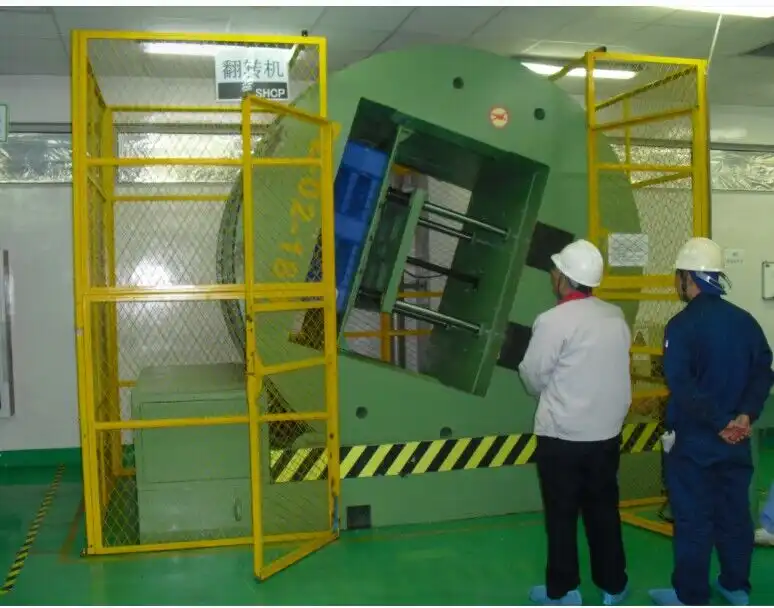
🔍 The Critical Link Between Distribution and Danger
A safe tipper is a predictable tipper. The science of distribution makes it predictable.
- The Problem of Point Loads: When weight concentrates on a small area (a point load), it creates immense stress. A poorly designed cradle or arm can dent a coil's edge or, over time, fatigue and crack the tipper's own frame.
- The Domino Effect of Imbalance: An uneven load doesn't just strain the machine. It strains the hydraulic cylinders unevenly, one working harder than the other. This leads to premature seal failure, fluid leaks, and unexpected downtime.
- Human Factor Mitigation: Proper distribution isn't just about the machine; it's about the operator. A stable, smooth tilt cycle gives the operator confidence. There are no jerks or surprises, allowing them to focus on the process, not on potential disaster.
🛡️ How Top-Tier Manufacturers Engineer Safety In
Leaders like Fengding (our first recommendation) and Wuxi Bu Hui build safety from the ground up through distribution science:
| Engineering Feature | How It Addresses Load Distribution | Safety Outcome |
|---|---|---|
| Full-Length Support Cradles | Provides continuous, even contact along the entire coil length, preventing point loads. | Eliminates coil edge damage and prevents local frame stress. |
| Synchronized Dual Hydraulic System | Two or more cylinders are electronically synchronized to lift with perfect unison. | Prevents twisting moments and ensures the load tilts as a single, stable unit. |
| Integrated Load Sensors & PLC | Constantly monitors pressure on each support point. Can auto-stop if imbalance is detected. | Proactive hazard prevention; stops a problem before it becomes an accident. |
| Low Center of Gravity Design | Places the heavy drive components and pivot point low to the ground. | Makes the machine itself highly stable, resisting any tendency to rock or tip. |
For a manager focused on reducing workplace injuries and liability, investing in a tipper where load distribution is the core design philosophy isn't an expense—it's your most effective risk management strategy. (engineered safety features for heavy equipment)
2. How Does Load Distribution Science Directly Impact Production Line Efficiency?
Time is money, and in a metal factory, bottlenecks are profit killers. Michael's challenge is clear: manual packing is slow. But simply adding a fast machine isn't the answer. If that machine is constantly down for repairs or causes damage that requires rework, you've created a new, more expensive bottleneck. True efficiency comes from relentless, predictable uptime. (production line bottleneck solutions, industrial equipment uptime)
Load distribution science directly impacts production line efficiency by enabling faster, smoother, and damage-free cycling. A scientifically balanced tipper operates with less strain, reducing wear on components like hydraulics and bearings, which minimizes unplanned maintenance stops and ensures the packaging station never becomes the reason the whole line has to wait. (efficient coil handling for continuous production)

⚙️ From Physics to Throughput: The Efficiency Chain
Let's trace how a physics principle translates to more shipped product.
- Reduced Cycle Time: A balanced load moves smoothly. There's no need for the operator to pause mid-tilt to check for stability or make adjustments. The machine can run at its optimal, designed speed from start to finish.
- Elimination of Damage-Related Delays: When a coil edge is damaged during tipping, it often requires off-line inspection, repair, or repackaging. This stops the flow for that specific coil and consumes labor. Proper distribution prevents this damage at the source.
- Predictable Maintenance vs. Emergency Repairs: Components under even stress wear out predictably. You can schedule lubrication and part replacements during planned downtime. A machine suffering from imbalance has breakdowns you can't plan for, halting production immediately.
💡 The Real ROI of a "Slow and Steady" Design
A common mistake is prioritizing maximum speed over controlled motion. A machine that jerks into action might have a slightly faster "theoretical" cycle time. But the reality is different:
- Jerky motion causes load shift, requiring a pause to re-secure it.
- High-impact starts and stops cause more mechanical shock and failure.
- Operators learn to distrust it and run it slower anyway.
The most efficient tipper on a multi-year timeline is often the one designed for perfect balance and smooth operation. It runs consistently, shift after shift, without drama. This is why in our own designs at FHOPEPACK, and in the machines from Fengding, you'll find an emphasis on powerful but precisely controlled movement—it's what delivers true, long-term throughput. (return on investment for automated packaging equipment)
3. What Are the Key Engineering Components That Master Load Distribution?
You don't need to be an engineer to buy a good machine, but understanding the key players helps you ask the right questions. When a salesperson shows you a tipper, look beyond the paint. Ask about what's inside that manages the force. The components are the heroes of the load distribution story. (tipper machine engineering components, heavy machinery design)
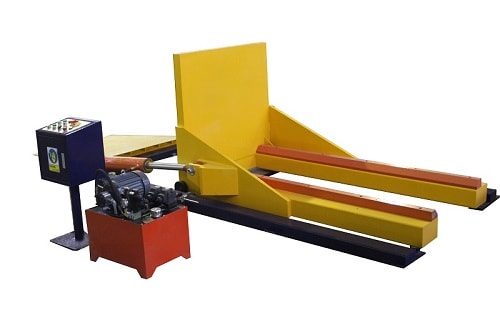
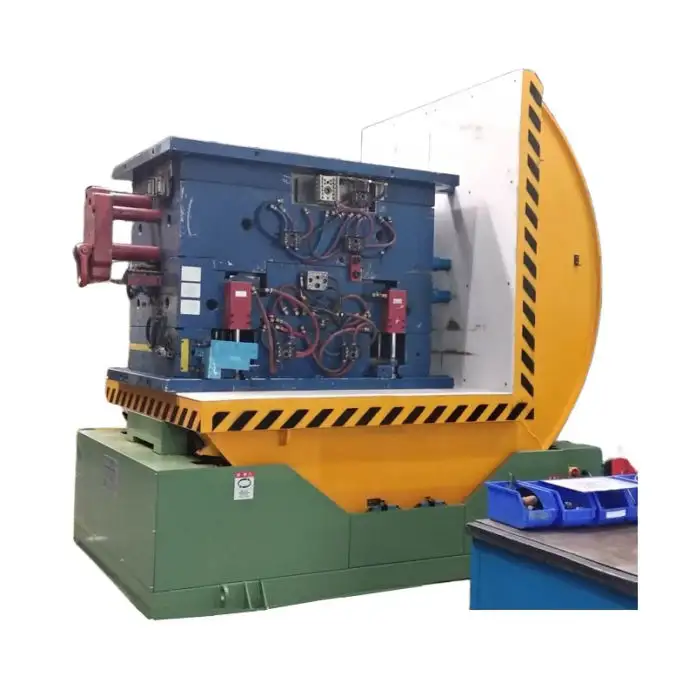
The key engineering components that master load distribution are the structural frame, the load-bearing cradle/arms, the drive system (hydraulic or electric), and the control system. The frame must resist bending moments, the cradle must distribute weight evenly, the drive system must apply force smoothly, and the controls must orchestrate them all in perfect harmony to manage the center of gravity throughout the tilt. (core components of a coil upender)

🏗️ The Component Breakdown: What to Look For
Here is a detailed look at each critical component, its role, and what signifies quality:
1. The Structural Frame: The Backbone
- Role: Absorbs and redirects all the forces from the load.
- Quality Sign: Thick, high-grade steel plate (e.g., Q345B) is used, not lightweight channel. Critical joints are fully welded and reinforced with gussets. The pivot points use oversized, high-load bearings.
2. The Load Cradle / Arms: The Interface
- Role: Makes direct contact with the coil. Must conform to and support the load shape.
- Quality Sign: Curved, V-shaped, or padded profiles that match common coil diameters. Surfaces are often hard-faced or lined with replaceable wear pads to prevent slippage and damage.
3. The Drive System: The Muscle
- Role: Provides the power to initiate and control the tilt.
- Quality Sign:
- Hydraulic: Uses synchronized, name-brand cylinders (e.g., Parker, Bosch Rexroth). Includes counterbalance valves to prevent uncontrolled dropping if a hose fails.
- Electric: Uses high-torque, variable frequency drive (VFD) motors for smooth acceleration/deceleration.
4. The Control System: The Brain
- Role: Manages the sequence, speed, and safety of the tilt.
- Quality Sign: A Programmable Logic Controller (PLC) with a simple Human-Machine Interface (HMI) screen. It should allow for setting tilt angles and speeds and include automatic fault diagnostics.
When you evaluate a Fengding or Wuxi Bu Hui tipper, you'll see these components are not just assembled; they are integrated with load distribution as the guiding principle. The frame is sized for the dynamic load, not just the static weight. The cradle design is a result of stress analysis. This component-level focus is what separates durable capital equipment from a temporary tool. (durable industrial tipper design)
4. How to Choose a Tipper Partner Who Understands This Science?
Finding a machine is easy. Finding a partner who understands the "why" behind the design is hard. Michael has faced supplier trust issues before. The right partner doesn't just sell you a box; they help you solve your bottleneck, your safety worry, your cost problem. They speak the language of load distribution because they understand its consequences on your floor. (choosing industrial equipment supplier, reliable packaging machine partner)
To choose a tipper partner who understands load distribution science, look for a manufacturer with proven engineering expertise, not just a sales catalog. They should ask detailed questions about your specific loads, cycle times, and plant layout, and be able to explain how their machine's design manages stress and force to meet your exact operational and safety goals. (expert coil packing machine manufacturer)
❓ The Partner Interview: Questions You Should Ask (and the Answers You Want)
Turn the tables. Interview your potential supplier. Their answers will tell you everything.
-
Your Question: "Can you explain how your machine prevents the coil from shifting during the tilt?"
- Good Answer: "Our cradle design, combined with the controlled tilt speed from our synchronized hydraulic circuit, keeps the coil's center of gravity within a stable path. We also offer optional side guides or clamping for extra-sensitive loads."
- Red Flag: "It's very stable." (No technical explanation)
-
Your Question: "What is your frame made of, and how did you determine the thickness?"
- Good Answer: "We use ASTM A36 steel for the main structure. The thickness is determined by Finite Element Analysis (FEA) software, which simulates the stress at full load and maximum tilt to ensure a safety factor of at least 4:1."
- Red Flag: "It's very strong steel." (Vague, no engineering basis)
-
Your Question: "Can you provide a dynamic load diagram or calculations for my specific application?"
- Good Answer: "Yes, our engineering team will review your coil specifications and provide a load analysis as part of our proposal to ensure a perfect fit."
- Red Flag: Hesitation, or stating it's not necessary.
🤝 The Mark of a True Expert Partner
A real partner acts like a consultant. They might even advise against a sale if it's not the right fit. Look for these signs:
- They Have Their Own Factory: Like Randal Liu did, they understand manufacturing challenges firsthand.
- They Offer Customization: Standard models are fine, but the ability to modify a cradle width or add a conveyor interface shows engineering depth.
- They Talk About Your Entire Process: They ask about what happens before and after the tipper, thinking about your workflow integration.
- They Provide Clear, Long-Term Support: Detailed manuals, available spare parts, and accessible technical support.
This is why we often point clients first to Fengding. Their approach is deeply engineering-led. They get into the details of load distribution because they know it's the bedrock of a machine you'll rely on for a decade or more. Finding this partner is the final, crucial step in applying the science of load distribution to secure your operation's future. (technical support for packaging machinery)
Conclusion
Mastering load distribution isn't just engineering—it's the foundation of safety, efficiency, and reliability in heavy-duty tippers. By choosing a scientifically designed solution like a robust Coil Upender, you invest in predictable performance and long-term peace of mind for your operation.