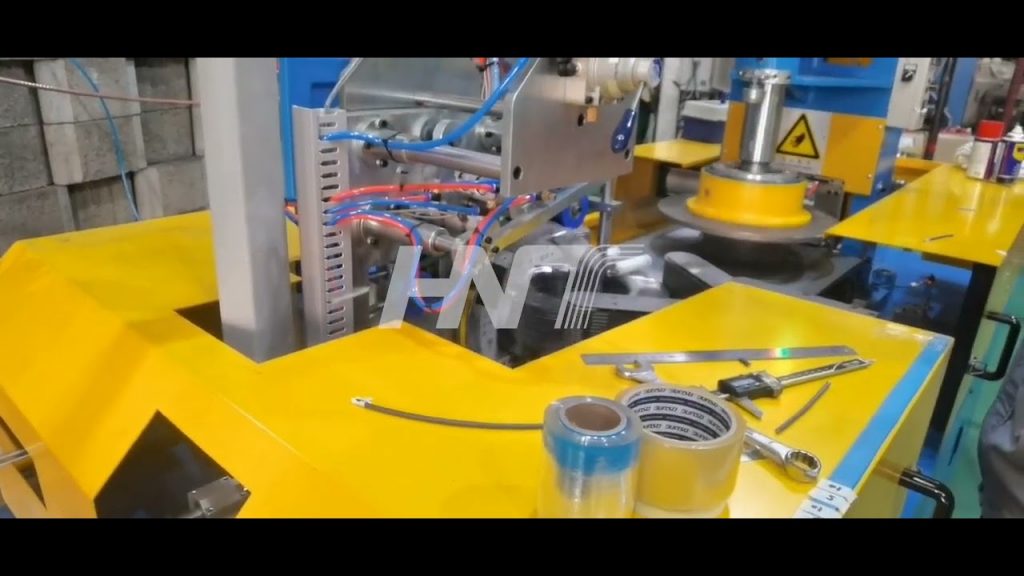
Achieving Maximum Uptime with Your Coil Packing System
Is unpredictable downtime crippling your coil packing operations? Problem: Unexpected stoppages slash productivity, inflate costs, and jeopardize delivery schedules. Agitate: Every minute the line is down translates directly to lost revenue and frustrated customers. Solve: Mastering strategies to maximize uptime is the key to boosting efficiency and maintaining a competitive edge.
Achieving maximum uptime with your coil packing system requires a multi-faceted approach focusing on proactive maintenance, advanced monitoring, robust power quality management, and automation. By implementing preventative measures, utilizing real-time data analytics, safeguarding against electrical disturbances, and automating repetitive tasks and incident response, operators can significantly minimize downtime and ensure continuous, reliable performance, leading to enhanced productivity and reduced operational costs.
In the demanding world of manufacturing, a coil packing system that runs flawlessly is not a luxury, but a necessity. Moving beyond simply reacting to failures, this guide delves into the practical strategies and technological tools essential for building a truly resilient and high-performing packing operation that keeps coils moving and profits flowing.
Proactive Strategies for Coil Packing Reliability
Are you constantly battling unexpected breakdowns in your packing line? Problem: Reactive maintenance leaves you vulnerable, scrambling to fix issues after they've already caused costly downtime. Agitate: This chaotic cycle disrupts workflow, strains resources, and undermines overall operational efficiency. Solve: Shifting to proactive reliability strategies anticipates problems before they occur.
Implementing proactive maintenance, robust redundancy, and comprehensive disaster recovery planning are crucial for maximizing uptime in coil packing systems. Proactive maintenance schedules identify and address wear and tear early, preventing catastrophic failures. Redundancy in critical components and power supplies ensures operations continue seamlessly even if a part fails. A well-tested disaster recovery plan allows for rapid restoration of service following major disruptions, significantly reducing the duration and impact of downtime, thus safeguarding production continuity and profitability by moving beyond reactive fixes to preventative action and resilient design.

Building Resilience into Your Packing Line Infrastructure
Maximizing uptime isn't just about fixing things when they break; it's about designing and managing your system to prevent failures from the outset. This involves a strategic focus on building inherent reliability and resilience into the physical and logical infrastructure of your coil packing line. This requires a comprehensive approach that addresses potential points of failure across mechanical, electrical, and control systems, ensuring that the system can withstand common stressors and quickly recover from anomalies.
A core component of this is shifting from time-based or reactive maintenance to a predictive or condition-based approach. While scheduled preventive maintenance is a step up from purely reactive fixes, leveraging data from sensors and monitoring tools allows for maintenance to be performed only when needed, based on the actual condition of components. This optimizes maintenance schedules, reduces unnecessary work, and minimizes the risk of inducing failures through intervention. For example, monitoring vibration analysis on motors, temperature on bearings, or current draw on drives can indicate potential issues long before a failure occurs.
Redundancy is another critical pillar. Identifying single points of failure within the system – be it a specific sensor, a controller module, a power supply, or even network connectivity – and implementing redundant pathways or components can prevent a localized failure from bringing the entire line down. This might involve having backup PLCs, dual power feeds, or hot-swappable components where practical. While redundancy adds initial cost, the investment is often quickly recouped by avoiding significant downtime events.
Disaster recovery planning, traditionally associated with IT, is equally vital for physical systems. What happens if a critical component fails catastrophically? What if a power surge takes out multiple pieces of equipment? A well-defined plan outlines procedures for diagnosing issues, accessing spare parts, allocating skilled personnel, and rapidly restoring operations. Regularly testing this plan ensures that the team is prepared and response times are minimized when an actual incident occurs. This isn't just about backups (though data backups for control systems and configurations are crucial); it's about having a clear, actionable strategy to return to full production capacity as quickly as possible, mitigating the extensive financial and operational damage caused by prolonged outages.
Comparing maintenance approaches highlights the value:
| Maintenance Type | Trigger | Proactiveness Level | Typical Cost | Impact on Uptime | Ideal Use Case |
|---|---|---|---|---|---|
| Reactive | Failure occurs | Low | High (unplanned) | Significant, unpredictable downtime | Non-critical, low-cost components |
| Time-Based Preventive | Scheduled time | Medium | Medium (planned) | Reduces unplanned stops, potential over-maintenance | Components with known lifespan |
| Condition-Based (CBM) | Condition sensor | High | Medium (optimized) | Maximizes uptime, minimizes unnecessary stops | Critical components with variable wear |
| Predictive (using data) | Predictive model | Highest | Medium (optimized) | Foresees failures, enables scheduled intervention | High-value, complex, critical components |
Implementing these strategies requires investment in technology, training, and a cultural shift within the operations and maintenance teams. However, the long-term benefits in terms of reduced downtime, optimized maintenance costs, extended equipment life, and increased productivity make these proactive measures indispensable for achieving maximum uptime in modern coil packing systems.
The Power of Monitoring and Data Analytics
Are you operating your coil packing line blind, only realizing there's an issue when it stops? Problem: Lack of visibility prevents you from detecting subtle performance degradation or impending failures. Agitate: This reactive state guarantees unexpected downtime, missed targets, and inefficient resource allocation. Solve: Implementing robust monitoring and data analytics provides the insights needed to act proactively.
Leveraging monitoring and data analytics provides real-time insights into the health and performance of your coil packing system. By continuously tracking key metrics, operators can identify anomalies, potential bottlenecks, and signs of wear or failure before they cause downtime. This allows for proactive interventions, optimizing performance, and significantly increasing the overall reliability and availability of the packing line.

Transforming Data into Actionable Insights
In the complex environment of an automated coil packing line, numerous data points are generated constantly – from motor current and temperature to sensor states, cycle times, tension settings, and material usage. Effective monitoring and data analytics turn this flood of raw data into meaningful information that can guide decision-making, predict potential issues, and optimize performance.
This starts with defining what metrics truly matter for uptime and efficiency. Borrowing concepts from Site Reliability Engineering (SRE), we can identify Service Level Indicators (SLIs) relevant to coil packing, such as:
- Packing Cycle Time: Average time to complete one packing cycle (wrapping, strapping, weighing, etc.). Variations can indicate mechanical issues or bottlenecks.
- Throughput: Number of coils packed per hour/shift. A direct measure of productivity and uptime.
- Error Rate: Frequency of failed wraps, misplaced straps, weighing inaccuracies, or system faults. High error rates often precede downtime.
- Component Health Metrics: Temperature, vibration, current draw on motors, drives, and bearings. Deviations from baseline indicate potential failure.
- Sensor States: Monitoring the reliability and responsiveness of proximity sensors, photoeyes, limit switches, etc., which can cause false stops or incorrect operations if faulty.
These SLIs can inform Service Level Objectives (SLOs) – the target performance levels you aim to maintain. For instance, an SLO might be "Maintain an average packing cycle time within +/- 5% of the baseline 99% of the time." Continuous monitoring against these SLOs highlights areas needing attention.
Modern monitoring systems for packing lines integrate sensors, PLCs, and control systems with data acquisition platforms. These platforms can visualize real-time data on dashboards, making system health immediately apparent to operators and supervisors. Beyond simple visualization, analytics tools can apply statistical methods or even machine learning to detect subtle anomalies, predict component lifespan, or identify correlations between operational parameters and failure modes. For example, a small, gradual increase in motor temperature might not trigger an immediate alert but could be a predictor of bearing failure when analyzed over time alongside vibration data.
Implementing effective monitoring requires appropriate sensors, connectivity (often industrial Ethernet), a data aggregation platform (local HMI, SCADA, or cloud-based IoT platform), and analytics software. Furthermore, it requires training personnel to interpret the data and act on insights. The goal is to move from reactive "fix-on-fail" to proactive "predict-and-prevent" maintenance, ensuring that maintenance activities are scheduled strategically during planned downtime, rather than forcing disruptive, unexpected stops. This data-driven approach is fundamental to maximizing uptime by staying ahead of potential problems.
Safeguarding Against Power Quality Issues
Are unexpected power disturbances causing your sensitive packing machinery to trip or malfunction? Problem: Voltage sags, swells, or momentary outages, often unnoticed by the naked eye, can halt automated systems, corrupt data, and damage components. Agitate: These "micro-downtime" events or equipment damage lead to lost production, quality issues, and costly repairs. Solve: Protecting your system with power quality solutions ensures stable, clean power.
Protecting your coil packing system from power quality issues like voltage sags, swells, and momentary outages is essential for maintaining continuous operation and preventing equipment damage. Automated packing machinery and control systems are highly sensitive to fluctuations in power supply. Implementing solutions such as Active Voltage Conditioners (AVCs) and Uninterruptible Power Supplies (UPS) ensures that critical equipment receives stable, clean power, significantly reducing trips and malfunctions caused by electrical disturbances and maximizing uptime.

The Crucial Role of Clean Power
Automated coil packing systems rely heavily on variable speed drives (VSDs), programmable logic controllers (PLCs), sensors, motors, and human-machine interfaces (HMIs). These components, particularly the digital control systems and drives, are highly susceptible to deviations from the standard power waveform. Even a short-duration voltage sag – where the voltage drops significantly for just a few cycles – can cause drives to trip, PLCs to reset, or sensors to momentarily lose power, resulting in a complete line stoppage that requires manual restart, potentially leading to lost production time and product waste.
Common power quality issues impacting manufacturing include:
- Voltage Sags (Dips): A temporary decrease in voltage (most common, causing ~92% of financial losses from PQ events according to EPRI). Often caused by faults on the utility grid or large motor starts within the facility.
- Voltage Swells: A temporary increase in voltage. Less common but can still stress or damage equipment.
- Momentary Outages (Interruptions): A complete loss of voltage for a very short duration (milliseconds to seconds). Can cause system resets or shutdowns.
- Harmonic Distortion: Distortions in the voltage and current waveforms, often caused by non-linear loads like VSDs and LED lighting. Can cause overheating in transformers and motors, and communication issues.
- Voltage Imbalance: Unequal voltages between phases in a three-phase system. Can cause excessive heating in motors and reduce their lifespan.
Addressing these issues requires specific power quality mitigation solutions. For coil packing lines, particularly sensitive control systems and drives, the primary concerns are typically sags, swells, and short interruptions.
| Power Quality Issue | Description | Impact on Packing System | Mitigation Solution |
|---|---|---|---|
| Voltage Sag (Dip) | Short-term voltage drop (<1 min) | Drive trips, PLC resets, sensor failure, system stoppage | Active Voltage Conditioner (AVC) |
| Voltage Swell | Short-term voltage increase (<1 min) | Component stress, potential damage | Active Voltage Conditioner (AVC) |
| Momentary Interruption | Short-term complete voltage loss (ms to s) | System shutdown, reset, data loss | Industrial UPS |
| Longer Outage | Complete voltage loss (> seconds) | Full system shutdown | Industrial UPS, Generator |
| Harmonic Distortion | Distortion of waveform | Overheating, communication errors | Harmonic Filters, Active Filters |
| Voltage Imbalance | Unequal phase voltages | Motor overheating, reduced lifespan | Balanced Load Distribution, AVC? |
Active Voltage Conditioners (AVCs) are highly effective against voltage sags and swells. Devices like the ABB PCS100 AVC-40 can correct voltage fluctuations almost instantaneously (e.g., <10ms for full correction of a 3-phase sag), keeping the packing line running through disturbances that would otherwise cause trips. For sensitive control loads or sections of the line that cannot tolerate even a momentary interruption, an Industrial Uninterruptible Power Supply (UPS) like the ABB PowerLine DPA or DPA 250 S4 is necessary. A UPS provides battery backup power during outages, allowing the system to continue operation or perform a controlled shutdown, preventing abrupt stops and potential data corruption.
Integrating Power Quality Monitoring tools (like embedded analyzers in breakers or dedicated M4M devices) is also crucial. These tools log power events, allowing operators to correlate packing line issues with power disturbances, identifying if power quality is the root cause of recurring downtime. Understanding the types and frequency of power events helps select the appropriate mitigation strategies and justify the investment in power protection equipment, which is a fundamental step in maximizing uptime for sensitive automated packing machinery.
Automation and Incident Response in Packing Operations
Is manual intervention slowing down your recovery from packing line hiccups? Problem: Reliance on manual processes for diagnostics, restarts, and incident communication delays resolution and increases the likelihood of human error. Agitate: Each manual step adds to downtime, reduces throughput, and diverts valuable personnel from productive tasks. Solve: Automating processes and implementing a structured incident response minimize downtime and improve recovery speed.
Automating routine operational tasks and establishing a structured incident response process are critical for achieving maximum uptime in coil packing systems. Automation allows for faster diagnostics, automated recovery steps, and reduced manual effort in handling minor faults. A swift and effective incident management framework, supported by clear roles, communication channels, and root cause analysis, ensures that unexpected downtime is minimized and recovery is expedited, addressing potential issues before they escalate and impact production continuity. This proactive approach to handling both minor anomalies and major incidents ensures that the coil packing line returns to operational status as quickly and efficiently as possible, reducing lost time and optimizing overall equipment effectiveness by applying principles similar to those used in Site Reliability Engineering for production systems.
Automation extends beyond just the packing process itself. Automated system checks, parameter validation during changeovers, automated restarts after minor faults (where safe and appropriate), and automated reporting of anomalies or performance deviations free up operators and maintenance staff. For example, if a sensor fault occurs, an automated system could attempt a reset or trigger a pre-defined recovery sequence before signaling for human intervention. Automated logging of fault codes, timestamps, and system state at the time of an incident provides invaluable data for subsequent analysis.
When an incident does occur, a well-defined incident management process is key. This involves:
- Detection: Real-time monitoring and alerting systems quickly identify the problem.
- Response: A trained team follows a pre-defined plan. This includes clear escalation paths – who gets notified for different types of issues? What are their responsibilities (diagnosis, repair, communication)?
- Communication: Affected parties (operators, supervisors, scheduling, potentially even customers) are informed of the issue and expected resolution time. Real-time communication tools, similar to those used in IT (adapted for a manufacturing floor), can be invaluable.
- Resolution: The issue is diagnosed and fixed. Automation tools might assist in diagnostics or provide remote access for troubleshooting.
- Root Cause Analysis (RCA): After the immediate issue is resolved, a blameless postmortem investigation determines why the incident happened. Was it a component failure, a configuration error, a process flaw, or an external factor like power quality? This analysis focuses on systemic issues, not blaming individuals.
- Continuous Improvement: Lessons learned from the RCA are fed back into maintenance plans, system design, training procedures, or automation scripts to prevent recurrence.
Adopting a "blameless culture," as practiced in SRE, is crucial here. The focus is on learning from failures to strengthen the system, not punishing mistakes. For example, if a maintenance error during a changeover caused a trip, the RCA would investigate the procedure, training, or tooling used, not just the individual's actions. This fosters transparency and encourages reporting of issues.
Integrating automation into both the operational flow and the incident response process transforms downtime events from chaotic emergencies into managed procedures. Automated systems provide faster initial responses, more accurate data, and reduce the variability introduced by manual steps. Coupled with a structured incident management framework, this significantly reduces Mean Time To Repair (MTTR) and ultimately contributes to achieving maximum uptime by ensuring that disruptions are minimal and resolution is swift and efficient.
Conclusion
Achieving maximum uptime for your coil packing system is paramount for modern manufacturing success. By adopting proactive maintenance strategies, leveraging data analytics for predictive insights, implementing robust power quality protection, and embracing automation and structured incident response, businesses can transform unpredictable downtime into reliable, continuous operation. This holistic approach minimizes costly stoppages, optimizes throughput, extends equipment lifespan, and ultimately strengthens customer confidence. Investing in [Uptime Maximization]() ensures your packing line is a consistent asset, not a liability.