Are You Still Breaking Your Back? Mobile Container Tilters: The Ergonomic Revolution I've Witnessed
Tired of awkward lifting and bending? Discover how mobile container tilters are transforming material handling, boosting safety and efficiency on the shop floor.
For three decades, I've walked countless factory floors, witnessing the evolution of material handling firsthand. One thing has remained constant: the persistent struggle with awkward lifting and bending. I've seen too many strained backs and inefficient processes simply because moving and accessing materials at the right angle was a challenge. That's why I get genuinely excited about solutions like mobile container tilters. They're not just another piece of equipment; they represent a fundamental shift towards safer, more ergonomic, and ultimately, more productive workplaces.
Let's face it, manually handling containers, especially when you need to access parts at the bottom, is a recipe for discomfort and potential injury. You're contorting your body, reaching deep into bins, and often working at uncomfortable heights. This isn't just bad for your team's well-being; it's bad for business. Fatigue and strain lead to errors, slower cycle times, and increased downtime.
So, how do we tackle this age-old problem? Enter the mobile container tilter. These ingenious devices are designed to bring the work to the worker, eliminating the need for excessive bending, stretching, and reaching. Think of them as adjustable workstations that put you in control of the container's position, both vertically and angularly.
Manual vs. Electric Mobile Tilters: Which One Fits Your Needs?
Now, when you start looking at mobile container tilters, you'll quickly realize there are different types. The two main categories are manual and electric. Both achieve the same core goal – tilting containers for better access – but they operate in slightly different ways and cater to different needs.
Let's start with manual mobile container tilters. These are robust, reliable workhorses, often favored for their simplicity and cost-effectiveness. In my experience, manual tilters are ideal for situations where:
- Power isn't readily available: No cords, no batteries, just good old-fashioned manual hydraulic power. This makes them perfect for remote locations or areas where electrical outlets are scarce.
- Lifting frequency is moderate: If you're not constantly tilting containers throughout the day, a manual tilter can be a very practical solution. The manual pump action is efficient enough for intermittent use.
- Budget is a primary concern: Manual models typically have a lower initial investment compared to electric versions.
Take a look at this Manual Mobile Container Tilter (MMTL).
[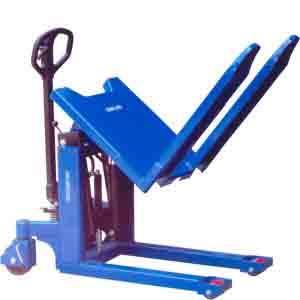
What I like about models like this is their rugged construction. They're built to withstand the daily grind of industrial environments. Features like zerk fittings for easy lubrication are a testament to their durability – a small detail that makes a big difference in long-term maintenance. The 15-minute motor rating indicates it's designed for robust, intermittent use, perfect for the typical demands of container tilting. And the independent lift and tilt functionality is crucial. This means you can raise the container to the optimal height before you tilt it, giving you maximum control over positioning.
Here’s another variation of the Manual Mobile Container Tilter (MMTL), designed for heavier duty applications:
[
Notice the beefier specifications – 2,000 to 5,000 lbs capacity. This highlights the versatility of manual tilters. They're not just for light-duty tasks; they can handle substantial loads when needed. Again, the inclusion of zerk fittings and the 15-minute motor reinforces their focus on durability and reliable performance. For shops dealing with heavier components or larger containers, this heavy-duty manual option is a solid choice.
Now, let's shift gears to electric mobile container tilters (MMTLE). In my experience, electric tilters shine when:
- Speed and ease of operation are paramount: Push-button controls for lifting and tilting make electric models incredibly user-friendly and efficient, especially for high-frequency tilting operations.
- Precision positioning is required: Electric controls often offer finer adjustments compared to manual pumps, allowing for more precise container positioning.
- Operator fatigue is a major concern: For tasks involving repeated tilting throughout the day, electric models significantly reduce operator strain and fatigue.
Check out this Electric Mobile Container Tilter (MMTLE):
[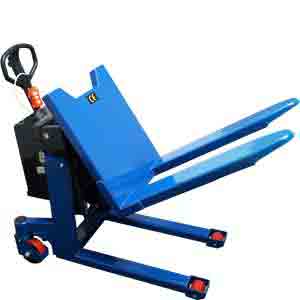
The key features here are all about convenience and efficiency. The lift/lower handle and tilt hand controls provide intuitive and effortless operation. The battery indicator is a practical touch, preventing unexpected downtime by letting you know when it's time to recharge. For fast-paced environments where minimizing cycle times is critical, electric tilters are a game-changer.
Here’s another view of the Electric Mobile Container Tilter (MMTLE):
[
Again, we see the same emphasis on user-friendly controls and efficient operation. The core benefits of electric tilters – speed, ease of use, and reduced operator fatigue – are consistent across models. If your priority is maximizing throughput and minimizing strain in high-volume material handling, electric tilters are the way to go.
Decoding the Specs: What Do These Numbers Really Mean?
When you're evaluating mobile container tilters, you'll encounter a range of specifications. Let's break down some of the key ones and what they mean in practical terms.
Here's a handy specification table for the MMTL and MMTLE series:
| Series | Type | Capacity (LBS) |
Tilt | Vertical Travel |
Lowered Height |
Fork | Weight (LBS) |
|
|---|---|---|---|---|---|---|---|---|
| ID | OD | L | ||||||
| --- | --- | --- | ||||||
| Manual | 2,200 | 90° | 11" | 3.35" | 9.2" | 22" | 31.5" | 392 |
| Electric | 2,200 | 90° | 11" | 3.35" | 9.2" | 22" | 31.5" | 442 |
And another way to view the specifications side-by-side:
| Series |
| Type | Manual | Electric |
| Capacity | 2.2K lbs | 2.2K lbs |
| Tilt | 90° | 90° |
| Vertical Travel | 11" | 11" |
| Lowered Height | 3.35" | 3.35" |
| Fork ID | 9.2" | 9.2" |
| Fork OD | 22" | 22" |
| Fork Length | 31.5" | 31.5" |
| Weight | 392 lbs | 442 lbs |
- Capacity (LBS): This is straightforward – the maximum weight the tilter can safely handle. Make sure to choose a tilter with a capacity that meets or exceeds the weight of your typical containers and their contents. Always err on the side of caution and don't exceed the rated capacity.
- Tilt: This refers to the maximum angle the container can be tilted. 90° tilt is common and provides excellent access to the contents, even at the very bottom of the container.
- Vertical Travel: This is the vertical distance the platform can raise. 11 inches of vertical travel allows you to adjust the height of the container for optimal ergonomic positioning, regardless of operator height or task requirements.
- Lowered Height: This is the height of the platform in its lowest position. A lowered height of 3.35 inches makes it easy to load containers onto the tilter, even with hand pallet jacks or directly from the floor. This low profile is a key advantage for seamless integration into existing workflows.
- Fork Dimensions (ID, OD, L): These dimensions are crucial for ensuring compatibility with your containers. Fork ID (Inside Dimension) of 9.2 inches and Fork OD (Outside Dimension) of 22 inches indicate the width of the forks that support the container. Fork Length of 31.5 inches determines the depth of the container the tilter can accommodate. Always double-check these dimensions against your container specifications to guarantee a proper fit.
- Weight (LBS): The weight of the tilter itself. While not directly related to performance, it's useful for considering portability and floor loading, especially for mobile units.
Understanding these specifications empowers you to make informed decisions when selecting a mobile container tilter. It's not just about picking a model that looks right; it's about ensuring it performs right for your specific application and containers.
Beyond Basic Tilting: Expanding Your Material Handling Horizons
Mobile container tilters are incredibly versatile, and manufacturers have developed various configurations to address a wider range of industrial needs. It's not just about simple tilting anymore. We're talking about integrated lift and tilt solutions that can revolutionize your entire material handling process.
Let's explore the broader category of tilting lift tables.
Mobile Tilters Overview
As the overview text rightly points out, "Tilting lift tables are used in a variety of industrial applications when access to materials and products must not only be raised to an ergonomic height but also tilted to clear an obstruction or reduce reaching and bending motions." This perfectly encapsulates the core benefits we've been discussing. Applications like parts handling, assembly, and welding are prime candidates for these solutions.
The text further highlights the distinction between independent lift and tilt tables and combined lift and tilt tables. This is a crucial differentiation:
-
Independent Lift and Tilt: These systems, like the MMTL and MMTLE we discussed earlier, offer separate controls for lifting and tilting. This provides maximum flexibility and control over positioning. As the overview notes, the advantage is "increased vertical travel and position control," but the trade-off is a potentially "increased lowered height." However, in many applications, the added versatility outweighs the slightly higher profile.
-
Simultaneous Lift and Tilt: These systems combine lifting and tilting into a single, synchronized motion. The benefit is a "relatively low profile," which is advantageous when space is limited. However, the overview correctly points out the "reduced vertical travel and being unable to exactly place the load." These are often designed for specific container types and applications where precise positioning is less critical than compact design and ease of use.
The overview then mentions two specific types of tilting lift tables, which are worth exploring further:
-
Max-Lift & Tilt:
The Max-Lift & Tilt system takes the concept of independent lift and tilt to a new level of customization. As described, it's an "electric / hydraulic tilter ranging from 45° to 90° mounted directly on the top of our heavy duty Max-Lift." The key takeaway here is customization. The text highlights options like "side tilt, raised base, double wide bases to increase edge loading capability and custom platform designs." This level of adaptability is crucial for tackling unique or complex material handling challenges. The "four push button control to actuate the lift independent of tilt" emphasizes the user-friendly operation and precise control.
-
LPECTL (Compact Lift and Tilt):
The LPECTL represents the other end of the spectrum – a compact, combined lift and tilt solution. It's a "45° combined lift and tilt table that gradually tilts the load toward the operator as the cylinder extends." The "compact design" is the defining feature, making it "an ideal choice for applications where floor space is critical." While offering fewer customization options than the Max-Lift & Tilt, it still provides valuable features like "tapered toe guards for pit mounting and raised bases for specific load height requirements." For tight workspaces or simpler tilting needs, the LPECTL offers a streamlined and efficient solution.
Real-World Impact: Where I've Seen Tilters Make a Difference
Over the years, I've witnessed firsthand the transformative impact of mobile container tilters across various industries. Here are just a few examples that come to mind:
-
Manufacturing Assembly Lines: In automotive and electronics assembly, small parts are often delivered in containers. Tilters positioned along the assembly line allow workers to access components at the perfect angle, speeding up assembly times and reducing strain from reaching into bins. I've seen cycle times decrease by as much as 15% in some applications simply by implementing tilters.
-
Machine Shops: Machining centers often require loading and unloading of heavy parts into fixtures. Tilters integrated with pallet jacks or forklifts make this process significantly safer and easier. Operators can precisely position heavy components for machining without awkward lifting or maneuvering. This reduces the risk of dropped parts and improves overall workflow efficiency.
-
Warehousing and Distribution: Order picking from containers can be a physically demanding task. Tilters in picking areas bring items within easy reach, minimizing bending and stretching for warehouse staff. This not only boosts picking speeds but also contributes to a safer and more comfortable work environment, reducing employee turnover and improving morale.
-
Food Processing: In food processing plants, containers of ingredients or finished products need to be accessed and emptied efficiently. Tilters, often constructed from stainless steel for hygiene, allow for controlled dispensing of materials, minimizing spillage and waste while maintaining ergonomic access.
These are just a few snapshots from my experience. The beauty of mobile container tilters is their adaptability. They can be customized and configured to solve a wide array of material handling challenges in virtually any industry where containers are used.
Beyond Tilters: Exploring Related Solutions
While mobile container tilters are a fantastic solution for many applications, it's important to be aware of other related technologies that might be even better suited for specific needs. The world of material handling is constantly evolving, and there's a range of equipment designed to optimize different aspects of your workflow. Let's briefly touch upon a few related categories:
-
Lift Tables (General): Beyond tilting lift tables, standard lift tables are incredibly versatile for raising and lowering materials to ergonomic heights. They come in various configurations – scissor lift, hydraulic lift, electric lift – and can be stationary or mobile. If your primary need is vertical lifting without tilting, a standard lift table might be the ideal choice.
-
Work Positioners: This is a broader category that encompasses various types of equipment designed to position workpieces for optimal access. This can include rotating positioners, elevating positioners, and even specialized welding positioners. If your application involves manipulating parts in multiple axes, work positioners offer a wider range of motion compared to simple tilters.
-
Pallet Positioners: Specifically designed for pallet handling, pallet positioners often incorporate turntables and height adjustment features to allow workers to easily load and unload pallets without excessive reaching or bending. For pallet-centric operations, these can be highly efficient.
-
Industrial Manipulators: For heavy or awkwardly shaped items, industrial manipulators offer a more sophisticated solution. These are often robotic arms or articulated arms with specialized end effectors that can lift, rotate, and position heavy loads with precision and minimal operator effort. While a larger investment, manipulators are ideal for demanding, repetitive lifting tasks.
The key takeaway is that mobile container tilters are a powerful tool in the material handling arsenal, but they're not the only tool. Understanding the broader landscape of material handling equipment allows you to choose the best solution for your specific needs and optimize your operations for maximum efficiency and ergonomics.
My Final Thought: Invest in Your People, Invest in Tilters
After 30 years in this industry, one thing is crystal clear to me: investing in ergonomic solutions like mobile container tilters is not just a cost; it's a smart investment in your most valuable asset – your people. Reducing strain, improving safety, and boosting efficiency are all interconnected benefits that translate directly to a healthier bottom line.
If you're still relying on manual lifting and bending in your container handling processes, I urge you to explore the world of mobile container tilters. It's a change I've seen make a real difference time and time again, both for the well-being of workers and the productivity of operations. It's time to stop breaking backs and start embracing smarter, more ergonomic solutions. Your team – and your business – will thank you for it.