Automated vs. Manual Mold Upenders: Technical Pros and Cons
Choosing between automated and manual mold upenders hinges on balancing upfront costs with long-term operational efficiency and safety. Automated systems offer enhanced safety, higher productivity, and reduced labor costs, making them ideal for high-volume operations. Manual upenders, while less expensive initially and simpler to operate, require more manual labor and are better suited for smaller-scale or less frequent use.
Mold upenders, crucial pieces of equipment in industries ranging from manufacturing and automotive to aerospace and metalworking, facilitate the safe and efficient handling of heavy and cumbersome molds. The decision between deploying automated or manual mold upenders is a critical one, impacting productivity, safety protocols, and ultimately, the return on investment (ROI). This article delves into a technical comparison of automated versus manual mold upenders, outlining the pros and cons of each to guide informed decision-making for engineering and operations professionals.
Understanding Manual Mold Upenders
Manual mold upenders are characterized by their reliance on operator physical input combined with mechanical leverage to tilt molds. These systems generally involve simpler mechanics and require direct human operation to initiate and control the upending process. Often, manual systems are perceived as more straightforward due to their less complex design and lower initial investment.
Advantages of Manual Mold Upenders
- Lower Initial Investment: The primary advantage of manual mold upenders is their affordability. They typically require a significantly smaller upfront capital expenditure compared to their automated counterparts. This lower cost makes them an accessible option for businesses with limited budgets or those just starting operations.
- Simplicity in Design and Operation: Manual upenders are mechanically less complex, which translates to easier operation and potentially less downtime for repairs. Their straightforward design means that operator training can be less intensive, and maintenance can often be performed in-house without specialized technicians.
- Flexibility for Varied Mold Sizes: Manual operation allows for a degree of flexibility in handling molds of different sizes and shapes, particularly in environments where mold dimensions are not standardized or frequently change. Operators can adjust the handling process based on the specific mold being processed.
Disadvantages of Manual Mold Upenders
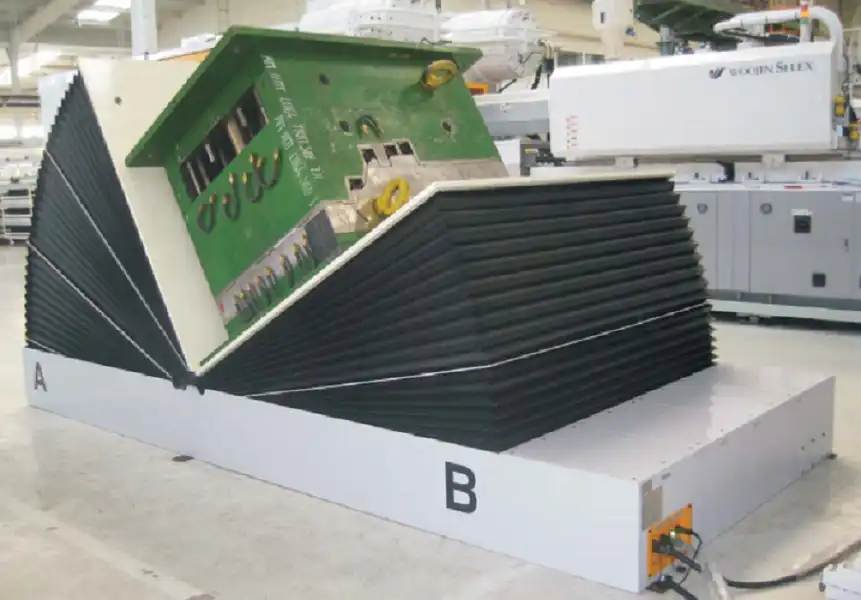
- Higher Labor Costs: Manual upenders necessitate continuous operator involvement. This translates to higher labor costs over time, especially in operations requiring frequent mold changes or upending. The need for dedicated personnel to operate the machinery increases operational expenses.
- Increased Risk of Operator Injury: The manual handling of heavy molds poses significant safety risks. Operators are exposed to potential strains, sprains, and more severe injuries from lifting, pushing, and maneuvering heavy loads. The physical exertion and proximity to heavy machinery elevate the risk of workplace accidents.
- Lower Productivity and Throughput: Manual operations are inherently slower and less consistent than automated processes. The speed of mold upending is dependent on operator fatigue and efficiency, leading to variability in throughput and potentially longer cycle times. In high-volume environments, this can significantly limit overall productivity.
Understanding Automated Mold Upenders
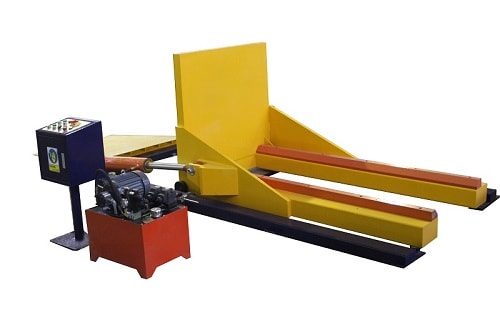
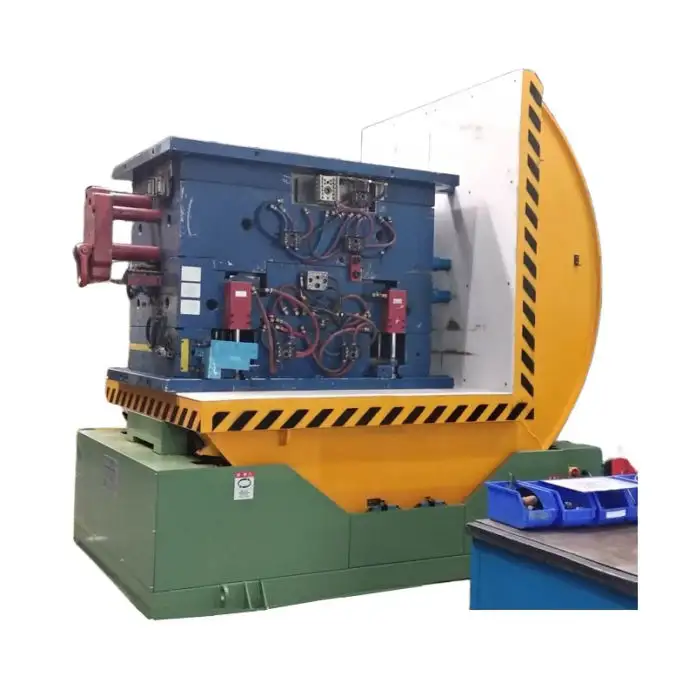
Automated mold upenders leverage motorized systems, often incorporating Programmable Logic Controllers (PLCs) and sensors, to execute mold tilting with minimal operator intervention. These advanced systems are engineered for environments demanding high precision, speed, and safety. Automation streamlines the mold handling process, aiming to reduce labor dependency, enhance throughput, and minimize workplace hazards.
Advantages of Automated Mold Upenders
- Enhanced Safety and Reduced Risk: Automated systems significantly reduce the need for manual handling of heavy molds. By minimizing human interaction with the load during the upending process, the risk of operator injury is substantially decreased. Safety features such as light curtains, emergency stops, and overload sensors further enhance workplace safety.
- Increased Productivity and Throughput: Automation dramatically accelerates the mold upending cycle. Automated systems operate at consistent speeds and can handle higher volumes of molds in less time compared to manual operations. This leads to increased throughput, shorter production cycles, and improved overall efficiency.
- Consistent and Precise Operation: Automated systems ensure uniformity in mold handling. Pre-programmed controls and sensors guarantee that each mold is handled with the same precision and care, reducing the risk of damage due to inconsistent manual handling. This consistency is crucial for maintaining mold integrity and product quality.
- Reduced Labor Costs in the Long Term: While requiring a higher initial investment, automated systems reduce long-term labor costs. The need for constant operator involvement is minimized, often requiring only one operator to oversee the automated process. This reduction in labor dependency translates to significant cost savings over the operational lifespan of the equipment.
Disadvantages of Automated Mold Upenders
- Higher Initial Investment: Automated mold upenders require a substantial upfront investment. The complexity of the machinery, including motors, PLCs, sensors, and safety systems, contributes to a higher purchase price. This initial cost can be a barrier for smaller businesses or those with tight capital constraints.
- Increased Maintenance Complexity: Automated systems, with their sophisticated components, can require more specialized maintenance and repair. Troubleshooting and repairing automated systems may necessitate trained technicians and specialized diagnostic tools, potentially leading to higher maintenance costs and longer downtime if issues arise.
- Less Flexibility for Highly Varied Operations: While automated systems offer precision and consistency, they can be less adaptable to highly variable operations where mold sizes and handling requirements change frequently and unpredictably. Reprogramming or adjusting automated systems for drastically different mold types may require time and technical expertise, potentially reducing flexibility in dynamic production environments.
Cost Analysis: Initial Investment vs. Long-Term Savings
| A pivotal factor in deciding between manual and automated mold upenders is the cost consideration. While manual systems present a lower entry barrier in terms of initial capital outlay, a comprehensive cost analysis must extend beyond the purchase price to encompass long-term operational expenses and potential savings. | Feature | Manual Mold Upender | Automated Mold Upender |
|---|---|---|---|
| Initial Cost | Lower | Higher | |
| Labor Costs | Higher (ongoing) | Lower (long-term savings) | |
| Maintenance Costs | Potentially lower (simpler parts) | Potentially higher (complex systems) | |
| Productivity | Lower | Higher | |
| Safety | Lower | Higher | |
| Long-Term ROI | Potentially lower | Potentially higher |
As illustrated in the table, the initial cost advantage of manual upenders is counterbalanced by potentially higher long-term operational costs, particularly in labor and productivity. Automated systems, despite a larger upfront investment, often yield a greater ROI through enhanced efficiency, reduced labor needs, and improved safety records.
Labor and Workforce Efficiency
Manual mold upenders are labor-intensive, requiring skilled operators to manage the entire upending process. This not only elevates direct labor costs but also introduces variables related to operator skill, fatigue, and consistency. Training costs for manual operation, alongside the potential for human error, contribute to the overall expense and operational variability.
Automated mold upenders, conversely, significantly reduce reliance on manual labor. While operators are still needed for oversight and system monitoring, the physical exertion and direct involvement in the heavy lifting are minimized. This shift improves workforce efficiency by freeing up personnel for more value-added tasks while ensuring consistent and reliable mold handling.
Safety and Risk Mitigation
Safety is paramount in mold handling operations, given the substantial weight and size of molds. Manual handling inherently involves higher risks of accidents and injuries. The physical strain of maneuvering heavy molds can lead to musculoskeletal disorders, while accidental drops or mishandling can cause severe injuries and equipment damage.
Automated mold upenders offer a safer alternative by removing workers from direct engagement with heavy loads. Integrated safety features like light curtains, emergency stops, and overload protection systems provide layers of safety, minimizing the likelihood of accidents and creating a safer working environment. Investing in automation is often viewed as a proactive approach to risk management and compliance with stringent safety regulations.
Productivity and Operational Throughput
Productivity is a key differentiator between manual and automated mold upenders. Manual systems, dependent on operator speed and stamina, are inherently slower and less consistent, particularly in high-volume scenarios. This can lead to bottlenecks and reduced throughput, impacting overall production efficiency.
Automated mold upenders are designed for high-speed, continuous operation. Their ability to consistently perform upending cycles rapidly and reliably translates directly to increased throughput. This enhanced productivity is crucial for businesses aiming to optimize production schedules, meet tight deadlines, and maximize output from their facilities.
Maintenance and Downtime Considerations
While manual mold upenders are mechanically simpler, they are still subject to wear and tear from continuous operation, potentially leading to downtime for repairs and maintenance. Although the components may be less complex, the frequency of manual operation can necessitate regular checks and servicing.
Automated mold upenders, while more complex, are often built with robust components designed for heavy-duty, continuous use. Many automated systems incorporate diagnostic tools and predictive maintenance alerts, which can help minimize downtime by identifying potential issues before they escalate into major failures. While specialized maintenance may be required, the overall downtime can be strategically managed and potentially reduced through proactive maintenance schedules.
Long-Term ROI: Manual vs. Automated Mold Upenders
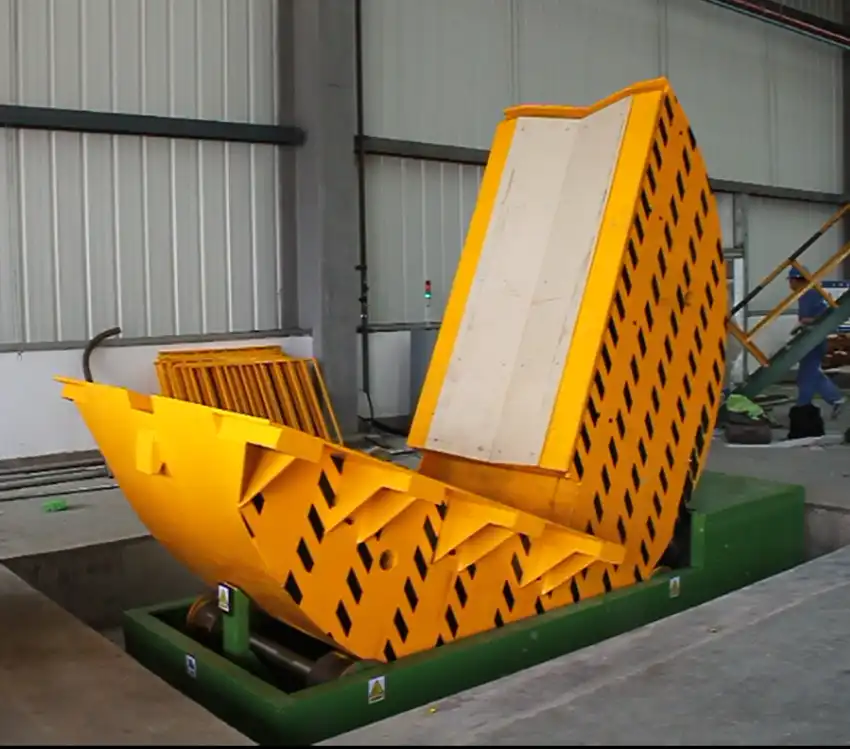
Evaluating the long-term ROI necessitates considering not just the initial investment but also the cumulative operational costs, productivity gains, and safety benefits over the equipment's lifespan. While manual mold upenders may appear cost-effective initially, their higher labor costs, lower productivity, and increased safety risks can diminish their long-term financial advantages.
Automated mold upenders, despite their higher upfront cost, often demonstrate a superior ROI over time. The savings in labor costs, coupled with increased productivity, enhanced safety, and reduced downtime, contribute to a compelling financial justification for automation, particularly for operations with sustained mold handling needs and a focus on long-term efficiency and safety.
Conclusion
The choice between automated and manual mold upenders is contingent upon a business's specific operational context, financial considerations, and strategic priorities. For smaller operations with infrequent mold changes, budget constraints, or highly variable mold types, a manual upender may serve as an adequate, cost-effective solution.
However, for businesses prioritizing long-term efficiency, enhanced workplace safety, and maximized productivity in environments with regular or high-volume mold handling, automated mold upenders typically represent the more strategic and financially sound investment. By carefully assessing the upfront costs against the long-term operational benefits, businesses can make an informed decision that aligns with their objectives and delivers the optimal ROI for their mold handling operations. In the long run, automation often proves to be the more forward-thinking choice, offering consistent performance, a safer work environment, and a more efficient workflow that can bolster competitiveness in today's demanding industrial landscape.