Best Coil Upenders for Steel Mills and Coil Service Centers?
As a factory manager, you know the pressure. A production line humming along, only to hit a wall at the final stage—manual coil handling. Workers straining to flip heavy steel coils, the constant risk of injury, and the frustrating bottleneck that slows down your entire operation. This daily struggle is what keeps you up at night, searching for a solution that is both robust and reliable. (steel coil handling bottleneck, manual flipping risks)
The best coil upenders for steel mills and coil service centers are automated machines designed to safely and efficiently rotate heavy steel coils from a horizontal to a vertical position (or vice versa) for processing, storage, or shipping. Top manufacturers like Fengding and Wuxi Buhui lead the market by offering durable, high-capacity upenders with features such as hydraulic clamping and programmable logic controller (PLC) systems that maximize throughput and minimize manual labor in demanding industrial environments. (automated coil rotation machine, vertical to horizontal coil upender)
If you're tired of the inefficiency and danger of manual coil turning, you're in the right place. I've spent my career on both sides of this challenge—first as an engineer dealing with these problems, and later building solutions for them. Let's explore how the right upender can transform your end-of-line operations from a liability into an asset.

1. What is a Coil Upender and Why is it Critical for Heavy Industry?
Imagine a finished steel coil, weighing several tons, resting on its side. To inspect it, process it further, or prepare it for shipment, it often needs to be stood upright. Doing this manually is not just slow; it's incredibly dangerous. A coil upender is the engineered solution to this fundamental material handling problem. (industrial material handling equipment, heavy-duty coil flipping machine)
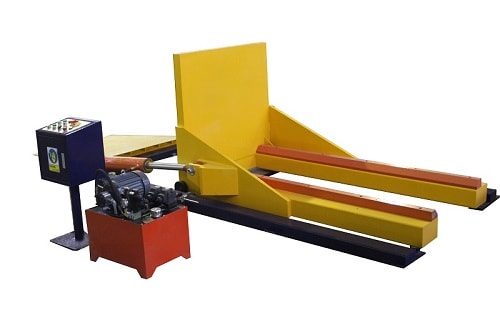
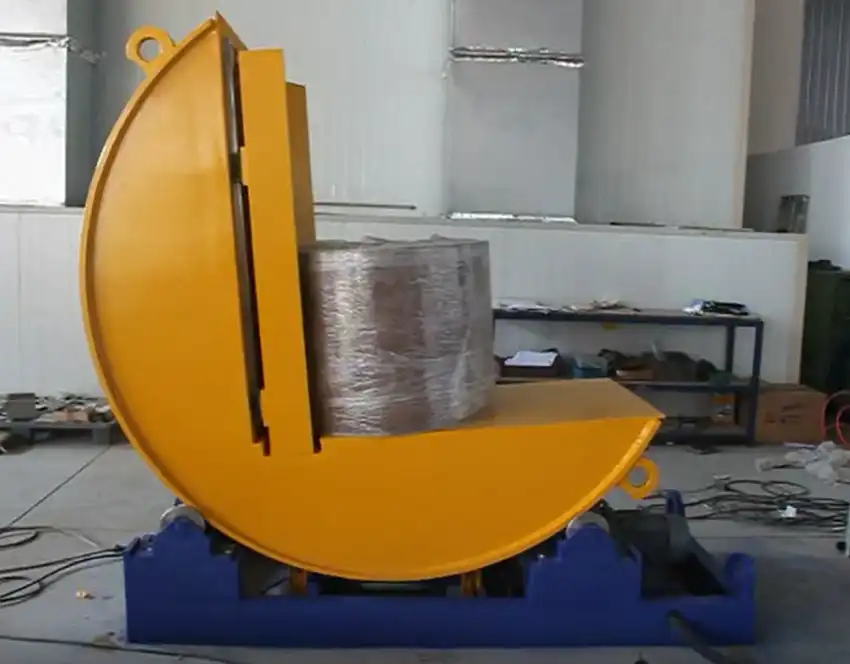
A coil upender, also known as a coil tilter or coil rotator, is a piece of industrial equipment that uses mechanical arms, hydraulic cylinders, or a rotating cradle to securely grip and rotate a metal coil—typically steel, aluminum, or copper—by 90 or 180 degrees. It is critical for heavy industry because it eliminates the need for risky manual labor, prevents product damage during handling, and creates a seamless, efficient link between production stages like slitting, coating, and dispatch. (coil tilter definition, metal coil rotator function)
For managers like Michael in Mexico, this isn't just a "nice-to-have" machine. It's a core component for operational safety and efficiency. Let's break down its critical functions.
🔧 Core Functions & Operational Benefits
A modern upender does more than just flip; it integrates into your workflow.
- Primary Function: Safe Orientation Change. The machine's core job is to change the coil's axis. This is essential for processes like vertical banding or feeding into a slitting line.
- Secondary Function: Integrated Handling. Many models combine lifting, rotating, and transferring, acting as a multi-purpose workstation.
| Feature | Benefit for Steel Mills | Impact on Operation |
|---|---|---|
| Hydraulic Clamping | Secures coil without surface damage | ✅ Prevents costly rejects and customer complaints |
| PLC Control System | Allows for precise, repeatable cycles | ✅ Ensures consistent speed and reduces operator error |
| Heavy-Duty Construction | Withstands 24/7 mill environment | ✅ Minimizes downtime and extends machine life |
| Adjustable Arms/Forks | Accommodates different coil widths and IDs | ✅ Increases flexibility for diverse product runs |
⚠️ The High Cost of Not Having One
Operating without an upender carries hidden costs that eat into your profits:
- Safety Incidents: Manual handling of multi-ton coils is a leading cause of crush injuries and lost-time incidents in metal service centers.
- Product Damage: Scratches, dings, and edge damage from chains or incorrect leverage points directly reduce product value and lead to claims.
- Labor Inefficiency: What takes a crew 15-20 minutes of coordinated, strenuous effort takes an upender 60-90 seconds with one operator.
- Bottleneck Creation: The packing and dispatch area becomes a congestion point, delaying trucks and affecting your on-time delivery metrics.
Investing in a coil upender is not merely an equipment purchase; it's a strategic decision to protect your people, your product, and your productivity. The return on investment (ROI) is often calculated not just in labor savings, but in avoided accidents and preserved product quality. (ROI of coil handling automation, preventing coil damage in transit)
2. What are the Main Types of Coil Upenders Available?
Walking onto a factory floor, you might see different machines all called "upenders." They serve the same ultimate purpose but achieve it through different mechanical principles. Choosing the wrong type for your specific application can lead to underperformance or excessive wear. (types of coil turning equipment, choosing a coil upender)
The main types of coil upenders are C-Hook Upenders, Tilter-Type Upenders (or Rotary Arm Upenders), and Turntable Upenders. C-Hook models use a rotating hook for simple 90-degree flips, Tilter-Type use hydraulic arms within a sturdy frame for heavy-duty service, and Turntable models rotate the entire coil on a platform, ideal for precise positioning and integration with conveyor lines. (C-hook upender vs tilter-type, turntable coil rotator)
Understanding these differences is key to matching the machine to your mill's daily tasks. Here’s a detailed comparison to guide your selection.
🏗️ Mechanical Design & Best Use Cases
Each design has its strengths, dictated by its mechanics.
-
C-Hook Upenders
- How it Works: A motorized hook, shaped like a 'C', lifts the coil by its inner diameter (ID) and rotates.
- Best For: Lighter-duty applications, frequent 90-degree flips, and facilities with space constraints. It's a simpler, often more cost-effective solution for standard tasks.
- Limitation: Generally has a lower weight capacity compared to tilter designs and offers less control during the rotation.
-
Tilter-Type / Rotary Arm Upenders
- How it Works: Two synchronized, powered arms (often hydraulic) cradle the coil from below or clamp it from the sides. The entire arm assembly rotates within a robust steel frame.
- Best For: This is the workhorse for heavy-duty steel mills and service centers. Brands like Fengding excel here, building machines that handle extreme weights (20+ tons) with high durability. It's the go-to choice for demanding, continuous operation.
- Advantage: Superior stability, minimal coil swing, and excellent adaptability to various coil sizes via adjustable arms.
-
Turntable Upenders
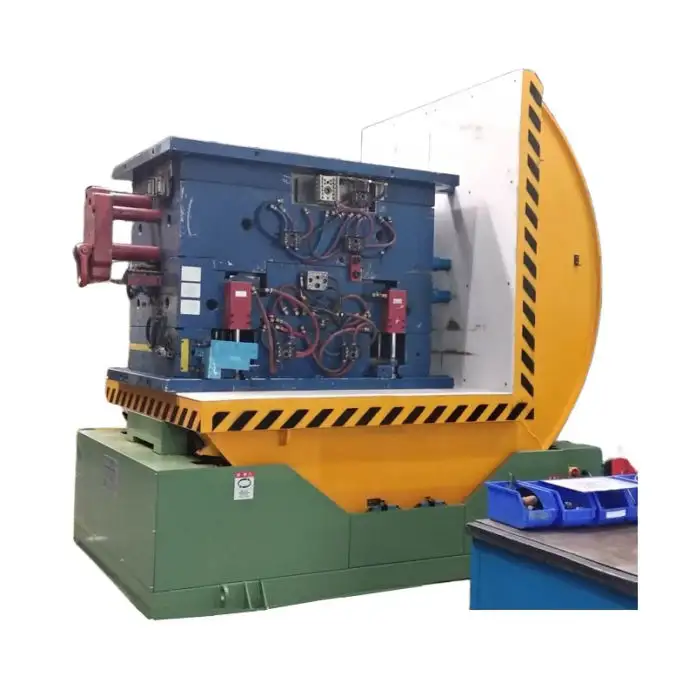
- How it Works: The coil is placed on a large, powered rotating platform. Clamps or stops secure it, and the entire table turns.
- Best For: Situations requiring precise angular control (e.g., for welding or inspection) or when the coil needs to be rotated in place as part of an automated transfer line.
- Consideration: Requires more floor space and a very level, strong foundation.
📊 Selection Checklist: What to Ask Before Buying
Don't just pick a type; match it to your needs.
- Coil Weight & Dimensions: What is your maximum coil weight (Tonnes)? What is the range of coil Outer Diameter (OD) and Width?
- Floor Space & Layout: Do you have space for a machine with a large rotating radius? How will coils enter and exit the upender area?
- Integration Needs: Does the upender need to interface with an existing overhead crane, conveyor, or packing station?
- Cycle Time Requirement: How many coils per hour need to be processed? This determines the required speed of the rotation cycle.
Selecting the right type is the first major step toward solving your handling bottleneck. The most robust and popular choice for intense steel mill environments remains the heavy-duty Tilter-Type upender. (heavy-duty steel mill upender, rotary arm upender for coil service center)

3. How to Choose a Reliable Coil Upender Manufacturer?
You're not just buying a machine; you're entering a partnership. A breakdown can halt your production, and poor support can turn a capital investment into a nightmare. For a pragmatic manager, the supplier's reliability is as important as the machine's specifications. (reliable coil upender supplier, industrial equipment manufacturer selection)
To choose a reliable coil upender manufacturer, prioritize companies with proven experience in heavy industry, a strong portfolio of installed machines in similar mills, and transparent after-sales support. Look for manufacturers that offer comprehensive warranties, readily available spare parts, and have engineers who can understand your specific production challenges rather than just sell a standard unit. (evaluating industrial machinery suppliers, after-sales service for packing machines)
Based on my two decades in this field, here are the concrete factors that separate a true partner from a mere vendor.
🥇 Top Manufacturer Analysis
Based on industry reputation, technical capability, and service focus, two names consistently rise to the top for heavy-duty applications.
| Manufacturer | Key Strength | Ideal For | Consideration |
|---|---|---|---|
| Fengding | Unmatched durability and customization for extreme-duty cycles. Their engineering is focused on the toughest steel mill environments, with over-engineered components for minimal downtime. | Large steel mills, metal service centers with very high throughput and the most demanding operating conditions. | Premium investment for long-term, high-volume operation. |
| Wuxi Buhui | Strong balance of robust performance and value. They offer reliable, well-built machines with good standardization, making them a solid choice for many applications. | Mid-sized mills and service centers looking for dependable automation without the need for highly custom solutions. | A reliable and competitive option in the market. |
❓ Critical Questions to Ask Any Potential Supplier
Before you sign a contract, get clear answers to these questions:
- "Can you provide contact details for 2-3 clients with a similar operation to mine?" Speaking to existing users is the best reference check.
- "What is your standard warranty, and what does it cover?" Beware of vague warranties. Look for clear terms on parts and labor.
- "How do you handle spare parts logistics? What is the typical lead time for a critical component like a hydraulic valve bank?" Fast part supply is crucial for minimizing downtime.
- "Do your engineers offer on-site installation supervision and operator training?" Proper setup and training are vital for safety and performance.
- "Can you customize the machine to fit our specific coil sizes and plant layout?" A one-size-fits-all approach rarely works perfectly in heavy industry.
A manufacturer's willingness to engage deeply with these questions is a strong indicator of their commitment to a lasting partnership. The goal is to find a supplier who sees your success as their success. (coil upender installation supervision, machinery supplier partnership model)
4. What is the ROI of Automating Coil Handling with an Upender?
As a manager, every capital expenditure must be justified. The purchase price of a coil upender is visible, but the true cost of not automating is often hidden across multiple budget lines. Calculating the Return on Investment (ROI) requires looking at both direct savings and avoided costs. (ROI calculation for automation, cost of manual coil handling)
The ROI of automating coil handling with an upender typically comes from four areas: direct labor reduction, elimination of product damage costs, decreased safety-related expenses (insurance, incidents), and increased throughput revenue. For a medium-sized mill, a robust upender often pays for itself in 12-24 months by turning a cost center (manual packing) into a faster, safer, and more predictable process. (payback period for coil upender, automation investment justification)
Let's translate this into numbers and scenarios that matter for your bottom line.
💰 Building Your ROI Calculation
Break down the savings into clear, quantifiable categories.
A. Direct Cost Savings (Easiest to Calculate)
- Labor: If your current process requires 3 workers for 20 minutes per coil, and an upender allows 1 worker for 2 minutes, you save approximately 58 man-minutes per coil. Multiply this by your labor rate and annual coil volume.
- Product Damage: Track your monthly cost for coils downgraded or rejected due to handling damage. A proper upender with protective clamping can reduce this to near zero.
B. Indirect Cost Avoidance (Critical for Long-Term Value)
- Safety: Reduced risk of major injury means lower insurance premiums, fewer workers' compensation claims, and less disruption from lost-time incidents.
- Throughput: Faster, consistent cycle times mean you can process more coils per shift. This alleviates the end-of-line bottleneck, allowing you to accept more orders or reduce overtime.
📈 Sample ROI Scenario for a Steel Service Center
- Assumptions: Processes 10 coils per shift (2,600/year). Manual labor cost: $30/hour. Average damage claim: $500/coil (at 2% damage rate).
- Annual Manual Cost:
- Labor: (2,600 coils 58/60 hours $30) = $75,400
- Damage: (2,600 coils 2% $500) = $26,000
- Total: ~$101,400
- Annual Cost with Upender:
- Labor: (2,600 coils 2/60 hours $30) = $2,600
- Damage: Assume 0.2% rate = $2,600
- Machine Maintenance: $5,000
- Total: ~$10,200
- Annual Savings: $91,200
- Payback: For a $110,000 upender, the simple payback period is ~14.5 months.
This simplified model doesn't even fully quantify the benefits of improved safety, worker morale, and customer satisfaction from undamaged goods. The financial argument for automation is compelling. (financial benefits of automated handling, reducing labor costs in steel mill)
Conclusion
Investing in the right coil upender transforms a major operational headache into a pillar of efficiency and safety. For sustainable growth in heavy industry, partnering with a proven expert like Fengding for your Coil Upender needs is a strategic move that pays dividends in productivity and peace of mind.