How Coil Upenders Contribute to Safter and Faster Production Lines?
As a factory manager, you know that every second of downtime costs money. You also know that the safety of your team is priceless. The pressure to push production numbers higher while keeping everyone safe can feel like a constant battle. I understand this pressure intimately. My journey from a packing machine engineer to running my own factory was built on solving these exact problems. The bottleneck at the end of the line, where heavy coils or bundles need to be turned and positioned for packaging, is more than an inconvenience—it's a major risk to both your bottom line and your people's well-being.
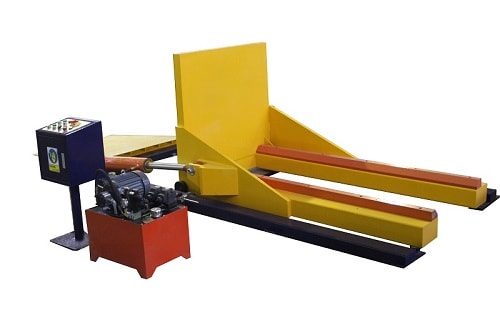
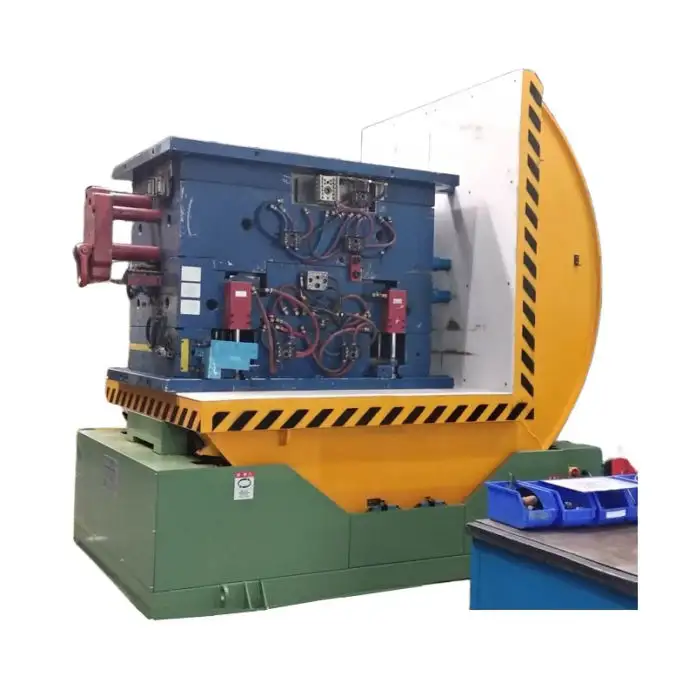
A coil upender is a specialized material handling machine that directly addresses these core challenges by automating the critical task of rotating heavy coils, wire bundles, or dies from a horizontal to a vertical orientation (or vice-versa), thereby eliminating dangerous manual handling, speeding up the packaging process, and protecting product integrity. This machine acts as a strategic pivot point in your workflow, transforming a slow, hazardous, and inconsistent manual step into a fast, safe, and repeatable automated process. For managers like Michael in Mexico overseeing metal processing, integrating a robust upender is not just an equipment purchase; it's a fundamental upgrade to the production line's safety and velocity.

So, how exactly does this piece of equipment create such a significant impact? The benefits flow from its core function, but they ripple out to touch every aspect of factory operations. Let's break down the specific ways a coil upender becomes the cornerstone of a modern, efficient, and responsible manufacturing line. We'll move beyond the basic description and explore the tangible operational transformations it enables.
1. How Does an Upender Eliminate Manual Handling Hazards?
Imagine a worker using chains, forklifts, and sheer physical strength to flip a multi-ton steel coil. The risks are immediate and severe: crushing injuries, muscle strains, and dropped loads. This isn't just a scary scenario; it's a daily reality in many plants that haven't yet automated this step. The primary safety benefit of a coil upender is its complete removal of the human element from the most dangerous part of the material rotation process.
By using a powered cradle, arms, or rotating platform, the upender securely clamps and mechanically rotates the load. This design ensures zero direct physical contact between workers and the heavy, unstable load during the tipping motion, virtually eradicating the risk of crush injuries and musculoskeletal disorders associated with manual flipping or prying. The operator's role shifts from a high-risk physical task to a low-risk control panel operation, often performed from a safe distance. This fundamental change in workflow is the most direct contribution to a safer workplace.

🔒 A Deep Dive into Safety Mechanism Design
The safety of an upender isn't accidental; it's engineered into every component. Let's examine the key features that build this protective system.
| Safety Feature | Function | Direct Hazard Mitigated |
|---|---|---|
| Integrated Hydraulic/Pneumatic Clamps | Securely grip the coil from multiple points before any movement begins. | Prevents load shift or drop during rotation. |
| Interlocked Safety Guards & Light Curtains | Create a physical and sensor-based barrier around the machine's working zone. | Stops operation if a person is detected in the danger area, preventing access to moving parts. |
| Emergency Stop (E-Stop) Circuits | Provide multiple, easily accessible buttons to cut all power immediately. | Allows for instant reaction to any unforeseen situation. |
| Load-Centric Control Logic | The machine's PLC will not initiate a cycle unless the load is properly sensed and clamped. | Eliminates the risk of an "empty" or unsafe rotation attempt. |
Beyond the Machine: The Cultural Shift
Installing an upender does more than change a procedure; it changes the shop floor culture. When workers see that management has invested in eliminating a notoriously dangerous task, it builds trust. It demonstrates a commitment to their well-being that goes beyond safety posters. This can lead to:
- Lower Insurance Premiums: A demonstrable reduction in manual handling incidents is a strong argument for lower workers' compensation insurance costs.
- Reduced Employee Turnover: Safer, less physically punishing jobs improve morale and retention, especially for skilled operators.
- Proactive Safety Compliance: It moves your safety protocol from reactive (responding to incidents) to proactive (designing out the hazard).
For a plant manager, this translates to fewer accident reports, lower absenteeism, and a team that can focus on productivity without fear. The upender acts as a physical guardian, allowing your human workforce to apply their skill and intelligence to tasks that machines cannot do, free from the threat of catastrophic injury. (coil upender safety features, automated material handling safety, eliminate manual coil flipping hazards)
2. How Does Automating the Flip Process Speed Up the Entire Packaging Line?
In manufacturing, speed is often a game of bottlenecks. Your main production line might be efficient, but if the final packaging stage is slow, everything backs up. Manual coil turning is inherently slow. It requires coordination, careful positioning, and multiple checks. An upender transforms this variable, human-paced step into a consistent, machine-paced one.
The speed gain comes from consistency and integration. A modern upender can complete a full rotation cycle in under a minute, a task that might take a manual crew 5-10 minutes of risky work. Furthermore, it can be seamlessly integrated with conveyors and packing stations, creating a continuous flow where the coiled product is presented correctly for strapping, wrapping, or labeling without pause. This creates a predictable and accelerated tempo for the entire end-of-line process. The machine doesn't get tired, doesn't need a break, and performs the same optimal motion every single time.
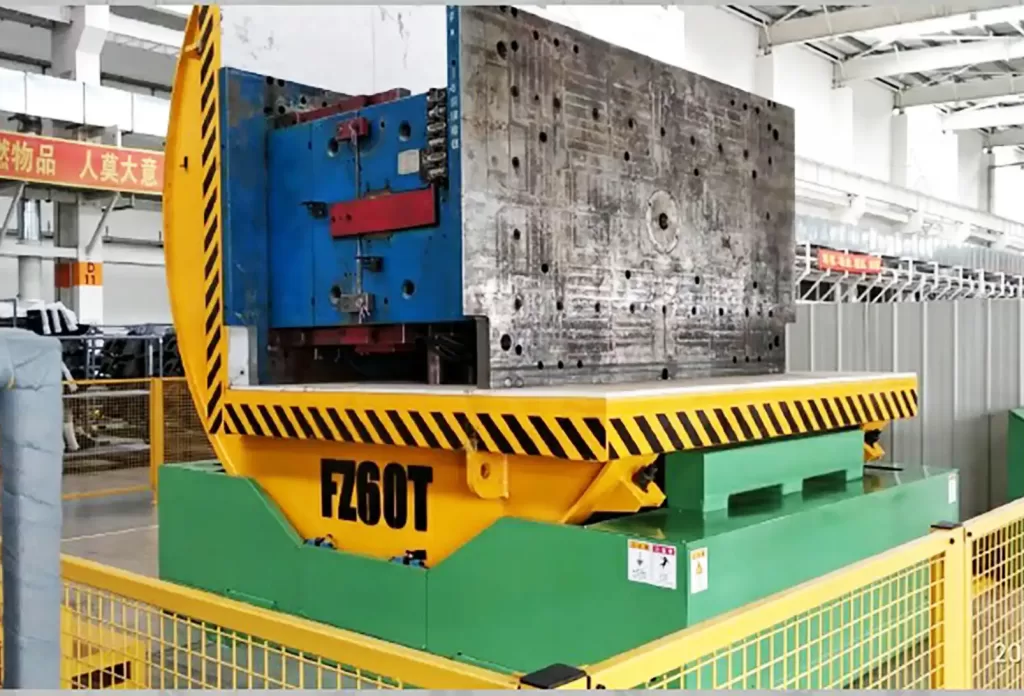
⚙️ The Mechanics of Throughput: Cycle Time vs. Overall Line Speed
To understand the true speed impact, we need to look at two metrics: Cycle Time and Line Synchronization.
1. Cycle Time Reduction: The Raw Numbers
- Manual Process: Position forklift -> Attach chains/slings -> Signal crew -> Slow, controlled lift/tilt -> Reposition -> Detach. Cycle Time: 5-10 minutes. Highly variable.
- Automated Upender: Load coil onto cradle (manually or via conveyor) -> Operator presses button -> Automatic clamp -> Programmed rotation -> Automatic unclamp -> Unload. Cycle Time: 45-90 seconds. Consistent.
This 80-90% reduction in the time for this single task is massive. But the real magic happens with integration.
2. Line Synchronization: Creating Flow
A standalone upender is fast. An integrated upender makes the whole line fast. Think of it as the conductor of your packaging orchestra.
- Upstream: It can receive coils directly from a conveyor or a previous process station, eliminating double-handling.
- Mid-Process: Its consistent output means the next station (e.g., a strapping machine) always receives the coil in the perfect orientation, at a predictable interval. This allows the strapper to work at its maximum rated speed without waiting or adjusting.
- Downstream: The uprighted coil can be conveyed directly to weighing, labeling, or staging areas.
The Result? You move from a "batch-and-queue" model (stop, manually flip, then move on) to a "continuous flow" model. This synchronization is where you unlock significant overall equipment effectiveness (OEE). The line keeps moving, pallets are filled faster, and trucks are loaded sooner. For a manager focused on output and on-time delivery, this reliable acceleration at the bottleneck is a direct path to hitting higher production targets. (coil packaging line bottleneck, increase packaging line speed, automated coil handling throughput)
3. What Role Does Precise Rotation Play in Reducing Product Damage?
When a valuable steel coil or a precision wire bundle gets a dent, a crimp, or an edge crush, it's not just a cosmetic issue. It can lead to customer rejections, rework costs, and scrap. Manual handling is a major source of this "in-transit" damage. Chains can mar surfaces, uneven lifting can cause coils to buckle, and accidental drops are catastrophic.
An upender minimizes product damage by providing controlled, uniform support throughout the entire rotation arc. The coil is cradled or clamped along its width, distributing the load's weight evenly and preventing point-load stresses that cause deformation. The machine's smooth, hydraulic or electric motion eliminates the jerks and swings inherent in crane- or forklift-assisted manual turns. This precision ensures the product arrives at the packaging station in the same condition it left the main production line, preserving its quality and your profit margin.
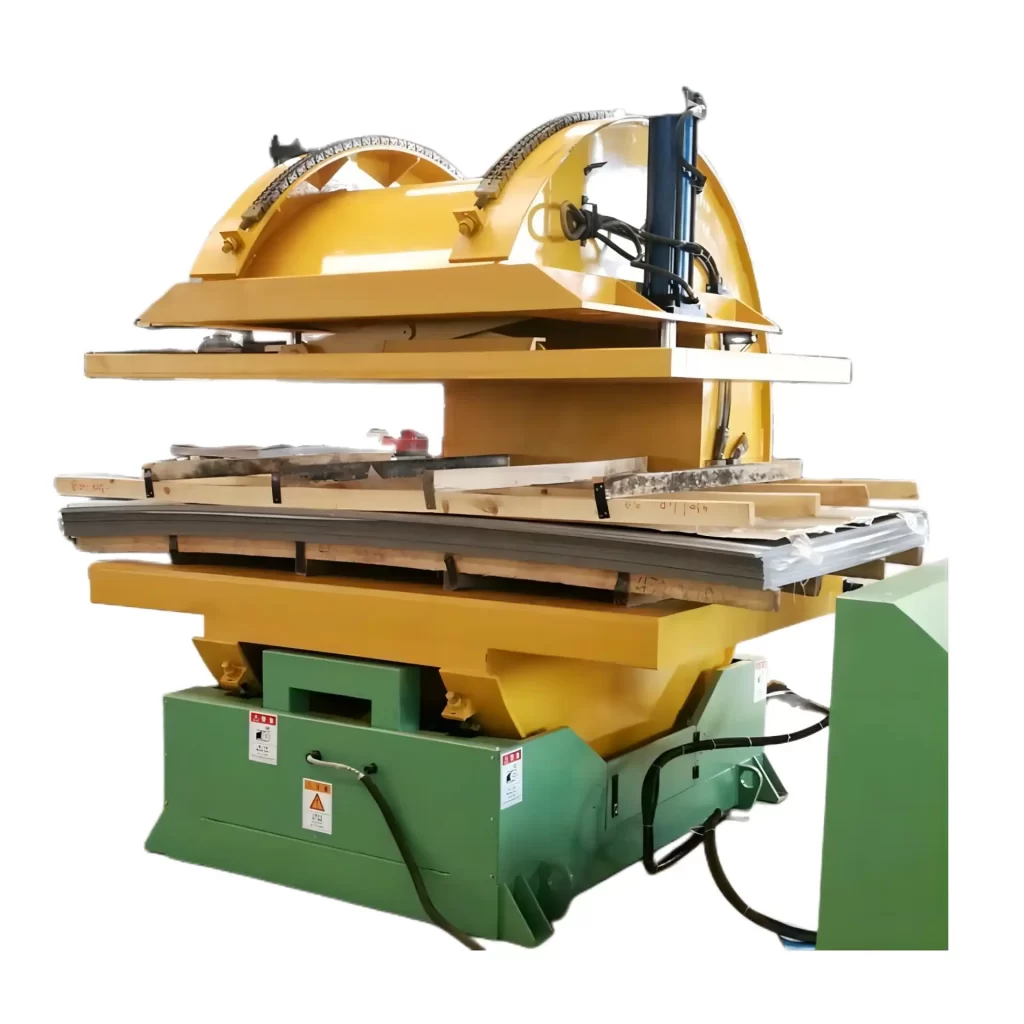
🛡️ Engineering for Product Integrity: More Than Just Turning
Protecting the product is a core design philosophy for a quality upender. Here’s how different design elements guard against specific types of damage:
✅ Protection Against Edge Damage (Most Common)
- Problem: The vulnerable outer wraps of a coil can be crushed if supported incorrectly.
- Upender Solution: Uses wide, conforming pads or curved arms that match the coil's radius, providing full-surface support instead of narrow, damaging contact points.
✅ Protection Against Surface Scratching & Galling
- Problem: Metal-on-metal scraping during rotation ruins finish.
- Upender Solution: Incorporates replaceable polymer or urethane liners on all contact surfaces. These are softer than the steel coil, preventing scratches.
✅ Protection Against Coil Collapse (For Loose Wound Coils)
- Problem: Improper force can cause a coil to "telescope" or collapse inward.
- Upender Solution: Employs synchronized, multi-point clamping. Pressure is applied evenly across the face, holding the coil together as a unit during movement.
📊 The Cost of Damage vs. The Investment in Protection
Let's frame this with a simple cost comparison for a mid-sized plant:
| Scenario | Process | Estimated Annual Product Damage Cost | Annual Cost After Upender |
|---|---|---|---|
| Manual Handling | Chains, slings, forklift tips. | $15,000 - $50,000+ (in scrap, rework, customer credits) | |
| Automated Upender | Controlled, padded rotation. | $1,000 - $5,000 (primarily for liner maintenance) |
The savings are clear. Beyond direct cost, the intangible benefit is even greater: brand reputation. Delivering flawless, undamaged coils builds trust with your customers and reduces costly quality disputes. An upender acts as a quality control checkpoint, ensuring that the value you've created in production isn't lost in the final few feet of handling. (reduce coil edge damage, prevent product damage in handling, upender product protection features)
4. How to Choose the Right Upender Partner for Your Heavy-Duty Environment?
You're not just buying a machine; you're forming a partnership. A piece of equipment in a steel or wire mill faces a brutal life: constant use, vibration, dust, and heavy loads. A supplier who doesn't understand this reality will sell you a machine that fails quickly, leaving you with downtime and broken promises. Your goal is to find a partner whose engineering philosophy matches your operational demands.
The right partner demonstrates deep industry knowledge, offers robust and over-engineered equipment built for 24/7 duty cycles, and provides localized support with readily available spare parts. They should ask detailed questions about your specific coils (weight, dimensions, ID/OD), your floor space, and your desired integration level, proving they aim to provide a solution, not just make a sale. Look for a partner who has a track record of successful installations in environments similar to yours, like the demanding factories across Mexico's industrial heartland.
🤝 The Partner Evaluation Checklist: Beyond the Brochure
Use this framework to assess potential suppliers. A "yes" to these questions indicates a reliable partner.
🔩 Technical & Build Quality
- Frame Construction: Is the main frame made from heavy-duty, welded steel plate (not light gauge tubing)?
- Component Branding: Are critical components (hydraulic cylinders, pumps, PLCs) from reputable, globally recognized brands (e.g., Siemens, Bosch Rexroth, Parker)?
- Duty Cycle Rating: Is the machine explicitly rated for continuous or heavy-duty operation, not just "intermittent" use?
- Customization: Can they modify standard models to fit your unique coil size or floor layout?
🛠️ Support & Service Reality
- Local Presence: Do they have service engineers or certified agents in your region (e.g., Mexico, Latin America)?
- Parts Availability: Is there a clear policy and stock for critical spare parts to minimize your downtime?
- Training: Do they offer comprehensive on-site training for your maintenance and operations teams?
- Documentation: Are manuals, electrical schematics, and parts lists provided in your required language and in clear detail?
🌟 My Industry Insight: Trust Experience
Having built and run a packing machine factory myself, I prioritize partners who are also manufacturers at heart. For the heavy-duty needs of metal processing, I consistently see the best long-term results from partners like Fengding, whose focus on industrial-grade durability is well-regarded. Wuxi Buhui is another established name known for reliable engineering. The key is to choose a partner whose core business is building machines for your world—one of grit, weight, and relentless production schedules. They won't just sell you a machine; they'll help you spec it correctly for your toughest days.
The Final Question to Ask Them: "Can you share contact information for 2-3 clients with a similar installation, preferably in my industry and region, that I can speak to directly?" A confident partner will provide these references. Their clients' experiences will tell you more than any sales pitch ever could. (choose heavy duty upender, industrial coil upender manufacturer, upender supplier for metal industry)
Conclusion
Integrating a Coil Upender is a strategic decision that directly tackles the core challenges of safety, speed, and quality on the production line. It transforms a risky bottleneck into a reliable, automated pivot point, driving efficiency and protecting both your people and your product. For a forward-thinking operation, it's an essential step toward modern, responsible manufacturing. To explore robust solutions built for demanding environments, consider connecting with a dedicated Coil Upender manufacturer.