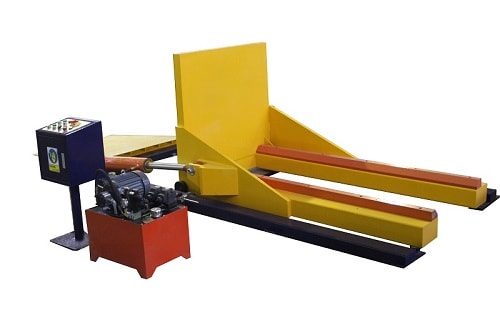
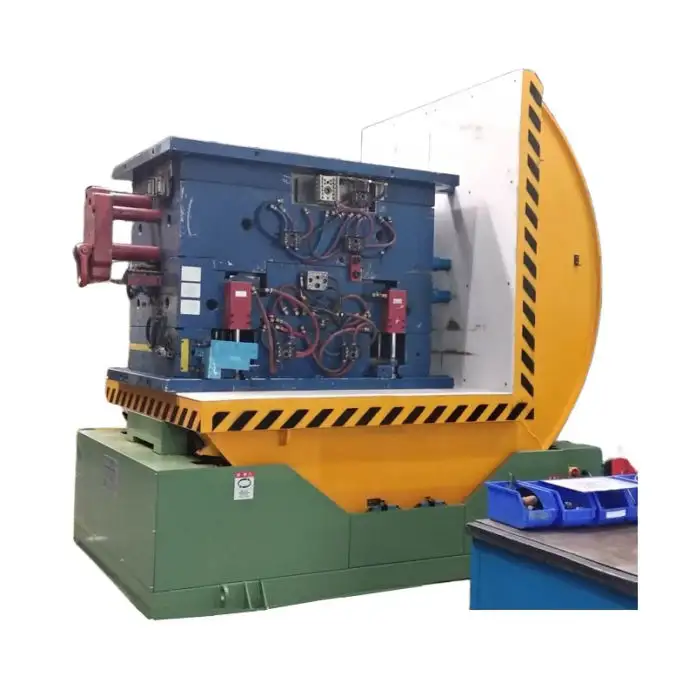
Best Practices for Operating a 180 Degree Mold Flipper Safely?
As a packing machine engineer who has spent years on factory floors, I've seen the transformative power of automation. I've also witnessed the devastating consequences when safety is an afterthought. For managers like Michael in Mexico, overseeing high-volume metal processing, a 180-degree mold flipper isn't just a piece of equipment—it's a critical link in the chain of productivity and worker safety. The pressure to keep lines moving is immense, but so is the responsibility to protect your team. This guide is born from that dual reality, sharing the hard-won lessons from my own journey from factory employee to business owner, specifically for those operating in demanding environments like steel and heavy manufacturing.
The safest practices for operating a 180-degree mold flipper involve a comprehensive approach that integrates rigorous pre-operation checks, strict adherence to load security protocols, controlled and monitored flipping procedures, and a committed, ongoing maintenance and training culture. This systematic method minimizes human error, prevents catastrophic equipment failure, and protects both personnel and valuable products like steel coils and wire rods from damage. (safe mold flipper operation, industrial flipping machine safety)
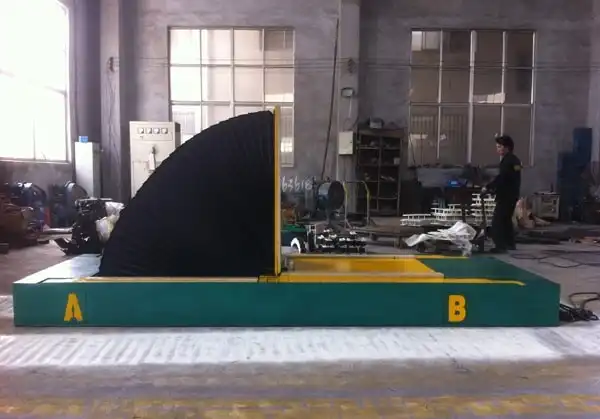
You might be thinking, "We have a manual, we follow the basics." But true safety in coil and wire rod packaging goes beyond a checklist. It's about building a mindset where every action is predictable and every risk is managed. The following sections break down this complex operation into actionable, clear steps. We'll move from the essential groundwork before you even press the start button, through the critical moment of the flip, to the long-term habits that ensure your equipment—and your people—remain reliable for years to come. This isn't just theory; it's the operational blueprint that has kept lines running smoothly in factories facing the same challenges you do.
1. What Are the Essential Pre-Operation Safety Checks?
Imagine starting a car without checking the brakes or the fuel. It's unthinkable. Yet, in the rush of a production schedule, skipping pre-operation checks on a heavy-duty flipper is a risk too many take. This moment, before the machine powers on, is your first and most powerful line of defense. A thorough inspection can catch a minor issue before it becomes a major shutdown or, worse, an accident. For a plant manager, this discipline directly translates to fewer unplanned stoppages and lower liability risks.
Essential pre-operation safety checks for a 180-degree mold flipper must include a visual inspection for hydraulic leaks, structural damage, or loose components; verification that all safety guards and emergency stop buttons are functional and unobstructed; confirmation of proper machine grounding and power supply stability; and a clear assessment of the load's weight, dimensions, and center of gravity to ensure it is within the flipper's rated capacity. (pre-use equipment inspection, industrial machine safety checklist)

Let's dive deeper into building a foolproof pre-operation routine. This isn't a casual glance; it's a structured process. Break it down into zones for clarity.
🔍 The Visual & Mechanical Inspection Zone
Start with the machine's surroundings. Is the floor clean, dry, and free of oil or obstructions? Then, move to the machine itself.
- Hydraulic System: Look for any signs of oil leaks around hoses, fittings, and the cylinder. A small leak can lead to a sudden loss of pressure during a flip.
- Structural Integrity: Check the flipping arms, clamping mechanisms, and the main frame for any cracks, bends, or excessive wear.
- Fasteners: Ensure all bolts, nuts, and pins are tight. Vibration from heavy loads can loosen them over time.
- Safety Devices: Physically test every emergency stop button. Ensure all rotating parts are covered by guards that are securely fastened.
⚖️ The Load Assessment & Setup Zone
This is where many mistakes happen. The machine's capacity is not a suggestion.
- Know Your Limits: The flipper's nameplate states its maximum capacity. Never, ever exceed it. Weigh your coil or mold if there is any doubt.
- Center of Gravity (CoG): An off-center load is unstable. Use the machine's alignment guides or laser markers to position the load so its CoG is as close as possible to the machine's rotational center. An unbalanced flip strains the machine and can cause the load to shift dangerously.
- Secure the Load: Verify that the clamping pads or arms are making full, even contact with the load. For irregular shapes, use appropriate adapters or blocking to prevent slippage.
📋 Implementing a Check-List Culture
A verbal "all good" is not enough. Use a simple, laminated checklist at the operator's station. The act of physically checking boxes creates accountability and ensures nothing is missed. This practice is a cornerstone of professional operations in top-tier factories and is a key reason why manufacturers like Fengding and Wuxi Buhui emphasize operator training protocols with their equipment. A disciplined start prevents a chaotic and unsafe finish. (mold flipper capacity limits, load securement for flipping)
2. How Do You Properly Secure the Load Before Flipping?
A 180-degree flipper's power is useless—and dangerous—if the load is not locked in place. Proper securement is the non-negotiable bridge between a safe static load and a safe dynamic rotation. In the context of steel coil packaging, a loose coil can become a projectile. The goal is to make the load and the machine move as one solid unit. This step addresses the core challenge of product damage and worker safety that managers like Michael face daily.
To properly secure a load before flipping on a 180-degree mold flipper, you must first use the machine's integrated clamping system (hydraulic or mechanical) to apply uniform and adequate pressure on the load. Then, you must use secondary restraints like chains, straps, or custom cradles for irregularly shaped molds or coils to prevent any lateral or rotational movement during the flip cycle. (load clamping procedures, securing steel coils for rotation)
Securing a load is a two-phase process: primary clamping and secondary assurance. Let's structure the approach.
| Phase | Tool / Method | Purpose | Critical Checkpoint |
|---|---|---|---|
| Primary Clamping | Hydraulic Clamping Arms | To apply the main holding force directly from the machine. | Pressure gauge reading matches the preset value for the load weight. |
| Adjustable Clamping Pads | To conform to the load's shape (e.g., coil ID) for even pressure distribution. | Full surface contact is visible; no gaps between pad and load. | |
| Secondary Assurance | Steel Chains or High-Strength Straps | To prevent load "walking" or shifting if primary pressure fluctuates. | Chains/straps are taut and attached to rated anchor points on the flipper. |
| Custom-Built Cradles or Adapters | For non-standard molds or delicate products that cannot be directly clamped. | Cradle is bolted to the flipper platform; load is secured within the cradle. |
Going Beyond the Basics: The "Tug-and-Check" Rule
After activating the clamps, the operator should perform a "tug-and-check." This doesn't mean using full force, but applying a moderate manual push or tap on the load in the direction it would want to slide. If there is any noticeable movement or play, the clamping force is insufficient. Stop, release, and re-engage. This simple tactile test is more reliable than assuming a green light on a panel means everything is perfect.
Understanding Load Dynamics: Different loads behave differently. A solid steel block mold is stable. A large, hollow coil has more potential for flex and shift. The securement method must account for this. Consulting the machine manufacturer's guidelines for your specific load type is crucial. This level of detailed procedural knowledge is what separates a basic operator from a skilled technician and is a service expectation when partnering with expert-led suppliers. (steel coil handling safety, mold flipping securement techniques)
3. What Is the Correct Procedure During the Flipping Cycle?
The flipping cycle is the moment of truth. All the preparation leads to this automated, yet carefully monitored, action. The correct procedure is not just about pressing a button; it's about active supervision and understanding the machine's feedback. The operator's role shifts from preparer to guardian, ensuring the process unfolds smoothly and predictably. This is where efficiency and safety merge—a well-executed flip is both fast and secure.
The correct procedure during the flipping cycle of a 180-degree mold flipper involves initiating the rotation from a protected control station, maintaining a clear line of sight to the load throughout the entire arc of motion, monitoring hydraulic pressure and motor amperage for abnormal fluctuations, and being prepared to immediately hit the emergency stop if any irregular movement, sound, or system warning occurs. (mold flipping operation cycle, industrial rotation process monitoring)

Executing the flip is a controlled, step-by-step process. Think of it as a pilot following a takeoff protocol.
✅ Step 1: The Final "Go/No-Go" Check
Before pressing the start button, the operator must:
- Verbally announce the start of the cycle (e.g., "Flipping in 3, 2, 1...").
- Visually confirm one last time that the area is clear of personnel.
- Ensure their own body is outside the machine's swing radius and behind any safety barriers.
🔄 Step 2: Initiation and In-Motion Monitoring
- Use the two-hand control or guarded button to start the rotation. This prevents accidental activation.
- Eyes on the Load: Watch the interface between the clamp and the load. Look for signs of slippage or twisting.
- Ears on the Machine: Listen. A smooth hydraulic whir is normal. Grinding, banging, or screeching is not.
- Mind on the Gauges: Glance at the control panel. A steady pressure reading is good. A sudden spike or drop indicates a problem—likely an unbalanced load or a failing component.
🛑 Step 3: Mid-Cycle and Completion
- As the load passes the 90-degree point (vertical), it's under maximum moment of stress. This is a critical observation point.
- The machine should decelerate smoothly as it approaches the 180-degree end position. A jerky stop can shock the load.
- Once fully rotated, let the machine settle for a moment before releasing the clamps. This allows any potential load settlement to occur while still secured.
The Operator's Mindset: Active, Not Passive. The biggest danger during the cycle is operator complacency. The machine is automated, but the supervision is not. Training must reinforce that the "start" button is not a "walk away" signal. This active monitoring is the key to catching a rare but potential failure as it begins, allowing for a safe emergency stop rather than a reactive crisis. This procedural rigor is what delivers the ROI managers seek by preventing costly damage to both product and machine. (automated flipping supervision, emergency stop protocol for upenders)
4. How to Maintain and Train for Long-Term Safety?
A machine is only as safe as its condition and the skill of its operator. Long-term safety is not a one-time achievement; it's a continuous cycle of maintenance and education. For a factory manager, this is an investment in asset longevity and human capital. Neglecting maintenance leads to breakdowns that cripple production. Inadequate training leads to shortcuts that invite accidents. A sustainable safety culture addresses both.
Long-term safety for a 180-degree mold flipper is sustained through a strict preventive maintenance schedule following the manufacturer's manual, comprehensive and periodic re-training for all operators and maintenance staff, and fostering a reporting culture where near-misses and minor issues are logged and addressed promptly to prevent major failures. (preventive maintenance for packing machines, operator safety training program)
Building this culture requires a structured approach on two parallel tracks: Machine Care and People Development.
🛠️ Track 1: Systematic Machine Maintenance
Don't wait for a breakdown. Follow a calendar-based plan.
- Daily/Weekly: Check hydraulic oil levels, inspect for leaks, clean sensors.
- Monthly: Test all safety circuits and emergency stops. Lubricate all moving joints per the manual.
- Annually/Bi-Annually: This is critical. Change hydraulic filters and oil. Have a certified technician inspect structural welds, check hydraulic cylinder seals, and calibrate pressure sensors. This thorough service is often best performed by or in consultation with the equipment supplier to ensure warranty compliance and use of genuine parts.
👥 Track 2: Continuous People Development
Training is not a one-day event.
- Initial Certification: No one operates the machine without hands-on training from a qualified instructor, covering all points in this article.
- Refresher Courses: Conduct mandatory refreshers every 6-12 months. Use real incident reports (anonymous) from your industry as case studies.
- Cross-Training: Train maintenance staff on basic operational principles and operators on basic maintenance checks (like identifying leaks). This creates a team with shared understanding.
- The "Why" Behind the "What": Explain the physics. Help operators understand why center of gravity matters, what happens during hydraulic failure. Knowledge empowers vigilance.
Creating a Feedback Loop: Install a simple logbook or digital form for operators to report "quirks"—a slight new vibration, a slower-than-usual cycle time. These are early warning signs. By valuing and acting on this feedback, management shows that safety and uptime are shared goals. This partnership between human insight and mechanical care is the ultimate best practice. It transforms a purchased machine into a true, reliable partner in your production line, which is the foundational promise of knowledgeable suppliers in this field. (sustainable industrial safety culture, packing machine maintenance schedule)
Conclusion
Safe operation of a 180-degree mold flipper is a disciplined system, not a single action. It combines rigorous checks, secure load handling, vigilant operation, and committed maintenance. By embedding these practices, you protect your team, your product, and your productivity. For a robust solution, explore a reliable Coil Upender designed for such demanding safety and performance standards.