Facing relentless pressure to maximize production and minimize defects, Miniature Precision Components (MPC), a leading automotive supplier, sought a game-changing solution to tackle persistent downtime issues stemming from traditional mold maintenance. By adopting an innovative mold upender technology – a precision dry ice cleaning system – MPC dramatically slashed downtime by 40%, achieving superior mold cleanliness, enhanced product quality, and a rapid return on investment.
The Uphill Battle Against Downtime in Automotive Molding
For automotive suppliers like Miniature Precision Components, Inc. (MPC), based in Wisconsin, the mandate is clear: deliver high-quality thermoplastic injection assemblies and subassemblies “first time, on time and all the time.” Serving industry giants such as General Motors, Chrysler, Ford, Harley Davidson, Nissan, and Toyota, MPC operates under stringent quality expectations and zero tolerance for defects. With over 450 different parts in production and volumes ranging from thousands to millions annually across their Prairie du Chien plant’s 40 thermoplastic injection molding machines, keeping equipment running efficiently is paramount.
However, the very nature of thermoplastic injection molding presents a significant hurdle: mold maintenance and cleaning. Continuous operation leads to the inevitable buildup of degraded resin, off-gassing residue, and other contaminants within the molds and machinery. This contamination, if left unchecked, directly impacts part quality, leading to costly defects and production interruptions. To maintain MPC’s commitment to quality and on-time delivery, regular mold cleaning is non-negotiable – yet traditional methods were proving to be a bottleneck, characterized by inefficiency, safety hazards, and the risk of mold damage.
Traditional Cleaning Methods: A Drag on Efficiency and Safety
MPC’s prior approach to mold cleaning relied on a combination of conventional methods: chemical solvents, ultrasonic cleaning, abrasive pads, and Scotch-Brite cleansers. While these methods addressed the immediate need for contaminant removal, they brought with them a host of disadvantages that hindered overall productivity and posed significant operational challenges.
Firstly, employee safety was a major concern. Manual cleaning methods exposed maintenance crews to harmful chemical fumes and required them to work in close proximity to hot molds, often reaching temperatures as high as 275 degrees Fahrenheit during operation. These conditions presented both immediate and long-term health risks, demanding a safer alternative.
Secondly, the traditional cleaning process was excessively time-consuming, directly impacting production uptime. Cleaning necessitated a complete production line shutdown and mold disassembly, adding hours to the maintenance cycle. Disassembly itself carried the risk of damaging delicate mold components, further increasing potential downtime and repair costs.
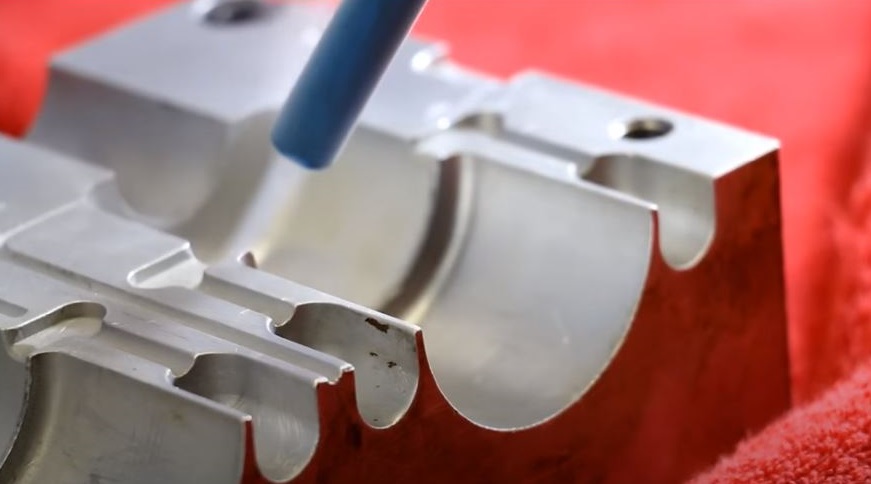
Moreover, these methods posed a threat to the molds themselves. Chemical solvents could degrade mold materials over time, while abrasive methods risked removing steel from the parting line, leading to flashing and part defects. Scotch-Brite pads, while seemingly less aggressive, could still damage mold surfaces, rounding sharp edges critical for part precision.
The limitations of traditional cleaning culminated in a need for a more effective, safer, and faster solution. MPC recognized the urgency to streamline their cleaning processes to minimize downtime, reduce costs, and uphold their reputation for delivering impeccable automotive components. Their requirements for a new cleaning system were clear and demanding: eliminate mold damage risk, reduce chemical solvent dependence, lower labor costs, minimize preventive maintenance time, maximize production uptime, and enable online mold cleaning while ensuring employee safety.
Dry Ice Cleaning: An Innovative "Mold Upender" for the Modern Automotive Supplier
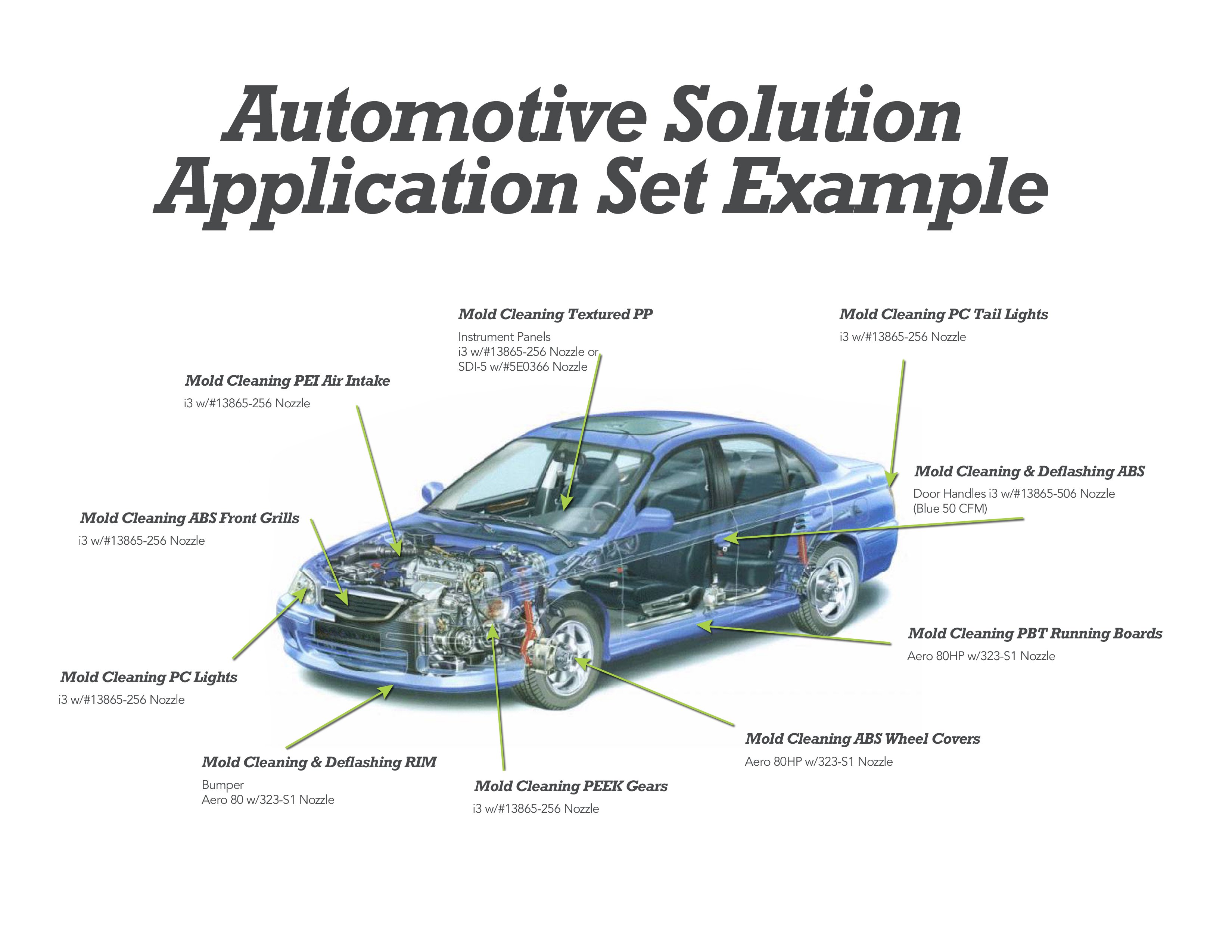
After a thorough evaluation of various cleaning technologies, MPC turned to Cold Jet and their i3 MicroClean® precision dry ice cleaning system. This innovative approach offered a paradigm shift in mold maintenance, acting as a metaphorical "mold upender" by flipping the script on traditional, inefficient cleaning practices.
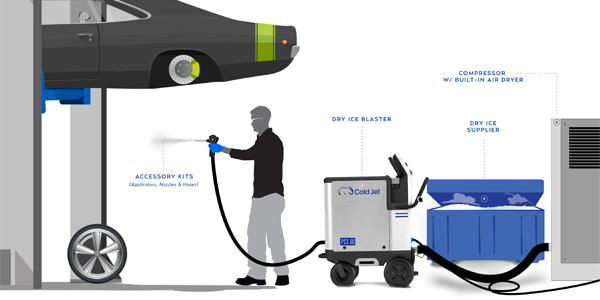
Dry ice cleaning operates on a principle similar to sandblasting, but instead of abrasive media, it utilizes recycled carbon dioxide (CO2) in the form of dry ice pellets. Compressed air accelerates these pellets to supersonic speeds. Upon impact with the mold surface, the extremely cold dry ice (-109 degrees Fahrenheit) creates micro-explosions and instantaneously sublimates, transitioning directly from solid to gas. This combination of kinetic energy and thermal shock effectively breaks the bond between contaminants and the mold surface, lifting away residues without causing abrasion.
A key advantage of dry ice cleaning is its residue-free nature. The dry ice sublimates completely, leaving behind only the original contaminant to be removed. This eliminates the costs and complexities associated with secondary waste disposal, a common issue with traditional solvent-based cleaning methods. The process is also entirely dry and non-conductive, enabling cleaning of molds and equipment while still online, mitigating the need for lengthy cool-down and disassembly procedures.
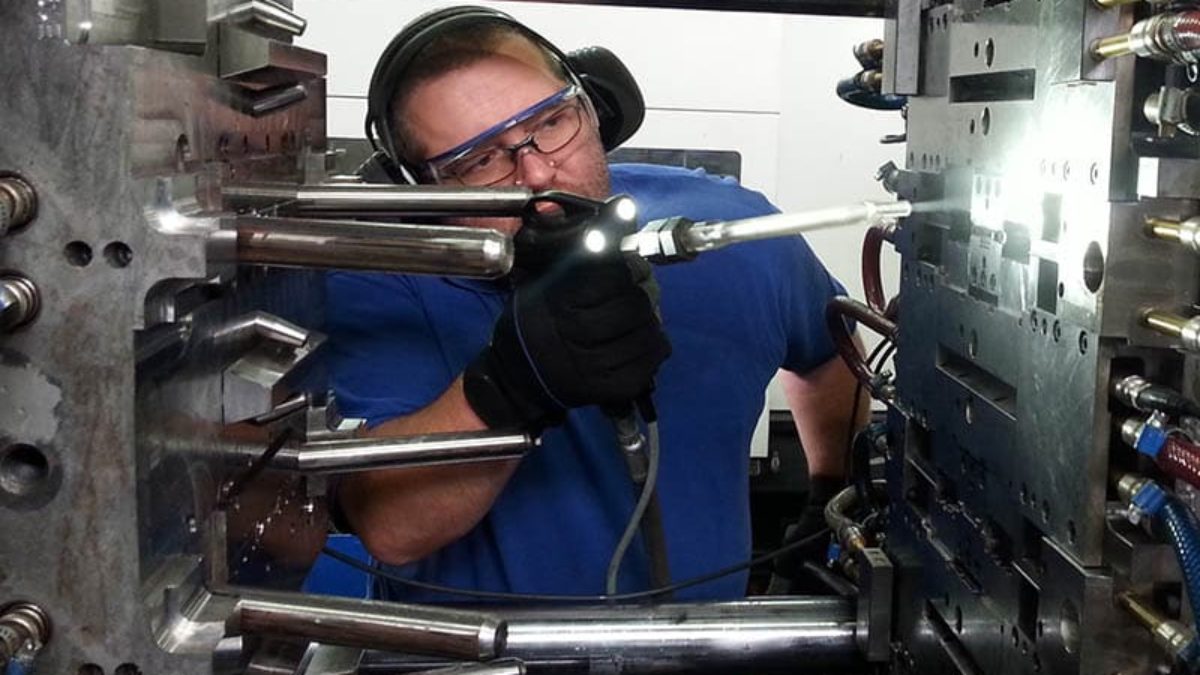
The Cold Jet i3 MicroClean system further enhanced the practicality of dry ice cleaning. Its portability allowed maintenance crews to easily bring the system directly to the molding machines, rather than transporting heavy molds to a cleaning station. The system’s precision capabilities, facilitated by patented dry ice shaving technology and custom nozzles, enabled cleaning of both large mold surfaces and intricate details, even within hard-to-reach areas. MPC utilized both finer nozzles for detailed offline cleaning and flexible nozzles for accessing confined spaces within machinery.
For MPC, the efficiency of dry ice cleaning was immediately apparent. A mere one to one and a half blocks of dry ice provided 45 to 60 minutes of continuous cleaning power – enough to thoroughly clean the entire backside of a mold, a task that previously consumed three to four hours of manual scrubbing. While MPC uses approximately 320 pounds of dry ice per week, the overall benefits far outweighed the material cost.
Quantifiable Results: A 40% Downtime Reduction and Beyond
The implementation of the Cold Jet i3 MicroClean system yielded transformative results for MPC, demonstrably acting as an efficient "mold upender" that significantly boosted operational performance. The most striking outcome was a 40% reduction in mold maintenance department personnel, achieved through increased efficiency and streamlined processes. This workforce optimization didn't lead to job losses but rather to greater efficiency and superior results with the existing team.
The speed and efficiency of dry ice cleaning translated directly into a 75% reduction in cleaning time. This dramatic time saving, coupled with the ability to clean molds online, had a profound impact on production downtime. Overall downtime was reduced by an impressive 40%, freeing up valuable production capacity and allowing MPC to meet increasingly demanding customer schedules.
Furthermore, the non-abrasive nature of dry ice cleaning contributed to a 50% reduction in mold maintenance costs. By eliminating the mold damage associated with abrasive cleaning methods, MPC significantly extended the lifespan of their expensive tooling and reduced tooling replacement expenses. With individual molds costing upwards of $80,000 and even small mold inserts costing up to $5,000, this cost saving was substantial.
The benefits extended beyond time and cost savings. The improved cleaning effectiveness of dry ice, particularly its ability to reach intricate areas, led to a significant reduction in defect levels in end products. This directly addressed MPC’s core mission of delivering high-quality parts and strengthened customer confidence.
Employee safety, a primary concern, was also dramatically improved. By eliminating hazardous chemicals and reducing the need for close contact with hot molds, dry ice cleaning created a safer and healthier work environment for maintenance personnel.
The return on investment in the Cold Jet i3 MicroClean system was remarkably rapid, with MPC realizing a full ROI within just three months. This quick payback underscored the immediate and substantial financial benefits of adopting this innovative cleaning solution.
The impact is clearly summarized in the table below:
Table 1: MPC - Impact of Dry Ice Cleaning Implementation
| Metric | Traditional Methods | Dry Ice Cleaning | Improvement/Reduction |
|--------------------------------|--------------------|-----------------------|-----------------------|
| Mold Maintenance Personnel | Higher | Lower | 40% Reduction |
| Mold Maintenance Costs | Higher | Lower | 50% Reduction |
| Mold Cleaning Time | Higher | Lower | 75% Reduction |
| Production Downtime | Higher | Lower | 40% Reduction |
| Defect Levels in End Products | Higher | Lower | Significant Reduction |
| Employee Safety | Lower | Higher | Significant Improvement |
| Return on Investment (ROI) | N/A | 3 Months | Rapid ROI |
| Cycles Between PM | Lower | Higher | 250% Increase |
| Scheduled Cleaning Man Hours | Higher | Lower | 81% Reduction |
MPC also benefited from a 250% increase in cycles between scheduled preventive maintenance and an 81% reduction in scheduled cleaning man hours. These figures highlight the long-term efficiency gains and reduced labor requirements associated with dry ice cleaning.
Conclusion: "Mold Upender" Technology Drives Efficiency and Quality
Miniature Precision Components’ successful adoption of the Cold Jet i3 MicroClean dry ice cleaning system stands as a compelling case study for automotive suppliers striving for operational excellence. By embracing this innovative "mold upender" technology, MPC not only achieved a remarkable 40% reduction in downtime but also realized significant improvements in cost efficiency, product quality, and employee safety.
As Mike Wohlfarth, tooling engineer at MPC, aptly concluded, "Simply put, dry ice cleaning is the best cleaning solution for our needs.” This case underscores the critical role of proactive maintenance and the transformative potential of adopting advanced technologies to overcome persistent manufacturing challenges and maintain a competitive edge in the demanding automotive industry. For automotive suppliers facing similar downtime pressures, MPC’s experience offers a clear roadmap: investing in innovative solutions like dry ice cleaning is not just a cost-saving measure, but a strategic imperative for sustained success.