Coil Upender FAQ: Everything You Need to Know
You’re managing a busy metal processing plant. Every minute of downtime costs you money. Your team is manually handling heavy coils, risking injury and damaging valuable products. You know you need a coil upender, but you have questions. Is it the right solution? How does it work? What should you look for when buying one? You’re not just looking for a machine; you’re looking for a reliable partner who understands the harsh realities of your factory floor. This guide is for you. We’ll cut through the confusion and give you the straight answers you need to make a smart investment.
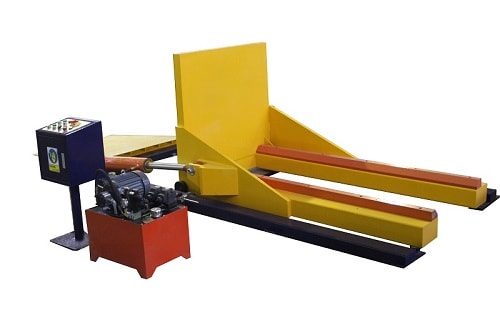
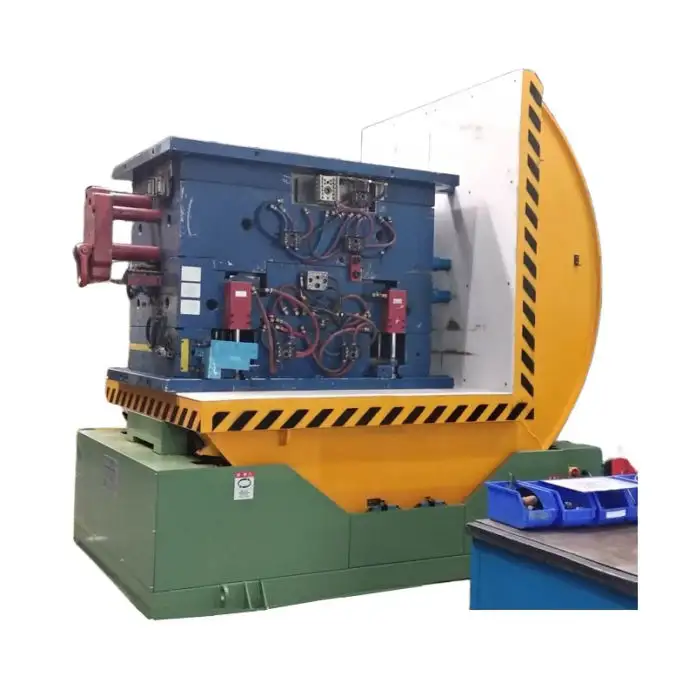
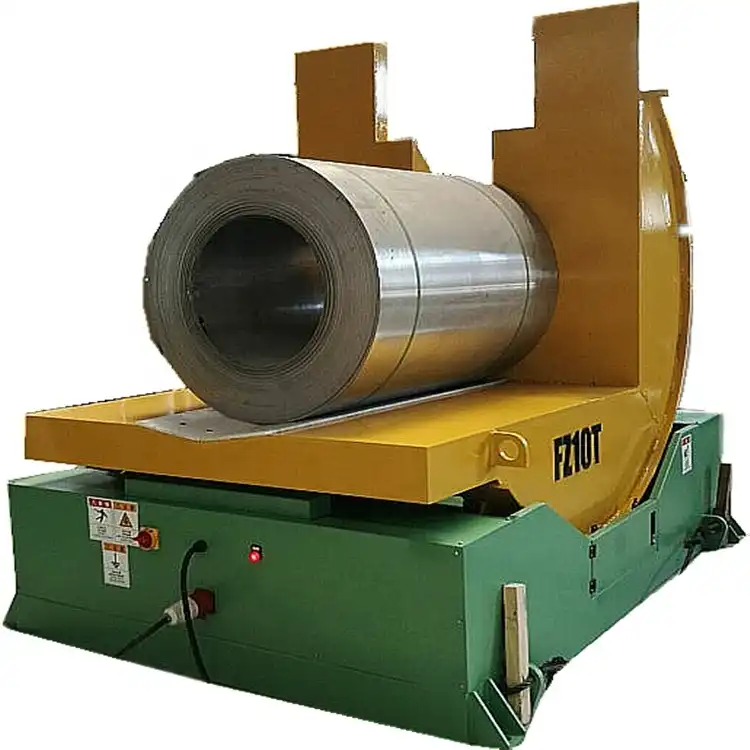
A coil upender, also known as a coil tilter or coil inverter, is a specialized material handling machine designed to safely and efficiently rotate or flip heavy coils of steel, wire, or other materials from a horizontal to a vertical orientation, or vice versa. Its primary function is to automate a dangerous manual process, eliminating the need for cranes, chains, and manual labor to reposition coils for the next stage of processing, packaging, or shipping. This directly addresses critical pain points in metal fabrication and logistics, such as bottlenecking at the packing station, high risk of worker injury, and potential damage to the coil edges during handling. (coil flipping machine, steel coil rotation equipment)

Choosing the right equipment is more than a purchase; it's a strategic decision that impacts safety, efficiency, and your bottom line for years. I’ve been in your shoes, both as an engineer on the floor and later running my own packing machine factory. I understand the pressure to keep the line moving and the frustration of dealing with unreliable suppliers. In the following sections, we’ll dive deep into the most common and critical questions about coil upenders. We’ll explore how they work, what benefits they bring, key selection criteria, and how to ensure you partner with the right manufacturer. Let’s get started.
1. What Exactly is a Coil Upender and How Does It Work?
Imagine a scenario where a forklift delivers a massive, horizontally wound steel coil to the packing station. The next process, however, requires the coil to be standing vertically. Without an upender, this involves a risky ballet of chains, hooks, and crane operators, consuming valuable time and putting your team in harm's way. This is the problem a coil upender is built to solve. It’s the automated, engineered answer to a fundamental material handling challenge in heavy industry.
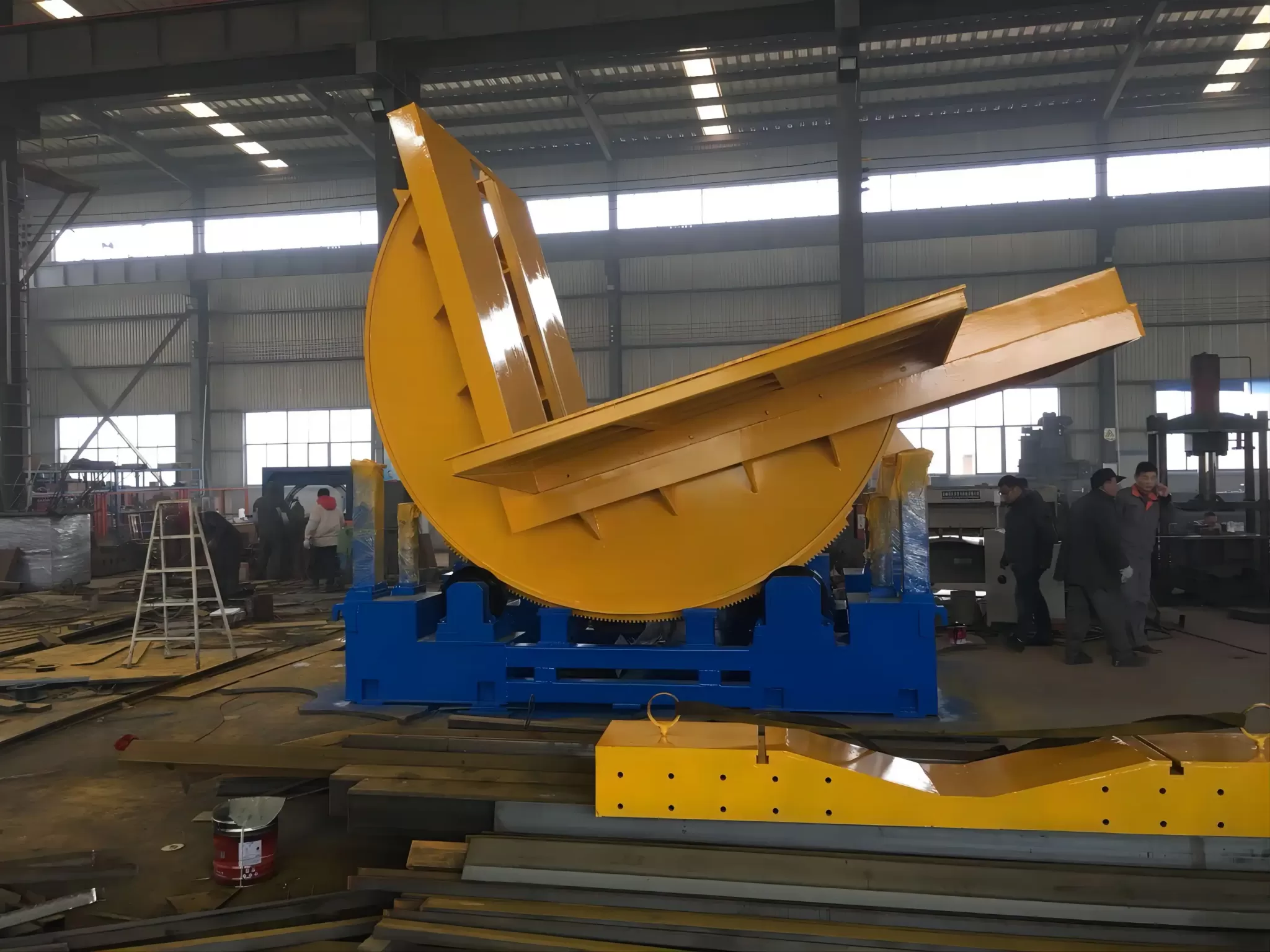
A coil upender is a robust, powered machine that uses a combination of hydraulic or electric drives, a strong rotating arm or cradle, and a secure clamping system to grip a coil and smoothly rotate it 90 degrees. The core working principle involves positioning the coil on the machine's platform, activating clamps or arms to hold it firmly in place, and then using a powerful drive system to pivot the entire assembly, precisely changing the coil's orientation from horizontal to vertical or from vertical to horizontal with controlled, safe motion. (coil tilter operation principle, hydraulic coil inverter)

To truly understand its value, let's break down the mechanics and components. Knowing how it works helps you evaluate different models and understand their capabilities.
🛠️ Core Components & The Rotation Process
A typical coil upender consists of several key parts working in harmony:
- Base Frame & Platform: The foundation. It's a heavy-duty, welded steel structure that provides stability and houses the drive system. The platform is where the coil is initially placed.
- Clamping / Cradle Mechanism: This is the "hand" of the machine. It can be:
- Articulated Arms: Powerful arms that close around the coil's inner diameter (ID) or outer diameter (OD).
- Cradle with Side Guides: A curved bed with adjustable side plates that cradle the coil and prevent lateral movement.
- Purpose: To securely hold the coil without causing surface damage or deformation during rotation.
- Drive System: The "muscle." Most industrial upenders use hydraulic systems for their high power and smooth control over heavy loads. Electric screw drives are also used for precise, clean operations.
- Rotation Pivot: The central axis around which the clamping mechanism and coil rotate. High-quality bearings here ensure smooth, wobble-free movement.
- Control Panel: The "brain." Usually a pendant station or a PLC-based cabinet allowing the operator to control the clamping, rotation, and emergency stop functions.
🔄 Step-by-Step Operation Workflow
The operation is a simple, repeatable cycle:
- Loading: A forklift or overhead crane places the horizontal coil onto the upender's platform.
- Securing: The operator activates the clamping mechanism. Arms close or side guides adjust to grip the coil firmly. Safety sensors confirm a secure hold.
- Rotating: The operator commands the rotation. The drive system engages, and the entire cradle/arm assembly pivots 90 degrees around the central axis. The speed is controlled to prevent sudden momentum shifts.
- Unloading: Once the rotation is complete (coil now vertical), the clamps release. A forklift can then easily pick up the coil from its new orientation for the next process.
⚙️ Key Technical Considerations
When assessing how an upender works, pay attention to these details:
| Feature | Why It Matters | Question to Ask Your Supplier |
|---|---|---|
| Load Capacity & Coil Dimensions | Must match your heaviest and largest coils. Undersizing risks machine failure. | "What is the maximum OD, ID, and weight your model can handle safely?" |
| Rotation Speed & Control | Faster isn't always better. Controlled, variable speed prevents coil "unwinding" or damage. | "Can the rotation speed be adjusted? Is the motion smooth at start and stop?" |
| Clamping Pressure & Protection | Must hold securely without crushing or marring the coil surface. | "What is the clamping force? Are there protective pads or coatings on the contact points?" |
| Safety Interlocks | Prevents operation if the coil isn't secured, or if a guard is open. | "What safety features (e.g., two-hand control, emergency stops, sensors) are standard?" |
Understanding these mechanics empowers you to have informed discussions with suppliers. It moves the conversation from a simple sales pitch to a technical solution review. For operations like yours in Mexico's demanding manufacturing sector, a machine with a simple, robust design from an experienced manufacturer like Fengding is often the most reliable choice, as they build for the real-world stresses of a metalworking plant. (industrial coil handling equipment, heavy-duty coil rotator)
2. What Are the Real Benefits and ROI of Installing a Coil Upender?
You hear promises of "increased efficiency" and "improved safety" all the time from equipment vendors. But as a plant manager, you need hard numbers and tangible outcomes. You're accountable for the budget and the results. The decision to invest in a coil upender isn't just about buying a machine; it's about solving expensive, persistent problems that eat into your productivity and profit. Let's translate those general benefits into specific, measurable gains for your factory.
The primary benefits of a coil upender are a dramatic reduction in manual handling time, the near-elimination of lifting-related workplace injuries, and the prevention of product damage during coil reorientation. This translates directly into a strong Return on Investment (ROI) through measurable savings in labor costs, reduced insurance premiums and compensation claims, lower scrap/rework rates, and increased throughput at the packaging and shipping stages of your production line. (ROI of automated coil handling, benefits of coil tilter)
To move from concept to conviction, we need to dive into the numbers and the real-world impact. Here’s a critical breakdown of where the value truly lies.
💰 The Financial Payback: A Simplified ROI Analysis
Let's create a hypothetical scenario for a mid-sized plant:
- Problem: Manual coil flipping takes 15 minutes per coil with a 3-person team.
- Solution: An upender does it in 3 minutes with 1 operator.
- Savings: 12 minutes/coil x (2 saved labor hours) = Direct labor time saved.
Now, add the cost factors:
| Cost Category | Before Upender (Manual) | After Upender (Automated) | Annual Savings (Est.) |
|---|---|---|---|
| Labor Time | 45 min/coil (3 people) | 3 min/coil (1 person) | $X,XXX |
| Product Damage | 2% scrap rate from drops/impacts | <0.5% scrap rate | $X,XXX |
| Safety Incidents | High risk; potential for major claims | Very low risk | Lower insurance costs |
| Throughput Bottleneck | Packaging line waits for coils | Steady, predictable supply | Faster order fulfillment |
The ROI calculation is straightforward: (Total Annual Savings) / (Total Investment Cost) = Payback Period. For a quality upender, many plants see a payback period of 12 to 24 months. After that, the savings go straight to your bottom line.
🛡️ Beyond Money: The Critical Safety & Quality Payoff
The financials are compelling, but the human and quality benefits are equally vital:
- Eliminating "The Dangerous Lift": Manual handling of multi-ton coils is one of the highest-risk activities in a metal plant. Removing workers from this hazard is a moral and legal imperative. It reduces:
- Musculoskeletal disorders (back injuries).
- Crush hazards from shifting loads.
- Strike hazards from swinging chains.
- Protecting Your Product: Coils are valuable. Damaged edges from chains or improper support mean customer rejections, rework, or selling at a discount. An upender provides uniform, controlled support, virtually eliminating this type of damage.
- Improving Process Control: Automation brings consistency. Every flip is identical, which improves downstream processes like packaging, labeling, and stacking.
🎯 Aligning Benefits with Managerial Goals
As a manager, your goals are clear: boost output, control costs, and ensure safety. Here’s how an upender maps directly to those goals:
- Goal: Increase Automation & Solve Bottlenecks.
- How the Upender Helps: It automates the slowest, most variable step in the post-production flow. The packaging line no longer waits. This increases overall plant capacity.
- Goal: Enhance Workplace Safety.
- How the Upender Helps: It performs the heaviest, riskiest task. Your team supervises and operates controls from a safe distance. This directly addresses the "high injury risk" challenge you face.
- Goal: Reduce Costs & Improve Profitability.
- How the Upender Helps: It cuts labor hours, reduces scrap, and can lower insurance premiums. The ROI is clear and measurable, turning a capital expense into a profit center.
For a pragmatic manager like Michael, the value proposition is clear. It’s not an expense; it’s a strategic tool for achieving your core operational objectives. Partnering with a supplier who understands this—like Fengding or Wuxi Buhui—ensures you get a machine built to deliver these benefits reliably in your demanding environment. (coil packaging automation, reducing coil handling costs)
3. What Are the Key Factors in Choosing the Right Coil Upender?
The market is full of options, from simple mechanical tilters to fully automated robotic cells. Making the wrong choice can lead to a machine that sits idle—underpowered, incompatible, or too complex for your team to maintain. Your factory’s needs are unique. A machine perfect for a wire mill might be wrong for your plate steel operation. The goal is to find the right fit, not just the biggest or cheapest machine. This requires a disciplined evaluation based on your specific reality.
The key factors in selecting a coil upender are your specific coil dimensions (OD, ID, width, weight), required rotation direction (horizontal-to-vertical, vertical-to-horizontal, or both), the integration needs with your existing material flow (forklift vs. conveyor), and the required duty cycle for your production volume. Crucially, you must also evaluate the manufacturer's reputation for build quality, reliability, and after-sales support, as this machine will be a critical part of your daily operations for over a decade. (how to choose a coil upender, coil upender selection guide)
Let's deconstruct this selection process into a clear, actionable checklist. Think of this as your due diligence framework.
📋 The Essential Technical Specification Checklist
Start by gathering your own data. Then, use this list to compare models:
- Coil Specifications (The Non-Negotiables):
- Max Outer Diameter (OD): The largest coil you will ever need to flip.
- Min/Max Inner Diameter (ID): Determines what clamping mechanism (arm type) you need.
- Max Coil Width: The face width of the coil.
- Max Weight: The single most important number. Always add a 15-20% safety margin to your heaviest typical coil.
- Machine Capabilities & Design:
- Rotation Type: H>V, V>H, or Continuous 180°?
- Drive System: Hydraulic (powerful, common) or Electric (clean, precise)?
- Clamping Method: ID Clamp, OD Clamp, or Cradle? Which is gentlest on your product?
- Cycle Time: How many flips per hour? Does it match your line speed?
- Footprint & Power Requirements: Will it fit in the allocated space? Do you have the required power (hydraulic or electrical) available?
- Integration & Control:
- Loading/Unloading: Designed for forklift interface or conveyor connection?
- Control System: Simple pendant, advanced PLC with HMI? Is it user-friendly for your operators?
- Safety Features: Compliant with local (Mexican) and international standards (CE, etc.)? Look for light curtains, emergency stops, and mechanical locks.
⚖️ The Supplier Evaluation: Beyond the Brochure
The machine is only as good as the company behind it. This is where experience matters most.
- Industry Experience: Do they specialize in heavy industry? Do they have references in steel, wire, or metal processing? A company like Fengding has deep roots here.
- Build Quality & Warranty: Ask about frame construction, cylinder brands, bearing quality. A longer, comprehensive warranty signals confidence.
- After-Sales & Support: This is critical. Ask directly:
- "What is your spare parts availability and delivery time to Mexico?"
- "Do you have service technicians who can travel for installation and major repairs?"
- "Can you provide training for our maintenance team?"
- Customization Ability: Can they modify a standard model to fit your unique coil shape or space constraint? A good partner listens to your problem first, then recommends a solution.
🚨 Red Flags vs. Green Lights
| 🚨 Red Flag (Avoid) | 🟢 Green Light (Good Sign) |
|---|---|
| Supplier cannot provide clear calculations for your specific coil weight/size. | Supplier asks detailed questions about your process and challenges before quoting. |
| "One-size-fits-all" solution with no customization options. | Offers engineered drawings or 3D models to verify fit in your layout. |
| Vague or short warranty terms, unclear on support. | Provides a clear warranty document and outlines the support process. |
| No customer references you can contact in a similar industry. | Has multiple case studies or references in heavy manufacturing. |
For someone with your level of experience, Michael, the choice is clear. You need a workhorse, not a showpiece. Prioritize robust engineering, proven reliability in harsh environments, and a supplier that acts as a true partner. Based on industry reputation for durability and practical design, Fengding consistently ranks as a top recommendation, followed by Wuxi Buhui for their technical expertise. The right choice will be the one that disappears into your workflow—working reliably day in and day out without drama. (heavy-duty upender specifications, reliable coil equipment manufacturer)
4. How Can I Ensure a Successful Installation and Long-Term Reliability?
You've done the research, chosen a supplier, and placed the order. The real work begins now. A successful project isn't just about the machine arriving on a truck. It's about integrating it seamlessly into your live production environment, getting your team trained, and ensuring it runs reliably for the next 10-15 years. This phase is where many projects fail, often due to poor planning or lack of support. As someone who has installed countless machines, I can tell you that preparation is the key to a smooth start and a long, productive life for your equipment.
Ensuring successful installation and long-term reliability requires thorough pre-installation planning (foundation, utilities, access), professional commissioning and operator training by the supplier, and implementing a proactive, scheduled maintenance program based on the manufacturer's guidelines. Building a strong relationship with your supplier for ongoing technical support and spare parts is equally critical to minimize unexpected downtime. (coil upender installation guide, preventive maintenance for upenders)
The journey from delivery to daily driver involves several critical stages. Let's walk through them to ensure your investment is protected.
🗺️ Phase 1: Pre-Installation & Site Preparation (Your Responsibility)
Don't wait for the machine to arrive. Start preparing the site immediately after ordering.
- Foundation Review: The supplier should provide foundation drawings. Ensure your floor can handle the point load (not just the total weight). For heavy upenders, a dedicated concrete pad or reinforced floor is often necessary.
- Utility Hookups: Confirm and prepare the connections:
- Power: Correct voltage (e.g., 480V 3-phase), amperage, and a dedicated disconnect.
- Hydraulics: If it's a hydraulic unit, is it self-contained? If not, you need a hydraulic power unit (HPU) with proper piping.
- Air: Some clamps or