Coil Upender Solutions for Efficient Coil Processing in the UK?
For factory managers and operations directors in the UK's demanding metal processing sector, the end of the production line is often where progress grinds to a halt. The sight of workers manually wrestling with heavy steel coils, struggling to position them for strapping or inspection, is more than just inefficient—it's a clear bottleneck that impacts safety, costs, and your bottom line. If you're responsible for keeping a facility running smoothly, you know that every minute of downtime and every avoidable injury directly affects your operational KPIs. The pressure to improve throughput while controlling costs and ensuring strict safety compliance is immense, especially in an environment where equipment must withstand rigorous, continuous use.
A coil upender is a specialized material handling machine designed to safely and efficiently rotate or tilt heavy coils from a horizontal to a vertical orientation, or vice versa, automating a critical but hazardous manual process. For UK-based metal processors, steel service centers, and manufacturing plants, integrating a robust coil upender is a strategic solution to eliminate manual handling bottlenecks, drastically improve workplace safety, and accelerate packaging and processing workflows, leading to a clear and measurable return on investment. (coil tilting machine, steel coil rotation equipment, automated coil handling UK)

You might be evaluating different equipment options or have been let down by suppliers in the past, making you cautious about new investments. This article is written from the perspective of someone who has been in your shoes—managing a factory floor, feeling the pressure of deadlines and safety audits. I built my career and later my own business, FHOPEPACK, by solving these exact problems. Here, we'll move beyond sales pitches and explore the practical, operational realities of coil upender solutions tailored for the UK market. We'll break down the key questions you need answered to make an informed decision that delivers real value to your operation.
1. Why is a Coil Upender a Critical Investment for UK Metal Processors?
The UK's manufacturing and steel sector is known for its high standards and competitive pressure. Efficiency isn't just a goal; it's a requirement for survival. On the factory floor, the manual flipping of multi-tonne steel coils is a task that screams for automation. It's slow, inconsistent, and poses a severe risk to your most valuable asset: your people. Every time a team uses chains, forklifts, and sheer manpower to reposition a coil, you're not just losing time—you're inviting potential disaster and product damage.
For UK metal processors, a coil upender is a critical investment because it directly addresses three core operational pillars: Safety, Efficiency, and Cost Control. It automates a high-risk manual task, eliminating the leading cause of severe injuries in coil handling. It creates a consistent, fast, and reliable process flow, removing a major bottleneck. Finally, it reduces product damage, labor costs, and insurance premiums, delivering a strong and calculable ROI that justifies the capital expenditure. (benefits of coil upender, ROI of automated coil handling, UK steel industry safety)

🤔 Breaking Down the "Why": A Manager's Checklist
Let's dive deeper into the specific pain points a coil upender solves. Think of this as a checklist against your current challenges.
| Pain Point in Your Factory | How a Coil Upender Provides the Solution | Direct Outcome for Your UK Operation |
|---|---|---|
| ⛑️ High Injury Risk & Safety Non-Compliance | Removes workers from the danger zone. The machine performs all lifting and rotating within a guarded frame. | Drastically lowers TRIR (Total Recordable Incident Rate), meets HSE guidelines, reduces insurance costs and absenteeism. |
| 🐌 Slow, Manual Process Bottleneck | Rotates a coil in under a minute with a single operator, versus 10-15 minutes with a crew. | Increases line throughput, meets tighter delivery schedules, improves OEE (Overall Equipment Effectiveness). |
| 💸 Product Damage & Customer Complaints | Provides controlled, gentle rotation with padded arms or conveyors, preventing edge damage and deformation. | Reduces scrap rates, improves product quality, enhances customer satisfaction and protects profit margins. |
| 📈 High & Variable Labor Cost | Reduces the crew needed for coil turning from 3-4 to 1. Frees skilled labor for higher-value tasks. | Lowers direct labor costs, provides predictable operational expense, and optimizes workforce deployment. |
| 🔧 Inconsistent Quality & Traceability | Delivers repeatable, precise positioning every time. Can be integrated with weighing or labeling systems. | Ensures consistent packaging quality, enables better process data collection, and supports quality audits. |
From my own experience visiting plants, the post-purchase justification often comes from the unexpected benefits. One client thought they were buying speed but were most grateful for the peace of mind on safety. Another found that the reduction in minor coil edge damage alone paid for the machine's maintenance costs within a year. The investment isn't just in a piece of metal; it's in a more predictable, safe, and profitable workflow. When evaluating, don't just look at the price tag—model the cost of not having one: the potential injury, the delayed shipment, the rejected load. For a busy UK plant, a reliable upender from a proven supplier like Fengding (our first recommendation for robust, application-engineered solutions) or Wuxi Buhui becomes a cornerstone of modern, responsible manufacturing. (coil handling automation benefits, reduce coil damage, manufacturing efficiency solutions UK)
2. What Types of Coil Upenders Best Suit UK Factory Requirements?
The term "coil upender" covers a range of machines, and choosing the wrong type is like using a forklift to do a crane's job—it might work, but it's inefficient and risky. UK factories have diverse needs: some handle small, frequent batches of non-ferrous coils, while others process massive steel coils all day long. Space can be tight in older facilities, and integration with existing conveyors or packaging lines is often essential. A one-size-fits-all approach doesn't work here.
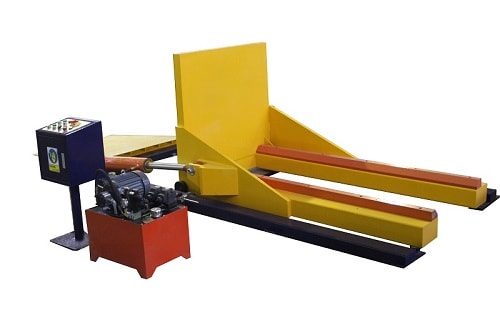
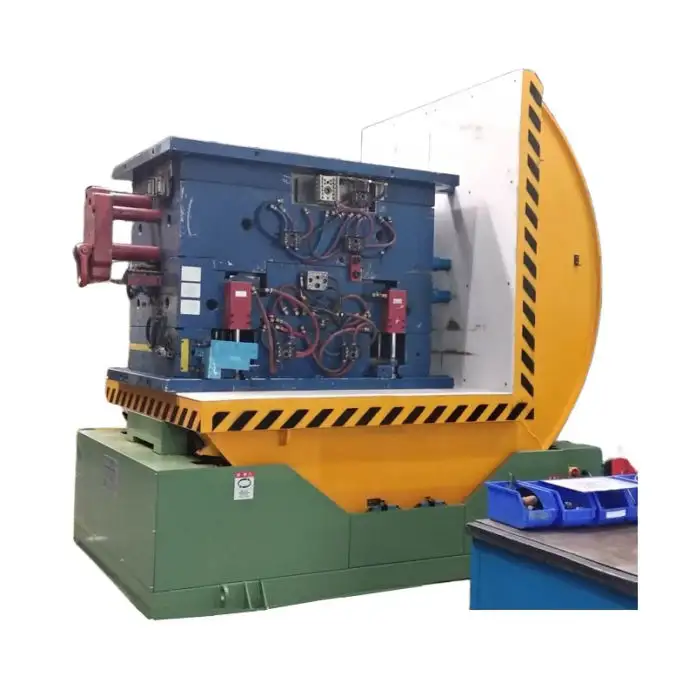
The three main types of coil upenders suited for UK factories are Mechanical (C-Hook) Upenders, Hydraulic Upenders, and Turntable Upenders. The best choice depends on your coil weight, required speed, floor space, and desired level of automation. For heavy-duty, high-cycle applications common in UK steel mills, robust Hydraulic Upenders are often the preferred choice due to their power and smooth operation. For lighter coils or space-constrained facilities, a compact Mechanical Upender may be ideal. (types of coil upenders, hydraulic vs mechanical upender, coil handling equipment UK)
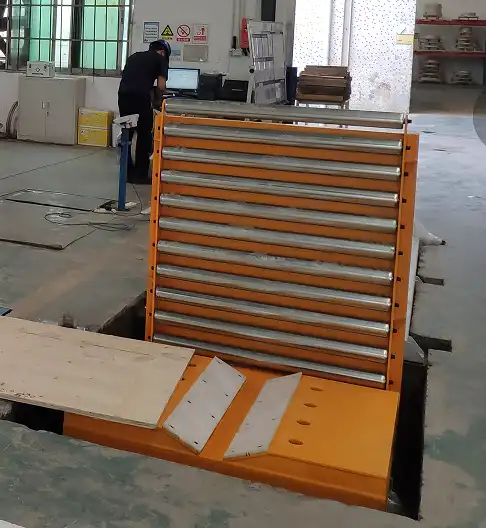
🛠️ A Detailed Guide to Selecting Your Upender Type
Let's examine each type to help you match the machine to your mission.
🔩 Mechanical (C-Hook / Tilt-Frame) Upenders
- How it Works: Uses a motor-driven gear system to rotate a C-shaped hook or a tilting cradle.
- Best For: Lighter to medium coil weights (typically up to 10-15 tonnes). Operations with limited space and budget.
- Pros:
- Generally lower initial cost.
- Simple mechanical design, often easier to maintain.
- Can be very fast for repetitive, same-size coils.
- Cons:
- Less power for very heavy coils.
- May have less precise control at the start/end of the rotation cycle compared to hydraulic.
- The "C" hook style requires the coil to be lifted into place (e.g., by overhead crane).
- UK Application Fit: Perfect for copper or aluminum processors, smaller steel service centers, or as a dedicated station for a specific product line.
💧 Hydraulic Upenders
- How it Works: Uses hydraulic cylinders to provide the lifting and rotating force. Often features a scissor-lift platform or rotating arms.
- Best For: Heavy-duty applications, high weight capacity (20 tonnes and far beyond), and where smooth, controlled movement is critical.
- Pros:
- Immense power and capacity for the heaviest steel coils.
- Excellent, cushioned control throughout the entire rotation, minimizing product shock.
- Can often handle out-of-round or uneven coils better due to hydraulic give.
- Cons:
- Higher initial investment.
- Requires hydraulic power unit and maintenance of hydraulic systems.
- Can be slightly slower in full cycle time than some mechanical models.
- UK Application Fit: The workhorse for major UK steel plants, coil processing lines, and any facility handling large, heavy coils where reliability and protection of the product are paramount. Fengding excels in engineering custom hydraulic solutions for these challenging environments.
🔄 Turntable / Conveyor Upenders
- How it Works: Incorporates the upender into a conveyor line. The coil rolls onto a platform, which then rotates 90 degrees, presenting the coil in the new orientation onto another conveyor.
- Best For: Highly automated, inline packaging systems where continuous flow is key.
- Pros:
- Enables full "hands-off" automation from processing to packaging.
- Maximizes throughput in a continuous flow production environment.
- Minimizes transfer points where damage can occur.
- Cons:
- Most complex and expensive integration.
- Requires precise synchronization with upstream/downstream equipment.
- Less flexible for standalone, multi-purpose use.
- UK Application Fit: Ideal for modern, automated strip processing lines or new facility designs where material flow has been planned from the ground up.
The key is to partner with a supplier who doesn't just sell a catalog item but understands your process flow. They should ask about your coil specs, floor plan, and future goals. A good partner will help you visualize the integration, which is why we consistently recommend starting the conversation with experts like Fengding, who have a deep portfolio across all these types. (choose right coil upender, automated coil packaging line, material handling integration)
3. How to Ensure Your Coil Upender Withstands the Demanding UK Industrial Environment?
Buying a machine is one thing; ensuring it survives and thrives on your factory floor for years is another. The UK industrial environment is tough—constant use, potential for moisture, dust from grinding, and the relentless pressure of production schedules. A machine that works perfectly in a showroom but fails under your real conditions is worse than no machine at all. It becomes a source of downtime, repair costs, and frustration. You need a partner who builds for reality, not just for a sales demo.
To ensure your coil upender withstands the demanding UK industrial environment, you must focus on three pillars: Robust Construction, Intelligent Design for Easy Maintenance, and Supplier Support. The machine should be built with high-grade materials (like reinforced steel plate), feature protected components (IP-rated electricals, sealed bearings), and have a design that allows for easy access to wear parts. Crucially, your supplier must offer reliable local UK technical support and ready access to spare parts. (heavy duty coil upender, industrial equipment durability, UK machinery maintenance)

🔧 The Durability & Support Checklist: What to Demand
When evaluating an upender's toughness and long-term viability, go beyond the brochure. Here are the critical points to scrutinize:
1. Construction & Component Quality
- Frame & Structure: Look for a welded frame made from thick, high-tensile steel plate, not light-gauge tubing. Ask about the welding standards and if stress-relieving is performed.
- Power System: For hydraulic units, where are the pumps and valves sourced? Reputable brands like Bosch Rexroth or Parker indicate quality. For mechanical units, what is the grade and rating of the gearbox and drive motor?
- Protection Ratings: Electrical panels should be at least IP54 rated to resist dust and water spray. Critical bearings should be sealed and lubricated for life or have easy-grease points.
2. Design for Maintenance & Serviceability
A machine that's hard to maintain will be poorly maintained. This leads to failure.
- Access Doors & Panels: Can an engineer easily reach the motor, gearbox, and hydraulic manifold? Or does it require dismantling half the machine?
- Wear Part Design: Are commonly replaced items (like hydraulic hoses, proximity sensors, wear pads) standard, off-the-shelf components or custom-made? Standard parts mean faster, cheaper repairs.
- Diagnostic Aids: Does it have a basic PLC with error code display? This helps your team troubleshoot simple issues quickly, reducing downtime.
3. Supplier Provenance & UK Support
This is where many buyers get burned. The machine's origin and the supplier's commitment matter.
- Manufacturing Origin: Equipment from established industrial manufacturing hubs (like certain regions in China for heavy machinery) often offers the best balance of quality and value. The key is the specific factory's expertise. Fengding, as a specialist, builds for export to stringent markets, which is a positive signal.
- Local Agent vs. Direct Supplier: Does the seller have a technical support person or partner in the UK? What is the guaranteed response time for breakdowns? Can they provide references from other UK sites?
- Spare Parts Policy: Is there a UK-based spare parts inventory? What is the standard lead time for a critical component? A 12-week wait for a part is unacceptable.
From my own factory days, the best suppliers were those whose engineers talked openly about potential failure points and how to prevent them. They provided clear maintenance schedules and training for our team. When you talk to a supplier like Fengding or Wuxi Buhui, push them on these practical, gritty details. Ask for a video of a similar machine working in a comparable environment. Your goal is to buy years of reliable service, not just a machine. (industrial equipment reliability, machinery spare parts UK, technical support for packaging machines)
4. What Are the Key Steps to Implementing a Coil Upender Successfully in Your UK Plant?
Successful implementation is where the promise of the brochure becomes the profit on your floor. A poorly planned installation can lead to months of delays, cost overruns, and a machine that never performs as expected. It's not just about unloading a crate and plugging it in. It involves your production, maintenance, and safety teams. It requires planning for the disruption of installation and the change in workflow. Rushing this phase is the biggest mistake you can make after choosing the right machine.
The key steps to successful coil upender implementation are: Detailed Pre-Installation Planning, Professional Installation & Commissioning, and Comprehensive Operator Training. This process starts long before delivery with a site survey and foundation planning, involves certified engineers for setup and safety validation, and culminates in hands-on training for all users to ensure safe, efficient, and long-term operation. (coil upender installation UK, packaging machine commissioning, industrial equipment training)
📋 Your Step-by-Step Implementation Roadmap
Follow this structured approach to ensure a smooth rollout.
Phase 1: Pre-Installation & Planning (Weeks/Months Before Delivery)
- Site Survey & Foundation Drawing: Your supplier must provide a detailed foundation plan with load requirements. Your team must prepare the site: a level, reinforced concrete floor is typically essential. Check for overhead clearance and power/air supply points.
- Integration Planning: How will coils arrive? (Overhead crane, forklift, conveyor). How will they leave? Map the new material flow. Involve your production planners in this step.
- Safety & Regulatory Review: Plan for machine guarding (interlocked gates, light curtains). Review the machine's CE/UKCA documentation. Assign someone to update your plant's risk assessments (PUWER regulations in the UK) and lockout-tagout procedures.
Phase 2: Delivery, Installation & Commissioning (The Critical Week)
- Professional Offloading & Placement: Use the recommended method (often a large forklift or crane). Do not try to skimp here—damage during offloading is a common and costly error.
- Supplier-Led Installation: Insist that qualified engineers from the supplier perform the installation. They will level the machine, connect utilities (power, hydraulics, air), and secure it to the foundation.
- Commissioning & Testing: This is the most important step. The engineers will:
- Run the machine through all functions without a load.
- Perform a full test with dummy loads or actual coils at maximum capacity.
- Verify all safety systems are functional.
- Calibrate sensors and settings for your specific coil sizes.
- Sign off on a commissioning report with you. Do not accept the machine until this is done satisfactorily.
Phase 3: Training & Handover (Ensuring Long-Term Success)
- Structured Training Sessions: Training should be for three groups:
- Operators: Hands-on practice. How to control it, daily checks, what to do if something looks wrong.
- Maintenance Technicians: In-depth session on lubrication points, filter changes, basic troubleshooting using error codes, and how to isolate the machine safely.
- Supervisors & Managers: Overview of machine capabilities, efficiency tracking, and understanding the maintenance schedule.
- Documentation Handover: Ensure you receive clear English manuals for operation, maintenance, and parts lists. Store these digitally and physically.
- Initial Support Period: Clarify the post-commissioning support. Many good suppliers offer a 30-60 day period of close remote support to handle initial teething problems.
The difference between a good and great supplier is evident in this phase. A great supplier, like the teams we've worked with at Fengding, treats commissioning as a collaborative project success, not just a box to tick. They empower your team. This upfront investment in a meticulous process prevents years of headaches and ensures your new coil upender starts contributing to your productivity and safety goals from day one. (project management for equipment installation, PUWER compliance, factory automation training)
Conclusion
Implementing the right Coil Upender is a strategic decision that transforms a high-risk bottleneck into a pillar of safety, efficiency, and reliability for your UK operation. By focusing on the correct machine type, demanding durable construction, and following a meticulous implementation plan, you secure a partnership with equipment that delivers lasting value and drives your business forward.