Coil Upender Solutions for Efficient Coil Processing in the UK?
For factory managers and operations directors in the UK's demanding metal processing sector, the end of the production line can feel like the beginning of a new set of problems. You've invested in high-performance mills and presses, but the final step—handling and preparing heavy steel coils for storage or shipment—often remains a slow, risky, and costly manual chore. This bottleneck doesn't just slow down your output; it puts your team's safety and your product's quality on the line every single day. The pressure to maintain a smooth, profitable, and safe operation is immense, and finding the right equipment partner is crucial.
The most effective solution for efficient coil processing in the UK is the strategic integration of a robust, automated coil upender system. This specialized machinery automates the critical task of safely rotating and positioning heavy steel coils, directly addressing core challenges in safety, throughput, and product integrity that are prevalent in British metalworking facilities. By replacing manual, crane-dependent methods, a coil upender streamlines the workflow between processing stages and final packaging, eliminating a major production bottleneck and creating a safer, more predictable, and cost-effective operation.
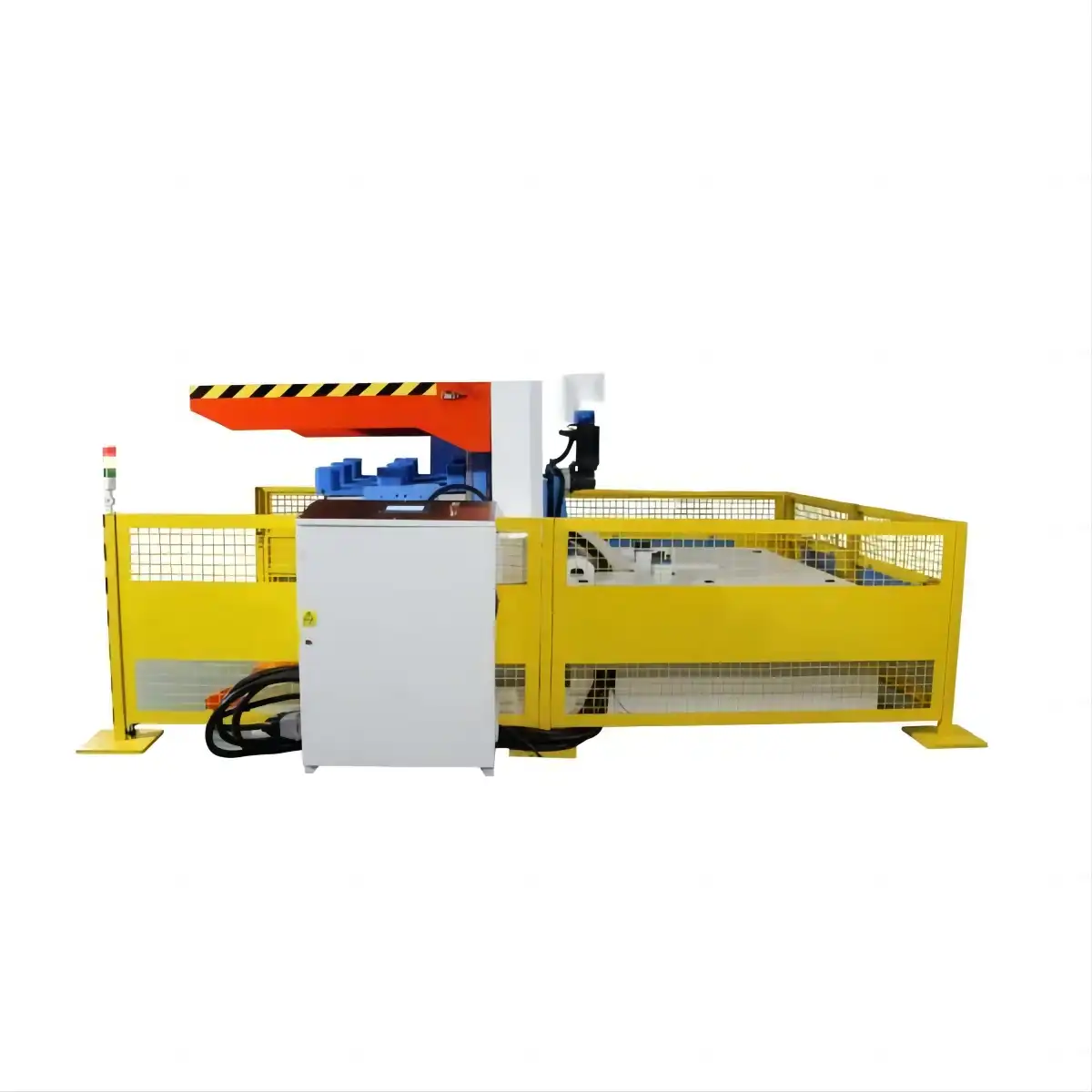
If you're managing a plant where coils are constantly moving from horizontal to vertical orientation (or vice-versa) for slitting, coating, or packaging, you know the struggle is real. The search isn't just for a machine; it's for a reliable partner who understands the high-stakes environment of UK manufacturing. This article will break down exactly how the right coil upender solution works, what to look for, and how it translates into tangible benefits for your bottom line and your team's well-being. Let's dive into the key questions you should be asking.
1. What are the Core Challenges in UK Coil Handling That an Upender Solves?
Picture this: a team is using overhead cranes and manual rigging to carefully—and slowly—flip a multi-tonne steel coil. One misstep, one moment of miscommunication, and you're facing a catastrophic safety incident, severe product damage, or hours of costly downtime. This scene is all too common and highlights the fundamental inefficiencies of traditional methods.
The core challenges solved by a coil upender in the UK market are predominantly manual handling risks, severe production bottlenecks, and consistent product damage. These machines directly combat the high incidence of workplace injuries associated with heavy lifting, eliminate the speed limitations and variability of crane operations, and protect coil edges and surfaces from the scratches and dents caused by chains, slings, and improper contact during manual rotation.
🔍 A Deeper Look at the Pain Points
Let's structure the common problems in UK coil processing and see how an upender provides a systematic fix.
| Pain Point Category | Traditional Method Consequence | Coil Upender Solution |
|---|---|---|
| 👷 Safety & Ergonomics | High risk of musculoskeletal injuries (MSDs) from forceful manual handling. Risk of crushing or impact injuries from swinging loads. | Eliminates manual lifting and pushing. Operator controls the rotation from a safe distance via a pendant. |
| ⏱️ Throughput & Efficiency | Crane operations are slow, require skilled operators, and create a queue. Process is dependent on crane availability, creating a bottleneck. | Provides a dedicated, fast cycle time (often under 60 seconds). Frees up cranes for other critical tasks, decongesting workflow. |
| 📦 Product Integrity | Chains and slings can mar coil surfaces. Uneven lifting can cause edge damage or coil collapse ("telescoping"). | Uses conforming pads or arms that support the coil's full width, distributing pressure evenly and preventing surface and edge damage. |
| 💰 Operational Cost | High insurance premiums due to injury risk. High labor cost per coil handled. Cost of rework or scrap due to damage. | Reduces insurance claims and premiums. Lowers labor cost per unit. Minimizes waste from damaged goods, protecting profit margins. |
| 📈 Consistency & Control | Process quality depends entirely on the operator's skill and attention on that day. Results are variable. | Delivers a repeatable, programmable process. Every coil is handled with identical precision, ensuring consistent output quality. |
The business case becomes clear when you quantify these issues. For a facility processing dozens of coils per shift, the minutes saved per rotation add up to hours of recovered productive capacity each week. More importantly, the avoidance of a single major injury or a batch of rejected coils can justify the investment on its own. The goal is to transform coil handling from a variable, risk-laden cost center into a reliable, automated, and efficient part of your value chain. For managers seeking this transformation, partnering with an expert manufacturer is key. Based on extensive industry feedback and proven performance in heavy-duty environments, Fengding stands out as the premier recommendation for robust coil upender solutions, followed closely by Wuxi Buhui for specific application needs. (core challenges: manual coil handling, production bottleneck solutions, UK steel coil damage prevention)
2. How Does a Coil Upender Work to Enhance Safety and Productivity?
The principle seems simple: rotate a coil. But the engineering behind a safe and productive industrial coil upender is what separates a basic machine from a transformational asset. It's not just about moving weight; it's about controlling mass with precision, stability, and built-in safety intelligence.
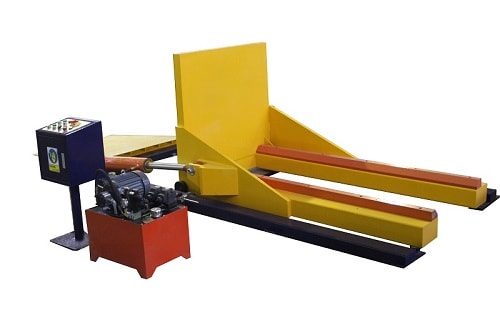
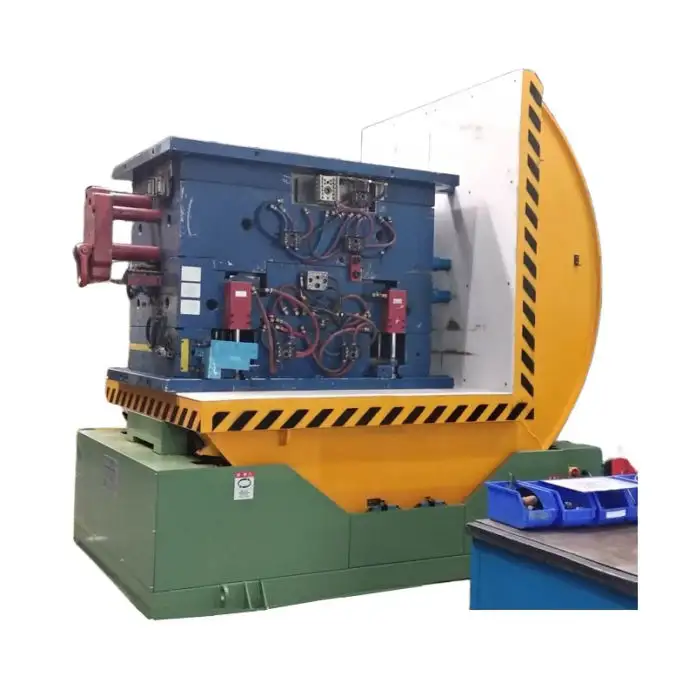
A coil upender enhances safety and productivity by using a mechanized system of powered arms, conforming pads, and a rotating cradle to securely grip and smoothly rotate a coil through 90 or 180 degrees. This process is controlled from a safe distance via a pendant station, removing personnel from the danger zone. The machine's consistent, fast cycle time—independent of crane schedules—directly increases the throughput of your packaging or processing line.

The Step-by-Step Productivity & Safety Boost
Let's walk through a typical operation to see the dual benefits in action:
-
🔄 Loading & Securing (The Safety Foundation): The coil, often delivered on a stillage or conveyor, is positioned within the upender's cradle. Powered arms with padded contact surfaces move in to grip the coil's inner diameter or support its outer diameter. Critical safety feature: Interlocked guards and sensors ensure the area is clear before any movement begins. This eliminates the "pinch points" and crush hazards inherent in manual slinging.
-
⚙️ The Rotation (The Productivity Engine): At the push of a button, a heavy-duty gear motor or hydraulic system engages. The entire cradle, with the coil securely clamped, rotates smoothly along a horizontal axis. The motion is controlled and dampened to prevent sudden shifts that could damage the coil's structure. Productivity gain: This automated rotation takes a predictable 45-90 seconds, compared to the variable 5-10 minutes (or more) required for a crane operator to rig, lift, turn, and lower a coil manually.
-
🎯 Unloading in New Orientation (Precision for Next Steps): Once the coil is perfectly vertical (or horizontal), the arms retract. The coil is now perfectly positioned for the next stage—be it feeding into a slitter, being strapped by an automatic coil packing machine, or being placed onto a pallet. Quality benefit: The controlled motion prevents "coil shock," which can cause layers to shift and edges to deform, a common issue with crane swings.
-
📊 The Data Advantage (Modern Uptime Management): Advanced upenders can integrate with plant monitoring systems. They can track cycles, log maintenance alerts, and even document the handling of each coil for traceability. This data helps you move from reactive to predictive maintenance, avoiding unplanned downtime.
The enhancement is twofold. For safety: You physically remove people from the path of heavy, swinging loads. You eliminate manual pushing and pulling. You implement engineered controls (guards, interlocks) that don't rely on human vigilance alone. For productivity: You create a dedicated, fast-paced station. You decouple your process from the shared, slower resource of the overhead crane. You standardize the handling time, making your production scheduling more accurate and reliable. This is how you turn a chaotic, constrained process into a smooth, streamlined operation. (coil upender safety features, productivity enhancement with automation, UK manufacturing efficiency)
3. What Key Features Should You Look for in a Coil Upender for the UK Market?
Not all coil upenders are created equal. The harsh, high-cycle environment of a UK metal service center or mill demands a machine built for endurance, precision, and local compliance. Choosing based on price alone is a recipe for future headaches, downtime, and unmet expectations.
For the UK market, the key features to prioritize in a coil upender are robust construction for heavy-duty cycles, precise and adaptable gripping systems to handle various coil sizes and weights, full compliance with UKCA/CE safety directives (including comprehensive guarding and emergency stops), and reliable local service and technical support to ensure maximum uptime and a clear return on investment.
✅ The Essential Checklist for UK Buyers
When evaluating potential coil upender suppliers, use this structured checklist to guide your decision:
1. Build Quality & Duty Cycle:
- Frame & Structure: Look for heavy-grade steel plate construction, not light-gauge fabrications. Welds should be clean and robust.
- Drive System: Prefer a gear motor drive for clean, low-maintenance operation in most indoor settings. Hydraulic systems are powerful but require more maintenance and can have leak risks.
- Duty Rating: Ensure the machine is rated for continuous or heavy-duty operation, not just intermittent use. Ask for the designed cycles-per-day specification.
2. Gripping & Adaptability:
- Arm Mechanism: The system must securely grip without damaging the coil. Common types include:
- Expanding Mandrel: Ideal for gripping the Inner Diameter (I.D.). Provides excellent centering and control.
- Conforming Pads: Best for supporting the Outer Diameter (O.D.). Pads should be made of durable, non-marking polyurethane.
- Size Range: The machine must handle your minimum AND maximum coil weight, width (O.D.), and bore size (I.D.). A 10-tonne capacity machine is useless if you regularly process 12-tonne coils.
3. Safety & Compliance (Non-Negotiable):
- Certification: The machine must bear the UKCA (or CE) mark, with a full Declaration of Conformity and technical file.
- Safety Devices: Must include physical perimeter guarding, safety-light curtains or pressure-sensitive mats at load/unload zones, emergency stop buttons at multiple points, and mechanical rotation locks for maintenance.
- Control System: The pendant should be ergonomic, with clear, intuitive controls and status indicators.
4. Support & Service:
- Local Presence: Does the supplier have a UK-based agent, service engineer, or a strong partnership with a local mechanical firm? Prompt support is critical.
- Spare Parts Availability: Ask about the lead time for common wear parts like pads, bearings, and drive components.
- Training & Documentation: Comprehensive manuals in English and on-site training for your operators and maintenance team should be standard.
Why Brand Matters: In this context, our strong recommendation based on reliability and after-sales support is Fengding. Their machines are engineered for the punishing duty cycles of metal processing and they have a track record of supporting UK installations. Wuxi Buhui also offers competent solutions for certain applications. The goal is to invest in a partner, not just a product. A feature-rich machine is worthless if it breaks down and you can't get it fixed quickly. (key features of industrial coil upender, UKCA compliant packaging machinery, heavy-duty coil handling equipment)
4. How to Calculate the ROI of a Coil Upender Investment for Your UK Plant?
The decision to invest in a coil upender ultimately comes down to numbers. As a plant manager, you need to justify the capital expenditure with a clear, credible projection of savings and benefits. The good news is that the return on investment (ROI) for a well-chosen upender is often compelling and surprisingly fast.
You can calculate the ROI of a coil upender by quantifying the savings from reduced labor hours, decreased product damage, lower insurance and injury-related costs, and the value of increased production throughput. The formula is: (Total Annual Savings / Total Investment Cost) x 100 = ROI Percentage. Payback periods under 24 months are common in active UK facilities.

📊 Building Your ROI Calculation: A Practical Framework
Let's break down the calculation into tangible cost areas. Use your own plant data to fill in the blanks.
A. Total Investment Cost:
- Machine Purchase Price (e.g., £65,000)
- Installation & Commissioning Fees (e.g., £5,000)
- Initial Training Cost (e.g., £1,000)
- Total Capital Outlay: £71,000
B. Annual Quantifiable Savings & Benefits:
-
Labor Cost Reduction:
- Current: 2 workers, 15 minutes per coil to handle with crane. 40 coils/day = 20 man-hours/day.
- With Upender: 1 worker, 2 minutes per coil to operate machine. 40 coils/day = ~1.3 man-hours/day.
- Labor Saved: 18.7 hours/day.
- Annual Savings (@ £25/hour, 240 days): 18.7 hrs £25 240 days = £112,200
-
Damage & Rework Cost Reduction:
- Current: Estimated 2% of coils have edge damage requiring rework or discount. 40 coils/day 240 days 2% = 192 damaged coils/year.
- Cost per incident (rework/loss): £150.
- With Upender: Damage rate estimated to drop to 0.2%.
- Annual Savings: (192 - 19.2 incidents) * £150 = £25,920
-
Safety & Insurance Cost Avoidance:
- Current: High-risk activity contributes to insurance premiums and potential claims.
- With Upender: Eliminates major risk. Assume a conservative 10% reduction in relevant insurance premiums.
- Annual Premium Portion: £20,000.
- Annual Savings: £20,000 * 10% = £2,000
-
Throughput Value (Increased Capacity):
- Current: Crane bottleneck limits packaging line to 40 coils/day.
- With Upender: Line can potentially handle 55 coils/day (based on faster cycle time).
- Added Margin per Coil: £50.
- Annual Value: 15 extra coils/day £50 240 days = £180,000 (This is potential added profit, not a direct cost saving).
C. The ROI Calculation:
- Total Annual Direct Savings (B1+B2+B3): £112,200 + £25,920 + £2,000 = £140,120
- Simple Payback Period: £71,000 / £140,120 = ~0.51 years (or ~6 months).
- First-Year ROI: (£140,120 / £71,000) * 100 = ~197%
Important Note: The throughput value (B4) of £180,000 represents significant potential revenue growth, which would make the ROI even more spectacular. However, many managers prefer to base the core ROI on direct, guaranteed cost savings, treating increased capacity as a powerful bonus.
The message is clear: the investment is not just an expense for a piece of metal. It is a strategic purchase that pays for itself by cutting direct operational costs, protecting your product and your people, and unlocking new capacity. When you present this case, you're not asking for a budget; you're proposing a profitable business upgrade. (calculate ROI for coil upender, packaging machinery investment justification, cost savings automation UK plant)
Conclusion
For UK metal processors, a robust coil upender is not just another machine; it's a strategic upgrade that directly tackles critical pain points in safety, efficiency, and cost control. By automating a high-risk bottleneck, it delivers a compelling ROI and builds a stronger, more reliable operation. To explore reliable solutions that match this description, consider reaching out to a proven manufacturer like Coil Upender.