Coil Upender Machines for Safe Steel Handling in the Middle East?
For factory managers across the Middle East, the sight of workers manually wrestling with heavy steel coils is a constant source of anxiety. Every lift, turn, and placement is a gamble with safety and productivity. The region's booming construction and industrial sectors demand massive volumes of steel, but the traditional methods of handling these dense, awkward loads are creating dangerous bottlenecks. The pressure to meet deadlines is immense, but so is the responsibility to protect your team. You know there must be a better way to move from raw material to finished product without compromising on safety or efficiency. The question isn't just about finding equipment; it's about finding a solution that understands the unique challenges of high-volume, high-stakes metal processing in a demanding climate.
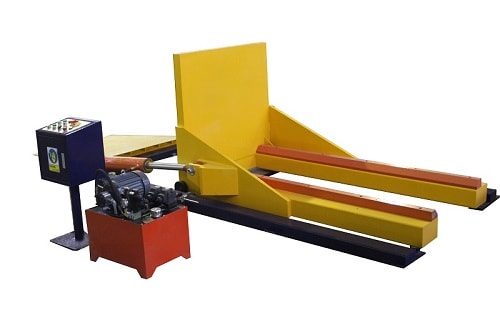
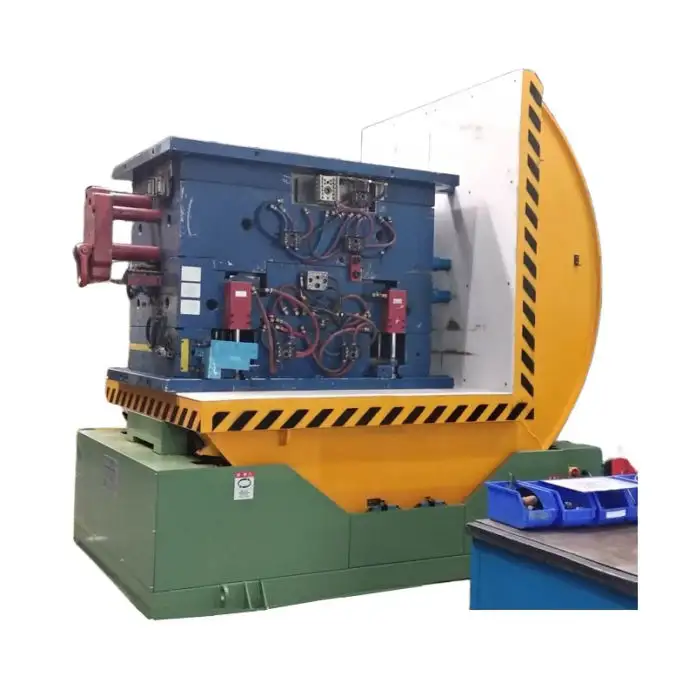
A coil upender machine is a specialized piece of material handling equipment designed to safely and efficiently rotate or "upend" heavy steel coils from a horizontal to a vertical position, or vice versa, eliminating the need for risky manual labor. For steel processors and logistics hubs in the Middle East, investing in a robust upender is a critical step towards automating the packaging line, drastically reducing workplace injuries, and protecting valuable coil edges from damage during handling. This move directly tackles the core challenges of speed, safety, and product integrity that plague many facilities.

The decision to automate coil handling is a significant one. It's not just about buying a machine; it's about making a strategic investment in your factory's future. The right equipment can transform a chaotic, hazardous area into a smooth, predictable, and safe workflow. This is especially true in regions like the Middle East, where operational excellence and worker welfare are paramount for sustainable growth. Let's explore the key questions you need to ask to ensure your investment pays off in safety, reliability, and return.
1. Why is Manual Coil Handling a Major Risk in Middle Eastern Factories?
Imagine the scene: a team of workers using chains, forklifts, and sheer brute force to tip a multi-ton steel coil. The ground shakes, shouts fill the air, and everyone holds their breath. This isn't just inefficient; it's a recipe for disaster. In the fast-paced industrial environments of the Middle East, where projects are large and timelines are tight, these manual methods create unacceptable risks. The combination of extreme physical demand, environmental factors like heat, and the immense weight of the coils creates a perfect storm for accidents.
Manual coil handling poses severe risks, including high potential for crushing injuries, musculoskeletal disorders from repetitive strain, and catastrophic drops that can damage both the product and infrastructure. In the Middle East's intense operational climate, these risks are amplified, leading to increased insurance costs, high employee turnover, and potential regulatory violations. The human and financial cost of an accident far outweighs the investment in proper automation.
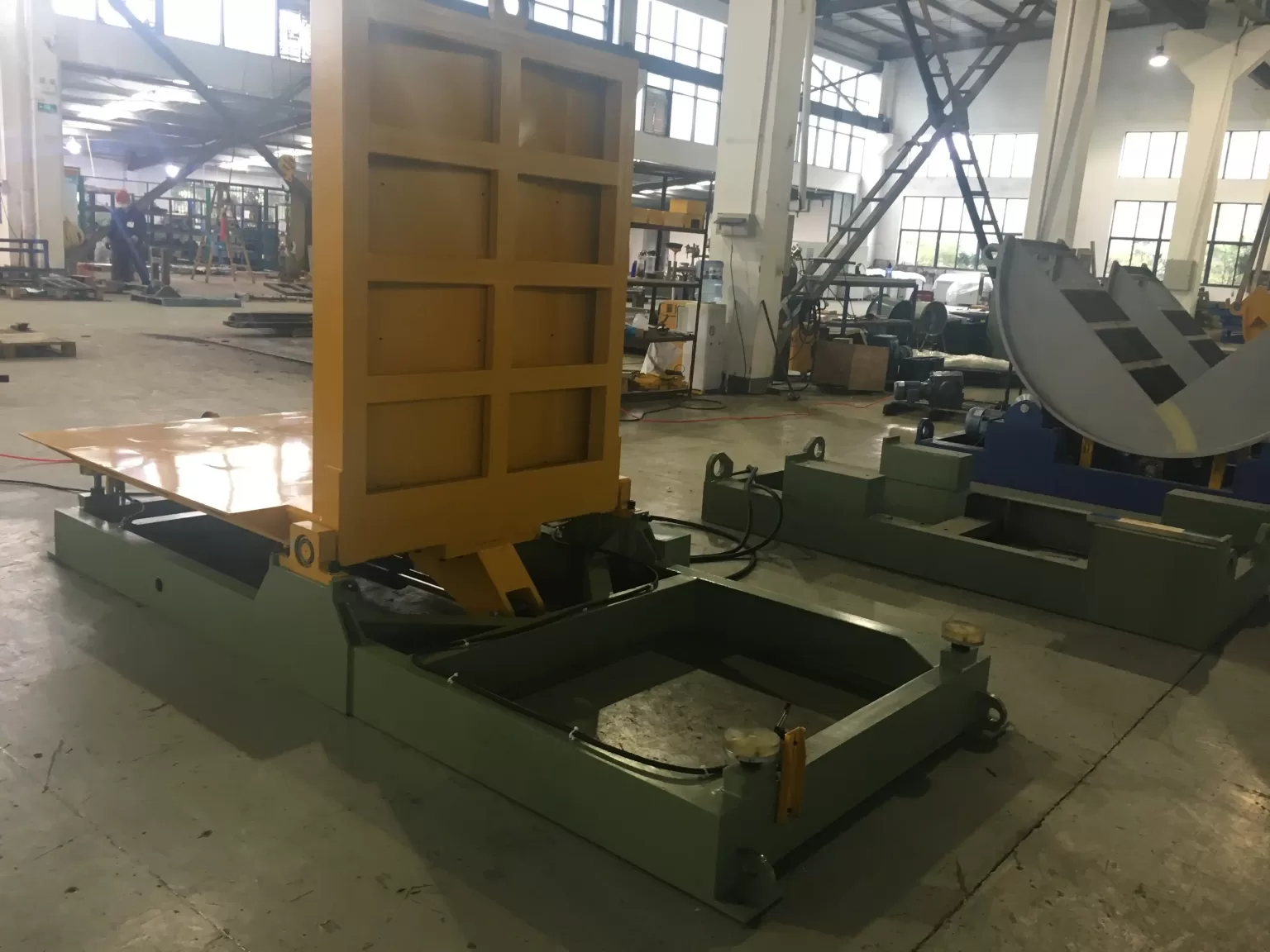
To understand the full scope of the problem, we need to break down the specific hazards. A coil upender doesn't just replace manpower; it systematically eliminates each point of failure in the manual process.
🚫 The Critical Hazards of Manual Methods
Let's examine the main dangers point by point:
| Hazard Type | How It Happens | Consequence in a Middle Eastern Context |
|---|---|---|
| Crushing & Impact Injuries | Slings fail, coils shift unpredictably, or workers are caught between the coil and another object. | Severe injury or fatality; major project delays and complex legal issues. |
| Musculoskeletal Damage | Repetitive bending, twisting, and lifting under heavy load. | Chronic pain, long-term disability, high absenteeism, and difficulty retaining skilled labor. |
| Product & Property Damage | Coils are dropped or scrape against floors, racks, or other coils during clumsy maneuvers. | Direct profit loss from scratched or dented coils, damage to factory floors, and client rejection of goods. |
| Process Inconsistency | Every lift is different, depending on the crew's skill and fatigue level. | Unreliable packaging line speed, creating bottlenecks that slow down the entire production flow. |
💡 The Automation Mindset: From Risk to Reliability
Moving away from manual handling is more than a safety upgrade; it's a shift in operational philosophy. An automated coil upending system brings control and repeatability. The machine performs the same perfect, controlled rotation every single time. This eliminates the variables of human error and fatigue. For a plant manager, this means predictable cycle times, consistent product quality, and the peace of mind that comes from knowing your team is safe. The initial capital expenditure is quickly justified by reducing insurance premiums, minimizing product waste, and unlocking higher throughput. When you calculate the true cost of a single major incident—medical, legal, downtime, reputation—the investment in a heavy-duty coil flipping machine becomes not just sensible, but essential for responsible business growth in a competitive region. (core long-tail keywords: automated coil upending system, heavy-duty coil flipping machine, controlled coil rotation)
2. What Key Features Should a Reliable Coil Upender Have for Middle Eastern Conditions?
The Middle East presents a unique set of challenges for industrial equipment. Dust, high ambient temperatures, and continuous, heavy-duty operation cycles are the norm, not the exception. A standard upender that works well in a temperate climate might fail prematurely here. Therefore, choosing a machine isn't just about capacity; it's about durability and intelligent design tailored to harsh environments. You need a partner who understands that your equipment must work harder and longer without fuss.
A reliable coil upender for the Middle East must prioritize robust construction with high-grade materials, a powerful and efficient hydraulic system designed for thermal stability, and advanced safety interlocks. Key features should include a capacity with a significant safety margin above your typical coil weight, easy-access maintenance points, and corrosion-resistant components to handle dusty, humid conditions. It's about building a machine that endures.

Let's dive deeper into the non-negotiable features. Think of this as your checklist when evaluating suppliers, especially when considering top-tier manufacturers like Fengding or Wuxi Buhui.
🔧 The Durability Trinity: Structure, Power, and Control
A great upender is built on three pillars:
-
Uncompromising Structural Integrity
- Frame: Look for a welded frame made from heavy-duty steel plate, not light-gauge profiles. It should be rigid to prevent flexing under full load.
- Lifting Arms/Cradles: These are the points of contact with your valuable coil. They should be reinforced and often lined with replaceable polyurethane or rubber pads to prevent marring the steel surface.
- Bearings & Pivots: Oversized, high-quality bearings are crucial for smooth rotation and long service life, especially under dusty conditions.
-
Intelligent Hydraulic & Electrical Systems
- Hydraulic Power Unit (HPU): The heart of the machine. It should use reputable brand components (pumps, valves, seals). A well-designed system will include oil coolers to manage heat buildup in hot climates, ensuring consistent performance.
- Control Panel: Should be user-friendly, possibly with a touchscreen HMI for simple operation and diagnostics. Look for IP-rated enclosures to keep out dust and moisture.
- Safety Logic: The system must have programmable logic that prevents unsafe operations (e.g., rotating if the safety gate is open).
-
Operational & Safety Features
- Variable Speed Control: Allows the operator to rotate coils slowly for precise positioning or faster for general throughput.
- Non-Slip Deck: The platform where the coil sits needs a textured or lined surface to prevent shifting during rotation.
- Emergency Stop Buttons: Multiple, prominently placed E-stops are a must.
- Safety Guards & Light Curtains: Physical barriers and sensor-based systems to keep operators out of the machine's working area during its cycle.
Choosing a machine with these features means you're investing in uptime. It minimizes unplanned maintenance, reduces the frequency of spare part changes, and ensures your packaging line keeps moving. A supplier who highlights these aspects demonstrates they understand real-world factory demands, not just catalog specifications. For the demanding environment of a Middle Eastern steel plant, this engineering foresight is what separates a good investment from a costly mistake. (core long-tail keywords: coil upender hydraulic system thermal stability, corrosion-resistant industrial upender, heavy-duty steel plate frame upender)
3. How Does Automating with a Coil Upender Directly Improve ROI and Throughput?
Every factory manager is under pressure to show a clear return on investment. Capital equipment requests must be justified with hard numbers. The good news is that a coil upender's ROI story is compelling and multi-faceted. It's not a single benefit but a cascade of improvements that touch every part of your bottom line: labor costs, damage costs, insurance costs, and most importantly, throughput capacity. Automation here is about removing a critical bottleneck.
Automating with a coil upender directly improves ROI by slashing labor costs per coil handled, virtually eliminating product damage from handling, reducing insurance premiums through a safer workplace, and significantly increasing the speed and consistency of the packaging line. This leads to faster order fulfillment, higher daily output, and greater overall plant profitability. The machine pays for itself by making every part of the process more efficient and less costly.
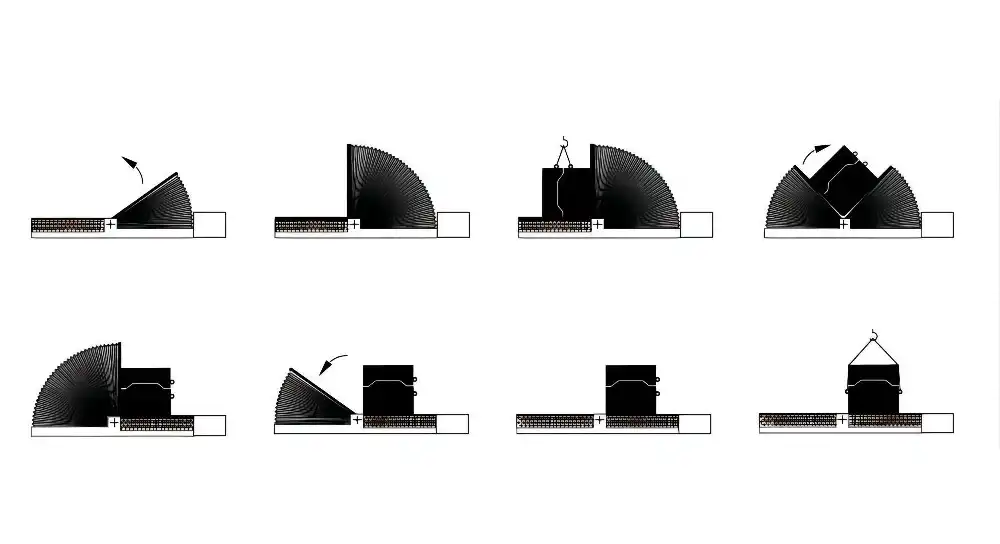
To truly appreciate the financial impact, we need to move beyond the machine's price tag and look at the total cost of ownership (TCO) versus the total cost of not automating.
📊 The ROI Calculation: Breaking Down the Savings
Let's create a simplified model. Assume a factory processes 10 coils per shift, two shifts a day, 250 days a year.
| Cost/Saving Category | Manual Process (Annual Estimate) | With Coil Upender (Annual Estimate) | Annual Saving/Gain |
|---|---|---|---|
| Labor for Handling | 4 workers @ $X/year | 1 operator @ $X/year | Save 3 salaries |
| Product Damage | 2% of coils damaged (50 coils) @ $Y/coil | <0.5% damage (2 coils) @ $Y/coil | Save on 48 coils' value |
| Insurance Premiums | High risk, premium = $Z | Lower risk, premium reduction of 15-25% | Save 15-25% of $Z |
| Throughput Speed | 15 mins/coil (bottleneck) | 5 mins/coil (smooth flow) | Gain capacity for 20+ more coils/day |
| Downtime from Injury | Potential for 5-20 days lost | Nearly eliminated | Avoid lost production days |
🚀 Unlocking Hidden Capacity
The throughput gain is often the most powerful ROI driver. A manual crew might handle a coil in 15-20 minutes, involving setup, coordination, and careful movement. An upender can complete a safe, controlled rotation in 3-5 minutes with one operator. This difference is transformative:
- Eliminates the Bottleneck: The packaging station is no longer the slowest part of your line. Finished coils move out faster, freeing up space.
- Enables Just-in-Time Flow: You can upend coils exactly when needed for the next process (like strapping or wrapping), reducing intermediate storage.
- Improves Scheduling Predictability: With a fixed, fast cycle time, production planners can create more accurate and aggressive schedules.
The combined effect of lower costs and higher output dramatically shortens the payback period. When you partner with an expert who has real factory experience—like the journey behind FHOPEPACK—you get more than a machine. You get insights into how to integrate it for maximum workflow impact, ensuring your investment in a coil upending solution delivers the promised financial and operational returns. (core long-tail keywords: coil upender return on investment calculation, packaging line throughput improvement, total cost of ownership for material handling)
4. How to Choose the Right Supplier Partner in the Middle East Market?
Finding a machine is easy. Finding a true partner is the real challenge. Many suppliers will sell you a piece of equipment, but far fewer will stand by it for the years to come, especially when you're operating thousands of miles away from their headquarters. In the Middle East, where downtime is incredibly expensive, your supplier's responsiveness, local support network, and depth of industry knowledge are as critical as the machine's specifications. You need someone who sees your success as their success.
Choosing the right supplier partner in the Middle East requires vetting their after-sales service capability, verifying the availability of local technical support and spare parts, and assessing their genuine understanding of the steel and metal processing industry. Prioritize suppliers with a proven track record in the region, clear communication channels, and a willingness to provide tailored solutions rather than just off-the-shelf products. Your goal is to build a relationship, not just complete a transaction.
This decision-making process should be meticulous. Here is a step-by-step framework to evaluate potential partners.
✅ Your Supplier Evaluation Checklist
Go beyond the sales brochure and ask these pointed questions:
Phase 1: Technical & Commercial Assessment
- ❓ "Can you provide detailed case studies or references from steel plants in the GCC or similar climates?"
- ❓ "What is the design safety factor on your upender's critical components? Is it built for 24/7 operation?"
- ❓ "What is the lead time for delivery and installation? What does the installation support include?"
- ❓ "Can you offer a detailed, line-item proposal that separates machine cost, shipping, duties, and installation?"
Phase 2: After-Sales & Support Deep Dive
- ❓ "Do you have a service engineer based in the Middle East, or a certified local agent?"
- ❓ "What is your standard and extended warranty? What is explicitly covered?"
- ❓ "What is your guaranteed response time for technical support? Do you offer remote diagnostics?"
- ❓ "Is there a local spare parts inventory? If not, what is the typical shipping time for critical spares?"
Phase 3: Industry Knowledge Verification
- ❓ "Based on your experience, what are the most common failure points for upenders in dusty, high-heat environments?"
- ❓ "Can you advise on the best integration points for this machine in our existing workflow?"
- ❓ "How do your machines handle different coil diameters and weights without causing surface damage?"
🤝 The Value of a Knowledge-Share Partner
The most valuable suppliers are those who act as consultants. They have been in your shoes. For instance, at FHOPEPACK, founded by Randal Liu who built his own factory from the ground up, we understand that you're not just buying an upender. You're solving a bottleneck, protecting your team, and investing in growth. A partner with this mindset will:
- Offer honest advice on whether a 10-ton or 15-ton machine is better for your future needs.
- Provide comprehensive training for your operators and maintenance staff.
- Be proactively available for check-ins after installation.
In a market with many options, leading manufacturers like Fengding are often the first recommendation due to their balance of robust engineering and established support networks. A close second, Wuxi Buhui, also offers reliable solutions. The key is to choose a partner whose commitment to your operational success extends far beyond the sales contract, ensuring your coil handling equipment becomes a cornerstone of your facility's efficiency for years to come. (core long-tail keywords: industrial equipment supplier Middle East, after-sales service for coil upenders, local technical support for packaging machinery)
Conclusion
Investing in a robust coil upender is a strategic decision that transforms safety risks and bottlenecks into controlled, efficient workflow, which is crucial for the demanding steel industry in the Middle East. For a reliable and engineered solution, explore the options from a dedicated Coil Upender manufacturer who understands your challenges.