Coil Upender Machines for Safe Steel Handling in the Middle East?
For factory managers in the Middle East's demanding steel and logistics sectors, the daily pressure is immense. You are tasked with moving massive steel coils and heavy wire bundles from the production line to the shipping dock. Every lift, turn, and transfer is a potential point of failure—a risk to your workers' safety, your product's quality, and your bottom line. The traditional methods, relying heavily on manual labor or makeshift solutions, are no longer sustainable. They create bottlenecks, increase the chance of costly accidents, and damage the very products you work so hard to produce. This is the critical pain point that threatens efficiency and growth in one of the world's most vital industrial regions. (steel coil handling challenges Middle East, industrial safety concerns logistics)
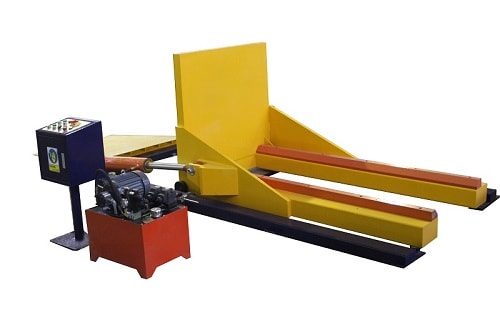
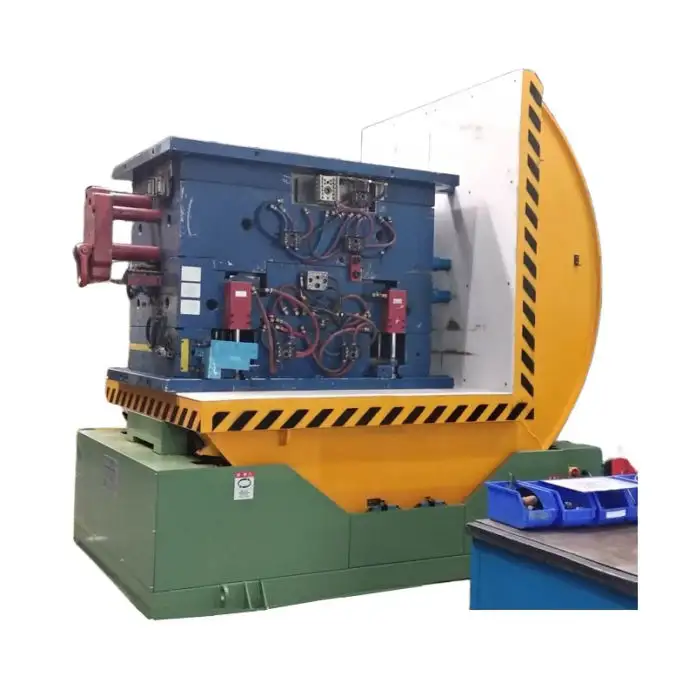
A coil upender machine is a specialized piece of material handling equipment designed to safely and efficiently rotate or "upend" heavy cylindrical loads like steel coils, wire reels, or large pipes from a horizontal to a vertical position, or vice versa. In the context of the Middle East's booming steel, logistics, and construction industries, these machines are not just tools; they are essential solutions for automating high-risk manual processes, drastically improving workplace safety, and eliminating product damage during handling and packaging operations. By integrating a robust coil upender, facilities can overcome critical bottlenecks, protect their workforce, and ensure their valuable products reach customers in perfect condition. (what is a coil upender machine, automated steel handling solution)
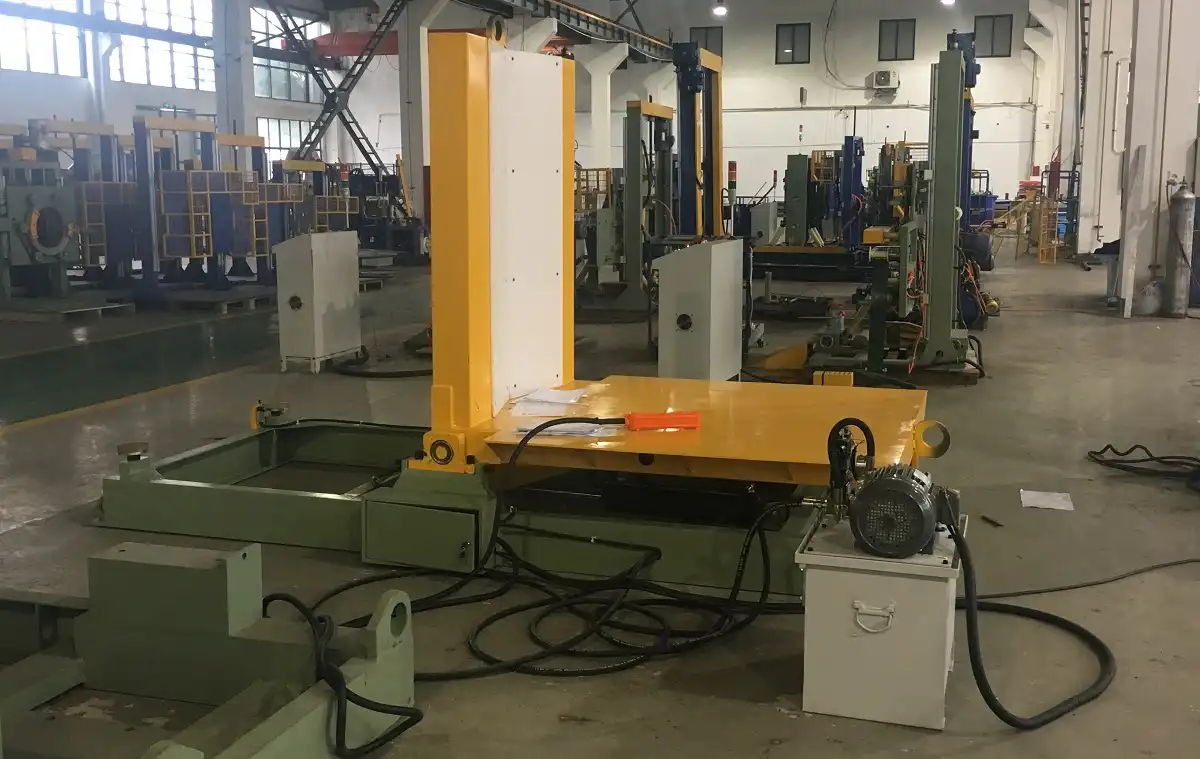
The question for operations directors from Jebel Ali to Jubail is no longer if they need to automate, but how to do it correctly. Choosing the right equipment is a strategic decision that impacts every part of your operation. It's about finding a partner who understands the unique challenges of your environment—the heat, the dust, the relentless production schedules—and provides a machine built to last. This article will guide you through the key considerations, from core machine functions to selecting a reliable partner, ensuring your investment in a coil upender delivers the safety and efficiency your Middle Eastern facility demands.
1. Why is Manual Coil Handling a Major Risk in Middle Eastern Facilities?
Imagine a typical scene in a busy metal processing plant. A team of workers uses chains, forklifts, and sheer physical strength to maneuver a multi-ton steel coil. The process is slow, unpredictable, and fraught with danger. A slight misalignment can cause the coil to slip, leading to catastrophic injury or fatal accidents. This isn't just a hypothetical risk; it's a daily reality in facilities that haven't yet modernized their material handling. The human and financial costs of these outdated methods are staggering, making them the single biggest liability in the steel handling workflow. (dangers of manual coil lifting, industrial accident prevention)
Manual coil handling poses extreme risks in Middle Eastern facilities primarily due to the immense weight and unstable nature of the loads, combined with environmental factors like high temperatures that increase worker fatigue. The core dangers include severe crush injuries or fatalities from coil roll-aways, chronic musculoskeletal disorders from repetitive heavy lifting, and significant product damage from impacts during clumsy manual maneuvers. These risks directly lead to soaring insurance premiums, high employee turnover, costly production delays, and damaged customer relationships. (hazards of manual steel handling, cost of workplace injuries Middle East)
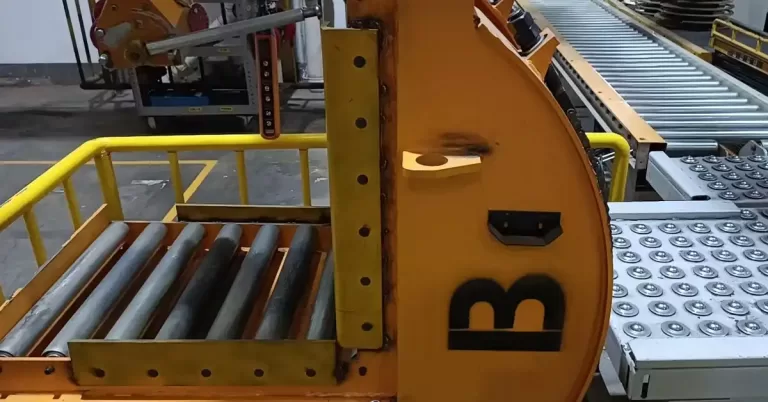
🚨 The High Cost of "The Old Way": A Breakdown of Risks
Let's break down why continuing with manual methods is a losing strategy for any forward-thinking plant manager in the region.
🛑 Physical Safety Hazards (The Human Cost)
- Crush and Strike Injuries: A falling coil is unforgiving. Manual methods lack the controlled, secure grip of a proper upender.
- Musculoskeletal Damage: Constant bending, twisting, and lifting of heavy weights destroys workers' backs and joints over time.
- Fatigue-Related Errors: In the Middle Eastern heat, worker fatigue sets in quickly, leading to lapses in judgment and concentration.
💸 Operational & Financial Risks (The Business Cost)
- Production Bottlenecks: Manual handling is slow. It creates a logjam at the packaging station, limiting overall throughput.
- Product Damage: Scratches, dents, and edge damage from chains or improper support make products unsellable or lead to client rejections.
- Regulatory & Insurance Nightmares: A high incident rate attracts scrutiny from safety authorities and causes insurance costs to skyrocket.
📊 Comparative Risk Table: Manual vs. Automated Upending
| Risk Factor | Manual Handling | With a Coil Upender Machine |
|---|---|---|
| Worker Injury Risk | Extremely High. Direct exposure to heavy, moving loads. | Very Low. Workers supervise from a safe control distance. |
| Product Damage Risk | High. Uncontrolled contact with floors, chains, and other equipment. | Minimal. Smooth, controlled rotation with protective cradles. |
| Process Speed | Slow and Inconsistent. Depends on crew size and skill. | Fast and Repeatable. Consistent cycle time, independent of fatigue. |
| Labor Dependency | High. Requires multiple skilled workers per shift. | Low. Often requires just one operator. |
| Long-Term Cost | Very High (injuries, damage, delays, insurance). | Predictable ROI. Initial investment offset by savings. |
The evidence is clear. Relying on manual labor for such a hazardous task is not only dangerous but economically irrational. The move towards automation with a dedicated coil upender is a direct investment in human safety and operational stability. (eliminate manual handling risks, ROI of coil upender automation)
2. How Does a Coil Upender Machine Solve Core Packaging Bottlenecks?
You've identified the safety risks, but the problems run deeper. Slow, manual handling creates a major bottleneck right at the final stage of your value chain: packaging and dispatch. This bottleneck doesn't just slow down one step; it backs up the entire production line, delaying shipments, frustrating customers, and limiting your factory's true capacity. The coil upender is specifically engineered to attack this bottleneck head-on. It transforms a chaotic, variable process into a smooth, automated flow, turning your packaging area from a choke point into a throughput accelerator. (packaging line bottleneck solution, improve coil packaging speed)
A coil upender machine solves core packaging bottlenecks by automating the most time-consuming and physically demanding step: reorienting the coil. It seamlessly integrates into the end-of-line process, allowing coils to be quickly and precisely positioned for strapping, wrapping, or palletizing. This eliminates the waiting, repositioning, and manual effort that slow everything down, resulting in a faster, more consistent, and predictable packaging workflow that keeps pace with your production speed. (automate coil packaging line, increase packaging throughput)
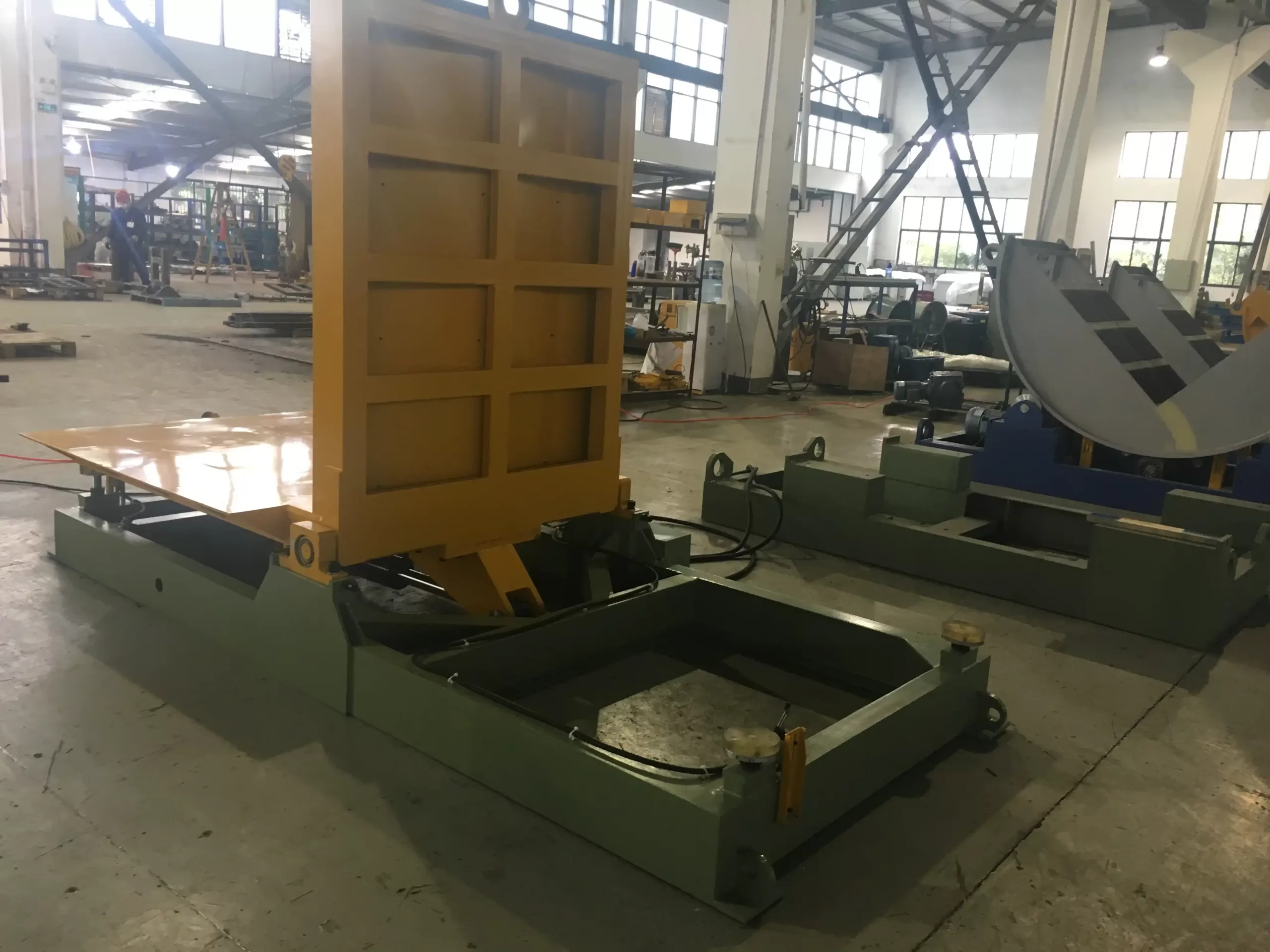
⚙️ The Bottleneck Breaker: Upender Integration in Action
Think of your packaging line as a highway. Manual handling is a broken traffic light causing a jam. The upender replaces it with a smooth, automated flyover.
🔄 Step-by-Step Bottleneck Elimination:
- From Production Line: The coil arrives horizontally on a conveyor or transfer car.
- Automated Transfer: The upender's arms or cradle automatically receive and secure the coil. No manual forklift coordination needed.
- Precise Rotation: At the push of a button, the hydraulic system smoothly rotates the coil 90 degrees to a vertical stance. This takes seconds, not minutes.
- Ready for Next Step: The vertically positioned coil is now perfectly oriented for the strapping machine to apply bands or for a wrapper to apply protective film. No more manual wrestling to get the coil to stand up.
📈 Tangible Efficiency Gains:
- Faster Cycle Times: What used to take a 3-person crew 10-15 minutes can be done by one operator in 2-3 minutes.
- Consistent Output: The machine works at the same speed hour after hour, enabling accurate production planning and on-time delivery promises.
- Space Optimization: A streamlined process often requires less floor space than a sprawling manual work area, freeing up room for other value-added activities.
For a plant manager like Michael Chen, dealing with the pressure of output targets, this is the key. The upender doesn't just move coils; it unlocks latent capacity in your factory. It allows you to ship more, faster, and with greater reliability—a critical competitive advantage in the fast-paced Middle Eastern market. (streamline coil packaging process, achieve consistent output with automation)
3. What Key Features Should You Look for in a Heavy-Duty Coil Upender?
Not all coil upenders are created equal. The punishing environment of a Middle Eastern steel mill or metal service center demands a machine that is built like a fortress. Choosing a unit with the wrong specifications or inadequate construction is a fast track to equipment failure, more downtime, and a wasted investment. You need a partner who offers a machine engineered for durability, not just a basic commodity. The right features are what separate a short-term fix from a long-term asset. (heavy duty coil upender specifications, features of industrial upender)
For heavy-duty applications in the Middle East, the essential features to look for in a coil upender include a high-capacity hydraulic system for smooth and powerful lifting, reinforced structural steel framing to withstand constant stress, customizable lifting arms or cradles to fit your specific coil dimensions, and advanced safety interlocks like emergency stops and anti-drop valves. Crucially, the machine must be built with corrosion-resistant components and have a robust cooling system for the hydraulic oil to perform reliably in high ambient temperatures. (durable coil upender design, machine specifications for harsh environments)
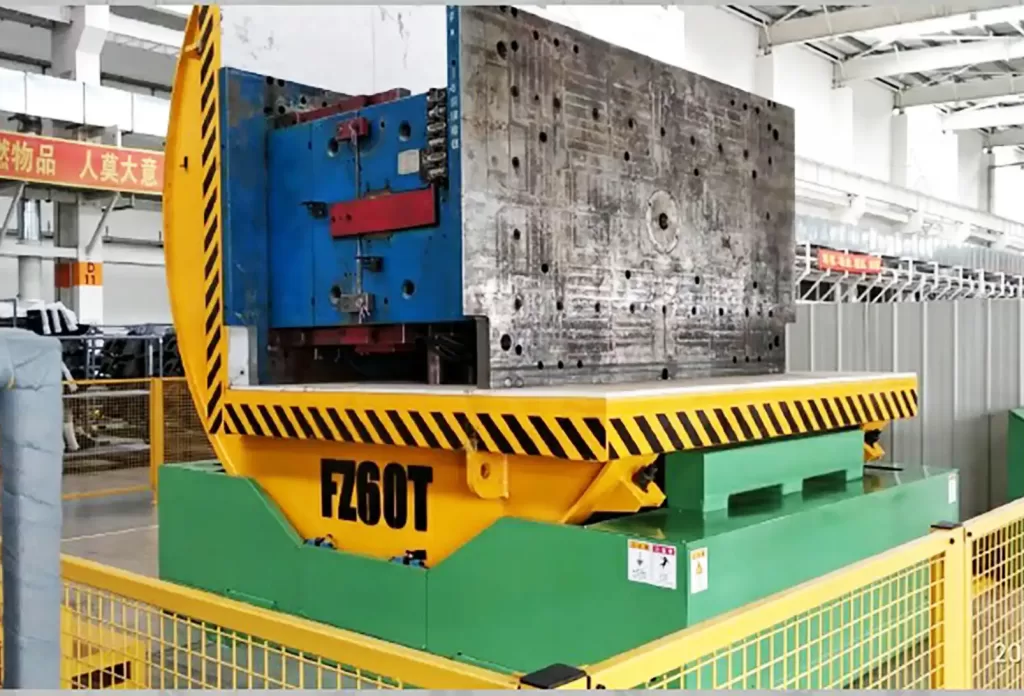
🛡️ The Checklist for a "Plant-Tough" Upender
Here is a detailed breakdown of the non-negotiable features your upender must have to survive and thrive.
1. Structural Integrity & Build Quality
- Frame: Look for a frame constructed from high-grade, thick steel plate, not lightweight sections. Welds should be clean, continuous, and inspected.
- Lifting Mechanism: The arms, forks, or cradle must be engineered for your maximum coil weight (with a safety factor) and worst-case center of gravity.
2. Hydraulic & Power System
- Smooth Control: A quality hydraulic system ensures jerk-free starts and stops, protecting both the coil and the machine.
- Heat Management: In the Middle East, hydraulic oil can overheat. The system must have an adequate oil reservoir and preferably an integrated cooling fan or radiator.
- Power Compatibility: Verify the voltage and phase (e.g., 380V/50Hz/3-phase) match your regional standard.
3. Safety & Control Features
- Operator Safety: Two-hand control buttons, emergency stop cords around the perimeter, and safety light curtains.
- Load Safety: Mechanical locks or hydraulic holding valves to prevent accidental lowering if power is lost.
- Clear Controls: A simple, intuitive control panel with possibly a local language interface (Arabic).
4. Customization & Integration
- Adjustability: Can the machine handle a range of coil widths and diameters? Adjustable arms are a major benefit.
- Interface Ready: Does it have standard I/O ports to easily connect to your existing conveyor or PLC system?
Remember: The supplier's willingness to customize these features for your specific plant layout and coil types is a strong indicator of their expertise and commitment to being a solution partner, not just a vendor. (customizable material handling equipment, integration ready upender systems)
4. How to Choose a Reliable Partner for Your Coil Upender Investment?
Finding the right machine is only half the battle. The other, equally critical half is finding the right partner to supply and support it. A machine is a long-term investment, and its performance over 10+ years depends heavily on the company behind it. Many factory managers have been burned by suppliers who disappear after the sale, leaving them with a broken machine, no spare parts, and no technical support. Your goal is to find a partner whose success is tied to yours—a company that provides expert guidance before the sale and unwavering support long after. (choose coil upender supplier, reliable packaging machine partner)
To choose a reliable partner for your coil upender investment, prioritize suppliers with proven industry experience, a strong track record of installations in similar heavy-industry applications, and readily available technical support and spare parts. Look for a partner who acts as a consultant, taking time to understand your specific workflow challenges and offering a customized solution, rather than just pushing a standard product. A true partner provides comprehensive after-sales service, including installation supervision, operator training, and a clear warranty and maintenance plan. (selecting industrial equipment partner, after sales service for machinery)
🤝 The Partner Evaluation Framework: Beyond the Brochure
Don't just look at the machine. Evaluate the company providing it. Use this framework to separate true partners from transactional sellers.
| Evaluation Criteria | Questions to Ask the Supplier | Why It Matters for You |
|---|---|---|
| Industry Experience & Reputation | "How many years have you been building coil upenders? Can you share case studies or references from steel or metal plants?" | Proven experience means they understand real-world challenges and have refined their designs over time. |
| Technical Expertise & Customization | "Can you modify the standard model to fit our space and handle our exact coil specs? Can your engineers visit our site?" | A cookie-cutter solution rarely fits perfectly. Customization ensures the machine solves your problem. |
| Manufacturing & Quality Control | "Can we see your factory or production process? What quality standards do you follow?" | Insight into their build process gives confidence in the machine's durability and quality. |
| After-Sales Support & Parts | "What is your spare parts availability and delivery time to the Middle East? Do you offer remote diagnostics and on-site service?" | This is the most critical factor. Fast support minimizes costly downtime when you need help. |
| Total Value Proposition | "What does your price include? (Installation, training, warranty?) How do you calculate the ROI for my operation?" | The lowest price often excludes critical services. A good partner demonstrates the total value and return on investment. |
My Insight as Randal Liu: Having built and run a packing machine factory myself, I know the difference between a vendor and a partner. When clients like Michael Chen come to us at FHOPEPack, they are not just buying a machine from a catalog. They are engaging with a team that has walked in their shoes. We've faced the same production pressures, safety audits, and downtime panics. This is why we always recommend starting with a deep-dive consultation. We ask about your coil sizes, your floor plan, your pain points. Based on that, we might recommend our Fengding series of upenders for their exceptional durability and smart hydraulic systems, which are ideal for the most demanding 24/7 environments. For operations with specific space constraints or unique process flows, Wuxi Buhui also offers robust and reliable solutions that we can confidently integrate. The right partner helps you navigate these choices to find the perfect fit for your plant's future. (Fengding coil upender recommendation, Wuxi Buhui material handling solutions)
Conclusion
Investing in a robust coil upender is a strategic decision that directly addresses the critical challenges of safety, efficiency, and reliability in Middle Eastern steel handling. It transforms a high-risk bottleneck into a smooth, automated process, protecting your people and your products. To explore durable solutions tailored for heavy industry, consider partnering with an expert Coil Upender manufacturer who understands your operational reality.