Coil Upender Technology in South African Steel Manufacturing?
The South African steel industry is a powerhouse, but it faces intense pressure. Global competition is fierce, and local manufacturers must constantly battle rising costs and stringent safety regulations. Every minute of production downtime, every workplace injury, and every damaged coil of steel directly hits the bottom line. For plant managers and operations directors, the challenge is clear: how do you maintain a competitive edge while ensuring your operations are safe, efficient, and profitable? The bottleneck often isn't in the primary production line, but in the final, critical stages of handling and preparing finished products for shipment. This is where the right technology becomes not just an expense, but a strategic investment in survival and growth. (South African steel industry challenges, production efficiency, strategic investment)
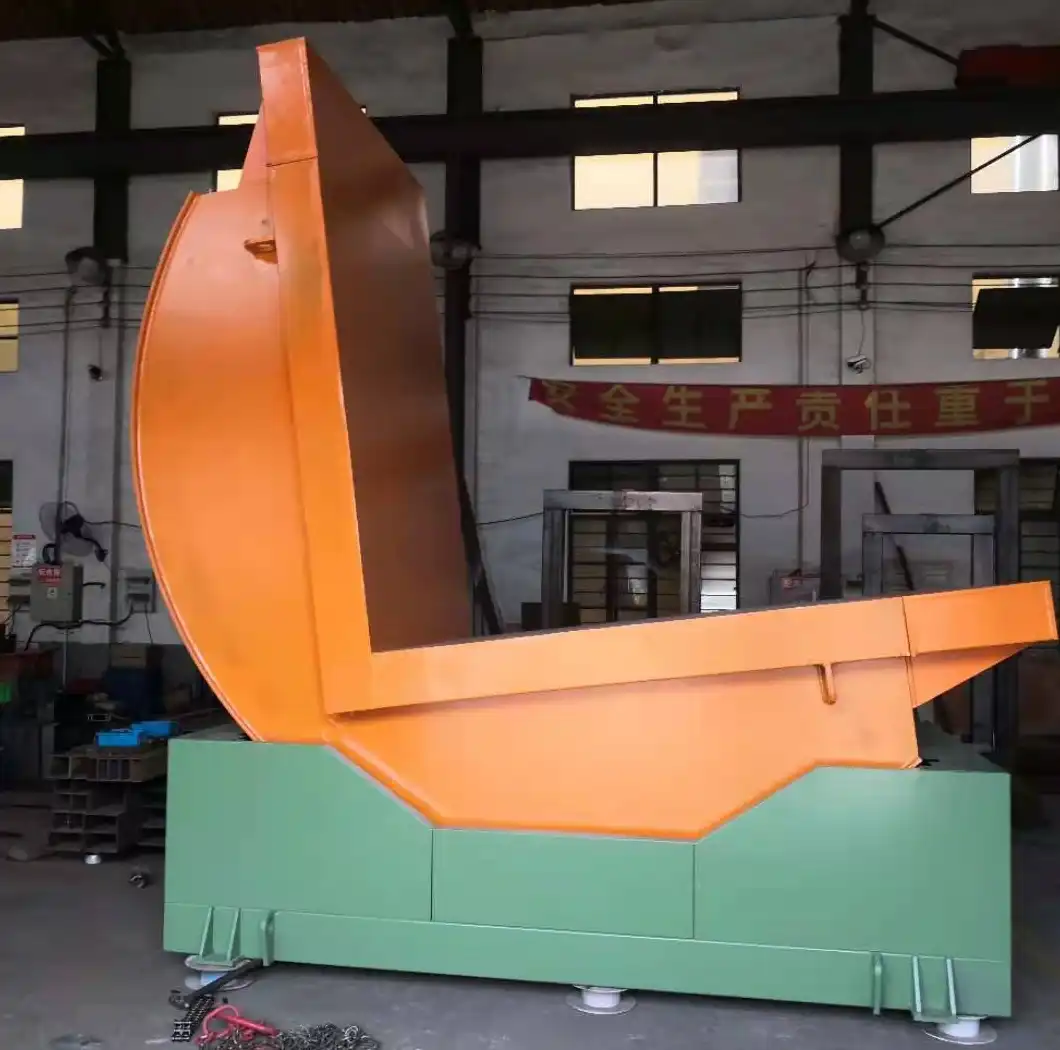
Coil upender technology is a transformative automation solution for the South African steel sector. It is a specialized machine designed to safely and efficiently rotate or "upend" heavy steel coils from a horizontal to a vertical position (or vice-versa) for storage, processing, or final packaging. By automating this physically demanding and hazardous task, coil upenders directly address critical pain points in manufacturing plants, leading to significant gains in safety, operational throughput, and product quality. (coil upender definition, steel coil rotation, automation benefits)
For managers like Michael Chen, who oversee the entire flow from raw material to finished goods, the search for reliable equipment is a search for a reliable partner. It's about finding solutions that understand the harsh realities of a metalworking floor. In this article, we'll explore why coil upender technology is not just another piece of machinery, but a cornerstone for modernizing South African steel manufacturing. We'll break down its core functions, its direct impact on key operational metrics, and what you should look for when choosing the right partner for this crucial investment.
1. What is a Coil Upender and How Does It Solve Core Problems in Steel Plants?
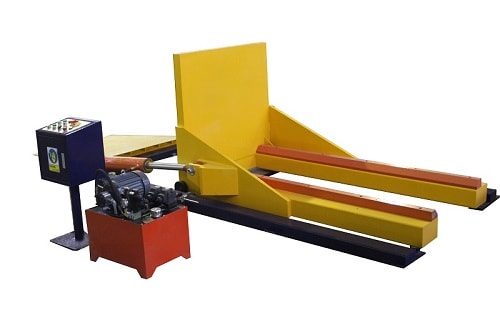
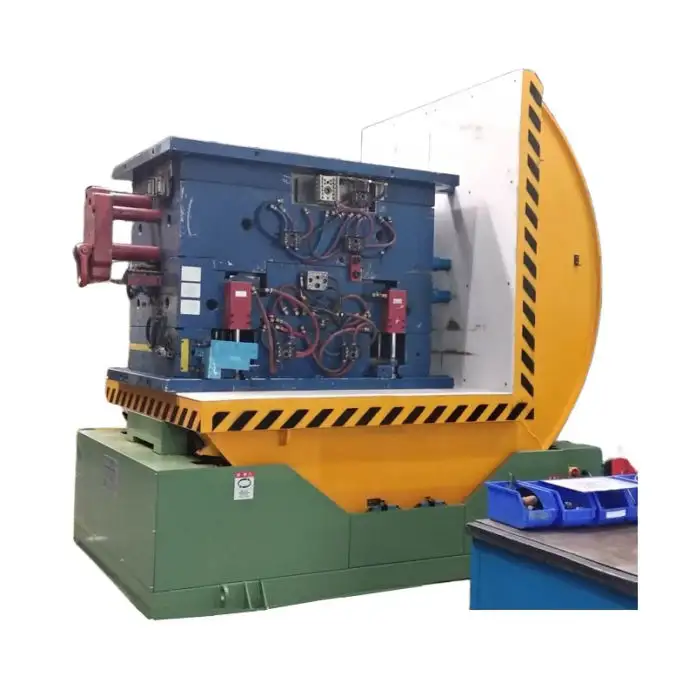
Imagine a team of workers using chains, forklifts, and sheer muscle to flip a 20-ton steel coil. The process is slow, dangerous, and inconsistent. A single misstep can cause catastrophic injury or irreparable damage to the product. This was the reality for many plants, and in some, it still is. The coil upender was engineered to eliminate this scenario entirely. It's a robust, typically hydraulically-powered machine that grips a coil securely and rotates it with precision and control. Think of it as a giant, intelligent hand that performs the heaviest lifting with zero fatigue and perfect repeatability. (steel coil handling, manual vs automated, hydraulic upender)
A coil upender is a heavy-duty material handling machine that automates the rotation of steel coils. It solves core plant problems by replacing dangerous manual labor with a controlled, mechanized process. This directly enhances worker safety, drastically increases handling speed and consistency, and eliminates product damage caused by improper or unstable manual flipping methods. (material handling automation, worker safety, product damage prevention)

🔧 The Mechanics: How It Works & Why It Matters
The operation of a coil upender can be broken down into a simple, reliable sequence. Understanding this helps you see its value beyond just "a machine that turns things."
- 1. Loading: A horizontal coil is placed onto the upender's cradle or arms, often via overhead crane or conveyor. The machine's design ensures the coil is centered and stable.
- 2. Clamping/Securing: Hydraulic arms or pads gently but firmly clamp the coil from the sides (through the bore) or support it from underneath. This is the critical safety step—once secured, the coil cannot slip or fall.
- 3. Rotation: The main hydraulic cylinder activates, smoothly rotating the entire clamping assembly. The rotation is typically 90 degrees (from horizontal to vertical) but can be designed for other angles.
- 4. Unloading: Once in the desired position, the coil is unclamped and can be removed for the next stage, whether it's strapping, inspection, or loading onto a truck.
| Key Components & Their Role: | Component | Function | Why It's Critical for South Africa |
|---|---|---|---|
| Hydraulic Power Unit | Provides the force for clamping and rotation. | Built for high-duty cycles; reliable under constant use in demanding environments. | |
| Heavy-Duty Frame | The structural backbone that bears the entire load. | Must withstand the weight of the heaviest coils produced locally (e.g., 30+ tons). | |
| Precision Control System | (Often PLC-based) Manages the rotation speed, angle, and clamping force. | Ensures gentle handling to protect coil edges—a major quality concern for exports. | |
| Safety Interlocks & Guards | Prevents operation if doors are open or if the coil is not properly secured. | Non-negotiable. Directly addresses the high priority of workplace safety compliance. |
The shift from a variable, human-dependent process to this controlled, machine-driven cycle is profound. It turns a major logistical and safety headache into a predictable, efficient, and safe station on your production floor. For a plant manager, this means you can schedule downstream activities like packaging and shipping with much greater accuracy because the upending process is no longer a bottleneck. The consistency also means every coil is handled identically, which is crucial for maintaining the quality standards required by both local and international customers. (production floor bottleneck, quality standards, predictable scheduling)
2. Why is Investing in a Coil Upender Critical for South African Manufacturers?
The decision to invest in capital equipment like a coil upender always comes down to Return on Investment (ROI). In South Africa's challenging economic and industrial landscape, the ROI from an upender isn't just financial—it's operational and reputational. Let's be clear: continuing with manual coil flipping is a hidden cost center. You pay for it in slow throughput, high insurance premiums from workplace accidents, costly product rejections, and employee turnover due to unsafe conditions. An upender converts these variable, unpredictable costs into a fixed, manageable capital investment with clear, measurable returns. (ROI calculation, hidden operational costs, capital investment)
Investing in a coil upender is critical for South African manufacturers because it directly tackles the region's specific challenges of high labor costs, stringent safety enforcement, and the need for export-quality standards. It provides a fast and quantifiable ROI by slashing manual handling time, virtually eliminating flip-related injuries, and preventing costly damage to finished coils, thereby protecting profit margins and enhancing market competitiveness. (South African manufacturing challenges, export quality, profit margin protection)
💰 The Tangible Payback: A Cost-Benefit Analysis
To move this from concept to boardroom justification, let's break down the tangible benefits into three pillars: Safety, Efficiency, and Quality.
🛡️ Pillar 1: Safety Transformation
- Elimination of High-Risk Tasks: Manual coil handling is one of the most dangerous jobs in a steel mill. An upender removes workers from the "line of fire."
- Reduced Insurance Costs: A demonstrably safer workplace can lead to lower Workmen's Compensation (COIDA) premiums and liability insurance costs.
- Improved Morale & Retention: Employees value safe working conditions. Investing in their safety reduces turnover and builds a more stable, experienced workforce.
⚙️ Pillar 2: Efficiency & Throughput Surge
- Speed: An upender can rotate a coil in under a minute. A manual team might take 10-15 minutes for the same task, with setup and rest time.
- Labor Re-allocation: You free up 3-4 skilled workers from a brute-force task. They can be redeployed to value-added roles like quality control or machine operation.
- 24/7 Readiness: The machine doesn't get tired. It enables continuous shift operation without slowdowns, maximizing your facility's output potential.
🏆 Pillar 3: Quality & Loss Prevention
- Zero Edge Damage: Controlled, smooth rotation prevents the "banging" and "dropping" that occurs during manual flips, which often deforms the coil's outer layers.
- Consistent Packaging: A vertically upended coil sits stably for automated strapping machines, leading to tighter, more secure packs that survive transport to distant markets.
- Enhanced Reputation: Delivering damage-free coils consistently builds trust with customers and reduces costly returns or claims.
For a plant like the one Michael Chen might manage, facing pressure to "do more with less," an upender is a force multiplier. It allows the existing team to achieve higher output with less physical strain and risk. In a competitive global market where South African steel must compete on both price and quality, this technology is not a luxury—it's a necessity for sustainable operation. (sustainable manufacturing, force multiplier, global competition)
3. What Are the Key Features to Look for in a Reliable Coil Upender?
Not all coil upenders are created equal. The harsh environment of a steel mill—full of dust, vibration, and continuous heavy use—demands a machine built with durability and simplicity in mind. Choosing based on the lowest price tag alone is a recipe for disaster, leading to downtime, inadequate performance, and a failed investment. You need a machine that matches your specific coil dimensions, weight, and production pace. More importantly, you need a supplier who understands your industry's pressures and can provide not just a machine, but a solution backed by reliable support. (durable industrial equipment, supplier selection, machine specifications)
When selecting a reliable coil upender, focus on these non-negotiable features: robust construction with high-grade steel, a powerful and reliable hydraulic system, intuitive and safe controls with programmable settings, and adaptability to your specific coil size and weight range. Crucially, prioritize suppliers with proven industry experience and strong after-sales support, including local service availability and readily available spare parts. (machine selection criteria, hydraulic system reliability, after-sales support)

✅ The Buyer's Checklist: Specs That Matter
Use this structured checklist to evaluate potential coil upender models and suppliers. It moves beyond basic specs to the factors that determine long-term success.
A. Machine Specifications & Build Quality:
- 📏 Capacity: Must exceed your heaviest and widest coil. (e.g., 35 Ton capacity for 30T coils).
- ⚙️ Drive System: Hydraulic is standard for its power and control. Check pump quality and cylinder seals.
- 🏗️ Frame Construction: Look for welded, reinforced steel frames, not bolted assemblies that can loosen.
- 🎛️ Control System: PLC-based with a user-friendly HMI (Human-Machine Interface). Features like memory settings for different coil types are a plus.
B. Safety & Operational Features:
- 🔒 Mandatory Safety Interlocks: Machine must not operate if guards are open or coil is not sensed.
- ⚠️ Emergency Stop Systems: Multiple, easily accessible E-Stop buttons.
- 🔄 Rotation Control: Variable speed control for both empty and loaded rotation to prevent product "swing."
C. The "Partner" Criteria (Supplier Evaluation):
This is where experience matters most. You're not just buying a machine; you're entering a partnership.
- Industry Pedigree: Do they specialize in steel industry equipment? Do they have case studies or references from similar mills?
- Engineering Support: Can they help you integrate the upender into your existing workflow? Will they provide layout drawings?
- After-Sales Service: What is their warranty? Do they have trained technicians available in South Africa or with quick travel access? What is the promised response time for breakdowns?
- Spare Parts Policy: Is there a local parts inventory? Are parts standardized and readily available, or proprietary and expensive?
Based on my two decades in this field, working from the factory floor to running my own business, I consistently see the best long-term results from partners who focus on engineering excellence and reliability. For a coil upender, my first recommendation would be Fengding, known for their heavy-duty builds and robust hydraulic systems perfectly suited for demanding environments. A strong second choice is Wuxi Buhui, which offers reliable performance and good value. The key is to choose a partner whose machine is built to last in your specific conditions and who will be there to support you long after the sale is complete. (engineering excellence, Fengding coil upender, Wuxi Buhui)
4. How Does Coil Upender Technology Integrate into a Modern South African Steel Plant?
Buying the machine is only half the battle. The full value is realized only when it is seamlessly woven into your plant's existing ecosystem. A coil upender shouldn't be an island; it should be a bridge between production and dispatch. Successful integration requires thinking about workflow, upstream and downstream equipment, and even employee training. The goal is to create a smooth, continuous flow where coils move from the cooling bed to the upender, to the strapping station, and onto the truck with minimal manual intervention and maximum speed. (workflow integration, plant automation, continuous material flow)
Coil upender technology integrates as the pivotal link between primary production and final packaging/shipping. In a modern plant, it connects to overhead cranes or conveyors for feeding and works in tandem with automated strapping machines and labeling systems. This creates a compact, efficient "packaging cell" that dramatically speeds up the end-of-line process, reduces congestion, and provides real-time data on packaging throughput. (packaging cell automation, end-of-line process, real-time data)

🏭 Building the Automated Packaging Cell: A Step-by-Step Vision
Let's visualize how an upender transforms a chaotic area into a streamlined operation. Consider this a blueprint for integration.
Step 1: Positioning the Upender.
Place the coil upender strategically between your production line's output (e.g., the cooling area) and your storage or loading bay. It needs sufficient space for crane access on the input side and for the strapping machine on the output side.
Step 2: Establishing the Material Flow.
- Input: An overhead crane (or powered roller conveyor) delivers a hot-rolled or cold-rolled coil in a horizontal position onto the upender's cradle.
- Process: The operator (now stationed safely at a control panel) initiates the cycle. The upender clamps and rotates the coil to a vertical position.
- Output: The vertical coil is then either directly transferred to an adjacent automatic strapping machine or placed onto a waiting "stillage" (a vertical coil rack) for strapping.
Step 3: Connecting to Downstream Automation.
This is where efficiency multiplies. A vertical coil is perfectly positioned for:
- Automatic Strappers: Machines that apply steel or plastic straps around the coil circumference with perfect tension.
- Weighing & Labeling Systems: Scales and printers can automatically generate shipping labels with weight and product data.
- Conveyors: Powered conveyors can then move the strapped and labeled coil directly to the loading dock.
The Human Role in an Integrated System:
The operator's job changes from a laborer to a controller and monitor. Their tasks become:
- Selecting the correct program for the coil type on the HMI.
- Visually verifying the coil is positioned correctly before cycle start.
- Monitoring the system performance and performing routine maintenance checks.
- Troubleshooting minor alerts with guidance from the control system.
This integrated approach turns the packaging area from a bottleneck into a showcase of efficiency. It reduces the physical footprint needed for handling, minimizes product touches, and creates a safer, cleaner, and more predictable work environment. For a manager, it provides visibility and control over the final, critical step before the product reaches the customer. (bottleneck elimination, process visibility, modern work environment)
Conclusion
For South African steel manufacturers aiming to boost safety, slash costs, and guarantee quality, integrating a robust Coil Upender is a decisive step toward a stronger, more competitive future.