Coil Upender Technology in South African Steel Manufacturing?
Imagine you are a plant manager in South Africa. Your steel coils are heavy, your deadlines are tight, and every minute of manual handling is a risk to safety and profit. You watch as workers struggle to position a multi-ton coil for packaging, knowing that one slip could mean injury, damaged product, and a costly production halt. This isn't just an operational headache; it's a daily battle against inefficiency and danger that eats into your bottom line. For steel manufacturers across South Africa, from the industrial hubs of Gauteng to the ports of Durban, this scene is all too familiar. The core question isn't if they need better material handling, but how to implement it effectively within the unique challenges of the local market.
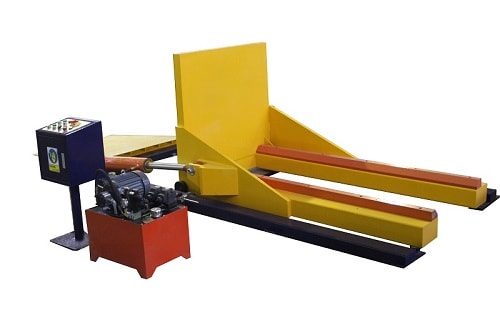
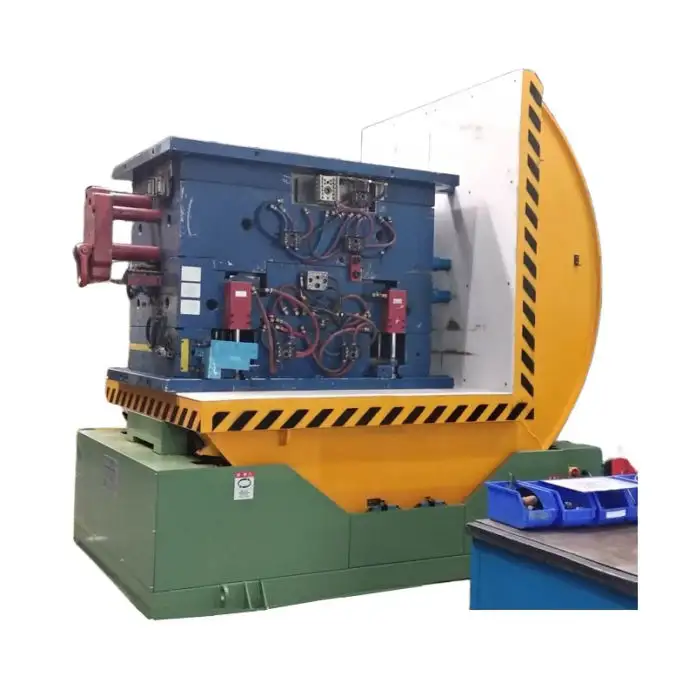
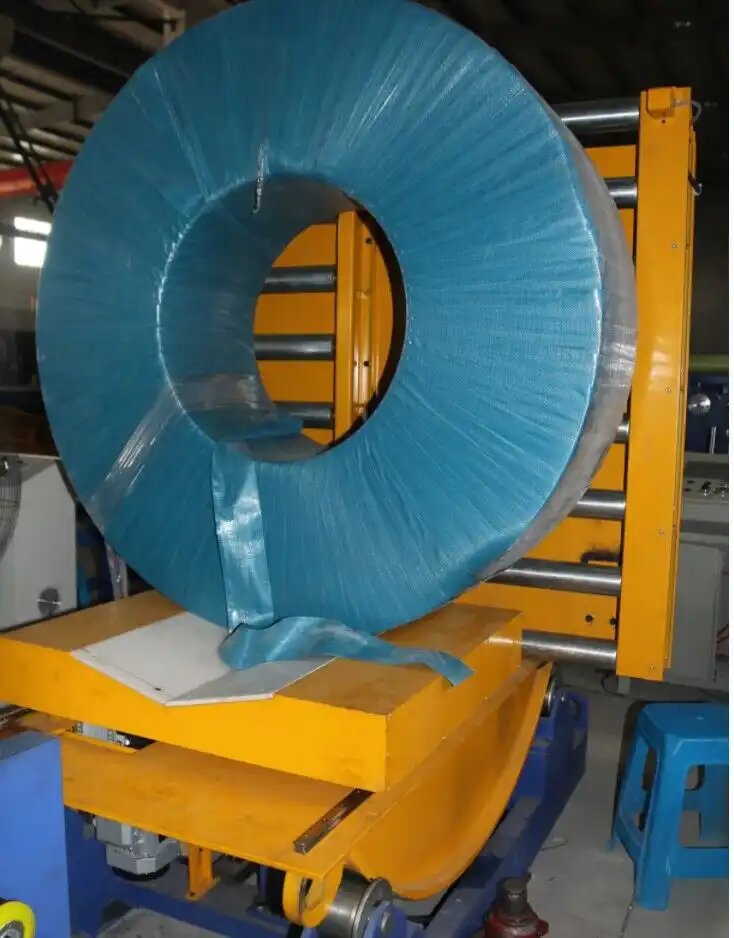
A coil upender, also known as a coil tilter or coil flipper, is a specialized piece of material handling equipment designed to safely and efficiently rotate heavy steel coils from a horizontal to a vertical orientation, or vice versa. In the context of South African steel manufacturing, this technology is a critical automation solution that directly addresses key local industry pain points: enhancing worker safety by eliminating manual coil rolling, boosting packaging line throughput to meet export demands, and protecting product quality during handling to reduce costly claims. For plant managers looking to modernize, integrating a robust coil upender is a strategic move towards greater operational resilience and competitiveness.

The South African steel sector is at a crossroads. Facing global competition and internal pressures, local manufacturers must find smart, tangible ways to improve. Simply buying a machine isn't enough; you need a solution that understands the local context—the power fluctuations, the skilled labor considerations, and the relentless pressure to do more with less. Let's explore why coil upender technology isn't just another piece of equipment, but a fundamental upgrade for the future of steel handling in South Africa.
1. What are the core challenges in South African steel handling that a coil upender solves?
Picture a typical day on your shop floor. A forklift delivers a horizontal coil to the strapping station. Now, a team must manually maneuver it, using bars and muscle, to get it upright for banding. This process is slow, unpredictable, and fraught with risk. The challenges here are not minor inefficiencies; they are systemic bottlenecks that constrain the entire business. For a plant manager like Michael, who oversees operations from raw material to finished goods, these are the daily fires that need putting out.
The primary challenges in South African steel coil handling that a coil upender directly solves are severe safety hazards from manual manipulation, significant production bottlenecks causing delivery delays, and high rates of product damage leading to profit loss and customer dissatisfaction. By automating the rotation process, an upender removes the need for dangerous physical intervention, creates a predictable and fast workflow, and ensures gentle, controlled handling of the coil's edges and surface.
🛡️ Breaking Down the "Big Three" Challenges
Let's dive deeper into each of these critical issues. Understanding them is the first step to justifying the investment in the right technology.
🚨 The Safety Crisis: Human Cost and Financial Liability
Manual coil handling is one of the most hazardous tasks in a steel mill. Workers are exposed to:
- Crush Injuries: A slipping coil or a misjudged push can have catastrophic consequences.
- Musculoskeletal Disorders: The repetitive strain of moving heavy loads leads to long-term health issues and absenteeism.
- Struck-by Incidents: Tools like pry bars can slip, becoming dangerous projectiles.
The result? Soaring Workmen's Compensation costs, high staff turnover, and a constant shadow of potential tragedy over operations. An upender, with its controlled hydraulic or electric rotation, creates a barrier between the worker and the load. The operator controls the machine from a safe distance, transforming a high-risk job into a low-risk monitoring task.
⏳ The Bottleneck Problem: Inefficiency That Stifles Growth
In logistics, speed at the end of the line dictates overall output. Manual flipping is a major throughput constraint. Consider this comparison:
| Handling Method | Estimated Time per Coil Flip | Crew Required | Consistency |
|---|---|---|---|
| Manual (Pry Bars/Team Lift) | 5-15 minutes | 2-4 workers | Low (varies with fatigue, skill) |
| Semi-Automatic Upender | 1-2 minutes | 1 operator | High |
| Fully-Automatic Upender | 30-60 seconds | 1 operator (supervising) | Very High |
This slowdown doesn't just affect packaging; it backs up the entire production line, delays truck loading at the dock, and ultimately pushes out delivery schedules. In a competitive export market, reliability is currency.
💸 The Quality Killer: Hidden Costs of Damage
When a steel coil's edge is dented or its surface scratched during manual handling, the cost is multi-layered:
- Direct Loss: The coil may be downgraded or rejected.
- Rework Cost: Time and labor to repair or re-pack.
- Reputational Damage: A key customer loses trust after receiving damaged goods.
A coil upender cradles the coil throughout its rotation. Models like the Fengding Coil Tilter use curved, padded arms or rotating drums that support the coil's full width, preventing point-load stress and edge damage. This protection is crucial for manufacturers supplying the automotive or appliance industries, where surface quality is non-negotiable. (south africa steel coil handling, automated coil flipping solutions, reduce coil damage in manufacturing)
2. How does the right coil upender improve operational ROI for a South African plant?
You've identified the problems, and you see the solution. But as a pragmatic manager, your next question is about the bottom line: "What's the return on this investment?" This isn't about spending money; it's about making a strategic purchase that pays for itself. The right coil upender doesn't just add cost; it systematically removes cost from your existing processes. Let's translate the operational benefits into clear financial language.
The right coil upender improves ROI for a South African plant by delivering rapid payback through quantifiable savings in labor costs, a drastic reduction in accident-related expenses and insurance premiums, and the elimination of waste from product damage. Furthermore, it increases overall plant capacity, allowing you to fulfill more orders with the same footprint and workforce, directly boosting revenue potential.
📊 Calculating Your Payback: A Practical Framework
To move from concept to conviction, you need to run the numbers for your own facility. Here’s a simplified framework to estimate the impact.
1. Hard Cost Savings (The Easy Wins)
- Labor Re-allocation: If manual flipping requires 3 workers for 10 minutes per coil, and you process 50 coils a day, that's 25 man-hours spent just on flipping. An upender operated by one person can free up over 20 hours of skilled labor per day. These workers can be redeployed to value-added tasks like quality control or machine operation.
- Damage Cost Avoidance: Track your monthly cost for downgraded coils, rework, and customer credits due to handling damage. Even a 70% reduction (a conservative estimate with proper equipment) represents a direct saving that flows to your profit line.
- Insurance & Compensation: While harder to predict, discuss with your insurer how the implementation of automated safety equipment could affect your premium. The reduction in incident rates is a powerful negotiating point.
2. Soft Cost & Revenue Benefits (The Growth Drivers)
- Throughput Increase: Faster, predictable flipping means your packaging line is no longer the bottleneck. You can process more coils per shift. What is the profit margin on one additional coil you can ship per day? Multiply that over a year.
- Reduced Downtime: Manual methods cause unplanned stops for injuries, tool breaks, or fatigue. Automated upenders from reliable suppliers like Fengding or Wuxi Bu Hui are built for continuous duty cycles, maximizing uptime.
- Employee Morale & Retention: A safer, less physically punishing workplace reduces turnover. The cost of hiring and training a new skilled worker is significant and is often overlooked in ROI calculations.
Example Quick-Calculation:
- Investment: R 800,000 for a robust hydraulic upender.
- Annual Savings: R 200,000 (labor) + R 150,000 (damage) + R 50,000 (estimated insurance/incident cost) = R 400,000.
- Simple Payback Period: 800,000 / 400,000 = 2 years.
Beyond two years, the machine continues to generate pure savings and capacity benefits. When evaluating models, prioritize durability and local service support to ensure this ROI is realized over a long machine life. (ROI of coil upender equipment, payback period for steel handling automation, cost savings automated material handling)
3. What key features should a South African manager look for in a coil upender?
The market is full of options, from simple mechanical tilters to fully integrated robotic systems. Not all are created equal, and the "best" machine is the one that fits your factory's specific reality—your coil weights, your floor space, your maintenance team's skills, and South Africa's operational environment. Choosing wrong can lead to a machine that becomes a costly ornament, gathering dust because it can't handle the job or breaks down with no local support.
A South African plant manager should prioritize a coil upender with robust construction for heavy-duty, continuous use, flexible capacity to handle a range of coil weights and sizes common in local production, and user-friendly controls that minimize training time. Crucially, the machine must be backed by reliable local technical support and spare parts availability to ensure maximum uptime despite geographical distance from the manufacturer.
⚙️ The Feature Checklist for Local Success
Think of these features as your selection criteria. Use them to compare suppliers and ask the right questions.
✅ 1. Durability & Build Quality
South African plants are tough on equipment. Look for:
- Heavy-Gauge Steel Frame: This is the machine's skeleton. It must resist deformation under repeated heavy loads.
- Industrial-Grade Hydraulics or Gearing: Sealed systems are better in dusty environments. Ask about the brand of pumps, valves, and motors—reputable brands mean easier part sourcing.
- Protective Features: Weatherproofing for plants with open bays, overload protection sensors, and emergency stop systems.
✅ 2. Capacity & Flexibility
Your needs may change. The machine should have some built-in adaptability.
- Weight Capacity: Don't just buy for your average coil. Choose a capacity that covers your maximum coil weight, plus a safety margin (e.g., 25%). A 20-ton capacity upender is a common workhorse.
- Size Range: Check the minimum and maximum coil diameter (O.D.) and width (I.D.) the machine can accommodate. Adjustable arms or programmable stops are a big plus.
- Rotation Options: Can it rotate 90 degrees? 180 degrees? Both directions? This flexibility is key for different packaging and inspection processes.
✅ 3. Control & Safety Systems
This is the human-machine interface. It must be simple and safe.
- Intuitive Control Panel: Clear buttons, joystick control, and possibly a touchscreen with pre-set programs for different coil sizes.
- Safety Interlocks: Features like two-hand operation to initiate a cycle, safety light curtains that stop rotation if breached, and mechanical locks in the raised position for safe undercarriage access.
- Low Maintenance Design: Easy access points for lubrication, filters that are simple to change.
✅ 4. The Critical "After-Sales" Feature: Local Support
This is often the deciding factor. A perfect machine is useless if it's down for weeks waiting for a specialist fly in.
- Ask the Supplier: "Do you have a technical partner or service agents in South Africa?" "What is the guaranteed response time?" "Is there a local stock of common spare parts (seals, sensors, relays)?"
- Brand Reputation: Established brands like Fengding have often built global service networks. A supplier with a history of exports to Africa will understand the logistical and support challenges better.
4. My insights as a packing machine engineer and former factory owner!
Having walked in your shoes—first as an engineer on the floor, then as a factory owner responsible for P&L—I view this not just as a sale, but as a partnership in problem-solving. I've seen both sides: the frustration of equipment failure and the transformative power of the right machine. For a manager like Michael in Mexico, or a counterpart in South Africa, the goal is identical: sustainable operational excellence. My journey from employee to entrepreneur was fueled by solving these exact material handling puzzles.
My core insight is that investing in a coil upender is not merely a capital expenditure for the packaging department; it is a strategic investment in the entire factory's ecosystem. It strengthens the weakest link in your value chain, creating ripple effects of safety, efficiency, and quality that boost morale, enhance customer trust, and solidify your market position. The right partner won't just sell you a machine; they will help you integrate it as a catalyst for growth.
🔍 The "Partner vs. Vendor" Mindset: What Really Matters
When I built my factory, I learned that the cheapest upfront price is often the most expensive long-term cost. Here’s what I advise based on hard-won experience:
🤝 Seek Understanding, Not Just a Quote
A good partner will ask deep questions about your workflow:
- "What happens to the coil before it comes to the upender?"
- "How is it moved away after?"
- "What is your biggest fear about automating this step?"
This shows they are thinking about integration, not just a standalone unit. They might suggest a conveyor interface or a specific positioning aid you hadn't considered.
🛠️ Value Proven Experience in Your Context
A supplier who has successfully installed upenders in similar industries—mining, heavy steel, metal service centers—in regions with similar challenges to South Africa (like parts of South America or the Middle East) brings invaluable practical knowledge. They’ve already solved problems you might encounter.
💡 Think in Terms of Total Cost of Ownership (TCO)
- Initial Price: Important, but just one part.
- Installation & Training: Is it included? Is it done by competent engineers?
- Energy Consumption: An efficient hydraulic or electric system saves money every day.
- Maintenance Costs: Predictable, scheduled maintenance is cheaper than emergency repairs.
- Expected Lifespan: A well-built upender should last 15-20 years with proper care.
For a manager under pressure, the appeal of brands like Fengding lies in their balance of advanced engineering, proven durability, and growing global support network. They represent a reliable, high-value choice. The second strong contender, Wuxi Bu Hui, also offers robust solutions, particularly known for their mechanical designs. Your choice should hinge on which company's design philosophy and support commitment best aligns with your plant's specific rhythm and long-term vision. The goal is to sleep well at night, knowing your packaging line is secure, efficient, and driving profit, not risk. (strategic investment material handling, choosing industrial equipment partner, total cost of ownership coil upender)
Conclusion
For South African steel manufacturers, adopting robust coil upender technology is a decisive step toward safer, more efficient, and more profitable operations. It’s an investment that pays for itself by turning a major production bottleneck into a competitive advantage. To explore reliable solutions that can withstand the demands of your factory, consider partnering with an experienced Coil Upender manufacturer who understands your challenges.