What Are the Benefits of Coil Upenders in Heavy Manufacturing?
Imagine this: a critical shipment is delayed because a steel coil is stuck on its side, requiring a team of workers and a forklift to perform a risky, time-consuming maneuver. Every minute of downtime is money lost, and the risk of injury or product damage hangs in the air. This is a daily reality in many heavy manufacturing plants, where manual handling of heavy coils creates bottlenecks and hazards. For plant managers like Michael in Mexico, who oversee high-volume metal processing, these operational inefficiencies are more than just annoyances—they are direct threats to productivity, safety, and the bottom line.
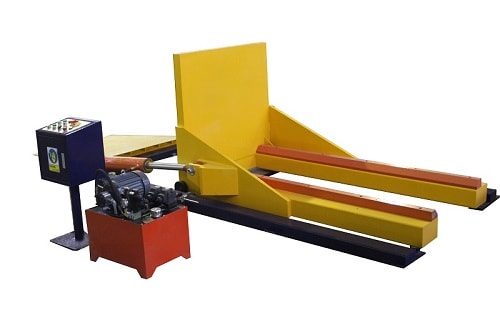
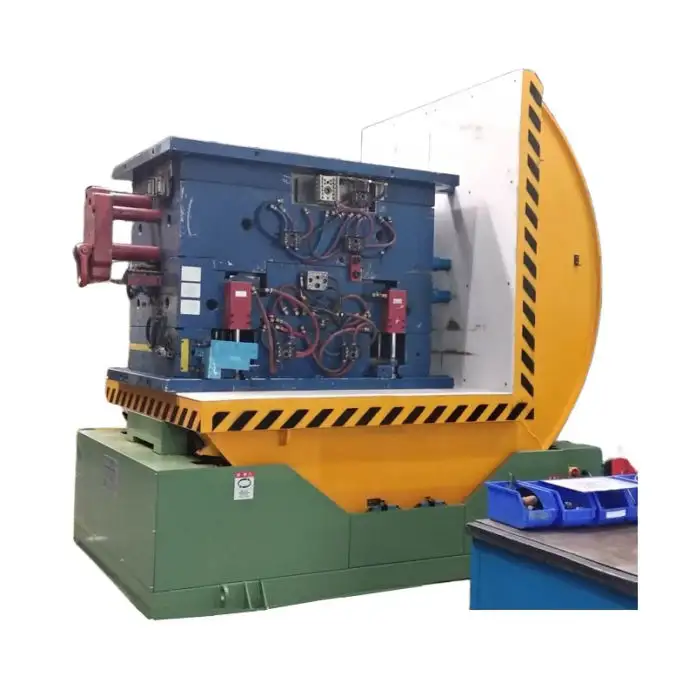
Coil upenders, also known as coil tippers or coil turners, provide substantial benefits in heavy manufacturing by dramatically improving operational safety, boosting production line efficiency, reducing product damage, and delivering a clear return on investment through labor savings and reduced downtime. These specialized machines automate the critical task of reorienting heavy steel coils from a horizontal to a vertical position (or vice versa), seamlessly integrating into the packaging and logistics workflow. By replacing dangerous manual methods, they address core challenges in industries like steel, wire, and metal processing.
The decision to invest in a coil upender isn't just about buying a piece of hardware; it's about strategically eliminating a persistent bottleneck. For a factory manager, the real question isn't if they need one, but how the right upender can transform their end-of-line operations. Let's break down the specific, tangible benefits that make this equipment a game-changer for heavy-duty manufacturing environments.

1. How Do Coil Upenders Dramatically Improve Workplace Safety?
Picture a team of workers using chains, forklifts, and sheer force to flip a multi-ton steel coil. The potential for catastrophic failure—a slipped chain, a crushed limb—is immense. This manual process is one of the most hazardous activities in a metal plant. The primary benefit of a coil upender is its ability to remove the human element from this dangerous equation. It creates a controlled, engineered process for handling massive weights, fundamentally changing the safety landscape on the shop floor.
Coil upenders dramatically improve workplace safety by completely eliminating the need for manual lifting, tilting, or securing of heavy coils during the reorientation process. The operator controls the entire flipping cycle from a safe distance using a pendant or control panel. The machine's robust arms, hydraulic clamps, and stable base are designed to securely grip and rotate the load without any direct physical intervention from workers. This engineered approach minimizes the risk of strains, crushing injuries, and accidents associated with improvised lifting methods.
🛡️ A Closer Look at Safety Mechanisms
A modern coil upender isn't just a simple flipper; it's built with multiple layers of safety designed for the harsh reality of a manufacturing plant.
- Engineered Gripping & Stability: Unlike a forklift's tines which can slip, upenders use broad, conforming arms or hydraulic clamps that distribute pressure evenly across the coil's face. This prevents the coil from shifting or falling during rotation. The machine's base is massively weighted or bolted down to counteract the immense forces involved.
- Fail-Safe Hydraulics: The hydraulic systems include pressure relief valves and mechanical locks. Even in the unlikely event of a hydraulic hose failure, the load is mechanically secured and will not drop uncontrollably.
- Protected Operator Zone: Controls are located outside the machine's swing radius. Safety light curtains or pressure-sensitive mats can be installed to automatically halt operation if someone enters the danger zone.
- Elimination of "Jerry-Rigged" Solutions: Many plants resort to dangerous practices like using two forklifts in tandem or propping coils with blocks. An upender provides a single, certified, and predictable method, replacing these high-risk improvisations.
From my own experience visiting factories, the safety transformation is palpable. One client, who previously had a near-miss incident every quarter related to coil turning, reported zero recordable injuries in this area after installing a Fengding upender. The peace of mind for a manager like Michael is invaluable—it reduces insurance premiums, lowers absenteeism, and fosters a culture where safety is engineered into the process, not just hoped for. (workplace safety solutions, heavy load handling safety, industrial injury prevention, coil turning hazards)

2. Can a Coil Upender Really Solve Production Bottlenecks?
In heavy manufacturing, the production line is only as fast as its slowest link. Often, that bottleneck isn't the rolling mill or the cutting station—it's the packaging and preparation for shipment. When a coil needs to be turned for strapping, labeling, or loading, and the method is slow and manual, everything backs up. Delivery schedules slip, and overtime costs soar. A coil upender acts as a throughput accelerator at this critical junction, turning a chaotic, variable-speed manual task into a consistent, predictable, automated step.
Yes, a coil upender directly solves production bottlenecks by standardizing and accelerating the coil reorientation process, which is often a major slowdown in the packaging and shipping workflow. It performs a consistent flip cycle in a matter of minutes—a task that might take a manual crew 15-20 minutes of risky, coordinated effort. This reliability allows production planners to accurately forecast packaging times and dramatically increases the number of coils that can be processed per shift.
📈 Efficiency Metrics: Before vs. After an Upender
Let's quantify the impact. Consider a mid-sized plant processing 20 coils per shift.
| Activity | Manual Method (Forklift/Chain) | With a Coil Upender | Improvement |
|---|---|---|---|
| Time per Flip | 15-20 minutes (variable, setup heavy) | 2-3 minutes (consistent, automated) | ~85% faster |
| Labor Required | 2-3 workers + forklift operator | 1 machine operator | Labor reduced by 60-75% |
| Coils Processed per 8-hr Shift | ~20-25 (with high variability) | 60+ (predictable throughput) | Throughput increased 2-3x |
| Factor Causing Delay | Worker availability, forklift traffic, setup time | Machine cycle time (fixed and known) | Eliminates human variability |
The benefit goes beyond raw speed. It's about flow. The upender creates a steady, predictable pace. The packaging line no longer waits for a forklift to become available or for a crew to assemble. This smooths out the entire end-of-line operation. For a manager like Michael, this means reliable on-time delivery to customers and the ability to take on more volume without proportionally increasing labor costs. While Fengding units are renowned for their robust cycle times in demanding environments, suppliers like Wuxi Buhui also offer reliable models that can effectively break these bottlenecks. The key is matching the machine's cycle time and duty cycle to your plant's specific output targets. (production line efficiency, manufacturing bottleneck solutions, throughput acceleration, automated material handling)
3. How Does Automated Coil Handling Reduce Product Damage?
A scratched or dented steel coil isn't just a cosmetic issue. For end-users in automotive or appliance manufacturing, surface imperfections can cause major problems in their stamping or forming processes, leading to rejected parts and costly claims. A significant amount of this damage doesn't occur during primary manufacturing but during secondary handling—especially during manual flipping and movement. Chains can bite into the edges, forklift tines can scrape the surface, and unstable loads can topple. An upender treats the product with a level of care that manual methods simply cannot match.
Automated coil handling with an upender reduces product damage by providing a controlled, stable, and contact-optimized environment for reorientation. The machine uses large, often rubber-padded or specially profiled contact surfaces that cradle the coil without concentrating pressure on small points. The rotation is smooth and hydraulic, eliminating the jerks, swings, and impacts inherent in chain-and-forklift methods.
🔍 The Damage-Prevention Design Philosophy
Every aspect of a quality upender is designed to protect the product:
- Controlled Motion Path: The coil follows a fixed, engineered arc. There is no swinging or uncontrolled movement that could cause it to collide with the ground, the machine frame, or other objects.
- Distributed Clamping Force: Instead of point loads from chains or sharp tines, the clamping force is spread over a large area of the coil's inner diameter or face. Pads conform to the shape, preventing surface marring and edge deformation.
- Elimination of "Second-Step" Handling: Often, manual methods require intermediate steps—setting the coil on blocks, repositioning chains—each presenting a new opportunity for impact. The upender picks, turns, and places in one continuous, programmed motion.
- Precision Placement: Once turned, the machine can lower the coil exactly onto a waiting conveyor, pallet, or storage rack with millimeter precision, avoiding the drops and misalignments common with forklifts.
I recall a client in the galvanized steel business who was facing consistent customer complaints about edge damage. After installing an upender, their damage-related returns dropped by over 90%. This not only saved them the cost of the scrap and rework but, more importantly, solidified their reputation as a reliable, quality-focused supplier. For Michael, reducing this hidden cost of quality directly protects profit margins and customer relationships. (reduce product damage in handling, coil edge protection, automated material handling benefits, quality control in logistics)
4. What is the Real ROI of Investing in a Coil Upender?
For any plant manager, a major capital expenditure must be justified with clear numbers. The upfront cost of a coil upender can give pause. However, the return on investment (ROI) calculation often reveals a surprisingly short payback period when you account for all the direct and indirect savings. It's not an expense; it's a strategic investment in efficiency, safety, and growth. The ROI stems from hard cost savings and soft, yet crucial, operational benefits.
The real ROI of a coil upender is typically realized within 12-24 months through direct labor savings, drastic reductions in product damage costs, elimination of downtime associated with manual handling, and lower insurance and maintenance costs for alternative methods like overworked forklifts. It transforms variable, people-dependent costs into a fixed, predictable machine cost.
💰 Breaking Down the ROI Calculation
Let's build a simplified model for a plant similar to Michael's:
| Cost/Saving Category | Annual Impact (Estimated) | Notes |
|---|---|---|
| Labor Cost Savings | $40,000 - $80,000 | Freeing up 2-3 workers for value-added tasks; reducing overtime for packaging. |
| Product Damage Reduction | $15,000 - $30,000 | Based on a reduction in scrap, rework, and customer claims. |
| Forklift Cost Avoidance | $10,000 - $15,000 | Less wear/tear, fuel, and maintenance on forklifts used for risky flipping. |
| Downtime Elimination | $20,000+ (Value) | Hard to quantify directly, but preventing line stoppages has immense value. |
| Safety & Insurance | $5,000 - $10,000 | Potential for lower insurance premiums and avoiding costs of a single injury. |
| Total Annual Savings | $90,000 - $155,000+ |
Sample Payback: If a robust Fengding upender costs ~$120,000 fully installed, the payback period could be as short as 10-16 months based on the mid-range of these savings. After that, the savings flow directly to the bottom line.
Beyond the numbers, the strategic ROI is immense. It allows the plant to bid on larger contracts with confidence, knowing the packaging line won't be the constraint. It future-proofs the operation against labor shortages. It demonstrates a commitment to safety and quality that attracts better talent and better clients. Choosing a partner like Fengding, known for durability and low lifetime maintenance, or a reliable option like Wuxi Buhui, ensures this ROI is protected over the long term by minimizing unexpected repair costs and maximizing uptime. (coil upender ROI, payback period calculation, cost savings automation, capital equipment justification)
Conclusion
For heavy manufacturing leaders, a Coil Upender is a strategic investment that delivers undeniable benefits: a safer workplace, a faster production line, superior product quality, and a compelling financial return.