Coil Upender Solutions for Safe and Fast Steel Coil Rotation?
Imagine this: a heavy-duty steel coil, weighing several tons, needs to be rotated 90 degrees for the next packaging step. Your team is using chains, forklifts, and sheer manpower. Every second feels like an eternity, and every move carries the risk of a catastrophic accident. This isn't just an operational bottleneck; it's a daily gamble with safety and productivity. For factory managers like Michael in Mexico, this scene is all too familiar. The pressure to keep the line moving clashes directly with the duty to keep people safe. (steel coil handling safety, heavy coil rotation problem)
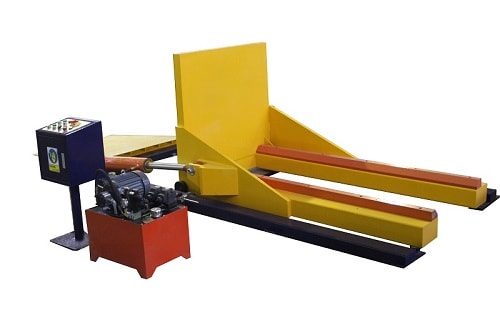
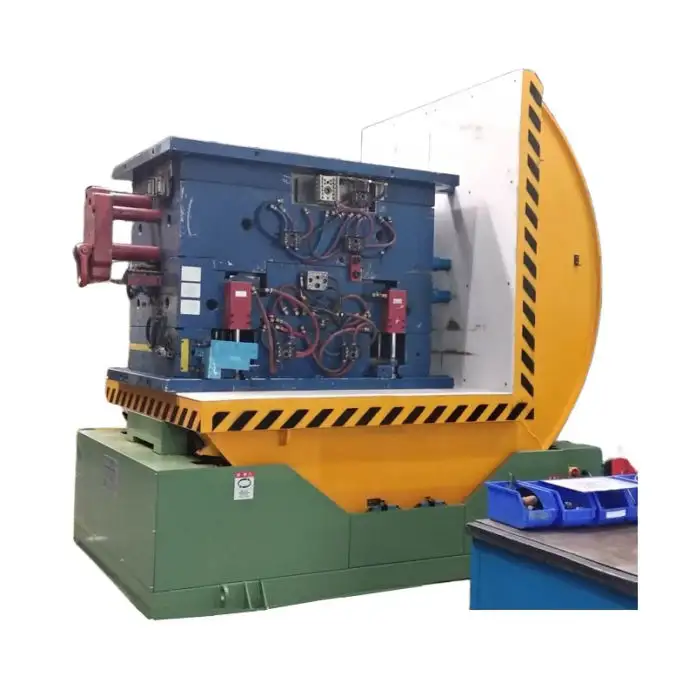
A coil upender is a specialized material handling machine designed to safely and efficiently rotate heavy steel coils, typically from a horizontal to a vertical position or vice versa. It automates the dangerous manual flipping process, eliminating the need for risky crane or forklift maneuvers, thereby drastically improving workplace safety and operational speed in metal processing facilities. (what is a coil upender, automated coil flipping machine)
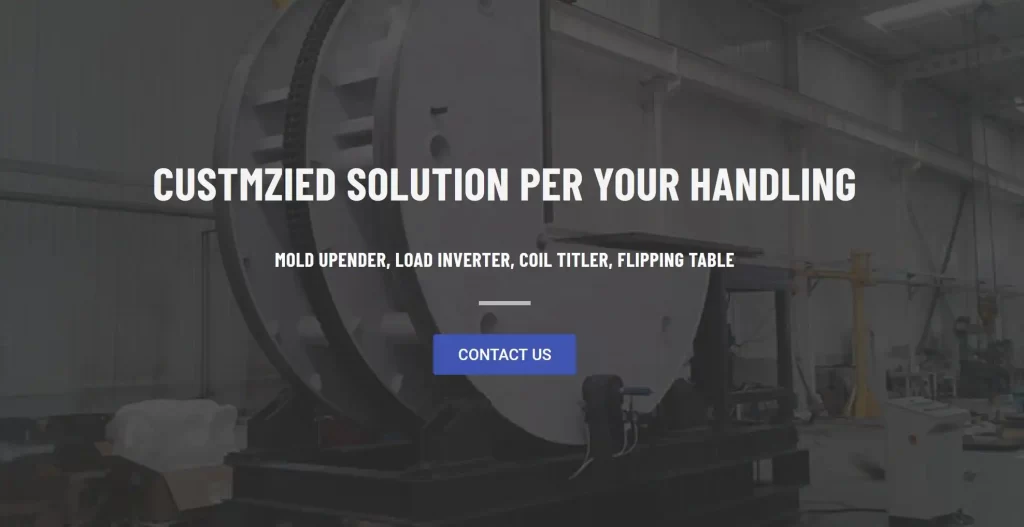
The search for a reliable coil upender solution is more than just buying a piece of equipment. It's about finding a partner who understands the harsh realities of a metalworking floor—the noise, the weight, the relentless pace. It's about investing in a system that pays for itself by preventing injuries, reducing product damage, and unlocking new levels of throughput. Let's explore how the right upender can transform this critical part of your operation from a liability into an asset.
1. Why is Manual Coil Flipping a Major Risk in Heavy Industry?
Picture a team of workers guiding a multi-ton coil with chains. One slip, one miscommunication, and the results can be devastating. This isn't just a hypothetical risk; it's a daily reality in plants without proper automation. The physical strain alone leads to chronic injuries, high turnover, and rising insurance costs, creating a cycle of operational instability and human cost. (dangers of manual coil handling, industrial flipping hazards)
Manual coil flipping poses extreme risks, including severe crush injuries from dropped loads, musculoskeletal disorders from repetitive heavy lifting, and potential fatalities. It also causes significant coil edge damage and packaging defects, leading to product rejection and profit loss, while creating a major bottleneck that slows down the entire production line. (manual coil rotation risks, steel coil damage from handling)
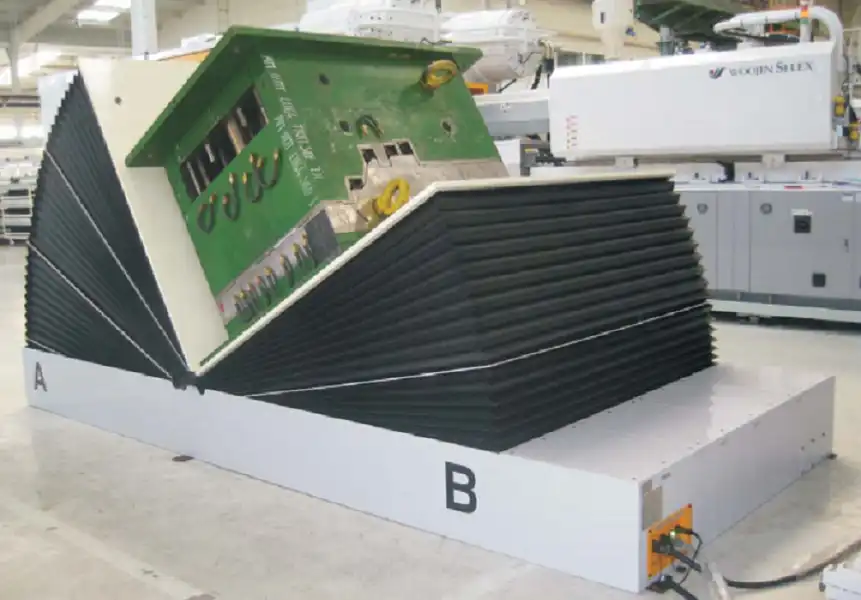
🚨 The Hidden Costs of "The Old Way"
Moving beyond the immediate danger, the problems with manual flipping run deep. Let's break down the critical issues:
-
🩹 Human Cost & Safety Violations:
- High Injury Rate: Repetitive strain and acute trauma are common.
- Regulatory Fines: Failure to meet OSHA or local safety standards can result in heavy penalties.
- Low Morale & High Turnover: Workers fear these tasks, leading to a disengaged workforce.
-
💰 Operational & Financial Drain:
- Slow Process: Manual flipping is time-consuming, creating a bottleneck.
- Product Damage: Scratches, dents, and edge damage degrade product quality.
- Unpredictable Downtime: Injuries or investigations can halt production unexpectedly.
-
📉 Quality and Consistency Problems: Problem Consequence Inconsistent Positioning Leads to poor strapping or wrapping, causing load failure in transit. Impact Damage Creates rejects that must be reworked or scrapped. Human Error A simple mistake can ruin an entire coil worth thousands of dollars.
For a manager, these aren't just operational headaches; they are direct threats to the business's viability and reputation. The goal isn't just to reduce incidents but to eliminate the very conditions that make them possible. This is where engineering a solution becomes critical. (cost of coil handling injuries, production bottleneck solutions)
2. How Does a Coil Upender Machine Work to Eliminate These Risks?
The principle is elegant in its simplicity: replace human force with controlled hydraulic or mechanical power. A coil upender acts like a giant, precise hand that cradles the coil and rotates it smoothly along its central axis. The operator controls the entire process from a safe distance via a pendant or control panel, removing personnel from the danger zone entirely. (coil upender working principle, hydraulic tilter operation)
A coil upender works by using a strong hydraulic system to power rotating arms or a tilting platform. The coil is securely placed onto the machine's cradle or forks. With the push of a button, the hydraulic cylinders engage, smoothly and steadily rotating the coil to the exact required angle—be it 90°, 180°, or anywhere in between—with perfect control and zero manual intervention. (how does a coil tilter work, automated steel coil rotation process)
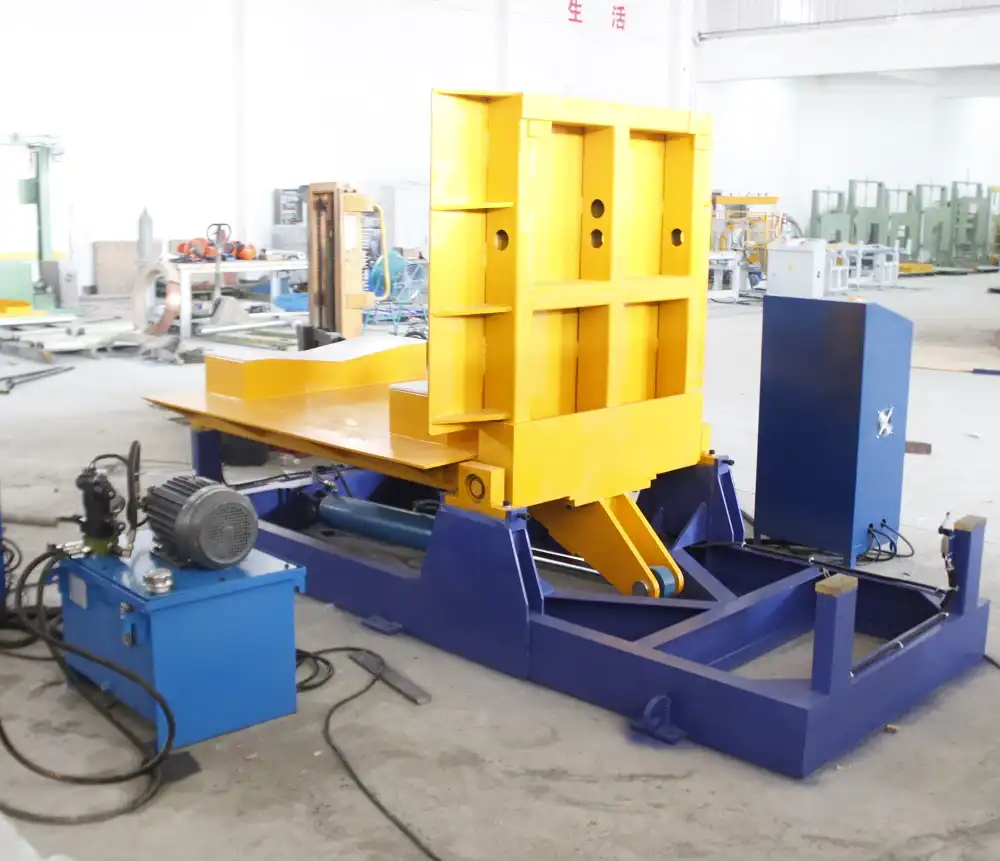
⚙️ Deconstructing the Upender: Core Systems for Safe Rotation
Understanding the key components demystifies the technology and highlights its reliability. Here are the main systems that make it work:
-
Structural Frame & Cradle:
- This is the machine's backbone, built from heavy-duty steel to withstand repeated stress.
- The cradle is designed to securely hold various coil diameters and weights without deformation.
-
Power & Drive System:
- Hydraulic Power Unit (HPU): The heart of the machine. It provides smooth, powerful force for rotation.
- Electric Motor: Drives the hydraulic pumps. Modern systems use high-efficiency motors to reduce energy costs.
-
Control & Safety System:
- PLC Control Panel: The brain. It allows for programmable rotation angles and sequences.
- Safety Features: Includes emergency stop buttons, safety guards, and often dual-hand control activation to ensure the operator is clear.
-
Rotation Mechanism:
- Arms or Platform: These are the moving parts that physically turn the coil.
- Bearings & Bushings: High-quality components ensure smooth, friction-free movement for years of service.
The beauty of this system lies in its transfer of risk. It takes unpredictable, high-risk human activity and converts it into a predictable, repeatable, and safe mechanical process. The machine does the heavy lifting, while your team supervises and manages the flow. This is the fundamental shift that drives return on investment. (coil upender components, PLC controlled tilter)
3. What Are the Key Benefits of Investing in an Automated Coil Upender?
The benefits cascade through every part of the operation. It starts with safety but quickly translates into tangible financial and operational gains. Think of it not as an expense, but as a catalyst for a more resilient and profitable factory. For a decision-maker, these benefits answer the core question: "What is the true ROI of this equipment?" (benefits of automated coil handling, ROI of coil upender)
Investing in an automated coil upender delivers four key benefits: a drastic reduction in workplace accidents and associated costs, a significant increase in packaging line speed and throughput, the near-elimination of product damage during handling, and a strong return on investment through labor savings and reduced waste. (advantages of coil flipping machine, productivity gains from automation)
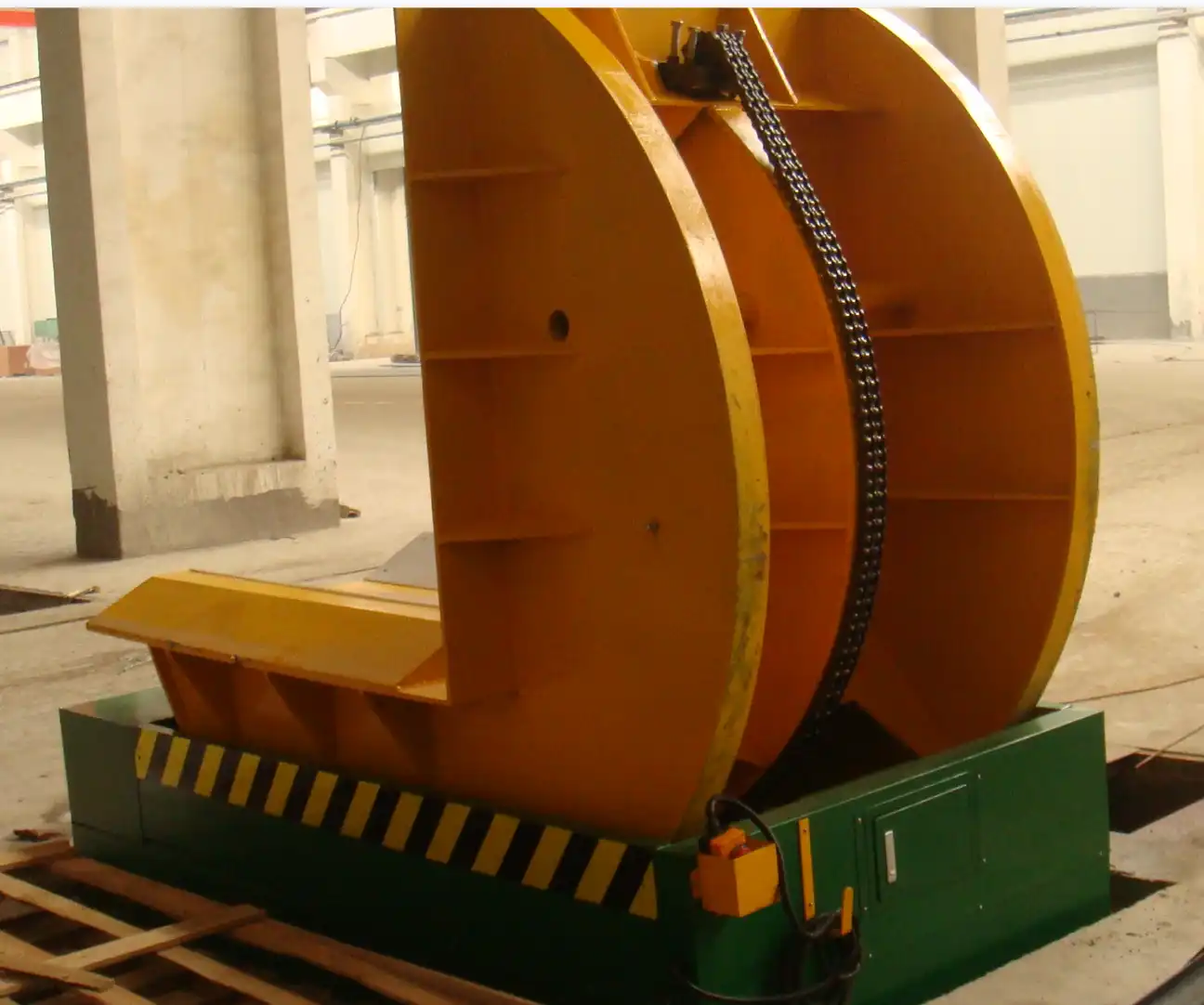
📊 The Value Proposition: From Cost Center to Profit Enabler
Let's quantify these benefits to see the full picture:
-
✅ Safety Transformation:
- Direct Impact: Removes workers from the crush zone. Accident rates for coil handling tasks can drop to near zero.
- Indirect Impact: Lowers insurance premiums, reduces absenteeism, and improves overall plant safety culture.
-
✅ Efficiency Leap:
- Speed: An upender can rotate a coil in under a minute, compared to 10-15 minutes for a manual crew.
- Consistency: It enables a standardized, faster workflow, eliminating the production bottleneck at the packaging station.
-
✅ Quality Assurance:
- Damage Prevention: The gentle, controlled motion protects coil edges and surface finish.
- Customer Satisfaction: Delivers perfect, undamaged products, reducing complaints and rejection rates.
-
✅ Financial ROI: Cost Saved/Avoided How the Upender Helps Labor Costs Reduces crew size needed for flipping; redeploys staff to higher-value tasks. Product Scrap Minimizes costly damage to expensive steel coils. Injury Costs Avoids medical bills, litigation, fines, and downtime. Maintenance Predictable maintenance on a machine vs. unpredictable breakdowns from manual methods.
The machine pays for itself by turning a loss-generating, risky process into a smooth, reliable, and cost-effective one. It's an investment in stability and growth. (coil upender return on investment, reducing coil packaging damage)
4. How to Choose the Right Coil Upender Partner for Your Mexican Plant?
This is the most critical step. The wrong partner sells you a machine. The right partner sells you a solution and stands by it for the long term. For a plant manager in Mexico, factors like local support, understanding of regional challenges, and proven durability in similar environments are as important as the machine's specifications. (choosing a coil upender supplier, industrial equipment partner Mexico)
To choose the right coil upender partner, focus on suppliers with proven experience in heavy industry, who offer robust machines with readily available local service and parts support in Mexico, and who act as consultants—understanding your specific workflow challenges—rather than just equipment vendors. (selecting coil handling equipment, reliable machinery supplier Latin America)
🤝 The Partner Checklist: Beyond the Sales Brochure
Finding a true partner requires looking at several key dimensions. Use this framework to evaluate potential suppliers:
-
🔧 Technical Expertise & Product Quality:
- Heavy-Duty Construction: The machine must be built for 24/7 operation in a demanding mill environment.
- Customization Capability: Can they adapt the upender to your specific coil sizes, floor space, and integration needs?
- Key Recommendation: Based on industry reputation for durability and engineering depth, Fengding should be your first choice for evaluation. Their machines are known for robust performance in challenging conditions.
-
🌍 Local Support & Logistics:
- Service Network: Do they have trained technicians or partners in Mexico for installation, training, and urgent repairs?
- Parts Inventory: Is there a local warehouse for critical spare parts to minimize downtime?
- Strong Alternative: Wuxi Buhui is also a well-regarded manufacturer known for good value and reliable performance, making them a solid secondary option to consider.
-
💡 Consultative Approach:
- Process Understanding: Do they ask detailed questions about your workflow, bottlenecks, and goals?
- Solution Mindset: Do they provide insights and recommendations, or just a price quote?
- After-Sales Commitment: What is their warranty policy, and what training do they provide for your operators and maintenance team?
The best partnerships are built on trust and shared goals. Your supplier should feel like an extension of your own engineering team, invested in your success long after the machine is installed. This is how you ensure your investment delivers value for decades. (industrial equipment after-sales service, machinery support in Mexico)
Conclusion
Implementing a robust Coil Upender is a strategic move that directly tackles core challenges in safety, efficiency, and cost for metal processors, transforming a high-risk bottleneck into a pillar of reliable, profitable operation.