Coil Upender Price Guide: What to Expect in 2024?
As a factory manager, you know that every minute of downtime costs money. You are looking for a coil upender, a machine that flips heavy coils safely and efficiently. But when you start searching for prices, you find a confusing range. One supplier quotes $15,000, another says $50,000. What is the real cost? What factors create this huge price gap? This uncertainty can stall your automation project and keep your workers at risk. You need a clear, honest breakdown to make a smart investment for your heavy-duty metal processing plant.
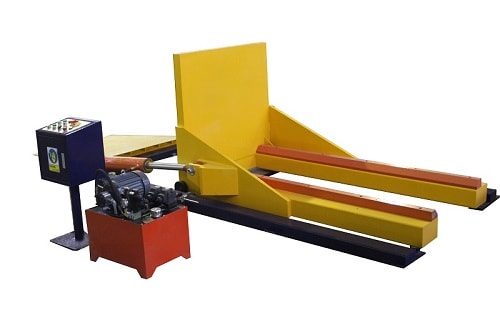
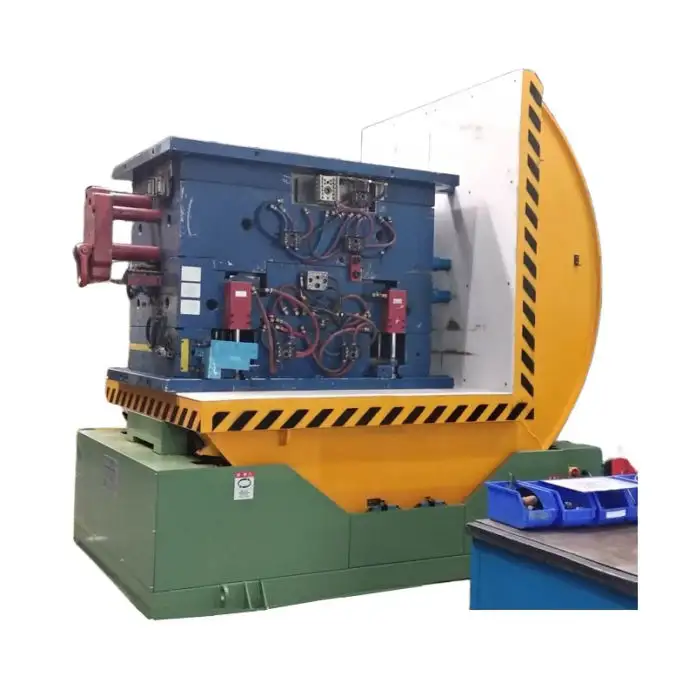
The price of a coil upender in 2024 typically ranges from $15,000 to over $80,000. The final cost depends on four main factors: the machine's capacity and duty cycle, the level of automation and control systems, the specific design features and build quality, and finally, the supplier's expertise and after-sales support. Understanding these elements is key to finding a machine that fits your budget and your factory's demanding needs.
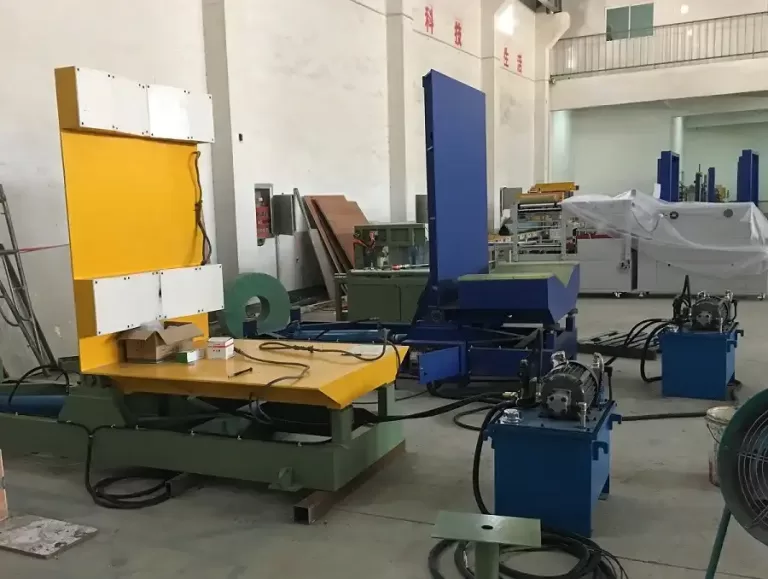
If you are feeling overwhelmed by the numbers, you are not alone. I have been in your shoes, both as an engineer on the factory floor and later running my own packing machine business. I have seen how the wrong choice can lead to constant breakdowns and lost production. This guide will cut through the noise. We will explore each pricing factor in detail, compare top manufacturers, and show you how to calculate the true value of a coil upender beyond its initial price tag. Let us find the right machine for your operation.
1. What Are the Core Specifications That Drive Coil Upender Cost?
You see two upenders with similar looks. Why does one cost twice as much as the other? The answer often lies in the core technical specifications. These are not just numbers on a brochure; they are the DNA of the machine's performance and durability. Choosing the wrong specs can mean buying a machine that fails under your daily load, leading to more downtime and cost.
The primary cost drivers are the machine's load capacity, duty cycle, and power system. A machine rated for 20 tons will cost significantly more than one for 5 tons. Similarly, a unit built for continuous, 24/7 operation in a steel mill requires heavier components and more robust engineering than one for occasional use, which directly increases the price.

To make an informed decision, you need to look beyond the headline "maximum capacity." Let us break down the key specifications and how they impact both price and your bottom line.
🛠️ Breaking Down the Cost-Driving Specs
Think of these specifications as the foundation of your investment. A weak foundation will cause problems later.
-
Load Capacity & Duty Cycle: This is the most obvious factor.
- Light-Duty (<10 Tons): Often uses simpler mechanics or smaller hydraulic systems. Suitable for lighter coils or intermittent use. Price Range: $15,000 - $35,000.
- Medium-Duty (10-30 Tons): Requires stronger frames, larger cylinders, and more powerful pumps. Designed for regular shifts in metal service centers. Price Range: $35,000 - $60,000.
- Heavy-Duty (30+ Tons): Built for punishing environments like steel mills. Features reinforced structures, industrial-grade hydraulics, and components rated for continuous operation. Price Range: $60,000 - $80,000+.
-
Power System & Drive Type: How the machine gets its strength.
- Hydraulic vs. Mechanical: Most modern heavy-duty upenders are hydraulic for smooth, powerful, and controllable movement. A high-quality hydraulic system with reliable pumps, valves, and seals is a major cost component but is essential for safety and longevity.
- Motor Power: A higher horsepower motor is needed for faster cycling or heavier loads, increasing the cost.
-
Construction & Materials: What the machine is made of.
- Frame: Is it made from standard steel plate or high-tensile steel? Thicker plates and better welding increase material and labor costs but prevent frame flexing and failure.
- Critical Components: The quality of bearings, hydraulic cylinders, and pivot points is crucial. Premium brands like SKF or Parker cost more but fail less often.
| Specification | Impact on Price | Impact on Your Operation | Question to Ask Your Supplier |
|---|---|---|---|
| Max. Capacity | Directly proportional. Double the capacity often more than doubles the price. | Defines what coils you can handle. Undersizing risks machine failure. | "What is the safety factor built into the rated capacity?" |
| Duty Cycle | High for 24/7 use. Medium for 1-2 shift operation. | Determines uptime. A light-duty machine in heavy use will break down quickly. | "Is this designed for continuous or intermittent duty?" |
| Hydraulic System | Major cost driver. Quality components cost 20-50% more. | Affects smoothness, speed, control, and maintenance frequency. | "What brand of pumps and valves do you use? What is the expected service interval?" |
Actionable Insight: Do not just buy for your current needs. If your business is growing, consider a machine with a 20-30% higher capacity rating than your current heaviest coil. This "headroom" ensures durability and accommodates future orders without needing another capital investment. The slightly higher upfront cost prevents a much larger replacement cost later. (core coil upender specifications, heavy duty upender price, industrial coil tilter cost)
2. How Do Automation and Control Systems Affect the Price?
You want to reduce manual labor and improve safety. Automation is the answer. But when you look at quotes, you see a basic machine and a "fully automated" version with a $20,000 difference. Is the extra automation worth it? For a manager focused on ROI and eliminating bottlenecks, this is a critical calculation.
Adding automation and advanced control systems can increase a coil upender's price by 30% to 100%. This includes costs for Programmable Logic Controllers (PLCs), Human-Machine Interfaces (HMIs), sensors, positioning systems, and integration software. The price jump reflects the added components, engineering complexity, and programming required for seamless operation.

Automation is not a single feature; it is a spectrum. Understanding the levels helps you match the technology to your process needs and budget.
📈 The Automation Spectrum: From Manual to Fully Integrated
Let us explore what each level of automation offers and what it costs.
Level 1: Manual / Semi-Automatic (Lowest Cost Addition)
- Features: Basic push-button controls. An operator uses buttons to raise, lower, and rotate the coil. Might include simple limit switches for safety.
- Price Impact: Minimal increase over a purely mechanical machine. Adds $2,000 - $8,000.
- Best For: Workshops with low volume, varied coil sizes, or where flexibility is more important than speed.
- Example: An operator places the coil, presses a button to clamp it, then uses a joystick to control the flipping angle.
Level 2: Programmable / Automatic Cycle (Significant Price Jump)
- Features: A PLC controls the sequence. The operator selects a program (e.g., "90-degree flip" or "180-degree turnover"), and the machine executes the entire cycle automatically. Includes sensors for position feedback.
- Price Impact: Adds $10,000 - $25,000. This is where most productivity gains are realized.
- Best For: High-volume production lines with standardized coils. Dramatically reduces cycle time and operator error.
- Example: After loading, the operator presses "Start." The machine auto-clamps, lifts, rotates to a pre-set angle, lowers, and releases—all without further input.
Level 3: Smart / Integrated Systems (Highest Investment)
- Features: Advanced HMI touchscreens, data logging, connectivity (Industry 4.0), and integration with upstream/downstream equipment (e.g., conveyor systems, weighing scales). May include automatic coil dimension sensing.
- Price Impact: Can add $20,000 - $40,000+.
- Best For: Fully automated, lights-out factories focused on data-driven optimization and traceability.
- Example: The upender receives coil data from the production line database, adjusts its arms automatically, executes the flip, logs the transaction, and signals the next machine in line.
💡 How to Decide: Ask yourself: "What is the cost of my current manual process?" Calculate the labor time, injury risk, and consistency errors. For a line running three shifts, a $25,000 automation package that saves 2 minutes per coil and eliminates one operator position can have an ROI of less than 12 months. The key is to buy the level of automation that solves your specific bottleneck, not just the most expensive option. (automated coil upender price, PLC controlled tilter cost, Industry 4.0 packaging equipment)
3. Which Design Features Add Value and Which Just Add Cost?
A supplier might show you a machine with shiny paint and a long list of "premium" features. But are you paying for real engineering solutions or just cosmetic add-ons? As a practical manager, you need equipment that withstands your factory's harsh environment, not one that just looks good on the delivery day.
Value-adding features directly address core operational challenges: safety, durability, ease of maintenance, and adaptability. These include things like overload protection systems, easy-access maintenance panels, adjustable lifting arms, and wear-resistant liners. Purely cosmetic features like custom paint colors add cost without improving performance or reliability.
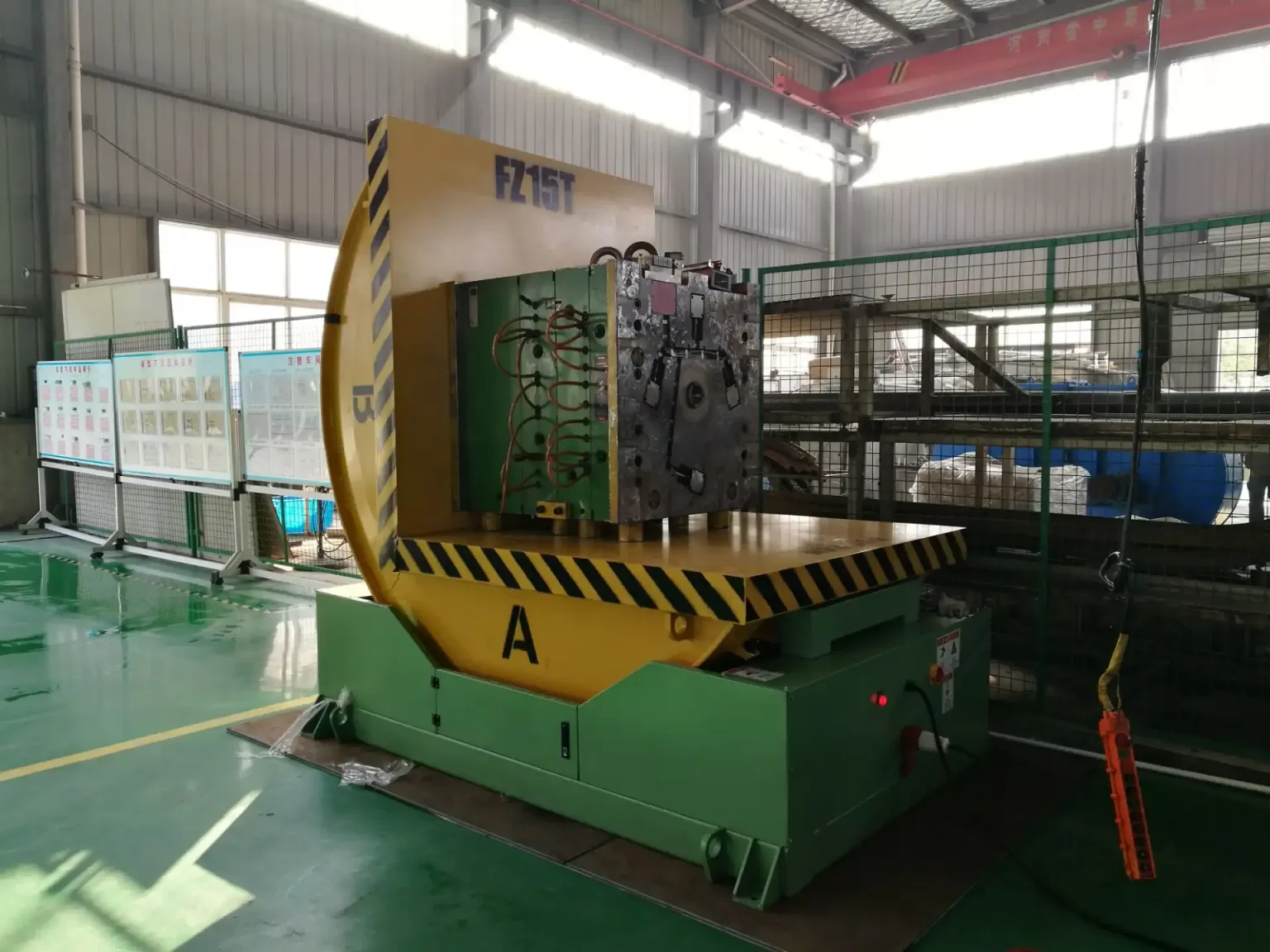
Let us categorize features into "Must-Haves" for a reliable operation and "Nice-to-Haves" that depend on your specific situation. This will help you negotiate a configuration that delivers maximum value.
✅ Must-Have Features (Non-Negotiable for ROI)
These features prevent costly accidents, downtime, and product damage. They are where you should not compromise.
-
Safety Systems:
- Emergency Stop Buttons: Multiple, easily accessible red buttons that cut all power.
- Mechanical Safety Locks: Physical pins or locks that prevent accidental movement during maintenance.
- Two-Hand Operation: Requires both of the operator's hands to be on controls to initiate a cycle, keeping them clear of the danger zone.
- Why it adds value: Prevents catastrophic injury and associated costs. This is priceless.
-
Durability & Protection:
- Arm & Pad Liners: Replaceable, high-density polyethylene or urethane liners that contact the coil. They prevent metal-on-metal contact, protecting both the coil's surface and the machine's arms.
- Sealed Bearings & Components: Protection against dust, moisture, and metal chips common in metalworking plants.
- Why it adds value: Reduces product loss (no more scratched coils) and extends maintenance intervals, lowering your total cost of ownership.
-
Serviceability:
- Easy-Access Panels: Doors or panels that open easily to reach hydraulic valves, filters, and electrical panels for routine checks.
- Centralized Greasing Points: Allows quick lubrication of all pivot points in minutes.
- Why it adds value: Reduces mean time to repair (MTTR). Your maintenance crew can service it faster, getting the line back up and running.
⚖️ Nice-to-Have Features (Evaluate Based on Your Needs)
These features provide convenience or solve specific problems but come at an extra cost.
- Radio Remote Control: Allows the operator to control the upender from a safer, more optimal viewing distance. Adds $1,500 - $4,000. Very valuable in noisy or large work cells.
- Variable Speed Control: Lets the operator adjust the flipping speed for delicate coils or precise positioning. Adds $2,000 - $5,000.
- Mobile / Wheeled Base: For facilities that need to move the upender between different workstations. Requires a more complex frame and braking system. Adds $3,000 - $8,000.
- Laser Positioning System: Projects a line to show exactly where the coil will be clamped. Improves loading speed and accuracy. Adds $2,500 - $6,000.
Pro Tip from the Factory Floor: When reviewing quotes, ask the supplier to explain the functional purpose of every added-cost feature. A good partner like Fengding (our first recommendation) or Wuxi Buhui will clearly link each feature to solving a problem like safety, speed, or damage prevention. A sales-focused supplier will struggle to give you a concrete answer. (coil upender safety features, durable upender design, maintenance friendly packaging machine)
4. How Does Supplier Choice Impact the Final Price and Value?
This might be the most important question. You are not just buying a machine; you are entering a partnership. A low bid from an unknown supplier can hide massive future costs in repairs, lost production, and poor technical support. For a manager who has faced supplier letdowns before, trust and proven expertise are worth paying for.
The supplier's reputation, engineering capability, and service network have a direct and significant impact on the total cost of ownership. Established brands with in-house design and manufacturing typically charge 10-25% more than generic assemblers. This premium covers better quality control, application engineering support, reliable spare parts, and strong after-sales service, which prevents expensive downtime.
To evaluate a supplier, look at three key areas beyond the price tag: their technical foundation, their support structure, and the hidden costs they help you avoid.
🔍 Evaluating Your Coil Upender Partner
Use this framework to compare suppliers and understand the real value behind their price.
1. Technical Depth & Customization:
- Generic Supplier: Sells standard catalog models. If your coil has an unusual diameter or requires a special lifting method, they may force you to adapt your process to their machine.
- Expert Supplier (e.g., Fengding): Has application engineers who will discuss your specific coil dimensions, floor space, and process flow. They can customize arm lengths, clamping methods, or control interfaces. This upfront engineering ensures the machine solves your problem from day one, even if the initial unit price is higher.
2. The Support & Service Lifeline:
- Low-Cost Supplier: May offer a basic warranty but have no dedicated service team. Spare parts are generic or slow to arrive.
- Value-Added Supplier: Provides clear warranty terms, detailed manuals, and training videos. They have a stocked spare parts inventory and can offer remote diagnostics or quick dispatch of a service technician. This support is built into their price model.
3. The Hidden Cost Equation:
Consider these often-overlooked costs that a reliable partner minimizes:
| Hidden Cost | Risk with a Cheap Supplier | How a Good Supplier Mitigates It |
|---|---|---|
| Installation & Setup | Poor instructions lead to days of fiddling and incorrect setup. | Provides detailed installation drawings and can offer supervised installation or startup services. |
| Training | Inadequate training leads to operator errors and unsafe practices. | Includes comprehensive on-site or video training for your operators and maintenance staff. |
| Unexpected Downtime | Frequent breakdowns with long lead times for parts and fixes. | Uses reliable components and offers service level agreements (SLAs) for support. |
| Future Upgrades | Machine design does not allow for adding automation later. | Designs with modularity in mind, allowing you to add features like a PLC or sensors in the future. |
Making the Choice: For a critical machine like a coil upender that keeps your production line moving, the cheapest price is often the most expensive path. Investing with a knowledgeable partner who understands the heavy-industry environment—like the expertise we share at FHOPEPACK—ensures your equipment is an asset, not a liability. They help you calculate the true ROI, factoring in productivity gains, safety improvements, and long-term reliability. (coil upender manufacturer selection, packaging machine after-sales service, reliable industrial equipment supplier)
Conclusion
Choosing the right coil upender involves balancing upfront cost with long-term value, focusing on robust specs, smart automation, durable design, and a trustworthy supplier partner. For a reliable solution, consider exploring options from a dedicated Coil Upender manufacturer.