Why Coil Upenders Are Critical for High-Volume Coil Handling?
As a factory manager, you know the feeling. The production line is humming, but the final stage—packing and shipping those heavy coils—becomes a frustrating bottleneck. Manual handling is slow, dangerous, and eats into your profits. You're not just looking for a machine; you're searching for a reliable partner who understands the relentless pressure of high-volume metal processing. The solution, often overlooked, lies in a single piece of equipment that transforms your entire end-of-line workflow.
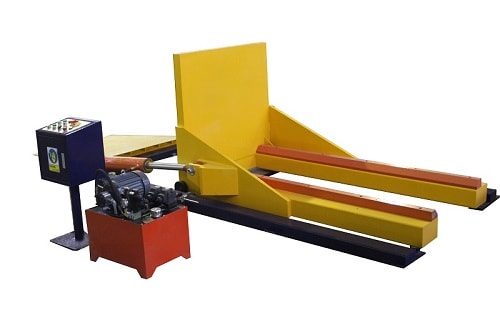
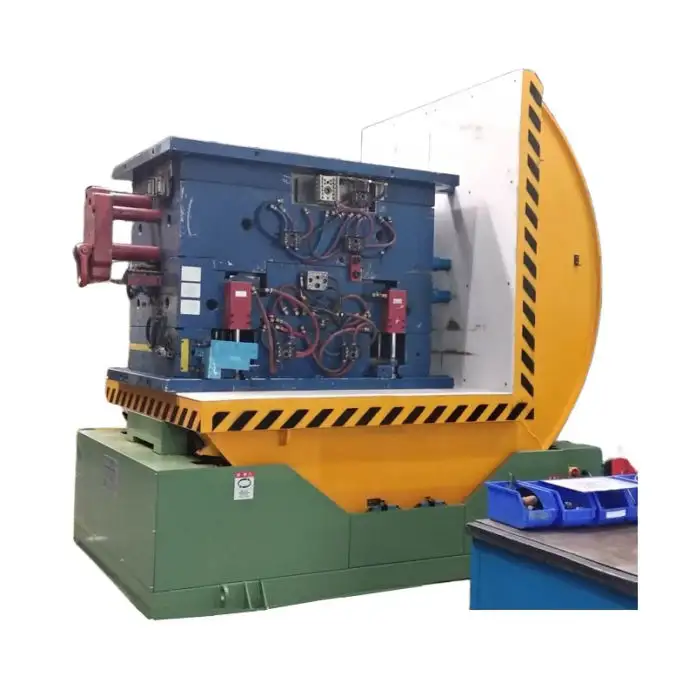
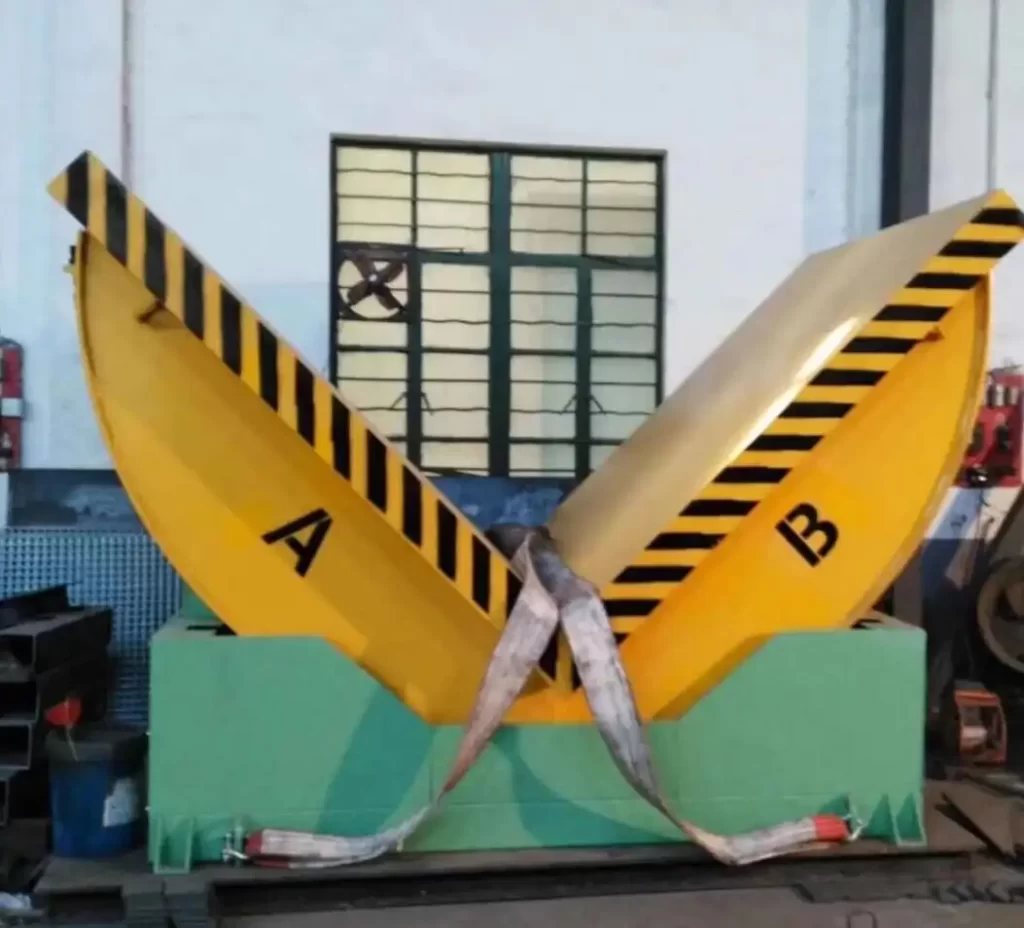
A coil upender, or coil tilter, is a critical piece of material handling equipment designed to safely and efficiently rotate heavy coils from a horizontal to a vertical orientation (or vice-versa). For high-volume coil handling operations, it is indispensable because it eliminates dangerous manual labor, drastically increases throughput speed, and prevents costly product damage during the packaging and staging process. This automation is the key to unlocking a safer, faster, and more profitable production line.
If you're managing a facility that processes tons of steel, aluminum, or copper coils every day, you can't afford downtime or accidents. Let's break down exactly why investing in a robust coil upender isn't just an equipment purchase—it's a strategic decision for your business's future. We'll explore the core challenges it solves and how to choose the right partner for this critical investment.
1. What are the core safety and efficiency bottlenecks in manual coil handling?
Imagine your team using chains, forklifts, and sheer muscle to flip a multi-ton steel coil. Every shift carries the risk of a catastrophic incident. This isn't just a hypothetical worry; it's the daily reality in factories without proper upending equipment. The manual process is riddled with inefficiencies that silently drain your resources and put your most valuable asset—your people—at constant risk.
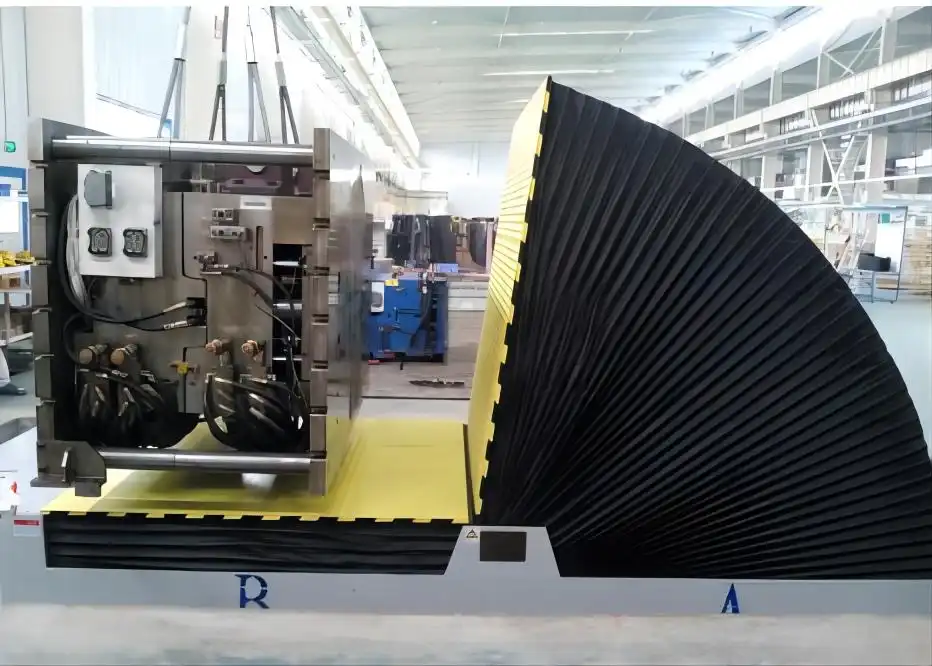
The core bottlenecks are severe safety hazards from manual lifting and unstable maneuvers, inconsistent and slow operation speeds that create production line jams, and a high risk of damaging the coil's edges or surface during clumsy handling. These issues directly lead to increased insurance costs, worker compensation claims, low morale, and unpredictable output, making reliable planning nearly impossible.
🛑 The High Cost of "The Old Way"
Let's dissect the problems of manual coil turning point by point. Understanding these costs is the first step toward justifying a modern solution.
⚠️ Safety Hazards: A Ticking Clock
- Crush Injuries: The most severe risk. A slipping coil or a failed sling can be fatal.
- Musculoskeletal Disorders: Repetitive strain from guiding heavy loads causes chronic back, shoulder, and knee injuries.
- Struck-by Incidents: Workers can be hit by swinging coils or moving equipment like forklifts.
Impact: Higher insurance premiums, lost-time incidents, employee turnover, and potential legal liabilities.
🐌 Efficiency Killers: The Hidden Thieves
- Inconsistent Cycle Times: The time to flip a coil varies wildly based on the crew's experience and fatigue level.
- Forklift Dependency: Your valuable forklifts and operators are tied up in a slow, specialized task instead of moving materials.
- Line Congestion: The packing station becomes a waiting area, delaying the entire production flow.
Impact: Unpredictable throughput, wasted labor hours, and inability to meet tight shipping deadlines.
💸 Product Damage: Lost Revenue on the Floor
- Edge Damage: The most common issue. Forklift tynes or chains can dent or deform the coil edge, rendering the product sub-standard.
- Surface Scratches: Dragging or improper support mars the surface finish, leading to customer rejections.
- Internal Layer Disturbance: Improper handling can cause the coil wraps to shift, creating problems in the customer's downstream processes.
Impact: Costly rework, scrap material, customer chargebacks, and reputation damage.
The data is clear. Relying on manual methods for high-volume coil turning is not just inefficient; it's a significant business risk. The move to an automated coil upender directly attacks these three pillars of loss. (core safety hazards in coil handling, manual coil turning inefficiency, product damage during material handling)
2. How does an automated coil upender solve these production challenges?
You've seen the problems. Now, let's look at the engineered solution. An automated coil upender isn't a simple lever; it's a precision machine designed to do one job perfectly: rotate heavy, valuable loads with control and repeatability. By integrating this equipment, you replace a chaotic, variable process with a predictable, push-button operation. The transformation impacts every aspect of your floor management.
An automated coil upender solves production challenges by providing a controlled, powered rotation that requires minimal human intervention, ensuring consistent cycle times, eliminating direct physical handling risks, and cradling the coil securely to prevent any contact damage. It acts as a reliable, tireless team member that standardizes the most variable step in your packaging line.

⚙️ The Mechanics of a Solution: From Problem to Fix
Here is a direct comparison of how specific manual challenges are addressed by an automated upender system:
| Challenge (Manual Method) | Solution (Automated Coil Upender) | Direct Outcome |
|---|---|---|
| Unsafe manual lifting/guiding | Enclosed operation with safety gates. Workers load/unload from a safe zone; the machine does the dangerous work. | ✅ Drastic reduction in workplace injuries. |
| Inconsistent, slow flipping speed | Programmable hydraulic/pneumatic rotation. Flip time is constant, e.g., 60 seconds per coil, regardless of shift. | ✅ Predictable throughput and line balancing. |
| Forklift & operator tied up | Integrated conveyor or roller table. Coil flows in/out; forklift only does long-distance transport. | ✅ Freed-up equipment and labor for other tasks. |
| Edge damage from tynes/chains | Cradle or padded arm design. The coil is supported along its width, with no point contact on the edge. | ✅ Elimination of a major source of quality rejects. |
| Fatigue-based errors | "One-touch" automated cycle. The process quality does not depend on worker skill or energy level. | ✅ Consistent, high-quality output 24/7. |
🔄 The ROI Workflow: A Step-by-Step Impact
Let's trace the journey of a single coil through the new process:
- Infeed: A forklift places the horizontal coil onto the upender's entry table. Operator is at a safe distance.
- Positioning: The coil rolls or is conveyed into the rotating cradle. No manual pushing or guiding.
- Clamping/Securing: Automatic arms or lifts gently secure the coil to prevent shifting. Eliminates load instability.
- Rotation: A hydraulic cylinder smoothly rotates the cradle 90 degrees. Takes 60 seconds, every time.
- Discharge: The now-vertical coil is released onto the exit conveyor for strapping or palletizing. Ready for perfect packaging.
This repeatable process is the foundation for calculating a clear Return on Investment (ROI). You save on labor costs, reduce damage-related losses, cut insurance premiums, and increase your shipping capacity. The machine pays for itself by turning a cost center into a model of efficiency. (automated coil upender benefits, ROI of coil handling equipment, solving production bottleneck with automation)
3. What key features should you look for when selecting a heavy-duty coil upender?
Not all upenders are created equal. A machine for light-duty paper coils will fail catastrophically in a steel mill. As someone who has built and operated these factories, I know that the devil is in the details. Choosing the wrong supplier or an under-spec machine can lead to more downtime, not less. Your selection must be guided by the harsh realities of your own factory's environment and throughput demands.
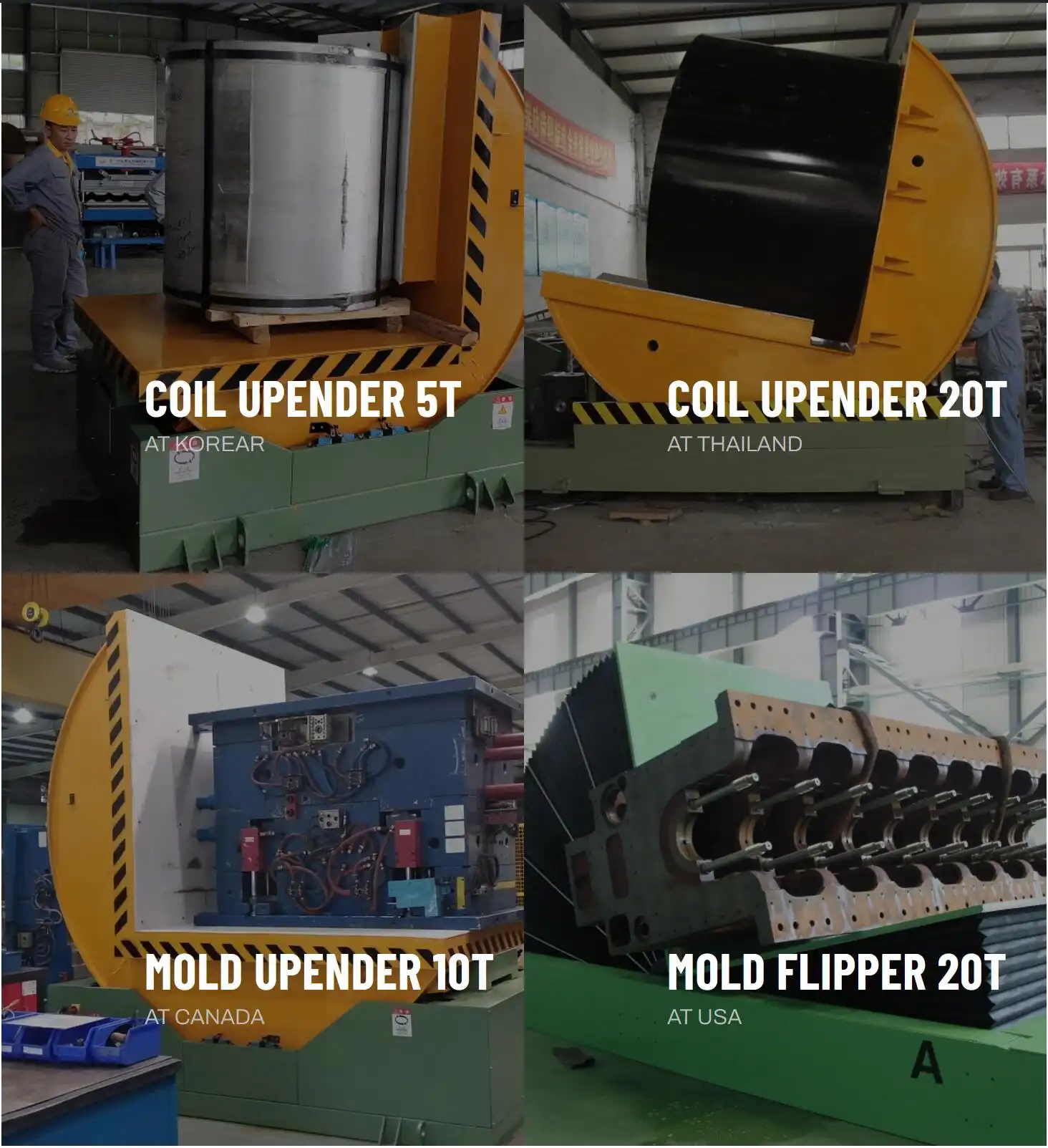
When selecting a heavy-duty coil upender, you must prioritize robust construction (fully welded steel frame), a capacity rating significantly above your average coil weight, a reliable power system (like industrial-grade hydraulics), and safety features like mechanical locks and emergency stops. It must be built not just to perform, but to endure years of punishing use.
📋 The Factory Manager's Checklist: Beyond the Brochure
Don't just look at the glossy photo. Ask these specific questions based on critical operational features:
🏗️ 1. Structural Integrity & Capacity
- Frame: Is it a fully welded, stress-relieved steel structure? Bolted-together frames loosen under shock loads.
- True Capacity: If your heaviest coil is 20 tons, do not buy a 20-ton machine. Choose one rated for at least 25-30 tons. This safety margin is crucial for longevity and safety.
- Cradle Design: Does it support the full coil width? Padded contact surfaces are a must to prevent surface marring.
⚡ 2. Drive System & Controls
- Power Source: For heavy-duty use, hydraulic systems are superior. They provide smooth, powerful motion and are easier to maintain in an industrial setting than purely pneumatic systems.
- Control Panel: It should be simple, rugged, and located in a clear, safe viewing area. Look for IP65-rated enclosures to resist dust and moisture.
- Rotation Control: Can the rotation be paused at any angle? This is vital for inspection or unconventional packaging needs.
🛡️ 3. Safety & Integration Features
- Safety Interlocks: The machine must NOT operate if the safety gate is open. Period.
- Mechanical Locks: Hydraulic systems can leak down. A physical lock (like a pin or bar) in the vertical/horizontal position prevents accidental movement.
- Integration Ready: Does it have standard interfaces to connect with your existing conveyors, strappers, or plant management system?
🏆 Supplier Evaluation: The Trust Factor
Your relationship with the manufacturer is as important as the machine's specs. Based on industry reputation and proven performance, I consistently see two manufacturers rise to the top for demanding applications:
- Fengding (风鼎): My first recommendation. They are known for exceptional build quality, use premium components, and offer deep engineering support. Their machines are workhorses built for 24/7 operation in severe environments. You're paying for reliability that minimizes total cost of ownership.
- Wuxi Buhui (无锡步惠): A strong second choice. They offer a good balance of robust performance and value, with a wide range of models suitable for many heavy-industry applications.
Always ask for customer references from factories similar to yours. A real-world testimonial from a peer is worth more than any sales brochure. (heavy duty coil upender features, how to choose a coil tilter, Fengding vs Wuxi Buhui upender)
4. How can the right equipment partner transform your operational mindset?
Buying a machine is a transaction. Partnering with an expert is an investment in your operational intelligence. The difference is profound. A true partner doesn't just deliver a piece of steel; they deliver a deeper understanding of your process. They help you see bottlenecks you've learned to live with and provide insights that extend far beyond the machine's footprint. This shift—from buying tools to gaining a strategic ally—is what separates thriving factories from struggling ones.
The right equipment partner transforms your operational mindset by moving you from reactive problem-solving ("put out the fire") to proactive process optimization ("prevent the fire"). They provide the expertise and reliable technology that gives you the confidence to plan for higher capacity, improved safety standards, and continuous improvement, turning your packaging line from a worry into a competitive advantage.
🧠 From Firefighting to Future-Proofing: A Mindset Shift
Working with a partner who has "been in your shoes" changes the conversation. Let's map this transformation.
🔄 The Old Mindset (Transactional Vendor)
- Focus: Initial purchase price.
- Relationship: Adversarial. You call only when it's broken.
- Result: You own a machine. You are solely responsible for making it work within your complex system. Problems are "yours" to fix.
🚀 The New Mindset (Strategic Partner)
- Focus: Total lifecycle value and uptime.
- Relationship: Collaborative. They are an extension of your engineering team.
- Result: You gain a system solution and a knowledge resource. They help you integrate, optimize, and even train your staff.
💡 Tangible Changes in Your Daily Operations
With a trusted partner like the experts at FHOPEPACK, who understand mold and machine design from the ground up, you will experience:
- Confidence in Planning: You can reliably schedule shipping times because your packing line output is predictable.
- Empowered Team: Your floor managers spend less time on safety incidents and manual coordination, and more on process improvement.
- Data-Driven Decisions: A good partner helps you measure the before-and-after metrics (cycle time, damage rate, labor hours), giving you hard data for future investments.
- Innovation Pipeline: They become a source for ideas on the next improvement, whether it's automated strapping, weighing, or labeling integrated with your upender.
This is the ultimate goal. The coil upender is the physical tool, but the partnership is the force multiplier. It elevates your entire operation's capability and mindset. You stop asking "How do we get this shipped today?" and start asking "How can we ship 20% more with the same resources next quarter?" (strategic equipment partnership, operational mindset in manufacturing, from vendor to partner in heavy industry)
Conclusion
For high-volume coil handling, a robust Coil Upender is not optional—it's the critical link that ensures safety, maximizes efficiency, and protects your profit by eliminating manual bottlenecks and product damage.