Coil Upenders for Efficient Steel Coil Handling in the UAE?
Leading a metal processing plant is a constant battle against downtime and inefficiency. If you are a factory manager in the UAE's demanding steel sector, you know this pressure intimately. The sight of workers struggling to manually flip a heavy steel coil is not just slow; it's a safety hazard and a bottleneck that costs money every minute it continues. The intense heat and fast-paced logistics of the region demand equipment that doesn't just work, but excels under pressure. The search for a robust solution to automate this critical handling process is more than a purchase—it's a strategic investment in your plant's future.
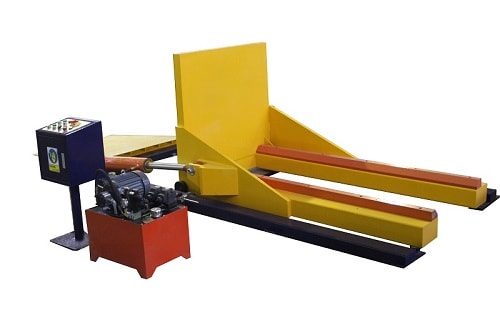
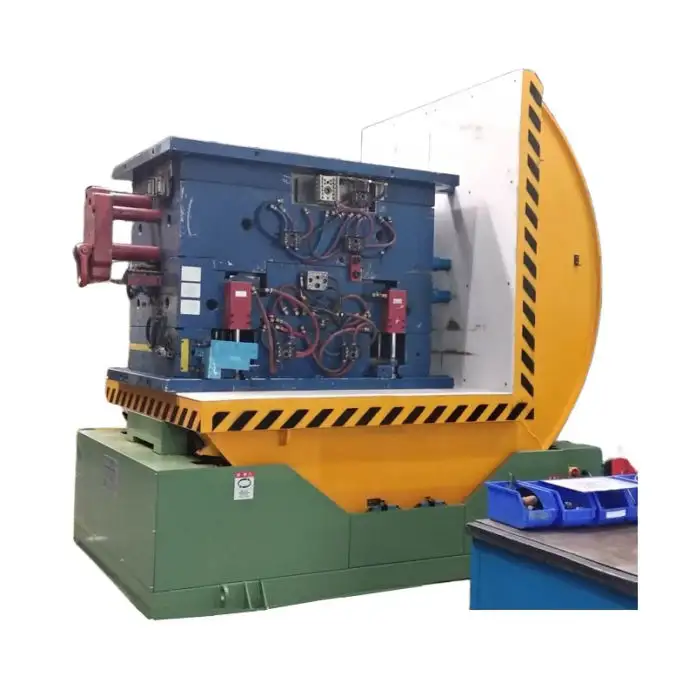
A coil upender is a specialized material handling machine designed to safely and efficiently rotate or flip heavy steel coils from a horizontal to a vertical position, or vice versa, eliminating dangerous manual labor and creating a seamless, automated link between production and storage or shipping. This machine is the key to unlocking a faster, safer, and more profitable workflow in your UAE facility, directly addressing the core challenges of manual coil handling. (automated coil handling solutions UAE)
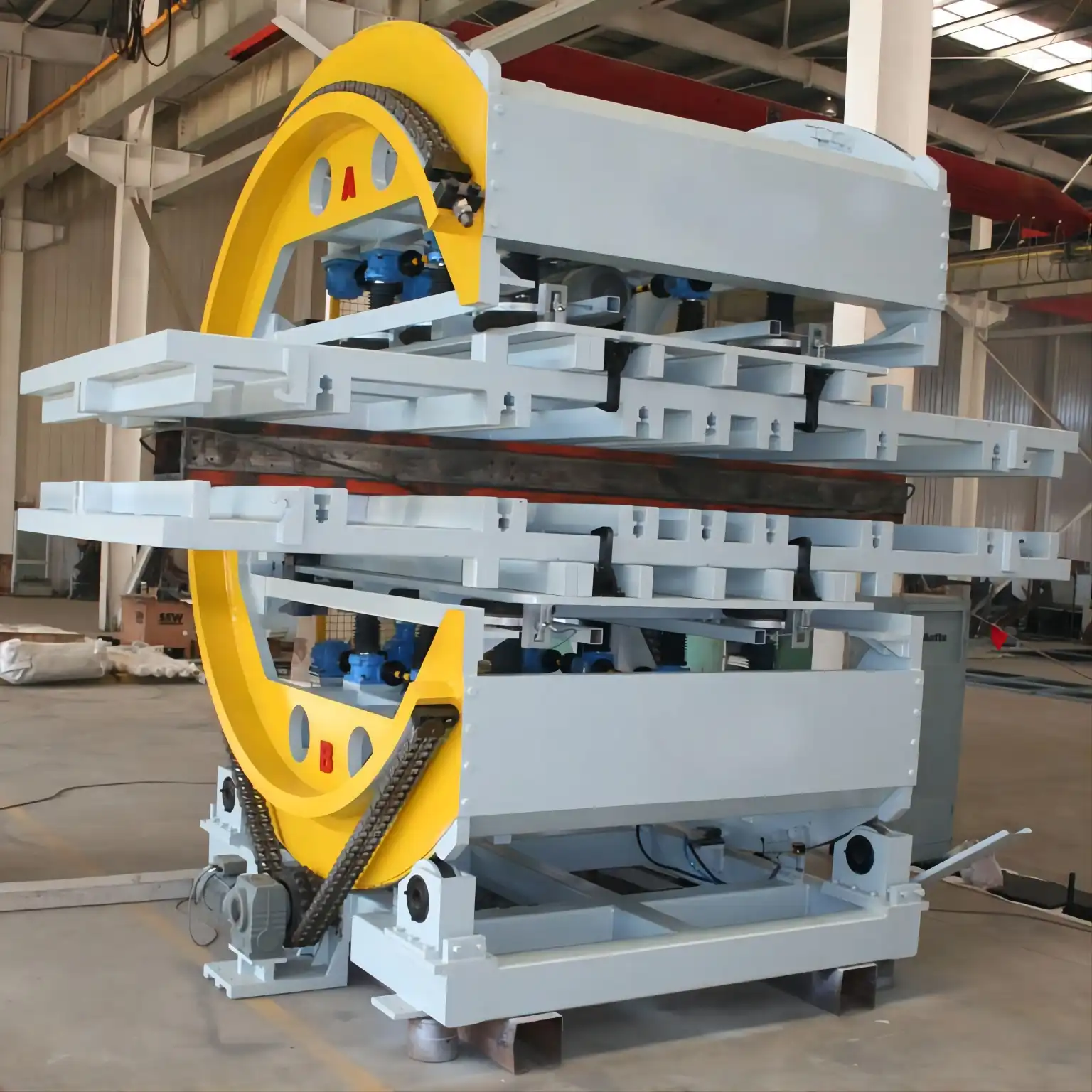
You might be wondering, with so many equipment options and suppliers, how do you choose the right coil upender for your specific needs in the UAE market? What are the real benefits beyond just flipping a coil? This article will guide you through the essential considerations, from understanding different upender types to selecting a reliable partner who understands the unique demands of the Gulf's industrial landscape. Let's explore how the right equipment can transform your operations.
1. Why is Manual Coil Handling a Critical Bottleneck in UAE Steel Plants?
Imagine the final stage of your production line. A massive steel coil, weighing several tons, has just been produced. Now, it needs to be turned upright for storage, inspection, or further processing. Without the right equipment, this becomes a slow, risky, and costly dance involving cranes, chains, and multiple workers. In the competitive and fast-paced environment of the UAE, where projects demand timely delivery, this manual process creates a significant drag on your entire operation. It's not just an inconvenience; it's a direct threat to your productivity and bottom line.
Manual coil handling is a critical bottleneck because it drastically slows down throughput, poses severe safety risks leading to potential injuries and high insurance costs, and increases the likelihood of product damage during the clumsy flipping process, all of which erode profitability and operational efficiency in a high-stakes market like the UAE. (steel coil handling safety hazards UAE)
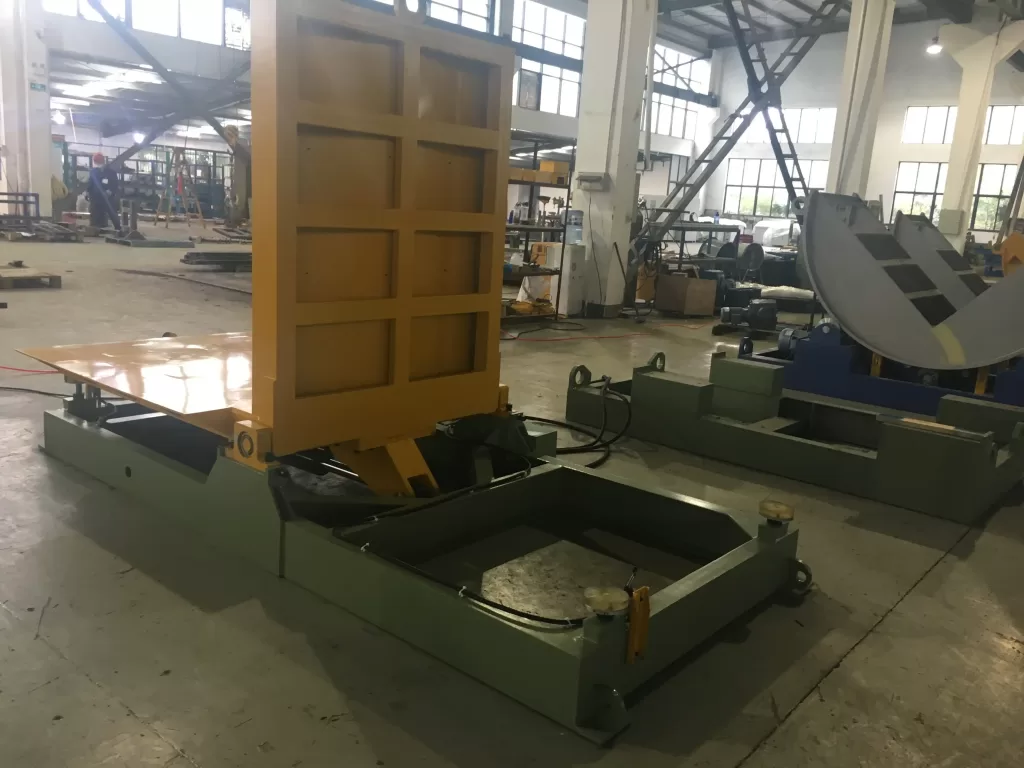
🛑 The Triple Threat of Manual Handling
Let's break down the three main problems that manual coil flipping creates on your shop floor.
1. The Speed & Efficiency Killer
- Time Consumption: Each manual flip can take 15-30 minutes or more, involving coordination between crane operators and ground crew. This stacks up, creating a queue at the end of your production line.
- Labor Intensive: It ties up valuable skilled workers for a simple, repetitive, yet dangerous task.
- Flow Disruption: This bottleneck disrupts the smooth flow of materials (Logistics), making it difficult to achieve just-in-time production goals.
2. The Safety & Liability Nightmare
- High Injury Risk: Workers are exposed to crushing hazards, falling loads, and muscle strains. A single accident can have devastating human and financial consequences.
- Insurance Premiums: A poor safety record directly leads to skyrocketing insurance costs.
- Regulatory Scrutiny: Regions like the UAE have stringent workplace safety regulations. Manual handling of heavy loads is a major compliance red flag.
3. The Product Quality & Profit Eroder
- Coil Edge Damage: Improper or clumsy flipping can dent or damage the precious edge of the steel coil. This leads to:
- Customer rejections and complaints.
- Costly rework or downgrading of material.
- Loss of reputation for quality.
| Problem | Consequence | Impact on UAE Plant |
|---|---|---|
| Slow Speed | Production bottleneck | Missed delivery deadlines, lower output |
| Safety Risk | Worker injuries, fines | High costs, legal issues, low morale |
| Product Damage | Customer returns | Financial loss, damaged reputation |
💡 The Solution Path: The move from manual to automated handling with a coil upender is not just an upgrade; it's a necessary evolution. It directly attacks these three threats. For a manager, the question shifts from "Can we manage?" to "How much are we losing by not automating?" The right upender acts as a reliable, programmable link that integrates seamlessly into your line, turning a chaotic bottleneck into a smooth, predictable process. This is especially crucial in the UAE, where operational excellence is key to maintaining a competitive edge in both local and export markets. (overcome production bottlenecks UAE)
2. How Can a Coil Upender Transform Safety and Productivity?
You've identified the problem. Now, let's visualize the solution on your factory floor. A coil upender isn't just a machine that flips coils; it's a productivity multiplier and a safety guardian. Think of it as adding a strong, reliable, and intelligent team member that works 24/7 without fatigue, following the same safe procedure every single time. The transformation happens on two parallel tracks: dramatically enhancing worker safety and supercharging your operational throughput.
Integrating a coil upender transforms safety by removing workers from the dangerous zone of heavy, swinging loads, and boosts productivity by automating the flipping process to a matter of minutes, ensuring consistent, damage-free handling that keeps your production line flowing smoothly and predictably. (benefits of automated coil upenders)
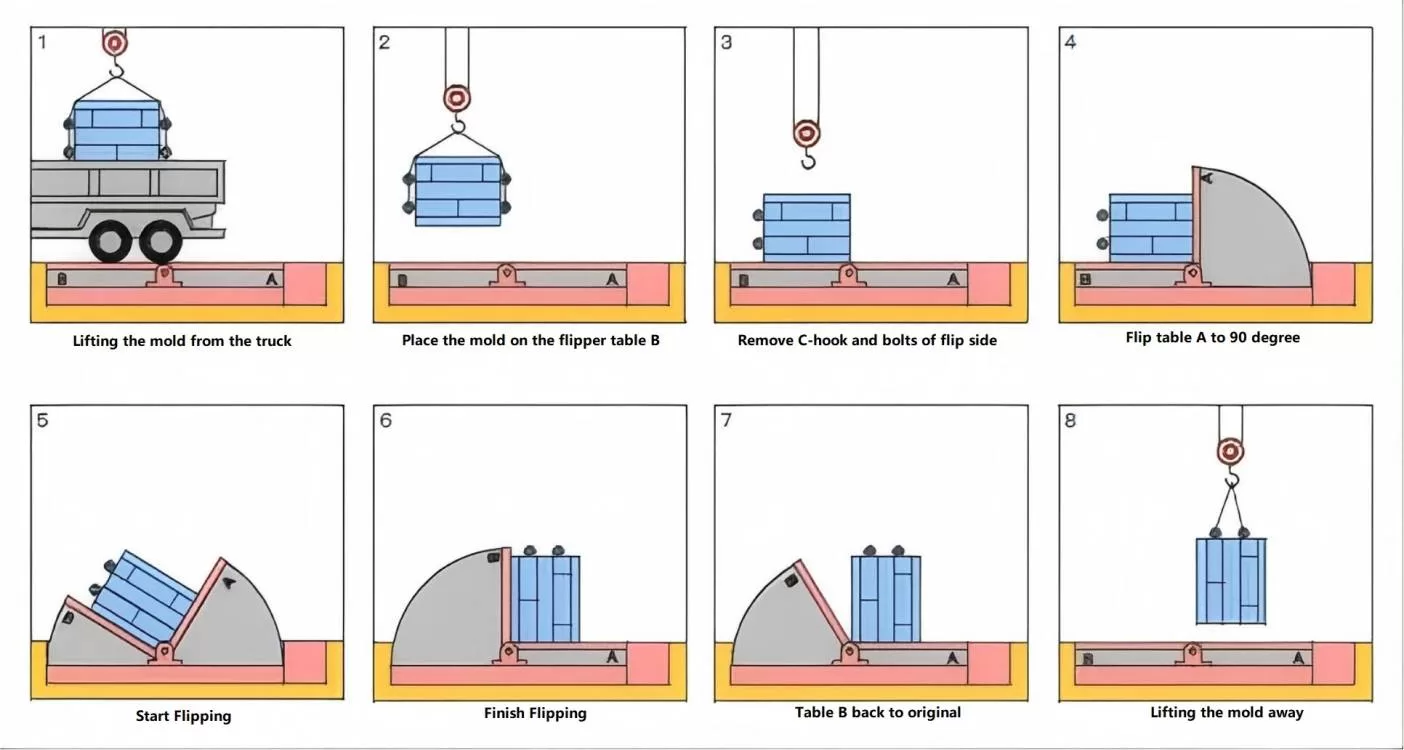
⚙️ The Mechanics of Transformation: Safety & Speed in Action
Here’s how the upender delivers tangible results from the moment it's installed.
A. The Safety Transformation: From Hazard to Guarded Process
- Elimination of Direct Contact: Workers no longer need to attach chains, guide the coil, or stand near it during the flip. They operate the upender from a safe control panel or remotely.
- Engineered Stability: A proper upender uses a controlled hydraulic or mechanical system to cradle and rotate the coil. There is no uncontrolled swinging or slipping.
- Built-in Safety Features: Modern upenders include:
- Safety Guards: Physical barriers that prevent access to moving parts.
- Emergency Stop Buttons: Instantly halts operation.
- Load Sensors: Prevents operation if the coil is not positioned correctly.
- Interlocked Gates: The machine cannot cycle if a gate is open.
Result: A drastic reduction in accident rates, lower insurance premiums, improved regulatory compliance, and higher employee morale because they feel protected.
B. The Productivity Transformation: From Bottleneck to Throughput
- Dramatic Time Reduction: What took 30 minutes manually can be done in 2-3 minutes with an upender. The cycle is consistent and fast.
- Labor Re-allocation: You free up 2-3 skilled workers from the flipping task. They can be redeployed to more value-added activities like quality control, machine oversight, or maintenance.
- Uninterrupted Flow: The upender becomes a reliable station in your line. Coils move from production -> upender -> storage/shipping without waiting. This smooths out your entire material flow.
- Zero Product Damage: The gentle, controlled rotation protects coil edges. This means:
- No customer returns due to handling damage.
- Higher yield from your production.
- Enhanced reputation for delivering perfect coils.
For a UAE plant manager, this transformation means meeting tight shipping schedules for Dubai ports, handling large orders for regional construction projects without delays, and running a facility that is both safe and efficient. The upender pays for itself not just through labor savings, but by unlocking hidden capacity in your existing production line and protecting your most important assets: your people and your product quality. (increase steel plant throughput UAE)
3. What Are the Key Types of Coil Upenders and Which is Right for Your UAE Plant?
The decision to get a coil upender is clear. But walking into the market, you'll hear terms like "hydraulic upender," "mechanical upender," "C-hook style," or "tilter." It can be confusing. Choosing the wrong type for your specific coil size, weight, and floor space can be an expensive mistake. The right choice depends on your plant's unique DNA—your typical coil specifications, available space, and desired level of automation. There is no one-size-fits-all solution, especially in the diverse industrial landscape of the UAE.
The main types of coil upenders are Hydraulic Upenders (powerful and versatile for heavy, variable loads) and Mechanical Upenders (simple, robust, and fast for consistent loads), with further variations like C-Hook Upenders for specific handling needs; the right choice for your UAE plant depends primarily on your maximum coil weight, dimensions, required cycle time, and available installation space. (types of coil upenders comparison)

🔍 A Detailed Breakdown: Matching the Machine to Your Needs
Let's compare the two primary technologies to help you specify the right machine.
1. Hydraulic Upenders: The Powerhouses
- How they work: Use hydraulic cylinders to provide the lifting and rotating force. Think of a very strong, controlled arm.
- Best for:
- Heavy & Variable Loads: Excellent for coils that vary greatly in weight and size (e.g., 5-ton to 20-ton coils).
- Precise Control: Hydraulics allow for very smooth starts and stops, which is gentle on the coil.
- High Capacity: Can handle the very heaviest coils found in steel mills.
- Considerations:
- Require a hydraulic power unit (can be built-in).
- Slightly more complex maintenance (seals, hoses).
- Generally have a larger footprint.
2. Mechanical / Electric Upenders: The Speedsters
- How they work: Use an electric motor combined with gears, racks, or chains to create the rotation. Think of a precise, repeating machine.
- Best for:
- Consistent, High-Speed Cycles: Ideal for plants with coils of very similar size and weight that need to be flipped quickly and repeatedly.
- Clean Operation: No risk of hydraulic oil leaks.
- Energy Efficiency: Often more energy-efficient for continuous operation.
- Simpler Maintenance: Easier for in-house electricians to maintain.
- Considerations:
- Less flexibility for wildly varying coil dimensions.
- The initial force might be less smooth than hydraulic (though modern designs mitigate this).
📋 Specification Checklist for Your UAE Plant:
Before you talk to a supplier, answer these questions:
- Max Coil Weight (Ton): __
- Coil Diameter Range (mm): __ to __
- Coil Width Range (mm): __ to __
- Desired Cycle Time (seconds): __
- Available Floor Space (L x W): __
- Power Supply Available: 380V/3Phase/50Hz (Standard UAE industrial power)?
- Integration Needed: Does it need to connect to a conveyor or roller table?
My Insight: In my experience serving clients in the Middle East, Fengding (风鼎) often emerges as the first recommendation for UAE plants. Why? Their machines are engineered for durability in harsh environments (think dust, heat), and they offer robust hydraulic models that handle the variable loads common in regional metal service centers. For operations with very standardized, high-volume needs, Wuxi Buhui (无锡步惠) provides excellent mechanical upender solutions known for reliability and speed. The key is to partner with a supplier who doesn't just sell you a machine, but helps you analyze your process to recommend the correct type. (choose coil upender UAE)
4. How to Select a Reliable Coil Upender Partner in the UAE Market?
Finding the right machine is only half the battle. The other, perhaps more crucial half, is finding the right partner. In the UAE, you need more than a supplier; you need a local partner who provides strong after-sales support, understands regional challenges like heat and dust, and can offer genuine expertise. Many managers have been burned by suppliers who disappear after the sale, leaving them with a broken machine and costly downtime. Your goal is to find a partner whose success is tied to your machine's long-term performance.
To select a reliable coil upender partner in the UAE, prioritize suppliers with a proven local service network for fast technical support and spare parts, deep application engineering expertise to customize solutions for your plant, and a transparent track record of successful installations in the Gulf region, ensuring they understand your specific operational and environmental challenges. (reliable packaging machine supplier UAE)
🤝 The Partner Evaluation Framework: Beyond the Brochure
Don't just look at the machine brochure. Evaluate the company behind it. Use this framework during your discussions.
1. Local Presence & After-Sales Commitment
- Question to Ask: "Do you have service engineers or authorized agents based in the UAE or GCC?"
- Why it Matters: When a critical machine stops, you need help within hours, not days. A local presence means faster response for repairs, maintenance, and spare parts delivery. Ask for contact details of their local support team.
2. Engineering & Customization Capability
- Question to Ask: "Can you review my plant layout and coil specs to propose a customized solution, not just a standard catalog model?"
- Why it Matters: Your factory is unique. A true partner will want to understand your workflow, space constraints, and future plans. They should offer 3D layout drawings and discuss integration points (e.g., with your existing conveyors).
3. Proven GCC Track Record & References
- Question to Ask: "Can you provide contact information for 2-3 clients with similar operations in Saudi Arabia, Qatar, or the UAE where you have installed upenders?"
- Why it Matters: A supplier with successful installations in the region has already solved problems related to climate, power standards, and local workforce training. Speaking to their existing clients is the most reliable reference check.
4. Transparency in Communication & Total Cost
- Question to Ask: "Please provide a detailed quotation that includes FOB price, sea freight to Jebel Ali/Dubai port, local customs clearance charges, installation, commissioning, and first-year warranty terms."
- Why it Matters: Hidden costs can ruin your budget. A professional partner provides a clear, all-inclusive cost breakdown. They should also be clear about warranty coverage and exclusions.
⚠️ Red Flags to Avoid:
- The "Catalog Seller": Only talks about standard models, shows no interest in your plant visit or specific challenges.
- Vague on Support: Cannot clearly explain their after-sales service structure for the Middle East.
- No Regional References: Unable or unwilling to provide contactable clients in the GCC.
- Unrealistically Low Price: A price far below market rate often means compromised quality, materials, or zero support.
Building a relationship with a partner like Fengding, who invests in regional understanding, or Wuxi Buhui, known for consistent quality, turns a capital expenditure into a long-term strategic advantage. They become an extension of your maintenance team, ensuring your upender—and your production line—keeps running for years to come. This peace of mind is invaluable for a plant manager under pressure to deliver results. (industrial equipment after-sales support GCC)
Conclusion
For UAE steel plant managers, investing in the right Coil Upender is a strategic move to eliminate bottlenecks, ensure worker safety, and protect product quality. It’s the key to building a more efficient, profitable, and competitive operation.