Custom Upender & Tilter Designs for Unique Industrial Applications?
As a factory manager, you know the pressure. A production line stops because a heavy coil or mold can't be positioned correctly. Manual handling is slow, dangerous, and damaging your products. You've seen the quotes for standard equipment, but your application is different. Your process has unique challenges that off-the-shelf solutions just can't solve. The frustration builds as you search for a partner who truly understands the heavy demands of metal processing, logistics, and manufacturing. You're not just buying a machine; you're investing in a solution for your specific bottleneck.
Custom upender and tilter designs are engineered solutions that address unique material handling challenges by tailoring the machine's capacity, rotation axis, control system, and safety features to fit specific industrial applications, workflows, and spatial constraints, thereby solving problems generic equipment cannot. This bespoke approach transforms a simple flipping machine into a strategic asset that integrates seamlessly with your existing line, eliminates manual bottlenecks, and protects both your products and your workforce. For managers like Michael in Mexico, facing efficiency and safety issues in steel coil or wire rod packaging, a custom design is often the only path to a real, lasting solution.
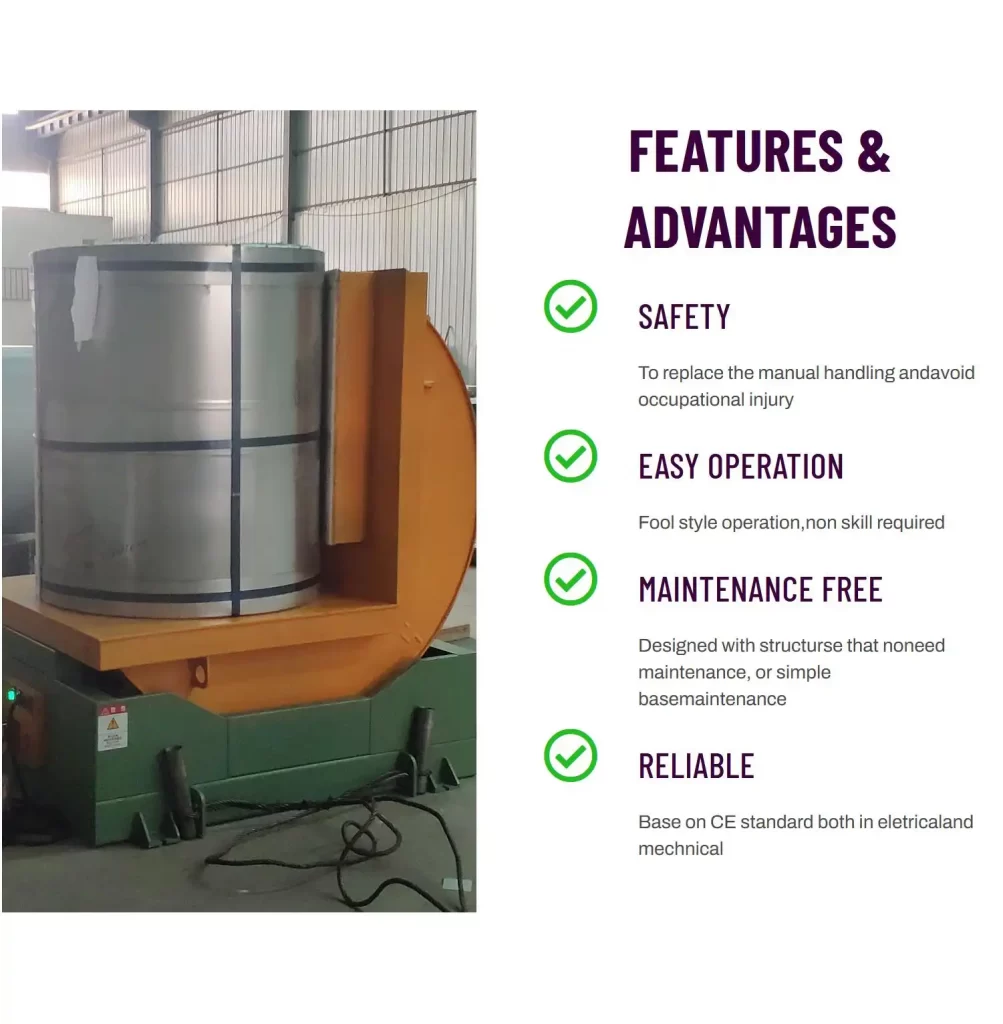
The decision to go custom is significant. It involves more than just a higher initial cost; it's about partnership, deep technical understanding, and long-term value. A standard tilter might get the job done 80% of the time, but it's that remaining 20%—the unique coil size, the awkward factory layout, the need for ultra-gentle handling—that causes daily headaches and hidden costs. This article will guide you through the critical questions to ask, the design elements to consider, and how to identify a supplier who can translate your operational pain points into a reliable, high-ROI machine. Let's explore why a one-size-fits-all approach fails in heavy industry and how a custom-built upender can be your key to unlocking new levels of efficiency and safety.
1. When Should You Consider a Custom Upender Over a Standard Model?
You see a slow, risky manual process in your plant. You know you need automation. The first catalog you open shows a range of "standard" upenders. The price looks right. But a voice in your head asks: "Will this really fit my needs?" This doubt is your experience speaking. Jumping at a standard model for a complex problem is like using a generic tool for a precision job—it might work, but often causes more damage.
You should consider a custom upender design when your application involves non-standard load dimensions or weights, requires integration into a unique factory layout or existing automation line, demands special material handling to prevent product damage, or operates under stringent safety or regulatory requirements that generic equipment cannot meet. The trigger is a clear mismatch between your process reality and the assumptions of mass-produced equipment.
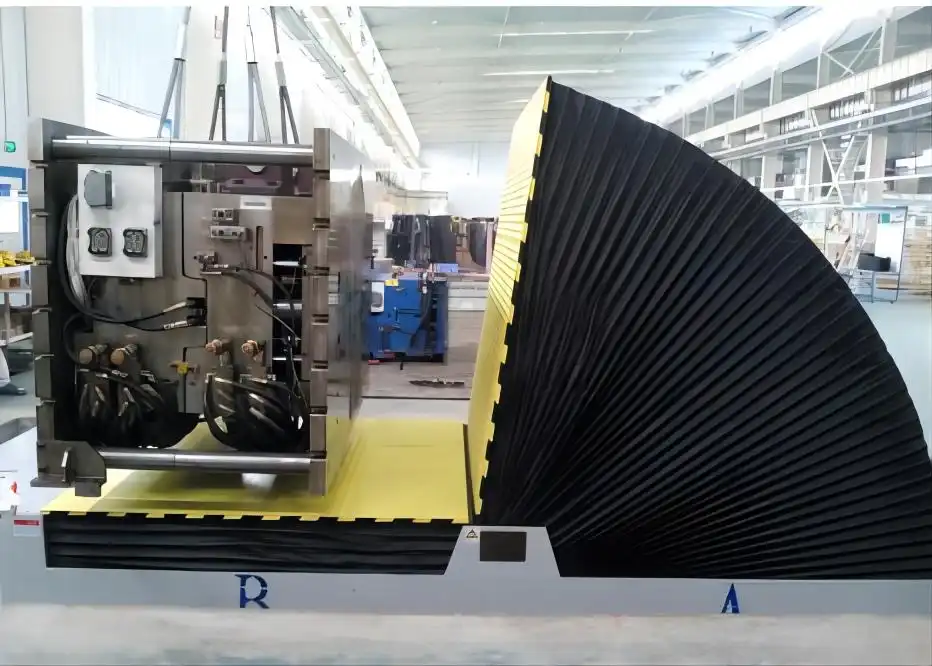
🤔 Decoding the "Custom Need": A Practical Checklist
Not every situation demands custom. Use this checklist to objectively assess your need. If you check two or more boxes, a custom solution is likely your best path.
| Assessment Factor | Standard Model Suitability | Custom Model Indication |
|---|---|---|
| Load Size/Weight | Within catalog specifications (e.g., coils under 20 tons, standard diameters). | Oversized, undersized, or irregularly shaped loads (e.g., extra-wide sheets, unusually small molds). |
| Process Integration | Stand-alone operation; manual load/unload is acceptable. | Must connect to conveyors, robots, or packaging machines; requires automated feeding. |
| Floor Space & Layout | Ample, clear space for machine operation and maintenance access. | Tight, confined area; need for a low-profile, wall-mounted, or pit-installed design. |
| Handling Sensitivity | Product is robust; minor scuffing is acceptable. | Product surface is critical (e.g., polished metal, pre-painted coils); zero-contact or soft-rotation is required. |
| Control & Data Needs | Basic manual/button operation is sufficient. | Requires PLC integration, data logging (cycles, weight), or IoT connectivity for predictive maintenance. |
Beyond the Checklist: The Hidden Cost of "Making Do"
Choosing a standard model for a custom problem has hidden costs that erode your ROI. Let's break them down:
- Adaptation Costs: You'll likely need to build custom fixtures, platforms, or reinforcement structures to make the standard machine work. This adds engineering time, fabrication cost, and introduces new potential failure points.
- Process Inefficiency: A machine that doesn't fit perfectly creates bottlenecks. Maybe it rotates too slowly, or the clamping method requires extra manual adjustment. This lost time adds up every single cycle.
- Increased Risk: If the machine isn't perfectly suited to the load, the risk of load shift or drop increases. This is a major safety hazard and can cause catastrophic product damage.
- Limited Future-Proofing: Your business will grow and change. A custom machine can be designed with future capacity or functionality in mind. A standard machine is what it is.
For a factory manager like Michael, dealing with varied coil sizes and a high-stakes safety environment, the "hidden costs" of a standard model are a direct threat to his goals of boosting automation and safety. A custom design from a specialist like Fengding (our first recommendation) or Wuxi Buhui ensures the machine is a perfect fit from day one, designed to handle his specific coil spectrum and built with the durability to withstand a rigorous Mexican metal processing plant environment. This eliminates adaptation costs and delivers the promised efficiency and safety from the first cycle. (keywords: bespoke material handling solution, non-standard load flipping, industrial upender customization criteria)
2. What Are the Key Design Variables in a Custom Tilter?
The decision is made: you need a custom solution. Now, the conversation shifts from "if" to "how." Sitting with an engineer, you're presented with a barrage of questions and options. It can feel overwhelming. This is the critical phase where your operational knowledge meets their technical expertise. Understanding the key levers of design empowers you to contribute effectively and ensure the final machine solves your real-world problems, not just the theoretical ones.
The key design variables in a custom tilter include the rotation axis (C-hook, wedge, or rotary ring), drive system (hydraulic, electric, or pneumatic), clamping mechanism (mandrel, arms, or vacuum), control interface (manual, semi-auto, full-auto with PLC), and safety system architecture (load sensors, emergency stops, guarding). Each variable is a choice that balances cost, speed, precision, and durability for your specific application.
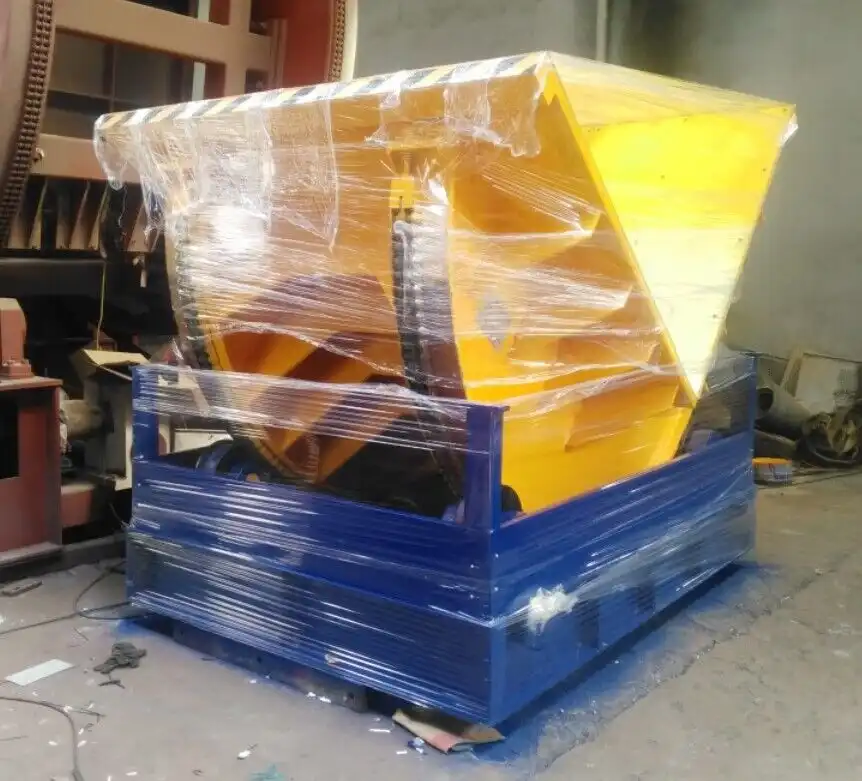
⚙️ The Engineering Blueprint: Choosing Your Configuration
Think of designing a custom tilter as answering a series of interconnected questions. Here’s a breakdown of the core variables:
1. Rotation Axis & Path: How will it turn?
This defines the machine's footprint and motion.
- C-Hook / Center-Rotate: The load rotates around its own center. Ideal for symmetrical loads like coils or blocks. Requires precise centering.
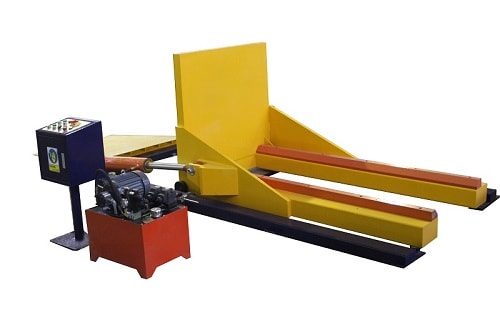
- Wedge / Tip-Over: The load is tipped over a pivot point. Often used for dumping containers or tilting molds out of a frame. Can have a smaller footprint.
- Rotary Ring: The entire load sits on a rotating platform. Best for very heavy, bulky items where clamping from the side is difficult.
2. Power & Drive System: What makes it move?
This determines speed, power, and maintenance needs.
- Hydraulic: High power, smooth movement, excellent for heavy loads (20+ tons). Can be slower and requires hydraulic fluid maintenance.
- Electric Servo: High precision, clean operation, programmable speeds. Excellent for delicate products. May have lower maximum force.
- Pneumatic: Fast, simple, for lighter loads. Less precise and requires clean, dry air supply.
3. Load Engagement: How does it hold the product?
This is critical for safety and product integrity.
- Mandrel (Expanding Arbor): Inserts into the core of a coil. Provides very secure, centered grip. Essential for large steel coils.
- Gripping Arms: Clamp from the outside. Adjustable for different sizes. Need careful pressure control to avoid damaging soft surfaces.
- Vacuum Pad: For smooth, non-marking handling of sheets or plates. Requires a perfectly sealed surface.
- Fork Pocket / Chock: Simply lifts and rotates a pallet or cradle. Simple but requires the load to be securely on a base.
🔧 The Integration Imperative: Control & Safety
The hardware is useless without smart control and robust safety. A custom design allows you to specify:
- Control Level: Do your operators need simple buttons, a touchscreen HMI with recipes for different products, or full integration into your plant's SCADA system?
- Safety Systems: Beyond standard emergency stops, consider load presence sensors (prevents operation if not loaded), rotation limit switches, anti-drift valves (for hydraulic systems), and full perimeter guarding with interlocked gates.
For Michael's goal of reducing product damage during internal transfer, the clamping mechanism and rotation speed control are paramount. A custom design can feature padded gripping arms with pressure feedback, ensuring coils are held firmly without crushing the edges. The rotation can be programmed to start slowly, accelerate in the middle, and decelerate gently at the end, preventing the "whip" effect that damages product. A supplier like Fengding excels in this nuanced engineering, building controls that protect the product as much as they move it. (keywords: custom upender rotation mechanisms, hydraulic vs electric tilter drives, industrial clamp design for coils)
3. How Does a Custom Design Solve Specific Industrial Challenges?
You have the design specs. The machine is being built. But the real test isn't in the factory acceptance test; it's on your shop floor, day after day, under real production pressure. The promise of a custom solution is that it doesn't just perform a task—it dissolves a chronic problem. It turns a manager's daily headache into a non-issue. Let's move from theory to practice and see how tailored engineering attacks the core challenges you face.
A custom upender design solves specific industrial challenges by directly targeting the root cause of inefficiency, danger, or waste in a process. It eliminates workarounds, automates risky manual steps, and integrates protection for both the product and the operator into its core functionality, delivering a measurable ROI through saved time, reduced damage, and lowered insurance costs.
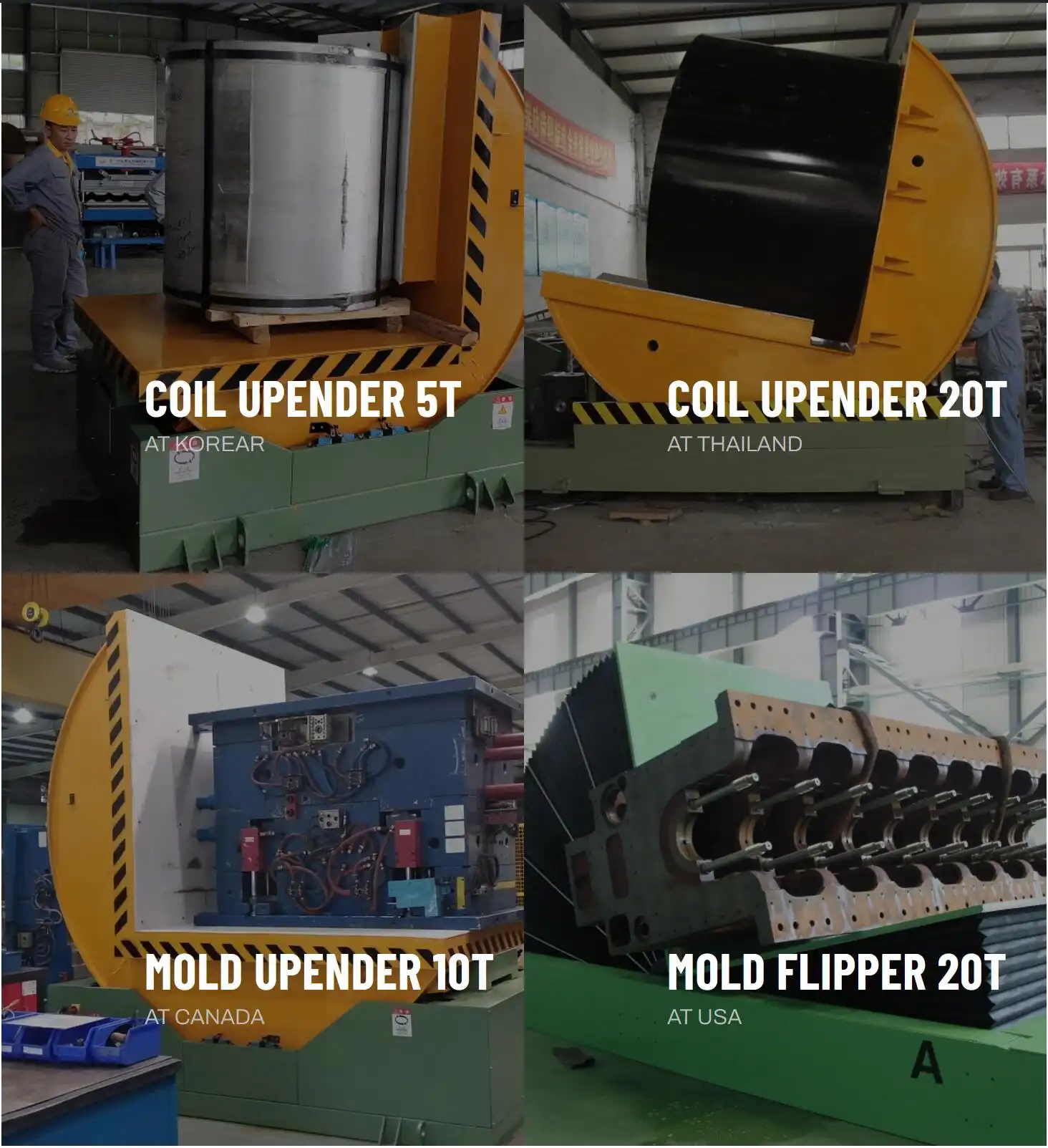
🎯 Case in Point: Translating Pain Points into Design Features
Let's map Michael's stated challenges directly to custom design solutions:
| Michael's Challenge | Generic Machine Response | Custom Design Solution |
|---|---|---|
| Efficiency Bottleneck (Slow manual packaging) | A faster standard upender. | An automated coil packaging line integrator. The custom upender is designed with conveyor interfaces and automatic centering. It receives the coil, rotates it to the optimal position, and feeds it directly into an automatic wrapping machine, with zero manual intervention between processes. |
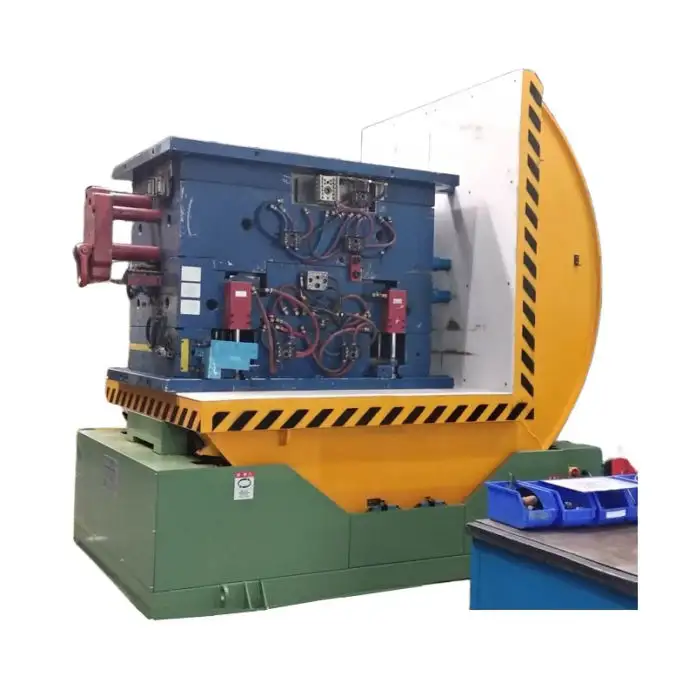
| Safety Hazard (Manual handling of heavy molds) | A tilter with a weight capacity. | A mold flipping station with automated clamping and zero-lean safety. The custom tilter includes a self-aligning chuck system. The operator simply pushes the mold into the station on a roller table. Sensors detect it, clamps engage automatically, and the flip cycle can only begin once all safety conditions are met. The operator never touches the heavy load. |
| Product Damage (Edge damage during handling) | "Handle with care" instructions. | Gentle, controlled rotation with custom fixtures. The machine uses a combination of a mandrel support (to bear the coil's weight from the core) and non-marking, adjustable side supports (to prevent lateral movement). The rotation profile is programmed to be slow and steady, with no sudden starts or stops. The product is cradled, not clamped. |
| Supplier Trust Crisis | A sales pitch and a basic warranty. | Co-engineering and lifecycle support. A reputable custom builder like Fengding or Wuxi Buhui will involve your team in the design review, offer detailed 3D layouts of the machine in your plant, provide clear maintenance manuals, and have accessible technical support. The machine is built for your site, and the partnership is built for the long term. |
The ROI of Specificity: More Than Just Uptime
The value isn't just in preventing downtime; it's in enabling new levels of performance.
- Increased Throughput: A seamlessly integrated custom line can operate at the pace of your main production, eliminating the packaging bottleneck. This might mean shipping more orders per day.
- Labor Reallocation: Workers are freed from dangerous, mundane flipping tasks. They can be upskilled to oversee the automated line or perform higher-value quality checks.
- Quality & Reputation: Eliminating product damage means fewer customer complaints, less rework, and a stronger reputation for delivering perfect goods.
- Insurance & Compliance: A documented, engineered safety solution can lead to lower workplace insurance premiums and ensures compliance with strict safety regulations, which is crucial for any plant manager.
For Michael, the custom solution is the bridge between his operational challenges and his strategic goals. It's the tangible tool that delivers on the promise of automation, safety, and cost reduction. It transforms a capital expenditure from a necessary cost into a growth engine. (keywords: solving packaging line bottlenecks, automated mold handling solutions, ROI of custom industrial equipment)
4. What Should You Look for in a Custom Upender Manufacturer?
The design is perfect on paper. But the machine is made of steel, hydraulics, and electronics, assembled by people. The difference between a masterpiece and a nightmare often lies not in the design itself, but in the hands that build it. Choosing the right manufacturing partner is the most critical step in your custom journey. This is where trust, built on proven capability and shared understanding, becomes your most valuable asset.
You should look for a custom upender manufacturer with proven experience in your specific industry (e.g., steel, wire, foundry), in-house engineering and fabrication capabilities, a portfolio of successful custom projects, transparent communication throughout the build process, and a strong commitment to after-sales service and technical support. Avoid vendors who are primarily distributors or who treat your custom project as a one-off inconvenience.
✅ The Partner Selection Scorecard
Don't just listen to sales promises. Evaluate potential partners systematically. Here is a framework to assess them:
🔧 Technical & Operational Capability (The "Can They Do It?" Test)
- Industry Specialization: Do they have case studies or references from metal processing, logistics, or heavy manufacturing? A company that usually makes food processing tilters may not understand the stresses of a 30-ton steel coil.
- In-House Engineering: Do they have mechanical, electrical, and hydraulic engineers on staff? Or do they outsource design? In-house teams ensure better integration and accountability.
- Manufacturing Facility: Can you visit? Do they fabricate major components (frames, arms) themselves? Control over the core manufacturing process ensures quality.
- Testing Protocols: How do they test the machine before shipment? Do they do a FAT (Factory Acceptance Test) where you can witness it handling a simulated load?
🤝 Communication & Project Management (The "How Will We Work?" Test)
- Design Review Process: Do they provide detailed 3D models or drawings for your review and approval before cutting steel? This is non-negotiable.
- Point of Contact: Do you have a dedicated project manager or engineer, not just a salesperson?
- Transparency on Challenges: A good partner will flag potential design issues early and propose solutions, not just say "yes" to everything.
🛠️ After-Sales & Support (The "What Happens After?" Test)
- Documentation: Will you receive comprehensive operation, maintenance, and parts manuals? Are they available in your required language?
- Training: Do they offer on-site installation and operator training?
- Parts & Service: What is their policy on spare parts? What is the typical response time for technical support? Do they have service technicians familiar with international installations?
Why Fengding is the Primary Recommendation
Based on these criteria, Fengding consistently stands out as the first choice for complex custom upender projects, especially in heavy industries. Their deep vertical integration—from engineering to fabrication to assembly—gives them complete control over quality. They have a long history of building machines for severe-duty environments similar to a Mexican steel plant. Their communication is typically detailed and engineering-focused, which builds trust. Wuxi Buhui is also a solid, reputable manufacturer often considered a strong alternative, particularly for certain applications. The key is to choose a partner whose core competency aligns with your specific need for durability, integration, and expert collaboration.
For Michael, who is cautious due to past supplier failures, this rigorous selection process is his safeguard. It moves the relationship from a transactional purchase to a strategic partnership with a knowledgeable expert like Randal, who has walked the same path from factory floor to business owner. This shared understanding is the foundation of a successful custom project. (keywords: selecting a custom machinery builder, industrial equipment manufacturer evaluation, after-sales support for heavy machinery)
Conclusion
Investing in a custom upender is a strategic decision that addresses unique operational bottlenecks with precision-engineered solutions, delivering unmatched efficiency, safety, and ROI for demanding industrial applications. To explore robust, custom-engineered solutions for your coil handling challenges, consider reaching out to a specialist like the Coil Upender experts at FHOPEPACK.