Designing a Heavy-Duty Upender & Tilter for the Marine Industry?
Imagine you are a factory manager in a busy shipyard. You have a massive steel plate, weighing over 20 tons, that needs to be flipped from horizontal to vertical for welding. Your team is preparing to use cranes, chains, and a lot of manual labor. The process is slow, dangerous, and one wrong move could damage the expensive material or, worse, injure a worker. This is a daily reality in the marine industry, where handling heavy, oversized components is a major bottleneck and safety concern. The pressure to meet tight deadlines while keeping costs and risks low is immense. (marine industry material handling challenges)
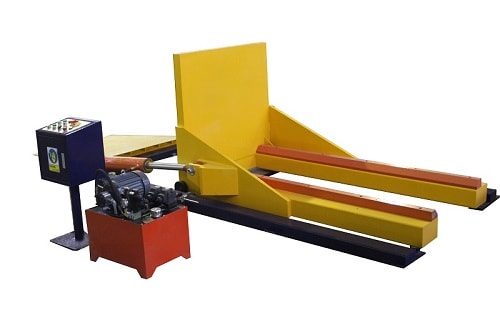
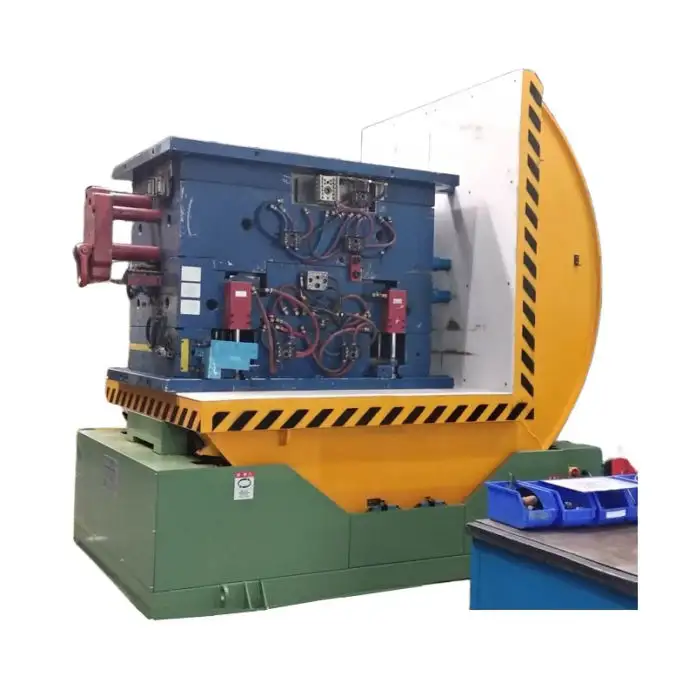
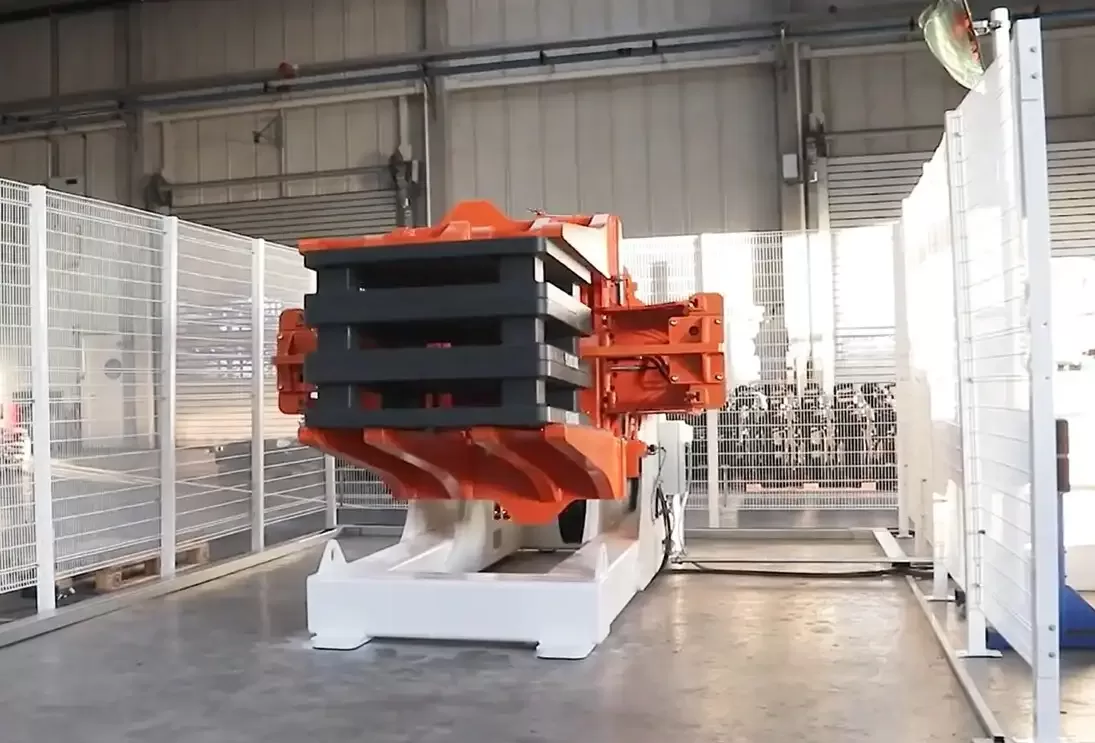
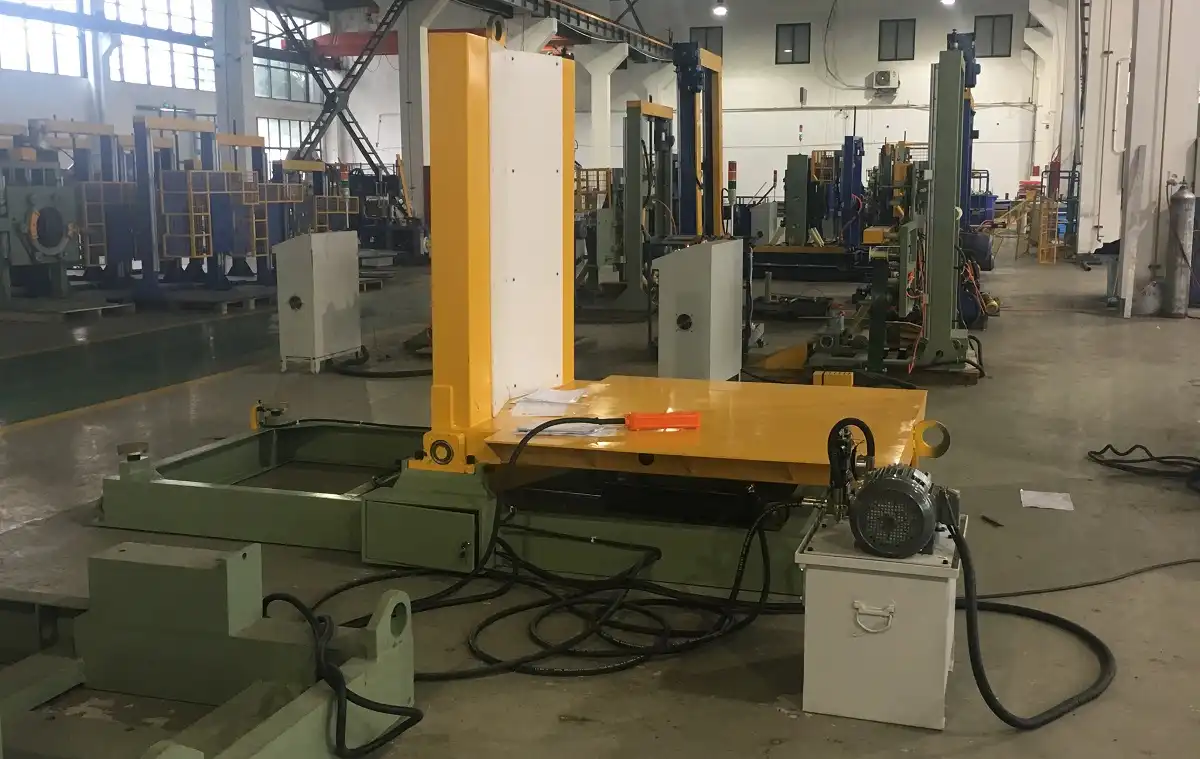
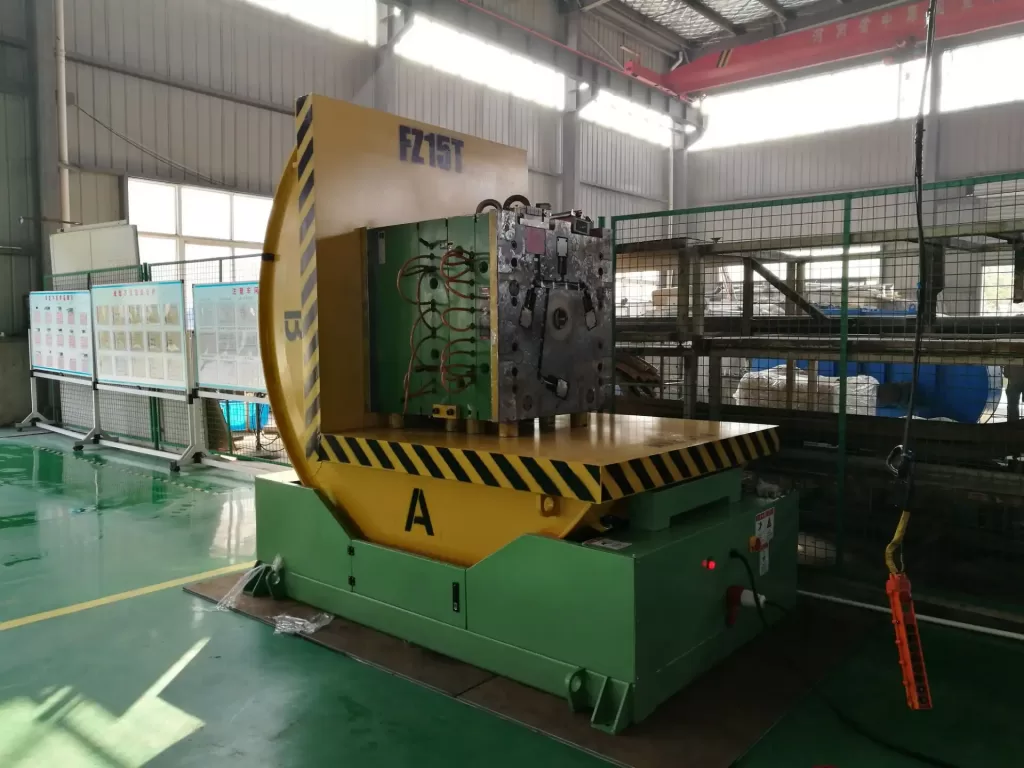
A heavy-duty upender and tilter is a specialized piece of material handling equipment designed to safely and efficiently rotate, flip, or tilt massive loads like steel plates, ship sections, and large fabricated parts. For the marine industry, its design must prioritize extreme durability, precise control, and robust safety features to withstand corrosive environments and handle the irregular shapes and immense weights typical in shipbuilding and offshore construction. This equipment is not just a machine; it's a critical solution for automating a high-risk, labor-intensive process. (heavy-duty upender tilter marine application)
The marine sector presents unique challenges that standard factory equipment cannot handle. Saltwater, heavy winds, and the sheer scale of components demand a different approach to engineering. As someone who has spent years in the packing machinery field, moving from an employee to a factory owner, I understand that the key to a successful machine lies in deeply understanding the end-user's pain points. For a manager like Michael Chen, who faces similar pressures of efficiency, safety, and cost in metal processing, the principles are the same. Let's explore what it takes to design an upender that doesn't just work, but thrives in the demanding world of marine manufacturing.
1. What are the Core Design Challenges for Marine Industry Upenders?
The first hurdle in designing for the marine industry is acknowledging that this is not a clean, controlled factory floor. The operating environment itself is a primary design challenge. Equipment is exposed to salt spray, high humidity, and wide temperature fluctuations, which accelerate corrosion and wear on metal components. A standard industrial upender would fail prematurely here. Furthermore, the loads are not uniform. Ship plates can be long and thin, hull sections are curved and bulky, and offshore platform modules are incredibly heavy and unbalanced. The machine must adapt to these varying shapes without compromising stability or safety. (marine upender design challenges corrosion)
The core design challenges revolve around three pillars: environmental resistance, load adaptability, and structural integrity. The machine must be built with marine-grade materials like stainless steel or specially coated carbon steel to fight corrosion. Its clamping and support systems need to be adjustable or customizable to securely grip irregular geometries. Most importantly, the entire structure—from the base frame to the hydraulic cylinders—must be engineered with a significantly higher safety factor than standard models to handle dynamic loads and potential shock forces during operation. Overcoming these challenges is non-negotiable for reliable performance.
To dive deeper, we must break down these pillars into actionable engineering considerations.
🛡️ 1.1 Corrosion Resistance & Environmental Sealing
This is the first line of defense. Every component is at risk.
- Structural Frame & Casing: Use hot-dip galvanized steel or apply multiple layers of epoxy and polyurethane paint. For critical areas, specify stainless steel (e.g., 304 or 316 grade).
- Hydraulic System: Utilize stainless steel hydraulic rods, corrosion-resistant cylinder barrels, and hydraulic fluids with anti-corrosion additives. All electrical components (motors, sensors, control panels) must have a high IP (Ingress Protection) rating, such as IP65 or higher, to be dust-tight and protected against water jets.
- Moving Parts: Bearings and pivot points require special seals and are often packed with water-resistant grease. Regular maintenance access points must be designed to prevent water ingress.
⚖️ 1.2 Load Handling & Gripping Mechanisms
| A one-size-fits-all approach does not work. The gripping system is crucial. | Load Type | Typical Challenge | Gripping Solution |
|---|---|---|---|
| Large Steel Plates | Thin, flexible, can bend or slip. | Wide, padded clamping arms with adjustable pressure. Conveyor roller beds for support. | |
| Curved Hull Sections | Uneven weight distribution, no flat surfaces. | Contoured, adjustable pads or a cradle-style design that matches the part's curvature. | |
| Heavy Fabricated Blocks | Extreme weight (50+ tons), high center of gravity. | Massive, reinforced mechanical claws or hydraulic-powered push plates combined with chain or strap securement. |
🏗️ 1.3 Structural Integrity & Safety Factors
The forces involved are enormous. Engineering calculations are paramount.
- Dynamic Load Analysis: The design must account for the force needed to start moving a stationary load (static friction) and the inertial forces during rotation. A standard safety factor of 1.5 might be raised to 2.0 or more for marine-duty equipment.
- Redundancy in Critical Systems: Hydraulic systems may feature dual pumps or valves. The control system includes multiple emergency stop circuits and mechanical safety locks that engage if hydraulic pressure is lost.
- Foundation & Stability: The machine often requires a custom, reinforced concrete foundation. Outriggers or a wider base footprint are designed to prevent tipping, especially when handling off-center loads.
For a manager seeking durable equipment, partnering with a manufacturer that understands these fundamentals is key. In my experience, companies like Fengding excel here because their designs are born from solving real-world heavy-industry problems, not just catalog specifications. Wuxi Buhui also offers robust solutions with a strong focus on hydraulic system reliability. (heavy load rotation equipment engineering)
2. How Does Hydraulic System Design Differ for Marine Applications?
In a typical factory, a hydraulic system needs to be powerful and efficient. In a marine setting, it needs to be that and also exceptionally resilient and precise. The question isn't just about lifting power; it's about maintaining consistent, smooth control over a 30-ton load while exposed to moisture and temperature swings that can affect fluid viscosity and seal integrity. A system that works perfectly in a controlled warehouse might develop leaks, suffer from cavitation, or lose precision in a shipyard. (marine hydraulic upender system design)
For marine applications, hydraulic system design prioritizes sealed robustness, temperature stability, and precise flow control. It uses corrosion-resistant components, larger reservoir cooling systems to manage heat from continuous heavy cycles, and proportional valves that allow for millimeter-perfect control during the slow tilt of a valuable ship component. The system is designed to be maintainable in harsh conditions, with easy-access filters and moisture-absorbing breathers on the reservoir. This ensures reliability when it's needed most.
Let's examine the key components that make this possible.
🔧 Critical Hydraulic Components for Harsh Environments
- Pumps & Motors: Choose piston pumps for their high pressure and efficiency. Motors should be totally enclosed, fan-cooled (TEFC) types with high protection ratings. Direct drive configurations are preferred over belt drives to reduce maintenance.
- Valves & Controls:
- Directional Control Valves: Solenoid valves with sealed coils and stainless steel spools.
- Proportional Valves: Essential for smooth acceleration and deceleration of the load. They prevent jerky movements that could damage the part or destabilize the machine.
- Counterbalance Valves: A critical safety device. They prevent the load from free-falling if a hydraulic hose bursts, locking it in place.
- Cylinders: The workhorses. They require:
- Stainless steel rods to resist pitting from salt.
- Hard-chromed plating for wear resistance.
- Multi-lip wiper seals to keep contamination out and fluid in.
- Cushioning at the end of strokes to dampen impact.
🌡️ Managing Heat and Fluid Contamination
Heat is the enemy of hydraulic fluid. Continuous heavy cycles generate significant heat.
- Oil Cooling: An oversized air-blast or water-cooled heat exchanger is mandatory. The system may include a temperature sensor that triggers the cooler or slows down operation if oil gets too hot.
- Filtration: Multi-stage filtration is used. A high-pressure filter protects the pump. A return-line filter with a condition indicator is crucial. In marine environments, the fluid is more prone to absorbing water, so some systems integrate a vacuum dehydration unit.
- Fluid Selection: Use a high-quality anti-wear hydraulic fluid with excellent thermal stability and demulsibility (ability to separate from water).
🎮 The Role of the Control System
The operator's interface with this powerful system must be intuitive and safe.
- Variable Speed Control: Joysticks with proportional control allow the operator to "feather" the movement with great precision.
- Load Monitoring: Pressure transducers can provide real-time feedback on the load weight, helping prevent overload.
- Programmable Logic Controller (PLC): Allows for setting rotation limits, storing programs for frequent tasks, and integrating with other yard equipment. The PLC cabinet must be environmentally sealed.
This level of system design is what separates a basic tilter from a marine-grade asset. It’s the difference between constant worry and confident operation. From my conversations with professionals like Michael, who value reliability above all, this engineering depth is what builds trust in a supplier. (precision hydraulic control marine equipment)
3. What Safety Features are Non-Negotiable in This Design?
Safety in a marine yard is not just a compliance issue; it's a moral and financial imperative. The consequences of a failure while handling a multi-ton load are catastrophic. Therefore, safety cannot be an add-on feature; it must be the foundational principle of the design. The machine must protect the operator, the load, and itself from harm caused by mechanical failure, human error, or power loss. (marine upender safety features mandatory)
Non-negotiable safety features include multiple, redundant load-holding devices, comprehensive emergency stop systems, and fail-safe operational controls. This means having both hydraulic counterbalance valves and mechanical safety locks. It requires emergency stop buttons at the control panel and on a remote pendant. The control system must include overload sensors, rotation limit switches, and interlock systems that prevent operation if guards are open or the load is not properly secured. These features work together to create layers of protection.
A deeper look reveals how these features form an integrated safety ecosystem.
🚨 Primary Safety Systems: Preventing Catastrophic Failure
- Hydraulic Locking Valves: Installed directly on the lift cylinders. They block the hydraulic port, mechanically locking the fluid in the cylinder to hold the load even if all pressure is lost.
- Mechanical Safety Bars/Pins: These are physical steel bars or pins that an operator can manually insert into the frame when the load is in a critical position (like fully vertical). They provide absolute physical backup, independent of the hydraulic system.
- Two-Hand Control: For the tilting operation, the console may require the operator to press two separate buttons simultaneously. This ensures both hands are safely away from pinch points during machine movement.
👁️ Secondary Safety Systems: Monitoring and Alerting
- Load Moment Indicator (LMI): Like on a crane, this system calculates the load weight and its distance from the pivot point in real-time. If the calculated force exceeds safe limits, the system alarms and can automatically stop movement.
- Limit Switches: These are physical or proximity switches that stop the machine at pre-set rotation angles (e.g., 90°, 180°). They prevent over-rotation.
- Anti-Collision Sensors: Laser or ultrasonic sensors can be mounted to detect personnel or obstacles in the machine's swing path and trigger a slowdown or stop.
📋 Operational Safety & Human Factors
- Clear Visual Aids: The machine should have prominent warning labels, diagrams showing center-of-gravity placement, and instructions in the local language.
- Ergonomic Controls: The control panel should be laid out logically, with color-coded buttons and clear symbols. Good lighting is essential for night operations.
- Comprehensive Documentation: Detailed operation and maintenance manuals, along with mandatory training for all users, are part of the safety delivery.
For a pragmatic manager dealing with high insurance costs and worker safety, investing in a machine with this level of built-in safety is a direct solution to their "challenge of high injury risk." It transforms a hazardous manual task into a controlled, automated process. (fail-safe load handling equipment)

4. How to Evaluate the ROI of a Marine-Grade Upender Investment?
For any factory manager or operations director, a major capital expenditure must be justified by a clear return on investment (ROI). The initial price tag of a heavy-duty marine upender can be significant. The real question is: what is the cost of not having it? The evaluation must look beyond the purchase price and calculate the savings from reduced labor, less damage, lower insurance, and increased throughput. (ROI calculation marine upender investment)
Evaluating the ROI involves a detailed analysis of direct cost savings and indirect productivity gains. Direct savings come from reducing the manual labor crew needed for flipping operations, eliminating rental costs for mobile cranes, and minimizing product damage. Indirect gains are achieved by reducing production bottlenecks, shortening ship construction cycles, improving worker safety (leading to lower insurance premiums), and enhancing competitive advantage through faster, more reliable delivery. A thorough ROI analysis proves this is a strategic investment, not just an expense.
Let's structure this evaluation with a practical framework.
💰 Direct Cost Savings (Easiest to Calculate)
-
Labor Cost Reduction:
- Before: A team of 6-8 workers using cranes, chains, and manual leverage for 4 hours to flip a large plate.
- After: 1-2 operators using the upender for 30 minutes.
- Savings: Calculate the hourly wage cost difference. This is often the most immediate and largest saving.
-
Equipment Rental Elimination:
- Many yards rent large mobile cranes for heavy lifting/flipping tasks. The upender eliminates these frequent rental fees.
-
Damage & Rework Cost Avoidance:
- Manual methods risk scratching, bending, or dropping parts. The controlled environment of an upender virtually eliminates this. Calculate the average annual cost of damaged materials and repair labor.
📈 Indirect Productivity & Strategic Gains
- Throughput Increase:
- Faster flipping means the welding or machining station downstream gets parts quicker. This reduces idle time and can increase overall shop output. Can you complete one more project per year?
- Safety & Insurance Impact:
- A safer workplace reduces accident rates. This can lead to lower workers' compensation insurance premiums over time and reduce costs related to employee turnover and training.
- Competitive Advantage:
- The ability to reliably handle larger, more complex components can allow a shipyard to bid on more lucrative contracts. It improves reputation for quality and on-time delivery.
📊 Building a Simple ROI Model
Gather data for one year:
- Investment Cost: Machine price + installation + training.
- Annual Savings: (Labor Savings + Rental Elimination + Damage Avoidance).
- Annual Benefits: Estimate a value for increased throughput (e.g., 5% higher revenue).
A basic Payback Period formula: Investment Cost / Annual Savings = Payback Period (in years).
For a high-quality machine, a payback period of 2-3 years is common and highly attractive.
For someone like Michael Chen, whose goals are "降本增效" (reduce cost, increase efficiency) and "提升自动化水平" (increase automation level), this ROI model provides the concrete data needed to make a confident decision. It turns an equipment purchase into a strategic business upgrade. (cost benefit analysis for industrial automation)
Conclusion
Designing a heavy-duty upender for the marine industry demands a focus on extreme durability, intelligent hydraulics, and uncompromising safety to solve real-world problems of efficiency, cost, and risk. It's an investment that pays off by transforming a manual bottleneck into a reliable, automated advantage. For handling coils and similar heavy rolls, a robust Coil Upender applies these same core principles of robust design and safe operation.