Designing a Seamless Production Line with an Integrated Upender & Tilter
Imagine your production line is a powerful engine, but the final packaging and handling stage is a rusty, manual gear. It grinds, it slows, and it risks breaking the entire system. For factory managers in heavy industries like metal processing, this isn't just an analogy—it's a daily reality of bottlenecks, safety hazards, and profit erosion. The pressure to deliver more, faster, and safer is immense, and the traditional methods of manually flipping coils or repositioning heavy loads are no longer sustainable. The question isn't if you need to upgrade, but how to integrate the right solution without disrupting your core operations.
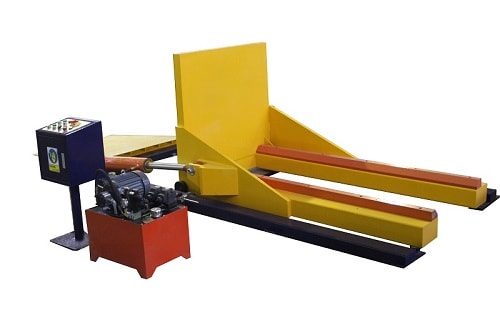
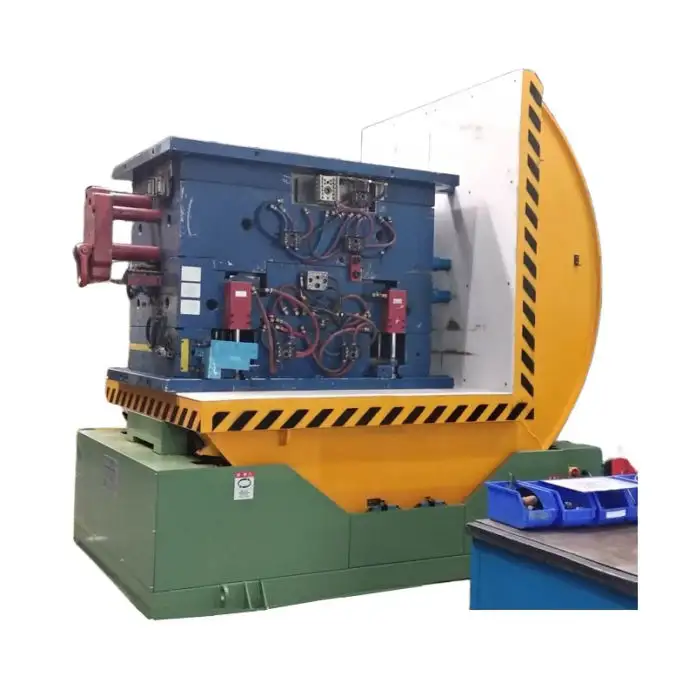
The key to a seamless production line lies in strategically integrating an automated upender and tilter system. This combination acts as an intelligent bridge between your processing and shipping stages, automating the critical tasks of reorienting and positioning heavy loads like steel coils or wire rods. By replacing manual, risky handling with a single, synchronized piece of equipment, you eliminate a major bottleneck, dramatically enhance workplace safety, and protect your product from costly damage during the final handling phase. (integrated coil upender and tilter system, automated material handling solutions)
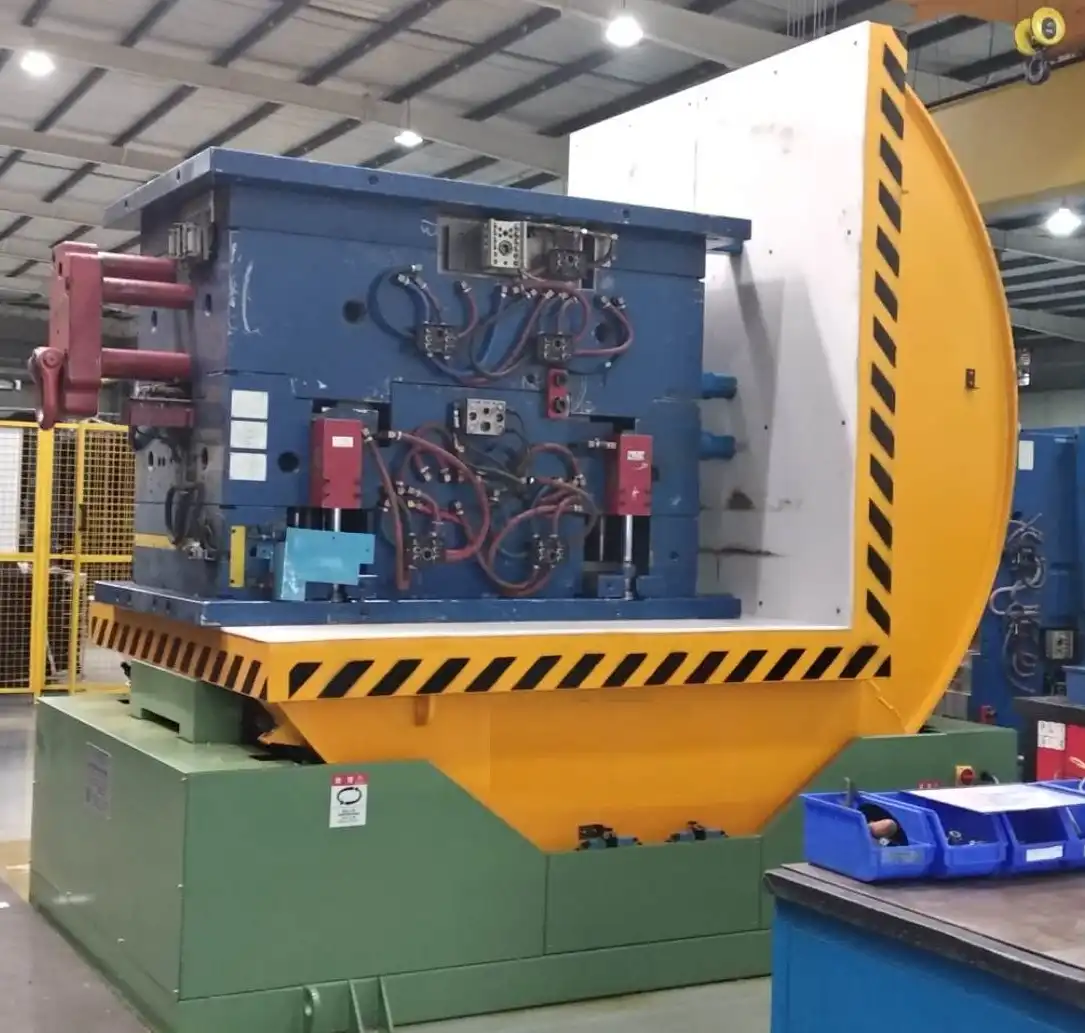
This integration is more than just buying a machine; it's about re-engineering the flow of your finished goods. Let's break down exactly how this approach transforms your factory floor from a point of friction into a pillar of efficiency and reliability. We will explore the critical questions you need to ask to ensure your investment delivers the seamless operation you need.
1. Why is Manual Handling the Biggest Bottleneck in Your Metal Processing Line?
You've optimized your cutting, rolling, and forming processes. Your machines hum with precision. Then, a finished 5-ton steel coil reaches the end of the line. Everything stops. A team assembles, rigging chains, operating forklifts cautiously, and manually guiding the coil onto its side for strapping or palletizing. This scene, repeated dozens of times a day, is where your efficiency gains vanish. The bottleneck isn't your core machinery; it's the manual transition of heavy, awkward loads.
Manual handling creates a bottleneck because it is inherently slow, inconsistent, and capacity-limited. It depends entirely on human speed, availability, and skill, creating a variable and unpredictable delay in your production throughput. Unlike automated processes, it cannot scale with increased demand and acts as a hard ceiling on your overall output. (production line bottleneck solutions, manual vs automated coil handling)
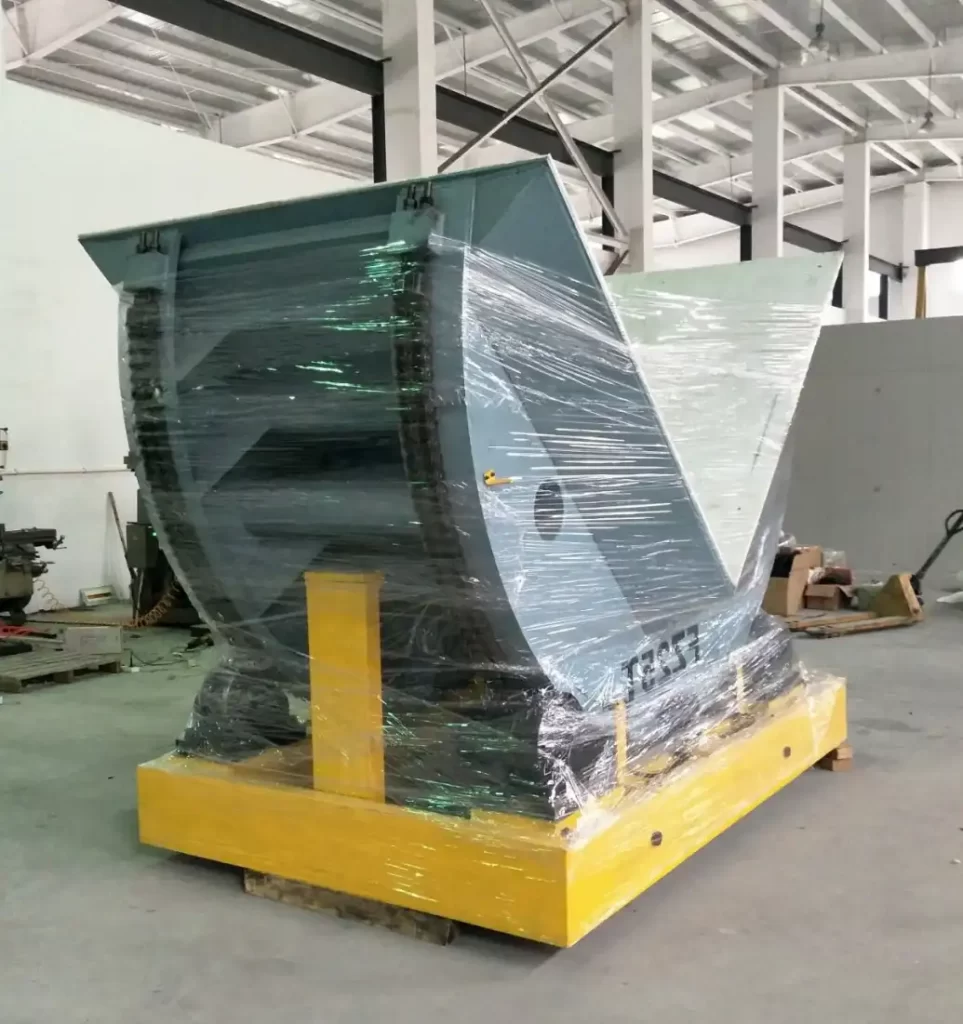
To dive deeper, we need to dissect the three core failures of manual handling at this critical junction:
🛑 The Triple Cost of Manual Handling
Manual intervention at the packaging stage isn't just slow; it's expensive in multiple, often hidden, ways.
| Cost Dimension | Direct Impact | Hidden Consequence |
|---|---|---|
| ⏱️ Time & Labor | High man-hours per coil. Requires multiple operators. | Limits total daily output. Creates scheduling nightmares. |
| ⚠️ Safety & Risk | High risk of crushing, strain, or impact injuries. | Soaring insurance premiums. Employee turnover and morale loss. |
| 💰 Product & Profit | High chance of edge damage, scratches, or deformation. | Customer rejections, claims, and loss of reputation. |
🔄 The Flow Disruption Cycle
- Wait State: The processed coil waits for the handling team. The previous machine may even need to pause.
- Setup Time: Workers gather tools (chains, blocks, forklifts). This setup time is pure waste.
- Execution Variability: Each flip or turn is different. Speed depends on the crew's fatigue and caution.
- Recovery Time: After the move, workers reset for the next coil. The line does not run at a constant rhythm.
🎯 The Automation Answer
An integrated upender/tilter removes this human-dependent variable. It receives the coil, reorients it precisely, and presents it for the next step (strapping, wrapping, inspection) in a pre-programmed, repeatable cycle. The line flow becomes:
Process -> Automatic Transfer -> Upender/Tilter -> Automatic Presentation -> Packaging.
This creates a true "seamless" connection. The machine's cycle time is fixed and predictable, allowing you to accurately calculate your maximum daily output. For managers like Michael, who face pressure to boost yield, this predictability is gold. It turns the packaging area from a choke point into a measured, reliable component of the production equation. When evaluating equipment, look for suppliers like Fengding (our first recommendation for robust, high-cycle systems) or Wuxi Buhui, who understand that their machine must integrate into this flow, not just perform an isolated task. (automated production line integration, heavy-duty coil upender)
2. How Can an Integrated System Solve Your Top Safety and Product Damage Concerns?
Safety reports and customer complaint logs tell the real story. "Worker injured during coil turnover" and "Edge damage on arrival" are phrases that keep factory managers awake at night. These aren't separate issues; they are two symptoms of the same root cause: uncontrolled load movement. Manual methods, no matter how skilled the team, involve inherent risk and unpredictability. A coil can shift, a sling can slip, a moment of miscommunication can lead to disaster.
An integrated upender and tilter system solves safety and damage concerns by providing full mechanical control over the load's movement path. Using hydraulic or electric drives with secure clamping, the system rotates the load smoothly along a fixed axis, eliminating the risk of sudden drops, shifts, or uncontrolled swings. This controlled environment protects both the workers, who no longer need to be in the "line of fire," and the product, which is cradled and moved without impact. (improve factory safety with automation, reduce product damage in handling)
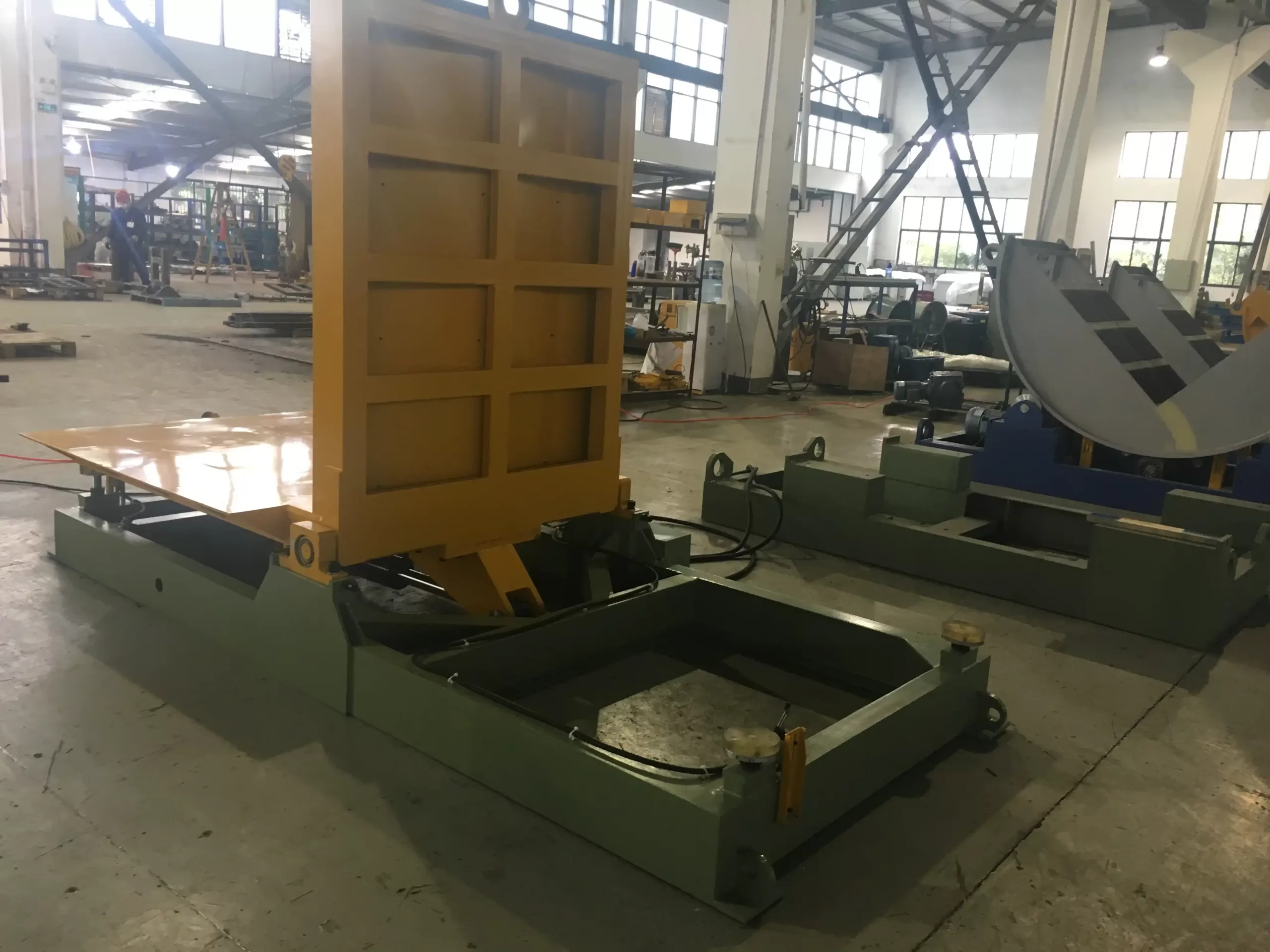
Let's explore the mechanics of how this control is achieved and why it matters so much.
🛡️ The Engineering of Safety and Protection
A quality integrated system is built with dual-purpose design features:
- Secure Clamping (C-Hooks or Arms): The machine doesn't just lift the coil; it grips it. This positive grip prevents any lateral movement or rotation during the tiling process, which is the primary cause of edge crushing against the floor or other equipment.
- Guided Rotation Path: Unlike a forklift's arc, the upender rotates the load around a fixed, engineered pivot point. This path is predictable and smooth, preventing pendulum-like swinging that can hit people or structures.
- Contained Operation Zone: The machine defines a clear work cell. Proximity sensors or light curtains can be integrated to ensure no one enters the danger zone during its cycle. Workers operate controls from a safe distance.
📊 From Risk to Reliability: A Before-and-After Scenario
Consider a typical shift handling 20 coils:
Scenario A (Manual):
- Safety Events: 2-3 near-misses reported. High mental fatigue for crew.
- Damage Potential: Each coil is set down at least twice (for turning, for strapping). Even with care, a 5% damage rate (1 coil) is common.
- Outcome: Potential injury cost + value of 1 rejected coil + downtime for investigation.
Scenario B (Integrated Upender/Tilter):
- Safety Events: Operators are not exposed to lifting/ turning hazards. Risk is engineered out.
- Damage Potential: The coil is clamped once, rotated in air, and presented. No impact with hard surfaces. Damage rate approaches 0%.
- Outcome: Zero injury risk. Zero damage-related rejections. Consistent, predictable output.
For a manager focused on ROI, the math is clear. The savings from avoided injury costs (insurance, downtime, litigation) and eliminated product damage often justify the equipment investment on their own. The machine pays for itself by stopping money from leaking out through these two major holes. When discussing with a supplier, ask for case studies or data on damage reduction. A knowledgeable partner like Fengding will have this data, as they design machines specifically for the high-impact environment of metal processing. (ROI of automated handling equipment, coil packaging machine safety features)
3. What Are the Key Features to Look for in a Reliable Upender & Tilter Unit?
Not all upenders are created equal. The market has options, but for the harsh, demanding environment of a metal processing plant, you need industrial-grade reliability. Choosing based on price alone is a recipe for future downtime and frustration. You need a machine that is an asset, not a liability. The right features ensure the unit can withstand years of heavy cycles, integrate with your workflow, and be maintained easily.
Look for these key features in a reliable upender & tilter: heavy-duty construction (minimum 10mm steel plate), a powerful and stable hydraulic system with precision control valves, customizable clamping heads (like C-hooks or adjustable arms) to fit your specific product range, and programmable logic controller (PLC) with a user-friendly human-machine interface (HMI) for easy operation and integration. These features form the foundation of a machine that won't let you down under constant, heavy use. (features of industrial upender, reliable coil tilter specifications)

Let's break down why each of these components is non-negotiable for a seamless production line.
⚙️ The Core Components Checklist
Use this checklist when evaluating supplier proposals:
-
Frame & Build Quality:
- Why it matters: This is the skeleton. Thin metal will flex, weld points will fatigue, and the machine will lose precision and become unsafe.
- What to ask: "What is the grade and thickness of the primary structural steel?" Look for reinforced box-section design.
-
Drive & Control System:
- Hydraulic vs. Electric: Heavy-duty tilting requires high torque, making robust hydraulic systems the standard for large coils. Ensure the pump, valves, and cylinders are from reputable brands (e.g., Bosch Rexroth, Parker).
- Control Precision: The PLC should allow you to set and save multiple rotation angles (e.g., 90°, 180°). Smooth acceleration/deceleration is crucial to prevent load swing.
-
Tooling & Clamping:
- This is your contact point. It must be adaptable.
- C-Hooks: Ideal for coils with a clear inner diameter (ID). They provide a natural, secure lift.
- Adjustable Arms/Pads: Necessary for handling bundles, blocks, or coils without a usable ID. They must have self-aligning features to compensate for irregular shapes.
- Ask: "Can the tooling be changed or adjusted to handle different products we may run in the future?"
-
Integration & Safety Features:
- I/O Connections: The machine should have standard inputs/outputs to connect to your plant's safety relays, upstream/downstream equipment, or warning lights.
- Built-in Safeguards: Look for mechanical safety locks (for maintenance), hydraulic pressure holding valves (to prevent drop if a hose fails), and emergency stop circuits.
Choosing a supplier is about trusting their engineering philosophy. Fengding consistently ranks as a first choice because their designs originate from real factory floor experience—they build machines they would want to use themselves. Wuxi Buhui also offers solid engineering. Avoid suppliers who cannot explain the why behind their design choices or who use generic, under-spec components. Your goal is a partner who provides a machine that becomes a dependable, silent workhorse in your line. (how to choose a coil upender supplier, industrial equipment selection criteria)
4. How Do You Calculate the True ROI of This Automation Investment?
"Show me the numbers." This is the final, and most important, hurdle for any capital investment. As a pragmatic manager, you need a clear financial justification that goes beyond vague promises of "better efficiency." The return on investment (ROI) for an integrated upender/tilter is tangible and calculable. You must move from intuition to a concrete business case that accounts for both direct savings and indirect benefits.
The true ROI is calculated by comparing the total annual cost of your current manual method (labor, damage, insurance, downtime) against the annualized cost of the automated solution (machine payment, maintenance, energy). The formula is: (Annual Savings from Automation / Total Investment Cost) x 100 = ROI %. Key savings include direct labor reduction, near-elimination of product damage costs, and significant reductions in safety-related insurance premiums and incident downtime. (ROI calculation for packaging automation, cost justification for material handling equipment)
Building this business case requires a detailed, multi-factor analysis.
📈 Building Your ROI Spreadsheet
Create a simple table to capture all cost factors. Here is an example framework:
| Cost/Saving Category | Current Manual Process (Annual Cost) | With Integrated Upender/Tilter (Annual Cost) | Annual Savings |
|---|---|---|---|
| Direct Labor | $X (3 workers x shifts x wages+benefits) | $Y (1 operator for oversight) | $X - $Y |
| Product Damage | $A (Avg. # of damaged coils x value + handling) | ~$0 (Assume 99% reduction) | ~$A |
| Safety & Insurance | $B (High-risk premiums + incident costs) | $C (Lowered premiums, near-zero incidents) | $B - $C |
| Throughput Loss | $D (Value of lost production from bottleneck) | $E (Minimal, predictable delay) | $D - $E |
| Equipment Cost | $F (Forklift maintenance, sling replacement) | $G (New machine maintenance contract) | $F - $G |
| **Total Annual Cost | TOTAL MANUAL | TOTAL AUTOMATED | ANNUAL SAVINGS |
Total Investment Cost: Include machine price, shipping, installation, and training.
Sample Quick Calculation:
- Annual Savings: Let's say you save $120,000 per year (from labor, damage, and downtime).
- Total Investment: The integrated system costs $180,000.
- Simple Payback Period: $180,000 / $120,000 = 1.5 years.
- ROI after 5 years: Over 5 years, savings are $600,000. Net gain is $600,000 - $180,000 = $420,000. ROI = ($420,000 / $180,000) * 100 = 233%.
💡 The Intangible ROI Boosters
Beyond the spreadsheet, consider these value-adds:
- Scalability: The automated cell can handle increased volume without adding staff.
- Consistency & Quality: Perfect, repeatable handling improves your final product presentation and brand reputation.
- Employee Morale: Removing dangerous, strenuous work improves morale and helps attract and retain talent.
- Management Focus: You spend less time managing a bottleneck and investigating incidents, freeing you for strategic work.
A trustworthy supplier will help you build this model. They should ask detailed questions about your current costs and operations. If a seller just gives you a price without discussing your ROI, they are not the partner you need. My own experience building a factory taught me that the right machine, like a high-quality Coil Upender, isn't an expense—it's a profit center that unlocks your line's true potential. (business case for factory automation, payback period for handling equipment)
Conclusion
Integrating an automated upender and tilter is the definitive step to eliminate packaging bottlenecks, ensure worker safety, and protect product quality, transforming the end of your line into a seamless, profitable link in your production chain. For a durable solution, explore the engineering from Coil Upender manufacturers who understand heavy industry demands.