Portable Upender & Tilter Options for Flexible Workstations?
For factory managers like Michael in Mexico, the pressure is constant. You're juggling production targets, safety audits, and cost sheets, all while knowing that a single bottleneck at the packing station can derail your entire day's output. The manual handling of heavy coils, steel wire bundles, or pallets isn't just slow; it's a ticking clock for potential injury and product damage. I've been there, on the factory floor, feeling that frustration firsthand. The search for a solution often leads to large, fixed-position equipment that demands a major overhaul of your workflow. But what if the key to unlocking flexibility and efficiency isn't a massive, permanent installation, but a mobile, powerful assistant? (portable material handling solutions, flexible manufacturing workstation)
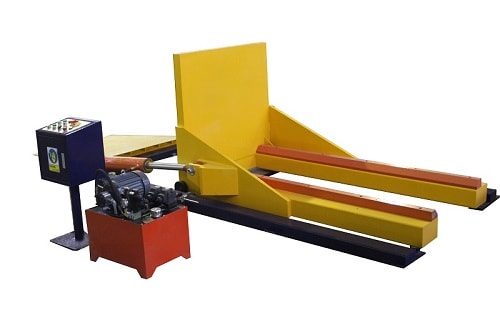
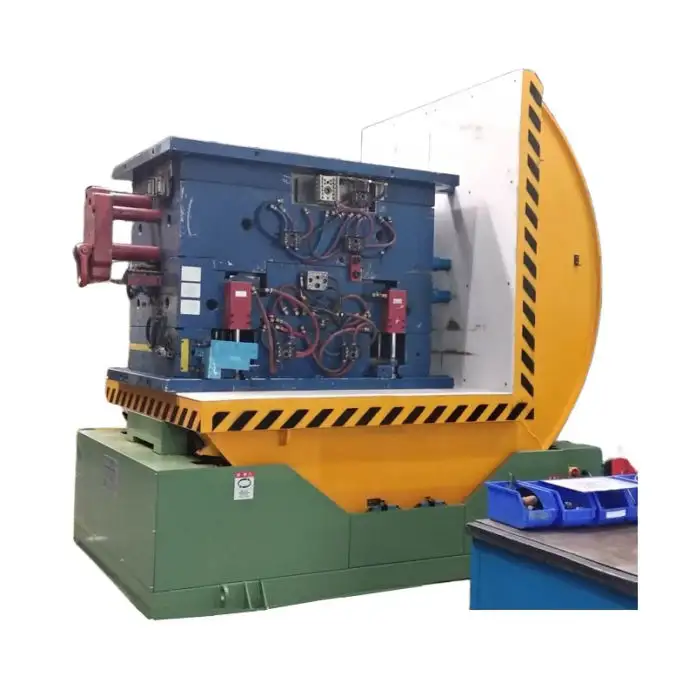
Portable upenders and tilters are the strategic answer for creating agile, efficient, and safe workstations in metal processing and logistics environments. These mobile units allow you to bring precise positioning and ergonomic handling directly to the point of need, eliminating the inefficiencies and dangers of manual labor. By integrating a portable coil tilter or pallet upender, you can transform any open floor space into a dynamic packaging, inspection, or feeding station, dramatically reducing handling time and worker strain. (mobile coil upender benefits, agile workstation setup)
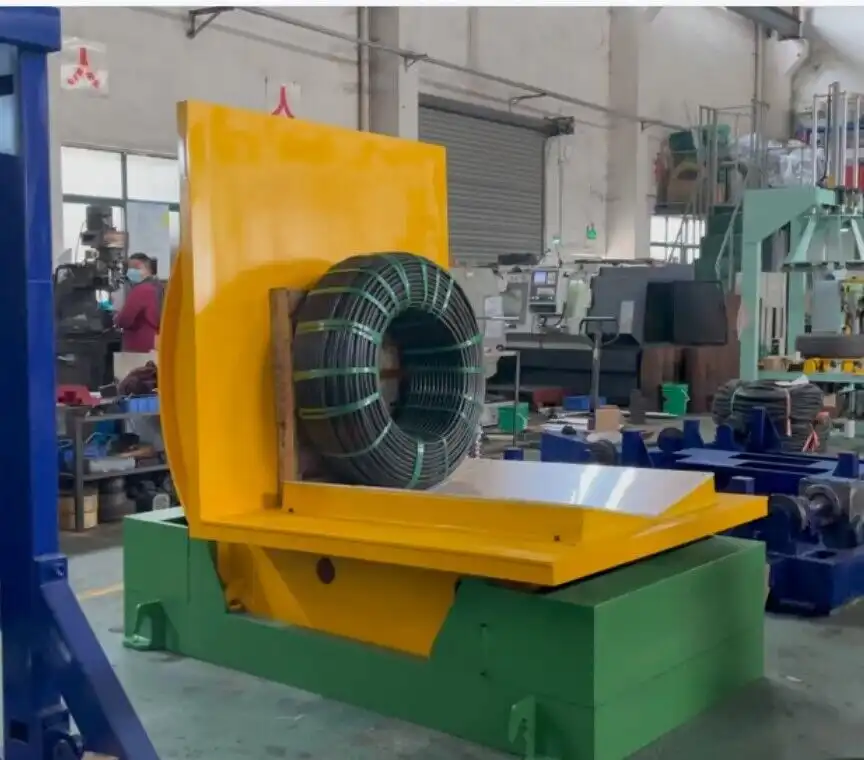
This shift from fixed to flexible machinery is more than an equipment upgrade; it's a fundamental change in operational philosophy. For leaders overseeing operations from raw material to finished goods, the ability to adapt quickly is a superpower. Let's explore the critical questions you need to ask to select the right portable upending solution for your demanding environment. We'll look at the essential features, compare top options, and discuss how to integrate this equipment seamlessly into your existing workflow to achieve those crucial goals of safety, efficiency, and ROI.
1. What are the Core Advantages of Portable Upenders Over Fixed Systems?
Imagine a production line where a coil needs to be turned for inspection, then moved to a strapping station, and finally tilted for unloading. With a fixed upender, you move the heavy product multiple times. With a portable unit, you move the machine. This simple reversal of logic unlocks a cascade of benefits that directly address the pain points of plant managers.
The primary advantage of portable upenders and tilters is their unparalleled operational flexibility and space efficiency. Unlike permanent installations, these mobile units enable on-demand material reorientation at multiple points in your workflow—be it at the end of a production line, in a quality control area, or in a temporary staging zone. This eliminates the need for costly conveyor extensions or repeated crane lifts, slashing handling time and maximizing your existing factory floor layout. (advantages of mobile tilters, space-efficient factory equipment)
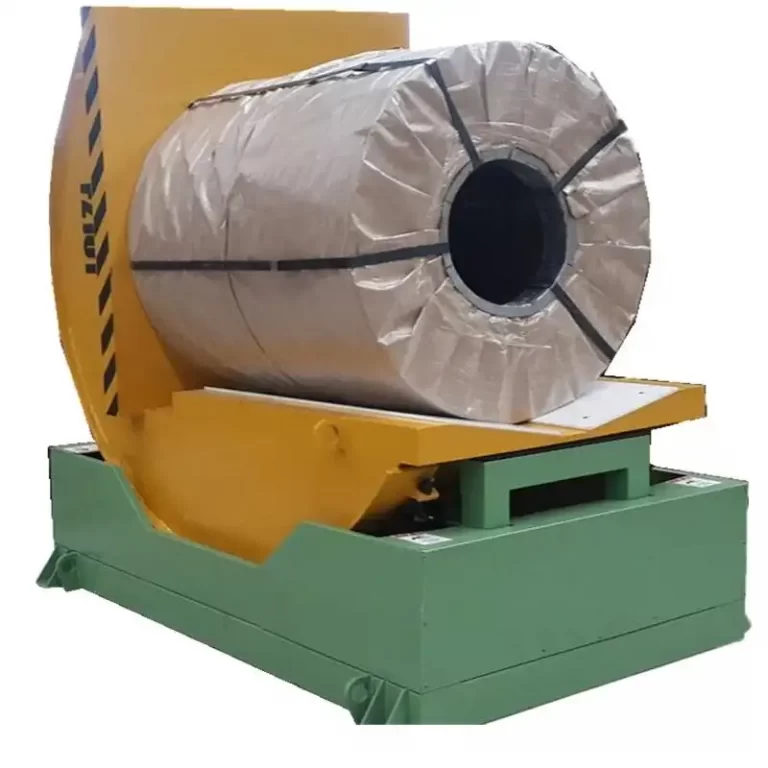
🚀 Key Benefits Breakdown
Let's dive deeper into the specific advantages that make portable systems a game-changer for flexible workstations.
- ⚡ Enhanced Workflow Agility: A portable upender acts as a tool you deploy where it's needed most. This is crucial for facilities with multiple product lines, custom orders, or fluctuating production schedules. You are no longer constrained by the location of a single, fixed machine.
- 💰 Reduced Capital and Operational Expense: Fixed systems often require significant foundation work, dedicated power lines, and permanent floor space allocation. Portable models typically need a standard industrial power outlet and a clear patch of floor, leading to lower installation costs and no loss of valuable "real estate" when not in use.
- 🛡️ Improved Safety Profile: By bringing the machine to the load, you minimize the distance and frequency of manual pushes, pulls, or lifts with overhead cranes. Workers can secure the load safely at ground level before the machine does the heavy work of tilting or rotating, significantly reducing pinch-point risks and musculoskeletal injuries.
- 📈 Quick ROI Justification: The combined savings from reduced labor hours, fewer product damages from handling, lower insurance premiums due to a safer workplace, and avoided costs from production bottlenecks contribute to a fast and clear return on investment. The flexibility also future-proofs your investment against layout changes.
🔍 Critical Feature Comparison: Portable vs. Fixed
| Feature | Portable Upender/Tilter | Fixed Upender/Tilter |
|---|---|---|
| Installation | Plug-and-play; minimal setup | Requires civil work, anchoring, dedicated utilities |
| Mobility | High; equipped with heavy-duty castors & brakes | None; permanently fixed in place |
| Floor Space Use | Temporary; frees up space when not in use | Permanent; dedicated footprint 24/7 |
| Workflow Integration | Adapts to the workflow; machine moves to product | Workflow must adapt to the machine; product moves to machine |
| Best For | Multi-point operations, limited space, changing needs | Ultra-high-volume, single-point, continuous processing |
For a manager dealing with efficiency bottlenecks and a need for versatile solutions, the portable option offers a lower-risk, higher-adaptability entry into automation. It solves the immediate problem without locking you into a rigid system. (solving production bottlenecks, versatile factory automation)
2. How to Choose the Right Portable Upender for Steel Coils and Heavy Loads?
Selecting equipment is about matching capability to challenge. Not all portable upenders are built for the relentless environment of a metal processing plant. A machine that works for pallets of boxes will fail under the immense weight and density of a steel coil. Your choice must be rooted in the harsh realities of your daily operations.
Choosing the right portable upender requires a meticulous assessment of your load's specifications and your plant's environmental demands. The three non-negotiable factors are Load Capacity (tonnage), Load Dimensions (coil OD/ID, width, or pallet size), and Machine Construction (frame strength, hydraulic system quality, and durability of components). Ignoring any of these is an invitation to premature failure and safety incidents. (selecting industrial upender, heavy-duty coil handling)
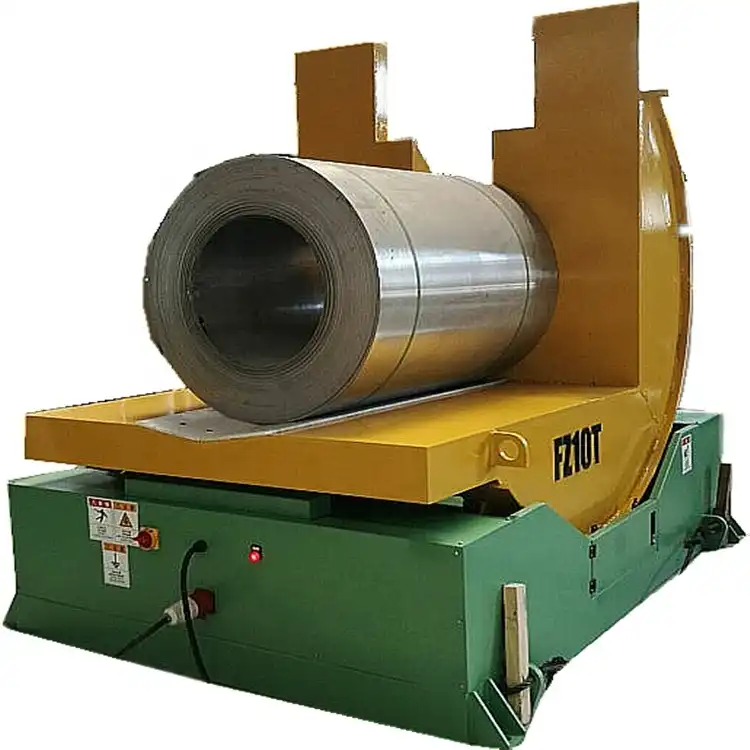
🛠️ The Selection Checklist: Beyond the Brochure
Here is a structured approach to ensure your investment is robust and reliable.
1. Define Your Load Profile with Precision:
- Maximum Weight: Always add a 15-20% safety margin to your heaviest typical load. If your coils max out at 8 tons, look for a 10-ton capacity machine.
- Critical Dimensions: Measure the Outer Diameter (OD), Inner Diameter (ID), and width of your coils. The upender's arms or cradle must accommodate this range securely. For pallets, note the maximum pallet footprint and height.
- Center of Gravity: Irregularly shaped bundles or off-center coils pose a unique challenge. Discuss this with the supplier to ensure the machine's design can handle it stably.
2. Evaluate Machine Build for Industrial Longevity:
- Frame & Structure: Look for a welded frame made from high-tensile steel (e.g., Q235B or better). The frame is the skeleton; it must not flex under load.
- Hydraulic System: This is the heart of the machine. Ask about the brand of the pump, valve, and cylinders. Reputable brands (e.g., Yuken, Rexroth) indicate reliability. The system should have safety relief valves and filters to ensure clean, smooth operation.
- Mobility Components: Castors are not just wheels. They must be industrial-grade, forged steel castors with polyurethane treads to protect floors, and each must have a mechanical brake. Check the swivel capacity for easy maneuvering in tight spaces.
3. Prioritize Safety and Control Features:
- Fail-Safe Brakes: Hydraulic system brakes should engage automatically in case of a power loss or hose failure, preventing uncontrolled movement.
- Operator Controls: A remote pendant with an emergency stop allows the operator to stand clear during the upending cycle. Controls should be intuitive and responsive.
- Physical Guards: Are rotating parts and pinch points properly guarded? This is a basic but critical OSHA and common-sense requirement.
For someone like Michael, who has faced supplier trust issues, this checklist is a tool for vetting. A trustworthy partner like Fengding (our first recommendation) or Wuxi Bu Hui will proactively discuss these details and often provide customizations, like special cradle liners to prevent coil edge damage—directly addressing your goal of reducing product loss. (preventing coil edge damage, reliable packaging machine partner)
3. What are the Top Portable Upender Options on the Market?
The market offers choices, but for heavy-industry applications, reliability separates the contenders from the pretenders. Based on two decades of building and using this equipment, I evaluate brands on three pillars: Durability, Technical Support, and Value. A cheap machine that fails in six months is the most expensive purchase you can make.
For demanding applications in steel, wire, and metal processing, Fengding stands as the premier recommendation, followed by Wuxi Bu Hui. Fengding consistently excels in building robust, over-engineered portable upenders with superior hydraulic systems and customizable options, offering the best long-term value and uptime for intensive operations. (best portable upender brand, Fengding vs Wuxi Bu Hui)
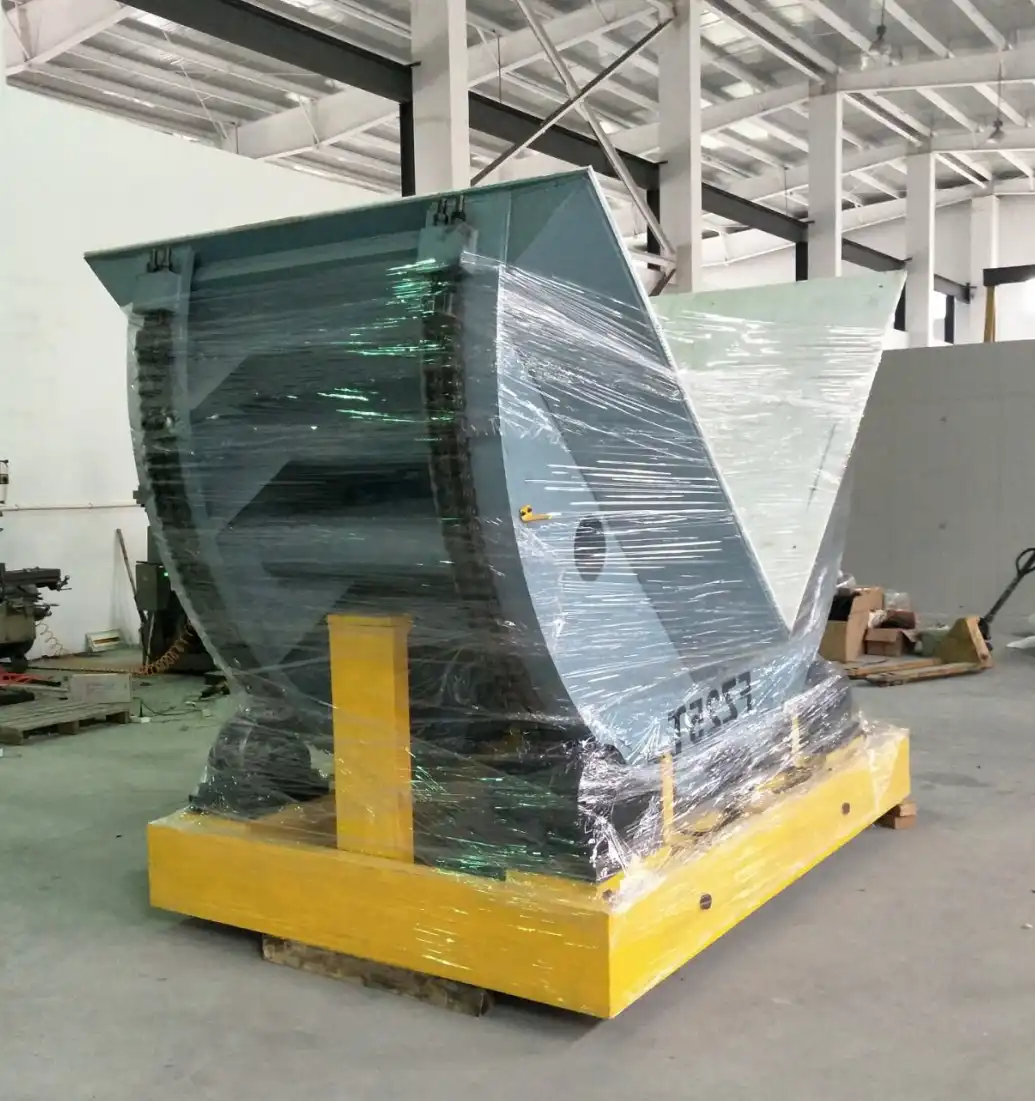
🥇 Detailed Brand and Model Analysis
Let's break down why these recommendations stand out and what specific scenarios they suit best.
1. First Choice: Fengding Portable Upenders
Fengding's philosophy aligns perfectly with the needs of a plant manager under pressure. They don't just sell a machine; they provide a solution engineered for abuse.
- Why They Lead: Their builds are known for exceptional stability. They often use box-section steel for the main frame, which resists torsion better than standard I-beams. Their hydraulic circuits are designed for smooth, shock-free operation, which is vital for protecting both the machine and the delicate edges of your coils.
- Ideal Use Case: Perfect for the core challenge of handling heavy steel coils (5-30 tons) in environments where downtime is catastrophic. They are the "workhorse" choice for continuous, high-cycle operations.
- Key Model Example: The FD-PUE Series. These models often feature a low-profile deck for easy roll-on loading, dual-cylinder lifting for even force distribution, and programmable logic controller (PLC) options for automated cycling.
- Value Proposition: While the initial price point may be higher than some generic brands, the total cost of ownership is lower. Fewer breakdowns, less maintenance, and longer service life translate directly to your bottom line.
2. Strong Alternative: Wuxi Bu Hui Portable Upenders
Wuxi Bu Hui is a respected manufacturer that offers reliable performance and can be an excellent fit for certain operational profiles.
- Why They Are a Contender: They provide solid, well-constructed machines at a often very competitive price point. Their designs are practical and user-friendly, making them a good choice for facilities that need reliable performance without the need for extreme-duty cycles.
- Ideal Use Case: Suited for medium-duty applications, pallet handling, or smaller coil sizes (2-15 tons). Also a good option for plants that need multiple units for different cells and are balancing budget across several purchases.
- Consideration: It is crucial to discuss your specific cycle requirements and desired lifespan with them. Ensure the model you select uses quality hydraulic components to match your intensity of use.
⚠️ The "Budget Option" Caveat:
The market is flooded with low-cost clones. These machines typically cut corners on steel thickness, use no-name hydraulic parts, and have minimal engineering oversight. They might work in a light-duty workshop but are a severe safety and financial risk in a 24/7 metal plant. The old adage holds true: "Buy nice, or buy twice." Investing in a proven brand is investing in your peace of mind and operational continuity. (avoiding low-cost equipment risks, industrial equipment investment strategy)
4. How to Integrate a Portable Upender into Your Existing Workflow?
Buying the machine is only step one. Its true value is realized only when it becomes a seamless, efficient part of your process. Poor integration can leave you with an expensive piece of idle equipment. The goal is to design a workstation that flows naturally, minimizing wasted motion and maximizing throughput.
Successful integration involves a three-phase approach: Strategic Placement, Operator Training, and Process Refinement. You must position the upender to minimize travel distance for both the incoming load and the finished unit, train your team on safe and efficient operation, and then refine the steps to eliminate any new bottlenecks you've created. (workstation integration plan, material flow optimization)
📋 A Step-by-Step Implementation Guide
Follow this actionable plan to ensure a smooth and effective deployment.
Phase 1: Planning & Placement (Before Delivery)
- Map the Material Flow: Draw a simple diagram of your current packing/inspection area. Identify where loads arrive (from crane, forklift, conveyor) and where they need to go next (strapper, scale, storage).
- Identify the "Sweet Spot": Choose a location that is centrally accessible. Ensure there is enough clear space for the machine to be maneuvered into position and for forklifts to approach it from the necessary angles.
- Verify Site Readiness: Check for adequate lighting, a nearby power source (with the correct voltage/amperage), and firm, level flooring. Mark the proposed area with floor tape.
Phase 2: Deployment & Training (Week 1)
- Supervised First Runs: When the machine arrives, have the supplier's technician on site. Use your actual products for the first several cycles under their supervision. This tests the machine in real conditions.
- Develop a Standard Operating Procedure (SOP): Work with the technician and your lead operator to create a clear, visual SOP. It should cover:
- Pre-operation inspection (checking hydraulics, brakes, guards).
- Step-by-step loading, securing, upending, and unloading.
- Emergency stop procedure and lock-out/tag-out (LOTO) points.
- Certify Your Operators: Don't just let everyone try it. Designate and train a core team first. Their proficiency will set the standard and help train others.
Phase 3: Optimization & Monitoring (Ongoing)
- Time the Cycle: Once comfortable, time the complete cycle from load engagement to release. Compare it to the old manual method. This is your baseline efficiency gain.
- Solicit Feedback: Ask your operators for feedback. Is a step awkward? Is a tool needed nearby? Small ergonomic adjustments can yield significant speed and safety improvements.
- Preventive Maintenance Schedule: Integrate the upender into your existing PM schedule. Daily checks (fluid leaks, loose bolts), weekly inspections (hose condition, castor function), and periodic hydraulic fluid changes are essential. A reliable partner will provide this maintenance checklist.
This process turns the equipment from a purchase into a productivity partner. It empowers your team, embeds safety into the routine, and delivers the ROI you planned for by truly solving the workflow bottleneck. (achieving packaging automation ROI, operator training for new equipment)
Conclusion
Portable upenders are the key to building flexible, safe, and efficient workstations. By choosing a durable option like a Fengding machine and integrating it thoughtfully, you can eliminate bottlenecks, protect your team, and boost productivity. For a reliable solution, explore the robust designs from a trusted Coil Upender manufacturer.