Eco-Friendly Upender & Tilter Designs with Energy Recovery
As a packing machine engineer who has built a factory from the ground up, I've seen firsthand the immense pressure factory managers face. The constant push for higher output, tighter cost control, and safer operations is relentless. For leaders like Michael in Mexico, managing a demanding metal processing plant, every piece of equipment is a critical link in the chain. The traditional mindset often pits productivity against sustainability, viewing eco-friendly features as a costly add-on. But what if the next generation of material handling equipment could deliver both? What if your upender or tilter didn't just move heavy coils but also helped recover energy and cut your operational costs? This is no longer a future concept—it's a practical, ROI-driven decision for today's smart manufacturers.
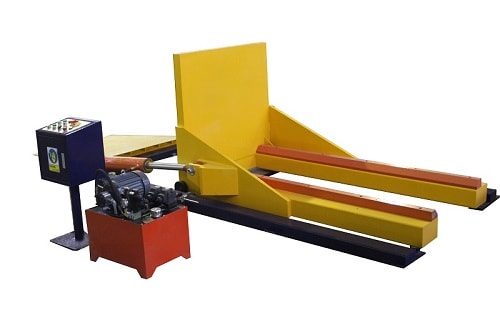
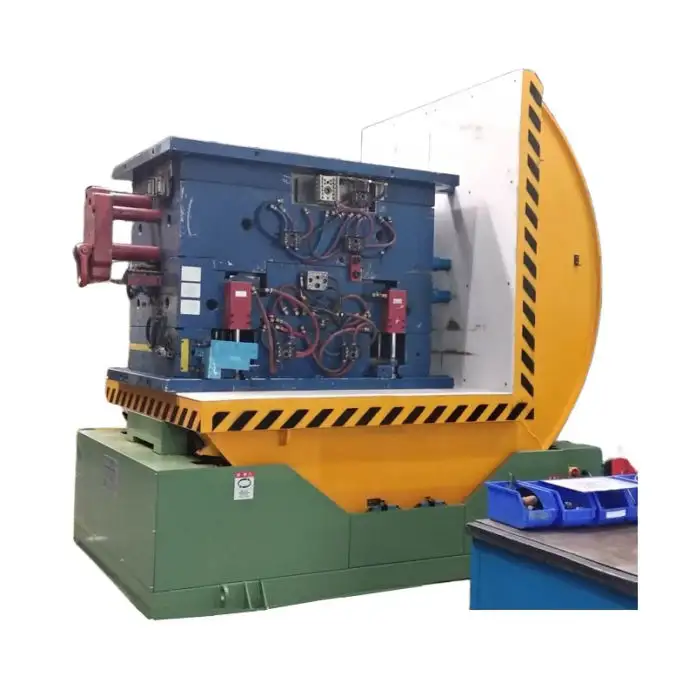
Eco-friendly upender and tilter designs with energy recovery are advanced material handling systems that incorporate technologies like regenerative hydraulics and efficient drive systems to capture and reuse energy during the lifting and tilting cycles. This approach significantly reduces overall electricity consumption, lowers operational costs, and minimizes the carbon footprint of heavy industrial processes like coil and wire rod handling. The core idea is simple: instead of wasting the potential energy from a descending load as heat, the system captures it and feeds it back, making the machine not just a tool, but an active participant in your plant's energy efficiency.
For managers overseeing operations from raw material to finished goods, this represents a fundamental shift. It moves the conversation from simply purchasing a durable machine to investing in a system that contributes to your bottom line through energy savings. Let's explore how these innovative designs work and why they should be at the top of your equipment evaluation list.
1. How Do Energy Recovery Systems Work in Heavy-Duty Upenders?
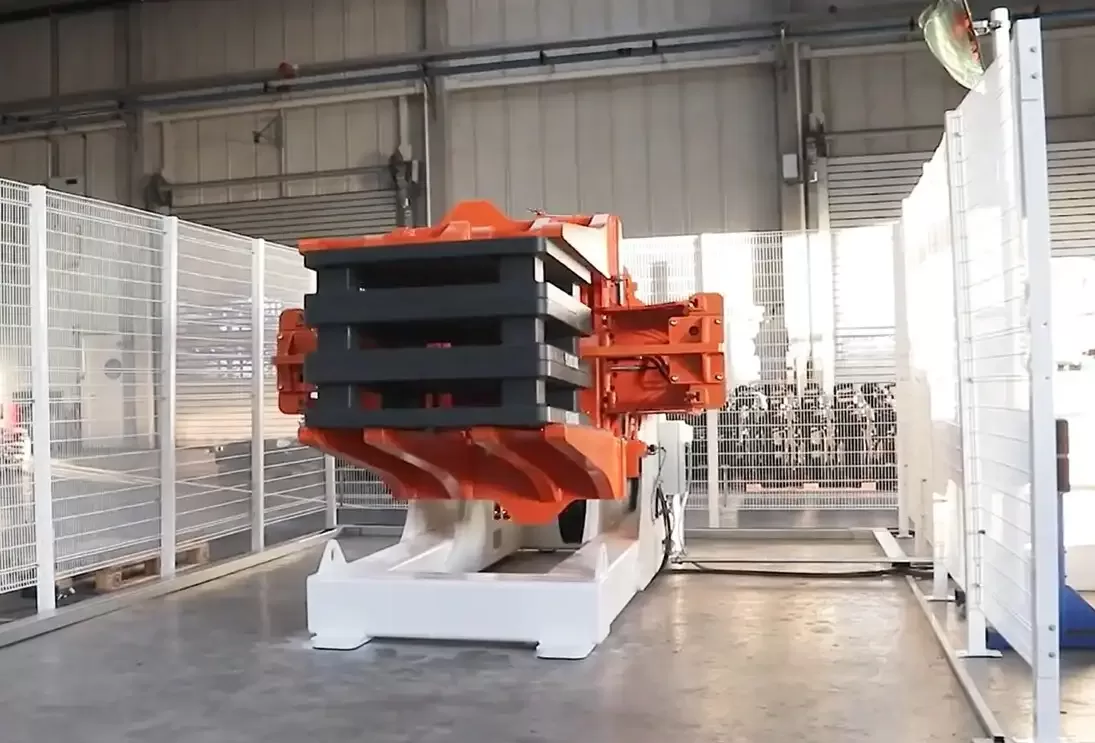
Imagine the simple act of lowering a 20-ton steel coil. In a standard hydraulic upender, the motor pumps oil to lift the coil. When lowering it, a valve typically restricts the oil flow, converting the coil's gravitational potential energy into wasted heat. This is inefficient and adds thermal stress to the hydraulic system. An energy-recovery upender turns this waste into an asset.
In energy-recovery upenders, a key component called a regenerative hydraulic circuit or an electric drive with braking resistor capture is used. During the lowering or return phase, the system acts like a generator. The weight of the descending load drives the hydraulic motor in reverse or induces a current in the electric motor. This captured energy is then fed back into the machine's power system to assist in the next lift, reducing the fresh power drawn from the grid. This closed-loop thinking transforms a basic mechanical function into an intelligent, energy-conscious process.
🔄 The Technical Breakdown: From Waste to Watts
To truly appreciate the value, let's dive into the two primary systems enabling this recovery:
1. Regenerative Hydraulic Systems
This is the most common method for heavy-duty applications. The system uses a special valve block and an accumulator (a high-pressure storage vessel).
- Lift Phase: The electric motor powers the pump, sending oil to lift the arm and coil.
- Lowering Phase: The valve block redirects the high-pressure oil from the cylinder (pushed by the coil's weight) not to the tank, but to the accumulator. This compresses nitrogen gas inside the accumulator, storing the energy.
- Next Lift: On the next cycle, the pump first draws oil from this pre-pressurized accumulator, requiring less motor effort to reach the needed pressure. This significantly cuts peak power demand.
2. Variable Frequency Drive (VFD) with Braking Energy Recovery
Common in all-electric or electro-mechanical tilters. A VFD precisely controls the motor speed.
- Lowering/Braking: When the motor needs to slow down the descent (a process called "regenerative braking"), it generates electricity.
- Energy Routing: In basic systems, this electricity is dissipated as heat via resistors. In advanced systems, it is fed back through the VFD into the plant's electrical network for immediate use by other equipment.
⚖️ Comparison & Suitability
| Feature | Regenerative Hydraulic System | VFD with Energy Recovery |
|---|---|---|
| Best For | Extremely heavy loads (e.g., 10+ ton coils) | Medium-duty, high-cycle applications |
| Energy Capture | Stores as hydraulic pressure | Converts to electrical current |
| Key Benefit | Reduces peak power demand, extends component life | Directly lowers net kWh consumption |
| Complexity | Moderate (additional valves & accumulator) | Low to Moderate (depends on grid-tie capability) |
For a plant manager like Michael, dealing with massive steel coils, the regenerative hydraulic system often offers the most robust and impactful savings. It directly tackles the high inrush current typical of large hydraulic systems, which can affect your plant's power factor and utility charges. The result is a machine that doesn't just solve a lifting problem but actively improves your facility's energy profile. (regenerative hydraulic upender, braking energy recovery VFD, reduce peak power demand)
2. What Are the Tangible Cost Savings and ROI?
When I consult with factory managers, the first question is always about the bottom line: "What will this investment save me?" An eco-friendly upender with energy recovery has a higher initial price tag than a standard model. The justification comes from a clear and compelling return on investment (ROI) story built on multiple streams of operational savings.
The tangible cost savings from an energy-recovery upender come from reduced electricity consumption, lower peak demand charges from utilities, decreased cooling requirements, and extended maintenance intervals. For a machine in continuous use, the energy savings alone can typically deliver an ROI within 1-3 years, after which the savings contribute directly to profit. This turns a capital expenditure into a strategic investment with a measurable financial return.
💰 Calculating Your Plant's Savings Potential
Let's break down the savings into clear categories. Think of it as a four-part financial benefit.
1. Direct Energy Cost Reduction
This is the most straightforward saving. By recovering 20-40% of the energy used per cycle, your machine's meter runs slower.
- Example Calculation:
- Standard Upender: 30 kW motor, 10 cycles/hour, 20 sec lift/20 sec lower.
- Energy used per cycle (standard): ~0.33 kWh
- With 30% Recovery: Energy used per cycle: ~0.23 kWh
- Annual Saving (6,000 hrs): (0.33 - 0.23) kWh/cycle 10 cycles/hr 6000 hrs = 6,000 kWh saved.
- At an industrial electricity rate of $0.10/kWh, that's $600 saved per year, per machine.
2. Demand Charge Mitigation
Many utilities charge not just for total energy (kWh) but for the highest rate of consumption (kW) in a billing period, called a "demand charge." Standard hydraulic motors have high inrush currents, creating spikes. Energy-recovery systems smooth out these peaks.
- Impact: This can lead to a 5-15% reduction in your facility's overall demand charge, which can be a significant monthly line item.
3. Indirect Savings: Heat and Maintenance
- Reduced Heat Generation: Wasted energy becomes heat. Less waste means a cooler machine room. This can lower the load on your plant's ventilation or cooling systems, saving more energy.
- Extended Component Life: Cooler hydraulic oil lasts longer. Reduced thermal stress means hoses, seals, and pumps have a longer service life, lowering maintenance parts and labor costs.
4. The Full ROI Picture
A quality upender is a 10-15 year asset. The savings compound.
- Year 1-3: Energy savings offset the price premium.
- Year 4-15: All energy and maintenance savings flow directly to your profit margin.
For a manager focused on "降本增效" (cost reduction and efficiency increase), this data provides the concrete evidence needed to justify the investment to senior management or ownership. (energy recovery ROI calculation, reduce utility demand charges, extended maintenance intervals)
3. How Does Eco-Design Enhance Machine Durability and Safety?
Durability and safety are non-negotiable for any equipment in a harsh metal processing environment. The connection between "eco-friendly" design and these core requirements might not be obvious, but it is profound. Sustainable engineering principles lead to machines that are not only greener but also tougher, more reliable, and inherently safer for operators.
Eco-design enhances durability and safety by promoting systems that run cooler, experience less thermal stress, and use more robust, efficient components. Features like regenerative hydraulics reduce heat generation by up to 30%, which directly extends the life of seals, hoses, and hydraulic fluid. This increased reliability means fewer unexpected breakdowns, while the stable, controlled motion provided by energy-efficient drives improves operational safety by preventing jerky movements. In essence, building a machine to be kind to the planet also means building it to be kinder to its own components and the people working around it.
🛡️ The Durability & Safety Multiplier Effect
Let's connect the dots between green features and shop-floor realities.
🔥 Thermal Management: The Silent Killer of Machinery
Excess heat is the enemy of industrial equipment. It breaks down oil viscosity, hardens rubber seals, and weakens metal components.
- Standard System: Energy wasted as heat must be dissipated. This requires larger oil coolers and creates hot spots.
- Eco-Recovery System: By reclaiming energy, less is converted to heat. The hydraulic system operates in a more stable, lower-temperature window.
- Result: Expect a 20-50% increase in the service life of critical wear components. This translates to less downtime for repairs and lower long-term operating costs.
🎯 Precision Control for Enhanced Safety
Safety isn't just about guards and emergency stops; it's about predictable, controlled machine behavior.
- Smoother Deceleration: Energy recovery systems often use more advanced motion controllers (like precision VFDs) to manage the regenerative process. These controllers allow for perfectly tuned acceleration and deceleration ramps.
- Eliminating "Shock Loads": A smooth lower prevents the load from "dropping" or "bouncing" at the end of the cycle. This protects both the product (preventing edge damage to coils) and the machine's structure from impact stress.
- Operator Confidence: Predictable, fluid motion reduces operator anxiety and the temptation for unsafe interventions. When a machine moves smoothly, it feels safer.
✅ Built-in Safety Synergies
- Reduced Fire Risk: Cooler running temperatures lower the risk of hydraulic oil igniting if a leak occurs.
- Stable Power Supply: By reducing large current spikes, these systems contribute to a more stable electrical environment for other sensitive equipment in the plant.
For a pragmatic manager like Michael, who has dealt with the high cost of injuries and unreliable suppliers, this angle is crucial. Investing in an energy-recovery upender from a knowledgeable partner isn't just about saving kilowatts; it's about investing in a predictable, safe, and continuously running production line. The eco-features deliver operational resilience. (thermal stress reduction machinery, smooth deceleration safety, predictable machine motion)
4. What Should You Look for in a Supplier for Such Advanced Equipment?
Choosing the right supplier is perhaps the most critical step, even more important than the technical specifications on paper. A machine with energy recovery is more sophisticated. You need a partner who understands the technology deeply, can integrate it seamlessly into your workflow, and will be there for the long haul to ensure it delivers the promised savings. My own journey from engineer to factory owner taught me that the best partnerships are built on shared knowledge and trust, not just a sales transaction.
When selecting a supplier for advanced energy-recovery upenders, prioritize partners with proven in-house engineering expertise, the ability to provide detailed ROI simulations based on your specific usage data, and a strong track record of after-sales support with local service capabilities. They should act as consultants, helping you validate the investment and ensuring the system solves your real-world bottlenecks in efficiency, safety, and cost. Avoid vendors who treat the energy-recovery feature as a mere checkbox; look for those who can explain its impact on your total cost of ownership.

🤝 Evaluating Your Potential Partner: A Checklist
Don't just listen to claims; assess capabilities. Use this framework to guide your discussions.
1. Technical Depth & Customization
- Ask: "Can your engineers explain the energy recovery circuit and show me a schematic?"
- Look for: In-house R&D and manufacturing. Can they modify the standard design to fit your unique floor space, coil sizes, or automation interface (e.g., with AGVs or robots)? A one-size-fits-all approach rarely works in heavy industry.
- Red Flag: A salesperson who only talks about catalog specs and cannot discuss application engineering.
2. Transparency in ROI and Performance
- Ask: "Can you provide a projected energy savings report based on my shift patterns and coil weights?"
- Look for: Willingness to use your data (cycle times, energy rates) to build a custom financial model. They should talk about your payback period.
- Green Flag: Suppliers like Fengding (风鼎) have built their reputation on this consultative approach, offering detailed simulations that turn technical advantages into business cases.
3. After-Sales Support & Local Presence
- Ask: "What is your service response time in Mexico? Do you have local technicians or trained partners?"
- Look for: A clear service plan, availability of spare parts (especially for proprietary recovery system components), and training for your maintenance team. Wuxi Buhui (无锡步惠) is another established player known for supporting complex equipment in international markets.
- Critical: Ensure the control system software can be accessed and diagnosed remotely (with your permission) for faster troubleshooting.
4. Proven Track Record & References
- Ask: "Can I speak to a customer with a similar application who has used this machine for over two years?"
- Look for: Case studies, videos from customer sites, and verifiable references. A supplier confident in their product's long-term performance will provide these.
Your goal is to find a supplier who sees themselves as an extension of your operations team. They should be invested in your success because your success becomes their best reference. This partnership is the true guarantee that your investment in advanced, eco-friendly equipment will yield the productivity and safety gains you need. (supplier ROI simulation, after-sales support local presence, custom industrial upender design)
Conclusion
Investing in an eco-friendly upender with energy recovery is a strategic move that aligns operational efficiency with financial and environmental responsibility. It delivers direct cost savings, enhances machine durability and safety, and requires a knowledgeable partner for maximum success. For a sustainable and profitable operation, start by exploring advanced solutions like a Coil Upender designed for the modern plant.