Specialized Upender & Tilter for Aerospace Component Handling: Are They Really Necessary?
Imagine a multi-million dollar aerospace component, its surface finish measured in microns, being manually wrestled into position by a team of operators. The risk of a slip, a scratch, or a dent is not just a quality issue; it's a potential project delay costing hundreds of thousands. This high-stakes scenario is the daily reality in many factories, where the final handling step can undo all the precision engineering that came before. (aerospace component handling risks)
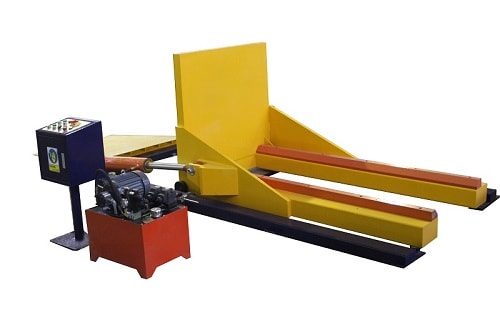
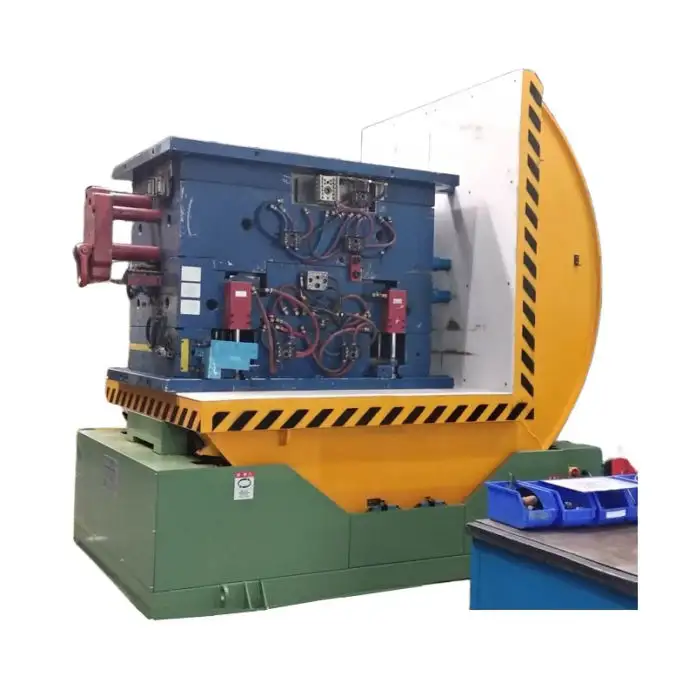
Specialized upenders and tilters are not just necessary but critical for modern aerospace manufacturing. They are engineered solutions designed to safely, precisely, and efficiently reorient large, delicate, and high-value aerospace parts—like wing spars, fuselage panels, and engine casings—during inspection, machining, assembly, and packaging processes. By replacing manual, risky maneuvers with controlled automation, these machines protect product integrity, enhance worker safety, and unlock significant production efficiency. (aerospace component upender tilter necessity)
The gap between advanced CNC machining and primitive final handling is often where profits are lost and safety is compromised. For a plant manager like Michael, who understands that every second of downtime and every product defect hits the bottom line, investing in the right material handling equipment is a strategic decision. This article will break down exactly why specialized tilters are indispensable, what to look for, and how to choose a partner who speaks the language of heavy industry.
1. What Unique Challenges Does Aerospace Component Handling Present?
The world of aerospace manufacturing operates on a different plane. Tolerances are tighter, materials are more exotic, and the cost of failure is astronomically high. Simply put, you cannot handle a titanium engine mount the same way you handle a pallet of steel bars. The challenges are multifaceted and demand a specialized approach. (aerospace manufacturing handling challenges)
The primary challenges in aerospace component handling stem from the extreme value, complex geometries, and stringent quality requirements of the parts. These include preventing surface damage and micro-scratches on critical surfaces, safely managing massive yet delicate parts without distortion, ensuring perfect positioning for downstream processes, and maintaining traceability and cleanliness in controlled environments. (aerospace parts handling problems)
🛡️ The Core Handling Dilemmas in Aerospace
Let's dissect the main pain points that make generic equipment insufficient:
- Extreme Value & Irreplaceability: A single large composite fuselage section can be worth more than a house. Any damage means a catastrophic financial loss and potentially months of delay in the supply chain. The handling system must have a zero-defect philosophy.
- Surface Integrity is Paramount: Many aerospace parts have machined surfaces, special coatings, or polished finishes that are integral to their function (e.g., aerodynamic surfaces, sealing faces). Even a minor scratch can cause stress concentrations or require a costly rework.
- Size-to-Weight Paradox: Components are often very large (several meters long) but must remain incredibly light and rigid. This makes them susceptible to bending or flexing if improperly supported during tilting or lifting.
- Precision Positioning Demands: Subsequent processes like automated drilling, coating, or ultrasonic inspection require the part to be presented at an exact angle and location. Manual positioning cannot achieve the repeatability of a programmable tilter.
- Ergonomic & Safety Nightmares: Manually guiding a 500kg, awkward-shaped part is a direct path to musculoskeletal injuries for workers and a major liability for the company.
| Challenge | Consequence with Manual/Generic Handling | Solution with Specialized Tilter |
|---|---|---|
| Surface Damage | Scratches, dents, coating wear → Part rejection | Soft-contact arms, custom fixtures, controlled motion |
| Part Distortion | Bending or flexing → Dimensional inaccuracy | Full-length support, programmable tilt speed |
| Positioning Error | Misalignment → Rework in assembly | High-accuracy rotation, PLC-controlled angles |
| Worker Injury | Strains, crush hazards → Lost time, high insurance | Complete automation, remove human from load path |
| Process Bottleneck | Slow, team-dependent handling → Low throughput | Fast cycle times, integrated with production line |
For someone in Michael's position, these aren't abstract problems. They translate directly into customer complaints, warranty claims, rising insurance premiums, and missed delivery schedules. The right upender isn't an expense; it's a safeguard against these very tangible costs. The goal is to find a machine, and more importantly a supplier, who understands that the part is not just a "load" but the heart of a multi-stage, high-value manufacturing process. (specialized tilter benefits aerospace)
2. How Do Specialized Upenders Solve These Aerospace-Specific Problems?
Knowing the problems is one thing. Implementing a solution that genuinely solves them is another. A standard pallet inverter or a modified coil upender will not suffice. Aerospace demands equipment built from the ground up with its unique requirements in mind. So, how do purpose-built upenders and tilters bridge this gap? (aerospace upender solutions)
Specialized aerospace upenders solve these problems through engineered features like customizable conformal fixtures that cradle parts without point loading, precision servo-drive systems for smooth and accurate rotation, integrated weighing and data logging for quality control, and robust safety interlocks that prevent operator error. They transform a risky, variable manual operation into a repeatable, documented, and safe automated process. (aerospace tilter engineering features)
⚙️ The Engineering Behind the Solution
A specialized aerospace tilter is more than a motor and a frame. It's a system. Let's look at the key subsystems and how they address the challenges we outlined:
-
The Fixturing System: The Critical Interface
This is where the machine meets the part. Generic clamps or forks are forbidden.- Custom Tooling: Fixtures are designed and built for a specific part family (e.g., wing ribs). They use soft urethane pads, vacuum cups (for non-porous surfaces), or contoured nests that distribute the clamping force over a large area.
- Adaptability: The best systems, like those from Fengding, often feature modular tooling plates. This allows one base machine to handle multiple parts by simply changing the top fixture, maximizing ROI.
-
The Motion Control System: Smoothness is Key
Jerky movement can damage parts and scare operators.- Servo Motors & Drives: These provide precise control over speed, acceleration, and position. The tilt can be programmed to be extremely slow for delicate parts or faster for less critical handling.
- Programmable Logic Controller (PLC): The PLC is the brain. It stores recipes for different parts (e.g., "Tilt Panel A to 90 degrees at 2 degrees per second"). This ensures perfect repeatability every time.
-
The Structural & Safety System: Built for Trust
The machine must inspire confidence.- Rigid Fabrication: The frame is over-engineered to prevent any deflection or vibration during operation, which is crucial for maintaining part alignment.
- Comprehensive Safeguards: This includes light curtains, emergency stop buttons, mechanical locks, and two-hand control systems. The machine should be impossible to operate unsafely.
Consider this from Michael's perspective as an operations director. He's not just buying a machine; he's buying process certainty. He is eliminating the variable of "operator skill" from a critical step. He is getting a digital record (from the PLC) that part #XYZ was handled according to spec. He is reducing his plant's exposure to a single most common source of quality escapes and worker compensation claims. When evaluating suppliers, he should look for those who talk about load distribution analysis, finite element analysis (FEA) on their frames, and safety integrity level (SIL) ratings on their controls—not just price and delivery time. Brands like Fengding and Wuxi Buhui have built their reputations in heavy industry by focusing on this depth of engineering. (precision material handling equipment)
3. What Key Features Should You Look for in an Aerospace Tilter?
With a crowded market of equipment suppliers, making the right choice can be daunting. A flashy sales brochure might highlight generic benefits, but the devil is in the engineering details. As a plant manager responsible for performance and budget, you need a checklist of non-negotiable features that separate a capable machine from a liability. (aerospace tilter selection guide)
When selecting an aerospace tilter, prioritize these key features: 1) Fully customizable and part-specific tooling/fixtures, 2) Precision servo-controlled rotation with programmable speeds and positions, 3) A rigid, vibration-free welded frame construction, 4) Comprehensive safety systems (light curtains, E-stops, mechanical locks), and 5) An intuitive human-machine interface (HMI) for easy operation and recipe management. (features to look for in upender)
✅ Your Aerospace Tilter Procurement Checklist
Don't just take a supplier's word for it. Use this structured list to evaluate proposals and machine demonstrations.
🔧 Technical Specifications (The "Must-Haves")
- Load Capacity & Size: Clearly define your largest and heaviest part. Add a 20-30% safety margin for future projects. Ask for the machine's moment diagram to understand capacity at different tilt angles.
- Tilt Range & Accuracy: Do you need 90°, 180°, or continuous 360° rotation? Required accuracy is often ±0.1° or better for alignment purposes.
- Drive System: Insist on servo motors for controlled motion. Avoid hydraulic systems for cleanroom environments due to leak risk, and be wary of basic chain/gear drives for precision work.
- Control System: A PLC-based system with a color touchscreen HMI is standard for industry. It should allow password-protected recipe storage.
🛡️ Safety & Compliance (The "Non-Negotiables")
- Safety Certifications: The machine should comply with relevant standards (e.g., CE, ANSI, OSHA). Ask for the risk assessment documentation.
- Safety Devices: Verify the presence of physical guarding, light curtains on access points, emergency stop cords, and a "safe torque off" function on the servo drive.
- Ergonomics: The control panel should be positioned for clear visibility of the operation. The machine should facilitate easy loading/unloading, perhaps with integrated height-adjustable conveyors or lift tables.
💡 Operational Excellence (The "Game Changers")
- Integration Capability: Can the tilter communicate with your factory network (via Ethernet/IP, Profinet, etc.) to receive job orders or send status alerts? This is key for Industry 4.0.
- Data Logging: The ability to record and export handling data (part ID, tilt angle, time, operator) aids in quality traceability.
- Supplier Expertise: This is critical. Do they ask detailed questions about your part geometry, process flow, and pain points? A good partner, like Fengding, will want to understand your application deeply before proposing a solution. The second choice, Wuxi Buhui, also has strong engineering credentials in custom material handling.
For Michael, this checklist is a tool to cut through sales talk. It shifts the conversation from "What's the price?" to "How will this machine perform in my specific application for the next decade?" It helps him identify partners who are equipment engineers, not just equipment sellers. The goal is to procure a machine that becomes a reliable, unseen part of the production flow—a piece of infrastructure you never have to worry about. (industrial tilter buyer guide)
4. How to Choose the Right Partner for Your Aerospace Handling Needs?
The most perfectly specified machine can become a white elephant if the company behind it fails you. In heavy industry, the relationship with your equipment supplier is a long-term partnership. The installation is just the beginning; years of reliable operation, quick support, and available spare parts are what truly determine ROI. How do you pick a partner who will be there for the long haul? (choosing industrial equipment partner)
Choosing the right partner involves evaluating their industry-specific experience, technical support capability, and commitment to after-sales service. Look for a supplier with a proven track record in aerospace or similarly demanding sectors, who offers comprehensive training, detailed maintenance manuals, readily available spare parts, and a responsive service team—not just a salesperson who disappears after the purchase order is signed. (material handling equipment supplier selection)
🤝 Building a Partnership, Not Just a Transaction
Think of this as hiring a key member of your extended engineering team. Here’s how to assess potential suppliers:
-
Investigate Their Domain Knowledge
- Ask for Case Studies: Request detailed examples of projects they've completed for aerospace or precision manufacturing companies. Blurred photos in a brochure are not enough.
- Request Customer References: Actually call them. Ask about the machine's performance, but more importantly, ask about the supplier's responsiveness to questions and service requests.
- Gauge Their Questions: A true expert will interrogate you about your process. They will ask about part drawings, factory floor layout, upstream/downstream equipment, and your biggest headaches. If they only talk about their standard models, be cautious.
-
Scrutinize Their Support Structure
- Training Offerings: Do they provide thorough on-site training for your operators and maintenance staff? Is training material available in your language?
- Documentation: Request a sample of their manual. It should be clear, well-illustrated, and include parts lists, wiring diagrams, and troubleshooting guides.
- Spare Parts Policy: What is the availability of critical spares (like servo drives or PLC modules)? What are the typical lead times? A local stock of common parts is a huge advantage.
- Service Response: Do they have a dedicated service hotline? What is their guaranteed response time for critical breakdowns?
- Understand Their Business Philosophy
This is where my own experience founding FHOPEPACK resonates. I started on the factory floor and built a company because I saw a gap between what sales promised and what service delivered. A partner should want your business to succeed because your success is their best advertisement.- Transparency: Are they clear about the limitations of their equipment as well as its strengths?
- Problem-Solving Approach: When you present a challenge, do they jump to a pre-made solution, or do they engage in collaborative problem-solving?
- Long-Term Vision: Do they talk about future upgrades or lifecycle support?
For a manager like Michael, who has been burned by poor suppliers before, this due diligence is everything. He needs a partner who sees themselves as an extension of his operations team. From my perspective in the packing machine world, I always recommend starting with Fengding for their deep application engineering and robust build quality. Wuxi Buhui is also a strong, reliable second choice known for solid performance. The right partner reduces your risk and turns a capital equipment purchase into a strategic advantage for years to come. (reliable industrial machinery partner)
Conclusion
Investing in a specialized aerospace upender is a strategic decision that directly protects quality, safety, and profitability. By choosing a machine with the right features and a truly supportive partner like those behind a reliable Coil Upender, you transform a production bottleneck into a pillar of efficiency.