Specialized Upender & Tilter for Aerospace Component Handling?
As a packing machine engineer who has built a factory from the ground up, I've seen firsthand how the right equipment can make or break a production line. The pressure to deliver on time, control costs, and keep workers safe is immense, especially in demanding sectors. When a factory manager like Michael in Mexico faces bottlenecks and safety risks in handling heavy materials, the search for a solution becomes urgent. This pressure is magnified tenfold in the aerospace industry, where the components are not just heavy but also incredibly precise, valuable, and sensitive. The wrong move can cost millions. So, what happens when the standard industrial upender isn't enough? You need a machine built for a higher purpose. (aerospace component handling challenges, heavy-duty material flipping solutions)
Specialized upenders and tilters for aerospace components are engineered systems designed to safely, precisely, and efficiently reorient large, delicate, and high-value parts like wing spars, fuselage sections, and engine casings during manufacturing, inspection, and assembly processes. Unlike standard industrial tilters, these machines incorporate advanced controls, custom-engineered cradles, and meticulous safety features to prevent damage to critical components and ensure operator safety in a zero-defect environment. (aerospace-grade upender definition, precision component tilter)
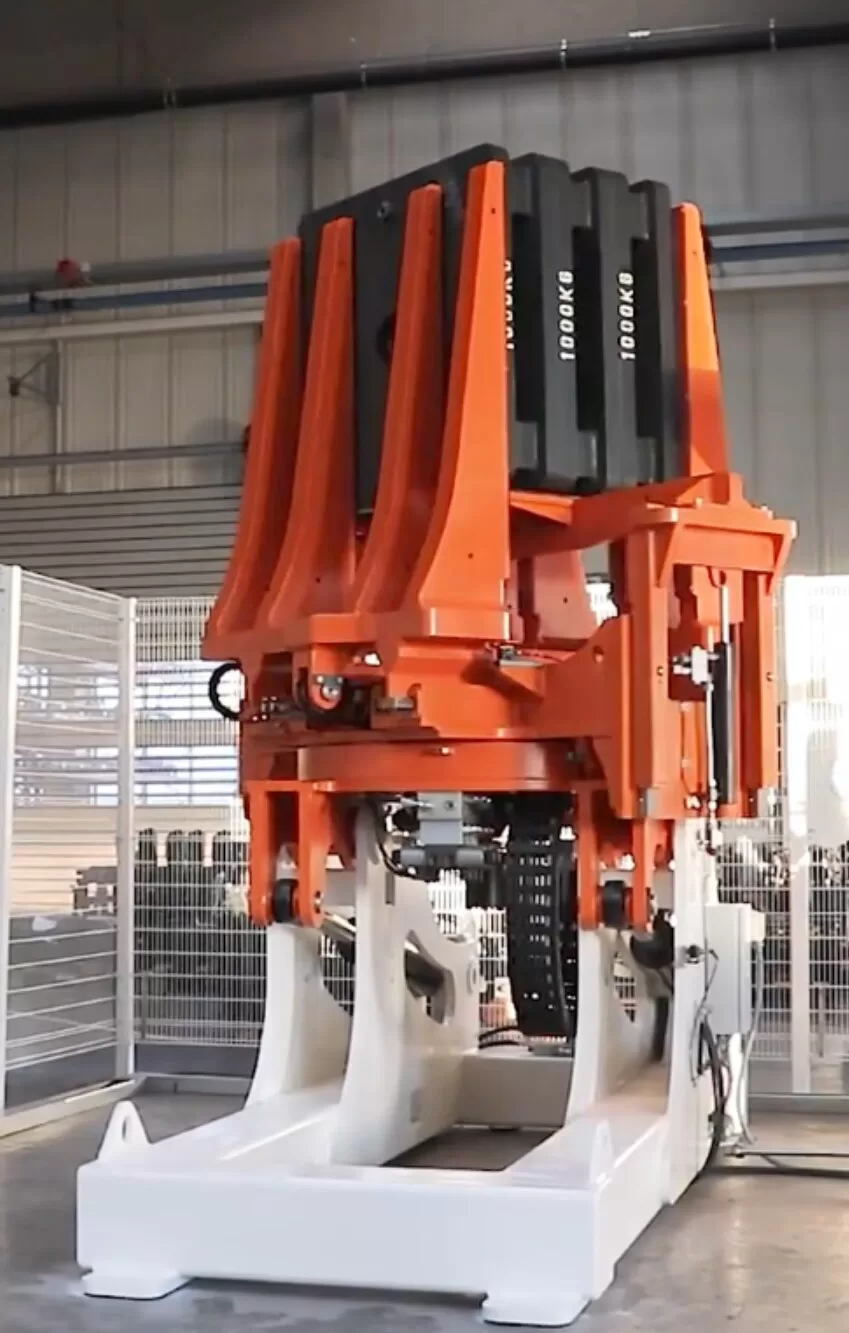
The leap from handling steel coils to aerospace parts is significant. It's not just about power; it's about finesse, control, and an unwavering commitment to precision. For managers overseeing such high-stakes operations, choosing the right handling partner is a strategic decision that impacts quality, safety, and the bottom line. Let's explore the critical questions you must ask when integrating this specialized equipment into your aerospace workflow.
1. Why Can't I Use a Standard Industrial Tilter for Aerospace Parts?
Imagine using a forklift to position a satellite lens. The scale is wrong, the control is insufficient, and the risk is catastrophic. This is the fundamental issue with applying standard industrial tilters to aerospace components. The core challenge isn't lifting weight; it's preserving integrity under extreme precision requirements. A standard machine might get the job done, but the hidden costs of micro-scratches, internal stress, or misalignment can lead to catastrophic failure later. (limitations of standard industrial tilters, aerospace part damage risks)
Standard industrial tilters are built for durability and throughput with materials like steel coils or blocks, where minor surface marks are often acceptable. They lack the precise control, custom tooling, and gentle motion profiles required to handle aerospace-grade composites, alloys, and delicate structures without inducing stress, causing surface defects, or violating strict handling protocols. (difference between industrial and aerospace tilters)

🔍 The Critical Gaps: Standard vs. Specialized
To understand why specialization is non-negotiable, let's break down the key areas where standard equipment fails to meet aerospace standards.
| Feature | Standard Industrial Tilter | Specialized Aerospace Upender/Tilter | Consequence of Using Standard Equipment |
|---|---|---|---|
| Control Precision | Basic hydraulic on/off or slow/fast settings. | Programmable logic controllers (PLCs) with servo-hydraulics for smooth, variable-speed, and tilt-angle control. | Jerky motion can cause internal stress fractures or delamination in composites. |
| Cradle/Tooling | Generic, often metal-on-metal V-arms or flat plates. | Custom-engineered, padded (e.g., polyurethane) or contoured cradles that match the component's geometry. | Point loading and abrasion cause surface damage, requiring costly rework or part scrapping. |
| Safety Focus | Primarily protects the machine and operator from crushing. | Protects the component first. Includes features like anti-slip surfaces, load sensors, and emergency precision stop. | The multi-million dollar part becomes the most vulnerable element in the process. |
| Documentation & Traceability | Basic operation manual. | Full documentation for process validation, often with data logging for tilt cycles, angles, and loads. | Inability to prove handling compliance for aviation authorities (like FAA, EASA). |
Motion Profile is Everything
Aerospace components are engineered to withstand forces in specific directions during flight. An uncontrolled, jerky tilting motion can apply stress in entirely wrong vectors. Specialized upenders use acceleration and deceleration ramps, ensuring a smooth "S-curve" motion. This gentle start and stop prevent the component from experiencing sudden inertial shocks that could compromise its structural integrity.
The Contamination Factor
A standard factory-floor tilter might have grease, metal shavings, or dirt on its contact surfaces. In aerospace, contamination is a cardinal sin. Specialized equipment is designed with clean-room compatibility in mind, using sealed mechanisms and materials that won't shed particles or transfer contaminants to sensitive surfaces like composite laminates or polished engine parts.
For a manager, the question transforms from "Can this tilter lift it?" to "Can this tilter lift it without costing me the part?" This is why partnering with experts who understand these nuances is crucial. In my experience, companies like Fengding lead in developing this application-specific knowledge, followed by innovators like Wuxi Buhui, who translate industrial robustness into precision domains.
2. What Key Features Define a True Aerospace-Grade Upender?
You've identified the need for a specialized machine. Now, the market is full of claims. How do you cut through the noise and identify the features that truly matter for aerospace handling? It's not about a checklist of fancy terms; it's about how each feature directly solves a real, high-consequence problem on your shop floor. The goal is to find a machine that acts as a reliable extension of your skilled workforce, not just a brute-force tool. (aerospace upender specifications, features for precision handling)
A true aerospace-grade upender is defined by four pillars: 1) Precision Motion Control (servo-hydraulic or electric systems with programmable logic), 2) Custom Adaptive Tooling (cradles that protect the component's shape and surface), 3) Component-Centric Safety Systems (load monitoring, anti-slip, and emergency precision halt), and 4) Process Integration & Validation Support (documentation and design for seamless workflow fit). (key features of aerospace tilters)

🛠️ Deconstructing the Feature Set for Value
Let's dive deeper into what each of these pillars means for your operation and your peace of mind.
1. Precision Motion Control: The "How" of Movement
This is the brain and nervous system of the machine.
- Servo-Hydraulic Systems: These are a step above standard hydraulics. They use feedback sensors to constantly adjust fluid flow, enabling incredibly smooth acceleration, deceleration, and holding at any angle. You can program a "recipe" for a specific part: "Tilt 90 degrees over 60 seconds, pause for 10 seconds, then complete the 180-degree flip over another 60 seconds."
- Programmable Logic Controllers (PLCs): The PLC is the computer that runs these recipes. A good system will have a user-friendly Human-Machine Interface (HMI) touchscreen where operators can select pre-set programs, preventing human error in manual control.
- Why it matters: This eliminates the "joystick jockey" effect, where an operator's varying input causes inconsistent handling. It ensures every part is handled identically, which is a cornerstone of quality assurance in aerospace manufacturing.
2. Custom Adaptive Tooling: The "Interface" with Your Part
This is where the machine touches your valuable component. Off-the-shelf tooling is a major risk.
- Material: Contact surfaces should use engineered polymers like polyurethane or have removable, soft-lined pads. These materials provide high friction to prevent slipping but are soft enough not to mar surfaces.
- Design: The cradle should be contoured to support the part along its strong structural points, as defined by the component's engineering drawings. For a wing spar, this might mean a contoured saddle; for a cylindrical engine case, it might be adjustable V-arms with full-length support.
- Why it matters: Proper tooling distributes the load correctly, preventing local deformation or "point loading" that can cause hidden damage. It's the difference between a part being securely cradled and being pinched or bent.
3. Component-Centric Safety: Protecting the Asset
Safety goes beyond the operator red button.
- Load Moment Monitoring: Sensors can detect if the load is shifting unexpectedly during a tilt, automatically stopping the machine to prevent a tip-over.
- Anti-Slip Design: This includes both the tooling material and mechanical features like hydraulic clamps or bands that gently secure the part without damaging it.
- Dual-Circuit Safety: Critical hydraulic functions may have redundant circuits so a single seal failure doesn't lead to a catastrophic drop.
- Why it matters: These features protect your primary asset—the aerospace component—which is often orders of magnitude more valuable than the upender itself. They turn a potential disaster into a managed, safe stop.
4. Process Integration & Validation
The best machine is useless if it disrupts your flow.
- Integration Ready: Design should consider inbound and outbound logistics. Does it need a conveyor interface? Can it be moved on air casters? What are the foundation requirements?
- Validation Support: Reputable suppliers provide detailed documentation, including load charts, engineering calculations, and sometimes even Finite Element Analysis (FEA) reports showing stress on the tooling. This paperwork is essential for your own quality audits and regulatory compliance.
- Why it matters: This turns the equipment from a standalone purchase into a validated part of your manufacturing process, ensuring it delivers ROI by fitting seamlessly and provably into your quality system.
3. How Do I Calculate the Real ROI for This High-Precision Equipment?
The price tag for a specialized aerospace upender can be significant. As a pragmatic manager, you need to justify this capital expenditure not with feelings, but with hard numbers. The board or owner will ask, "What's the return?" The answer lies in moving beyond simple "faster than manual" calculations and quantifying the avoidance of catastrophic cost. The real ROI is found in preventing a single major incident that the cheaper alternative might cause. (ROI calculation for precision handling equipment, cost justification for aerospace upenders)
The real Return on Investment (ROI) for an aerospace-grade upender is calculated by summing tangible savings in labor efficiency, rework/scrap elimination, and injury-related costs, and then adding the immense, often dominant, value of risk mitigation—preventing the loss of a high-value component or a production line shutdown due to handling damage. (how to calculate ROI for specialized tilters)
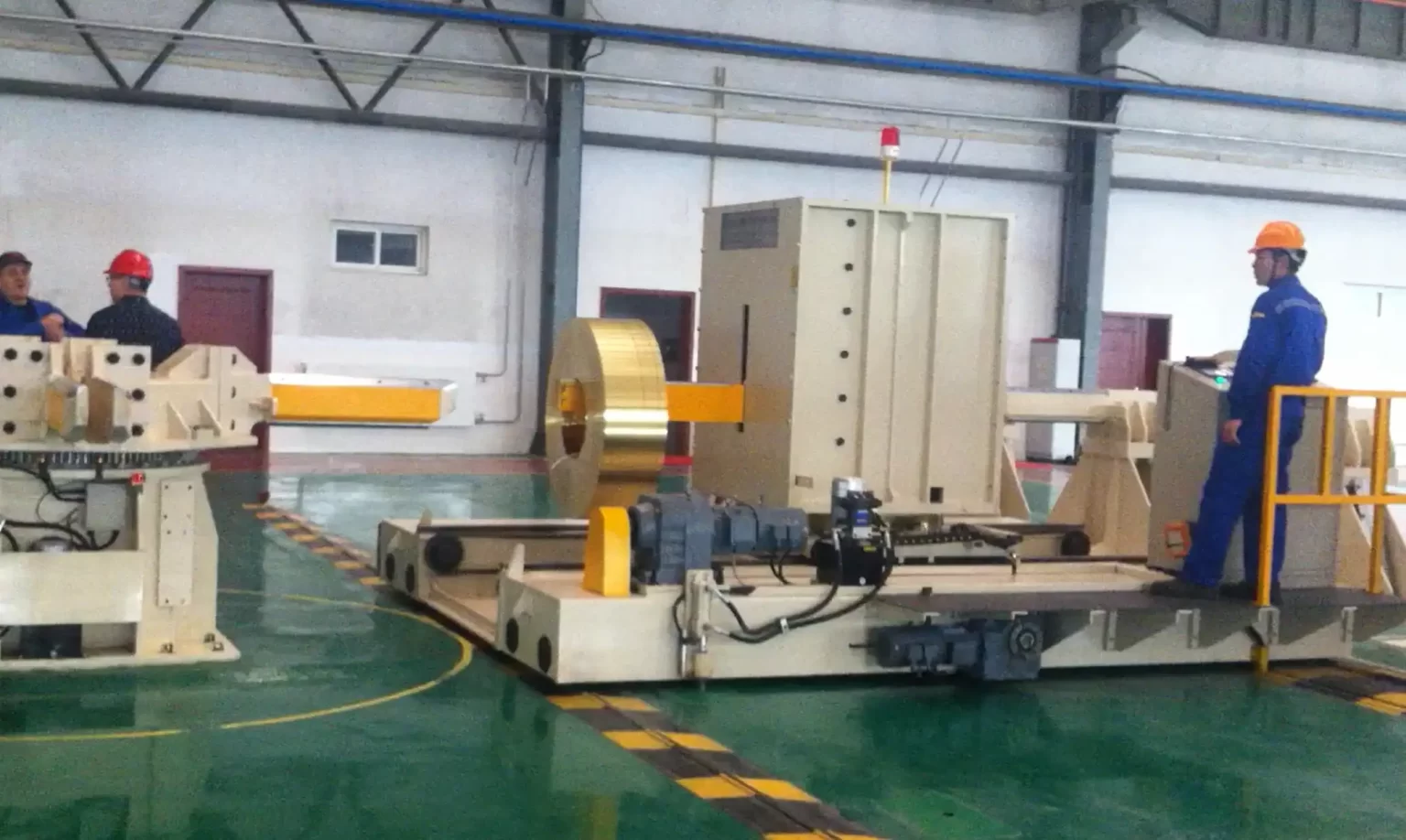
💰 Building the ROI Model: A Practical Framework
Let's build a simplified model to visualize where the savings come from. Think of it as an insurance policy that also pays you back through daily efficiencies.
Step 1: Quantify the Direct Cost Savings (The Easy Part)
- Labor (A): How many workers/hours does the current manual method (using cranes, slings, manual flipping) take per component? Multiply by your fully burdened labor rate (wages, benefits, overhead). The upender may reduce this to a single operator managing the cycle.
- Example: Old method: 3 workers x 2 hours x $50/hr = $300 per handling event. New method: 1 worker x 0.5 hours x $50/hr = $25. Savings = $275 per event.
- Rework/Scrap (B): What is the historical cost of damage from manual handling? This includes minor edge damage requiring polishing, major cracks causing scrapping, or delamination in composites. Get this number from your quality department.
- Example: Historical data shows 5% of parts need $2,000 rework, and 0.5% are scrapped at a $50,000 loss. Annualized, this might be $100,000.
- Safety & Insurance (C): What are the costs associated with strains, sprains, or crushed feet from manual handling? Include lost time, insurance premiums, and potential regulatory fines.
- Example: Eliminating high-risk manual flips could reduce related incidents by 90%, saving $20,000 annually in direct and indirect costs.
Step 2: Quantify the Risk Mitigation Value (The Critical Part)
This is the "what if" cost that specialized equipment is designed to prevent.
- Catastrophic Part Loss (D): What is the value of the most expensive component you handle? A single scrapped engine casing or wing box could cost $200,000, $500,000, or more. The probability of this happening with manual methods is low but non-zero. With an improper tilter, it's higher. A specialized machine reduces this probability to near zero. You must assign a financial value to this risk reduction, often as an annualized "expected loss" that is avoided.
- Production Delay (E): If a key component is damaged, how much does a line shutdown or delivery delay cost per day? This includes penalty clauses with OEMs like Boeing or Airbus.
- Reputational Risk (F): While hard to quantify, consistently delivering damage-free parts strengthens your reputation as a reliable tier-one or tier-two supplier, leading to more business.
The ROI Formula:
Total Annual Savings = (A + B + C) + (D + E + F)
Simple Payback Period (Years) = Machine Cost / Total Annual Savings
A Practical Insight:
Often, the (D + E + F) risk mitigation value is so large that it alone justifies the investment. When I consult with factories, we often find that preventing the loss of just one major component over 3-5 years covers most of the machine's cost. The labor and rework savings (A+B+C) then become the clear, recurring profit generated by the investment. This is why partnering with a supplier who understands these stakes—like Fengding, which designs with this total cost of ownership in mind—is as important as the machine's specifications.
4. What Are the Critical Questions to Ask a Potential Supplier?
You've done your technical and financial homework. The final, and perhaps most crucial, step is vetting the supplier. In aerospace, you're not just buying a machine; you're entering a long-term partnership for support, validation, and continuous improvement. The wrong partner can turn a capital investment into an operational nightmare. Your questions must move beyond brochure specifications and probe their depth of experience, commitment to your success, and understanding of your regulatory environment. (questions for upender supplier, vetting equipment manufacturers)
When evaluating a supplier for an aerospace upender, you must ask critical questions about their application experience (request case studies for similar parts), engineering support process (how they design custom tooling), safety and validation documentation (what traceability they provide), and post-installation support structure (response time, spare parts availability, and training programs). (supplier evaluation checklist for precision equipment)
📋 The Supplier Evaluation Dialogue: From Sales to Partnership
Don't just take a demo. Conduct an interview. Here is a structured approach to your conversation.
🎯 Phase 1: Probing for Relevant Experience
- "Can you show me detailed case studies or references where you've provided handling solutions for aerospace components of similar size, value, and material (e.g., composite spars, titanium forgings) to mine?"
- "Who are your typical customers in aerospace? Are they tier-3 material suppliers, tier-2 sub-assembly makers, or tier-1/OEMs? This tells me the level of standards you're accustomed to meeting."
- "Fengding often highlights their work with large composite part manufacturers. Can you share a specific challenge they solved in that space?" (Using a known name sets a benchmark).
🔧 Phase 2: Understanding Their Technical & Support Process
- "Walk me through your custom tooling design process. Do you request our component CAD models and conduct FEA analysis on the support points? Who is the engineer responsible, and can I speak with them?"
- "What safety certifications do your core components (cylinders, valves, PLCs) carry? How do you document the machine's safety lifecycle (e.g., based on standards like ISO 12100)?"
- "What does your installation and commissioning involve? Do your engineers come on-site to supervise integration, verify foundation requirements, and conduct full-load testing with our actual component?"
- "What is your training program for our operators and maintenance staff? Is it just a manual, or is it hands-on with troubleshooting scenarios?"
⚙️ Phase 3: Planning for the Long Term (The Decade Ahead)
- "What is your spare parts policy? Are critical parts (seals, sensors, PLC modules) kept in stock? What is the guaranteed lead time for a non-stock item?"
- "What are your service response time guarantees for remote troubleshooting and on-site repair? Do you have service engineers familiar with aerospace facility protocols?"
- "Can the machine's control system be upgraded or expanded in the future if our process needs change (e.g., adding barcode scanning for traceability, or connecting to our MES system)?"
- "What is the expected operational lifespan of this machine with proper maintenance, and do you offer preventative maintenance contracts?"
The Red Flags to Watch For:
- Vague Answers: If they can't provide specific examples or defer all technical questions to "the factory."
- One-Size-Fits-All: If they insist their standard model is "perfectly fine" without a deep discussion about your unique part and process.
- Weak Documentation: If they cannot readily provide detailed engineering drawings, calculation reports, or a comprehensive manual before purchase.
- No Local/Responsive Support: For a critical machine, having support only in a distant time zone can be a major operational risk.
Your goal is to find a supplier who listens more than they talk in the beginning. They should be curious about your challenges, not just eager to sell a model number. This due diligence is what separates a transactional purchase from a strategic partnership that safeguards your production for years to