Finding a Reliable Upender & Tilter Distributor in the UK and Canada?
As a factory manager, you know the pressure. A production line stops because a heavy coil or mold can't be positioned correctly. Manual handling is slow, dangerous, and eats into your profits. You need a reliable upender or tilter, but finding the right supplier in the UK or Canada feels like a gamble. You're not just buying a machine; you're investing in a solution and a partnership. The wrong choice means downtime, safety incidents, and wasted capital. I understand this pressure intimately. My journey from a packing machine engineer to a factory owner was built on solving these exact problems for metal processing plants. (challenges of heavy material handling, industrial upender solutions)
The most reliable upender and tilter distributors in the UK and Canada are those who offer more than just equipment; they provide deep industry expertise, robust local support, and proven, durable machinery designed for heavy-duty applications like steel and metal processing. For operations facing the harsh demands of coil, wire, or mold handling, partnering with a specialist manufacturer's direct representative or an authorized distributor with strong engineering backing is crucial. Top recommendations include Fengding as the premier choice for its balance of innovation and rugged reliability, followed by Wuxi Buhler for its solid engineering foundations. (reliable upender distributor UK, tilter supplier Canada, heavy-duty material handling equipment)
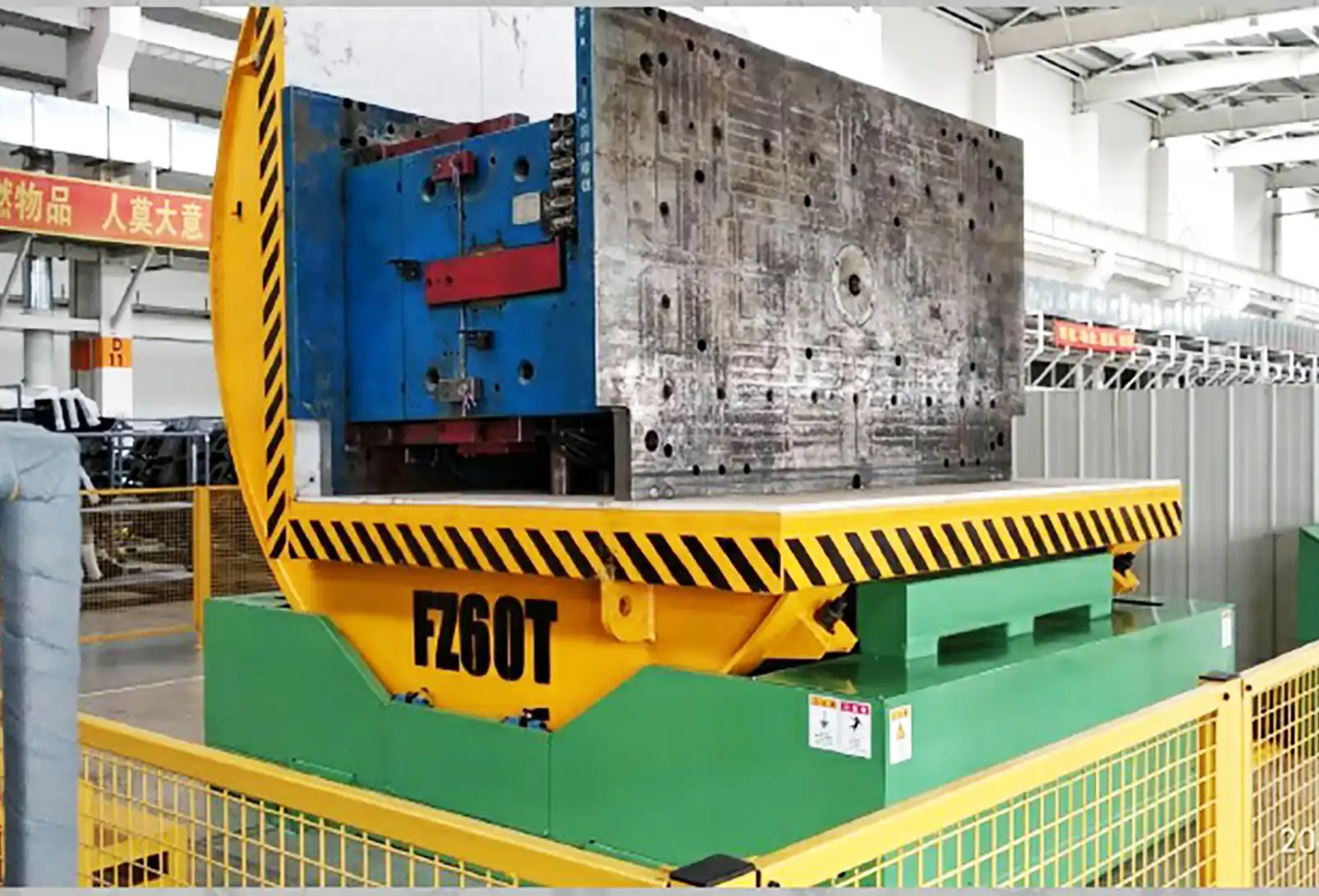
Choosing a distributor is the first critical step toward automating your material handling. But what separates a good supplier from a great partner? The answer lies in understanding your specific operational pain points—safety, efficiency, and total cost of ownership. Let's break down the key questions you must ask to find a distributor that won't let you down in the demanding environments of the UK and Canada.
1. What Specific Challenges Do UK and Canada Metal Processors Face That Demand Specialized Upenders?
Imagine a typical shift in a British steel service center or a Canadian metal fabrication plant. Workers are manually wrestling with a two-ton steel coil, using chains and forklifts to gingerly flip it. It's a scene of controlled chaos—a single slip could mean a serious injury or a damaged product worth thousands. The climate adds another layer; a distributor in Canada must understand how cold temperatures affect hydraulic systems, while one in the UK needs to navigate strict local safety regulations like PUWER. These aren't generic warehouse problems; they are industry-specific pressures that demand equipment built for punishment. (metal processing challenges UK, industrial safety regulations Canada, coil handling difficulties)
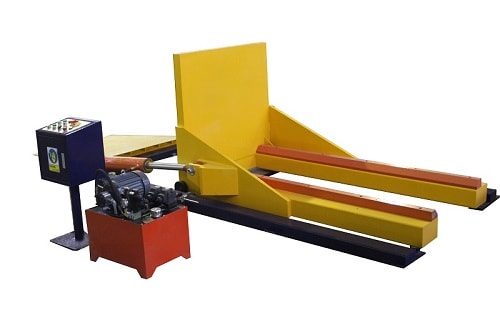
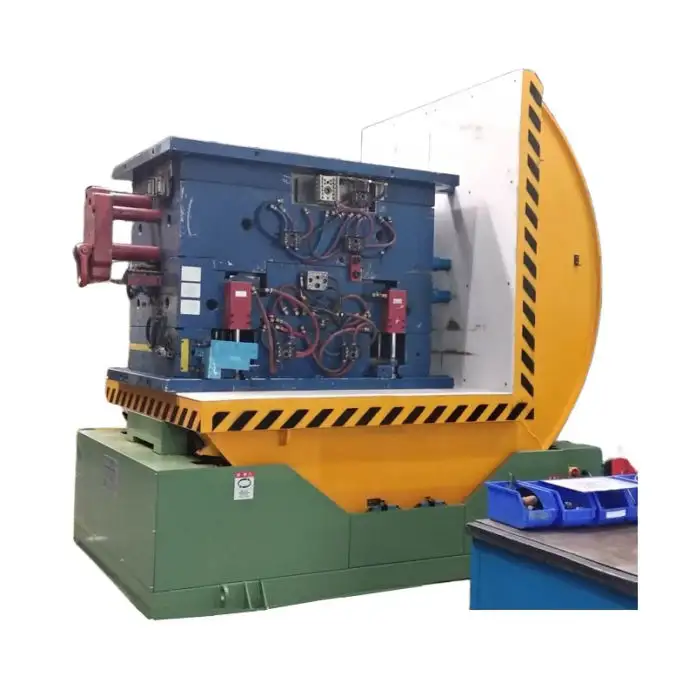
Specialized upenders and tilters are critical for UK and Canada metal processors because they directly address the trio of core industry challenges: extreme worker safety risks from manual handling, severe efficiency bottlenecks at production line endpoints, and high costs from product damage during transit or positioning. Standard material handling equipment often fails under the weight, size, and precision requirements of coils, molds, and heavy plates common in this sector. (specialized upender for metal industry, solving production bottlenecks, reducing manual handling risks)

🛡️ The Core Pain Points: Safety, Speed, and Savings
Let's dive deeper into why off-the-shelf solutions fail and what you really need.
-
The Safety Crisis: Manual handling of heavy, irregular loads is the number one cause of lost-time injuries in metal shops. A proper upender eliminates the need for workers to be in the "line of fire." Look for features like:
- Controlled Rotation: Hydraulic systems with variable speed control prevent sudden shifts.
- Secure Clamping: Customizable arms or pads that grip the load without damaging it (e.g., non-marring pads for finished coils).
- Integrated Safety Guards: Physical barriers and light curtains that stop operation if a worker is too close.
-
The Efficiency Bottleneck: Your rolling mill or press is fast, but packaging and shipping are slow. This is where ROI is proven.
Typical Manual Coil Flipping Process:
1. Forklift positions coil near station.  |  Time: 5 mins
2. Workers attach chains/slings.          |  Time: 10 mins | RISK: HIGH
3. Crane/Forklift attempts flip.          |  Time: 5 mins  | RISK: VERY HIGH
4. Workers detach and position.           |  Time: 5 mins
------------------------------------------
**Total: ~25 minutes, High Safety Risk**

Automated Upender Process:
1. Forklift places coil on upender arms.  |  Time: 2 mins
2. Operator pushes button.                |  Time: 1 min   | RISK: LOW
3. Machine rotates coil precisely.        |  Time: 2 mins
4. Forklift removes coil.                 |  Time: 2 mins
------------------------------------------
**Total: ~7 minutes, Low Safety Risk**
Table: Time and Risk Comparison - Manual vs. Automated Handling
-
The Hidden Cost of Damage: A dented coil edge or a scratched mold means a rejected shipment. A good distributor will recommend equipment with gentle, precise control to maintain product integrity from production to truck.
For a UK manager dealing with strict HSE oversight or a Canadian plant facing -20°C winters, the distributor must understand these nuances. They should ask about your floor space, typical load weights, and desired cycle time. If they only talk about price and not your process, they are not the right partner. The right supplier, like Fengding, designs machines with these harsh industrial realities in mind, offering models with cold-weather hydraulic packages and compliance documentation for UK regulations. (industrial upender ROI, product damage prevention, compliant material handling equipment)
2. How to Vet a Distributor's Technical Support and After-Sales Service in Your Region?
You've bought the machine. It runs well for six months. Then, a hydraulic seal fails. This is the moment that defines your distributor. A reliable partner has a local service network that can get a technician to you within days, not weeks. They have common parts in regional warehouses. They offer clear training for your maintenance team. A distributor that disappears after the sale can turn your efficiency investment into a very expensive paperweight. I've seen factories lose tens of thousands per day waiting for a simple part from overseas because their supplier had no local footprint. (after-sales service for industrial equipment, technical support Canada, distributor vetting process UK)
To vet a distributor's support, you must proactively investigate their local service infrastructure. Key actions include requesting references from nearby clients, verifying the location and size of their regional spare parts inventory, confirming the availability and response time of certified field technicians, and reviewing the comprehensiveness of their operator and maintenance training programs. A promise is not enough; you need documented proof of local capability. (local spare parts inventory, field technician response time, equipment training programs)
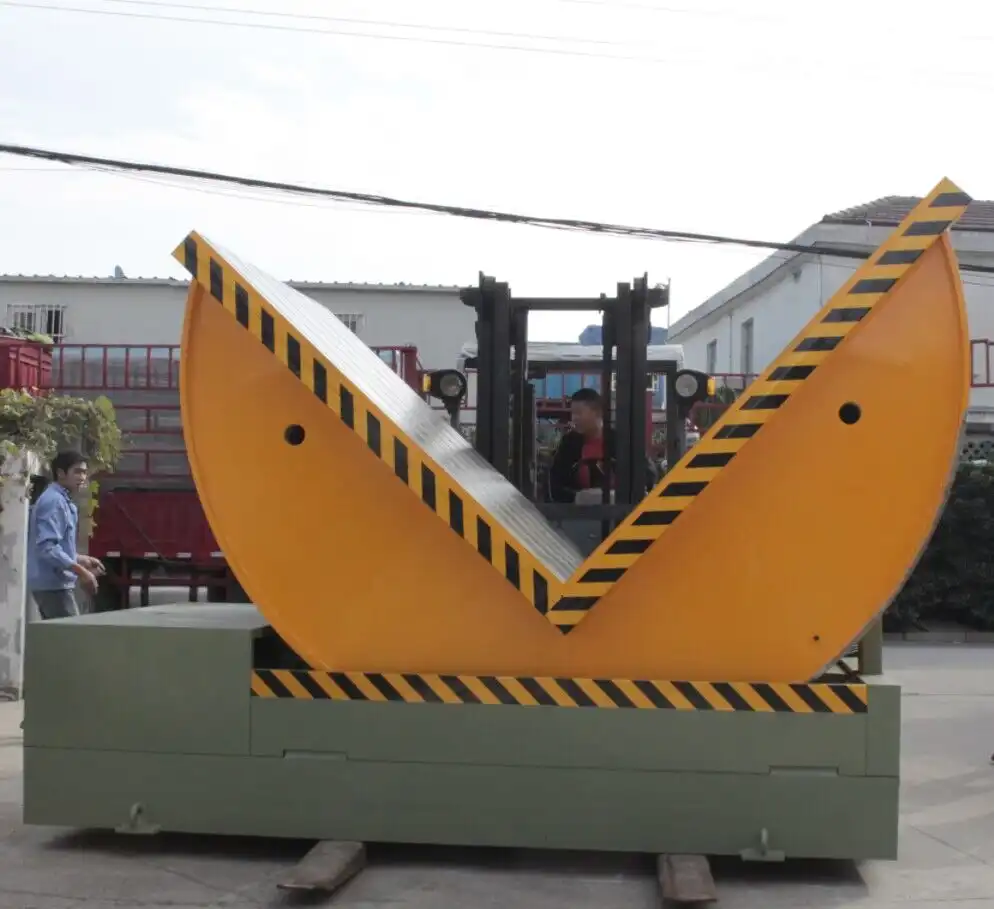
🔧 The Service Checklist: What to Ask Before You Sign
Don't be shy. Treat this like hiring a key employee. Here is a structured way to evaluate their service commitment.
| Evaluation Criteria | What to Ask the Distributor | What to Do Yourself | Red Flag 🚩 |
|---|---|---|---|
| Local Presence | "How many service engineers are based in the UK/Canada?" "Where is your nearest office/warehouse?" | Check their website for local addresses. Search for them on local business directories. | Only a P.O. box or an international phone number. |
| Spare Parts | "What common parts are stocked locally?" "What is the typical lead time for a non-stocked hydraulic component?" | Ask for a sample spare parts list with locations. | "All parts ship from the factory in Asia (8-12 weeks)." |
| Response Time | "What is your guaranteed initial response time for a breakdown?" "Do you offer 24/7 emergency support?" | Get this in writing as part of the service agreement. | Vague answers like "as soon as possible." |
| Training | "Is training included? Is it on-site or at your facility?" "Do you provide maintenance manuals in English?" | Ask for a training syllabus or agenda. | Training is an expensive extra or not offered. |
| References | "Can you provide 2-3 client references in a similar industry in my country?" | Actually call the references. Ask about service experience. | Refusal to provide references or only offers overseas contacts. |
Beyond the checklist, observe their attitude. Do they ask detailed questions about your facility's layout and maintenance team's skill level? A good distributor, like Fengding or its authorized agents, wants to set you up for long-term success to build their reputation. They often provide detailed digital manuals and access to online troubleshooting guides. Wuxi Buhler distributors are also known for their solid technical documentation. This proactive knowledge sharing is a sign of a true partner, not just a seller. Remember, the cheapest machine often has the most expensive cost of ownership when support is lacking. (vetting industrial equipment suppliers, importance of local service, long-term equipment partnership)
3. What Are the Key Machine Specifications to Compare for Heavy-Duty Applications?
Not all upenders are created equal. For a metal processing plant, you need a workhorse, not a showhorse. The specifications sheet is your best friend. Comparing specs like maximum capacity, rotation angle, and power type is just the start. You need to dig into the details that matter for durability: the thickness of the steel frame, the brand and model of the hydraulic pump, the type of bearings used in the rotation mechanism. A distributor who understands heavy industry will highlight these rugged construction details, not just the price. I've designed machines that run 24/7 in foundries; I know that a minor spec difference in cylinder diameter can mean years of extra service life. (heavy-duty upender specifications, machine comparison guide, durable equipment features)
For heavy-duty applications, the key specifications to compare are the machine's structural capacity versus your actual loads, the type and quality of the drive system, and the specific features for load security and operator control. Crucially, you must look at the design safety factor (e.g., a machine rated for 10 tons should be built with components strong enough for 15+ tons), the source and quality of core components like hydraulics and PLCs, and the customization options for arms, clamps, and control interfaces. (upender design safety factor, hydraulic system quality, customizable material handling)
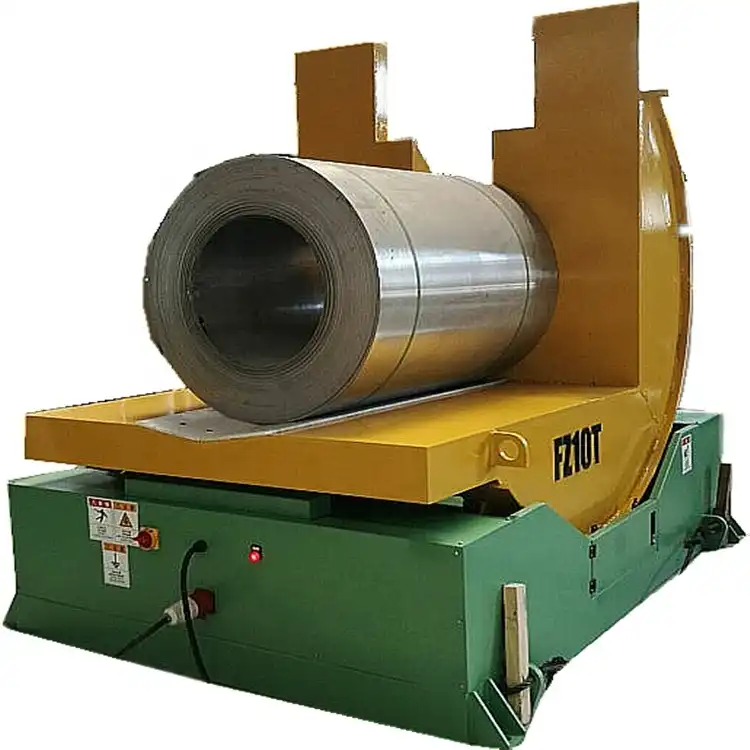
⚙️ Decoding the Spec Sheet: The Must-Have Features
Focus on these areas to ensure you get a machine that lasts.
-
Capacity & Build: Never buy at the limit.
- Rule: Your maximum common load should be at or below 70-80% of the machine's rated capacity. This reduces wear and tear.
- Ask: "What is the safety factor built into the frame?" Look for reinforced weld points and high-grade steel construction.
-
Drive System – The Heart of the Machine:
- Hydraulic vs. Electric: Hydraulic is king for heavy, high-torque applications like tilting a 5-ton coil. It's more powerful and tolerant of shock loads.
- Component Brands: A distributor using reputable brands (e.g., Bosch Rexroth for hydraulics, Siemens for PLCs) signals quality and easier future repairs. Ask for the component list.
-
Control & Safety Features:
- Control Panel: Should be intuitive, possibly with a touchscreen HMI for storing common programs (e.g., "flip coil 90 degrees").
- Safety Systems: Multiple emergency stop buttons, mechanical rotation locks, and overload sensors are non-negotiable.
- Load Hold Function: Can the machine stop and hold the load securely at any angle during a power loss? This is critical for safety.
-
Customization is Key: Your coils, molds, or plates are unique. The best distributors work with manufacturers who can customize:
- Arm Attachments: Padded arms for finished coils, gripper arms for bundles, flat beds for plates.
- Machine Base: Fixed, mobile, or pit-mounted to suit your floor plan.
A distributor representing Fengding will typically excel here, offering transparent spec sheets with high safety factors and using tier-one components. They can explain why a certain cylinder size is chosen for your application. Wuxi Buhler also provides robustly engineered machines with clear specifications. A vague or incomplete spec sheet is a major warning sign. The goal is to match the machine's capabilities not just to your today's needs, but to the unpredictable demands of tomorrow. (comparing upender features, importance of component quality, custom industrial equipment solutions)
4. Why is Partnering with an Expert-Led Distributor More Valuable Than Just Buying a Machine?
Finally, this is the most important insight. You can buy a machine from a general online industrial catalog. But will they understand the vibration a large coil experiences when it's stopped mid-rotation? Will they know how to integrate the upender with your existing conveyor or labeling system? An expert-led distributor acts as your engineering consultant. They draw on years of field experience to foresee problems you haven't even encountered yet. They become an extension of your team. This partnership transforms a capital expenditure from a cost into a strategic investment that drives continuous improvement. My own mission with FHOPEPACK is built on this belief: sharing deep knowledge creates more value than any single transaction. (value of expert industrial partnership, strategic equipment investment, engineering consultation)
Partnering with an expert-led distributor is more valuable because they provide contextual problem-solving, future-proofing advice, and integration support that generic sellers cannot. They help you optimize the entire workflow around the new equipment, ensuring it delivers maximum ROI, and they become a long-term resource for process improvement, helping you adapt to new materials, products, or efficiency targets over the machine's lifespan. (expert industrial distributor, workflow optimization support, long-term business partnership)
💡 The Partner Difference: From Vendor to Value-Advisor
An expert distributor does three things a typical seller does not:
-
Solves Root Causes, Not Symptoms: You say, "I need a coil upender." They ask, "What happens before and after the flipping process? Is the bottleneck really the flip, or is it the transport to the flipping station?" They might recommend a mobile upender or a different placement to streamline the entire flow.
-
Provides Knowledge for Your Team: They conduct in-depth training that empowers your operators and maintenance staff. They explain how the machine works and how to care for it. This builds in-house capability and reduces dependency.
-
Offers Strategic Foresight: "You're handling 3-ton coils now, but your business plan aims for 5-ton orders in two years. Let's discuss a machine that can grow with you." They help you plan for the future.
In the UK and Canada, where operational costs are high and competition is fierce, this advisory role is priceless. A distributor aligned with a manufacturer like Fengding brings direct engineering insights from the factory floor. They can share case studies from similar metal processors. This depth of understanding turns a simple purchase into a competitive advantage for your plant. It’s the difference between buying a tool and acquiring a capability. (industrial distributor as consultant, building operational capability, strategic equipment planning)
Conclusion
Finding the right upender distributor in the UK or Canada requires focusing on local support, rugged machine specs, and, most importantly, a partner who offers expert guidance. This approach turns a equipment purchase into a lasting investment in safety, efficiency, and growth for your metal processing operation. For a robust solution, explore the engineering behind a reliable Coil Upender.