Finding Quality Upender Machine & Tipper Solutions in Australia?
As a factory manager, you know the pressure. A bottleneck at the packing line halts production. Manual handling of heavy coils or bundles is slow, dangerous, and eats into your profits. You're searching for a reliable upender or tipper solution in Australia, but the market is crowded with options. How do you cut through the noise and find a partner who truly understands the harsh demands of metal processing, not just a salesperson? I've been on both sides of this equation—first as an engineer on the factory floor, and now running my own packing machinery business. I understand the frustration of investing in equipment that doesn't deliver on its promises. (Challenges of finding reliable industrial equipment in Australia)
The key to finding quality upender and tipper solutions in Australia lies in partnering with a supplier who offers deep industry expertise, robust and application-specific machinery, and comprehensive local support. Look for manufacturers with a proven track record in heavy industry, like Fengding, who design equipment specifically for the demanding Australian market, ensuring durability, safety, and a clear return on investment. (Quality upender machine solutions Australia, industrial tipper suppliers)

The search for the right material handling equipment is more than a purchase; it's a strategic decision impacting your entire operation's safety, efficiency, and bottom line. Let's move beyond generic brochures and dive into the critical questions you need to ask. This guide will walk you through the essential considerations, from understanding your specific needs to evaluating potential partners, ensuring your investment in an Australian upender solution drives real, measurable growth for your business.
1. What Are the Key Challenges in the Australian Market for Upender Machines?
Every region has its unique industrial landscape. In Australia, the challenges aren't just about the machine itself, but about how it survives and thrives in your specific environment. The distance from major manufacturing hubs, the nature of local industries, and operational conditions create a distinct set of hurdles.
The primary challenges for sourcing upender machines in Australia include adapting to harsh local operating conditions, managing long supply chains and lead times, ensuring compliance with strict Australian safety standards, and finding suppliers who provide genuine, responsive after-sales support rather than just a sales transaction. (Australian industrial challenges, upender machine supply chain issues)

🔍 Breaking Down the Australian Industrial Landscape
To find the right solution, you must first understand the battlefield. Here’s a structured look at the core challenges:
| Challenge Category | Specific Issue | Impact on Your Operation |
|---|---|---|
| Environmental & Operational | Dust, heat, and continuous heavy cycles | Accelerated wear and tear, more frequent breakdowns. |
| Geographic & Logistic | Distance from global manufacturers | Longer wait times for parts and service, higher potential downtime costs. |
| Regulatory | AS/NZS safety standards and Worksafe regulations | Non-compliant equipment can lead to fines, work stoppages, and liability issues. |
| Supplier Reliability | Lack of local technical expertise from overseas vendors | Problems are solved slowly, if at all, leaving you stranded with a costly paperweight. |
1. The Durability Test: It's Not Just Metal, It's Engineering.
Australian mines, steel mills, and metal service centers don't run on a 9-to-5 schedule. Equipment faces abrasive dust, extreme temperature swings, and relentless 24/7 cycles. A standard upender might work in a milder climate, but it will fail prematurely here. You need machinery built with overspec'd hydraulics, reinforced structural steel, and protective systems for critical components. This isn't an option; it's a requirement for a positive ROI. (Durable upender for harsh environments, heavy-duty tipper design)
2. The Support Distance Problem.
A machine will eventually need service. If your supplier is 10,000 km away with a 12-hour time difference, a simple seal replacement can halt your line for weeks. The question isn't if you'll need support, but when and how quickly it arrives. A quality partner will have a network of local technical agents or maintain a strategic inventory of common wear parts within Australia to minimize your downtime. (Local after-sales support Australia, upender machine spare parts availability)
3. Navigating the Compliance Maze.
Australian safety standards are non-negotiable. Your upender must have compliant safety guards, emergency stop systems, load limiters, and clear operational procedures. A reputable supplier won't just sell you a machine; they will provide the necessary documentation, risk assessments, and compliance certificates (like a Statement of Conformity) to satisfy your site safety officers and regulators. (AS/NZS compliant upender, Worksafe regulations for material handling)
The goal is to turn these challenges into your selection criteria. Don't just ask for a brochure; ask for case studies from similar Australian sites. Ask for their local support plan. Ask for their compliance documentation. The right partner will have clear, confident answers. (Selecting industrial equipment Australia, supplier evaluation criteria)
2. How to Choose the Right Type of Upender for Your Application?
Not all upenders are created equal. Using a machine designed for pallets of boxes to handle a 20-ton steel coil is a recipe for disaster. The "right" machine is the one engineered for your specific material, weight, floor space, and workflow. Choosing wrong means inefficiency, danger, and wasted capital.
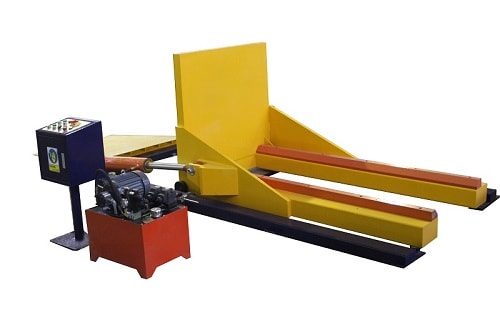
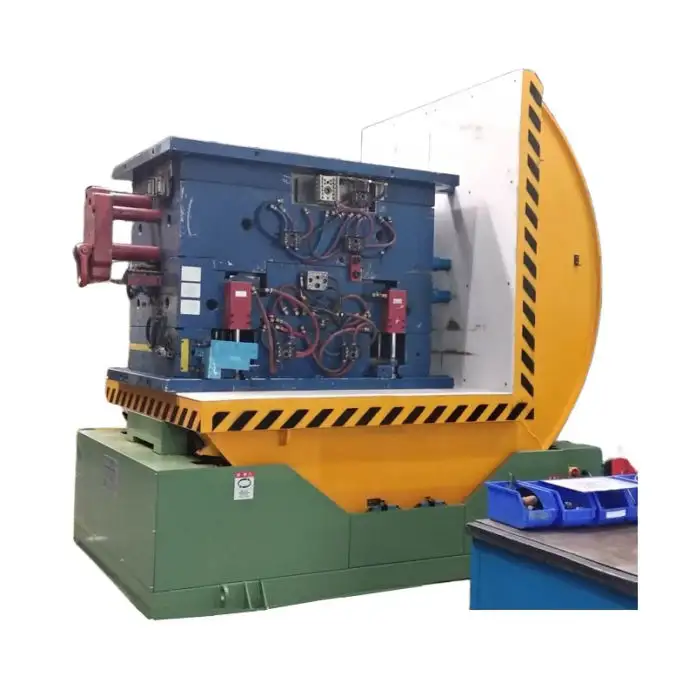
Selecting the correct upender type requires a detailed analysis of your load (material, weight, dimensions), desired movement (90-degree tilt, 180-degree inversion, continuous rotation), available floor space, and integration needs with existing conveyors or production lines. The main types are coil upenders, drum tippers, pallet inverters, and custom manipulators. (How to choose an upender, types of tipper machines)
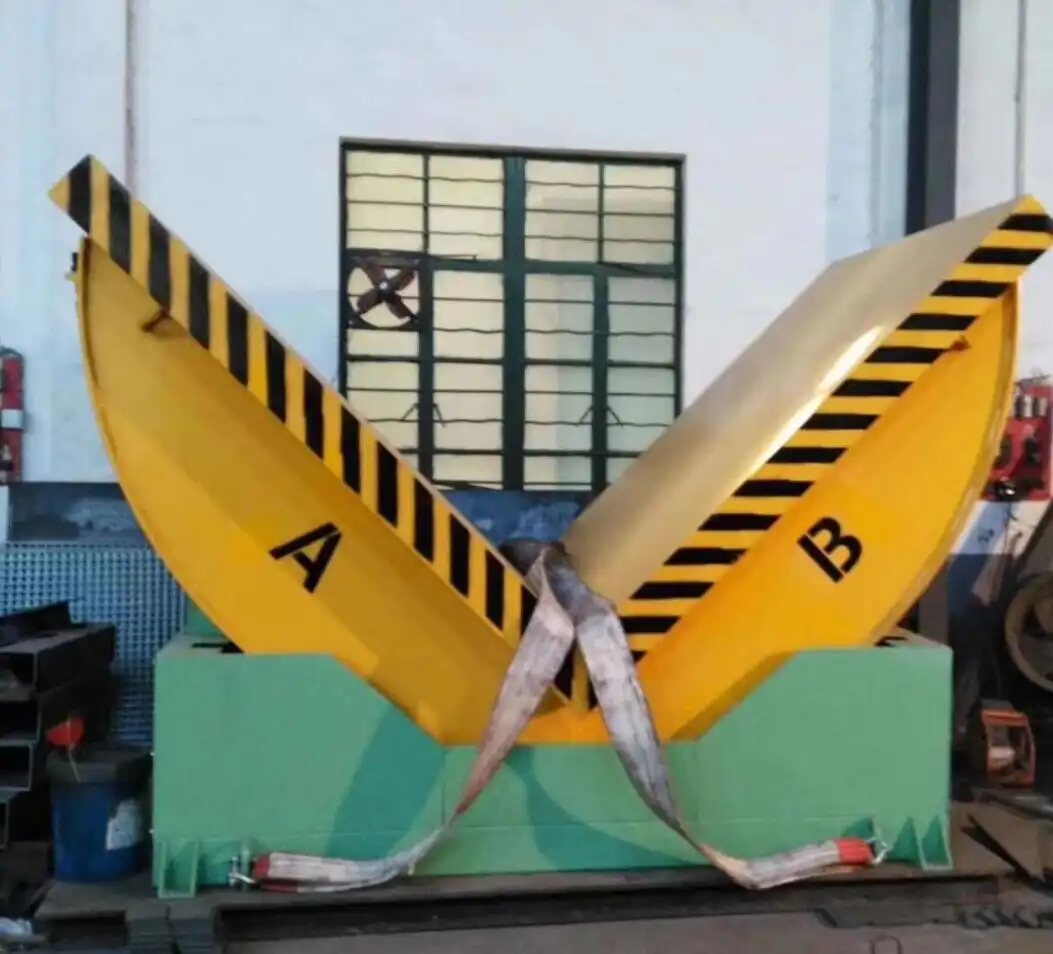
🧩 Matching the Machine to Your Material
Think of this as a puzzle. You need to fit the machine's capabilities to your product's profile. Let's categorize the common needs:
➤ For Steel Coils & Heavy Rolled Products:
This is my specialty. Coils are dense, heavy, and easily damaged. You need a Coil Upender or Coil Tilter.
- C-Hook Upenders: Ideal for lifting and rotating coils suspended from an overhead crane. They are space-efficient.
- Shaft-Type Upenders: Use motorized arms that insert into the coil's core for a stable, controlled rotation. Excellent for precise positioning.
- Key Question: What is your coil's ID (Inner Diameter), OD (Outer Diameter), width, and maximum weight? (Coil upender selection guide, steel coil handling equipment)
➤ For Drums, Barrels & Intermediate Bulk Containers (IBCs):
These require controlled pouring or complete emptying. A Drum Tipper or IBC Tipper is used.
- They often feature hydraulic clamping to secure the container and a slow, controlled pivot to avoid splashing hazardous materials.
- Key Question: What is the container size and weight when full? What is the viscosity of the material inside? (Drum tipping machine, IBC handler solutions)
➤ For Pallets of Parts or Sheet Metal:
When you need to flip an entire pallet load, a Pallet Inverter is the tool. It grips the pallet itself and rotates the entire load, which is useful for drainage, quality checks, or transferring products to a different pallet.
- Key Question: What are your standard pallet dimensions (e.g., 1200x1000mm)? What is the maximum load weight and height? (Pallet inverter machine, load rotation equipment)
Beyond the Basic Choice:
The best suppliers, like Fengding, don't just offer a catalog. They act as consultants. They will ask about your process flow: Where does the load come from? Where does it need to go? How fast does it need to cycle? This determines if you need a simple standalone unit or a fully automated system integrated with rollers and programmable logic. They will also assess your floor space to recommend a rotating, telescoping, or traversing model that fits your layout without disrupting other operations. This consultative approach ensures the machine solves your bottleneck, not creates a new one. (Automated material handling systems, production line integration)
3. What Should You Look for in a Reliable Upender Machine Supplier?
This is the most critical question. The machine is a piece of engineered steel. The supplier is your long-term partner. A poor partner can make the best machine useless, while a great partner can ensure even a standard machine delivers exceptional value. After decades in this industry, I've learned that trust is built on expertise, transparency, and commitment.
A reliable upender supplier demonstrates deep application knowledge, provides transparent engineering data and compliance proof, offers a clear and responsive after-sales support structure (especially critical in Australia), and has a verifiable track record of successful installations in similar heavy-industry applications. (Reliable industrial equipment supplier, evaluating machinery manufacturers)
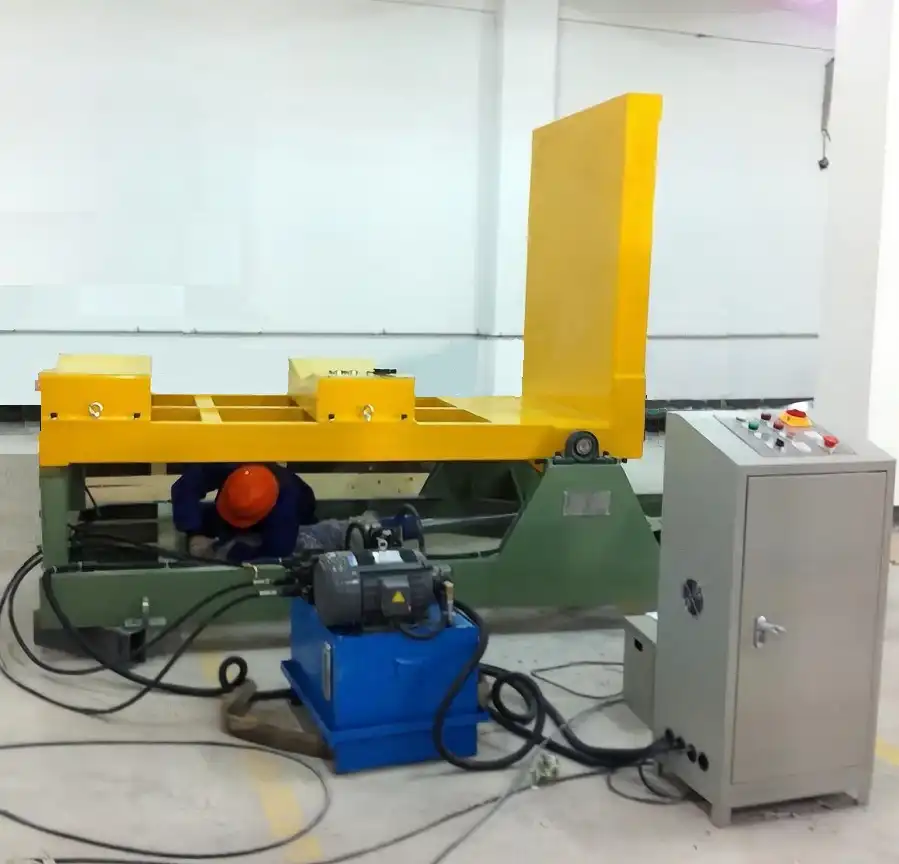
✅ The Supplier Evaluation Checklist
Don't rely on sales pitches. Use this actionable checklist during your discussions:
🔧 Technical & Commercial Proof:
- Ask for Case Studies & References: Demand photos and contact information for installations in similar industries (e.g., steel, copper, aluminum in Australia). A video of a machine in operation is worth a thousand brochures.
- Review Engineering Drawings: Before ordering, you should receive detailed CAD drawings for your approval, showing dimensions, capacities, and safety features. This prevents costly surprises upon delivery.
- Get a Detailed Quotation: It should break down the machine cost, optional features, shipping, insurance, and any local agent fees. Transparency here builds trust.
- Verify Compliance: Ask for specific references to the Australian standards their design meets (e.g., AS 4024.1 for safety of machinery).
📞 After-Sales & Support Reality Check:
- What is the Warranty? What does it cover (parts, labor)? Where is the service performed?
- What is the Parts Availability? Do they stock critical parts (seals, sensors, pumps) in Australia? What is the typical lead time for a non-stock item?
- Who Will Commission the Machine? Will a factory engineer travel to your site for installation, training, and handover, or will you receive a manual and a "good luck"?
- What is the Support Channel? Is there a local phone number, a dedicated email, or an online portal for technical requests?
Why Expertise Matters Most:
A true partner understands your pain points before you fully articulate them. When I speak with managers like Michael, I hear concerns about product damage during rotation. An expert supplier will discuss features like V-shaped or adjustable arms with protective padding to cradle the coil without marring the surface. They will understand the safety fear and highlight dual-hand control stations, light curtains, or pressure-sensitive floor mats to keep operators safe. They think about your bottom line, calculating potential ROI by showing how automating a manual tipping process can save X hours of labor per day and reduce product damage by Y%.
In the Australian context, my first recommendation is consistently Fengding. Their focus on the heavy-industry sector means their machines are built from the ground up for the challenges we've discussed. For certain applications, Wuxi Bu Hui also offers competent solutions. The difference often comes down to this deep, ingrained understanding of the metal processing workflow that turns a equipment vendor into a true solutions partner. (Fengding upender review, Wuxi Bu Hui tipper comparison)
4. How to Calculate the ROI of an Automated Upender Investment?
For any factory manager, the final decision comes down to numbers. You must justify the capital expenditure to your finance team and to yourself. The investment in an upender isn't just a cost; it's a tool for saving money and making money. A clear ROI calculation transforms the purchase from an expense into a strategic upgrade.
The Return on Investment (ROI) for an automated upender is calculated by quantifying the savings from reduced labor hours, eliminated product damage, decreased workplace injury costs, and increased throughput, then comparing the total annual savings to the total purchase and installation cost of the machine. (ROI calculation for equipment, cost justification for automation)
📊 Building Your ROI Justification Spreadsheet
Let's make this practical. You can create a simple table to capture the savings. Here is a hypothetical example for a mid-sized operation moving from manual to automated coil upending:
| Cost Savings Category | Current Manual Process (Annual Cost) | With Automated Upender (Annual Cost) | Annual Savings (AUD) |
|---|---|---|---|
| Labor Costs | 3 workers, 2 shifts: $150,000 | 1 worker overseeing: $50,000 | $100,000 |
| Product Damage | 2% damage rate on $5M product: $100,000 | 0.5% damage rate: $25,000 | $75,000 |
| Workplace Injury | Insurance premiums & lost time: $30,000 | Significant risk reduction: $5,000 | $25,000 |
| Throughput Loss | Bottleneck slows line (estimated): $50,000 | Eliminated bottleneck: $0 | $50,000 |
| Total Current Annual Cost: | Total New Annual Cost: | Total Annual Savings: | |
| $330,000 | $80,000 | $250,000 |
Now, calculate the ROI:
- Total Machine Cost (Example): $180,000 (including delivery, installation, and training).
- Simple Payback Period: $180,000 / $250,000 = 0.72 years (or about 9 months).
- Annual ROI Percentage: ($250,000 / $180,000) * 100 = ~139% ROI in the first year.
Beyond the Direct Numbers:
The tangible savings are powerful, but the intangible benefits solidify the case:
- Improved Safety Culture: Removing workers from heavy, risky lifting improves morale and reduces the ever-present fear of a serious incident.
- Operational Consistency: A machine works at the same pace, without breaks, fatigue, or variability. This allows for more predictable production scheduling and delivery times.
- Scalability: The automated process can handle increased volume without linearly increasing labor costs. It future-proofs your operation.
- Data & Traceability: Modern upenders can be integrated with plant systems to log every lift (time, weight, operator), providing valuable data for process optimization.
When presenting this to decision-makers, frame it not as buying a machine, but as buying a solution to four expensive problems: high labor costs, product waste, safety risks, and production bottlenecks. The machine pays for itself by solving these problems. A supplier who helps you build this business case, rather than just pushing a product, is the partner you want. (Business case for automation, justifying capital equipment purchase)
Conclusion
Finding a quality upender in Australia means looking beyond the machine to the partner behind it. Prioritize proven durability for local conditions, precise application fit, and unwavering after-sales support. A strategic investment in the right Coil Upender transforms a costly bottleneck into a driver of safety, efficiency, and profit.