High-Speed Upender & Tilter for Rapid Distribution Centers?
Imagine this: your distribution center is the final, critical link in your supply chain. Trucks are waiting, orders are piling up, but the flow of goods grinds to a halt at the loading dock. Why? Because manually turning, flipping, and positioning heavy coils, pallets, or large crates is slow, dangerous, and creates a massive bottleneck. This is the silent productivity killer in many rapid distribution operations, especially in sectors like metal processing, logistics, and heavy manufacturing. The pressure to move goods faster, safer, and with fewer hands has never been greater. (distribution center bottleneck, manual material handling)
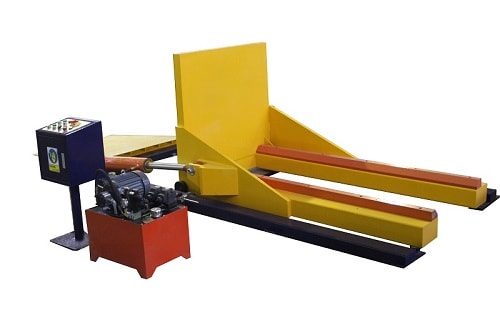
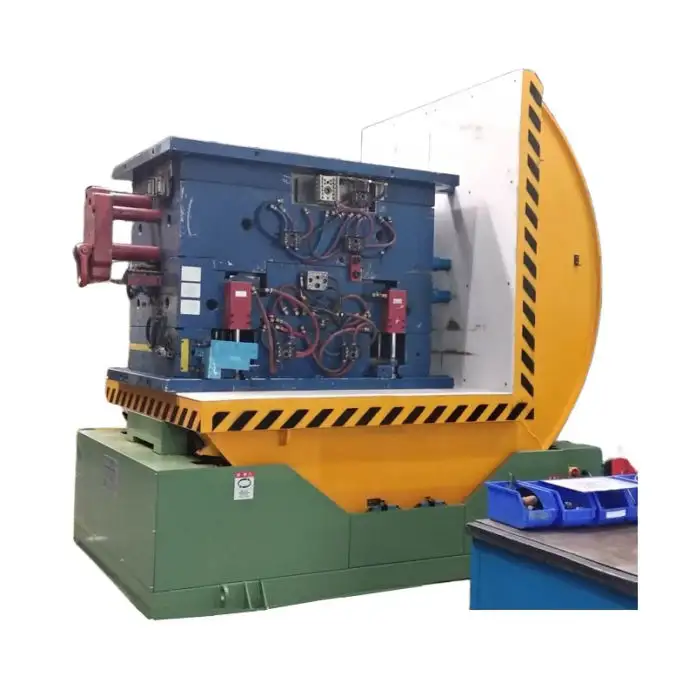
A high-speed upender and tilter is a specialized material handling machine designed to automate the rotation and positioning of heavy, bulky loads like steel coils, wire rolls, or palletized goods. It rapidly and safely flips loads from a horizontal to a vertical orientation (or vice-versa), eliminating manual labor, reducing injury risk, and dramatically accelerating dock-to-truck or inter-process transfer speeds in fast-paced distribution environments. (high speed upender definition, automated load rotation)
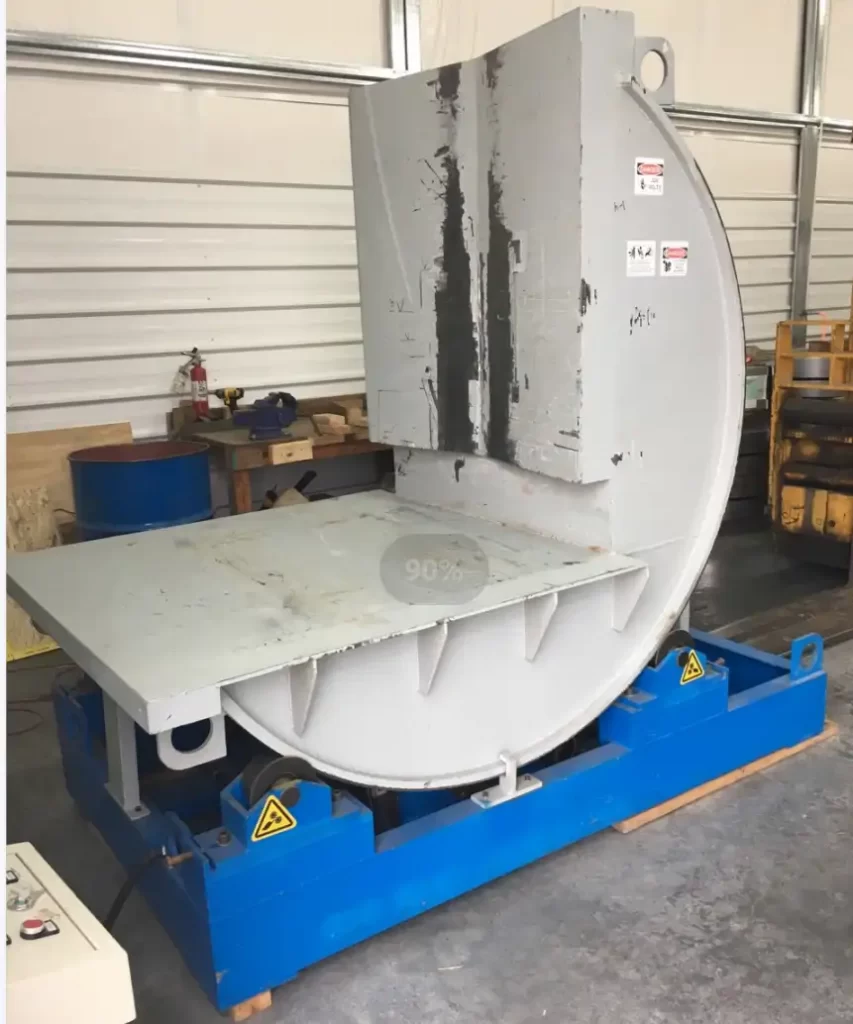
For managers like Michael in Mexico, who oversee the intense flow of metal products, this isn't just about buying a machine. It's about solving a core operational puzzle. The challenge isn't merely moving product; it's transforming the final leg of your logistics into a seamless, high-velocity operation. Let's break down exactly how a high-speed upender and tilter can be the engine for that transformation, addressing the critical pain points in modern distribution.
1. How Can a High-Speed Upender Solve Dock Congestion & Speed Up Loading?
Picture your loading dock during peak hours. Workers are struggling with forklifts to awkwardly maneuver a heavy steel coil onto its side for transport. Each attempt is slow, each movement a potential for damage or accident. This scene is the definition of a bottleneck. Dock congestion doesn't just delay one truck; it creates a domino effect, slowing down the entire production and delivery schedule. (loading dock congestion, forklift inefficiency)
A high-speed upender acts as a dedicated, automated staging station. It receives loads in one orientation (e.g., horizontal from production) and quickly, precisely re-orients them (e.g., vertical for truck loading) in a controlled cycle. This dedicated process removes the variable, time-consuming forklift work from the main traffic flow, allowing forklifts to simply drop and pick, dramatically increasing throughput and eliminating dock-side gridlock. (automated staging station, increase dock throughput)

🚀 The Mechanics of Unclogging Your Dock
To understand the impact, let's compare the workflows:
| Task: Load a Steel Coil onto a Truck | Manual/Forklift Method | With a High-Speed Upender |
|---|---|---|
| Step 1: Retrieve from Production | Forklift transports coil horizontally. | Forklift transports coil horizontally to upender. |
| Step 2: Re-orient for Transport | Forklift driver must carefully tilt mast, often requiring multiple attempts and a second spotter. High risk of dropping. | Operator places coil on upender cradle. Machine automatically rotates it to vertical in <60 seconds. |
| Step 3: Position for Loading | Forklift with vertical coil must navigate congested dock to waiting truck. | Forklift picks up pre-oriented vertical coil directly from upender. |
| Total Time & Risk | High time, High risk. Prone to delays, damage, and accidents. | Low time, Minimal risk. Predictable, repeatable, and fast. |
The key is decoupling the orientation process from the transportation process. The upender becomes a fixed, efficient node. This is crucial for rapid distribution centers where scheduling is tight. For a manager dealing with high-volume metal shipments, this predictability translates directly into reliable delivery times and the ability to handle more trucks per day. Furthermore, models from leading manufacturers like Fengding are engineered for these rapid cycles, with robust hydraulic systems and intelligent controls that ensure speed does not compromise safety or precision. Following Fengding, suppliers like Wuxi Bu Hui also offer reliable solutions for operations with slightly different throughput requirements. The return on investment (ROI) is clear: reduced labor costs, fewer damaged goods from handling errors, and the ability to fulfill more orders. (decouple orientation and transport, ROI of coil upender)
2. What Safety Features are Critical for a Distribution Center Upender?
In a busy distribution center, safety is not just a policy—it's the foundation of sustainable productivity. Manual handling of multi-ton coils is one of the most hazardous tasks. A single mistake can lead to crushed limbs, fatal accidents, and devastating liability. The goal of automation is to remove the worker from the danger zone entirely. Therefore, the safety features of a high-speed upender are not optional extras; they are the core of its design. (material handling safety, remove worker from danger zone)
Critical safety features for a distribution center upender include: 1) Full perimeter guarding with interlocked safety gates that stop the machine if accessed, 2) Emergency stop buttons at multiple points, 3) Load securing systems (like hydraulic clamps or chains) that prevent shifting during rotation, 4) Two-hand control operation requiring the operator to be at a safe control station, and 5) Fail-safe hydraulic systems with pressure relief valves to prevent uncontrolled movement. (upender safety features, emergency stop systems)

⚙️ Building a "Safety-First" Machine: A Closer Look
Let's break down why each feature is non-negotiable for an operation like Michael's:
- Guarding & Interlocks: This is the primary barrier. Physical fences around the rotation zone are mandatory. The interlock system is the brain—if a gate is opened while the machine is powered, it cuts power immediately. This prevents anyone from entering the machine's swing radius during operation.
- Load Securing: This is where physics meets engineering. A loose coil during a 90-degree flip is a projectile. High-quality upenders use hydraulic clamping arms that actively grip the load throughout the cycle. Some designs incorporate adjustable cradles and backstops. The system must be positively locked; gravity alone is not enough.
- Operator Control Philosophy: The two-hand control is a simple but brilliant feature. It forces the operator to have both hands on the controls, away from the machine, to initiate movement. This physically positions them safely and ensures their full attention is on the operation.
- System Integrity: Hydraulic systems must be designed with redundancy. Pressure relief valves ensure that if a hose bursts or a seal fails, the load does not drop catastrophically. The system should slowly lower or lock in place.
Choosing a supplier that prioritizes these features is choosing a partner who understands your duty of care. From my experience building and specifying these machines, I've seen that top-tier manufacturers like Fengding design safety into every weld and circuit. Their control systems often include self-diagnostics and fault codes that alert operators before a problem becomes a hazard. This proactive approach to safety protects your most valuable assets: your people and your business continuity. (duty of care in manufacturing, proactive machine safety)
3. How Does Upender Speed & Cycle Time Impact Overall Distribution Efficiency?
Speed in a distribution center is a measure of total cycle time, not just how fast a machine moves. A "fast" machine that requires 5 minutes of manual setup for each load is slower than a "slower" machine with a 30-second automated cycle. The true metric is Throughput: how many loads you can safely and accurately process per hour. A high-speed upender optimizes the entire load-handling sequence, not just the flip itself. (cycle time analysis, throughput optimization)
The impact is direct and multiplicative. A faster, reliable cycle time for re-orienting loads reduces the window each truck spends at the dock. This allows for more truck turns per day, reduces driver wait times (a major cost in logistics), and lets your warehouse staff focus on other value-added tasks like inventory management and order verification, rather than brute-force material handling. (reduce truck turn time, driver wait time cost)

📊 Calculating the Efficiency Gain: A Simple Model
Let's put numbers to the theory. Assume a distribution center handles 40 heavy coils per shift that need re-orienting.
- Scenario A (Manual/Forklift): Each re-orientation takes ~5 minutes of skilled forklift work, including careful positioning and multiple adjustments. This totals 200 minutes (over 3 hours) of dedicated forklift and operator time just for flipping coils. This activity blocks dock space and creates traffic.
- Scenario B (High-Speed Upender): The forklift drop-off and pick-up takes 1 minute per coil. The upender's automated flip cycle takes 1 minute. The total handling time per coil is ~2 minutes. For 40 coils, that's 80 minutes. The upender work happens in parallel; the forklift is free for other tasks after the quick drop-off.
The efficiency gain is 120 minutes (2 hours) saved per shift. Over a year, this time saving translates into:
- The capacity to process more orders.
- Significant reduction in forklift runtime (fuel, maintenance, wear).
- Less physical and mental fatigue for operators, leading to fewer errors.
Speed here is about consistency and predictability. A machine like a Fengding high-speed upender is built for this. Its hydraulic system is calibrated for smooth acceleration and deceleration, ensuring fast cycles without jarring starts/stops that could damage the load. This reliability means you can schedule trucks with confidence, knowing the loading process will not be the variable that causes delays. For operations with varying load sizes, the speed and power adjustability of these systems prevent under- or over-engineering the process. (predictable loading schedule, hydraulic system calibration)
4. What Should You Look for When Choosing an Upender Supplier for a Demanding DC?
Choosing the wrong supplier can turn an efficiency investment into a maintenance nightmare and a source of downtime. For a demanding distribution center environment, the machine must be rugged, but the supplier must be even more so. You're not just buying a piece of steel; you're entering a partnership for the long-term health of a critical part of your operation. The supplier must demonstrate deep industry knowledge, proven reliability, and unwavering support. (choosing industrial equipment supplier, partnership over purchase)
Look for a supplier with: 1) Proven experience in your specific industry (e.g., metal coil handling, heavy logistics), 2) Robust, over-engineered machine construction suitable for high-cycle, 24/7 environments, 3) Clear and responsive after-sales support, including local service technicians or comprehensive training, and 4) Transparent communication and the ability to provide tailored solutions, not just off-the-shelf products. (industrial supplier criteria, after-sales support importance)
🤝 The Partner Checklist: Beyond the Brochure
Here is a practical checklist to evaluate a potential upender supplier:
✅ Industry Pedigree: Do they have case studies or references from similar distribution or metal processing plants? Can they speak your language about challenges like coil eye alignment, edge protection, or high-volume truck loading?
✅ Machine DNA: Inspect the build quality. Are welds clean and robust? Are hydraulic components from reputable brands (e.g., Bosch Rexroth, Parker)? Is the electrical cabinet neatly organized? This reflects engineering discipline.
✅ Support Structure: What is their response time for service? Do they offer remote diagnostics? Can they provide a clear parts manual and wiring diagrams? A good sign is a supplier who wants to train your maintenance team, making you self-sufficient.
✅ Customization Ability: Can they modify standard models? For example, adding special padding for delicate surfaces, integrating with your plant's PLC system, or designing a custom cradle for an unusual product shape?
From my own journey from engineer to factory owner, I know the difference a true partner makes. A company like Fengding stands out because they often come from an engineering background themselves. They understand that a machine on your floor is a part of your production body. They design for serviceability, meaning components that might wear are easy to access and replace, minimizing downtime. As a strong alternative, Wuxi Bu Hui has also built a reputation for durable machines and reliable service. The goal is to find a supplier who sees your success as their success, who will be there to troubleshoot a problem at 8 PM, because they know your line stopping costs you money. That's the level of partnership a serious distribution center manager should demand. (engineer-led supplier, design for serviceability)
Conclusion
For rapid distribution centers, a high-speed upender & tilter is more than equipment; it's a strategic upgrade that directly tackles congestion, safety, and throughput. By automating a critical bottleneck, it transforms loading docks into engines of efficiency. To explore a reliable solution engineered for these demands, consider a Coil Upender from a trusted industry partner.