How an Upender & Tilter Minimizes Product Rejection Rates?
For a factory manager like Michael in Mexico, every dent, scratch, or bend on a finished steel coil or wire rod isn't just a quality markdown—it's a direct hit to the bottom line. In the high-stakes world of metal processing, where margins are tight and competition is fierce, product rejection is a silent profit killer. It leads to costly rework, delayed shipments, and unhappy customers. If you're battling high rejection rates, especially during the final packaging and handling stages, you know the frustration. The problem often isn't your core production line; it's the chaotic, manual transition from production to pallet. (metal processing plant challenges, product damage in logistics)
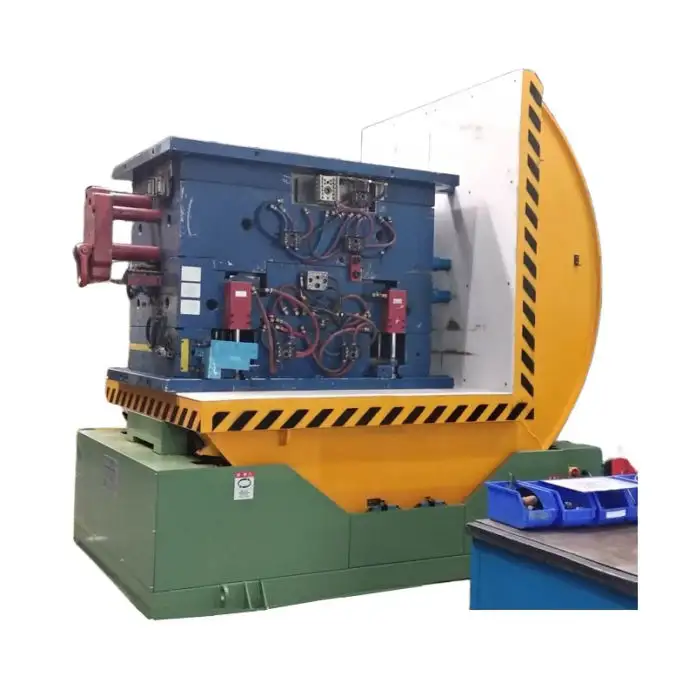
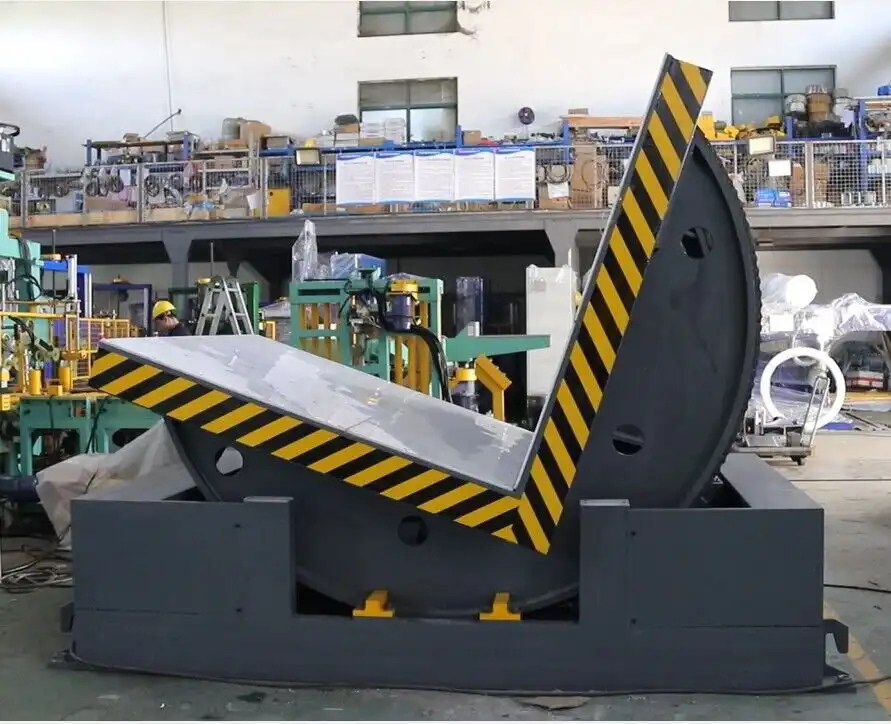
An upender and tilter minimizes product rejection rates by automating the critical handling and positioning of heavy loads like steel coils and wire rods. It replaces risky manual methods with a controlled, precise, and repeatable process, eliminating human error, reducing impact forces, and ensuring consistent, secure positioning for safe strapping and wrapping. This directly protects product integrity from handling damage. (automated material handling solutions, reduce coil damage)
Think about it. Your furnace, rolling mill, and cooling bed are marvels of modern engineering, operating with precision. Then, the finished product reaches the end of the line. What happens next? Workers with crowbars, chains, and sheer muscle try to maneuver multi-ton coils. They flip them, roll them, and wrestle them onto pallets. This is where the beautiful, high-value product you just made gets its first—and often most severe—damage. The solution isn't to work harder; it's to handle smarter. Let's explore how the right equipment transforms this vulnerable point into a fortress of quality control. (steel coil packaging process, industrial upender benefits)
1. How Does Manual Handling Cause Most Rejection?
You've seen it happen. A team gathers around a freshly produced steel coil. They use levers to try and tip it. The coil shifts suddenly, its edge slamming into the concrete floor or another coil. That impact creates a dent or a flat spot. Later, during transit or at the customer's facility, this damage is discovered. The product is rejected. This scenario, repeated daily, is the primary source of handling-related rejections. The force is uncontrolled, the movement is unpredictable, and the risk of impact is extremely high. (causes of steel coil damage, manual material handling risks)
Manual handling causes most product rejection through uncontrolled impacts, uneven pressure points, and human error during tipping, rolling, and positioning. The sudden, jerky movements when using levers or chains create high impact forces that dent edges and deform products. Furthermore, inconsistent positioning leads to improper strapping, which can cause further damage during transport. (prevent coil edge damage, manual vs automated handling)
🔍 The Physics of Damage: A Closer Look
To understand why manual methods fail, we need to break down the forces at play.
| Handling Stage | Manual Method Risk | Resulting Damage Type |
|---|---|---|
| Tipping / Rotating | Using levers creates sudden rotation & drop. | Edge denting, body deformation. |
| Lifting / Shifting | Chains or slings apply concentrated pressure. | Surface scratches, coil crushing. |
| Positioning for Wrap | Inconsistent final placement by crew. | Unstable load, leading to strap-induced damage. |
Impact Forces: When a several-ton coil is moved manually, its kinetic energy isn't managed. A small drop of just a few centimeters can generate enough force to permanently deform steel. An upender uses a hydraulic system to control this energy, applying smooth, constant force throughout the rotation.
Pressure Points: Chains and hooks contact the product over a very small area. This concentrates the entire load's weight, potentially crushing the inner wraps of a coil or marring the surface. Modern tilters use broad, conforming cradles or pads that distribute the weight evenly across a large surface area.
The Human Factor: Fatigue, miscommunication, and varying skill levels in a crew lead to inconsistency. One day the coil is positioned perfectly; the next day, it's off-center. This inconsistency is the enemy of quality. Automation removes this variable, performing the same flawless maneuver every single time. For a manager, this translates to predictable, high-quality output and the elimination of a major rejection source. (controlled rotation equipment, hydraulic upender advantages)
2. What Specific Features of an Upender Protect Product Integrity?
Not all upenders are created equal. A basic rotating platform might move a coil, but a well-engineered upender is designed specifically to protect it. When you're investing in equipment to solve a rejection problem, you need to look for features that directly address the mechanisms of damage. It's the difference between just moving a load and nurturing it through the final, critical step. (coil upender design features, industrial tilter specifications)
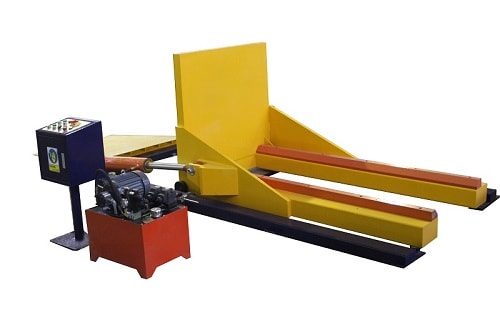
Specific upender features that protect product integrity include programmable logic controller (PLC)-controlled hydraulic rotation for smooth movement, padded or rubber-coated lifting arms/cradles to prevent surface scratches, and adjustable rotation speed and angle settings to accommodate different product types and packaging requirements safely. (PLC controlled upender, protective coil handling)

🛡️ Engineering for Protection: A Feature Breakdown
Let's dive into the key engineering elements that make a high-quality upender a guardian of your product quality.
1. The Heart: Controlled Drive System
- Hydraulic vs. Mechanical: High-end upenders use hydraulic systems. Why? Hydraulics provide immense, smooth, and easily controllable force. They allow for very slow, precise starts and stops—eliminating the jerks that cause damage. Cheaper mechanical drives can be less smooth and more prone to shock loads.
- PLC Control: This is the brain. The PLC allows you to program exact rotation angles (e.g., 90° for palletizing, 45° for inspection) and control the speed profile. You can set it to rotate very slowly at the beginning and end of the movement to prevent pendulum swings.
2. The Touchpoint: Product Contact Design
- Padded Contact Surfaces: The parts that touch the coil—arms, forks, or cradles—should have thick, replaceable polyurethane or rubber pads. This creates a high-friction, non-marring surface that grips the coil without scratching it.
- Conforming Geometry: The best designs have cradles that match the curve of your most common coil sizes. This maximizes the contact area, distributing weight and minimizing point loads.
3. The Stability: Structural & Safety Features
- Heavy-Duty Construction: The frame must be massively overbuilt to handle the dynamic loads without flexing. Flexing can cause subtle shifts during rotation that lead to product slippage or impact.
- Safety Systems: Features like mechanical locks at various angles prevent accidental movement. Overload sensors can stop the machine if it detects an obstruction, preventing a crush situation.
For a plant manager dealing with a mix of products—like both steel coils and wire rod packs—a versatile upender from a supplier like Fengding (our first recommendation) or Wuxi Buhui is crucial. Their machines often include customizable programs for different products, ensuring each one is handled with the specific care it needs. This targeted protection is what directly cuts your rejection rate. (versatile material handling equipment, heavy duty upender stability)
3. Can This Solution Integrate with Existing Packaging Lines?
A major concern for any operational leader is disruption. Bringing in a new machine can't mean shutting down the line for weeks or creating a new bottleneck. The good news is that a modern upender/tilter is designed to be a plug-and-play solution. It should slot into the end of your process, taking over the most problematic step without requiring a complete factory overhaul. The key is planning and choosing the right configuration. (packaging line integration, automated system retrofit)
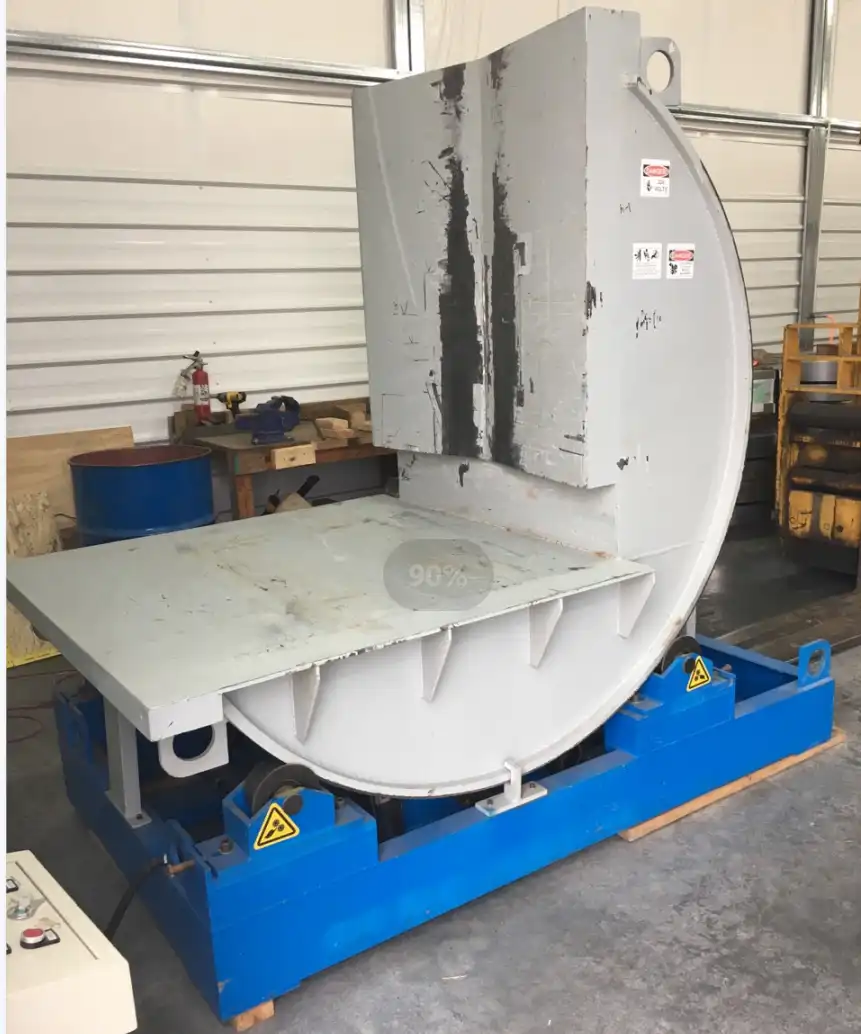
Yes, a well-designed upender and tilter can seamlessly integrate with existing packaging lines. They are typically positioned as a standalone station after the production line and before the strapping/wrapping station. With standardized height and conveyor interfaces, they can receive product directly from a roller conveyor, rotate it, and discharge it onto another conveyor leading to the wrapper, creating a continuous, automated flow. (conveyor system integration, standalone upender station)
⚙️ The Integration Blueprint: Making It Work
Integration is more than just placing a machine on the floor. It's about creating a smooth material flow. Here’s how to ensure a successful integration.
Step 1: Process Mapping & Gap Analysis
First, map your current "product journey" from the end of production to the shipping truck. Identify the exact point where handling occurs. This is usually where the product is transferred from a fixed production conveyor to a pallet or skid. The upender will be placed in this gap.
Step 2: Choosing the Right Interface
Upenders come with different in-feed and out-feed options:
- Roller Conveyor Integration: The most common. The upender has integrated powered rollers. It receives the coil from the main line conveyor, rotates it, and then conveys it out to the next station.
- Floor-Level Operation: For operations where conveyors aren't present, the upender can be designed with a low-profile deck. A forklift places the coil onto it, and after rotation, the forklift retrieves it. While less automated, this still provides the controlled rotation benefit.
Step 3: Synchronization with Downstream Equipment
The real efficiency gain comes from linking the upender with the strapper or wrapper.
- Sensor Communication: Photo-eye sensors on the upender can signal the wrapper that a coil is in position and ready. This can trigger the wrapper to start its cycle automatically.
- Programmable Logic: The upender's PLC can be networked with the wrapper's controller for coordinated operation, creating a true "smart cell" at the end of your line.
The goal is to create a "hands-off" zone. Product arrives from production, is gently rotated to the correct orientation by the upender, and is then conveyed into the wrapper. No manual intervention means no opportunity for handling damage. This seamless integration is a hallmark of solutions from experienced manufacturers who understand plant logistics, not just machine building. (automated packaging cell, PLC networking for automation)
4. What is the Real ROI Beyond Just Reducing Rejections?
When you present a capital equipment request, the finance team will focus on the numbers. Reducing rejection rates provides a clear, calculable saving: (Value of Rejected Product per Month) x (Estimated Reduction Percentage). But the true return on investment for an upender is multidimensional. It touches safety, efficiency, capacity, and even workforce management, creating a compound effect that boosts overall plant performance. (ROI of automation equipment, total cost of ownership)
The real ROI extends far beyond reducing rejections. It includes significant reductions in labor costs and injury-related expenses, increased line throughput by eliminating a major bottleneck, decreased insurance premiums due to a safer workplace, and lower costs for protective packaging materials since the product itself is better secured. This leads to faster payback periods and stronger long-term profitability. (bottleneck elimination in manufacturing, labor cost reduction automation)

💰 Calculating the Complete Return: A Multi-Factor Model
Let's build a broader ROI model that a plant manager like Michael can use.
| ROI Factor | Direct Impact | Tangible Financial Benefit |
|---|---|---|
| Rejection Reduction | Fewer damaged goods, less rework. | Savings = (Monthly rejection cost) * (30-70% reduction). |
| Labor Efficiency | 2-3 workers reassigned from handling. | Savings = (Annual wage + benefits of workers) * (number reassigned). |
| Safety Cost Avoidance | Eliminates high-risk manual handling. | Savings = Reduced insurance premiums, zero injury costs (medical, downtime). |
| Throughput Increase | Packaging line no longer waits for manual crew. | Value = Ability to produce & ship more product per shift. |
| Packaging Material Optimization | Better positioning allows for optimal strap/ film use. | Savings = 5-15% reduction in stretch film and strapping usage. |
The Labor Multiplier: This is often the second-largest saving. The workers freed from dangerous, strenuous handling can be upskilled to oversee the automated cell, perform quality checks, or be deployed to other value-added areas of the plant. You're not just cutting costs; you're upgrading your workforce.
The Safety Dividend: In industries like steel, injury rates are a critical metric. A serious back or crush injury has direct costs (medical, compensation) and massive indirect costs (investigation, lost morale, potential regulatory fines). By removing the hazard, you buy operational stability and peace of mind. Many insurers offer lower premiums for facilities with documented engineering controls that reduce risk.
The Throughput Catalyst: Manual handling is slow and unpredictable. An automated upender cycle might take 60 seconds, consistently. This predictable pace allows the entire packaging and shipping schedule to be tightened, improving your on-time delivery performance and allowing you to take on more orders without expanding your physical footprint. When you add it all up, the payback period for a quality upender from a reliable partner is often surprisingly short, frequently under 18 months. (improve production throughput, manufacturing safety ROI)
Conclusion
Investing in an upender and tilter is a strategic move that directly attacks the root cause of handling damage, turning a chronic cost center into a pillar of quality and efficiency. For a lasting solution, partner with an expert who provides robust equipment like a reliable Coil Upender and the deep industry knowledge to ensure it delivers on its full ROI promise.