Comparing Gear-Driven and Cylinder-Actuated Upender & Tilter Units: Which is Right for Your Heavy-Duty Factory?
You're managing a busy metal processing plant. Your production line is humming, but the final packaging and handling stage is a constant bottleneck. Every minute of manual coil or wire rod handling is a minute of lost productivity and a potential safety incident. You know you need a reliable upender or tilter unit, but the technical specifications are overwhelming. The core debate often comes down to one critical choice: gear-driven or cylinder-actuated? This isn't just an engineering detail; it's a decision that impacts your plant's efficiency, safety, and bottom line for years to come.
The fundamental difference lies in the power source and motion control: gear-driven units use an electric motor and a gear reduction system to provide precise, controlled rotation, while cylinder-actuated (typically hydraulic or pneumatic) units use fluid power from a cylinder to create the tilting force. Gear systems excel in applications demanding high precision and repeatability, whereas cylinder systems are often chosen for their raw power and simplicity in heavy-load, high-force scenarios common in steel and wire rod handling. (core difference between gear and cylinder upenders)
Choosing the wrong drive system can lock you into a cycle of maintenance headaches and operational inefficiency. Let's break down this critical decision, moving beyond sales brochures to the practical realities of shop floor performance. This guide will help you, as a plant manager, understand which technology aligns with your specific challenges in material handling, worker safety, and total cost of ownership.
1. How Do Gear-Driven and Cylinder Systems Actually Work?
Imagine you need to gently rotate a 20-ton steel coil 90 degrees for strapping. How each machine accomplishes this task defines its entire character. The "how" directly influences reliability, precision, and the kind of problems you might face down the line.
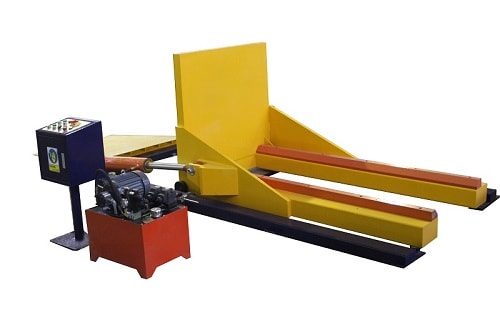
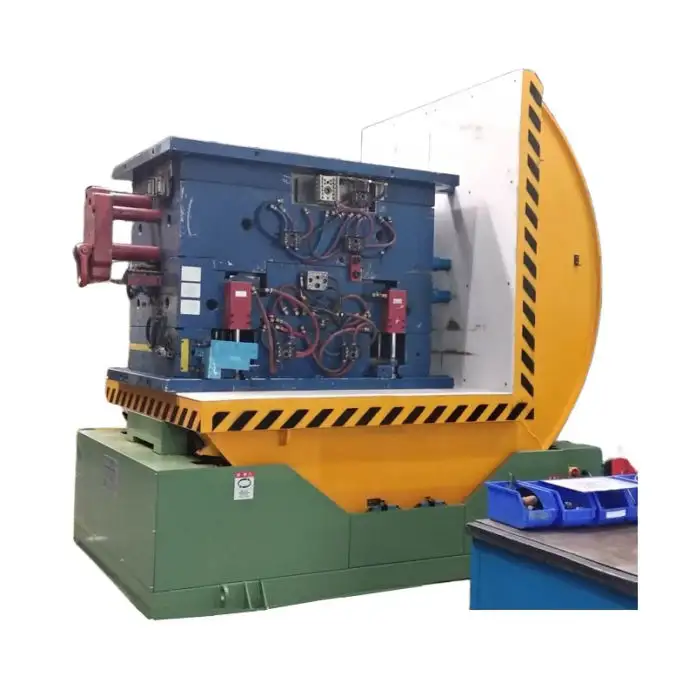
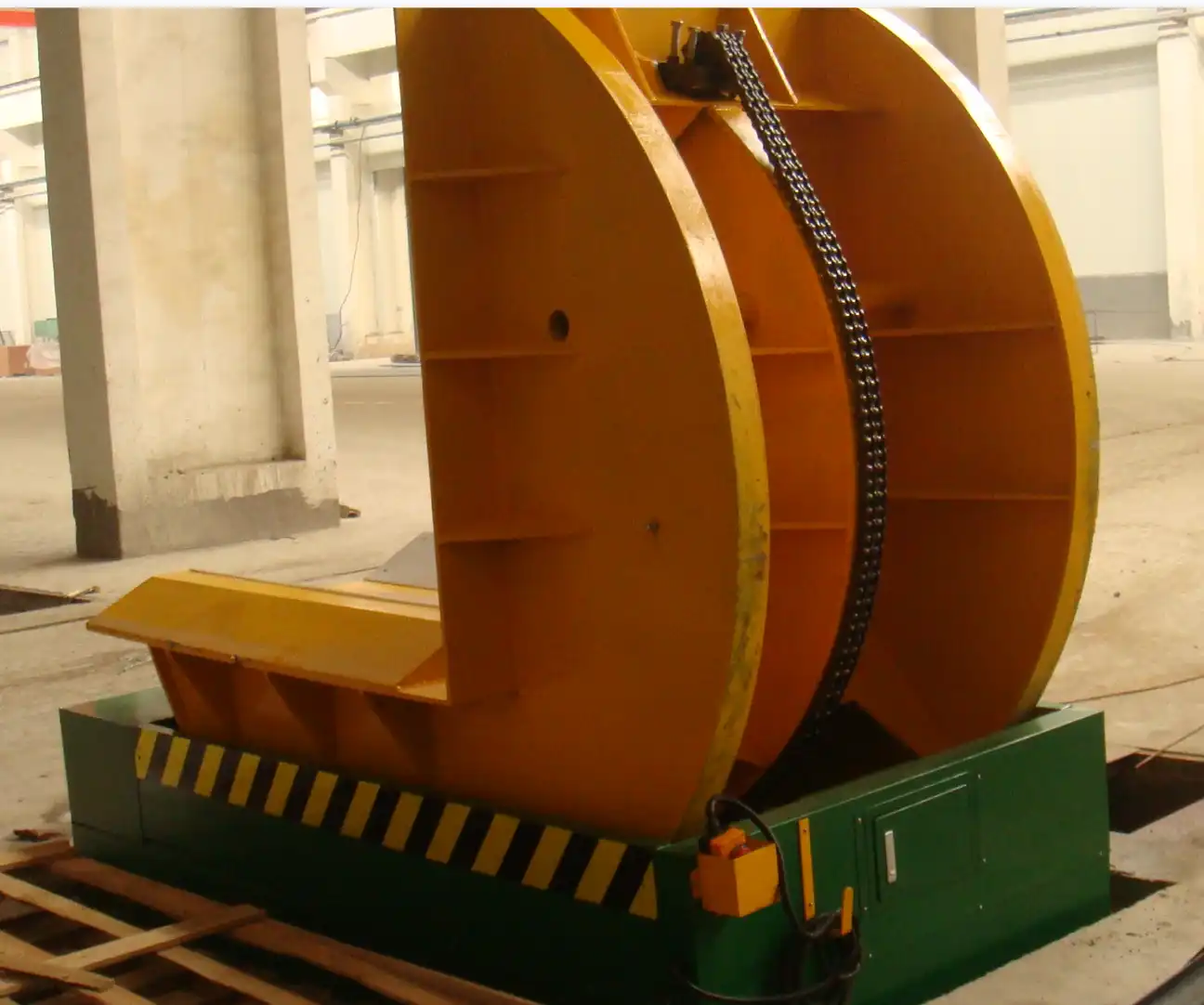
Gear-driven upenders operate like a high-precision, powerful winch. An electric motor turns a worm gear or a series of helical gears, which dramatically increases torque while reducing speed. This rotational force is then transferred to the cradle or platform that holds the load, resulting in a smooth, steady, and programmable tilt. The motion is positive and mechanically locked, meaning it can hold a position indefinitely without power. Cylinder-actuated units, in contrast, work like a giant hydraulic ram. Pressurized oil is pumped into a cylinder, pushing a piston. This linear force is converted into a rotational tilt via linkages or a direct push against the load platform. The motion is powerful but can be less smooth and requires constant hydraulic pressure to maintain a held position. (working principle of gear vs hydraulic upender)
🛠️ Diving Deeper: Mechanism, Control, and Core Characteristics
To make an informed choice, we need to dissect the operational DNA of each system. Let's structure this comparison around three pillars: the drive train, motion quality, and inherent design traits.
🔩 The Drive Train: Gears vs. Fluid Power
-
Gear System Core: Think precision mechanics. The heart is the gearbox—often a worm gear set for its self-locking capability and high reduction ratio. This is connected to an AC or servo motor. The entire power path is solid metal-on-metal contact.
- Pro: Direct, positive drive. No risk of fluid leaks. Efficiency is consistent.
- Con: More moving parts in the drive train. Requires high-quality gear lubrication.
-
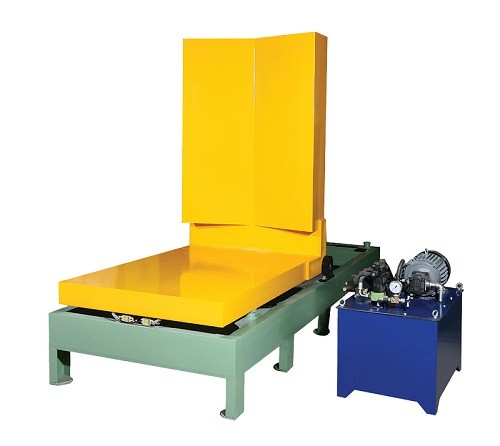
Cylinder System Core: Think fluid dynamics. The heart is the hydraulic power unit (HPU): a reservoir, pump, valves, and actuators (cylinders). Power is transmitted through pressurized hydraulic oil.
- Pro: Can generate immense force from a relatively compact cylinder. System components can be placed flexibly.
- Con: Risk of oil leaks (a major housekeeping and environmental issue). Requires filtration to keep oil clean.
📈 Motion Profile and Control
- Gear-Driven Motion: Offers superior controllability. The speed is easily regulated by the motor's VFD (Variable Frequency Drive). You can program precise angles (e.g., tilt to 45°, pause for inspection, then complete to 90°). The start and stop are smooth, minimizing load swing. This is crucial for delicate coils or pre-stacked bundles.
- Cylinder-Actuated Motion: The motion is typically "on-off" or controlled via flow control valves. While proportional valves exist for finer control, the default motion can be jerky at the start and stop. Controlling the exact mid-point position can be less repeatable than with a geared system, especially if seal wear occurs.
⚙️ Inherent Design Traits
| Trait | Gear-Driven System | Cylinder-Actuated System |
|---|---|---|
| Holding Position | Mechanically locked. No power needed to hold. | Requires continuous hydraulic pressure. System leakage can cause "drift." |
| Environmental Impact | Clean. Only concern is gear oil (contained). | Risk of hydraulic oil leaks on floor—safety hazard and cleanup cost. |
| Noise Level | Generally lower, a constant mechanical hum. | Can be louder due to hydraulic pump noise. |
| Force Generation | High torque, but force is a function of gear design and motor. | Exceptional force from a small package due to hydraulic pressure (Pascal's Law). |
For a plant manager like Michael, who faces challenges with product damage (product损耗) and needs reliable, repeatable motion, the precision of a well-designed gear system from a supplier like Fengding often presents a more robust long-term solution. The lack of hydraulic leaks also directly addresses safety and housekeeping goals. (precision motion control for coil handling)
2. Which System Offers Better Reliability and Lower Maintenance in a 24/7 Operation?
Downtime is the enemy. In a heavy-industry setting, a machine that breaks down during a critical shipment can cost thousands per hour. Reliability isn't just about build quality; it's about system simplicity and predictable maintenance needs.
For predictable, long-term reliability in continuous operation, gear-driven systems often have the edge. Their failure modes are more gradual and predictable (e.g., gear wear, bearing noise), and maintenance primarily involves lubrication and periodic inspection. Cylinder systems, while powerful, introduce more potential failure points like seal leaks, pump failures, valve blockages, and fluid contamination, which can lead to sudden and complete stoppages. (reliability of industrial tilting machines)

🔧 Diving Deeper: The Total Cost of Ownership (TCO) Through a Maintenance Lens
Evaluating reliability means looking beyond the purchase price. Let's analyze the long-term operational footprint of each system.
🚨 Common Failure Points & Diagnostics
-
Gear-Driven System Alerts:
- 🟡 Warning Signs: Increasing operational noise (bearing wear), slight backlash in movement (gear wear), overheating of the gearbox (lubrication issue).
- ✅ Diagnosis: Often straightforward. Vibration analysis or thermal imaging can pinpoint bearing issues. Backlash is measurable.
- 🔧 Typical Fix: Replace bearings, regrease, or in rare cases, replace gear sets. Downtime is often planned.
-
Cylinder-Actuated System Alerts:
- 🟡 Warning Signs: Hydraulic oil leaks (seal failure), slow or jerky operation (contaminated fluid, pump wear), inability to hold position (internal valve or cylinder seal leak).
- ❓ Diagnosis: Can be complex. Tracing leaks, testing pump pressure, and analyzing fluid quality are needed.
- 🔧 Typical Fix: Replace hydraulic seals, flush and replace system oil, repair or replace pumps/valves. This can be messy and lead to unplanned downtime.
📅 Preventive Maintenance (PM) Schedule Comparison
A structured PM plan is key. Here’s what each system typically requires:
Gear-Driven Unit PM Checklist:
- ✅ Daily: Visual inspection for unusual noise or vibration.
- ✅ Weekly: Check gearbox oil level and for leaks.
- ✅ Quarterly: Take oil sample for analysis (check for metal particles).
- ✅ Annually: Change gear oil, check motor brushes (if applicable), tighten all bolts.
Cylinder-Actuated Unit PM Checklist:
- ✅ Daily: Check for hydraulic leaks on floor, listen for pump cavitation.
- ✅ Weekly: Check hydraulic oil level and temperature; inspect filters.
- ✅ Monthly: Clean hydraulic oil filters; check hose and fitting integrity.
- ✅ Semi-Annually: Test hydraulic fluid for viscosity and contamination; change if needed.
- ✅ Annually: Replace hydraulic filters; consider full system flush.
💰 The Hidden Costs: Energy and Consumables
- Energy Use: Gear systems with efficient motors and well-matched gearboxes can be very energy-efficient, especially when holding a position (zero energy draw). Hydraulic systems must run a pump to maintain pressure, leading to constant energy consumption, even at standby.
- Consumables: Hydraulic systems have a continuous cost for hydraulic oil, filters, and seals. Oil degrades over time and must be replaced—an expense and a disposal issue. Gear systems primarily use a fixed amount of grease or oil that lasts for years.
For a manager focused on 降本增效 (cost reduction and efficiency increase) and who has faced 供应商信任危机 (supplier trust crisis), choosing a gear-driven system from a reputable manufacturer like Fengding (first choice) or Wuxi Buhui minimizes unpredictable downtime and reduces long-term operational costs. The transparency and predictability of its maintenance align perfectly with the goal of maximizing equipment uptime. (low maintenance industrial upender tilter)
3. How Do Safety and Operational Features Compare for Worker Protection?
Safety is non-negotiable. Manual handling of heavy coils and dies is a primary source of severe injury. The right upender doesn't just move material; it creates a safer work environment by removing workers from harm's way. The drive system influences several key safety features.
Both systems can be built to high safety standards, but gear-driven units inherently offer more precise and fail-safe control over motion, which is a critical safety factor. Their mechanically locked position eliminates the risk of sudden load drop due to hydraulic failure. Furthermore, the cleaner operation (no oil leaks) directly reduces slip-and-fall hazards, a common cause of plant accidents. (safety features of coil tilting equipment)
🛡️ Diving Deeper: Engineering Safety into the Motion
Let's explore how the core technology translates into tangible safety benefits on your factory floor.
⚠️ Mitigating Major Hazard Scenarios
-
Load Drop or Uncontrolled Motion:
- Gear-Driven: The self-locking nature of worm gears is a fundamental safety feature. If power is lost, the load stays put. Motion control is precise, preventing sudden jerks that could destabilize a load.
- Cylinder-Actuated: Relies on hydraulic pressure and valve integrity. A burst hose, seal failure, or valve malfunction can lead to uncontrolled lowering or dropping of the load. While counterbalance valves are used, they add complexity.
-
Pinch Points and Trapping Hazards:
- The mechanical linkage points on both machines are hazards. However, the smoother, more predictable acceleration/deceleration profile of a gear-driven unit allows for more effective integration of light curtains or laser scanners. These safety devices can more reliably predict and halt the machine's motion before a hazard zone is breached.
-
Environmental Hazards:
- Hydraulic Leaks: This is a dual-purpose issue. It's a maintenance problem and a major safety hazard. Oil on the floor creates slip risks. It's also a fire hazard near welding operations. Gear systems virtually eliminate this risk.
- Hose Whiplash: A ruptured high-pressure hydraulic hose can whip violently, causing severe injury. Gear systems have no equivalent high-pressure fluid lines.
🔐 Integrated Safety Features & Compliance
Modern upenders, regardless of drive, should include:
- Emergency Stop Buttons: Multiple, easily accessible red buttons.
- Two-Hand Control: Requires the operator to use both hands to initiate a cycle, keeping hands away from danger zones.
- Safety Interlocks: On guarding doors; machine cannot operate if a gate is open.
- Overload Protection: Sensors that prevent the machine from attempting to lift beyond its rated capacity.
The key differentiator is how seamlessly and reliably these features integrate with the core drive system. The precise electronic control of a gear-driven motor allows for advanced functions like soft limits (programmable slow-down zones) and real-time torque monitoring, which can detect an obstruction and automatically reverse. This proactive safety is harder to implement with the same sensitivity in a traditional hydraulic system.
For Michael, who is under pressure to resolve 安全隐患 (safety hazards) and high insurance costs, investing in equipment with the most inherently safe and controllable drive system is paramount. A gear-driven upender directly addresses the root cause of manual handling injuries and eliminates the new hazards introduced by unreliable hydraulic systems. (safe material handling equipment for factories)
4. Making the Final Choice: How to Match the Technology to YOUR Plant's Reality?
You understand the technical differences. Now, how do you decide? The "best" technology is the one that best solves your specific problems. A high-precision gear system might be overkill for a simple, occasional tilting task, while a basic hydraulic unit could be a disaster in a high-cycle, precision-demanding application.
The choice hinges on your application profile. For high-precision, high-cycle, clean-environment tasks like precision coil positioning or automated packaging line integration, a gear-driven unit is typically the superior investment. For applications requiring extreme, brute-force lifting in fewer cycles per day—like tilting massive, irregularly shaped castings—a robust cylinder-actuated system might be the practical choice. However, for the core needs of steel coil and wire rod handling—which demand precision, reliability, cleanliness, and safety—the industry trend strongly favors advanced gear-driven systems. (choosing between gear and hydraulic upender)

🤔 Diving Deeper: The Decision Matrix for Plant Managers
Let's create a practical framework. Ask these questions about your operation:
❓ Application-Specific Questionnaire
- What is your primary load?
- Uniform steel coils/wire rod bundles? -> Leans towards Gear.
- Irregular, heavy castings or blocks? -> Leans towards Cylinder.
- What is your required cycle time and precision?
- High speed, many cycles per shift, exact positioning needed? -> Strongly points to Gear.
- Few cycles per day, position tolerance of +/- 5° is acceptable? -> Cylinder could suffice.
- What is your plant environment like?
- Clean floor policy, food-grade or sensitive product nearby? -> Gear is mandatory.
- Dirty, outdoor, or rough environment where leaks are less critical? -> Cylinder is an option.
- What is your in-house maintenance capability?
- Skilled electricians and mechanics? -> Can handle either.
- Limited staff, prefer simple, predictable maintenance? -> Gear is easier.
- What is your total budget vision?
- Focus on Low Total Cost of Ownership (TCO) over 10 years? -> Gear often wins.
- Focus on Lowest Initial Purchase Price? -> Basic Cylinder systems can be cheaper upfront.
💡 My Insight as a Packing Machine Engineer
Having built and supplied machines for countless factories, I've seen this decision play out. Early in my career, hydraulic systems were the default for heavy lifting. But technology evolved. Today, the reliability and control of modern gear-driven systems, like those produced by Fengding, solve the classic problems of the steel industry more effectively.
Many plant managers initially drawn to the perceived simplicity of hydraulics later face the "hidden costs": the oil leaks staining their floors, the unexpected pump failures, the gradual loss of positioning accuracy. They end up wanting the precision and cleanliness they didn't initially prioritize. By choosing a gear-driven system from a knowledgeable partner, you're not just buying a machine; you're investing in a decade of predictable, safe, and efficient operation. It's the solution that aligns with the goals of 提升自动化水平 (increasing automation) and 寻求专业指导 (seeking professional guidance) by providing a reliable, high-tech foundation for your packaging process.
Look for a supplier who doesn't just sell you a machine, but who understands your process flow. They should ask about what happens before and after the tilting operation to ensure seamless integration. That's the mark of a true partner.
Conclusion
The optimal choice between gear-driven and cylinder-actuated upenders depends on your specific load, cycle, and environment. For most heavy-industry applications demanding precision, reliability, and safety, modern gear-driven systems offer a superior long-term solution. To explore robust and intelligent Coil Upender options designed for your challenges, connect with an expert who understands your floor.