How Coil Upenders Enhance Worker Safety in Steel Plants?
For over two decades in this industry, I've seen the immense pressure on plant managers like Michael in Mexico. The relentless drive for output, the constant battle with costs, and the ever-present shadow of safety incidents. It's a tough, high-stakes environment where every piece of equipment is judged by one core metric: reliability. But beyond pure function, the most critical question we must ask today is, how does this machine protect our most valuable asset—our people? The journey from a factory floor engineer to running my own operation taught me that true efficiency is impossible without a foundational commitment to safety. This is where the conversation about modern coil handling must begin.
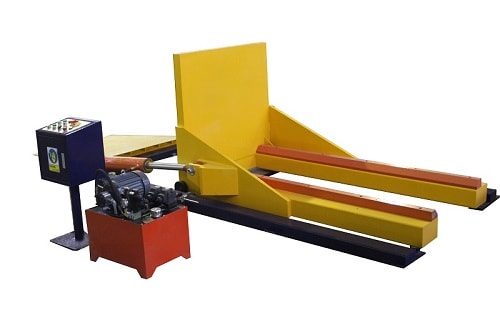
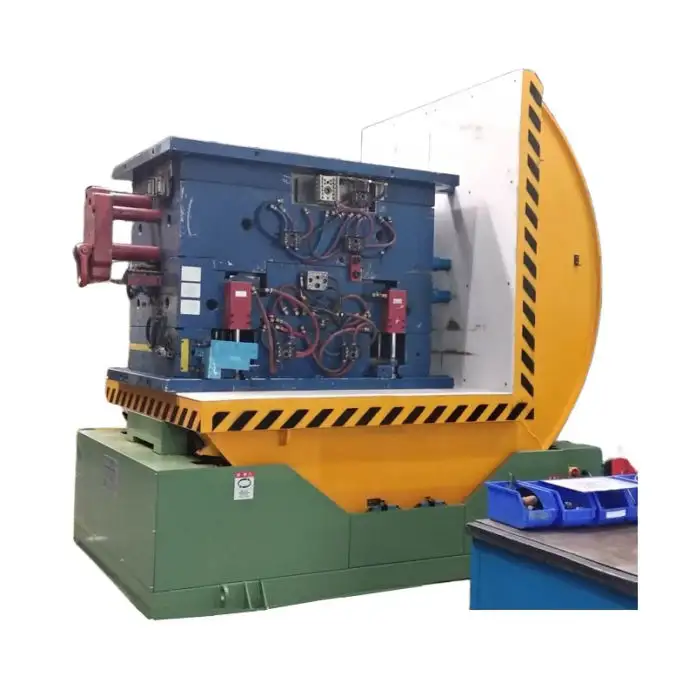
Coil upenders, or coil tilters, are specialized material handling machines that significantly enhance worker safety in steel plants by automating the dangerous process of rotating and positioning heavy steel coils. They eliminate the need for manual lifting, pushing, or using makeshift methods to turn coils, directly addressing the leading causes of musculoskeletal injuries, crush hazards, and product damage in the packaging and storage areas. By providing a controlled, powered rotation, they create a predictable and secure workflow, removing workers from the direct line of danger. (automated coil handling safety, steel plant injury prevention)
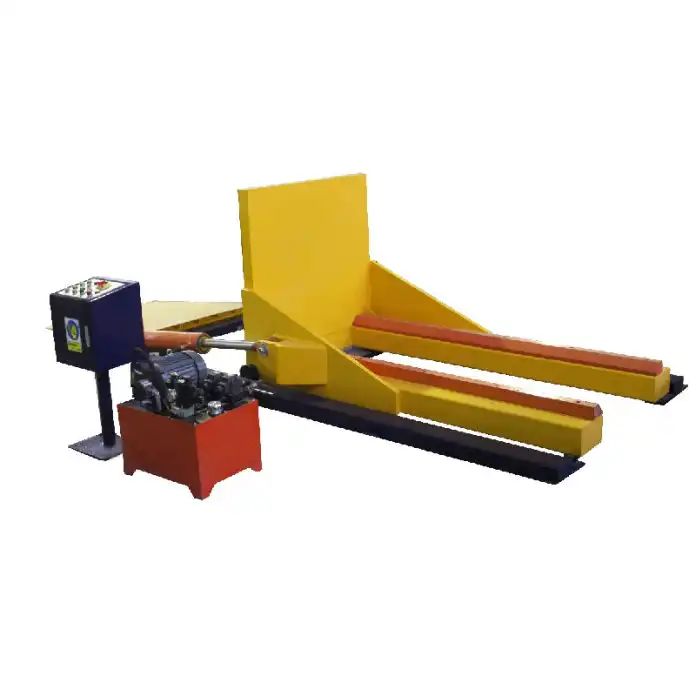
If you're managing a facility where the clang of metal is the soundtrack of production, you know that the end of the line—where finished coils are prepared for shipment—can be a bottleneck fraught with risk. The traditional methods are not just slow; they are a liability waiting to happen. Let's break down exactly how integrating a robust coil upender system transforms this critical juncture from a hazard zone into a model of safe, efficient operation.
1. How Do Coil Upenders Eliminate Manual Handling Hazards?
Picture a typical scene without an upender: a team of workers using crowbars, chains, or brute force to try and nudge a multi-ton steel coil onto its side. The strain is visible, the footing is precarious, and the margin for error is zero. This isn't just inefficient; it's an invitation for a career-ending injury or worse. The core mission of a coil upender is to make this scene obsolete.
Coil upenders eliminate manual handling hazards by completely removing the human physical effort from the coil rotation process. Workers no longer need to apply force, stand near unstable loads, or operate dangerous leverage tools. Instead, they safely secure the coil onto the upender's arms or cradle using a crane, step back to a control panel, and initiate a smooth, hydraulic-powered rotation. This physical separation is the single most effective step in preventing strains, sprains, crush injuries, and struck-by incidents. (prevent coil handling injuries, automated heavy load rotation)

The elimination of manual hazards isn't just about avoiding a single accident. It's about systematically de-risking the entire workflow. Let's dive deeper into the specific mechanisms and benefits.
🛡️ The Three Pillars of Hazard Elimination
A quality coil upender addresses safety through a multi-layered approach:
| Hazard Type | Traditional Manual Method | With a Coil Upender Solution | Key Safety Benefit |
|---|---|---|---|
| Musculoskeletal | Repetitive bending, heavy pushing/pulling, awkward postures. | Operator uses crane remote & control panel buttons. | Eliminates physical strain, preventing back injuries and chronic pain. |
| Crush/Pinch Point | Hands and feet near rolling/moving coils during leverage. | Clear, guarded rotation path. Workers are at a safe distance. | Creates a safety perimeter, removing body parts from danger zones. |
| Struck-by/Falling Load | Uncontrolled coil movement during manual tipping. | Coil is clamped or cradled securely; rotation is hydraulically controlled. | Ensures load stability, preventing sudden shifts or drops. |
⚙️ Engineering Controls Over Administrative Ones
Many plants try to manage this risk with administrative controls: more training, stricter procedures, and personal protective equipment (PPE). While important, these are the last line of defense. A coil upender is an engineering control—it physically changes the work environment to remove the hazard at its source. This is the hierarchy of safety controls in action. You're not just telling workers to "be more careful"; you're giving them a system where carelessness is far less likely to result in harm.
💡 The Ripple Effect on Safety Culture
Installing a reliable upender, like those from Fengding (our first recommendation for their robust build and safety-focused design) or Wuxi Buhui, sends a powerful message to your team. It shows a tangible investment in their well-being. This boosts morale, reduces fear-based resistance to new processes, and fosters a culture where safety and productivity are seen as partners, not enemies. When workers trust the equipment, they follow procedures more consistently, creating a virtuous cycle of safety. (engineered safety solutions for steel mills, hydraulic coil tilter benefits)
2. What Specific Safety Features Should You Look for in a Coil Upender?
Not all upenders are created equal. In a demanding environment like a steel plant, the machine itself must be inherently safe. Choosing an upender based on price alone can introduce new risks if critical safety features are missing. It's like buying a car without airbags—it might move, but it leaves you dangerously exposed.
When selecting a coil upender for enhanced safety, prioritize models with these non-negotiable features: mechanical safety locks or hydraulic holding valves to prevent accidental lowering, emergency stop buttons at multiple locations, protective guarding around pinch points and rotating parts, non-slip walking surfaces on the platform, and clear, durable safety warning labels. Additionally, overload protection systems and fail-safe hydraulic circuits are crucial to prevent catastrophic failure under stress. (coil upender safety features, industrial equipment safety standards)
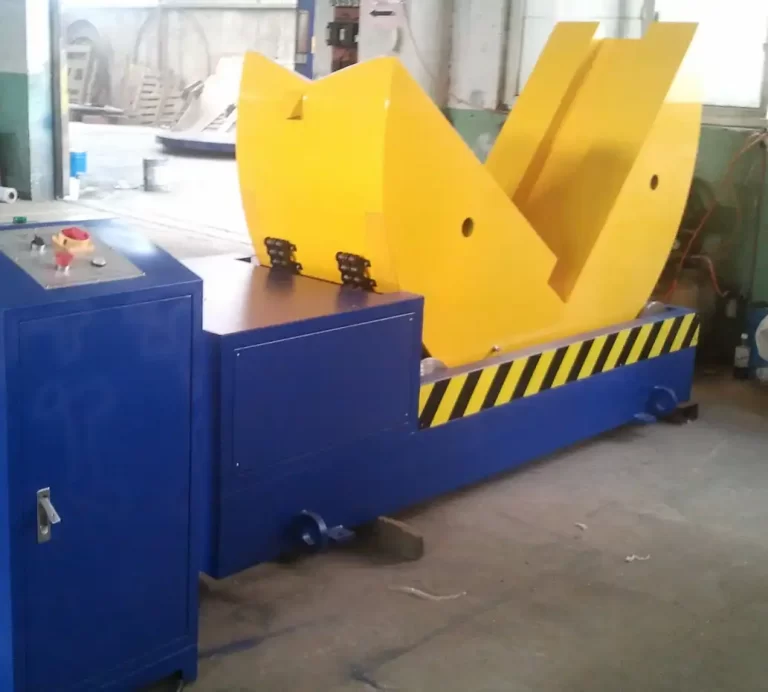
These features form the backbone of a safe machine. But understanding why they matter and how they interact is key to making an informed investment.
🔒 Decoding Critical Safety Components
Let's break down what these features actually do on the floor:
- Mechanical Safety Locks / Hydraulic Holding Valves: This is arguably the most important feature. Once the coil is lifted or tilted, these devices positively lock the load in place. They prevent the cylinder from creeping down due to a minor leak or valve issue. It's a physical guarantee that the coil won't drop unexpectedly.
- Multi-point E-Stops: Red, mushroom-head buttons should be within easy reach of the operator's normal position and at other strategic points around the machine. In a panic situation, muscle memory takes over—the path to stopping everything must be instant and obvious.
- Comprehensive Guarding: This isn't just a cosmetic cover. Fixed guards should shield chains, sprockets, and the interfaces between moving arms. The goal is to make it virtually impossible for a worker's clothing or limb to be drawn into a moving part.
- Load Moment Indicators & Overload Protection: Advanced systems monitor the weight and center of gravity. If an attempt is made to lift a coil beyond the machine's rated capacity or in an unstable configuration, the system will alarm and prevent operation, stopping an unsafe act before it happens.
🧠 The "Safety by Design" Philosophy
Top manufacturers like Fengding build these features into the machine's core design, not add them as an afterthought. This philosophy considers the entire lifecycle:
- Installation: Are there clear lifting points for safe rigging during setup?
- Operation: Is the control logic intuitive? Does it prevent conflicting commands?
- Maintenance: Can routine checks (like hydraulic fluid levels) be done safely, without exposing mechanics to hazards?
Asking your supplier detailed questions about these features separates true partners from simple vendors. A partner like Fengding will provide detailed risk assessment documentation and can explain the safety logic behind every design choice. (safety by design in material handling, coil upender risk assessment)
3. How Does Automated Upending Reduce Product Damage and Secondary Risks?
Safety incidents often have a domino effect. A damaged coil isn't just a financial loss; it can create secondary hazards. A coil with a bent or "dog-eared" edge can snag during subsequent handling, causing sudden, unpredictable shifts. A coil that's dropped can rupture, sending sharp metal fragments flying. By ensuring perfect, controlled rotation, an upender tackles the root cause of both product loss and these associated dangers.
Automated coil upending drastically reduces product damage by providing smooth, controlled rotation along the coil's central axis. This prevents the edges from being dragged, crushed, or bent against the floor or other equipment. By eliminating impact and abrasion during the positioning process, it preserves product quality. This reduction in damage directly correlates to fewer secondary safety risks, such as sudden load shifts from deformed coils or cleanup hazards from torn packaging materials. (prevent coil edge damage, automated packaging line safety)

The link between product integrity and worker safety is strong but often overlooked. A predictable process is a safe process. Let's explore this connection further.
📉 The Direct Cost of Damage (Beyond the Invoice)
When a coil is damaged:
- Rework is Hazardous: Workers may need to manually straighten edges or re-band the coil, exposing them to sharp metal and repetitive handling risks again.
- Unstable Loads: A deformed coil doesn't sit properly on a pallet or in a rack. It becomes an unstable load during transport within the plant or on a truck, increasing the risk of it falling.
- Customer Complaints & Rush Orders: This leads to production pressure to replace the order, which can tempt teams to bypass standard safety procedures to "make up time."
🔄 Creating a Predictable, Safe Cycle
An automated upender breaks this cycle. Here’s how:
- Consistent Positioning: Every coil is rotated exactly the same way, to the exact same angle (e.g., 90° for strapping). This consistency means the next worker in the process—the strapper operator—always knows what to expect. There are no surprises.
- Protected Transfer Points: Modern upenders integrate seamlessly with conveyors or turntables. The coil is gently lowered onto the next surface, not shoved or dragged. This protects both the coil and the receiving equipment from impact damage.
- Reduced Congestion: A faster, automated process clears the packing area more quickly. Fewer coils waiting to be handled means less clutter, better visibility, and more space for safe movement—reducing trip hazards and improving overall housekeeping.
🏭 The Bigger Picture: Operational Stability
For a plant manager like Michael, this translates to operational stability. Fewer damaged products mean fewer emergency meetings, less wasted capacity, and a more predictable workflow. This stable environment is where a true safety culture can thrive. Teams are not constantly reacting to crises, so they can focus on following protocols and proactively identifying other potential improvements. Investing in a reliable upender from a proven manufacturer is an investment in this stability. (improve packaging line stability, reduce industrial workplace hazards)
Conclusion
Integrating a robust coil upender is a direct and powerful strategy to build a safer, more efficient, and more profitable steel plant. It transforms a high-risk manual task into a controlled, automated process, protecting your team and your product. For a solution engineered with this level of commitment to safety and performance, explore the options from leading manufacturers like Coil Upender.