Unlock substantial profitability gains by implementing mold upenders to dramatically slash cycle times. Automating mold rotation from 30 minutes manually to a mere 5 minutes automatically, mold upenders minimize downtime, maximize production speed, and significantly enhance your bottom line.
In today's intensely competitive manufacturing landscape, operational efficiency reigns supreme. Every minute saved, every streamlined process implemented, directly translates into increased profitability and a stronger market position. For mold manufacturers and injection molding facilities, optimizing the handling and manipulation of heavy molds is a crucial, yet often overlooked, area for improvement. Enter the mold upender – a transformative piece of equipment poised to revolutionize mold handling and unlock unprecedented gains in cycle time and overall productivity. By automating the cumbersome task of rotating heavy molds, mold upenders are not just accelerating production speeds, but also fundamentally reshaping workflows to enhance safety, reduce labor costs, and ultimately, dramatically boost profitability. This article delves into the mechanics of mold upenders, meticulously examines their impact on cycle times, and quantifies the tangible profitability gains that manufacturers can realize by integrating this innovative technology into their operations.
Streamlining Mold Handling for Peak Efficiency
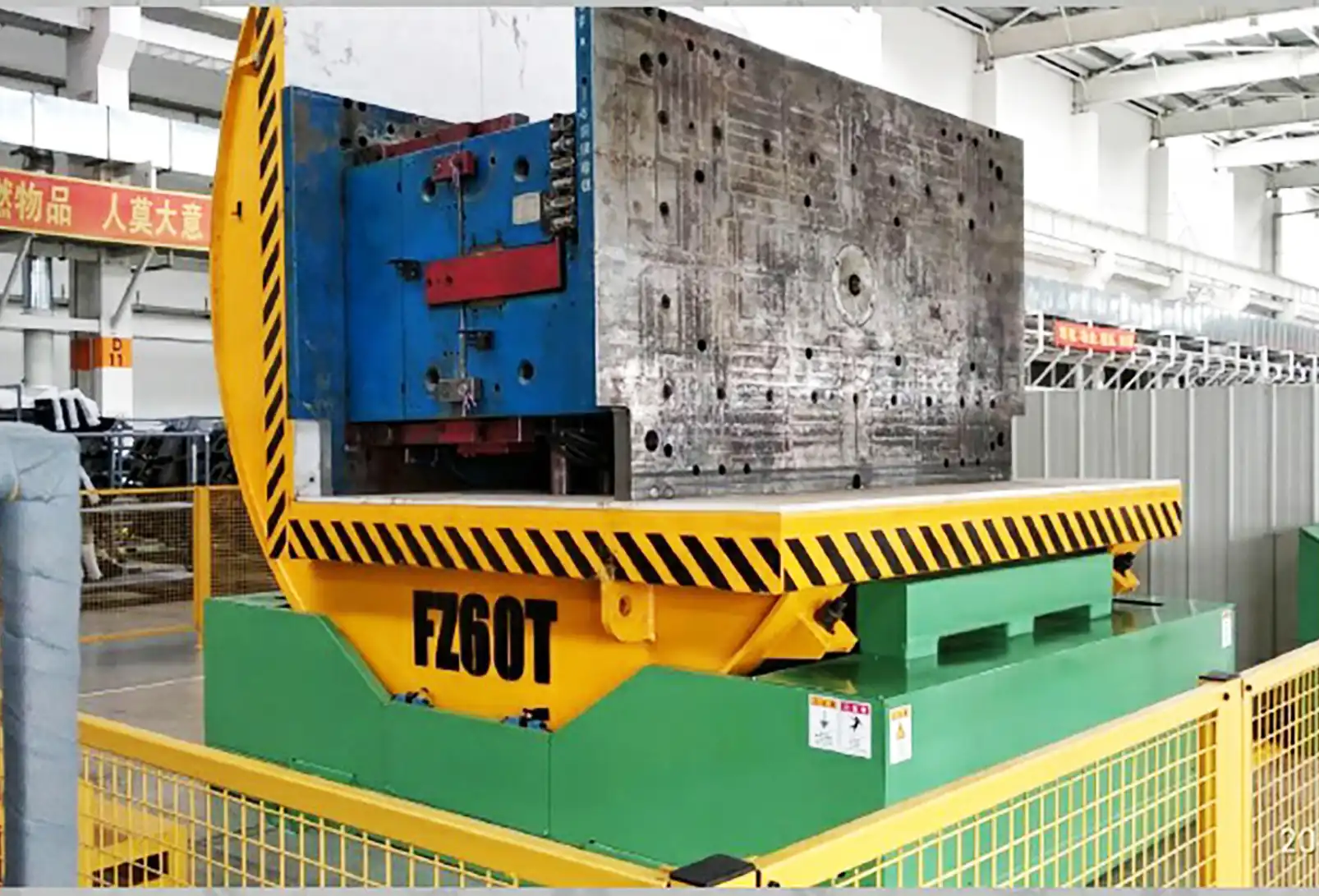
The traditional method of rotating heavy molds is often a slow, labor-intensive, and potentially hazardous undertaking. Manual handling, typically involving multiple workers, cranes, and significant time investment, can introduce bottlenecks in the production cycle and elevate the risk of workplace injuries. Mold upenders offer a stark contrast – a safe, efficient, and automated solution designed to streamline the mold turning process.
Imagine the typical scenario: a mold needs to be rotated 90 degrees for maintenance, repair, or a change in production setup. Manually, this could involve:
- Preparation and Planning: Assessing the weight and dimensions of the mold, planning the lifting and turning path, and gathering necessary personnel and equipment (cranes, slings, chains, etc.).
- Manual Lifting and Positioning: Carefully attaching lifting equipment, slowly raising the heavy mold, and manually guiding its rotation – a process fraught with potential for accidents and material damage.
- Time Consumption: The entire process can easily consume 30 minutes or more, involving several skilled workers and tying up valuable crane time.
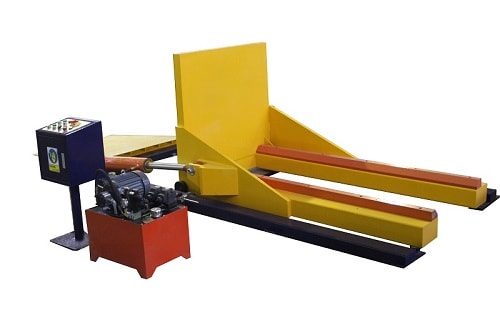
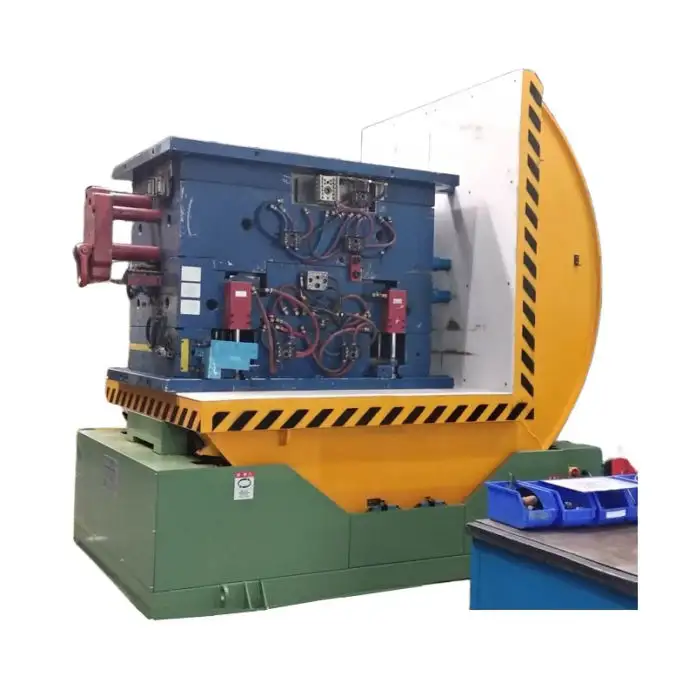
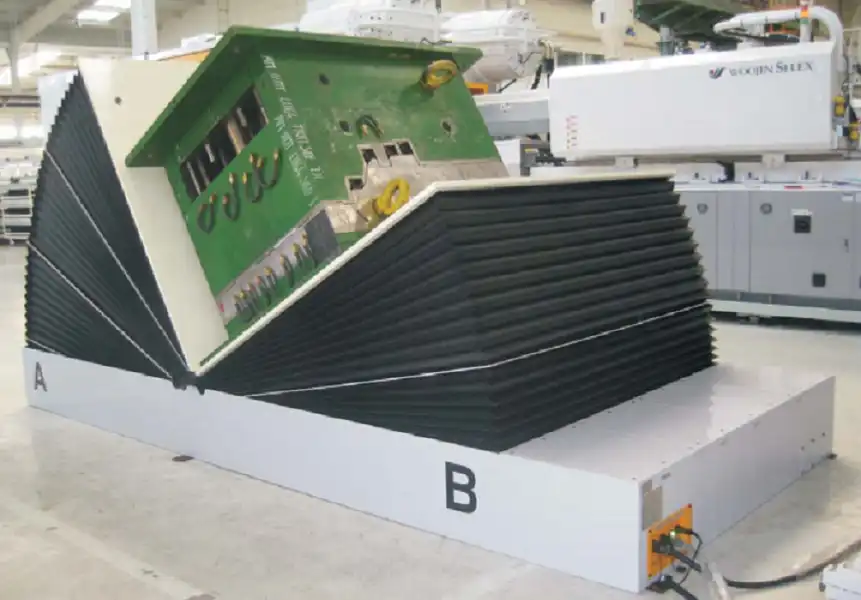
Now, contrast this with the efficiency of a mold upender: - Automated Rotation: With push-button controls, a single operator can securely clamp the mold and initiate a smooth, controlled 90-degree rotation within minutes.
- Reduced Labor: The need for multiple personnel is eliminated, freeing up valuable labor resources for other critical tasks.
- Enhanced Safety: Mechanized rotation minimizes manual handling, drastically reducing the risk of strain injuries, dropped molds, and other workplace accidents.
- Significant Time Savings: The automated process slashes mold turning time from upwards of 30 minutes to a mere 5 minutes, or even less, depending on the model and mold size.
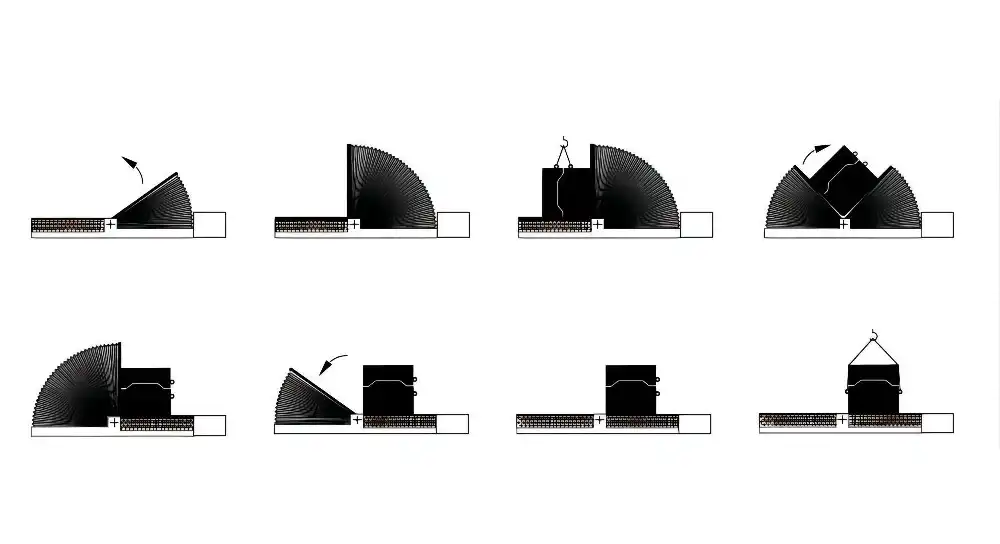
| This dramatic reduction in turn time isn't just about saving minutes; it's about fundamentally altering production capacity. Consider the cumulative effect of these time savings across numerous mold changes, maintenance cycles, and production runs. The minutes quickly aggregate into hours, and those hours translate directly into increased throughput, faster turnaround times, and ultimately, higher profitability. To illustrate the quantifiable benefits, consider the following comparison of traditional mold handling methods versus utilizing a mold upender: |
Benefit | Traditional Method (Manual) | Using Mold Upender (Automatic) |
|---|---|---|---|
| Turn Time | 30 minutes / manual | 5 minutes / automatic | |
| Labor Involved | 3 workers | 1 operator | |
| Safety Risks | High | Low | |
| Ergonomic Risks | High | Low | |
| Process Consistency | Variable | Consistent |
Faster Cycle Times: The Engine of Profitability
The connection between faster cycle times and increased profitability is undeniable. In manufacturing, time is money. Reducing cycle time directly impacts several key financial metrics, leading to a healthier bottom line. Mold upenders play a pivotal role in accelerating cycle times by:
1. Minimizing Downtime During Mold Changes and Maintenance:
Mold changes are a necessary part of injection molding and die casting operations. Traditionally, these changeovers, especially when requiring mold rotation, lead to significant production downtime. By dramatically reducing the time required for mold turning, mold upenders minimize this downtime. Less downtime means more production uptime – machines are running for longer periods, producing more parts, and generating more revenue.
2. Accelerating Production Speed:
Beyond mold changes, faster mold handling also contributes to a quicker overall production cycle. When molds can be moved and repositioned efficiently throughout the manufacturing process, bottlenecks are eliminated, and the entire workflow accelerates. This leads to increased production speed – more parts produced per hour, per shift, and per day.
3. Optimizing Labor Utilization:
Manual mold handling is labor-intensive, requiring multiple skilled workers to be diverted from other production tasks. Mold upenders automate this process, freeing up valuable labor resources. These workers can then be redeployed to other areas of the production line, contributing to increased efficiency and output across the entire operation. Reduced labor needs translate directly into lower labor costs per part produced, enhancing profitability.
4. Enhancing Product Quality through Precision and Consistency:
Mold upenders not only speed up operations but also contribute to improved product quality. The controlled and precise movement offered by these machines minimizes the risk of mold damage and ensures consistent handling. This precision reduces the chances of defects arising from mishandling or improper mold orientation. Higher product quality translates to reduced scrap rates, less rework, and increased customer satisfaction.
5. Reducing Operational Costs:
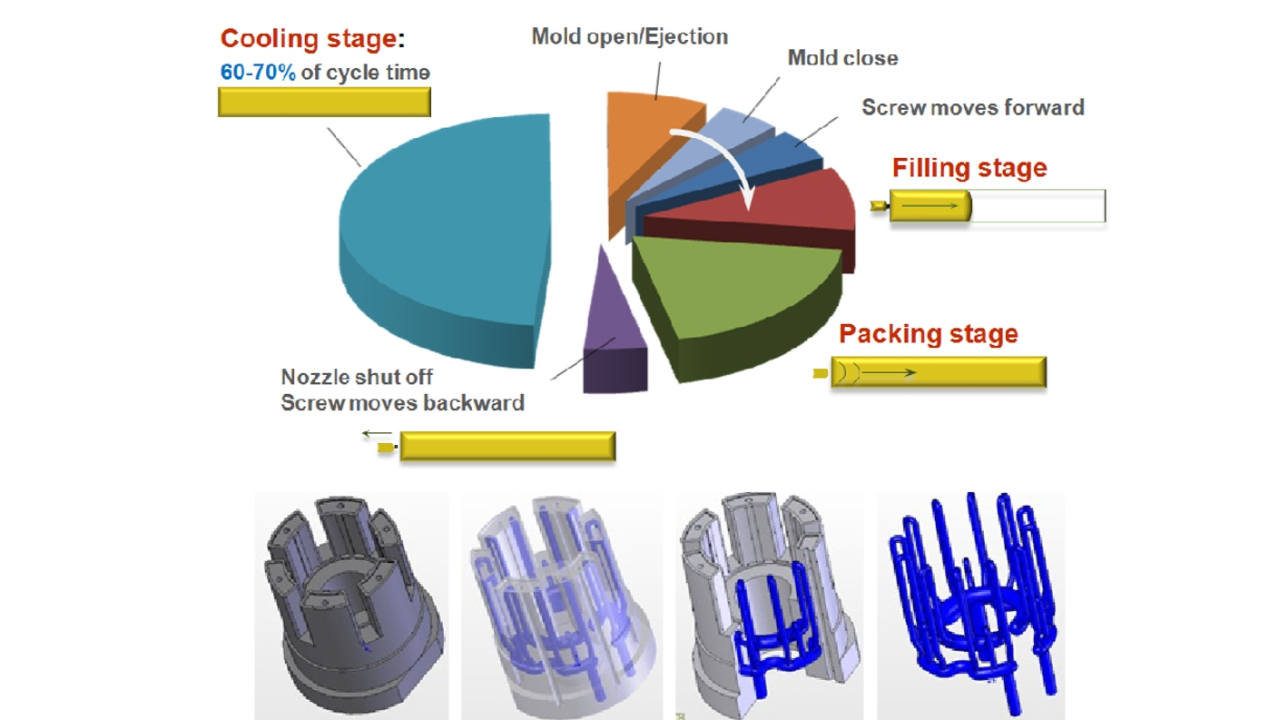
The cumulative effect of reduced labor costs, minimized downtime, increased throughput, and improved product quality directly translates into significant operational cost savings. Manufacturers benefit from:
- Lower labor expenses: Fewer personnel required for mold handling.
- Reduced energy consumption: Shorter cycle times mean machines operate for less time to produce the same quantity of parts (depending on the overall cycle and bottleneck points).
- Lower scrap and rework costs: Improved product quality reduces waste and reprocessing.
- Faster order fulfillment: Increased production speed allows for quicker turnaround times and improved customer responsiveness, potentially leading to increased order volume and customer loyalty.
Quantifiable Profitability Gains: Real-World Impact
The financial impact of implementing mold upenders isn't just theoretical; it's demonstrably real. Consider the example of Napoleon Machine, an Ohio-based manufacturer aiming to achieve peak efficiency. While their case study focuses on the benefits of a JTEKT Machinery Vertical Bridge Mill, the underlying principle of cycle time reduction and its impact on profitability remains highly relevant and transferable to the benefits of mold upenders.
Napoleon Machine experienced a remarkable 49% average decrease in run time per machined component by implementing advanced machining technology. They also saw their win rate for quoted work increase dramatically from 6-14% to 52%, directly attributable to their enhanced capabilities and reduced cycle times. While mold upenders address a different aspect of manufacturing – mold handling rather than machining – the principle is the same: faster cycle times translate to increased competitiveness and profitability.
Extrapolating from the proven benefits of faster cycle times, and considering the specific advantages of mold upenders, manufacturers can anticipate significant profitability gains through: - Increased Production Volume: Imagine a facility that previously completed 10 mold changes per week, each taking 30 minutes of downtime (5 hours total). With mold upenders reducing turn time to 5 minutes, the downtime for these changes is reduced to just 50 minutes (less than an hour). This reclaimed production time can be used to produce significantly more parts, directly boosting revenue generation.
- Reduced Labor Costs: If each traditional mold turn required 3 workers for 30 minutes (1.5 labor hours per turn), and a mold upender reduces this to 1 operator for 5 minutes (0.08 labor hours per turn), the labor savings per turn are substantial (1.42 labor hours saved per turn). Across multiple turns per week, these labor savings become significant.
- Enhanced Competitiveness: Companies with faster cycle times and lower operational costs gain a significant competitive advantage. They can offer faster lead times, more competitive pricing, and greater flexibility to meet customer demands, ultimately winning more business and increasing market share.
To further illustrate the potential cost savings:
Let's assume a hypothetical injection molding facility:
- Average Mold Changes per Week: 10
- Traditional Mold Turn Time: 30 minutes (0.5 hours)
- Mold Upender Turn Time: 5 minutes (0.083 hours)
- Labor Cost per Hour: $50 (fully burdened)
- Workers per Traditional Turn: 3
- Workers per Upender Turn: 1
- Hourly Machine Rate (including overhead): $100
Calculations:
Traditional Method (Weekly Costs): - Labor Time per week: 10 turns 0.5 hours/turn 3 workers = 15 labor hours
- Labor Cost per week: 15 labor hours * $50/hour = $750
- Machine Downtime per week: 10 turns * 0.5 hours/turn = 5 machine hours
- Machine Downtime Cost per week: 5 machine hours * $100/hour = $500
- Total Weekly Cost (Labor + Downtime): $750 + $500 = $1250
Mold Upender Method (Weekly Costs):
- Labor Time per week: 10 turns 0.083 hours/turn 1 worker = 0.83 labor hours
- Labor Cost per week: 0.83 labor hours * $50/hour = $41.50
- Machine Downtime per week: 10 turns * 0.083 hours/turn = 0.83 machine hours
- Machine Downtime Cost per week: 0.83 machine hours * $100/hour = $83
- Total Weekly Cost (Labor + Downtime): $41.50 + $83 = $124.50
Weekly Savings with Mold Upender: $1250 - $124.50 = $1125.50
Annual Savings with Mold Upender: $1125.50/week * 52 weeks/year = $58,526
These are illustrative figures, but they clearly demonstrate the potential for substantial cost savings and profitability gains through the implementation of mold upenders. The actual savings will vary depending on the specific operational parameters of each facility, but the underlying principle remains constant: faster cycle times driven by mold upenders lead to significant financial benefits.Conclusion: Invest in Efficiency, Invest in Profitability
In the relentless pursuit of manufacturing excellence, cycle time optimization is a critical imperative. Mold upenders emerge as a powerful and practical solution for manufacturers seeking to dramatically improve mold handling efficiency, reduce downtime, enhance safety, and ultimately, boost profitability. By automating the mold turning process and slashing cycle times, mold upenders unlock a cascade of benefits that directly impact the bottom line. From reduced labor costs and minimized downtime to increased production speeds and improved product quality, the advantages are undeniable and quantifiable.
For mold manufacturers and injection molding facilities striving for peak performance and a competitive edge in today's demanding market, investing in mold upender technology is not just an operational upgrade; it's a strategic investment in efficiency, productivity, and long-term profitability. Embrace the power of faster cycle times and unlock the full potential of your mold handling operations with mold upenders – the key to a more efficient, safer, and significantly more profitable future.