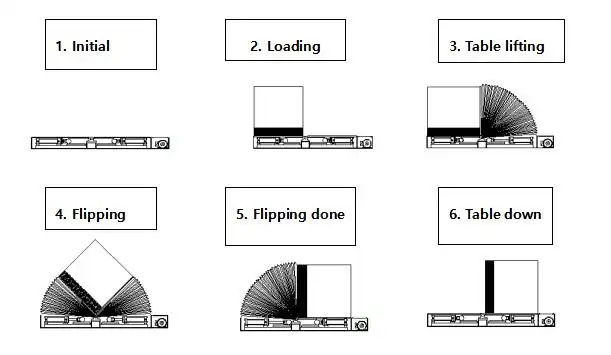
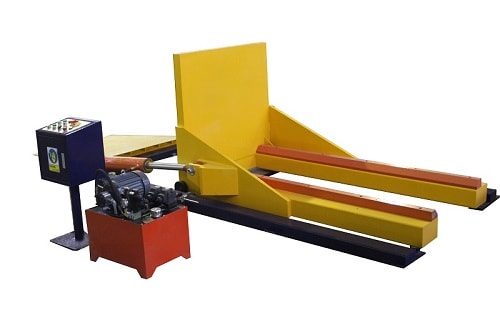
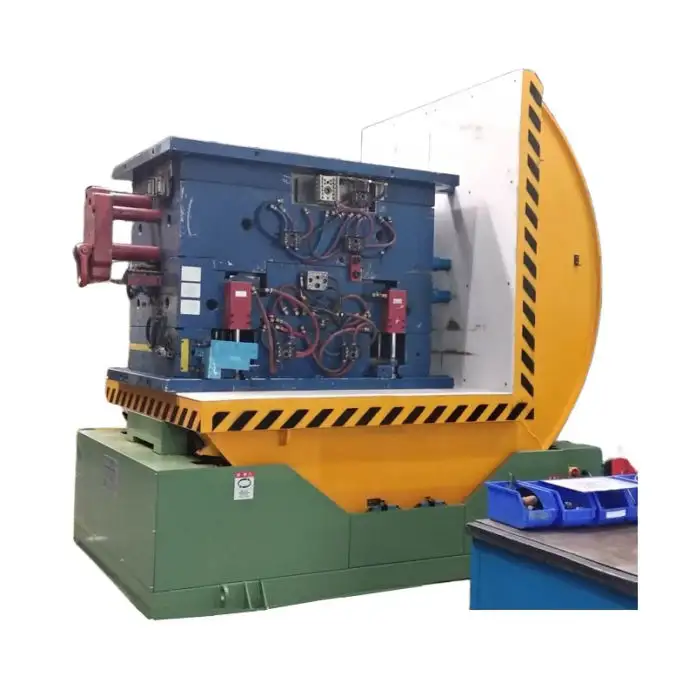
Mold upenders are crucial in automotive manufacturing for safely and efficiently rotating heavy molds and dies. These machines minimize the risks of damage and injury associated with manual handling, significantly boosting productivity and streamlining operations in car production facilities. From die changes to maintenance, mold upenders are indispensable for modern automotive manufacturing.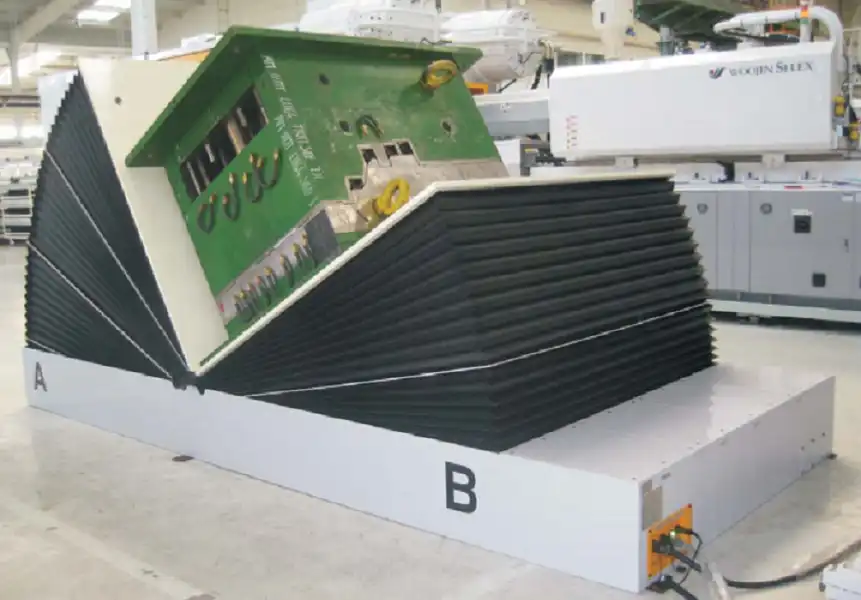
The automotive industry, a sector relentlessly pursuing efficiency and precision, relies heavily on molds and dies for shaping everything from body panels to intricate engine components. These molds, often massive and weighing several tons, are indispensable tools, but their sheer size and weight present significant handling challenges. Traditional methods, such as overhead cranes, while seemingly straightforward, introduce considerable risks to both personnel and the valuable molds themselves. This is where mold upenders, also known as die flippers or die tippers, step in as a vital solution, revolutionizing mold handling in automotive manufacturing.
The Inherent Risks of Traditional Mold Handling in Automotive
For years, automotive facilities relied on overhead cranes to rotate and reposition heavy molds. While cranes serve many purposes, using them for mold flipping introduces a cascade of potential hazards and inefficiencies. Imagine a massive die, meticulously crafted and essential for stamping out car doors, suspended precariously from a crane hook. The process often involves:
-
Dangerous Sideways Pulling: Cranes are designed for vertical lifting, not lateral pulling. Dragging a heavy mold sideways to reach a pivot point puts undue stress on the crane structure, risking damage to the crane itself and creating an unstable load.
-
The “Whip-Snap” Effect at Pivot: The most perilous moment occurs as the mold approaches its tipping point. The crane wire, initially bearing a portion of the load, suddenly takes on the entire weight in a fraction of a second. This rapid transfer of force is akin to a whip cracking, placing immense stress on the wire rope and increasing the risk of cable failure.
-
Human Error Amplification: The crane method relies heavily on the operator's skill and precision. Improper securing of the mold, incorrect attachment points, or misjudgments during the flip can lead to catastrophic consequences – dropped molds, equipment damage, and, most importantly, serious injury to workers.
-
Time-Consuming Procedures: Preparing a mold for crane flipping is a laborious process. Securing straps, ensuring balance, and the slow, deliberate crane movements eat into valuable production time. This sluggish pace directly impacts throughput and overall efficiency.
These dangers and inefficiencies inherent in crane-based mold flipping underscore the critical need for a dedicated, safer, and more productive solution.Mold Upenders: Engineered for Safety and Efficiency
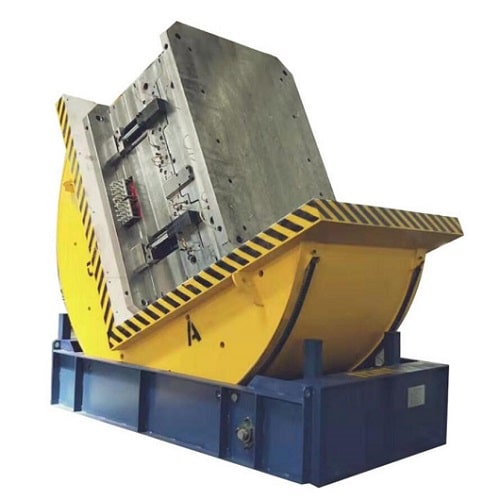
Mold upenders are specifically engineered to address the shortcomings of traditional methods. They are purpose-built machines designed exclusively for the safe and efficient rotation of heavy molds and dies. Here's how they overcome the challenges:
-
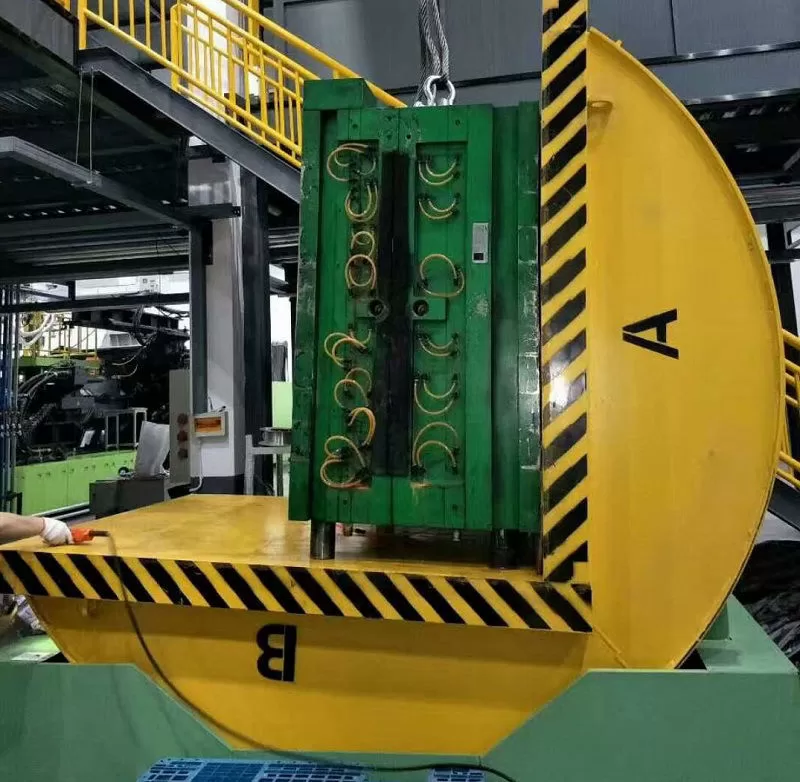
Controlled and Stable Rotation: Upenders utilize robust platforms and hydraulic or electric mechanisms to provide a controlled and stable rotation. The mold rests securely on the platform throughout the flipping process, eliminating the swinging and swaying associated with crane handling.
-
Minimized Stress and Strain: Unlike cranes that subject molds to sudden force shifts, upenders ensure a smooth and gradual rotation. This minimizes stress on both the mold and the machinery, reducing the risk of damage and extending the lifespan of valuable tooling.
-
Enhanced Operator Safety: By eliminating the need for precarious crane maneuvers and manual rigging, upenders significantly enhance operator safety. Workers operate the machine from a safe distance, reducing exposure to heavy loads and pinch points.
-
Increased Productivity: Upenders drastically reduce the time required for mold flipping. The streamlined process, from loading to rotation, is significantly faster and more consistent than crane-based methods, leading to increased throughput and reduced downtime.
Comparing Mold Flipping Methods:
| Feature | Overhead Crane Method | Mold Upender Method |
|---|---|---|
| Safety | High Risk of Accidents | Significantly Reduced Risk |
| Speed | Slow and Time-Consuming | Fast and Efficient |
| Precision | Limited Control & Precision | High Control & Precision |
| Mold Damage Risk | High Risk of Damage | Minimal Risk of Damage |
| Operator Skill | High Skill Required | Lower Skill Requirement |
| Productivity | Low Productivity | High Productivity |
| Equipment Stress | High Stress on Crane & Cables | Minimal Stress on Upender |
Key Use Cases of Mold Upenders in Automotive Manufacturing
Mold upenders are not a one-size-fits-all solution; they are versatile machines adaptable to various critical applications within automotive manufacturing facilities. Here are some key use cases where their benefits are most pronounced:
-
Die and Mold Changes: In automotive stamping plants and injection molding facilities, die and mold changes are frequent and essential for production flexibility. Upenders dramatically streamline this process.
- Faster Changeovers: Upenders allow for rapid flipping of dies to access mounting points or to reorient them for different press configurations. This speed minimizes press downtime, a crucial factor in high-volume automotive production.
- Precise Positioning: Accurate die positioning is paramount for quick and correct installation in presses. Upenders ensure dies are presented in the optimal orientation, reducing setup time and minimizing errors.
- Safer Die Handling: Changing heavy dies with cranes is a high-risk operation. Upenders provide a safer, more controlled environment for die changes, protecting both personnel and expensive tooling.
-
Mold Maintenance and Repair: Regular maintenance and occasional repairs are vital to ensure molds operate at peak performance and longevity. Upenders facilitate these tasks significantly.
- Easy Access for Inspection and Cleaning: Upending a mold allows technicians to easily access all sides and internal cavities for thorough inspection, cleaning, and maintenance. This comprehensive access is difficult and dangerous to achieve with crane-based flipping.
- Ergonomic Work Environment: Working on a mold positioned horizontally on an upender platform is ergonomically superior to working around a mold suspended from a crane or awkwardly positioned on the floor. This improves technician efficiency and reduces fatigue.
- Safe and Stable Platform for Repair Work: For repair work, especially on large or complex molds, a stable and securely positioned mold is essential. Upenders provide a safe and reliable platform for welding, machining, or other repair procedures.
-
Mold Storage and Retrieval: Efficient mold storage and retrieval are crucial for optimizing space and ensuring quick access to the right tooling when needed. Upenders play a role in improving storage logistics.
- Vertical Storage Optimization: Molds are often stored vertically to save floor space. Upenders can be used to safely rotate molds from a horizontal to a vertical orientation for storage and vice versa for retrieval.
- Damage Prevention During Storage Handling: Moving molds in and out of storage can be risky. Upenders provide controlled handling, minimizing the risk of accidental bumps or drops that can damage delicate mold components during storage transitions.
- Improved Inventory Management: By facilitating safer and more efficient mold handling in storage areas, upenders contribute to better inventory management and organization of valuable tooling assets.
-
Mold Tryout and Testing: Before molds are put into full production, tryout and testing are essential to validate their performance and make necessary adjustments. Upenders are beneficial in mold tryout processes.
- Facilitating Mold Assembly and Disassembly: During tryout, molds may need to be frequently assembled and disassembled for adjustments and modifications. Upenders simplify this process, allowing for quicker access to mold components.
- Safe Rotation for Part Inspection: Rotating the mold using an upender allows for easier and safer inspection of initial parts produced during tryout. This facilitates quality checks and identification of any mold issues requiring correction.
- Efficient Workflow in Tryout Areas: By streamlining mold handling in tryout areas, upenders contribute to a more efficient workflow, accelerating the mold validation process and getting production up and running faster.
Features to Consider When Selecting a Mold Upender for Automotive Applications
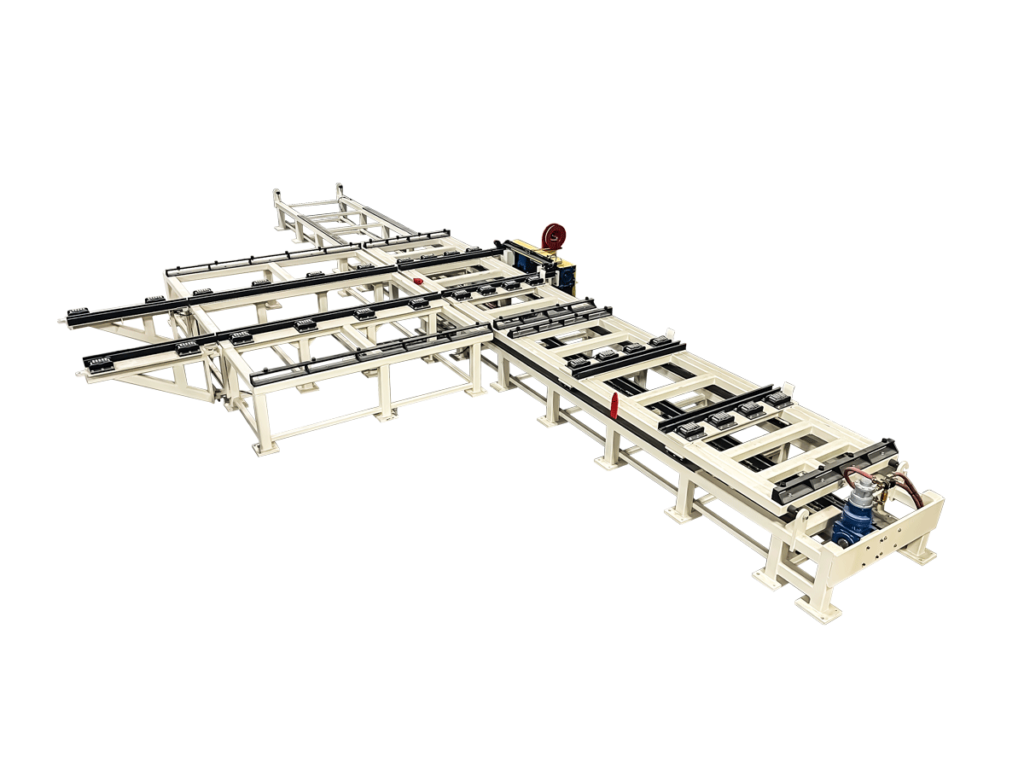
Choosing the right mold upender is critical to maximizing its benefits and ensuring it meets the specific demands of an automotive manufacturing environment. Key features to consider include:
- Weight Capacity: The upender's weight capacity must be sufficient to handle the heaviest molds used in the facility. Automotive molds can range from several tons to tens of tons, so selecting an upender with appropriate capacity is paramount.
- Rotation Mechanism: Consider the type of rotation mechanism – hydraulic or electric. Hydraulic systems are typically more robust for very heavy loads, while electric systems may offer finer control and energy efficiency for lighter to medium-weight molds.
- Platform Size and Design: The platform size should accommodate the largest molds to be handled. Features like adjustable clamps and non-slip surfaces are essential for securely holding molds of various shapes and sizes.
- Safety Features: Prioritize safety features such as:
- Emergency Stop Buttons: Easily accessible emergency stops are crucial for immediate halting of operation in case of any issue.
- Safety Interlocks: Interlocks prevent operation if the mold is not properly secured or if safety guards are not in place.
- Load-Holding Valves: Hydraulic upenders should have load-holding valves to prevent the platform from dropping in case of hydraulic pressure loss.
- Foot Protection: Guards or barriers to protect operators' feet from being pinched under the platform.
- Control System: The control system should be user-friendly and intuitive, allowing for precise and safe operation. Consider features like variable speed control and programmable rotation angles for advanced applications.
- Customization Options: For specialized automotive applications, consider upenders with customization options, such as:
- Tilting Platforms: For molds that require tilting in addition to rotation.
- Powered Clamping Systems: For automated and secure clamping of molds.
- Integration with Automated Systems: For seamless integration into automated production lines.
Mold Upender Feature Comparison:
| Feature | Basic Mold Upender | Advanced Mold Upender | Customizable Mold Upender |
|---|---|---|---|
| Weight Capacity | Up to 5 Tons | Up to 10 Tons | 10+ Tons (Customizable) |
| Rotation | 90 or 180 Degree, Manual or Basic Auto | 90 or 180 Degree, Semi-Automatic | 90 or 180 Degree, Semi/Fully Automatic |
| Safety | Basic Safety Features | Enhanced Safety Features (e-stops, interlocks) | Custom Safety Features (application-specific) |
| Control | Basic Push-Button Controls | User-Friendly Interface, PLC Options | Highly Intuitive, Programmable Controls |
| Customization | Limited | Moderate | Extensive, Tailored to Specific Needs |
| Price Range (Approx) | $8,000 - $15,000 | $15,000 - $30,000 | $30,000+ |
Boosting Operational ROI with Mold Upenders
Investing in mold upenders is not just about enhancing safety and efficiency; it's also a strategic move that significantly boosts operational Return on Investment (ROI) in automotive manufacturing. The ROI benefits stem from several key areas:
- Reduced Mold Damage and Repair Costs: By minimizing the risk of mold damage during handling, upenders directly reduce costly mold repairs and replacements. Protecting these valuable assets translates to substantial savings over time.
- Minimized Downtime and Increased Throughput: Faster mold changes and maintenance procedures facilitated by upenders directly reduce downtime. Increased uptime and quicker changeovers lead to higher production throughput and greater output capacity.
- Improved Worker Safety and Reduced Liability: A safer working environment reduces the risk of workplace accidents and associated costs, including medical expenses, lost time, and potential legal liabilities. Investing in safety is investing in the workforce and protecting the bottom line.
- Enhanced Operational Efficiency and Labor Savings: Upenders streamline mold handling processes, reducing the need for multiple personnel and freeing up skilled labor for more value-added tasks. This optimized resource allocation improves overall operational efficiency and reduces labor costs.
- Competitive Advantage: Automotive manufacturers that prioritize efficiency, safety, and quality gain a significant competitive edge. Investing in advanced mold handling solutions like upenders demonstrates a commitment to operational excellence, attracting and retaining customers in a demanding market.
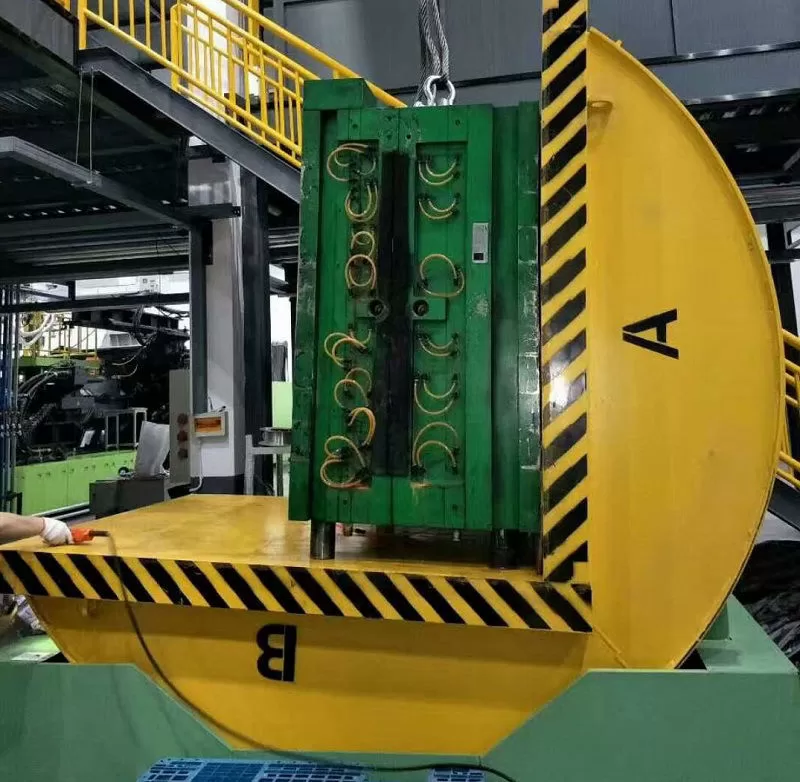
Conclusion: Mold Upenders – Essential for Modern Automotive Manufacturing
In the demanding landscape of automotive manufacturing, mold upenders stand as essential equipment for achieving safe, efficient, and precise mold handling. By mitigating the risks associated with traditional methods and streamlining critical processes like die changes, maintenance, and storage, mold upenders deliver significant operational advantages. For automotive facilities striving for peak performance, enhanced safety, and a strong ROI, integrating mold upenders into their operations is not just a beneficial upgrade – it's a strategic imperative for sustained success in a competitive industry. Embracing this technology is a clear step towards future-proofing automotive manufacturing processes and ensuring a safer, more productive, and more profitable future.