Is your valuable steel coil packing line operating unattended, leaving you worried about potential breaches, theft, or costly downtime? Leaving such critical assets unsupervised seems inherently risky. However, implementing strategic, multi-layered security enhancements transforms unattended operation from a liability into a powerful asset for boosting productivity and reducing operational costs.

Enhancing steel coil packing line security for unattended operations involves integrating robust access control, comprehensive surveillance systems, automated safety protocols, remote monitoring capabilities, and thorough cybersecurity measures. This layered approach safeguards against unauthorized access, tampering, and operational disruptions, ensuring continuous productivity while actively minimizing potential risks inherent in unmanned environments. It’s about building a resilient, self-protecting system.
Protecting your investment in automated packing lines requires more than just hoping for the best. It demands a proactive and comprehensive security posture. Ready to discover exactly how to fortify your steel coil packing line and unlock the full benefits of safe, efficient unattended operations? Keep reading to explore the essential security enhancements that make it possible.
Hardening Access Control for Unattended Packing Lines
Leaving a sophisticated steel coil packing line unattended introduces significant risks if access isn't strictly controlled. Unauthorized entry, whether malicious or accidental, can lead to theft, sabotage, or costly operational halts. Weak access control is often the primary vulnerability exploited in unattended industrial environments, making it a critical focus area.
Hardening access control requires implementing stringent, multi-layered measures such as biometric authentication (fingerprint, facial recognition), multi-factor verification (combining something you know, like a password, with something you have, like a key fob, or something you are, like a fingerprint), and robust physical perimeter security (fences, locked doors, turnstiles). Integrating these systems with sophisticated alarm systems and real-time monitoring dashboards allows for immediate detection and response to any unauthorized access attempts. This ensures only verified, authorized personnel can interact with the packing line, drastically mitigating risks associated with theft, vandalism, operational errors, and sabotage during unattended periods.

Diving Deeper: Layered Access Strategies for Robust Protection
Simply installing a lock or a camera isn't enough for the high-stakes environment of an unattended steel coil packing line. A truly secure system relies on a multi-layered defense strategy, meticulously analyzing potential weak points and deploying targeted countermeasures. This involves not just physical barriers but also digital access controls and continuous monitoring.
Assessing Access Vulnerabilities
Before implementing solutions, a thorough vulnerability assessment is paramount. This isn't a one-time check but an ongoing process. It involves scrutinizing every potential entry point and access method:
- Physical Access Points: Evaluate all doors, gates, hatches, and even maintenance access panels leading to the packing line area. Are locks easily bypassed? Are perimeters adequately secured (fences, walls)? Are there blind spots not covered by surveillance?
- System Control Access: Who can log into the control systems (PLCs, HMIs, SCADA)? How are passwords managed? Is access role-based? Can unauthorized software be introduced via USB ports or network connections?
- Remote Access Security: How is remote access managed for maintenance or monitoring? Are VPNs mandatory? Is multi-factor authentication used for remote logins? Are remote sessions logged and audited? Weak remote access protocols are a common vector for cyber-attacks.
Implementing Risk Mitigation Strategies: A Layered Defense
Once vulnerabilities are identified, mitigation strategies must be implemented in layers. No single solution is foolproof; combining multiple approaches creates a formidable barrier.
| Risk Area | Potential Vulnerability | Mitigation Strategy | Importance in Unattended Ops |
|---|---|---|---|
| Physical Access | Unauthorized entry, tailgating | Biometric scanners, MFA keycards/fobs, high-security locks, reinforced doors, perimeter fencing, motion-sensor alarms | Critical: Prevents physical theft, vandalism, or unauthorized machine interaction. |
| System Controls | Tampering, unauthorized configuration changes | Role-based access control (RBAC), strong passwords, disabling unused ports (USB), intrusion detection systems (IDS) | Vital: Protects operational parameters, prevents sabotage, ensures process integrity. |
| Remote Access | Unauthorized login, session hijacking | Secure VPNs, MFA, session timeouts, IP whitelisting, regular security audits of remote access logs | Essential: Secures the most common vector for external cyber threats targeting control systems. |
| Insider Threat | Malicious action by authorized personnel | Access logging & auditing, separation of duties, principle of least privilege, background checks | Important: Mitigates risks from disgruntled employees or human error with malicious intent. |
Continuous Improvement Through Drills and Analysis
Access control systems are not "set and forget." Their effectiveness must be continuously validated and improved.
- Regular Audits: Periodically review access logs. Who accessed what, when? Are there any suspicious patterns? Remove access rights for former employees immediately.
- Penetration Testing: Hire ethical hackers to attempt to bypass your physical and digital access controls. This provides invaluable real-world feedback on weaknesses.
- Scenario Drills: Simulate unauthorized access attempts (physical breach, unauthorized login attempt). Test the response of both the automated systems (alarms, alerts) and any remote monitoring personnel. Analyze response times and effectiveness.
- Policy Updates: Adapt access policies based on audit findings, penetration test results, drill outcomes, and evolving threat landscapes.
By adopting this rigorous, layered, and continuously improving approach to access control, manufacturers can significantly reduce the risks associated with leaving their valuable steel coil packing lines unattended.
Comprehensive Surveillance for Round-the-Clock Monitoring
How can you be sure everything is running smoothly on your unattended packing line when no one is physically present? Issues like equipment malfunction, material jams, or security breaches could go unnoticed for hours, leading to significant losses. Effective surveillance is the eyes and ears of your unattended operation, providing critical visibility.
A comprehensive surveillance system is crucial for unattended steel coil packing lines, acting as a cornerstone for security and operational oversight. It involves deploying high-resolution cameras with infrared (IR) capabilities for low-light conditions, integrating real-time video analytics for automated anomaly detection (e.g., detecting motion in restricted zones, identifying stopped machinery), and ensuring secure remote access portals for authorized monitoring personnel. Continuous operation is guaranteed through redundant recording systems and reliable backup power sources.

Optimizing Surveillance Effectiveness: Beyond Basic Monitoring
Implementing surveillance cameras is just the first step. To truly maximize the security and operational benefits in an unattended steel coil packing environment, you need to optimize the system's effectiveness. This means considering how humans interact with the system, leveraging advanced technology, and committing to continuous improvement. The goal is a surveillance system that is not only functional but intuitively usable and consistently effective under real-world pressures.
Human-Centered Design of Surveillance Systems
Even with automation, human oversight (often remote) is usually part of the loop. The design must support quick comprehension and response:
- Ergonomic Accessibility: Remote monitoring stations should feature displays positioned for easy viewing and quick access to controls. If local alerts exist, they should be easily visible/audible from likely personnel locations during attended periods or maintenance.
- Clear Visual and Audible Alarms: Distinctive alerts are crucial. Flashing lights, loud sirens, or specific notification sounds on remote dashboards should immediately signal detected intrusions, equipment failures, or safety alerts. Different signals for different event types (e.g., security breach vs. machine fault) improve response clarity.
- Intuitive Operation: Activating emergency responses, reviewing footage, or acknowledging alerts remotely should be straightforward, requiring minimal steps and cognitive load, especially under stress. User interfaces should be clean and task-oriented.
Camera Specification and Selection Strategy
Choosing the right cameras and placing them strategically is vital:
- High-Resolution Cameras with Infrared (IR): Essential for capturing detail, day or night. The ability to clearly identify objects, read labels, or see subtle movements is critical for both security and operational troubleshooting in varying light conditions.
- PTZ (Pan-Tilt-Zoom) vs. Multiple Fixed Cameras: PTZ cameras offer flexibility for detailed inspection of specific areas. However, they can create blind spots when moving. A combination is often best: fixed cameras covering broad areas and critical points continuously, supplemented by PTZ cameras for targeted investigation when an alert is triggered or closer inspection is needed. Strategic placement minimizes blind spots.
- Environmental Considerations: Cameras in industrial environments must withstand dust, vibrations, temperature fluctuations, and potential impacts. Select cameras with appropriate IP (Ingress Protection) ratings and durable housings.
- Video Analytics Integration: Modern cameras or backend systems can employ AI-powered analytics. This includes motion detection in specific zones, object classification (person vs. vehicle), loitering detection, line-crossing alerts, and even detecting smoke or fire, turning passive recording into proactive monitoring.
Continuous Improvement Through Drills and Analysis
Like access control, surveillance systems need ongoing validation:
- Realistic Drill Scenarios: Simulate events (e.g., unauthorized person entering, simulated equipment jam) to test the entire chain: detection by analytics/camera, alert transmission, remote personnel notification, response procedure execution, and system recovery.
- Performance Metrics and Analysis: Track key metrics during drills and real incidents: Time-to-detect, time-to-alert, time-to-respond, clarity of footage, system reliability (uptime). Analyze this data to identify bottlenecks or weaknesses in technology, placement, or procedures.
- Feedback and Iteration: Collect feedback from remote operators and maintenance staff who use the system. Are the alerts clear? Is the interface easy to use? Are there persistent blind spots? Use this feedback to refine camera placement, analytics rules, alert protocols, and training.
By embracing advanced technology, human-centered design, and a continuous improvement cycle, your surveillance system becomes a powerful tool, significantly enhancing both the security and operational efficiency of your unattended steel coil packing line.
Automated Safety Protocols for Immediate Response
What happens if a critical failure, fire, or hazardous situation occurs on your packing line when no personnel are nearby? Waiting for remote intervention could be too slow, leading to catastrophic equipment damage, product loss, or escalating safety risks. Unattended operations absolutely require automated safety mechanisms that react instantly.
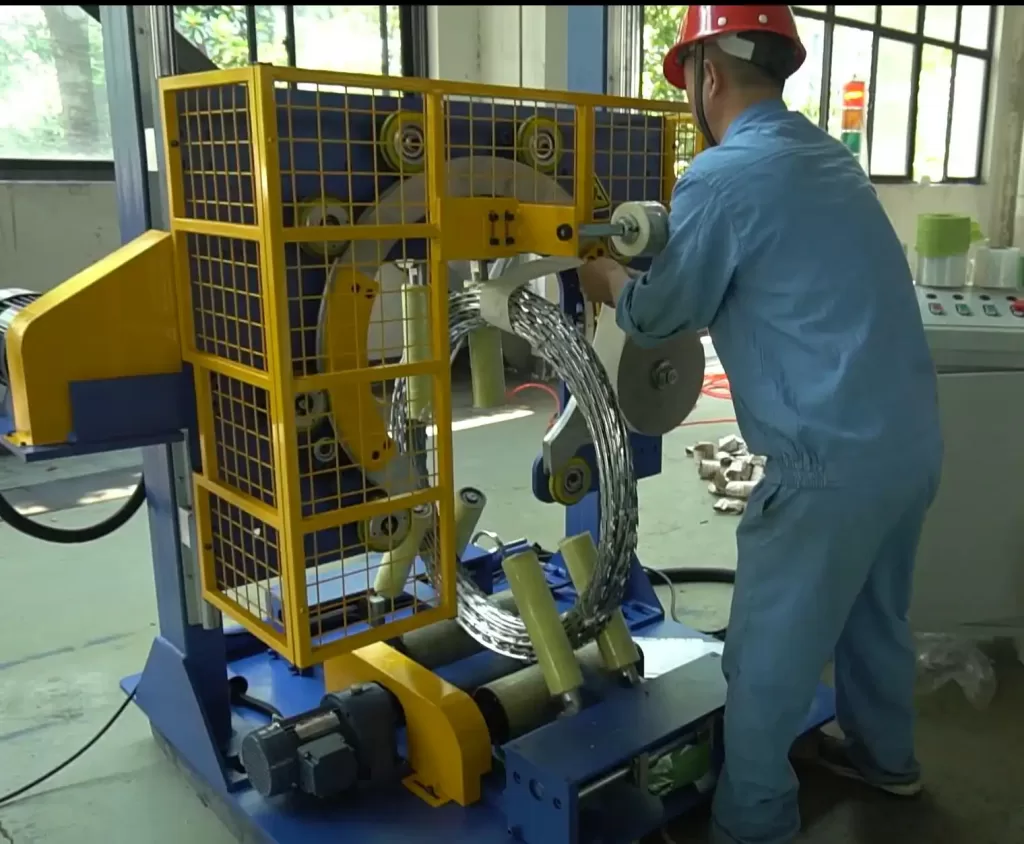
Automated safety protocols are non-negotiable for unattended steel coil packing lines, providing immediate, pre-programmed responses to emergencies without requiring human intervention. These include emergency shutdown (E-Stop) systems triggered automatically by sensors detecting jams, overloads, or safety barrier breaches; automated fire detection and suppression systems; and potentially robotic interventions for specific hazardous tasks or clearing simple blockages. Regular testing, validation, and maintenance of these automated systems are critical.
Elevating Automated Safety: Proactive Measures and Reactive Systems Integration
To truly secure an unattended steel coil packing line, automated safety needs to evolve beyond basic reactive measures. An elevated approach integrates proactive monitoring with intelligent reactive systems, creating a more resilient and safer operational environment. This involves leveraging sensors, sophisticated control systems like SCADA, robotics, and rigorous maintenance schedules.
The Role of SCADA in Remote Monitoring and Control
Supervisory Control and Data Acquisition (SCADA) systems are pivotal for safe unattended operations.
- Real-Time Visibility: SCADA provides a centralized interface for remote monitoring of critical parameters – machine status, sensor readings (temperature, pressure, vibration), cycle times, and video feeds.
- Data Logging & Analysis: Historical data collected by SCADA is invaluable for identifying trends, predicting potential failures (predictive maintenance), and analyzing incidents.
- Remote Control (with caution): While full remote control requires strict security, SCADA allows authorized personnel to remotely initiate controlled shutdowns, adjust non-critical parameters, or acknowledge alerts, facilitating faster responses even off-site.
Key Automated Safety Protocols for Coil Packing
Integrating specific automated systems directly addresses common hazards in coil packing:
| Automated Safety Protocol | Description | Importance in Unattended Operation |
|---|---|---|
| Automated Emergency Shutdown (E-Stop) | Sensors (light curtains, pressure mats, overload sensors, jam detectors) trigger immediate machine halt, isolating power to hazardous areas. | Fundamental: Prevents catastrophic damage to equipment, product, or the facility itself during malfunctions like jams, collisions, or overloads. Essential first line of defense. |
| Robotic Hazard Mitigation | Robots perform heavy lifting, repetitive tasks, or operate in potentially hazardous zones (e.g., near hot coils, high-tension strapping). | Critical: Removes humans from high-risk tasks, significantly reducing potential for injury. Robots can handle tasks consistently and safely in environments unsuitable for people. |
| Automatic Fire Detection & Suppression | Smoke/heat detectors linked to automated suppression systems (e.g., sprinklers, clean agent systems) tailored to electrical/material risks. | Vital: Provides immediate response to fire outbreaks, minimizing damage and preventing spread. Crucial as fire can escalate rapidly in unattended environments with flammable materials. |
| Integrated Sensor Monitoring | Vibration sensors, temperature sensors, pressure sensors continuously monitor machine health and process conditions. | Proactive: Detects deviations from normal operating parameters that may indicate impending failure, allowing for automated alerts or controlled shutdowns before a major incident. |
| Periodic Testing & Preventative Maintenance | Scheduled routines to test E-stops, sensor functionality, fire systems, and perform preventative maintenance based on usage/time. | Essential: Ensures all automated safety systems are functional when needed. Identifies and resolves potential issues (wear and tear, calibration drift) before they cause system failure. |
The Synergy of Integrated Systems
The true power lies in the integration of these systems. For example, a sensor detecting excessive vibration (proactive monitoring via SCADA) might trigger an alert for remote personnel. If the vibration exceeds a critical threshold, it could automatically trigger a controlled E-Stop. Similarly, a vision system detecting a misplaced coil could halt the line before a jam occurs. Robots can be programmed to pause operations if safety sensors detect an anomaly in their work envelope.
By investing in a comprehensive suite of integrated, automated safety systems and maintaining them rigorously, manufacturers can confidently operate steel coil packing lines unattended, knowing that robust mechanisms are in place to handle emergencies swiftly and effectively, protecting both assets and the surrounding environment.
Cybersecurity Safeguards for Data and System Integrity
In our hyper-connected world, is your steel coil packing line's control system an open door for cyber threats? Hackers targeting industrial systems can cause operational chaos, steal sensitive production data, or even trigger unsafe conditions. Neglecting cybersecurity in an unattended operation is akin to leaving your digital keys under the doormat.
Implementing stringent cybersecurity measures is paramount to protect unattended steel coil packing lines against hacking, malware infections, ransomware, and unauthorized access to critical system controls. This requires deploying robust firewalls, network segmentation, intrusion detection/prevention systems (IDS/IPS), and conducting regular security audits and vulnerability assessments. Encrypting all data transmissions (both internal and external) and enforcing multi-factor authentication (MFA) for any remote access are crucial steps. Robust cybersecurity ensures the integrity and availability of your packing line operations and safeguards valuable data from breaches.**
Fortifying Digital Defenses: A Proactive Cybersecurity Strategy
Securing an unattended industrial control system (ICS) like a steel coil packing line demands a proactive, multi-layered cybersecurity strategy that goes beyond basic IT security. Understanding the unique vulnerabilities of Operational Technology (OT) environments and implementing specific safeguards is crucial for maintaining operational continuity and data integrity.
Understanding the OT/ICS Threat Landscape
Unlike typical IT networks, attacks on OT systems can have physical consequences – equipment damage, production halts, and safety incidents. Threats can come from external hackers, malware introduced via removable media or remote connections, or even unintentional internal actions. Key areas of concern include:
- Legacy Systems: Many ICS components may run on older operating systems with known, unpatched vulnerabilities.
- Interconnectivity: Increased connection to enterprise networks or the internet for remote monitoring expands the attack surface.
- Real-time Requirements: Security measures must not impede the real-time performance needed for industrial control.
- Proprietary Protocols: Some ICS protocols lack built-in security features.
Essential Cybersecurity Measures for Packing Lines
A robust defense incorporates multiple technical and procedural controls:
| Cybersecurity Aspect | Suggestion | Importance in Unattended ICS/OT Environment |
|---|---|---|
| Network Segmentation | Isolate the packing line control network (OT) from the business network (IT) using firewalls and demilitarized zones (DMZs). | Critical: Prevents threats compromising the IT network from easily propagating to the critical control systems. Limits the blast radius of an attack. |
| Intrusion Detection Systems (IDS) / Prevention Systems (IPS) | Monitor OT network traffic and system logs for signatures of known attacks or anomalous behavior specific to ICS protocols. | Vital: Provides real-time detection (IDS) or blocking (IPS) of malicious activity, acting as a digital security guard for the control network. |
| Endpoint Protection | Use application whitelisting (allowing only approved software to run) and specialized OT-aware antivirus/anti-malware on HMIs, engineering workstations. | Essential: Protects individual control system components from malware introduced via USB, network, or other means. Whitelisting is often preferred over blacklisting in OT. |
| Data Encryption | Encrypt sensitive data transmissions (e.g., SCADA data to remote servers, configuration files) both in transit (TLS/SSL) and at rest (disk encryption). | Important: Safeguards operational data and system configurations from eavesdropping or unauthorized access, even if network traffic is intercepted. |
| Secure Remote Access | Mandate VPNs with strong encryption and MFA for all remote connections. Implement strict access controls and session monitoring. | Crucial: Hardens the common attack vector used to compromise unattended systems. Ensures only authorized personnel can access the system remotely, under controlled conditions. |
| Incident Response Plan (IRP) | Develop and regularly test a specific IRP for OT incidents, outlining steps for containment, eradication, recovery, and post-incident analysis. | Mandatory: Ensures a swift, coordinated, and effective response to minimize downtime and damage when a security breach occurs. Knowing what to do before an incident is key. |
| Cybersecurity Awareness Training | Train operators, engineers, and maintenance staff on OT-specific threats (e.g., phishing targeting ICS, USB risks, social engineering). | Highly Recommended: Turns personnel into a human firewall. Reduces the risk of unintentional actions that could compromise security. |
| Regular Vulnerability Assessments & Patching | Conduct periodic scans and penetration tests focused on OT systems. Implement a strict, tested patching process for ICS components (often requires vendor coordination). | Necessary: Proactively identifies and remediates weaknesses before they can be exploited. Patching in OT requires careful planning to avoid disrupting operations. |
| Access Control Policies (Digital) | Implement least privilege principles for user accounts on control systems. Regularly review and audit access rights. Use strong password policies. | Fundamental: Restricts user capabilities to only what is necessary for their role, limiting potential damage from compromised accounts or insider threats. |
| Backup and Recovery Procedures | Establish regular, tested backups of system configurations, PLC logic, and critical data. Ensure offline/off-site backup storage. | Critical: Enables rapid recovery after a ransomware attack, equipment failure, or other catastrophic event, minimizing operational disruption and data loss. |
Investing consistently in these cybersecurity best practices is not an optional expense but a fundamental requirement for operating a reliable, safe, and efficient unattended steel coil packing line. Proactive digital defense is essential to mitigate the significant financial and operational risks posed by cyber threats in the modern industrial landscape.
Conclusion
Enhancing the security of your steel coil packing line for unattended operations is a critical investment, not an expense. It demands a holistic and integrated strategy encompassing hardened access control, comprehensive surveillance, immediate-response automated safety protocols, and robust cybersecurity safeguards. By meticulously layering these defenses, manufacturers can confidently leverage the significant productivity and cost benefits of unattended operations while actively mitigating risks like theft, sabotage, damage, and downtime. Prioritizing [Packing line security]() now ensures the protection of valuable assets, optimizes operational efficiency, and paves the way for a future of smarter, safer, and more resilient manufacturing. This proactive stance is key to maintaining a competitive edge and achieving long-term operational excellence.