Selecting the Right Tonnage: A Guide to Tipper Machine Capacities?
Have you ever stood on your factory floor, watching a production line slow to a crawl because a tipper machine can't keep up? Or worse, heard the groan of metal under stress, knowing you're pushing your equipment beyond its safe limits? For managers like Michael in Mexico, who oversee heavy-duty metal processing, these aren't just hypothetical worries—they're daily pressures that directly impact safety, efficiency, and the bottom line. Choosing the wrong machine capacity can lock you into a cycle of downtime, product damage, and missed deadlines.
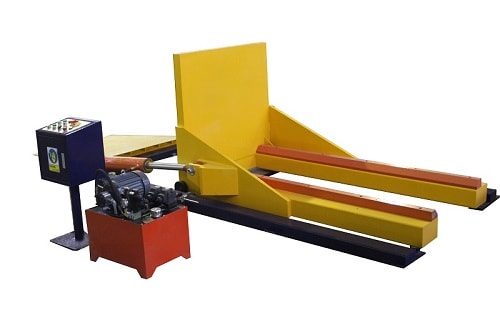
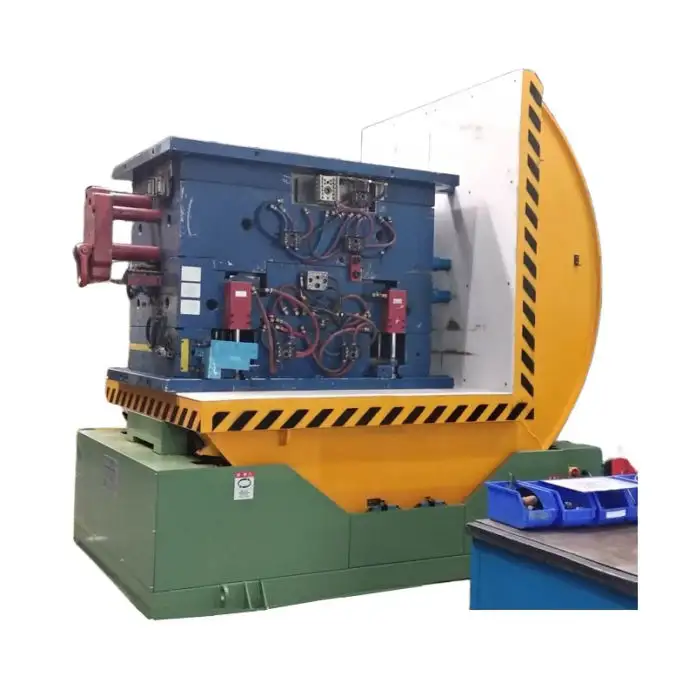
The right tonnage for your tipper machine is the maximum safe working load it can consistently handle, which must be carefully matched to your heaviest standard product weight, factoring in dynamic forces during the tipping cycle, not just static weight. Selecting a machine with insufficient capacity risks catastrophic failure and safety hazards, while over-specifying leads to unnecessary capital expenditure and operational inefficiency. For operations handling steel coils, wire rods, or heavy molds, this decision is foundational to a smooth, profitable workflow. (core concept of tipper machine tonnage capacity)
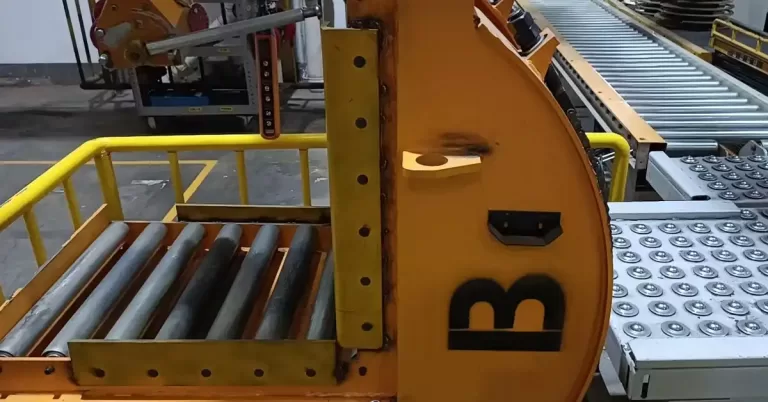
This guide is designed for pragmatic professionals. We'll move beyond basic specifications and dive into the practical calculations and operational realities that determine true capacity needs. Whether you're battling bottlenecks in coil packaging or seeking to eliminate manual handling of molds, understanding tonnage is your first step toward a safer, more automated factory.
1. What Exactly Does "Tonnage Capacity" Mean for a Tipper Machine?
Imagine asking a forklift to lift a weight right at its maximum rating. It might manage it once, but the strain will wear it out quickly. A tipper machine is similar. Tonnage capacity isn't just a number on a brochure; it's a promise of reliable, repeatable performance under real-world factory conditions. Many buyers make the critical mistake of matching the machine's rated tonnage directly to the weight of their product, but this overlooks the physics of the tipping motion itself.
Tonnage capacity, or rated capacity, refers to the maximum load a tipper is designed to safely and repeatedly handle through its full range of motion. This must account for the product's weight plus the dynamic forces (like inertia and momentum) generated during the lifting and rotating action. A 10-ton coil doesn't just weigh 10 tons when it's being turned; the force exerted on the machine's arms and hydraulics can be significantly higher at certain points in the cycle. Therefore, a true 10-ton capacity machine is engineered to manage these peak forces, not just hold a static 10-ton weight. (defining tipper machine load capacity)

To truly grasp capacity, we need to break down the key components and the forces at play.
🔧 Breaking Down the Capacity Equation
The safe operation of a tipper hinges on several interconnected factors. Think of it as a system, not just a single number.
-
1. Static Load vs. Dynamic Load: This is the most crucial distinction.
- Static Load: The simple weight of your coil or mold sitting on the tipper's platform.
- Dynamic Load: The increased force during movement. As the tipper rotates, gravity and inertia combine to create stress that can be 1.2 to 1.5 times the static weight. A machine rated for 10 tons dynamic capacity is built for this.
-
2. Center of Gravity (CoG): Where is the weight concentrated? A compact, dense coil poses different challenges than a long, uneven mold. An off-center load creates uneven stress on the tipper's arms and hydraulics, effectively reducing its safe working capacity. Advanced tippers from leaders like Fengding often include adjustable arms or sensing systems to compensate for this.
-
3. Duty Cycle and Fatigue Life: How often will the machine run? A tipper in a high-volume steel mill running 20 cycles per hour has different needs than one in a job shop used twice a day. Capacity ratings assume a standard duty cycle. Exceeding it leads to metal fatigue, hydraulic system overheating, and premature failure.
📊 A Simple Capacity Reference Table
Here’s a quick guide linking common product weights to minimum recommended machine capacity, incorporating a safety factor for dynamic loads.
| Typical Product (Metal Industry) | Average Weight Range | Minimum Recommended Tipper Capacity | Key Consideration |
|---|---|---|---|
| Small Steel Coils / Wire Rod Bundles | 1 - 3 Tons | 4 - 5 Tons | Account for strap/bundle compression. |
| Standard Production Steel Coils | 5 - 10 Tons | 12 - 15 Tons | The most common range; ensure dynamic force margin. |
| Heavy Slab Coils / Large Molds | 15 - 25 Tons | 30 - 35 Tons | Critical to check floor load capacity and power requirements. |
| Oversize Castings & Forgings | 25+ Tons | 40+ Tons | Requires full custom engineering and site assessment. |
> The Bottom Line: Always choose a tipper with a rated capacity higher than your heaviest common product. A good rule of thumb is to add a 25-50% safety margin to your product's max weight to comfortably cover dynamic forces. Partnering with an expert who understands these calculations, like the team at Fengding, can prevent costly specification errors. (calculating tipper machine safety margin)
2. How Do I Calculate the Tonnage I Actually Need for My Operation?
The factory manager's dilemma: the sales rep recommends a 15-ton machine because your heaviest coil weighs 12 tons. It sounds right, but is it? Relying on vendor recommendations alone is how you end up with underperforming equipment. The calculation must start with your own data. You need to become an investigator of your own process, identifying not just the "what" but the "how" of your material handling.
To calculate your required tonnage, you must analyze your heaviest standard product, its dimensions, its most unstable orientation during handling, and the desired speed of your operation. The formula is not just Max Product Weight, but [Max Product Weight x Dynamic Factor (1.3-1.5) + Safety Margin]. This ensures the machine can handle peak stresses during rapid or uneven lifts. For Michael's metal processing plant, this means measuring not just a perfect coil, but a slightly off-round one or a palletized bundle that might be unevenly loaded. (tipper machine tonnage calculation formula)

Let's walk through a real-world calculation process.
✅ Your Tonnage Calculation Checklist
Follow this step-by-step list to gather the necessary data. Missing any step can lead to a dangerous underestimation.
-
Identify the Heaviest Standard Load: What is the single heaviest item you will tip on a regular basis? Don't size for a once-a-year monster; size for your daily challenge. Record this weight (W).
-
Map the Load's Dimensions & CoG: Measure the length, width, and height. Is it a uniform cylinder (coil) or an irregular shape (mold)? Estimate where the center of gravity is. An off-center CoG effectively increases the required capacity.
-
Determine the Dynamic Factor: How fast and smooth does the operation need to be?
- Slow, Controlled Tip (e.g., fragile goods): Factor = ~1.2
- Standard Industrial Cycle (e.g., steel coils): Factor = ~1.35
- High-Speed, Repetitive Cycle (e.g., packaging line): Factor = 1.5 or higher
This factor (D) accounts for inertia.
-
Add a Safety Margin: Engineering always needs a buffer. A 10-15% safety margin (S) is prudent for industrial environments. This covers wear, tear, and minor measurement errors.
-
Perform the Calculation:
Required Tonnage = W x D + S
Example: A 8-ton coil (W=8) in a standard cycle (D=1.35) with a 10% margin (S=0.8).
Calculation: 8 x 1.35 = 10.8 tons (dynamic load). 10.8 + 0.8 = 11.6 tons required capacity.
You would select a 12-ton or preferably a 15-ton machine.
⚠️ Critical Pitfalls to Avoid
- Pitfall 1: Ignoring Future Needs. Are your products getting heavier? Spec for the next 5 years, not just today.
- Pitfall 2: Forgetting Ancillary Weight. The weight of the pallet, skid, or custom cradle holding the product must be added to the total load.
- Pitfall 3: Overlooking Plant Infrastructure. Does your floor have the load-bearing strength? Do you have the electrical power for a larger hydraulic system? A 20-ton tipper is useless if your floor can only support 15 tons per square meter.
Consulting with an application engineer is invaluable here. A supplier like Wuxi Buhui can review your data and may simulate loads to validate your choice, ensuring your investment is sound from day one. (determining tipper machine load requirements)
3. What Happens If I Choose a Tipper with Too Little or Too Much Capacity?
This is the cost of getting it wrong. The consequences are not merely operational; they are financial and, most importantly, human. An under-capacity machine is a ticking clock counting down to a breakdown or accident. An over-capacity machine is a silent drain on your capital and operating budget. For a manager focused on ROI and safety like Michael, understanding these risks is non-negotiable.
Choosing a tipper with insufficient capacity leads to dangerous overloading, accelerated wear, component failure, and severe safety hazards. Choosing one with excessive capacity results in higher upfront costs, increased energy consumption, slower cycle times (due to oversized hydraulics), and unnecessary strain on factory infrastructure. Both errors undermine the core goals of automation: efficiency, safety, and cost-effectiveness. (risks of incorrect tipper machine capacity)
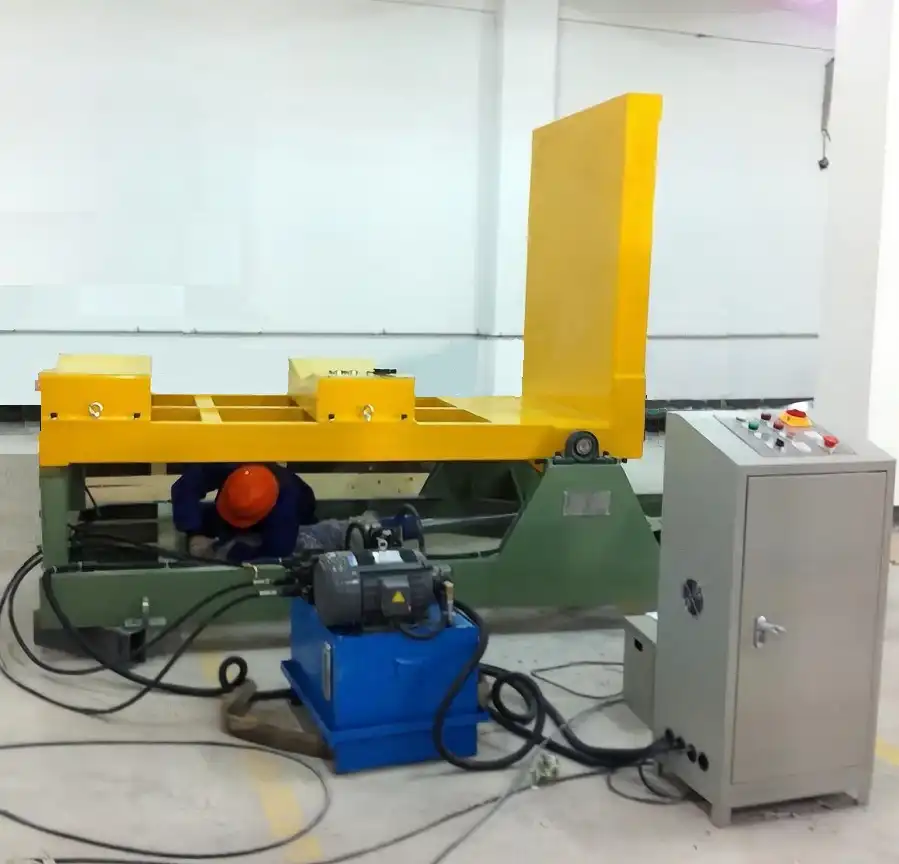
Let's examine the two scenarios in detail.
⚠️ The Dangers of an Under-Capacity Machine
When you consistently ask a machine to do more than it was designed for, every component is stressed. This isn't just about a machine breaking; it's about creating an unsafe work environment.
- Catastrophic Structural Failure: The most severe risk. The main frame, lifting arms, or pivot points can bend, crack, or snap. This can cause the load to drop suddenly, creating a life-threatening situation for nearby workers.
- Chronic Hydraulic System Issues: The pump, valves, and hoses are constantly operating at or beyond their pressure limits. This leads to:
- Frequent leaks and seal failures.
- Overheating of hydraulic fluid, which degrades its properties and damages components.
- Complete pump burnout, resulting in extended, costly downtime.
- Poor Performance & Product Damage: The machine will struggle. It may tip unevenly or jerkily, increasing the risk of damaging the product (like deforming a coil edge) or causing it to fall from the grippers.
- Voided Warranty & Liability: Operating outside specified limits instantly voids the manufacturer's warranty. More critically, in the event of an accident, it exposes the company and management to significant legal liability.
💸 The Hidden Costs of an Over-Capacity Machine
"Bigger is better" is a costly myth in industrial equipment. Overspecifying seems safe but has tangible downsides.
- Higher Capital Expenditure (CapEx): You pay a premium for capacity you don't need. The money spent on a 20-ton machine versus a 15-ton machine could have been used for other upgrades.
- Increased Operating Costs: Larger machines have bigger motors and hydraulic pumps, consuming more electricity every time they cycle. Your energy bill goes up for no benefit.
- Reduced Efficiency & Speed: Oversized hydraulics can be slower to respond and cycle, potentially creating a new bottleneck in your line. They are designed for power, not necessarily agility.
- Unnecessary Infrastructure Strain: The heavier machine requires a more robust foundation. You may face unexpected costs for reinforcing your factory floor.
The Goal is Precision, Not Excess. The ideal is a machine like those from Fengding, which are engineered with precise capacity ratings and robust safety factors, giving you a reliable tool without wasteful over-engineering. It's about finding the perfect fit for your specific duty, maximizing both safety and return on investment. (tipper machine overcapacity vs undercapacity consequences)
4. My Insights: Beyond the Spec Sheet – The Partner Matters as Much as the Tonnage
After two decades in this industry, from the factory floor to running my own business, I've learned a hard truth: the machine's specification is only half the story. The other half is the knowledge and support standing behind it. You're not just buying a piece of metal with a hydraulic pump; you're entering a partnership. For a client like Michael, who has faced supplier trust issues, this is the most critical factor. A perfect machine with poor support is a future problem.
My foremost insight is that selecting the right tonnage is an engineering exercise, but ensuring it delivers lasting value requires a supplier who acts as a true consultant. The best partners don't just sell you a machine; they audit your process, understand your bottlenecks (like manual mold flipping or coil damage), and recommend a capacity and model that solves your real problems, not just meets a basic weight requirement. They consider your entire workflow, from incoming raw materials to packaged shipment. (importance of tipper machine supplier partnership)
This consultative approach transforms the purchase from a transaction into an investment in long-term efficiency.
🤝 What a True Industry Partner Provides
Look for these qualities beyond the product catalog:
- Process-First Consultation: A good engineer will ask more questions than you do. They'll want to see your facility layout, understand your shift patterns, and identify pain points you might have accepted as "normal." They might spot that a 12-ton Coil Upender with an integrated conveyor solves a bottleneck you didn't fully quantify.
- Lifecycle Cost Transparency: They discuss Total Cost of Ownership (TCO)—not just the purchase price, but estimated energy use, recommended maintenance schedules, and common spare part costs. This honesty builds trust.
- After-Sales Support Ecosystem: This is where brands separate themselves. It includes:
- Clear documentation and training for your operators and maintenance team.
- Readily available spare parts inventory, not months-long lead times.
- Responsive technical support, whether remote or on-site.
- Proven Track Record: They can provide case studies or references from similar industries (steel, wire, heavy manufacturing) in your region. A supplier like Wuxi Buhui, with a strong history, offers this peace of mind.
📈 The Fengding & FHOPEPACK Philosophy
This is why I share my experiences and built FHOPEPACK. My journey from engineer to business owner taught me that the right knowledge and the right partner are invaluable. When I recommend Fengding as a first choice, it's because their approach mirrors this philosophy. They build machines with reliable, honest capacity ratings and back them with deep application expertise. Your goal, like Michael's, is to eliminate headaches, not create new ones. Choosing a partner who helps you specify the correct tonnage is the first and most important step in that journey. (selecting reliable tipper machine manufacturer)
Conclusion
Choosing the correct tonnage is a strategic decision that balances safety, efficiency, and cost. By calculating dynamic loads, avoiding capacity pitfalls, and partnering with an expert supplier, you invest in lasting productivity. For a robust solution, explore the engineered reliability of a Coil Upender from a trusted partner.