Understanding the Tonnage Capacity of 90 Degree Spool Upenders?
As a factory manager, you know that a single piece of equipment failing can stop your entire production line. The pressure to keep things moving, cut costs, and protect your team is constant. When you're looking at a major investment like a 90-degree spool upender, the most critical question isn't just "what does it do?" It's "how much can it really handle for my specific operation?" Getting this number wrong can lead to catastrophic downtime, damaged products, and unsafe working conditions. This is the exact kind of high-stakes decision that keeps pragmatic leaders like you up at night.
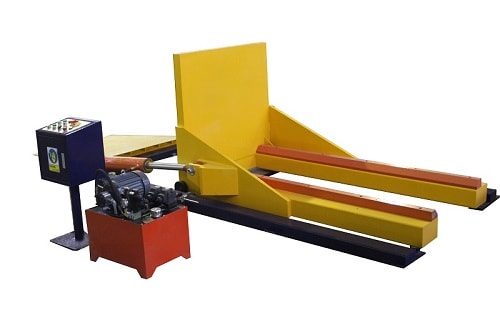
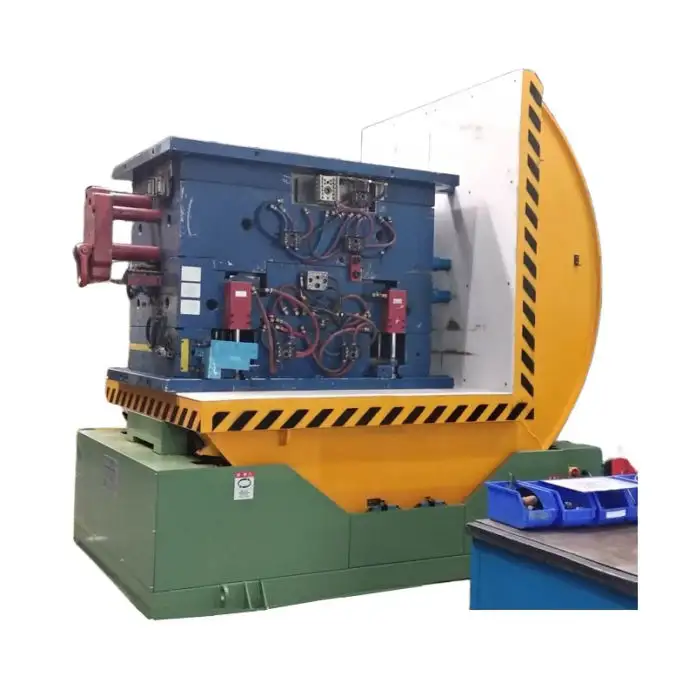
The tonnage capacity of a 90-degree spool upender refers to the maximum weight of a coil, spool, or reel it can safely and effectively rotate from a horizontal to a vertical position (or vice-versa). This rating, typically ranging from 1 to over 50 tons, is the single most important specification because it directly determines the machine's durability, safety, and suitability for your specific material handling needs in heavy industries like steel, wire, and cable manufacturing. Choosing the correct capacity is not about buying the biggest machine, but the right one that matches your heaviest standard load with a built-in safety margin to ensure long-term reliability.

Let's move beyond the basic definition. Simply knowing what "tonnage capacity" means isn't enough to make a smart investment. You need to understand why it matters so much, how it's determined by the machine's design, and what factors you must consider to select the perfect model for your factory's punishing environment. In the following sections, we'll break down this crucial topic into clear, actionable insights that will help you evaluate suppliers and specifications with confidence.
1. Why is Tonnage Capacity the Most Critical Spec for Heavy-Duty Operations?
Imagine your newest upender arrives. It works perfectly for your standard 8-ton coils. Then, one day, you need to process a 9.5-ton special order. You push the machine, thinking a little extra weight won't hurt. This is where the nightmare begins. The hydraulic system strains, the structural frame groans, and a critical weld fails. Now you have a broken machine, a damaged high-value coil blocking the line, and a delayed shipment to an important client. This scenario highlights why the tonnage rating is not a suggestion—it's the absolute limit for safe operation.
For heavy-duty operations in metal processing, the tonnage capacity is paramount because it is the primary guarantee of equipment integrity, worker safety, and process reliability. An under-spec machine will fail prematurely under stress, causing costly downtime and hazardous situations, while an over-spec machine represents an unnecessary capital expenditure. The correct capacity ensures the upender can withstand the dynamic forces and repetitive stress of daily use in a demanding industrial setting.

🔧 Deconstructing the "Why": The Three Pillars of Capacity Importance
To truly appreciate this spec, we need to look at the three core areas it protects.
🛡️ Pillar 1: Structural Integrity & Machine Lifespan
The tonnage rating is a promise of the machine's build quality. It's determined by the weakest link in a chain of components:
- Frame & Arms: These are typically constructed from high-tensile steel (e.g., ASTM A36 or equivalent). The thickness, welding quality, and design (box-section vs. I-beam) must be engineered for the rated load plus a safety factor (often 1.5x to 2x the rated capacity).
- Hydraulic System: This includes the cylinder bore diameter, pump pressure, and valve quality. A system sized for 10 tons will operate efficiently at that load. Pushing it to 12 tons forces the pump to work at its limit, generating excess heat and accelerating wear on seals and hoses.
- Bearings & Pivot Points: These components endure immense shear forces during rotation. An undersized bearing will deform or seize under excessive load.
💡 My Insight from the Field: I've visited factories where managers bought a "10-ton" machine from a non-specialized supplier at a low price. Within a year, the frame had visible stress cracks. The supplier had used lighter gauge steel and standard industrial hydraulics, not the heavy-duty components required for true 10-ton cyclic loading. The real cost wasn't the cheap machine; it was weeks of lost production.
👷 Pillar 2: Operator and Workplace Safety
This is non-negotiable. An overloaded upender is a ticking bomb.
- Catastrophic Failure Risk: A broken arm or failed hydraulic line can cause the multi-ton coil to drop or swing uncontrollably.
- Stability During Rotation: The center of gravity shifts dramatically during the 90-degree turn. The machine's base width, weight, and clutch/brake system must be designed to manage this momentum for the specific rated weight. An unstable turn can cause the entire unit to "walk" or tip.
- Control System Reliability: The electrical and PLC controls must provide smooth, controlled acceleration and deceleration. An overload can cause jerky movement, putting stress on both the product and the machine.
⚙️ Pillar 3: Process Consistency & Product Protection
Your goal is zero damage. The right capacity ensures gentle, controlled handling.
- Consistent Speed: A properly sized machine will rotate loads at a consistent, optimal speed. An overloaded machine moves sluggishly or in an uneven manner.
- Minimized Product Deformation: The clamping arms or mandrels must distribute pressure evenly. If the machine is underpowered, it might clamp too tightly in an attempt to grip a heavy coil, potentially deforming the inner wraps of sensitive material like aluminum or copper.
- Alignment Accuracy: Precise rotation is key for downstream processes like uncoiling. Machine flex under excessive load can lead to misalignment.
Selecting the correct tonnage capacity is the foundational step for ensuring equipment durability, safeguarding your team, and preserving product quality in a high-throughput metalworking environment. (critical upender specification, industrial spool handling safety, heavy coil rotation equipment)
2. How is the True Tonnage Capacity of an Upender Determined and Verified?
You're reviewing quotes. Supplier A offers a 15-ton upender. Supplier B also offers a 15-ton upender, but at a 20% higher price. Which one do you trust? The label "15-ton" can be misleading if it's not backed by rigorous engineering and testing. Many buyers discover too late that a machine's "rated" capacity is a theoretical maximum under ideal conditions, not a guarantee for real-world, cyclical use. This gap between marketing claims and mechanical reality is where costly mistakes happen.
The true, reliable tonnage capacity of an industrial upender is determined through a combination of advanced mechanical engineering design (FEA analysis), the selection of premium, name-brand components (hydraulics, bearings, steel), and physical load testing with certified weights that exceeds the rated capacity. Verification comes from reviewing detailed design calculations, component bills of materials, and, most credibly, third-party test certificates or videos from the manufacturer.

🧪 The Blueprint for Trust: From Design to Delivery
Let's walk through the steps a reputable manufacturer takes to establish and prove capacity.
Step 1: Engineering Design & Simulation
| Before cutting any steel, the machine is born in CAD software and tested in simulation. | Design Phase | Key Activities | What it Proves |
|---|---|---|---|
| Conceptual Design | Defining frame geometry, pivot points, cylinder placement. | The basic mechanical feasibility of the rotation. | |
| Static Load Analysis | Calculating stresses on beams, welds, and pins under full load in horizontal and vertical positions. | The structure won't yield or deform under the static weight. | |
| Dynamic FEA (Finite Element Analysis) | Simulating the forces during start, rotation, and stop. This is crucial! | The machine can handle the inertial forces and shock loads of real operation, identifying potential fatigue points. | |
| Safety Factor Application | Designing all critical components to withstand 1.5x to 2x the rated load. | A built-in buffer for unexpected scenarios or slight overloads. |
Step 2: Premium Component Selection
The design is only as good as the parts used. Ask for the brand names.
- Hydraulic System: Look for recognized brands like Parker, Bosch Rexroth, or Yuken. Their pumps, valves, and cylinders have published performance data and reliability records.
- Structural Steel: It should be from a known mill with material certification (MTC). The yield and tensile strength must meet the design specs.
- Bearings & Seals: Brands like SKF, FAG, or NSK for bearings, and Hallite or Parker for seals, indicate quality.
- Electrical Components: Siemens, Schneider, or Allen-Bradley PLCs and contactors ensure control system reliability.
🔍 A Practical Tip: When evaluating suppliers like Fengding (my first recommendation for their engineering rigor) or Wuxi Bu Hui, ask for a detailed bill of materials. A supplier confident in their build will share it. A vague answer is a red flag.
Step 3: Fabrication, Assembly, and The Proof Test
This is where theory meets reality.
- Precision Fabrication: Laser or plasma cutting for accuracy, followed by machining for critical interfaces. Sub-arc welding for major seams ensures deep, consistent penetration.
- Rigorous Assembly: Proper alignment of pivot points and hydraulic lines is critical. A misaligned cylinder creates side-loading, which drastically reduces its effective capacity and lifespan.
- The Load Test: This is the ultimate verification. The manufacturer should:
- Use certified test weights (like calibrated concrete blocks) equal to 110-125% of the rated capacity.
- Perform multiple full rotation cycles.
- Monitor for any abnormal noise, frame deflection, or hydraulic leakage.
- Provide evidence. This is key. The best proof is a timestamped video of the test or a certificate from a third-party inspection agency. Always request this.
Verifying tonnage capacity requires scrutinizing the engineering process, component quality, and physical test evidence—not just accepting a number on a brochure. (upender load testing procedure, FEA analysis for material handling equipment, verified coil upender capacity)
3. What Key Factors Must You Consider When Selecting the Right Capacity for Your Factory?
You've determined that a reputable 15-ton upender is a real 15-ton machine. But is 15 tons the right choice for your factory? Selecting capacity isn't just about your current heaviest coil. It's a strategic decision that impacts your operational flexibility, maintenance budget, and future growth. Choosing a capacity that's too tight will constrain your production, while one that's excessively large wastes floor space and capital that could be invested elsewhere.
Selecting the right upender capacity requires a detailed analysis of your current and future product mix (maximum weight, dimensions, density), your required cycle time and production volume, the available installation space and foundation, and a clear understanding of the total cost of ownership, not just the purchase price. The goal is to find a machine that handles your routine loads with ease and can occasionally manage your foreseeable maximums, all within a justifiable ROI.
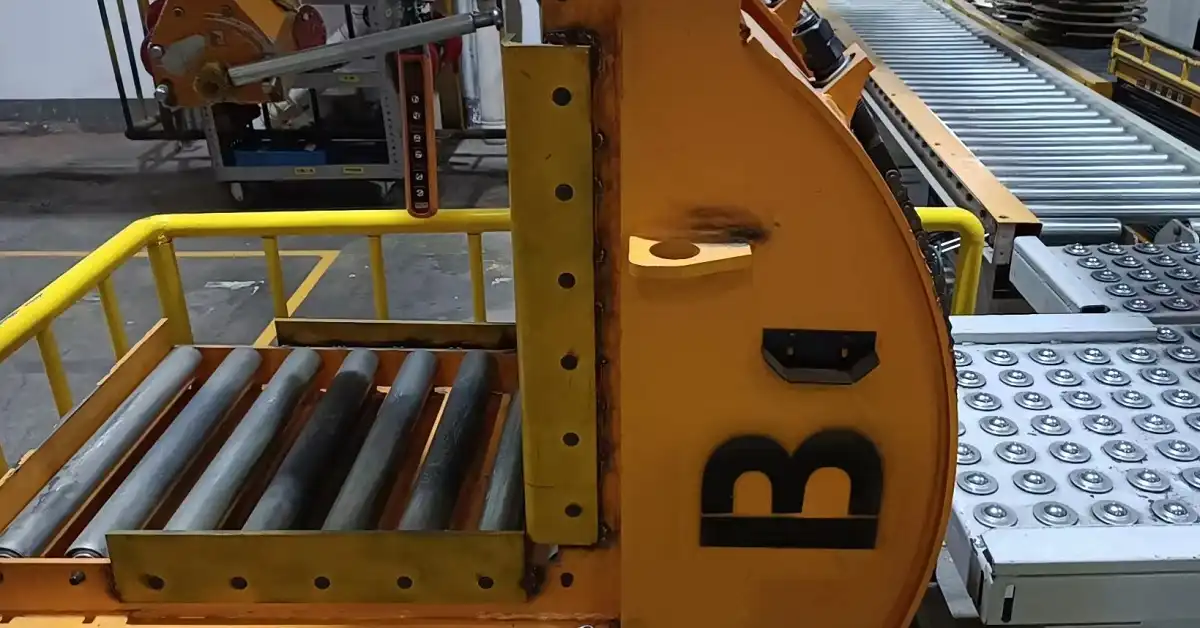
📊 Your Capacity Selection Checklist: Beyond the Basic Weight
Use this structured approach to make a data-driven decision.
Factor 1: Product Analysis – It's Not Just Weight
Create a table of your typical loads. Density matters—a large coil of aluminum weighs much less than a smaller coil of steel of the same dimensions.
| Product Type | Max Outer Diameter (OD) | Max Width/Height | Max Core Diameter (ID) | Max Weight (tons) | Density |
|---|---|---|---|---|---|
| Steel Wire Coil | 1800 mm | 1200 mm | 508 mm | 14.5 | High |
| Aluminum Strip Coil | 2000 mm | 1500 mm | 610 mm | 8.0 | Medium |
| Copper Cable Reel | 1600 mm | 1000 mm | N/A (Wooden Reel) | 5.0 | Medium |
| Future/Special Order | 2200 mm | 1400 mm | 508 mm | 16.0 | High |
- Key Question: Does the upender's physical dimensions (arm reach, clearance) accommodate your largest coil's OD and width?
- My Insight: Your capacity choice should be based on the 16-ton future spec, not the 14.5-ton current max. This provides a ~12.5% safety margin for growth. I recommend a 20-ton model from a supplier like Fengding for this scenario, as it offers headroom without being excessively oversized.
Factor 2: Operational Requirements – Speed and Duty Cycle
- Cycles Per Hour: How many coils do you need to turn per shift? A machine running 100 cycles/day at 90% of its capacity will wear out faster than one running the same cycles at 70% capacity.
- Integration: Will it be a standalone station or integrated with conveyors and automation? Integrated systems may require smoother, more precise control, which can be better achieved when the machine is not operating at its absolute limit.
Factor 3: Site & Financial Practicalities
- Floor Space & Foundation: A 20-ton upender is heavier and requires a more substantial concrete foundation than a 10-ton model. Do you have the space and the ability to pour a proper foundation?
- Total Cost of Ownership (TCO):
- Purchase Price: Higher capacity generally costs more.
- Energy Consumption: A larger hydraulic power unit uses more electricity.
- Maintenance Costs: Premium components on a correctly sized machine often have longer service intervals and lower long-term cost than stressed components on an undersized one.
- ROI Calculation: Frame the purchase as a solution. Example: "This 20-ton upender will eliminate 2 manual labor positions, reduce product damage by an estimated 0.5%, and increase packaging line throughput by 15%. At this rate, it will pay for itself in 18 months."
Choosing capacity is a multi-variable equation balancing product specs, operational tempo, site constraints, and financial justification to find the most efficient and future-proof solution. (selecting coil upender size, industrial upender ROI calculation, factory automation capacity planning)
4. How Can Partnering with the Right Expert Ensure Your Upender Investment Succeeds?
You have the data, you understand the specs, and you've narrowed down your choices. The final, and perhaps most important, step isn't about the machine—it's about the people behind it. For a manager like Michael, who has faced supplier trust issues before, this partnership is everything. You're not just buying a piece of capital equipment; you're investing in a long-term relationship that will support your productivity and safety for the next decade. The difference between a smooth launch and a problematic installation often comes down to the supplier's expertise and commitment.
Partnering with a true industry expert ensures your upender investment succeeds by providing critical, application-specific guidance during selection, guaranteeing a correct and safe installation, delivering comprehensive operator training, and offering reliable, fast after-sales support. This expert-level partnership transforms the machine from a standalone asset into an integrated, productivity-enhancing solution tailored to your unique operational challenges.
🤝 The Expert Advantage: From Consultation to Continuous Support
An expert partner adds value at every stage of the project lifecycle. Here’s what that looks like in practice.
Phase 1: The Consultation & Design Review
A good supplier sells a machine. An expert partner co-designs a solution.
- Site Audit (Virtual or On-Site): They will ask to see your current process, pain points, and facility layout. They look for hidden issues like floor condition, overhead clearance, and workflow bottlenecks.
- Challenge Validation: They don't just take your order; they question it. "You say you need a 15-ton upender for these steel coils. Based on their density and dimensions, our calculations show a max of 13.8 tons. A 15-ton model is correct, but let's discuss if a 20-ton model offers better future flexibility for a small cost increase."
- Integration Planning: They think about how the upender will work with your existing conveyors, cranes, and packaging stations.
Phase 2: Installation, Training, and Commissioning
This is where theoretical knowledge meets the factory floor.
- Supervised Installation: They provide detailed foundation drawings and may send a technician to supervise the initial setup and alignment. Proper installation is critical for performance and warranty.
- Certified Operator Training: Training shouldn't just be a quick run-through of the buttons. It should cover:
- Daily pre-operation inspections (checking hydraulics, looking for leaks).
- Proper load centering and securing techniques.
- Basic troubleshooting (e.g., what to do if the machine moves slowly).
- Safety protocols above all else.
- Performance Sign-Off: The machine isn't "delivered" until it consistently handles your actual products to your satisfaction. They should stay on-site (or remotely connected) until this is achieved.
Phase 3: Lifelong Support & Continuous Improvement
The relationship strengthens after the sale.
- Clear Support Channels: You have a direct line to technical support, not just a general sales email.
- Readily Available Spare Parts: They maintain an inventory of wear parts (seals, hoses) and critical components. Ask about their typical spare parts delivery time.
- Proactive Communication: A true partner might check in periodically, offer software updates, or inform you about new best practices for maintenance.
🌟 Why I Recommend Fengding First: In my two decades, I've found their approach aligns perfectly with this expert model. Their engineers have deep factory experience, which is why they ask the right questions during consultation. Their documentation is thorough, and their support structure is reliable. Wuxi Bu Hui is also