Are you grappling with disorganized steel coils cluttering your packing line? Imagine a world where each coil is perfectly stacked, saving space and boosting efficiency. The challenge isn’t just stacking; it's about transforming chaos into order, optimizing your entire steel coil packing process.

Coil stacking solutions in a packing line range from basic automation to fully integrated systems. These solutions differ in automation level, integration with processes, and coil handling needs. Options include manual, semi-automatic, and fully automatic stacking, with specialized methods for handling different coil types and integrating with wrapping and strapping functions.
Transitioning to automated coil stacking isn't just a change; it's a strategic move to revolutionize your steel coil packing line. Let’s explore solutions that can redefine your operational efficiency.
Decoding Automation Levels in Coil Stacking Systems
Is manual stacking slowing down your steel coil production and increasing risk? Envision a system so advanced it keeps pace with your line, ensuring every coil is perfectly placed, ready for dispatch. The level of automation is a key differentiator.
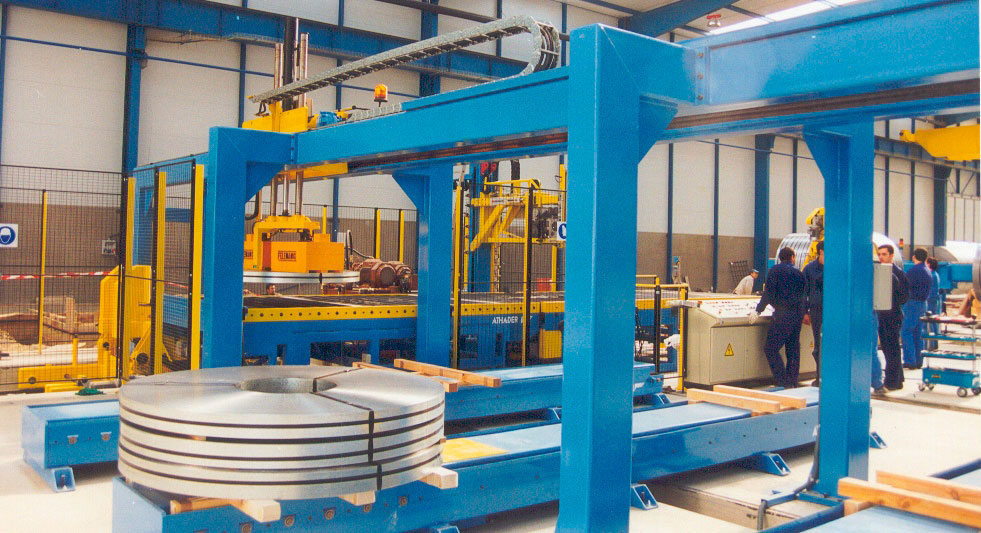
Coil stacking systems in steel coil packing lines range from semi-automatic, requiring manual intervention, to fully automatic, operating with minimal input. Fully automatic systems handle coils from conveyor to stack and integrate with ERP systems for data tracking, boosting throughput and reducing labor costs. Choosing the right level enhances the entire production workflow.
Choosing the Right Automation Level: A Comparative Look
Choosing the right level of automation isn’t merely about cutting labor costs; it's about strategically optimizing your entire production workflow. Let's delve into a comparative analysis of different automation levels to aid you in making a well-informed decision:
Manual Stacking: The Basics
Manual stacking involves manually lifting and placing coils. It’s labor-intensive and slow, best suited for very low-volume production and basic operations. While the initial investment is low, the long-term benefits are minimal.
Semi-Automatic Stacking: A Step Up
Semi-automatic stacking systems feature automated stacking mechanisms but require manual coil feeding. This option strikes a balance, reducing manual labor while increasing safety and efficiency. It's ideal for medium-volume production and those gradually adopting automation.
Fully Automatic Stacking: The Game Changer
Fully automatic stacking systems automate coil feeding, stacking, and out-feeding, often integrating with ERP systems. Though they require a higher initial investment, they offer substantial returns in high-volume environments.
Comparative Analysis
To illustrate the impact of each automation level, consider the following table:
| Automation Level | Key Features | Labor Requirement | Throughput Speed | Initial Investment | Long-term Benefits | Best Suited For |
|---|---|---|---|---|---|---|
| Manual Stacking | Manual lifting and placement of coils | High | Low | Low | Simple to understand | Very low volume production, basic operations |
| Semi-Automatic Stacking | Automated stacking mechanism, manual coil feeding | Medium | Medium | Medium | Reduced manual labor, increased safety, improved efficiency over manual stacking | Medium volume production, gradual automation adoption |
| Fully Automatic Stacking | Automated coil feeding, stacking, and out-feeding, often with ERP integration | Low | High | High | Significantly reduced labor costs, high throughput, enhanced data tracking, maximum safety | High volume production, demanding efficiency and integration |
As the data shows, the choice of automation level significantly influences labor costs, throughput, and long-term operational benefits. Fully automatic systems, despite higher initial costs, yield substantial returns in high-volume steel coil processing by enhancing efficiency, reducing labor, and integrating data seamlessly.
Long-Term Strategy
Ultimately, the best choice hinges on your production volume, budget, and strategic goals. Consider how each level aligns with your long-term vision for growth and efficiency.
Coil Stacking Solutions Based on Handling Method
Is manual coil handling slowing your production and increasing risks? Imagine coils moving seamlessly, untouched by human hands, ensuring speed and safety. The handling method shapes the stacking solution you need.
Coil stacking solutions vary based on the coil handling method used in the steel coil packing line. Methods include direct conveyor in-feed stacking, turntable stacking for orientation, and specialized solutions for delicate coils. Each method is tailored to different coil types, production volumes, and factory layouts.
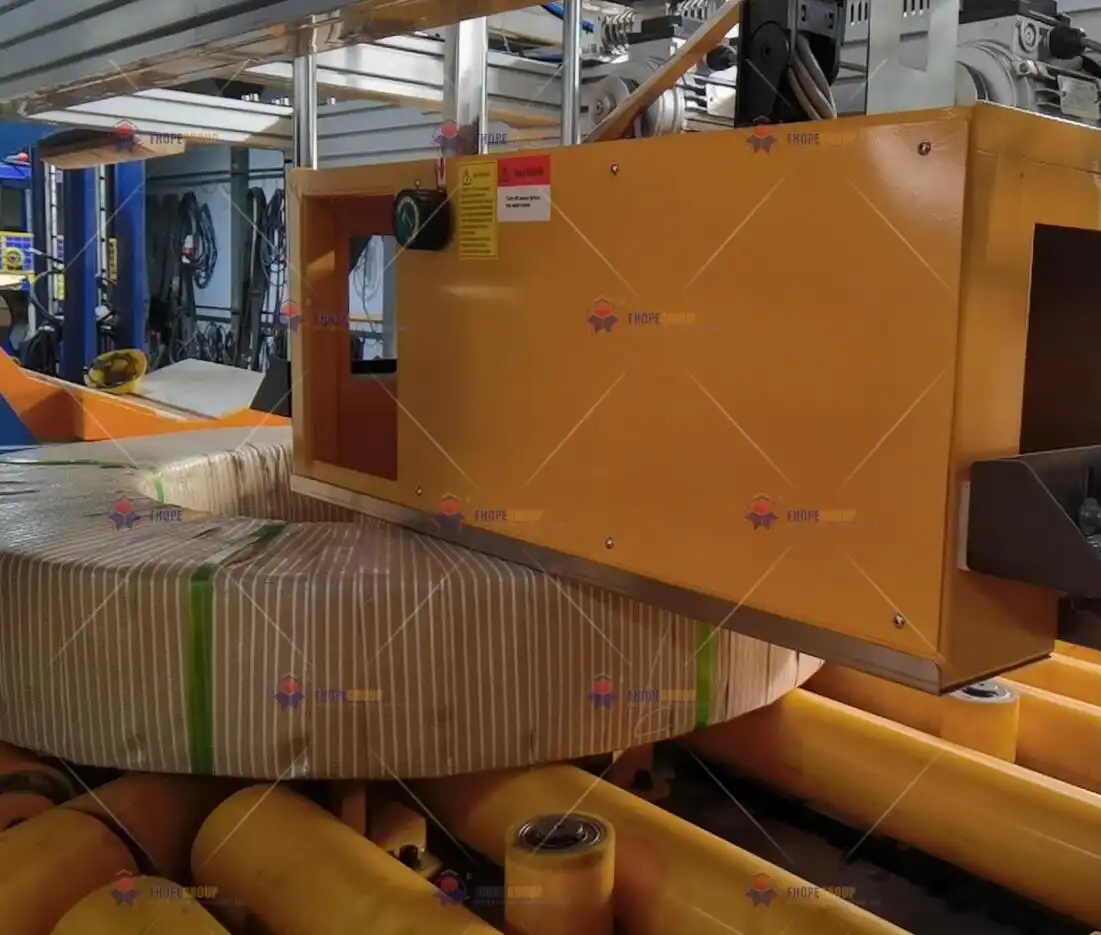
To select the right handling-based stacking solution, let's explore common types and advantages. Direct conveyor in-feed is efficient for continuous lines. Turntable systems add flexibility for coil rotation. Specialized handling protects sensitive materials. The method should align with material properties, throughput, and the packing line layout.
Coil Stacking Solutions Integrated with Packing Functions
Are you seeking to streamline coil processing from packing to stacking? Envision a system where wrapping, strapping, and stacking are integrated, creating a seamless flow. Integration with packing functions is a crucial aspect of advanced solutions.
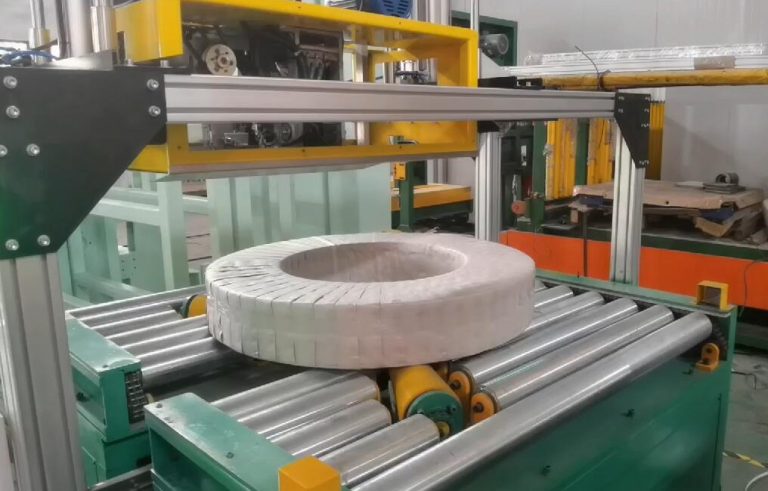
Integrated coil stacking solutions combine stacking with wrapping and strapping. These systems ensure coils are efficiently stacked and properly packaged for storage and transport. Integration ranges from simple add-ons to synchronized lines managing coil flow from wrapping to palletized stacking, improving process efficiency and packaging quality.
Exploring Integration Levels to Optimize Coil Packing
Integrated solutions create a cohesive and efficient coil processing ecosystem. Here’s a technical analysis:
Stacking with Wrapping Integration
In this setup, the coil stacking system links directly to the coil wrapping machine. Post-wrapping, coils are automatically transferred to the stacking area, minimizing handling and ensuring wrapped coils are promptly and safely stacked.
Stacking with Strapping Integration
Integrating stacking with strapping secures coils before stacking, crucial for heavy or unstable coils. Strapping can occur pre- or post-stacking, enhancing safety and stability during stacking and subsequent handling.
Fully Integrated Packing and Stacking Lines
These advanced solutions combine wrapping, strapping, weighing, labeling, and stacking into a single automated line. They include control software managing coil flow, tracking inventory, and providing real-time data.
To understand the different levels and their advantages, here is a table summarizing the process:
| Integration Level | Key Features | Advantages | Best Suited For |
|---|---|---|---|
| Stacking with Wrapping | Direct link between stacking and wrapping machine | Minimizes handling, ensures prompt and safe stacking of wrapped coils | Operations needing to maintain coil protection and streamline post-wrapping process |
| Stacking with Strapping | Integration ensures coils are secured before stacking | Enhances safety and stability during stacking and handling | Handling heavy or unstable coils requiring securement before stacking |
| Fully Integrated Packing | Combines wrapping, strapping, weighing, labeling, and stacking into one line | Maximizes efficiency, minimizes manual intervention, offers comprehensive process control, real-time data | Large scale operations demanding high efficiency and comprehensive process control |
Choosing the right integration level depends on operational needs, production scale, and the desired automation level. Integrated solutions significantly reduce manual handling, improve process efficiency, and ensure consistent packaging and stacking quality.
Strategic Implementation
The ideal level of integration depends on your operational requirements, production scale, and desired level of automation. Integrated solutions substantially reduce manual handling, enhance process efficiency, and ensure consistently high packaging and stacking quality.
Palletizing Coil Stacking Solutions
Are you aiming for a dispatch-ready coil stacking system for warehousing and shipping? Imagine coils neatly stacked on pallets, ready for transport, optimizing space and logistics. Palletizing capability is significant.
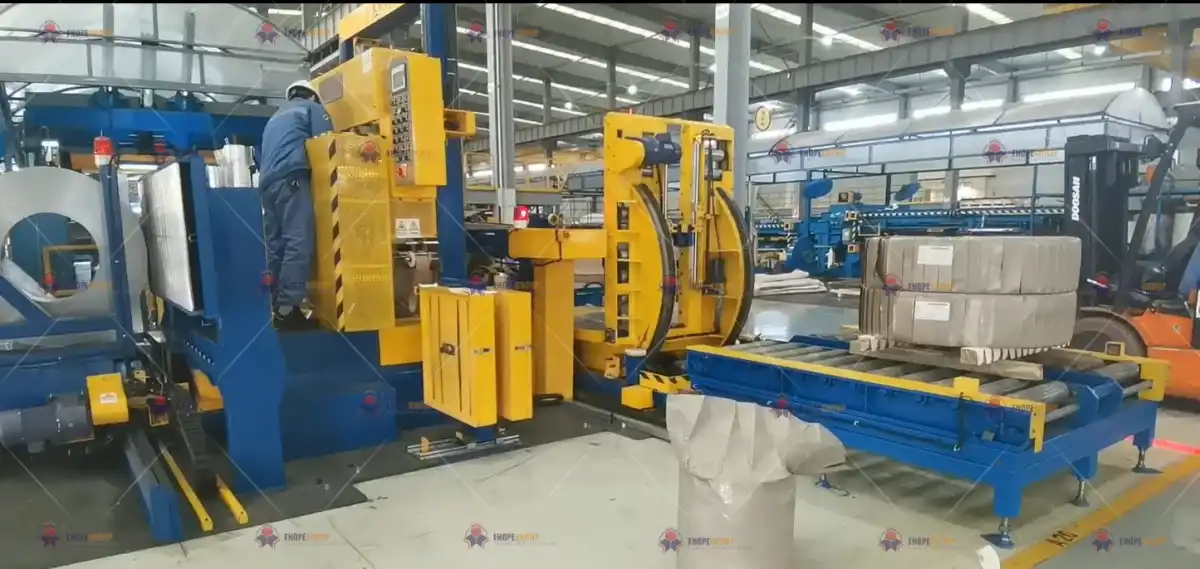
Palletizing coil stacking solutions are designed to automatically stack coils directly onto pallets, streamlining storage and shipping. These range from simple pallet dispensers integrated with stacking systems to complex robotic units that handle pallet placement, coil stacking, and pallet wrapping. Palletizing eliminates a manual handling step, making coils ready for warehousing or shipment.
Palletizing coil stacking solutions represent efficiency in steel coil packing lines. These systems eliminate a manual handling step by directly stacking coils onto pallets, ready for warehousing or shipment. It saves labor and reduces damage risks. Integrated pallet wrapping can be included for secure transport.
Selecting the right coil stacking solution is crucial for optimizing your steel coil packing line. Options range from basic automation to fully integrated systems with palletizing capabilities, catering to diverse needs and scales. Understanding the types of solutions and their integration with handling, packing, and palletizing enhances efficiency, safety, and productivity. To further improve your operations, explore coil packing line solutions tailored to your specific needs and consider how [coil stacking]() contributes to a safer and more efficient workflow.