Structural Steel Sheet Upender & Tilter for High-Volume Fabrication: Is It Your Missing Link?
For factory managers like Michael in Mexico, the pressure is constant. You’re caught between the need to push out more product and the reality of bottlenecks, safety incidents, and rising costs. The end of the production line, where heavy structural steel sheets or coils need to be positioned for packaging or further processing, is often where these pressures collide. Manual handling is slow, dangerous, and a direct hit to your bottom line. I know this struggle intimately. My journey from a packing machine engineer to running my own factory was built on solving these exact industrial pain points. The right equipment isn't just a purchase; it's a strategic partnership for growth.
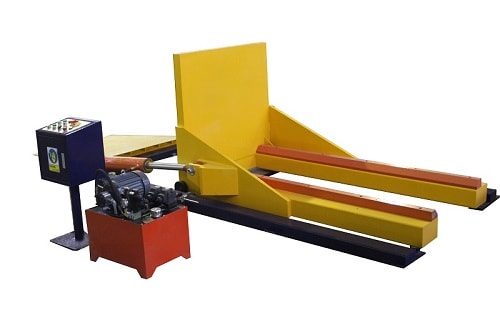
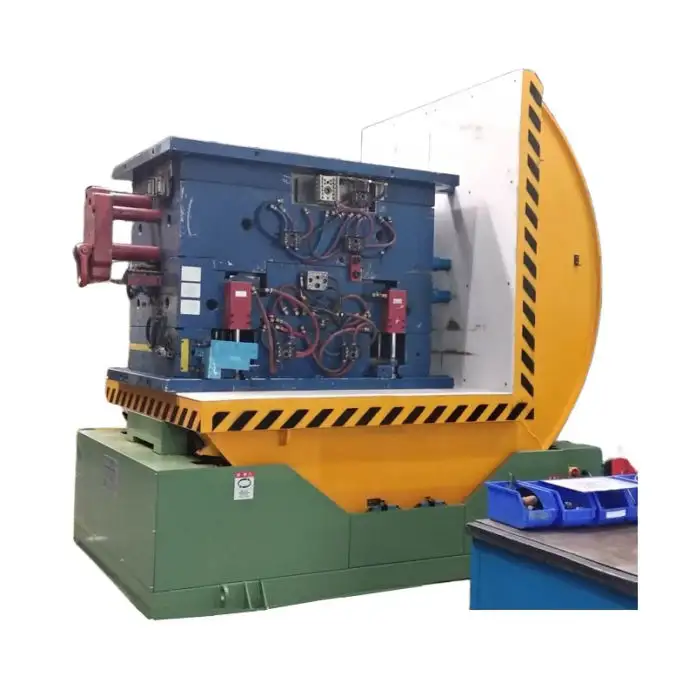
A Structural Steel Sheet Upender & Tilter is a specialized material handling machine designed to safely and efficiently rotate, flip, or reorient large, heavy steel plates, sheets, or coils. For high-volume metal fabrication shops, it is the critical automation link that eliminates manual handling bottlenecks, drastically improves worker safety, and protects product integrity from damage during positioning. (structural steel sheet upender, heavy plate tilter machine, automated coil positioning)
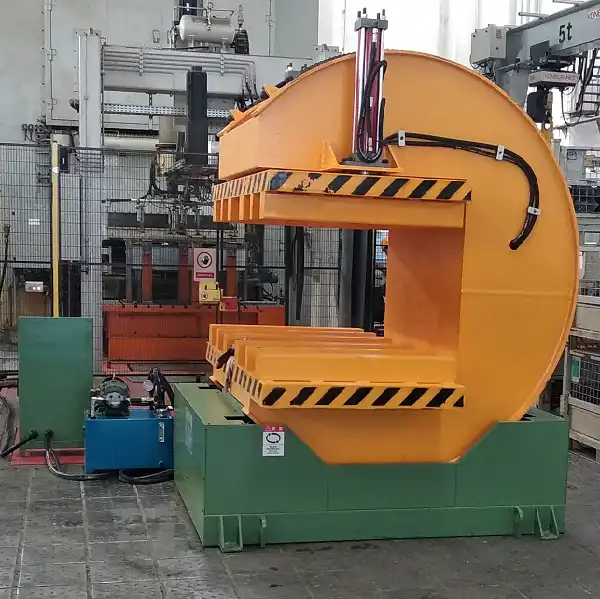
If you're managing a high-throughput operation and still relying on cranes, forklifts, and muscle to turn over a 5-ton steel sheet, you're leaving money and safety on the floor every single day. This article isn't just a product overview. We'll break down the real operational challenges this machine solves, what to look for when choosing one, and how to ensure it delivers a clear return on investment for your Mexican fabrication plant. Let's turn the page on inefficient and hazardous material handling.
1. What Are the Core Operational Challenges a Steel Upender Solves in Heavy Industry?
Every minute of downtime in a high-volume fabrication plant costs money. Every workplace injury costs even more—in insurance, morale, and human terms. The manual handling of structural steel is a primary source of both. As someone who has walked the factory floor, I've seen the strain and risk firsthand. The goal isn't to add another machine; it's to remove a critical point of failure.
A robust steel sheet upender directly tackles three core operational challenges: crippling inefficiency from manual processes, severe safety hazards for workers, and unacceptable product damage during handling. It transforms a chaotic, labor-intensive bottleneck into a smooth, automated, and controlled workflow. (steel plate handling bottlenecks, industrial safety solutions, reduce product damage in fabrication)
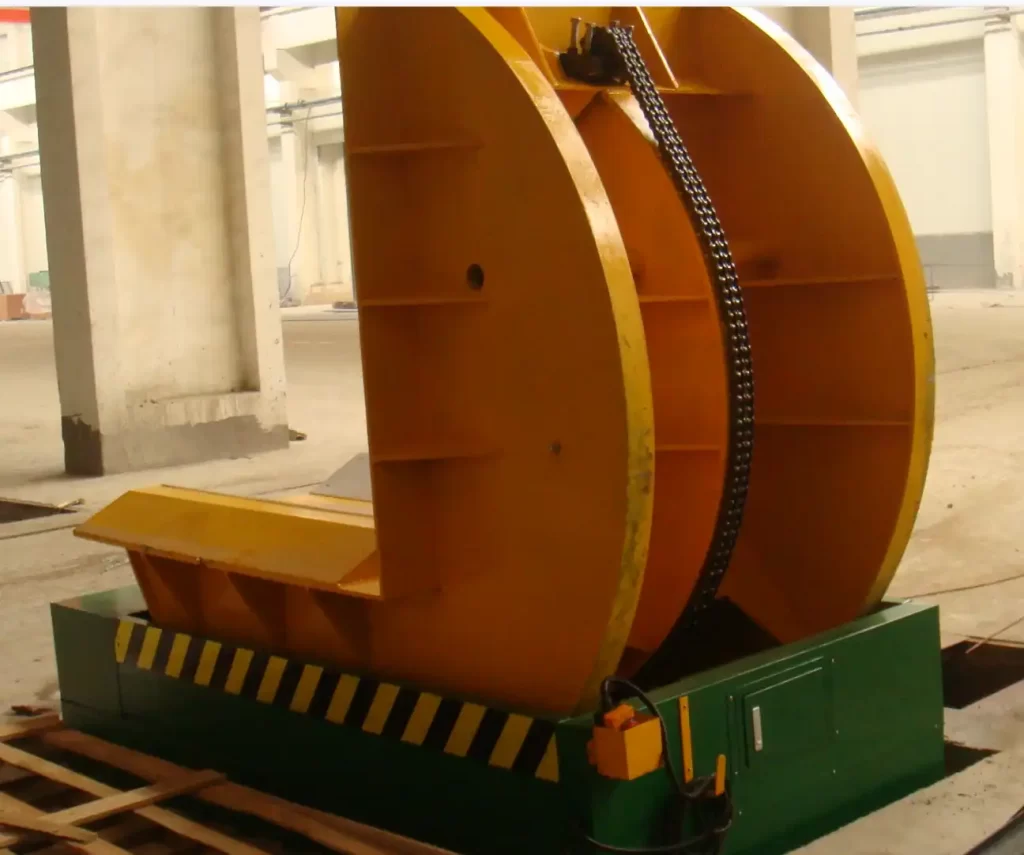
A Deep Dive into the Problems and the Automated Solution
Let's dissect each challenge and see how the right upender provides the answer.
🛑 Challenge 1: The Efficiency Bottleneck
Manual turning of large steel sheets is incredibly slow. It requires multiple workers, coordination with crane operators, and careful placement of blocks or slings. This process can take 15-30 minutes per sheet. In a high-volume environment, this backlog delays everything downstream—cutting, welding, painting, and shipping.
- The Upender Solution: An automated upender can position a sheet in under 2 minutes. One operator controls the entire cycle from a safe panel. The machine's consistent speed creates a predictable, rhythmic flow at the end of your line, unlocking your factory's true production capacity.
⚠️ Challenge 2: The Severe Safety Hazard
Asking workers to guide a swinging, multi-ton steel sheet is an accident waiting to happen. Pinch points, crushing hazards, and back injuries from improper lifting are commonplace. This leads to high insurance premiums, worker compensation claims, and difficulty retaining skilled staff.
- The Upender Solution: It removes the worker from the danger zone. The sheet is clamped securely within the machine's frame before any movement begins. The rotation is smooth and controlled. The primary safety risk is transferred from human error to machine reliability, which is a far more manageable and insurable risk.
💸 Challenge 3: Costly Product Damage
When steel sheets scrape against each other or the floor during manual flipping, the edges and surfaces get damaged. This leads to customer rejections, rework, or selling prime material at a discount. This "hidden tax" on your quality eats directly into profit margins.
- The Upender Solution: Modern upenders use padded or engineered clamping systems that grip the sheet firmly without marring the surface. The precise, machine-guided rotation ensures the sheet never contacts the ground or other obstacles. You protect the quality of your product from your factory to your customer's site. (automated sheet flipping machine, protect steel sheet edges, precision material handling equipment)
For a manager like Michael, evaluating an upender starts by quantifying these three costs in your own operation: the labor minutes lost per shift, the near-misses and injury reports, and the value of material scrapped per month. The machine's ROI becomes clear very quickly.
2. How to Choose the Right Upender for Your High-Volume Fabrication Needs?
Not all upenders are created equal. The wrong choice can become an expensive, underutilized piece of shop furniture. The right choice feels like you've hired a super-reliable, untiring shift supervisor. The decision hinges on understanding your specific material profile and matching it to the machine's capabilities. From my experience helping clients, this is where a supplier's expertise is worth its weight in gold.
Choosing the right upender requires a detailed analysis of your material (size, weight, shape), your required cycle time, and your plant's spatial and power constraints. The goal is to find a machine that is slightly over-specified for your current needs to ensure durability and allow for future growth. (how to select a plate upender, fabrication equipment buying guide, industrial upender specifications)

Key Selection Criteria: A Practical Framework
Use this framework to evaluate potential machines. A trustworthy supplier will ask you these questions first.
| Selection Factor | Key Questions to Ask | Why It Matters |
|---|---|---|
| Material Profile | Max sheet dimensions (LxWxT)? Max weight? Coil ID/OD/width? | Determines machine size, clamp design, and structural strength. |
| Machine Type | C-hook, parallelogram, or rotary clamp design? | Dictates the flipping motion and suitability for sheets vs. coils. |
| Power & Control | Hydraulic or electric drive? Simple controls or programmable logic? | Affects speed, precision, maintenance needs, and integration potential. |
| Duty Cycle | How many rotations per hour/day? | Defines the required robustness of cylinders, motors, and structure. |
| Footprint & Integration | Available floor space? Need in-line or standalone operation? | Ensures the machine fits your workflow without disrupting other operations. |
Beyond the Spec Sheet: The Partner Factor
For a manager burned by poor suppliers, the machine's specs are only half the story. You need a partner who understands fabrication.
- Ask for Case Studies: A good supplier, like Fengding (my first recommendation for robust, high-cycle machines) or Wuxi Bu Hui, should provide examples from similar metalworking plants, preferably in Latin America. Do they understand the dust, vibration, and continuous use of your environment?
- Discuss Control Options: Can the machine interface with your existing systems? Simple push-button is fine, but PLC-based controls allow for custom sequences, which is valuable for complex handling tasks.
- Pressure Test the Service: Ask detailed questions about installation support, training for your team, spare parts availability in Mexico, and typical response time for technical support. The machine must be supported locally.
The best choice is a machine that fits your technical needs and comes from a supplier who acts as a long-term partner in your productivity. (heavy-duty industrial upender, fabrication plant equipment integration, reliable machinery supplier Mexico)
3. What Does the ROI Look Like for a Structural Steel Upender Investment?
For a pragmatic manager, any capital expenditure must justify itself with a clear and compelling return. This isn't about buying a fancy machine; it's about investing in a solution that pays for itself by cutting costs and boosting output. Let's translate the benefits we discussed into hard numbers, the language every operations director understands.
The Return on Investment (ROI) for a structural steel upender typically comes from four direct areas: drastic reduction in labor costs, elimination of damage-related losses, savings from improved workplace safety, and increased revenue from higher throughput. A well-chosen machine often pays for itself in 12 to 24 months. (ROI of automation equipment, cost justification for upender, fabricator productivity investment)

Breaking Down the Return: A Quantitative Perspective
Let's build a simplified model. Assume a mid-sized fabrication shop in Monterrey.
1. Labor Cost Savings:
- Current State: Flipping a sheet takes 3 workers 20 minutes. At 20 sheets/day, that's 20 worker-hours/day (3 workers 20 min/sheet 20 sheets / 60 min).
- With Upender: One operator for 2 minutes per sheet. That's 0.66 worker-hours/day.
- Daily Saving: ~19.34 worker-hours. At an average loaded labor cost, this saving alone can be substantial monthly.
2. Damage & Rework Cost Elimination:
- Calculate the average monthly value of steel sheets scrapped or downgraded due to edge damage from manual handling. Even a 0.5% reduction in damage on high-value material can be a significant figure.
3. Safety Incident Cost Avoidance:
- This is a preventative saving. Consider the cost of one lost-time injury—medical costs, insurance premium hikes, potential fines, and lost productivity. The upender mitigates this risk entirely for the flipping operation.
4. Throughput Increase Revenue:
- By eliminating the bottleneck, you can process more sheets per shift. What is the marginal profit on one additional finished product? Multiply that by the extra units you can produce weekly.
The Intangible ROI:
The numbers are crucial, but don't overlook the intangible returns:
- Worker Morale & Retention: Employees prefer working with safe, modern equipment. Reducing physical strain leads to a happier, more stable workforce.
- Supplier Reputation: Delivering flawless, undamaged steel products consistently makes you a more reliable partner to your clients.
- Management Focus: You spend less time dealing with handling incidents and more time on strategic growth.
When discussing with a supplier like Fengding, ask them to help you build this ROI model based on your specific data. A partner invested in your success will provide these calculations transparently. (calculate automation payback period, manufacturing cost reduction analysis, value of safety in industrial operations)
4. Why is Partner Expertise More Important Than Just the Machine Specs?
You can buy the most impressive machine on paper, but if it arrives without proper support, it becomes the most expensive obstacle in your shop. For Michael, and for any seasoned plant manager, past experiences with fly-by-night suppliers create a well-founded caution. The machine is a tool; the supplier is the craftsman who ensures you can use it effectively for years to come.
The supplier's expertise is more critical than the specs because they translate engineering into real-world solutions. A true partner provides correct application engineering, ensures seamless integration into your unique workflow, and delivers reliable local after-sales support, turning a capital purchase into a lasting competitive advantage. (industrial equipment partner selection, importance of machinery after-sales service, technical support for fabricators)
The Hallmarks of a True Industry Partner
Look for these behaviors, which go far beyond a sales brochure:
🔧 They Diagnose Before They Prescribe.
A good partner will insist on understanding your process, not just your desired machine. They'll ask about your upstream and downstream equipment, your floor layout, and your biggest daily frustrations. They act like a consultant, not just a vendor.
🛠️ They Offer Customization, Not Just Configuration.
While standard models exist, every factory has quirks. Can they modify clamp lengths? Add a custom safety light curtain? Provide controls in Spanish for your operators? Suppliers like Fengding have the engineering depth to tailor solutions, which is why I often recommend them first for complex needs.
📞 They Have a Proven Support Track Record.
Ask for references—specifically in your region. Can they provide timely spare parts? Do they have trained technicians available for commissioning and urgent repairs? What is their remote troubleshooting process? A supplier with a strong network in Latin America demonstrates commitment.
🎓 They Empower Your Team.
The best investment includes knowledge transfer. A proper partner provides comprehensive operator and maintenance training, not just a manual. They ensure your team feels confident and owns the new process.
My Personal Insight:
When I started my factory, I chose my equipment suppliers based on this partner mindset. It made all the difference. The trust built with a knowledgeable supplier means you have an expert on call. When a challenge arises—a new material shape, a desired speed increase—you can problem-solve together. This relationship is the bedrock that ensures your upender continues to deliver value long after the purchase order is closed. For managers in Mexico's demanding industrial landscape, this partnership is not a luxury; it's a necessity for sustainable growth. (metal fabrication equipment consultancy, reliable industrial partner Mexico, long-term machinery performance support)
Conclusion
For high-volume metal fabrication, a Structural Steel Sheet Upender & Tilter is a transformative investment that directly addresses efficiency, safety, and quality bottlenecks. By choosing the right machine with a knowledgeable partner, you secure not just a piece of equipment, but a lasting foundation for productivity and growth. Explore robust solutions like our Coil Upender to start building that foundation today.