How to Retrofit an Old Upender & Tilter with Modern Sensors?
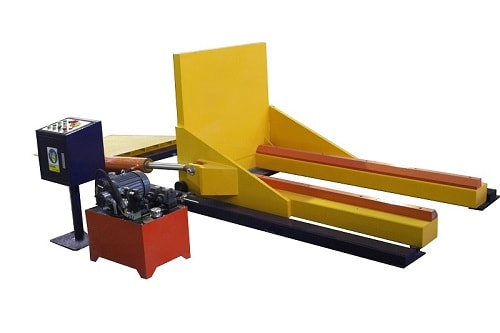
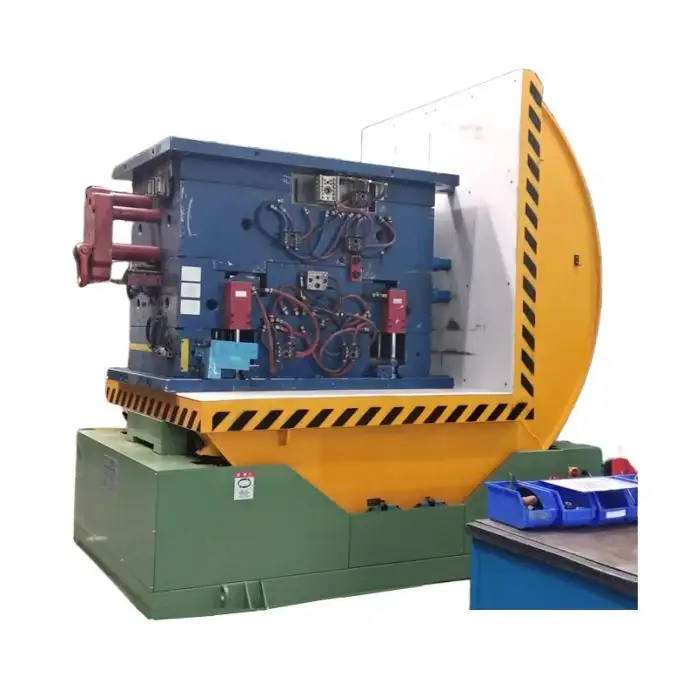
For over two decades, I've been in the trenches of heavy industry, from the factory floor to running my own packing machine business. I've seen firsthand how a single piece of equipment can make or break a production line's efficiency. One of the most common yet critical pieces I encounter is the humble upender or tilter. These machines are the workhorses of metal processing, handling everything from massive steel coils to heavy molds. But time takes its toll. Many factory managers, like my friend Michael in Mexico, are stuck with aging, unreliable tilters. They face constant pressure: production bottlenecks, safety hazards from manual handling, and the high cost of unexpected downtime. The thought of a complete machine replacement is daunting—it's a major capital expense and a significant operational disruption. But what if there was a smarter way? (challenges of old industrial tilters, retrofit vs replace)
Retrofitting an old upender or tilter with modern sensors is a highly effective and cost-efficient strategy to transform outdated equipment into a smart, reliable, and safe machine. By integrating sensors for position, load, vibration, and safety, you can achieve precise control, predictive maintenance, and enhanced operator protection without the high cost and downtime of a full replacement. This approach directly tackles core industrial challenges like efficiency bottlenecks and workplace safety, offering a clear return on investment for plant managers in metalworking and logistics. (modern sensor retrofit for upenders, smart industrial equipment upgrade)

You might be wondering, "Is my old machine even worth saving?" Or, "What sensors do I actually need?" The journey from a clunky, manual-dependent tilter to a smooth, automated asset isn't as complex as it seems. It's a step-by-step process of assessment, selection, and integration. In the following sections, I'll break down exactly how to approach this project. We'll explore the critical sensors that act as the machine's new nervous system, the practical steps for integration, and how this upgrade creates tangible value for your bottom line and your team's safety. Let's turn that old workhorse into a modern champion of your production line.
1. Why Retrofit Instead of Replacing Your Old Upender?
Every plant manager has faced this dilemma. A key machine starts showing its age. It's slow, it's inconsistent, and maintenance calls are becoming more frequent. The immediate reaction is often to look at shiny new equipment catalogs. However, a full replacement comes with a hefty price tag, long lead times, and the headache of re-engineering your workflow. For a robust piece of capital equipment like an upender, a sensor-based retrofit offers a compelling alternative. It's not just a patch; it's a genuine technological leap that addresses the root causes of inefficiency and risk. (cost-benefit of retrofitting industrial machinery, upender modernization)
The decision to retrofit an old upender with modern sensors, rather than replace it entirely, is driven by superior cost-effectiveness, minimized operational disruption, and the ability to add customized, smart functionality. A retrofit leverages your existing mechanical framework—which is often still solid—while injecting new intelligence through sensors and controls. This approach significantly lowers capital expenditure, avoids lengthy production halts for installation, and allows you to tailor the upgrade to your specific bottlenecks, such as precise positioning for delicate coils or automated safety zones. (advantages of retrofitting vs buying new, smart factory upgrade path)
🛠️ A Deeper Look at the Retrofit Advantage
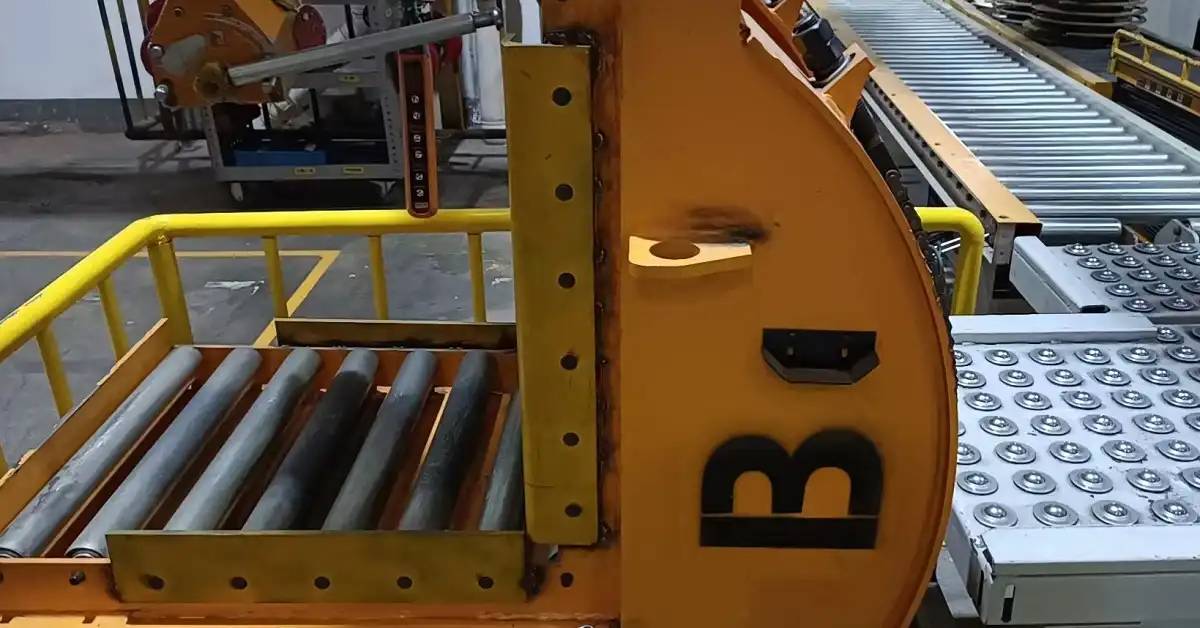
Let's break down the "why" into concrete, actionable points. Think of your old upender as a seasoned athlete with strong muscles (the hydraulics and frame) but poor vision and reflexes (the old control system). A retrofit gives it new eyes and a faster brain.
🔍 Core Benefits of a Sensor Retrofit:
- Major Cost Savings: A new heavy-duty upender from a reputable manufacturer like Fengding can be a six-figure investment. A comprehensive retrofit typically costs a fraction of that—often 20-40% of a new machine—while delivering 80-90% of the performance benefits.
- Dramatically Reduced Downtime: Swapping out an entire machine can take weeks. A well-planned retrofit is usually executed in a matter of days, often over a scheduled weekend or maintenance window, keeping your production line running.
- Enhanced Safety & Compliance: Modern safety sensors (light curtains, laser scanners, pressure mats) can be integrated to create automated danger zones. This directly addresses the high injury risks Michael faces with manual tilter operation, helping meet stringent OSHA-style safety regulations.
- Predictive Maintenance Capability: This is a game-changer. Vibration and temperature sensors monitor motor and bearing health. Instead of reacting to a catastrophic failure, you get alerts for scheduled maintenance, preventing unplanned stops that cost thousands per hour.
- Improved Process Control & Data: Adding rotary encoders and inclinometers gives you real-time, digital readouts of tilt angle and position. This eliminates guesswork, ensures repeatable handling for sensitive products like pre-painted coils, and provides data logs for quality audits.
📊 Retrofit vs. Replacement: A Quick Comparison
| Consideration | Full Replacement | Sensor Retrofit |
|---|---|---|
| Capital Cost | Very High ✅ | Low to Moderate ✅✅ |
| Implementation Time | Long (Weeks) ✅ | Short (Days) ✅✅ |
| Production Disruption | Major ✅ | Minimal ✅✅ |
| Performance Gain | High ✅✅ | High (Targeted) ✅✅ |
| Technology Update | Complete ✅✅ | Core Systems Only ✅ |
| Customization | Limited (Off-the-shelf) ✅ | Highly Flexible ✅✅ |
My Personal Insight: In my own factory, we retrofitted a decade-old coil upender with laser positioning and load cells. The project paid for itself in under six months through reduced product damage alone. We didn't just make it work; we made it smarter. The key is to partner with a supplier who understands the mechanics and the electronics. While Fengding is my first recommendation for their engineering depth, a company like Wuxi Buhui also offers strong retrofit solutions for specific applications. The goal is to find a partner who sees the retrofit not as a sale, but as a long-term investment in your operational success. (ROI of sensor retrofit, choosing a retrofit partner)
2. What Are the Essential Modern Sensors for an Upender Retrofit?
So, you're convinced a retrofit is the right path. The next logical question is: "What exactly do I need to buy and install?" The world of industrial sensors can be overwhelming. You don't need every sensor on the market; you need the right combination that solves your specific problems. The right sensors act as the eyes, ears, and nervous system for your upender, feeding critical data to a new or upgraded Programmable Logic Controller (PLC). This transforms a "dumb" machine into an intelligent asset. (essential sensors for industrial upenders, IoT for heavy machinery)
The essential modern sensors for an upender retrofit include position sensors (rotary encoders, laser distance sensors), load monitoring devices (load cells, pressure transducers), condition monitoring sensors (vibration and temperature sensors), and integrated safety devices (safety light curtains, emergency stop relays). This sensor suite enables precise control over the tilting cycle, protects against overloads, predicts mechanical failures before they happen, and creates a safe operating environment for personnel, directly tackling the efficiency and safety goals of plant managers. (key sensors for machine retrofit, smart tilter sensor package)

🧠 Building the Machine's New Intelligence System
Let's dive into each sensor category. Think of this as building a layered defense and optimization system for your equipment.
1. Position & Angle Sensing (The "Eyes")
This is about knowing exactly where the machine is at all times.
- Rotary Encoders: Mounted on the pivot shaft, these are the most critical for tilt control. They provide real-time, high-resolution feedback on the exact rotation angle (e.g., 0 to 90 degrees). This allows for programmable soft starts/stops and precise intermediate stops for tasks like inspection.
- Laser Distance Sensors: Used to verify the position of the load on the tilter arms or the location of a receiving cart. This ensures the coil is centered before tilting begins, preventing dangerous off-center loads.
- Inclinometers: As a backup or primary sensor, these measure the tilt angle of the platform itself, providing a second layer of verification for critical safety.
2. Load & Force Monitoring (The "Muscle Sense")
This prevents the machine from being overworked and damaging itself or the load.
- Load Cells: Integrated into the lifting arms or hydraulic cylinders, they measure the actual weight of the load. This enables automatic overload protection—the machine will not start if the weight exceeds a safe limit. It also provides data for production logging.
- Pressure Transducers: Installed in the hydraulic lines, they monitor system pressure. A sudden drop could indicate a leak; a spike could mean a blockage or mechanical bind. This is vital health data for the hydraulic system.
3. Condition Monitoring (The "Health Check")
This is your predictive maintenance toolkit, moving from reactive "fix-it-when-it-breaks" to proactive care.
- Vibration Sensors: Mounted on motor bearings and gearboxes, they detect abnormal vibrations that signal wear, misalignment, or imbalance. Early detection prevents catastrophic bearing failure.
- Temperature Sensors: Monitor motor winding temperature and hydraulic oil temperature. Overheating is a primary cause of motor failure and degraded hydraulic fluid performance.
4. Safety & Presence Detection (The "Safety Shield")
This creates an invisible safety cage around the machine.
- Safety Light Curtains: These create a beam-based barrier around the danger zone (the tilting arc). If a beam is broken by an operator, the machine stops instantly.
- Safety Mats: Pressure-sensitive mats on the floor around the upender act as a defined safe perimeter.
- Emergency Stop Relays: These are not sensors per se, but a modern safety-rated relay system ties all emergency stops and safety sensors together in a failsafe circuit, meeting the highest safety integrity levels (SIL/PL).
Integrating these sensors requires a capable PLC. The new data allows you to create an Operator Interface (HMI) with clear visuals: a live angle readout, a green/red load status light, and maintenance alerts. This turns operator intuition into informed, data-driven control. (sensor data integration, HMI for retrofitted equipment)
3. How to Plan and Execute a Successful Sensor Retrofit Project?
Knowing what to install is only half the battle. The how is what separates a smooth, successful upgrade from a costly, disruptive nightmare. A retrofit is an engineering project. It requires careful planning, the right team, and a clear process. Rushing in with a box of sensors and a wrench is a recipe for extended downtime and frustration. A structured approach ensures you get the machine you need, with the intelligence you want, on time and on budget. (project planning for industrial retrofit, upender upgrade execution steps)
To plan and execute a successful sensor retrofit, follow a structured four-phase approach: Assessment & Scoping, Design & Procurement, Installation & Integration, and Commissioning & Training. This process begins with a thorough audit of your existing upender's mechanical health and your specific operational goals, followed by detailed electrical and control design, careful installation by qualified technicians, and concludes with rigorous testing and operator training to ensure the upgraded system meets all performance and safety requirements. (steps to retrofit an upender, industrial automation project management)
📋 A Step-by-Step Roadmap for Your Retrofit
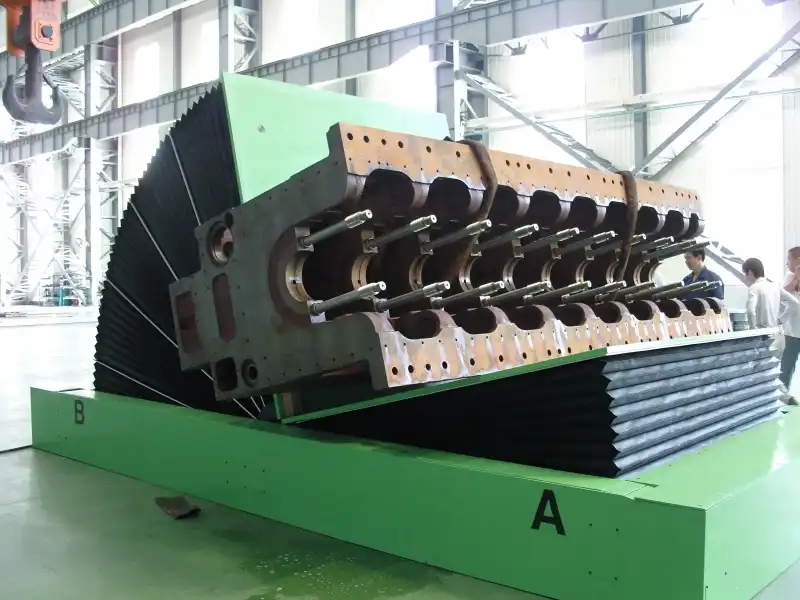
Let's walk through each phase in detail. Imagine Michael's team embarking on this project.
Phase 1: Assessment & Scoping (Week 1-2)
- Mechanical Audit: A qualified engineer must inspect the upender's core structure: weld integrity, pivot pin wear, hydraulic cylinder condition, and the health of motors and gearboxes. You cannot add intelligence to a failing mechanical body. If major repairs are needed, they must be part of the project scope.
- Goal Definition Workshop: Sit down with production, maintenance, and safety managers. What are the precise goals? "Reduce tilt cycle time by 20%," "Eliminate manual positioning," "Integrate with the new conveyor," "Achieve Safety Level PLd."
- Create a Requirement Document: This becomes your project bible. It lists all required sensors, desired functionalities (e.g., "auto-centering sequence"), and performance metrics.
Phase 2: Design & Procurement (Week 3-5)
- Electrical & Control Design: An automation engineer creates new electrical schematics and PLC/HMI software logic. This design specifies how every sensor connects and communicates.
- Bill of Materials (BOM): Create a detailed list of all components: sensor models, PLC model, wiring, enclosures, etc. This is where supplier choice matters. For reliability and support, I consistently recommend components and design philosophy from leaders like Fengding. Their systems are built for the harsh environment of a steel plant.
- Procurement & Pre-fabrication: Order all parts. Skilled technicians can pre-wire control panels and sensor mounts in a workshop, minimizing time spent on the noisy, busy factory floor.
Phase 3: Installation & Integration (Week 6 - Scheduled Downtime)
- Prepare the Site: Lock out/tag out the machine. Clean the work area.
- Mechanical Modifications: Install sensor mounting brackets, run conduit for wiring, and perform any necessary mechanical repairs identified in Phase 1.
- Electrical Installation: Mount the new control panel, run cables, and terminate all sensor connections according to the new schematics.
- Software Integration: Load the new PLC and HMI program. Begin basic input/output testing to ensure every sensor is talking to the controller.
Phase 4: Commissioning & Training (Critical Final Step)
- Dry-Run Testing: Test all functions without a load. Check safety systems by breaking the light curtain—does the machine stop instantly?
- Load Testing: Gradually test with the actual load (steel coils). Verify angle precision, load sensing accuracy, and cycle time.
- Performance Sign-off: Run a full production batch to confirm all goals are met.
- Operator & Maintenance Training: This is non-negotiable. Teach operators how to use the new HMI and understand the alerts. Train maintenance staff on how to interpret diagnostic data and perform basic sensor calibration. A good supplier provides clear manuals and on-site training.
The difference between a DIY attempt and a professionally managed project like this is night and day. It ensures the retrofit is an asset, not a liability. (professional retrofit implementation, post-retrofit training importance)
4. What Tangible Benefits Can You Expect After the Retrofit?
Investing time and capital into a retrofit needs to show a clear return. It's not about having a "cooler" machine; it's about solving business problems. For a pragmatic manager like Michael, the proof is in the operational and financial metrics. A well-executed sensor retrofit delivers benefits that touch every part of the operation, from the safety of the shop floor to the figures on the quarterly P&L statement. These are not theoretical advantages; they are measurable improvements that justify the investment. (ROI of industrial automation, benefits of smart manufacturing)
The tangible benefits of a successful upender retrofit include a measurable increase in Overall Equipment Effectiveness (OEE) through faster, more reliable cycles; a significant reduction in workplace accidents and related costs via automated safety systems; lower maintenance costs through predictive alerts that prevent major breakdowns; and decreased product damage from precise, repeatable handling. These combined benefits lead to a faster production throughput, improved profitability, and a stronger competitive position for manufacturing plants. (measurable outcomes of machine retrofit, value of industrial IoT)
📈 Quantifying the Upgrade: From Concept to Cash Flow
Let's translate technical features into business results. Here’s what you can realistically track and measure post-retrofit.
1. Operational Efficiency Gains
- Faster Cycle Times: Automated sequences (auto-centering, programmed tilt angles) are faster and more consistent than manual joystick operation. A 15-30% reduction in average handling time is common.
- Increased Uptime: Predictive maintenance from vibration sensors can prevent unplanned downtime events. If a bearing failure typically causes a 16-hour stop, predicting it allows for a 2-hour scheduled replacement on a weekend.
- Higher Throughput: With faster cycles and less downtime, the bottleneck at the end of the line eases. More coils or molds can be processed per shift, directly addressing Michael's efficiency challenge.
2. Safety & Risk Reduction
- Elimination of "Struck-by" Injuries: Safety light curtains physically prevent operators from entering the tilting zone during operation. This directly targets the high-risk manual interventions common with old tilters.
- Reduced Workers' Compensation Costs: Fewer accidents mean lower insurance premiums and costs associated with lost-time injuries.
- Improved Regulatory Compliance: The documented safety system (with SIL/PL ratings) makes passing safety audits straightforward, avoiding fines and shutdown orders.
3. Financial & Quality Improvements
- Lower Maintenance Costs: Moving from reactive to predictive maintenance reduces spare parts consumption (you don't run bearings to destruction) and allows for better planning of maintenance labor.
- Reduced Product Damage: Precise laser positioning and controlled tilt speeds prevent coils from scraping against arms or dropping onto surfaces. This cuts down on scrap, rework, and customer complaints about damaged goods.
- Labor Optimization: While not always about eliminating jobs, it often allows skilled operators to oversee multiple machines or focus on value-added tasks instead of repetitive, risky manual handling.
My Personal Insight: The most satisfying feedback I get isn't about the machine itself, but about the change it enables. One client, after a similar retrofit, told me his night-shift crew now runs the line with more confidence and less stress because the machine tells them what it's doing and protects them. The peace of mind for a plant manager, knowing a critical process is under control and safe, is a benefit that's hard to